Chapter 1: Why AI Changes Everything for Entrepreneurs
Chapter 1 of 4
0:000:00
EN
1x
Voice
PDF
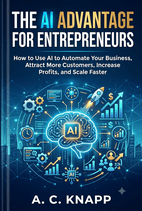
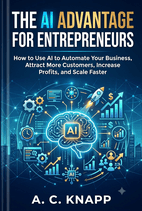
The AI Advantage for Entrepreneurs
by A. C. Knapp
What is the book The AI Advantage for Entrepreneurs about?
A. C. Knapp's The AI Advantage for Entrepreneurs provides small business owners a plain-language system for automating repetitive tasks, covering time tracking, prompt crafting, and risk-based automation. It offers practical tactics for marketing, sales, operations, and customer experience, helping solo owners reduce burnout and grow without sacrificing human judgment.
Feature
Insta.Page
Blinkist
Shortform
Summary Depth
Full Chapter-by-Chapter
15-min overview
Section-by-section guides
Audio Narration
✓
✓
✓
Visual Mindmaps
✓
✕
✕
AI Q&A
✓
✕
✕
Quizzes
✓
✕
✕
PDF Downloads
✓
✕
✓
Price
$89.99/yr
$146/yr (PRO)
$199/yr
*Competitor data last verified July 2026.
1 Page Summary
Paragraph 1: Central Thesis and Key Concepts
A. C. Knapp’s The AI Advantage for Entrepreneurs argues that artificial intelligence is a transformative tool for solo business owners, not because it requires technical expertise, but because it works through plain conversation. The book’s core distinction is between “smart work” (judgment and relationships) and “busy work” (repetitive tasks), with AI best used to automate the latter. It debunks four common myths—that AI is expensive, requires coding, produces generic output, and demands a full operational overhaul—and emphasizes that clear instruction matters more than programming. The author’s framework centers on tracking time to identify patterns, filtering tasks by frequency, complexity, and risk, and mastering a four-part prompt structure (role, task, detail, context) to avoid vague, mediocre results.
Paragraph 2: Author’s Approach and Distinctive Methods
Knapp’s approach is highly practical and process-driven, combining task auditing, risk-based automation, and strict measurement. She provides specific tactics across the customer journey: training AI on writing samples for brand voice, using a “one core idea, three angles, five posts” method for social content, and drafting four-email sequences (welcome, problem-awareness, proof, invitation). For sales, she recommends starting with the customer’s problem, desired outcome, hesitation, and next action, while tracking bottlenecks and using AI only for high-frequency, low-judgment tasks. Operational guidance includes a four-part checklist for financial communications (role, details, tone, format) and a caution to never paste sensitive banking data into unapproved tools. The book also stresses design choices like handoff signals for human intervention, lead magnets (checklists, quizzes, guides), and follow-up personalization.
Paragraph 3: Intended Audience and Reader Takeaway
The book is written for small business owners who lack marketing teams or weeks of learning time but face customer expectations of large-company speed and polish. Readers gain a clear, step-by-step system for deciding what to automate (high-frequency, low-complexity, low-risk tasks), how to prompt effectively, and how to measure impact with simple spreadsheets tracking time saved, financial results, and customer experience. The author emphasizes avoiding “vanity metrics” and scaling by identifying new bottlenecks after each automation. Ultimately, the reader leaves with actionable methods to reduce burnout, free up hours for real conversations, and grow faster—without sacrificing human judgment or accuracy.
Chapter 1: Why AI Changes Everything for Entrepreneurs
Overview
A small business owner cannot afford a marketing team or spend weeks learning new software, yet customers expect the speed and polish of a larger company. New tools tempt owners with efficiency, but myths and confusion make it unclear where to begin.
Why AI Is Different
AI differs from earlier business technology because it works through plain conversation. Desktop publishing, early online stores, and cloud tools were costly and required specialists. AI lets a solo owner draft an email, product description, or campaign in minutes by giving examples and clear direction. The owner still reviews and approves, but a strong draft beats a blank page. Clear instruction, not coding, matters most.
Myths and Competition
Four myths hold owners back:
AI is too expensive. Many strong tools are free or low-cost.
Coding is required. Plain language works.
Output is generic. Vague prompts cause bland drafts.
Adoption demands a full overhaul. One repeatable task is enough to start.
Large firms need meetings and approvals; a solo owner can revise a message or answer a customer first.
Smart Work and Automation
The key distinction is smart work versus busy work: judgment and relationships versus repeatable routine. An agency owner logged sixty-hour weeks, nineteen on copy-paste tasks; automating her welcome email cut it from forty minutes to under five. The automation mindset asks which repeatable task AI can manage, not whether AI can run the business.
Sorting Tasks
Sort tasks with three questions:
Does it need real human care?
Does it depend on your specific business knowledge?
Does it rely on your unique style or expertise?
Then label each task keep, assist, or automate, automating only what is predictable, low-risk, and easy to review.
Workflows and Goals
Log weekly tasks with time and energy ratings, group repeats, and list bottlenecks. Improve one of the three biggest time wasters within seven days. Start low-risk; early drafts will be imperfect. Set goals with real numbers, such as cutting response time from two hours to fifteen minutes. Goals should be specific, completable within two weeks, and worth the learning time. Success comes from small tests and early wins.
Key Takeaways
Use plain-language instructions and examples to get a first draft from AI, then do the reviewing and approving yourself; the draft removes the blank page, not the judgment.
Classify each recurring task into one of three buckets: handle yourself, use AI assistance, or automate it entirely, based on whether it needs human care, your business knowledge, or your unique style.
Look for one predictable, low-risk task to automate this week; a free tool is fine, and imperfect early drafts are acceptable when you can review them.
Start with a measurable goal you can hit within two weeks, like a response-time target, and let early wins build the case for more automation.
Treat your lack of meetings and approval chains as an edge; you can revise a message or answer a customer before a large firm even schedules a discussion.
Key concepts: Chapter 1: Why AI Changes Everything for Entrepreneurs
Chapter 1: Why AI Changes Everything for Entrepreneurs
Why AI Is Different
Works through plain conversation, not coding
Solo owners can draft content in minutes
Owner reviews and approves; draft beats blank page
Clear instruction matters most
Myths and Competition
AI is affordable; many tools are free or low-cost
No coding required; plain language works
Vague prompts cause generic output
Start with one repeatable task, not full overhaul
Smart Work vs. Busy Work
Smart work: judgment and relationships
Busy work: repeatable routine tasks
Automation mindset: find one task AI can manage
Example: welcome email cut from 40 to 5 minutes
Sorting Tasks
Ask: does it need human care, business knowledge, or style?
Label tasks as keep, assist, or automate
Automate only predictable, low-risk, easy-to-review tasks
Workflows and Goals
Log weekly tasks with time and energy ratings
Improve one of three biggest time wasters within 7 days
Set specific, measurable goals completable in two weeks
Start low-risk; early wins build momentum
💡 Try clicking the AI chat button to ask questions about this book!
Chapter 2: Building Your AI Foundation
Overview
Small business owners hear that AI can save them hours, yet most never track where those hours actually go. Picking a tool without that clarity leads to more clutter, and vague instructions to a powerful system only produce vague output.
Track time
Owners lose hours weekly to repeat emails, scheduling and follow-ups without knowing where time goes. Track one normal week: log every task over five minutes and whether it needs personal expertise or follows a pattern.
Filter tasks
Three filters decide what to automate:
Frequency: repeated chores compound into hours yearly.
Complexity: checklist tasks suit software; judgment and reading people stay human.
Risk: cheap mistakes can be automated; payment, legal and invoice errors need care.
Automate high-frequency, low-complexity, low-risk tasks; let AI draft medium-risk work for human review; keep high-risk manual.
Avoid overload
Before buying, check three things:
reliability
full cost including attention
effects on operations
Test on one client group for two weeks; add tools only after the first saves time.
Master prompting
Vague prompts produce generic results. A good prompt names four things:
Role: who the AI acts as
Task: exactly what to do
Limits: word count, tone, audience, exclusions
Format: email, list, table
Most failures signal missing context, not a broken tool. Repeatable prompts become business assets: saved and reused instructions give faster drafts and consistent quality, and a Prompt Library grows into an operating manual.
Build workflows
Choose one task done three times weekly, document every step, write the prompt, test, correct, reuse. Each Friday, review three signals and update prompts:
recurring customer questions
repeated manual edits
tool errors
The payoff is saved time and speed; a business of this size can handle more without hiring quickly.
Key Takeaways
Run a one-week time log that sorts every task by whether it needs personal expertise or follows a pattern; that baseline, not intuition, is what determines which automation is worth its cost.
Apply frequency, complexity, and risk in that order: automate what repeats often, runs on checklist logic, and fails cheaply; let AI draft the medium-risk steps for human sign-off; keep the high-risk steps manual.
Before buying a tool, check its reliability, the hidden attention it will consume, and its operational side effects, then pilot it with one client group for two weeks and adopt it only once the time saved is visible.
Turn prompting into a repeatable asset: state role, task, limits, and format in every prompt, treat bland output as missing context rather than a defective tool, and save your best prompts into a library that doubles as your operating manual.
Build a workflow from one task you currently do three times a week, then update its prompt every Friday against recurring customer questions, repeated manual edits, and tool errors; that cycle is how you absorb more work without hiring.
Key concepts: Chapter 2: Building Your AI Foundation
Chapter 2: Building Your AI Foundation
Track Time to Find Automation Targets
Log every task over five minutes for one week
Sort tasks by personal expertise vs. pattern-based
Use baseline data, not intuition, to choose automation
Apply filters in order: frequency, complexity, risk
Avoid Tool Overload
Check reliability, full cost, and operational effects
Pilot new tools with one client group for two weeks
Add another tool only after the first saves time
Master Prompting as a Repeatable Asset
Name role, task, limits, and format in every prompt
Treat bland output as missing context, not a broken tool
Save best prompts into a library as an operating manual
Build and Refine Workflows Weekly
Pick one task done three times weekly and document it
Test, correct, and reuse the prompt for that task
Every Friday review customer questions, manual edits, tool errors
Update prompts to absorb more work without hiring
Chapter 3: Using AI to Attract More Customers
Overview
Small business owners drown in content work, writing captions and newsletters while their real work waits. Spending more hours or pushing harder only deepens the burnout, and the message becomes harder to trust.
Content Marketing with AI
Content work eats hours because owners write reactively. The fix is a seven-day log of each task, its duration, and whether it needs creativity or follows a pattern. Group tasks into:
high-creativity work
template-based work
low-creativity repeat work
AI takes the repeatable layers while the owner keeps strategy and voice decisions. Before drafting, decide what the customer should understand, believe, or do.
Useful AI goals name the task, the time saved, and the quality kept, like cutting Instagram caption prep from ninety minutes to twenty. For social media, use one core idea, three angles, and five short posts. Candidate angles:
education
story
objection
example
invitation
Email works when consistent; from one offer, draft four messages as one conversation:
welcome
problem-awareness
proof
invitation
AI-Powered Branding
A brand is the voice customers recognize, not the logo. Train AI on ten to fifteen writing samples plus a brand note covering:
audience
problem
tone
phrases to use or avoid
Offers start from the customer's problem, desired outcome, and obstacle; test one task and keep a one-page style guide. Before publishing, an AI offer must answer three questions: "Is this for me?", "What problem does it solve?", "What should I do next?"
SEO and Lead Generation
Measure within days, not weeks:
minutes saved
useful drafts per hour
response time
Have AI brainstorm the phrases customers actually type:
plain-language questions
local terms
service names
problem-based searches
Group keywords by intent. Refresh the three most-used prompts every two weeks; when output drifts, change one variable at a time. A lead magnet gives one quick win. Then outline the follow-up:
immediate delivery
next question
proof
final invitation
Key Takeaways
Log a week of content work by task, time, and creativity level, then hand the template-based and repeatable layers to AI while keeping strategy and voice with you.
Give every AI task a concrete target such as trimming Instagram caption prep from ninety to twenty minutes, and build social and email content from one idea into three angles, five short posts, or four sequenced messages.
Train AI on ten to fifteen writing samples plus a one-page brand note covering audience, problem, tone, and phrases to use or avoid, and test any offer with three reader questions before publishing.
Track content and lead generation in days using minutes saved and useful drafts per hour, refresh your three most-used prompts every two weeks, and change only one variable at a time when output drifts.
Turn a lead magnet into one quick win and lay out the follow-up as immediate delivery, the next question, proof, and a final invitation.
Key concepts: Chapter 3: Using AI to Attract More Customers
Chapter 3: Using AI to Attract More Customers
Content Marketing with AI
Log a week of content tasks by time and creativity
Hand template-based and repeatable layers to AI
Set concrete targets like cutting caption prep time
Build social content from one idea into three angles
Start offers from customer's problem and desired outcome
Test offers with three reader questions before publishing
SEO and Lead Generation
Measure success in days: minutes saved, drafts per hour
Brainstorm plain-language and problem-based search phrases
Group keywords by intent for targeted content
Refresh top three prompts every two weeks
Lead Magnet Follow-Up
Offer one quick win as a lead magnet
Outline follow-up: immediate delivery, next question
Include proof and final invitation in sequence
Key Takeaways
Keep strategy and voice decisions with owner
Change one variable at a time when output drifts
Track content and lead generation in days, not weeks
Chapter 4: Increasing Sales with Artificial Intelligence
Overview
Every sales step that needs a personal touch also demands hours of follow-up, proposals, and record-keeping. The tension is that removing that work can make customers feel processed, while leaving it in place drains the time meant for real conversations.
Sales Copy and Emails
Sales time drains into proposals, follow-ups, and records; AI absorbs that repetition, freeing time for prospects. Copy starts with the customer's problem, desired outcome, hesitation, and next action. Vague prompts yield bland copy; state offer, audience, goal, tone, and next step. Test angles on time saved, revenue, or stress. Back every promise with proof.
Bottlenecks, not marketing, stall sales. For each task, track:
How often you do it
How long it takes
Whether it needs personal judgment
AI suits frequent, time-consuming, repetitive tasks.
Objections and Tools
Objections signal interest. Keep customers' exact wording; ask AI for several friendly replies, each with one proof point and a next step:
Price: explain value
Timing: respect pace
Trust: proof and low-risk entry
Confusion: simplify
Choose tools by time and comfort; the best one is maintainable. Personalize outreach using prospect details: industry, problem, downloaded guide. Test follow-up tools on real inbox messages; track speed, completions, satisfaction, handoffs. Include a stopping point leaving the door open.
Conversion and Closing
Judge AI purchases by current revenue, profit, cash flow, and conversion:
Monthly tool cost
Value of weekly hours saved
Sales recovered through faster replies
One-time setup cost
The costliest tool is the one you abandon. Mine stalled conversations for buyers' exact questions, write templates in your voice, and check drafts against:
Customer problem
Solution
Scope
Timeline
Price
Proof
Next step
Assumptions
For presentations, hourly value equals desired annual income divided by 2,000 hours plus overhead. For negotiation, list concerns, non-negotiables, tradeoffs, and value; the human decides.
Key Takeaways
Offload to AI only the tasks you do often, that take long stretches, and that require no personal judgment; keep the calls that need your judgment for yourself.
Write prompts that name the offer, audience, goal, tone, and desired action, then ground the output in the customer's problem, hoped-for result, and hesitation.
When an objection lands, preserve the buyer's exact words and ask for several friendly replies that each pair a single evidence point with a clear follow-up move.
Judge a sales AI purchase by whether it pays for itself in time saved and faster conversions, and expect to abandon any tool you cannot maintain.
Before any external-facing draft, run it against the full commercial checklist, and in a negotiation decide your limits and trade-offs yourself before letting the machine help.
Key concepts: Chapter 4: Increasing Sales with Artificial Intelligence
Chapter 4: Increasing Sales with Artificial Intelligence
AI for Sales Copy and Emails
AI absorbs repetitive writing, freeing time for prospects
Prompts need offer, audience, goal, tone, next step
Test angles: time saved, revenue, or stress
Back every promise with proof
Identifying Bottlenecks for AI
Bottlenecks, not marketing, stall sales
Track task frequency, duration, and judgment need
AI suits frequent, time-consuming, repetitive tasks
Handling Objections with AI
Objections signal interest; keep exact customer wording
Ask AI for friendly replies with one proof point
Address price, timing, trust, and confusion
Personalize outreach with prospect details
Choosing and Testing AI Tools
Pick tools by time and comfort; maintainability matters
Test follow-up tools on real inbox messages
Track speed, completions, satisfaction, handoffs
Include a stopping point leaving the door open
Conversion, Closing, and Negotiation
Judge AI by revenue, profit, cash flow, conversion
Costliest tool is the one you abandon
Check drafts against full commercial checklist
Decide negotiation limits yourself before AI helps
You've reached the end of the free chapters
Next chapter: “Automating Daily Operations” is locked
Keep reading The AI Advantage for Entrepreneurs — and unlock all 600+ book summaries with audio, mindmaps and AI Q&A.
$0.00 due today · 7 days free, then $89.99/year ($7.49/mo) · Cancel anytime before day 7
plus sales tax where applicable
More ways to explore The AI Advantage for Entrepreneurs
A. C. Knapp is a writer and educator specializing in dark fiction, folklore, and horror with a focus on Southern Gothic and Appalachian themes. Their notable works include the novel *The Woods All Black* and the short story collection *Comfort Me with Apples*, which have garnered critical praise for their inventive blend of genre tropes, folk horror, and atmospheric storytelling. Knapp holds degrees in English and library science and often draws on their background as a librarian and researcher to craft richly detailed, character-driven narratives.
Frequently Asked Questions about The AI Advantage for Entrepreneurs
What is The AI Advantage for Entrepreneurs about?
This book is a practical playbook for small business owners who want to use artificial intelligence to work smarter, not harder. It covers how to automate content creation, sales follow-ups, daily operations, customer support, and decision-making using plain-language tools that require no coding. The guide emphasizes starting small, tracking your time, and keeping human judgment for high-stakes tasks, all while debunking common myths about AI being expensive or generic.
Who is the author of The AI Advantage for Entrepreneurs?
A. C. Knapp is the author of this hands-on guide for entrepreneurs. Drawing on real-world examples and a clear, step-by-step framework, Knapp shows how small businesses can adopt AI without a big budget or technical team. The advice is practical and grounded in the actual workflows of solo owners and small operations.
Is The AI Advantage for Entrepreneurs worth reading?
Yes, it is an essential read for any entrepreneur feeling overwhelmed by content demands, sales follow-ups, or repetitive daily tasks. The book offers concrete, low-risk starting points and proven prompting methods that save hours while preserving quality and personal touch. It turns the vague promise of AI into a manageable, measurable action plan.
What are the key lessons from The AI Advantage for Entrepreneurs?
One key lesson is to automate only high-frequency, low-complexity, low-risk tasks, while keeping judgment and relationship-building human. Another is that effective prompting requires naming the role, task, audience, and context—vague prompts produce generic results. The book also stresses measuring AI impact with simple metrics like time saved, financial impact, and customer experience, rather than chasing vanity numbers. Finally, starting with one repeatable task and testing it for two weeks is the best way to build an AI-powered business step by step.
📚 Explore Our Book Summary Library
Discover more insightful book summaries from our collection