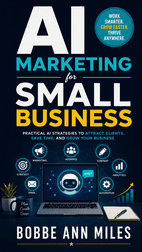
What is the book AI MARKETING FOR SMALL BUSINESS about?
BOBBE ANN MILES's AI MARKETING FOR SMALL BUSINESS provides a practical 7-day plan for skeptical, time-starved small business owners to harness AI for marketing without coding or consultants. It covers building automated systems for lead capture, content creation, and customer conversion, helping complete beginners create a self-running marketing machine.
Feature
Insta.Page
Blinkist
Shortform
AI MARKETING FOR SMALL BUSINE…
✓
✕
✕
Summary Depth
Full Chapter-by-Chapter
15-min overview
Section-by-section guides
Audio Narration
✓
✓
✓
Visual Mindmaps
✓
✕
✕
AI Q&A
✓
✕
✕
Quizzes
✓
✕
✕
PDF Downloads
✓
✕
✓
Price
$89.99/yr
$146/yr (PRO)
$199/yr
*Competitor data last verified July 2026.
1 Page Summary
This book is a practical, no-nonsense 7-day plan designed specifically for small business owners who feel intimidated by artificial intelligence. Author Bobbe Ann Miles directly addresses the skepticism of busy entrepreneurs who have been burned by complicated tech tools and believe AI is only for big corporations. The central promise is that readers can harness AI for marketing without any coding, technical expertise, or expensive consultants—the author’s assertion is that if you can send an email, you are already qualified. The book frames AI not as a sci-fi threat, but as a digital sidekick that handles repetitive tasks like scheduling emails, writing subject lines, and powering 24/7 chatbots, allowing owners to focus on the human elements of their business.
The book’s distinctive approach is its step-by-step, outcome-focused structure. It begins by demystifying AI and grounding success in specific, measurable goals (e.g., “increase signups by 20%”) rather than vague aspirations. Each of the seven days tackles a concrete marketing challenge: Day 1 builds momentum with AI-generated headlines; Day 2 sets up automated lead capture with chatbots and irresistible “lead magnets”; Day 3 teaches targeted, personalized email outreach using segmentation; and Day 4 shifts to AI-powered content calendars and scheduling. The final three days focus on converting warm leads into paying customers through smart follow-up systems. The book also asserts that branding is the non-negotiable foundation for all this automation, providing tools to define a clear brand promise using AI assistance.
The intended audience is the complete beginner—the skeptical, time-starved small business owner who has never touched AI. Readers will walk away from the book with a living marketing system they built themselves in one week: clear goals, AI-generated content, a working lead magnet, an automated chatbot, and a set of nurture messages that run on autopilot. The book goes beyond the core plan by providing bonus chapters on building a no-code chatbot from scratch, a detailed 8-step marketing outline, and over a dozen concrete ways to monetize AI tools. Throughout, the emphasis is on sustainable, low-effort consistency, with advice to treat roadblocks as signals for methodical tweaking rather than reasons to give up.
Introduction
Overview
The introduction speaks directly to the small business owner who’s heard the AI hype but isn’t sure it applies to them. You know the feeling: AI is everywhere, but it seems built for big corporations with deep pockets and tech teams. Maybe you’ve been burned by complicated tools before, or you’re just tired of marketing rules changing every few months. This chapter acknowledges that skepticism early, then makes a clear, refreshing promise: this is not another shiny tech distraction. It’s a practical, no-nonsense, 7-day plan designed for real people who run real businesses. No coding, no jargon, no expensive consultants. Just plug-and-play marketing tools that work—and yes, you can start even if you’ve never touched AI in your life. If you can send an email, you’re already qualified.
The tone is personal and direct, almost like a conversation over coffee. It doesn’t try to sell you on AI’s potential in the abstract; instead, it meets you exactly where you are—maybe curious, maybe skeptical, definitely busy. The chapter ends with the author’s own introduction (not included in the provided text), but the foundation is already set: this book was written for people who swore they’d never “do AI.”
Key Takeaways
AI tools are now accessible and affordable for small businesses, regardless of technical skill or budget.
The book offers a step-by-step, 7-day plan using only no-code, ready-to-use marketing tools.
You don’t need prior AI experience—basic email skills are enough to get started.
Key concepts: Introduction
1. Introduction
Addressing Skepticism
AI seems built for big corporations, not small businesses
Past complicated tools may have caused frustration
Marketing rules change too often for comfort
The Core Promise
A practical, no-nonsense 7-day plan
No coding, jargon, or expensive consultants needed
Plug-and-play marketing tools that actually work
Who This Is For
Real people running real businesses
No prior AI experience required
Basic email skills are enough to start
💡 Try clicking the AI chat button to ask questions about this book!
Chapter1: Demystifying AI
Overview
Artificial intelligence isn’t the sci-fi robot takeover you’ve been warned about—it’s a practical, approachable tool that small business owners can plug in today. Think of AI as your digital sidekick: Robin to your Batman. It handles repetitive, time-consuming tasks so you can focus on the work that actually needs your brain. Unlike traditional software that follows rigid instructions, AI spots patterns, learns from data, and gets better over time. For instance, basic automation lets you schedule emails; AI recommends subject lines that your customers are statistically more likely to open. It’s a shift from herding cats to having one cat that actually listens.
You don’t need to learn code or worry about a robot uprising. The AI tools that matter most for marketing are built for busy, non-technical people. Chatbots are a prime example—they act like a virtual front-desk assistant, answering FAQs and booking appointments around the clock, even while you’re sleeping. (Spoiler: you’ll build your own in Bonus Chapter 3.) AI also makes personalization feel effortless: it can scan your customer database and pop out birthday offers or appointment reminders that look like they came straight from you.
Solving Real Pain Points, One Bot at a Time
Let’s look at a real small business. Imagine you run a plant shop. Orders are flying in, customers are asking about fiddle leaf fig care, and you’re so busy answering questions you barely have time to water the plants you’re trying to sell. Solution: a free chatbot via ManyChat. Now your chatbot handles basic questions (“How much light does a monstera need?” “Are dogs safe around Pothos?”) 24/7. Sales increase because customers get instant answers, and you get your evenings back.
Social media is another time drain that AI can fix. Instead of logging in every day and hunting for clever captions, AI-powered content calendars let you pick themes or upload photos once, then schedule posts when your audience is most active. You can prep a month of content in a single sitting. One fitness studio owner cut her daily posting routine from two hours to fifteen minutes—and class sign-ups went up because her online presence stayed consistent.
Not knowing what’s actually working is a quiet revenue killer. AI tools now analyze engagement data, suggest optimal posting times, and even segment your email list by behavior—flagging “bargain hunters” or “lapsed regulars” so you know exactly who to reach out to and when. You get clear instructions like “Post more on Thursdays at 7 PM” or “Contact these ten customers who haven’t visited in 60 days.” No more guessing.
Avoiding Common Pitfalls
AI isn’t magic, and things can go sideways. Your chatbot might answer “What are your hours?” with “Banana bread is 20% off!” if you haven’t tested thoroughly. Always preview conversations and fix errors fast. If a glitch slips through, follow up with a human note—people appreciate honesty and a little humor.
Another trap: shiny object syndrome. Not every cool new tool fits your business. Watch out for hidden pricing, endless tutorials, or promises that sound like late-night infomercials. The smart approach is to pick one tool that solves your most pressing need (scheduling posts or sending reminders) and get comfortable with it. Then add another when you see results.
The Human Touch Still Wins
AI should handle the predictable—reminders, confirmations, follow-ups—so you can focus on the meaningful. Your brand’s personality and authentic voice are the magic ingredients that no algorithm can replicate. AI can draft an email, but only your unique edits and local touches make it memorable. Automation protects your revenue and frees your time, but it can’t replace the connection only you can create.
Key Takeaways
AI is a practical sidekick for small business, not a complex or scary technology.
It excels at automating routine tasks: chatbots handle FAQs, content tools schedule posts, and analytics flag customer behaviors.
Start with one tool that solves your most urgent pain point—don't test everything at once.
Always test AI outputs before going live and fix mistakes with humor and transparency.
Keep your authentic voice; AI augments your marketing, but your personal touch is irreplaceable.
Key concepts: Chapter1: Demystifying AI
2. Chapter1: Demystifying AI
AI as a Practical Sidekick
Digital assistant for repetitive tasks
Learns from data and improves over time
No coding or technical skills needed
Built for busy, non-technical people
Solving Real Business Pain Points
Chatbots handle FAQs and bookings 24/7
AI schedules social media content automatically
Analytics identify customer behaviors and trends
Frees time for meaningful work
Avoiding Common Pitfalls
Test AI outputs thoroughly before going live
Fix errors with humor and transparency
Avoid shiny object syndrome
Start with one tool solving your biggest need
The Human Touch Still Wins
AI handles predictable tasks only
Your brand personality is irreplaceable
Personal edits make AI drafts memorable
Automation frees time for genuine connection
Key Takeaways
AI is a practical tool, not scary technology
Start with one urgent pain point
Always test and fix mistakes openly
Keep your authentic voice central
chapter2: set the stage for success & maximize your ai tools
Overview
Chapter 2 is where you stop dreaming and start measuring. It’s about grounding your marketing ambitions in numbers that actually matter—and setting your AI tools up to work for you, not the other way around. You’ll learn why vague wishes like “get more customers” fall flat, and how specific goals (think: “increase signups by 20% in a month”) keep you focused and motivated. Then we dig into the metrics that separate signal from noise, introduce the most useful AI assistants for small business owners, and end with a simple five‑minute exercise that creates your baseline for the entire 7‑Day AI Marketing Guide.
The Fuel of Focus: Specific Goals
Broad aspirations are nice, but they don’t move the needle. The chapter drives home the power of concrete targets: a 20% bump in signups, a $10 lift in average order value, a doubling of online bookings. These aren’t just numbers—they’re mile markers that make progress visible and hit‑your‑stride satisfying. When you know exactly what you’re aiming for, your AI prompts become sharper and your effort more purposeful.
The Small Business Profit Trifecta
Not all data deserves your attention. Vanity metrics—like likes or shares—may flatter your ego, but they won’t tell you if your bank account is growing. Instead, focus on the three numbers that drive real profit:
Leads Captured – People who express genuine interest and hand over their contact information.
Visitors (Website or Social) – How many eyes land on your pages each week.
Sales or Bookings – The revenue‑generating actions you close.
These three form a simple but powerful system. If visits are up but leads are flat, you know your messaging needs work. If leads are strong but sales are weak, your conversion process might be leaking. Each number tells a story about the next step.
Measuring What Matters (Even When It’s Zero)
The chapter gives you a practical, no‑shame approach to tracking these metrics. Step 1: record your weekly visitors from Google Analytics, Facebook Insights, or Instagram Insights. Step 2: measure leads from email signups, contact forms, appointment requests, phone inquiries. Step 3: pull sales reports from your payment processor or booking system. The key instruction: even if a number is zero, write it down honestly. That zero becomes your starting line—and after seven days of applying AI strategies, you’ll have a real comparison to celebrate or adjust.
Leveraging AI Tools That Fit Your Budget
You already have powerful helpers within reach. The chapter gives a quick‑reference look at two leading AI assistants:
ChatGPT – Great for brainstorming blog topics, drafting customer responses, creating social posts. Generous free tier covers most needs; optional paid upgrades unlock extra features.
Gemini (by Google) – Ideal for planning marketing campaigns, summarizing research, and drafting content. Also free with optional upgrades.
Both are natural, chat‑style interfaces. The secret to using them well? Clear prompts. A vague question gets a vague answer. Tell the AI exactly what you need—tone, audience, format—and watch its usefulness leap. (For deeper prompting tips, the chapter points ahead to Chapter 10.)
Ethical Marketing: Trust as a Non‑Negotiable
Efficiency shouldn’t come at the cost of integrity. The chapter reminds us that ethical practices—transparent opt‑ins, data protection, honest messaging—build long‑term relationships. AI can amplify your reach, but it can’t replace the trust you earn by respecting your customers’ privacy and consent.
Quick Win Action Step: Your Marketing Baseline Snapshot
This is the heart of the chapter in practice. Take five minutes right now—yes, before you read further—and write down three numbers from the past week:
Website or Social Visitors:
New Leads or Signups:
Sales or Bookings:
This snapshot is your “before” picture. Once you complete the 7‑Day AI Marketing Guide, you’ll come back to these numbers to see how much your AI‑powered efforts have moved the needle. No progress can be measured without a starting point.
Key Takeaways
Specific, measurable goals turn vague hopes into achievable targets.
Track the Small Business Profit Trifecta: visitors, leads, and sales. Ignore vanity metrics.
Even a zero is valuable data—it gives you an honest baseline.
ChatGPT and Gemini offer free, powerful AI support when you prompt them clearly.
Your five‑minute baseline snapshot is the foundation for tracking improvement.
Key concepts: chapter2: set the stage for success & maximize your ai tools
3. chapter2: set the stage for success & maximize your ai tools
Specific Goals Drive Focus
Replace vague wishes with concrete targets
Examples: 20% signup bump, $10 order lift
Clear goals sharpen AI prompts and effort
Small Business Profit Trifecta
Focus on leads captured, visitors, and sales
Ignore vanity metrics like likes or shares
Each number reveals the next improvement step
Measure Honestly from Zero
Track weekly visitors, leads, and sales
Record zero as a valid starting baseline
Use Google Analytics, Insights, or payment reports
Leverage Free AI Assistants
ChatGPT for brainstorming and content drafting
Gemini for campaign planning and research
Clear prompts unlock AI's full usefulness
Ethical Marketing Builds Trust
Prioritize transparent opt-ins and data protection
Honest messaging earns long-term relationships
AI amplifies reach but not integrity
chapter3: branding-- your business foundation
Overview
Branding is far more than a logo or a color palette—it’s the bedrock of your business identity. This chapter drives home that branding isn’t a “someday” task but the very first step toward marketing success. When you invest in your brand, you’re building a system of consistency and focus that makes every customer interaction more coherent and every ad dollar more effective. The chapter also shows how artificial intelligence has leveled the playing field for small business owners, giving you access to tools that once required an entire agency. From AI-powered logo generators to writing assistants that keep your voice steady across channels, you can now create a professional brand without a huge budget. Practical resources like Canva, HubSpot, Looka, and Shopify are highlighted as starting points. And a simple but powerful brand statement example—“We help busy families enjoy fresh, homemade baked goods made with local ingredients and a personal touch”—illustrates how a clear mission guides everything from marketing to future AI-generated content. The chapter ends with a preview of the 7-Day AI Marketing Plan, where you’ll begin attracting attention with AI-powered headlines and social posts.
The Role of Consistency and Focus
A strong brand aligns your message, visuals, and customer interactions with your core mission. Without that alignment, you risk confusing your audience and diluting your impact. The chapter emphasizes that consistency builds recognition and trust. When every touchpoint reinforces the same story, potential customers don’t have to guess who you are or what you stand for. That clarity also makes your marketing more efficient—each dollar spent strengthens the brand narrative instead of just pushing a one-off sale.
How AI Transforms Branding for Small Businesses
Artificial intelligence has removed the old barriers to professional branding. You no longer need to hire expensive designers or struggle with voice and tone across dozens of platforms. The chapter walks through specific AI capabilities:
Logo and design creation – Platforms like Looka, Canva AI, and Brandmark.io let you generate polished logos and brand kits in minutes.
Voice and tone consistency – AI writing assistants such as ChatGPT can help you maintain a uniform style in emails, website copy, and social media posts, so your brand sounds like the same person everywhere.
These tools analyze customer preferences and engagement patterns to suggest messaging that emotionally resonates, making your brand more relatable and effective.
Practical Tools and Resources
The chapter provides a shortlist of free or low-cost resources to jump-start your branding:
Canva – Beginner-friendly design tool with templates and brand kit features for consistent visuals.
HubSpot – Free branding, marketing, and CRM resources tailored to small businesses.
Looka – AI-powered logo and brand kit generator for creating a professional visual identity.
Shopify – Articles and tools for building a brand, identifying your audience, and establishing a consistent business identity.
These aren’t just apps; they’re the scaffolding you can use right now to turn your brand idea into a tangible, recognizable presence.
The Brand Statement as Your North Star
One of the most valuable takeaways is the power of a clear brand statement. The example given—“We help busy families enjoy fresh, homemade baked goods made with local ingredients and a personal touch”—isn’t just a tagline. It’s a guide for every piece of content you create, every ad you write, and every customer conversation. When your brand statement is sharp and authentic, it becomes the lens through which you make decisions, and it ensures that even AI-generated content stays on message.
Key Takeaways
Branding is not optional or a future project; it’s the foundation for all marketing and customer loyalty.
Consistency in messaging, visuals, and interactions prevents confusion and builds trust.
AI tools make professional branding accessible and affordable for small businesses.
A clear, mission-driven brand statement acts as your compass for content and strategy.
Resources like Canva, HubSpot, Looka, and Shopify provide practical starting points to implement your brand today.
Key concepts: chapter3: branding-- your business foundation
4. chapter3: branding-- your business foundation
Branding as Business Foundation
Branding is the bedrock of business identity
It's the first step, not a someday task
Consistency builds recognition and trust
Clear brand makes marketing more efficient
AI Transforms Small Business Branding
AI removes need for expensive designers
Logo generators like Looka and Canva AI
Writing assistants maintain voice consistency
AI suggests emotionally resonant messaging
Practical Branding Tools
Canva for templates and brand kits
HubSpot offers free branding resources
Looka creates AI-powered visual identity
Shopify helps build brand and audience
Brand Statement as North Star
Clear brand statement guides all content
Example: helping busy families with baked goods
Sharp statement ensures AI content stays on message
Acts as lens for business decisions
Key Takeaways for Action
Branding is foundation for marketing and loyalty
Consistency prevents confusion and builds trust
AI tools make professional branding affordable
Start with Canva, HubSpot, Looka, or Shopify
You've reached the end of the free chapters
Next chapter: “Day1-your 7-day marketing plan begins!” is locked
Keep reading AI MARKETING FOR SMALL BUSINESS — and unlock all 600+ book summaries with audio, mindmaps and AI Q&A.
$0.00 due today · 7 days free, then $89.99/year ($7.49/mo) · Cancel anytime before day 7
plus sales tax where applicable
More ways to explore AI MARKETING FOR SMALL BUSINESS
Bobbe Ann Miles is an American author and oral historian known for her deeply researched works on Native American culture and Appalachian history, including *The Trail of Tears* and *National Parks of the West*. Her writing blends personal narrative with historical analysis, drawing from her background as a journalist and educator. Miles is recognized for bringing marginalized voices to light through her meticulous documentation of regional and indigenous stories.
Frequently Asked Questions about AI MARKETING FOR SMALL BUSINESS
What is AI MARKETING FOR SMALL BUSINESS about?
AI MARKETING FOR SMALL BUSINESS is a comprehensive guide that explores key concepts and practical insights. The book provides readers with actionable strategies and frameworks. It has become a must-read in its field.
Who is the author of AI MARKETING FOR SMALL BUSINESS?
AI MARKETING FOR SMALL BUSINESS is written by BOBBE ANN MILES, a renowned expert and thought leader in their field.
Is AI MARKETING FOR SMALL BUSINESS worth reading?
Yes, AI MARKETING FOR SMALL BUSINESS is definitely worth reading. It offers valuable insights and practical takeaways that can be applied immediately. Many readers have found it transformative.
What are the key lessons from AI MARKETING FOR SMALL BUSINESS?
The key lessons from AI MARKETING FOR SMALL BUSINESS include understanding fundamental principles, applying practical strategies, and developing new mindsets for success.
📚 Explore Our Book Summary Library
Discover more insightful book summaries from our collection