As an Amazon Associate, we earn from qualifying purchases.
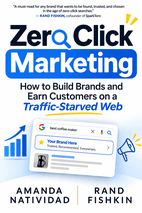
What is the book Zero Click Marketing about?
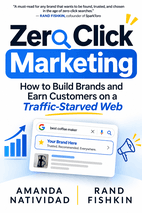
Amanda Natividad's Zero Click Marketing argues the click-based traffic model has collapsed as search engines, AI tools, and social platforms answer queries and keep users on-site, producing an 85 percent decline in referrals per human hour online. Written for marketers, founders, and growth teams facing falling traffic despite rising rankings, it offers frameworks for audience research, native content, PR, email, and measurement through incremental lift rather than attribution.
Feature
Insta.Page
Blinkist
Shortform
Summary Depth
Full Chapter-by-Chapter
15-min overview
Section-by-section guides
Audio Narration
✓
✓
✓
Full access to all 700+ summaries
✓
✓
✓
Visual Mindmaps
✓
✕
✕
AI Q&A
✓
✕
✕
Missing a book? Request it, usually live within 48h
✓
✕
✕
Quizzes
✓
✕
✕
PDF Downloads
✓
✕
✓
Send to Kindle
✓
✓
✓
Price
$89.99/yr
$146/yr (PRO)
$199/yr
*Competitor data last verified July 2026.
1 Page Summary
Amanda Natividad's Zero Click Marketing argues that the quarter-century bargain underpinning digital marketing—create content, earn clicks, grow—has quietly collapsed. Search engines and AI tools now answer billions of queries without sending a visit, social platforms design their algorithms to keep people inside their walls and penalize outbound links, and the result, per research cited in the book, is an 85 percent decline in referrals per human hour online even as total time online tripled between 2016 and 2026. What is dying is the open-web traffic model, not online behavior. Natividad coined the term Zero Click Marketing (ZCM) in 2022 as her answer: influence increasingly lands before a click or without one at all, so the work must move from renting traffic to earning recognition and trust where audiences already are. The book anatomizes the shift—the "Alligator Graph" of rising impressions against falling clicks, the platform exchange that traded reach for data before curdling into extraction, and the slow degradation of analytics that once let marketers reconstruct the path to a sale.
What distinguishes the book is its insistence on separating attribution from measurement. Natividad (drawing on co-author Rand Fishkin's experience, including the parable of a Milan pizzeria whose most-redeemed flyer was handed only to people already walking toward the door) shows how platforms claim credit for sales that would have happened anyway, and how post-purchase surveys and dashboards reward fast, click-adjacent channels while starving the slower work that creates demand. Against that false precision she offers a practical alternative: audience research that distinguishes customers from amplifiers and the broader community, channel choices based on sources of influence rather than raw reach, content built natively to satisfy the algorithm's hunger for engagement, a compounding zero-click flywheel, and measurement through experiments and incremental lift rather than perfect credit. The book extends the approach across search, PR, email, performance marketing, and AI answers, and closes with frameworks for content creation, campaign integration, and correlation-based dashboards.
The intended audience is practicing marketers, founders, and growth teams whose traffic is falling while their rankings and audiences grow—people under pressure to justify spend to executives who still want trackable proof. Readers will gain a diagnostic vocabulary for why the click economy is contracting, concrete rules and frameworks for reaching buyers and influencers off-site, and a more honest way to decide where budget belongs when the decisive exposures leave no trace. Natividad is careful not to overclaim: click-based marketing remains in the playbook where measurement fits how buyers behave, and ZCM is framed as an addition rather than a replacement. The payoff is a disciplined answer to the question the book opens with—what replaces the visit as the basic way to measure influence—and the reassurance that zero clicks need not mean zero influence.
Introduction: Eulogy for a Web Without Traffic
Overview
For twenty-five years, growth meant pulling visitors from elsewhere to your own site. That supply is running out. Buyers still research and buy online, but marketers now have to reach and persuade people who may never show up on their site. So what replaces the visit as the basic way to measure influence?
The quarter century of rising referrals from search engines, social networks, apps, and large web properties to independent sites is over. Search engines and AI tools answer billions of queries without producing a visit. Social platforms keep people inside their interfaces, discourage or block outbound links, and their algorithms favor posts without them. Research cited in the book estimates that total human hours online tripled between 2016 and 2026, yet traffic from every major platform to every property outside Big Tech fell by half. That works out to an 85 percent decline in referrals per human hour online. What's dying is the open-web traffic model, not online behavior.
What Still Works
People still buy online, subscribe to newsletters, read email, and make decisions from what they learn on the web. Zero Click Marketing, or ZCM, is Amanda's answer. She coined the term in 2022. It means earning an audience and moving that audience toward purchase even when they never click a link. The book goes in order: first the problem and the data you need to persuade skeptical bosses, teams, and clients; then strategic and tactical ways to influence without clicks; then measurement, reporting, and iteration. It rejects virality as a crutch for people who mistake lucky exceptions for a strategy that works every time, and it values wackiness, serendipity, and improbable questions over cookie-cutter frameworks.
Form and Authors
The book has twenty-seven short chapters, built so you can flip to the section you need and so the formatting serves both people and algorithms. Rand is cofounder and CEO of SparkToro and previously led Moz; Amanda is SparkToro's chief evangelist and hosts the Zero Click Marketing podcast. Their stance is that marketers should stop waiting for referrals to return and build influence without depending on visits.
Key Takeaways
Treat the collapse in platform referrals as the new baseline, and bring the evidence that gets bosses, teams, and clients to stop waiting for a recovery.
Build a direct audience that will buy from you whether or not anyone ever lands on your site.
Put your influence inside search answers, AI tools, and social feeds, then measure whether people remember and choose you after exposure rather than whether they click.
Skip virality and earn steady attention through specific, odd, and serendipitous work.
Key concepts: Introduction: Eulogy for a Web Without Traffic
Introduction: Eulogy for a Web Without Traffic
The Collapse of Open-Web Traffic
25-year growth model of pulling visitors from platforms is over
Search and AI answer billions of queries without generating visits
Treat referral collapse as new baseline; bring evidence to stop waiting
Build direct audience that buys whether or not they visit your site
Put influence inside search answers, AI tools, and social feeds
Measure recall and choice after exposure, not clicks; skip virality
💡 Try clicking the AI chat button to ask questions about this book!
1: Who Killed the Click?
Overview
Marketers built their reach on clicks from search and social, but those clicks are disappearing even as rankings and audiences grow. The harder problem is that the playbook still assumes a click means someone is paying attention.
Years after leaving his first startup, Rand still received Google Search Console emails about its traffic, because nobody had revoked his access and he could not log in to stop them. One showed clicks down roughly 20 percent while the keywords Moz ranked for and its average positions had both risen: better SEO, less traffic.
The Alligator Graph
Only two explanations fit:
Fewer people were searching for that growing set of terms.
Google was answering more searches on the results page, so nobody needed to click.
Google Trends for several terms showed interest climbing, ruling out the first. The chart is now called the Alligator Graph, because the lines spread apart like an alligator's open jaws: impressions go up while clicks go down.
The Flywheel That Ran on Clicks
In 2010, Rand's tweets could take small sites offline. With roughly fifty thousand followers and heavy amplification, one link sent thousands of visitors in minutes, and slow servers made it worse as people refreshed. A conference emcee called him the man who could take down any website with a single tweet. Twitter was his distribution strategy, and it drove a flywheel:
publish content
grow social, email and word-of-mouth audiences
earn links, amplification and domain authority
rank for more search terms
earn search and referral traffic
Millions of businesses ran the same loop under the names content marketing, SEO, inbound marketing or digital PR.
Everyone Murdered Them
Fourteen years on, his following had grown tenfold past 450,000, yet a link drew about one two-hundredth of the clicks. Algorithms suppress links, and users trained to scroll no longer wait for pages to load. Facebook, LinkedIn, YouTube and Reddit showed the same pattern. The platforms, device makers, regulators and users all did it; scrubbing the mold without fixing the moisture will not stop it from coming back.
Key Takeaways
Rankings and clicks no longer move together. Google often answers the query right on the results page, so a high position no longer means much traffic.
The content-social-links-rankings flywheel was never a law of nature. It ran on a temporary condition in which platforms passed attention through outbound links, and that condition has been withdrawn across Twitter, Facebook, LinkedIn, YouTube and Reddit alike.
A bigger audience does not buy you distribution. A following ten times larger can produce a fraction of the clicks, because algorithms, interface design, regulation and user habits all suppress the outbound link.
When traffic falls while visibility rises, the problem is the distribution channel, not the content. The businesses that survive will be the ones that don't need a platform to hand them a click.
Key concepts: 1: Who Killed the Click?
1: Who Killed the Click?
The Vanishing Click
Clicks decline even as rankings and audiences grow
Playbook wrongly assumes a click means attention
Rand's old startup showed clicks down 20% with better SEO
The Alligator Graph
Impressions rise while clicks fall, jaws spreading apart
Google Trends ruled out declining search interest
Google answers more queries directly on the results page
The Click-Fueled Flywheel
In 2010, one tweet could take down small sites
Loop: publish, grow audience, earn links, rank, get traffic
Millions of businesses ran this same inbound loop
Everyone Killed the Click
Tenfold larger following yielded 1/200th the clicks
Algorithms, users, platforms, devices and regulators all suppress links
Same pattern across Facebook, LinkedIn, YouTube and Reddit
Key Takeaways
Rankings and clicks no longer move together
The flywheel ran on a temporary platform condition now withdrawn
A bigger audience does not buy distribution
Survivors won't need a platform to hand them a click
2: How the Web’s Walled Gardens Won
Overview
Businesses built audiences on rented ground, trusting that reach would keep flowing as long as they kept creating. Then the terms shifted, and the same channels began deciding which content travels and which vanishes. The hard problem is dependence on a gatekeeper whose interests are not theirs.
The Exchange That Built the Platforms
Platforms grew by an exchange: create an account, post content, give up data, and receive reach and clicks. In 2012, Facebook page posts reached about 16 percent of followers organically. Google had already made a similar bargain by crawling sites and sending search visitors in return. This felt generous while the internet expanded. By 2018, global adoption had slowed to single digits, and much of the remaining growth came from lower-revenue regions. Because these firms answer to venture investors and public markets, they had to extract more from each existing user. On free products, that meant advertisers paying more, and it led to two conclusions:
More time on site means more monetization.
Anything that sends users away reduces revenue.
The Zero Click Web
Facebook did not simply kill organic reach; it rewrote the deal. Content that keeps people inside Facebook still travels, while content that links elsewhere is suppressed. Social@Ogilvy warned in 2014 that large brand pages were seeing reach as low as 2 percent without paid support. Meta's Widely Viewed Content Report for Q4 2025 found that 98.5 percent of US Facebook feed views contained no outside link. Google pursued the same logic by answering searches directly, through AI Overviews, instant answers, featured snippets and widgets. In January 2026, LinkedIn's marketing team said AI Overviews had gutted non-brand awareness traffic, with up to 60 percent of B2B clicks lost even as rankings held.
AI assistants intensify the pattern. According to reporting on leaked OpenAI visibility data, ChatGPT click-through rates averaged 0.69 percent. One publisher's best URL appeared in 185,000 conversations and earned 3,800 clicks, roughly 2 percent. Across 518,000 impressions, its clicks-per-appearance rate fell to 0.8 percent. Citations did not increase clicks and may suppress them. Tailwind CSS creator Adam Wathan said in 2026 that the framework was more popular than ever, but documentation traffic fell about 40 percent because coding assistants generated Tailwind code directly; he laid off 75 percent of his engineering team. Nicolas Bouliane's All About Berlin saw traffic fall 70 percent as Google answered with material trained on his work.
The Funnel Moves
The result is the Zero Click Web: the old model of building a digital home and pulling visitors through search, social and email is broken. Discovery, product education, comparison and feature research now happen on platforms, so marketing must follow. Antitrust has not restrained this. Microsoft's late-1990s case was effective, but later lobbying and campaign donations, reinforced by Citizens United, weakened enforcement. Biden and FTC chair Lina Khan won an antitrust case against Google, yet Judge Amit Mehta's jury-less trial produced no meaningful penalties. Two paths remain:
Replace the current system with a regulated economy that penalizes rent-seeking, or pursue communism.
Accept the hand dealt and practice Zero Click Marketing, earning reach and sales without links or traffic.
Key Takeaways
Treat off-site traffic as a rounding error rather than a foundation, and design content to deliver its full value inside the platform where it appears.
Budget paid amplification wherever it is the only remaining route to an audience you thought you owned, and stop counting organic reach as a channel.
Rebuild measurement around appearances, impressions and citations instead of sessions, judging campaigns by whether they move sales rather than whether they move clicks.
Assume AI assistants will answer your customers' questions using your own material, and find where you can still be paid or credited for expertise that survives summarization.
Do not wait for regulators to restore the old web; the incentive to keep users on-platform outlasts any verdict, so build a business that works under the current rules.
Key concepts: 2: How the Web’s Walled Gardens Won
2: How the Web’s Walled Gardens Won
The Platform Bargain and Its Breakdown
Platforms exchanged reach for content and data, initially generous.
Facebook organic reach fell from 16% (2012) to 2% (2014).
Slowing growth forced platforms to extract more from existing users.
More time on site means more monetization; outbound links reduce revenue.
The Zero Click Web
Platforms suppress content that links elsewhere, keeping users on-site.
98.5% of US Facebook feed views contain no outside link.
Google answers searches directly via AI Overviews and snippets.
AI assistants like ChatGPT have click-through rates below 1%.
The Funnel Moves
Discovery, education, and comparison now happen on platforms.
Old model of building a digital home and pulling visitors is broken.
Antitrust enforcement has failed to restrain platform power.
Two paths: regulate rent-seeking or practice Zero Click Marketing.
Key Takeaways for Businesses
Treat off-site traffic as a rounding error, not a foundation.
Budget paid amplification where it's the only route to audience.
Measure appearances, impressions, and citations instead of sessions.
Assume AI will summarize your expertise; find where you can still be paid.
3: Native Content or GTFO
Overview
People now expect answers, images, and video without leaving the place they already are. Any alternative built to send them somewhere else must overcome a habit so deep that convenience starts to look like inconvenience. What happens to the open web when the easiest path keeps everyone inside?
The Platform Incentive
Picture running product design at Google in 2007, watching searches for definitions, maps, weather, directions, scores and stock quotes flow out to other sites. Why hand Expedia that traffic when a widget can sit above the ranking algorithm? Picture leading UX at Reddit in 2014 with one quarter to lift engagement: the site sends visits to Imgur, Giphy and YouTube, so you build hosting, boost it, and suppress outlinks.
What Platforms Optimize For
Social networks design algorithms that reward engagement, feed addiction, and penalize outbound links.
Search engines try to answer as many non-advertising-monetized searches as possible in the results, so you never need to click a third-party website.
AI tools serve responses that encourage usage at scale and limit anything that takes you out of their playgrounds, except to buy more tokens.
Every platform optimizes for engagement to keep you captive for longer.
Users cooperate. The featured snippet, the martini recipe in seventy words without the blogger's thousand-word autobiography, the snide reply to a faceless stranger: all of it is simply easier than leaving.
The Grocery Store Parallel
Grocery stores are not built for a fast exit. Milk sits at the back, store brands sit at eye level, and low-margin third-party goods sit high up or low down. Platforms train the same expectations, and the Einstellung Effect names the preference for familiar bad experiences over novel better ones. Mastodon's chronological feed and Bluesky's user-chosen feeds stay beloved by small, conscious groups and never achieve broad popularity.
Concentration
Sixteen companies owned 588 brands that dominated Google's results, and Detailed.com found a large media brand behind the top result in 86.1 percent of 186,444 content-focused searches. Condé Nast's Roger Lynch said search went from his majority traffic source to under 25 percent, then told teams to plan as if search is zero. Of YouTube's 113.9 million channels, 0.062 percent take most of the views, nearer a 99/1 rule than 80/20.
Native Content
Platforms still want content that lives on them: answers, videos, posts that keep people scrolling. Native content on platforms holding your audience's attention now earns the investment once spent on click-driving tactics, because product designers cannot be beaten, only joined by optimizing the metrics they need to boost.
Key Takeaways
Build each piece to stand alone inside the platform it appears on, so the answer, video, or post satisfies the user without a click back to your site; move the budget you once spent pulling traffic away into formats the platform is built to reward.
Treat platform engagement metrics as the scoreboard you are optimizing, because the product teams behind the feed will always win the fight over where attention lands.
Assume your audience will keep choosing the familiar, frictionless in-platform option even when a better one exists elsewhere, and design around that habit instead of expecting merit to pull them away.
Concentrate on the few channels and publishers that already capture most of the attention in your category, because the long tail returns almost nothing.
Key concepts: 3: Native Content or GTFO
3: Native Content or GTFO
Platform Incentives Drive Content Containment
Platforms design algorithms to reward engagement and penalize outbound links.
Search engines answer queries directly to keep users on-site.
AI tools limit external links to encourage more token purchases.
Every platform optimizes for engagement to keep users captive longer.
User Behavior Reinforces Platform Stickiness
Users prefer convenient in-platform answers over visiting external sites.
Einstellung Effect: familiar bad experiences preferred over novel better ones.
Chronological feeds (Mastodon) and user-chosen feeds (Bluesky) remain niche.
Convenience makes leaving the platform feel like inconvenience.
Content Concentration on Platforms
Sixteen companies own 588 brands dominating Google results.
A large media brand is behind the top result in 86.1% of searches.
Condé Nast's search traffic dropped from majority to under 25%.
YouTube: 0.062% of channels capture most views (99/1 rule).
Native Content as the New Strategy
Create standalone content that satisfies users within the platform.
Shift budget from click-driving tactics to platform-rewarded formats.
Optimize for platform engagement metrics as the primary scoreboard.
Join platforms by optimizing their metrics rather than fighting them.
Strategic Implications for Publishers
Design content to work without a click back to your site.
Assume audience will choose frictionless in-platform options.
Focus on few channels that capture most attention in your category.
Long-tail returns are minimal; concentrate resources on top channels.
You've reached the end of the free chapters
Next chapter: “Ad Clicks, Misclicks, and the Flow of Traffic” is locked
Keep reading Zero Click Marketing — and unlock all 700+ book summaries with audio, mindmaps and AI Q&A.
$0.00 due today · 7 days free, then $89.99/year ($7.49/mo) · Cancel anytime before day 7
Amanda Natividad is a writer and marketing leader best known for her work as vice president of marketing at SparkToro and for co-authoring the book "Lost and Founder" with Rand Fishkin. She has built a reputation for expertise in content marketing, audience research, and brand storytelling, drawing on experience across startup and tech marketing roles. Her writing and insights on marketing strategy and audience behavior appear widely in industry publications and newsletters.
Frequently Asked Questions about Zero Click Marketing
What is Zero Click Marketing about?
It explains why the quarter-century run of rising referral traffic from search engines and social platforms is ending: AI answers, in-feed content, and link-hostile algorithms now deliver influence without sending anyone to your site. Rather than chasing vanishing clicks, it lays out an approach built on audience research, native content, earned trust through PR and creators, and a compounding flywheel that makes each effort cheaper than the last. Along the way it dismantles the myths of attribution, showing how platforms take credit for sales that would have happened anyway, and offers measurement methods based on incremental lift. Real-world cases from Airbnb, Uber, and Duolingo show how brands win attention inside walled gardens without a trackable visit.
Who is the author of Zero Click Marketing?
Amanda Natividad is a marketing leader who coined the term for this click-free approach in 2022 and has spent years testing it in practice, including through the audience research platform SparkToro. Her writing draws on her own experiments with LinkedIn, newsletters, and content strategy, as well as hard-won lessons from operators like Rand Fishkin and Moz's early blogging years. The result is a playbook grounded in real campaign data rather than theory.
Is Zero Click Marketing worth reading?
It is one of the few marketing books that addresses the actual problem teams face right now: doing the work that moves buyers while the dashboards show nothing. The breakdown of attribution's false precision, paired with a concrete alternative built on incremental lift experiments, is genuinely useful for anyone who has to defend a budget to skeptical executives. Practical channel-by-channel guidance for social, search, email, PR, performance, and AI makes it immediately actionable.
What are the key lessons from Zero Click Marketing?
Audience is not the same as customers — it also includes communities and amplifiers who shape what buyers notice and trust, and defining it too narrowly shrinks your reach. Stop fighting algorithms and give them what they reward: native, link-free content earns far more distribution, which you can later spend on a demo or newsletter link. Measure whether activity moved the business rather than assigning perfect credit, since attribution consistently favors channels closest to the purchase and starves the ones that actually create demand. Build a flywheel where each piece of work compounds, and treat clicks as one tool among many rather than the definition of success.
📚 Explore Our Book Summary Library
Discover more insightful book summaries from our collection