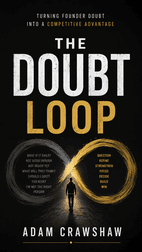
Patricia Cornwell's True Crime is an unflinching memoir tracing her path from a traumatized childhood marked by family instability and institutionalization to her groundbreaking career in forensic crime writing. Written for readers interested in trauma, creativity, and the real story behind her Kay Scarpetta novels.
Feature
Insta.Page
Blinkist
Shortform
Summary Depth
Full Chapter-by-Chapter
15-min overview
Section-by-section guides
Audio Narration
✓
✓
✓
Visual Mindmaps
✓
✕
✕
AI Q&A
✓
✕
✕
Quizzes
✓
✕
✕
PDF Downloads
✓
✕
✓
Price
$89.99/yr
$146/yr (PRO)
$199/yr
*Competitor data last verified July 2026.
1 Page Summary
Patricia Cornwell’s True Crime: A Memoir is an unflinching account of how a lifetime of avoiding the past finally collides with the need to reclaim it. The book began when a proposed television series required her to write an autobiographical treatment—work she found so alien that she abandoned the project and wrote this memoir instead. With the help of her sister-in-law and archivist Mary, Cornwell excavates a childhood marked by profound instability: her mother’s cycles of depression and mania, which led to the burning of the family’s belongings and multiple hospitalizations; her father’s abandonment and threatening behavior; and her own placement with a harsh missionary family. These early chapters establish a central tension: intense feeling etches scenes into memory, and Cornwell reads this as evidence that life offers self-corrections to those willing to make them.
The book traces her path from a traumatized child to a world-renowned author, showing how her investigative instincts were forged in both personal and professional crucibles. Cornwell details her struggles with anorexia and bulimia, her institutionalization as a teenager, and the mentorship of Ruth Graham, who insisted she write her story truthfully. It is this drive for authenticity that leads her to a career in journalism and, eventually, to the Richmond medical examiner’s office, where she witnessed autopsies and homicide investigations firsthand—experiences that inspired her to create the character of Kay Scarpetta. The memoir interweaves her professional milestones—winning the CWA award from Princess Margaret, meeting President Clinton, and her controversial investigation into Jack the Ripper—with the personal reckoning of her father’s death, the end of her marriage, and her evolving relationships with key figures like Ruth Graham and her mentor Charlie Cornwell.
Distinctive for its refusal to offer a simple redemption arc, the book is for readers interested in the intersection of trauma, creativity, and forensic science, as well as fans of Cornwell’s fiction seeking the real story behind her work. Cornwell’s approach is that of a journalist investigating her own life: she presents scenes with unflinching detail and acknowledges the limits of memory and the impossibility of a single, tidy narrative. What readers gain is a portrait of a woman who turned profound personal pain into a groundbreaking career, and who ultimately finds that revisiting the past—however painful—is the only way to understand the person she has become. The memoir closes on a note of continuity rather than closure: as she finally brings Scarpetta to the screen and says goodbye to Charlie, she suggests that those who shaped us remain with us, not as ghosts, but as integral parts of who we are.
Cover
Overview
The book says it's true, but then admits it changed some details. So what should you believe? Patricia Cornwell's True Crime: A Memoir came out in May 2026 from Grand Central Publishing, with a cover photo by Annie Leibovitz and design by Terri Sirma. Cornwell kept the copyright herself through Cornwell Entertainment, Inc., which shows she's in control of her story. She dedicates the book to Staci, forever, and to everyone who helped along the way. An epigraph dated April 17, 1980, from Patsy Daniels, says we'll all be gone someday, moving on like pilgrims. The contents page lists 48 numbered chapters, a photo section, acknowledgments, an author bio, and a list of her other books.
Key Takeaways
The dedication to "Staci, forever" and the epigraph about pilgrims put a long-standing personal bond at the heart of the book before you even start reading—so you know this isn't just a cold case file.
Cornwell kept the rights herself, which means she's the one calling the shots on how her life story gets told, not some publisher.
The epigraph from 1980, sitting in a book published in 2026, makes you feel like the whole memoir is a memory she's carried for decades, not something she just thought up recently.
With 48 chapters, then photos, acknowledgments, and a bio, you get a sense the book will mix fast-paced storytelling with real images and a personal sign-off—so you're in for both action and reflection.
The cover photo and design are a deliberate choice that shapes how you see the memoir from the first glance—Leibovitz's name alone tells you this image was meant to say something about who Cornwell is.
Key concepts: Cover
Cover
Publication and Control
Published May 2026 by Grand Central Publishing
Cornwell retained copyright via her own company
She controls her life story's narrative
Personal Framing Devices
Dedicated to Staci, forever, highlighting a lasting bond
1980 epigraph about pilgrims sets a reflective tone
Memoir framed as a decades-long memory, not recent
Structure and Visual Identity
48 chapters plus photos, acknowledgments, and bio
Mix of fast-paced storytelling and personal reflection
💡 Try clicking the AI chat button to ask questions about this book!
What drove me to it
Overview
A lifetime of refusing to look back collides with an unexpected need to account for a past that others have misrepresented. The impulse to tell true stories raises a harder question: what drives someone to revisit what they would rather leave behind?
Origins of the memoir
A proposed television series about her life required an autobiographical treatment, work she found so alien that she quit and wrote this memoir instead. Sister-in-law Mary, her archivist for more than twenty years, helped excavate the past. Her brothers, Jim and John, suppress distressing episodes, but she cannot: intense feeling etches scenes into memory like light into a photographic negative, which she reads as evidence that life offers self-corrections to those willing to make them.
The Davidson mentor
At twenty, in the summer of 1976, she transferred to Davidson College and began a novel-length account of her first nineteen years, mailing chapters to Charlie Lloyd, the English professor who became her mentor. Lloyd, self-taught in seven languages, refused a doctorate; when President Sam Spencer pressed him, he answered, “Who would examine me?” His critiques were honest but kind, and in her fractured, rule-ignoring sentences he found a “jolting and annoying” staccato.
Forum
Her first title alluded to a George MacDonald fairy tale; the book became Forum, named for the Roman site of legal trials. The Latin forensis, “of the forum,” is the root of forensic, meaning matters of interest to the courts, a connection she missed in college. Typed on a pawnshop Royal typewriter, Forum ran three hundred pages, an autobiography disguised as fiction. On August 29, 1977, she finished the first draft, writing that even a dusty closet-box fate would not have stopped her.
Research costs
She abhors violence, which is why she writes about it, yet people assume she relishes morgues, death-row interviews, and executions. The research is nearly unbearable, and exposure has not callused her. She remains squeamish and tearful at cruelty, and keeps an unspoken list of food aversions:
beef liver
steak tartare
borscht
Hypervigilance makes ordinary settings foreseeably fatal:
an escalator can cut a careless rider to ribbons
scaffolding can collapse overhead
a roadside backhoe sits too close to traffic
a loitering stranger might be a serial killer
Against discouragement
Nothing came easily, even after first publication at twenty-eight; her early life was, in her telling, a string of failures that convinced her she might die young, possibly by her own hand. Her advice to artists is to persist, because the purpose of a season often appears only later. In January 2025, reading Forum for the first time in decades, she felt her younger self, Patsy Daniels, and the author she became meet at last.
Key Takeaways
The scenes that refuse to fade are not simply wounds; the same emotional intensity that etches them is what makes self-correction possible.
A mentor's legitimacy rests on honest criticism softened by kindness, not on credentials, and refusing institutional examination can itself be an assertion of authority.
Autobiography is a forensic enterprise: the title Forum restores the legal root of forensic and treats memory as evidence to be tried.
Confronting violence never becomes routine; remaining tearfully sensitive is the condition that allows the writer to do the research at all.
The failures that precede a first publication are not a final verdict, since a later season can reveal their purpose and reconcile the younger self with the one who survived.
Key concepts: What drove me to it
What drove me to it
Origins of the Memoir
TV series proposal led to quitting and writing memoir
Sister-in-law Mary helped excavate the past
Brothers suppress distress; she cannot forget
Intense feeling etches memory like photographic negative
The Davidson Mentor
At twenty, wrote novel-length autobiography, mailed chapters to Lloyd
Lloyd self-taught in seven languages, refused doctorate
His critiques honest but kind
Found her staccato style 'jolting and annoying'
Forum and Its Forensic Root
First title from fairy tale; became Forum
Forensis means 'of the forum', root of forensic
Typed on pawnshop Royal, 300 pages disguised as fiction
Finished first draft August 29, 1977
Research Costs and Sensitivity
Writes about violence despite abhorring it
Research nearly unbearable; exposure hasn't callused her
Keeps food aversions: liver, tartare, borscht
Hypervigilance sees fatal risks in ordinary scenes
Against Discouragement
Early life felt like string of failures
First publication at twenty-eight; nothing came easily
Advises artists to persist; purpose appears later
Reading Forum in 2025 reconciled younger and older self
1
Overview
A snowed-in January should mean sledding and snowmen, but inside the house a mother is burning her children’s belongings, rationing empty cupboards, and muttering about God’s robes. The nine-year-old boy feels the dread but cannot understand the calamity taking shape around him.
In January 1966, the nine-year-old boy wakes to his mother frantically moving through their snowbound Montreat, North Carolina house. Weeks of storms have stranded the family, and his obsessive-compulsive mother, isolated with three boys, has snapped. Jim, the daredevil older brother, scrambles to the attic to hide his favorite Levi’s; little John cries as his teddy bear goes into the fireplace, where she burns clothing, toys, and mementos. She tells the boy they will get “white things” later. The breakdown stems from her marriage to Sam Daniels, a Miami attorney she feared would kill her, and from her need to erase every trace of that life. The boys only sense that their world is ending.
Key Takeaways
The mother’s breakdown is not a random unraveling but the explosion of a terror she has carried since her marriage to an abusive attorney; the isolation of the storms merely gives it nowhere left to hide.
Incinerating her son’s clothes and toys is her way of imposing a boundary: nothing that came from Sam’s orbit may survive into the household’s clean future, whatever the cost to the children.
Jim’s scramble to preserve his Levi’s and John’s weeping for the teddy bear expose the boycott as unilateral, forcing each son to either redeem one object or surrender to grief.
The boy experiences the morning as a total rupture even though he has no access to the marriage that produced it, so the event arrives in memory as devastation without explanation.
Key concepts: 1
1
The Mother's Breakdown
Obsessive-compulsive mother snaps in snowbound isolation
Marriage to abusive attorney Sam Daniels fuels terror
Burning belongings erases traces of her past life
The Boys' Experience
Nine-year-old narrator senses dread without understanding
Jim hides Levi's; John weeps for teddy bear
Children face unilateral destruction of their world
The Morning's Aftermath
Event becomes memory of devastation without explanation
Mother promises 'white things' for a clean future
Rupture marks end of childhood innocence
2
Overview
She was born on June 9, 1956, at 6:56 a.m., seven hours after a total solar eclipse. Dr. William Mixon delivered her at Doctors Hospital in Coral Gables. By her first birthday, she weighed twenty pounds and was a calm baby who never crawled. Her weak ankles were probably inherited—her half-sister Rona wore braces. Speech came late, but her inner thoughts ran early, and she credits that chattering mind with drawing her to writing. A January 1961 report noted teasing and excessive talking.
The doubloons
When a classmate, perhaps Maria, lost her family’s house to an electrical fire, she gave Maria six fake gold doubloons, her most treasured possession. Maria treated them with contempt, and a playground shove did not win them back. Her father called it a waste and said she set herself up to be victimized. Decades later, as agent Esther Newberg negotiated lucrative deals, he still warned her not to spend or give everything away.
Fishing trips and fear
On pre-dawn fishing trips with her father and brothers, the slow channel sparked invented explanations: no-wake buoys guarded sleeping manatees; mangroves looked like trees about to run; the Big Dipper might spill milk or stardust. On open water she pretended to balloon and be reeled back. Fear surfaced too. Snakes and sharks unsettled her, and a peacock fanned its tail because, her father said, it sensed fear, which made it her fault. Wanting to withdraw like a hermit crab, she later learned to stop letting fear show.
Key Takeaways
Her writerly origins lay in an inner monologue that predated spoken language, so the quiet child was never mentally idle.
Giving the doubloons to a classmate who lost her home brought back neither gratitude nor recovery. The lasting lesson came from her father, who kept warning her not to give everything away as her earning power grew.
Predawn fishing taught her two habits: she turned a dull, threatening channel into material she could narrate, and she learned to hide fear because visible fear could be blamed on her.
Key concepts: 2
2
Origins of a Writer
Born June 9, 1956, after solar eclipse
Calm baby who never crawled
Speech late, inner thoughts early
Chattering mind drew her to writing
The Doubloons Lesson
Gave fake gold doubloons to fire victim
Classmate treated gift with contempt
Father called it a waste
He warned against giving everything away
Fishing Trips and Imagination
Predawn trips with father and brothers
Invented stories about channel sights
Pretended to balloon on open water
Turned dull channel into narratable material
Fear and Self-Protection
Snakes, sharks, and peacocks unsettled her
Father blamed her for visible fear
Wanted to withdraw like hermit crab
Learned to stop letting fear show
Key Takeaways
Inner monologue predated spoken language
Quiet child was never mentally idle
Giving brought no gratitude or recovery
Fear hidden because visible fear was blamed
You've reached the end of the free chapters
Next chapter: “3” is locked
Keep reading True Crime — and unlock all 700+ book summaries with audio, mindmaps and AI Q&A.
$0.00 due today · 7 days free, then $89.99/year ($7.49/mo) · Cancel anytime before day 7
Patricia Cornwell is a bestselling American crime writer best known for her long-running series featuring medical examiner Dr. Kay Scarpetta, which began with *Postmortem* in 1990. A former crime reporter and computer analyst for the Office of the Chief Medical Examiner in Virginia, her expertise in forensics infuses her realistic, suspenseful plots. Her other works include the standalone novels *Hornet's Nest* and the non-fiction *Portrait of a Killer: Jack the Ripper—Case Closed*.
Frequently Asked Questions about True Crime
What is True Crime about?
This memoir recounts the author’s painful childhood in a fractured family, marked by a mentally ill mother, an absent and threatening father, and a disturbing early encounter with a predator. It details her institutionalization as a teenager, her struggle with an eating disorder, and her eventual path to becoming a celebrated crime writer. Alongside personal history, it explores her investigative work in forensics, her relationships with mentors like Ruth Graham, and the real-life cases that shaped her fiction.
Who is the author of True Crime?
Patricia Cornwell is the author, a renowned writer best known for creating the forensic thriller genre and the character Kay Scarpetta. The memoir reveals her personal journey from a troubled childhood in Montreat and Asheville to global literary fame, including awards like the Edgar and the CWA best first novel prize.
Is True Crime worth reading?
This is a compelling and unflinching memoir from a master storyteller who turns her investigative eye on her own life. It offers rare insight into how childhood trauma, institutionalization, and personal demons shaped the creator of Scarpetta. Fans of true crime and memoir alike will find a raw, surprising, and deeply human story.
What are the key lessons from True Crime?
A central lesson is that intense feeling and memory, while painful, can also serve as evidence for personal growth and self-correction. Another is that facing the truth about oneself—however dark—is essential to creative and personal survival. The book also emphasizes that professional success does not erase private wounds, and that healing often requires revisiting the past rather than fleeing it. Finally, it shows that people are shaped by their experiences, but also have the power to reclaim their own narrative.
📚 Explore Our Book Summary Library
Discover more insightful book summaries from our collection




![The Explosive Child [Sixth Edition] by Ross W. Greene PhD - Book Summary](/_next/image?url=https%3A%2F%2Fapi.insta.page%2Fstorage%2Fv1%2Fobject%2Fpublic%2Fsmall_bookcovers2%2FB08NP52GTW.png&w=3840&q=75)