True Crime Key Takeaways
by Patricia Cornwell
5 Main Takeaways from True Crime
Treat your past as a crime scene, not a verdict.
Patricia Cornwell calls autobiography a forensic enterprise: she re-examines childhood destruction, her father's suicide, and the orphanage as evidence rather than as self-blame. By looking at memory the way Scarpetta looks at a corpse, she can correct old verdicts and discover what actually happened.
Trauma can create compliance; self-awareness rebuilds agency.
The same girl who was groomed by an abuser later sat motionless while a celebrity pressured her for six hours and endured a therapist who called his molestation treatment. What broke the spell was self-awareness: naming abuse, refusing institutional cover-ups, and telling the truth in fiction and memoir.
Meaningful work and steady mentors are the real healing.
Working in the medical examiner's office and recovering from an eating disorder were one achievement for Cornwell; taking a real role in death investigation gave her the control writing required. She also needed mentors who offered honest criticism softened by kindness, plus patrons and modest invitations that only asked her to practice.
Protect your story and your work with hard boundaries.
From keeping the rights to her own book to using a single-author clause against a publisher, Cornwell made legal and financial control part of creative survival. She refused a secure Miami Herald offer to protect Scarpetta, built soundproof writing spaces, and ended a marriage rather than sacrifice her work.
Authority comes from direct experience, not inherited labels.
Scarpetta emerged when Cornwell stopped writing a traditional whodunit and let an examiner work in a real morgue with real forensic procedure. She verified clues at a body farm, flew helicopters, handled pipe bombs with ATF agents, and learned to trust physical evidence over official assumptions or stereotypes.
Executive Analysis
Together these five takeaways build the memoir's central argument: trauma is not a closed verdict but an open case. Cornwell applies to her childhood and adulthood the same forensic habits she gives Kay Scarpetta: treat memory as evidence, name abuse rather than comply with it, find healing in work and trustworthy mentors, defend the work with legal and emotional boundaries, and acquire authority through direct experience. Recovery and authorship are the same investigation; she does not explain away pain but follows its physical traces until she can reenter the room where her younger self was silenced.
True Crime matters because it refuses the usual split between the crime writer and the crime. It sits at the intersection of investigative true crime, literary autobiography, and professional memoir, and it gives readers a usable method instead of spectacle. For anyone who has survived family collapse, private violation, or professional rejection, the book demonstrates that self-correction is possible when emotional intensity becomes precise observation, and that success is sustainable only if the author keeps ownership of her story. Cornwell's central lesson is practical: the same care used to examine a corpse can be used to examine a life.
Chapter-by-Chapter Key Takeaways
Cover (Chapter 1)
The dedication to "Staci, forever" and the epigraph about pilgrims put a long-standing personal bond at the heart of the book before you even start reading—so you know this isn't just a cold case file.
Cornwell kept the rights herself, which means she's the one calling the shots on how her life story gets told, not some publisher.
The epigraph from 1980, sitting in a book published in 2026, makes you feel like the whole memoir is a memory she's carried for decades, not something she just thought up recently.
With 48 chapters, then photos, acknowledgments, and a bio, you get a sense the book will mix fast-paced storytelling with real images and a personal sign-off—so you're in for both action and reflection.
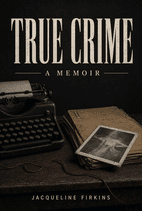
The cover photo and design are a deliberate choice that shapes how you see the memoir from the first glance—Leibovitz's name alone tells you this image was meant to say something about who Cornwell is.
Try this: Retain ownership of your life story from the first page, using dedications, epigraphs, and visual framing to show whose memory is being told.
What drove me to it (Chapter 2)
The scenes that refuse to fade are not simply wounds; the same emotional intensity that etches them is what makes self-correction possible.
A mentor's legitimacy rests on honest criticism softened by kindness, not on credentials, and refusing institutional examination can itself be an assertion of authority.
Autobiography is a forensic enterprise: the title Forum restores the legal root of forensic and treats memory as evidence to be tried.
Confronting violence never becomes routine; remaining tearfully sensitive is the condition that allows the writer to do the research at all.
The failures that precede a first publication are not a final verdict, since a later season can reveal their purpose and reconcile the younger self with the one who survived.
Try this: Treat your most painful memories as evidence to be re-examined, and let honest criticism softened by kindness, not sheer credentials, guide your self-correction.
1 (Chapter 3)
The mother’s breakdown is not a random unraveling but the explosion of a terror she has carried since her marriage to an abusive attorney; the isolation of the storms merely gives it nowhere left to hide.
Incinerating her son’s clothes and toys is her way of imposing a boundary: nothing that came from Sam’s orbit may survive into the household’s clean future, whatever the cost to the children.
Jim’s scramble to preserve his Levi’s and John’s weeping for the teddy bear expose the boycott as unilateral, forcing each son to either redeem one object or surrender to grief.
The boy experiences the morning as a total rupture even though he has no access to the marriage that produced it, so the event arrives in memory as devastation without explanation.
Try this: Investigate a loved one's symbolic destruction as a boundary statement before mourning the objects.
2 (Chapter 4)
Her writerly origins lay in an inner monologue that predated spoken language, so the quiet child was never mentally idle.
Giving the doubloons to a classmate who lost her home brought back neither gratitude nor recovery. The lasting lesson came from her father, who kept warning her not to give everything away as her earning power grew.
Predawn fishing taught her two habits: she turned a dull, threatening channel into material she could narrate, and she learned to hide fear because visible fear could be blamed on her.
Try this: Narrate threatening situations to yourself in the moment, give generously, but set a hard limit so you don't give your whole self away.
3 (Chapter 5)
Treat every family fight as a second conversation: the visible grievance masks a deeper wound about who was loved and who was ignored.
Love can be offered as food while emotional questions stay forever unasked, and that split can later surface as a life-threatening illness.
A person who answers tears with legal arguments and handles bullies through stealth revenge is still running from the confrontation he claims to master.
The child who absorbs a parent’s lesson that mirages are not worth chasing will chase anyway, making the futility itself part of his character.
Listening from behind a door, the child began to wonder if she and her brothers were the ghosts of the abortions her mother had.
Try this: Listen beneath every family fight for the deeper question of who was loved, and do not let food, legal arguments, or stealth revenge substitute for honest confrontation.
4 (Chapter 6)
The crusade is a turning point only retrospectively; before that night it was one gathering among many, and its historical weight comes from the mother’s private response.
The father’s Cuba case was a legitimate legal theory about sovereign acts, but in the Cold War atmosphere that distinction did not survive contact with neighbors or judges.
The mother’s deepening religious commitment and the father’s contempt for it formed the family’s central tension, and the conversion redirected the depression this tension had been deepening.
The chapter ultimately asks you to weigh the mother’s conversion as synchronicity, a meaningful alignment of prayer and event, rather than as psychological compensation for a failing marriage.
Try this: Mark a turning point from the private response it triggers, and hold open the possibility that meaningful timing is not always psychological compensation.
5 (Chapter 7)
The girl’s Santa disbelief was not an imagination failure but an early warning system; by five she already knew that a rotating cast of Santas meant no individual adult was accountable to her.
Christmas fused gift and loss into one scene: a wrong-color bicycle and a father who stopped long enough to leave, after which the yearly chore of taking down the tree became the ritual substitute for his return.
Shirley’s pink sweater was a test of loyalty, and wearing it was how the girl kept a place in her father’s new life, whatever her mother thought of the woman who had taken him.
The overheard phone call converted grief into knowledge: her mother’s disgust proved the departure was a choice for someone else, not a mistake that could be repaired, and the original family was gone for good.
Try this: Let childhood rituals and overheard conversations reveal what a departure really meant, even when they contradict the comfortable story you were told.
6 (Chapter 8)
A verdict can be officially accepted and still rest on almost nothing: no eyewitnesses, no colleagues, only a teenager’s guesses.
Grief converts uncertainty into proof, so a daughter’s conviction that suicide meant abandonment becomes the inheritance passed to her children.
The everyday routines of an orphanage, down to calling children inmates and renaming them, show how institutions strip identity under the cover of care.
A teacher’s public cruelty can teach a six-year-old the lasting lesson that family rupture was her own doing, not the teacher’s or the father’s.
Unexplained fears in later life, such as panics around male staff, can point back to childhood wounds that were never acknowledged in the family story.
Try this: Interrogate official verdicts that rest on almost nothing, and refuse to let institutions or teachers make family rupture into a child's fault.
7 (Chapter 9)
"Predators do not stumble onto unsupervised children; they deliberately look for children with no adult watching and turn that neglect into access."
"A child's pleasure at being singled out by an adult is not complicity: groomers weaponize a child's hunger for specialness to make compliance feel wanted."
"The way an abused child is questioned can leave deeper damage than the assault itself if it convinces her that her body is evidence against her and that she invited it."
"Gifts and clothing bans cannot carry the message a child needs after abuse: she was not at fault, and she is not ruined."
Try this: Recognize that predators deliberately target unsupervised children, and counter grooming by telling every child, early and often, that abuse is never their fault.
8 (Chapter 10)
The father’s “kidnap” is not a game at all; his careful hiding of the car and his announcement to the mother reveal that the real threat to the children is the man leading the outing.
Perry Nichols’s trophy den, built around an elephant that took six shots, presents a socially respectable form of violence that disturbs the daughter more than her father’s impulsive behavior does.
When the father rows away alone, the daughter becomes the only person present who notices that the adult supposedly in charge has turned himself into the one needing rescue.
Perry’s recovery of the father and the unplanned overnight stay leave the children under two men whose authority rests on performance and possession, not on any genuine protection of the young.
Try this: Ask which adult genuinely protects children and which one simply performs ownership or needs rescuing; safety depends on telling the difference.
9 (Chapter 11)
The father's collapse broke the family internally before the mother broke it geographically, making her 800-mile escape a necessary response to his attempt to give the children away.
What got them out of Miami and into safety was not institutional help but the improvised actions of Coast Guard, doctors, and a chance encounter with Grier Davis in Montreat.
Montreat sheltered the family as a Presbyterian retreat town where children could roam and find summer activities, but the mother’s wariness around the friendly, dying Mr. Crimm shows that the earlier sexual violation still governed their daily lives.
The father remained present even from a psychiatric distance: by sending alimony and child support once he learned the address, he kept a financial claim on the home he had tried to destroy.
Try this: Build informal rescue networks when formal institutions fail, and remember that financial support from an estranged parent can be a claim rather than a cure.
10 (Chapter 12)
Company can intensify loneliness instead of curing it, especially when a child learns to smile on command and is rewarded with a label rather than a friend.
Nothing begins without a grip: a woven piece, like a written one, takes its direction from the first secured loop, and that loop may be cut or shifted later without discrediting the work.
Caring for a wild thing means moving it with its roots intact so it can live somewhere new, and leaving the rarest ones behind even when you want them.
A wish made with shut eyes and left unanswered lands as blame on the child who made it, but that blames belongs to no real fault and never has to be carried.
Try this: Notice when company makes loneliness worse, and give care the way you would transplant something wild—keeping roots intact and leaving rare things in place.
11 (Chapter 13)
A child’s address can mark her more sharply than anything she says or draws, and Patsy learned that Montreat’s wealth quietly set her apart from the children who rode the bus with her.
The afternoon bus revealed a home life that Patsy did not share: children sent off to start the school day while parents worked, a schedule that felt ordinary to them but looked like a different world to her.
Patsy’s adult impatience with lateness is a direct inheritance from two missed rides, so her hurry is less a habit than a refusal to relive that powerless wait.
Kindness and cruelty coexisted in her childhood landscape: the same community that held a storekeeper who warmed a child’s hands and tamed squirrels could also produce people who shot those squirrels, and Patsy believed the worst without surprise.
Try this: Let missed rides teach you what punctuality protects, and acknowledge that class lines can divide children even when kindness and cruelty share one landscape.
12 (Chapter 14)
Household money distress is legible to a child through details like a one-dollar overdraft call or a late monthly check, and it fuses in her mind with her mother’s unraveling, leaving her with a rescue duty she cannot discharge.
Mr. Owl supplies what the adults around her do not: a social theory of the stolen pencil, in which visible favor draws envy, like chum in water, so the usable strategies are to hide special treatment and to excel at something others want.
Playground athleticism and belonging are different rewards: Patsy becomes first pick at recess yet still endures lunchroom rejection, and the one friendship that crosses the class line, with Deborah, cannot overcome the unwritten rule that keeps mountain children out of her neighborhood.
The child who feels like a broken toy with only drawing and stories to lean on is repeatedly approached by uninvited presences, from Mr. Owl to the author's later characters Kay Scarpetta and Jack the Ripper; they push her toward the things she fears, because the path runs through dark places.
Try this: Treat a child's sense of rescue duty as a symptom, solve money problems as an adult, hide special treatment to avoid envy, and keep building skills others want.
13 (Chapter 15)
The same town that filled with vacationing strangers each summer shrank to a few hundred permanent residents who watched one another’s lawns, teaching the girl that being discussed was an ordinary condition of being known.
The phone call in spring 1965 released a first surge of delight in the daughter, then a silence that sent her to her closet; her father’s newfound happiness and her place in his life had suddenly become incompatible.
The August visit’s jokes and gift-giving, from the Laddy Burger to the tennis racquets, came from a father who could not see that a dog might be his daughter’s closest companion or that a racquet could not fill an absent parent.
Laddy’s disappearance, following the mother’s unraveling and echoing her earlier surrender of Snuffy to the pound, most plausibly lay at her door, making the fate of the dog a battlefield where the parents’ old grievances were fought out through the child.
Try this: Notice when a parent's new happiness makes you hide in a closet, and refuse to fight adult grievances through pets or childhood belongings.
14 (Chapter 16)
A parent’s most intimate confessions turn a nine-year-old into a keeper of secrets, so the child protects the very person failing to protect her.
What neighbors call religious mania, an outcast calls divine clarity. It’s the same behavior, seen from opposite sides of belonging.
The gift that doesn’t fit becomes the child’s first deliberate act of making amends, shifting an adult’s lesson about generosity away from the giver’s intention.
The stories left untold, like the orphanage years, mark the child more than the stories told, because silence shows what shame has made too painful to say.
In a world where courtship arrives as kerosene and roasted opossum, children learn to trust a mother’s warnings about danger, no matter how strange they look to outsiders.
Try this: Refuse to become a child secret-keeper for adult pain, and trust your own perception of danger even when it looks strange to outsiders.
15 (Chapter 17)
The Christmas fire drill rehearsed the destruction the mother later carried out: her fear was already pointed at her own mind, and the January burning of the family’s clothing turned that imagined catastrophe into fact.
The children’s survival rested on a chain of informal rescue, from the plow driver’s choice to believe the mother’s false story to Ruth Graham’s willingness to take in people as readily as she took in salvaged building materials.
The note Ruth received exposes the abandonment as deliberate rather than accidental: the mother saw herself sailing away and assigned Ruth the task of raising the children in her kingdom.
Ruth’s inability to take all three children complicates the rescue, and the author’s guilt about wanting to stay records how a child could experience her mother’s breakdown as a private failure rather than a deliverance.
Try this: Accept informal rescuers in a family collapse, but release the guilt of being the child who wanted to stay with the rescuer instead of the mother.
16 (Chapter 18)
Lenore's veto on asking about Pat's return did not just withhold information; it made the mother's hospitalization an unmentionable fact the boy had to carry alone.
The Saunderses' divided care worked at cross-purposes: Manford asked God to heal Pat, while Lenore's severity signaled that the child's own fears were an imposition.
The move from Montreat to Appalachian Hall was experienced by the boy not as a change in housing but as a fall from grace, since Ruth Graham's refusal became proof that he had failed a divine test.
Try this: Name a parent's hospitalization aloud to the children, and tell a child that moving to a psychiatric place is not a fall from divine grace.
17 (Chapter 19)
Lenore’s severity is traceable to a chain of hardship, but tracing that chain neither excuses her cruelty nor softens its effect on the child.
The girl’s open fondness for Manford was read as a betrayal of Lenore, exposing how a household organized around wifely vigilance transformed ordinary affection into a transgression.
A girl’s failure inside Lenore’s domestic order could be made to explain a mother’s illness, showing how children inherit blame for adult suffering.
Montreat held segregation and a celebrated Black visitor in the same civic moment, so the town’s welcome to King did not erase the distance between Cora’s quarters and the church.
The Saunders’ decades of missionary life lingered in the marriage long after they left the Congo, making African trauma part of the everyday discipline of the American home.
Try this: Trace a caregiver's cruelty to its roots without excusing it, and make households safe enough that ordinary affection is never read as betrayal.
18 (Chapter 20)
Patsy's confinement and the cancellation of the escape to Miami show that children's lives are decided entirely by adult legal and custodial arrangements, with no weight given to the child's own wishes.
The invented companion, Dickie Bird, functions less as a lie than as a lifeline, a private refuge that Patsy must protect even from her own prayers.
Lenore's domestic lessons are a vehicle for emotional abuse, teaching Patsy that her mother's collapse is her fault and that catastrophe is the only safe expectation.
The household's religious rhetoric, from grace at meals to prayers for forgiveness, is redeployed as a tool of surveillance and accusation aimed directly at Patsy.
Patsy's daily terror is compounded by scarcity: even foraging for food is treated as a moral offense worthy of institutional punishment.
Try this: Give a child a private refuge even if adults dismiss it as a lie, and never use religious language to turn needs or hunger into moral offenses.
19 (Chapter 21)
A child’s creative work needs adult protection to survive; dismiss it as lying or idleness and it withers, honor it and it becomes the ground of gratitude and confidence later in life.
A mother’s return can heal the household’s shape without repairing her own numbness, so the child’s emotional recovery may fall to other adults whose steadiness matters more than their official role.
The people who seem most nurturing can also hand down the darkest truths: one woman’s custards and encouragement coexisted with memories of abandoned infants and bound feet, showing that care and inherited pain often travel together.
Any treasure that matters, whether a fossil, an arrowhead, a holed penny, or a usable story, reaches the person who stays active and receptive rather than the one waiting in place for it to arrive.
Try this: Protect a child's imaginative work, and let treasures find you by staying active and receptive instead of waiting in place.
20 (Chapter 22)
The tennis dreams at the start are the yardstick for the chapter: this child was still capable of a normal future, and what followed was the interruption of that capacity, not its absence.
Read the 1969 episode as the fourth-grade breakdown returning under the same roof, with Lenore’s fantasy of carrying Jesus and the stay at Appalachian Hall instead of real care.
The cruelty toward Cassi marks the true moral boundary: abuse the author could forgive when aimed at herself became unforgivable once it was inflicted on a helpless dog.
Linda Hile supplied the mothering that Lenore would not, while Manford’s later drift into an itinerant life selling Cherokee souvenirs turned him into someone the author could pity, and her promised purchase honors that pity.
Try this: Recognize that a child's breakdown can recur under the same roof, and treat cruelty to vulnerable beings as the moral line you will not cross.
21 (Chapter 23)
The D Hall punishment for willfulness was not corrective; it left her with a writing speed that persists into adulthood, where each book-signing tour duplicates the old experience of writing her name five hundred times.
The five rules she kept in her clippings made her a fierce high school player, but Gallwey's Inner Game added the decisive lesson that unselfconscious focus matters as much as natural talent.
Her teenage years were limited by things she couldn't control: her mother never watched her play, valued only looks after defeat, banned a Black boyfriend as impossible, and offered no word for a girl who liked girls.
Title IX opened the boys' varsity door for her and she went unbeaten, yet she later suspected that opponents' fear of losing to a 110-pound girl made the matches an unfair test in her favor.
She learned early to want what she could not have, abandoning Bobby Ferguson when he was available and only admitting she loved him after he was married.
Try this: Train for unselfconscious focus instead of external validation, and examine the habit of wanting only what you cannot have.
22 (Chapter 24)
The collapse of an implausible athletic dream did not clear the way for better possibilities but instead pushed the dreamer into a punishing regime of starvation, bingeing, and purging that gave her a new, lethal object of control.
Walking away from the Trevi Fountain without a coin was not a superstition but a clinical determination that she had no future, a verdict contradicted by the later visits she made to Rome to research her novels.
The rites of admission at Appalachian Hall, including the nude examination and Dr. Bill's joke about her red ears, worked less to evaluate her than to strip her of privacy, identity, and any sense of consent.
Because her diagnosis descended from her mother's, the same antipsychotic was prescribed for her without asking what it would mean for her body, and its numbing effect left her indifferent to Dr. Bill's warning about organ failure, thereby reproducing the very despair it was supposed to treat.
Try this: Refuse to let a collapsed athletic dream become a punishing control regime, and question treatment that borrows its diagnosis from a parent.
23 (Chapter 25)
A patient who hides her medication is not merely failing treatment; she is showing the staff exactly how she intends to die, and a system that reads the act as defiance will miss the depression underneath.
Once a therapist has decided a woman’s history is really about sex, his own molestation of her becomes, in his mind, another therapeutic intervention rather than a crime.
Childhood abuse conditions a form of compliance that recurs in adulthood, so the same woman who endures a therapist’s groping can sit motionless while a celebrity pressures her for six hours.
When abuse is reported inside the institution, the institution protects itself by renaming the abuse as clinical method, making the patient’s complaint sound like a symptom of the very phobia she was being “treated.”
The lasting damage is not the assault itself but the mirror it holds up: a victim kept telling herself she liked herself while the approval drained away day by day.
Try this: Read hidden medication as a despair signal, not defiance, and document institutional abuse because renaming it as clinical method is a common cover.
24 (Chapter 26)
Two months of hospitalization did not change her condition: she agreed to try Navane again, hid it, and went back to purging, then signed herself out no better than she had arrived.
Her father paid the $5,500 bill by cashing out the children's inheritances, leaving her with nothing and turning her treatment into one more family wound.
What she met outside the hospital was another set of impositions: neighbors made her a prayer project, Adger made exorcism conditional on accepting the gift of tongues, and Seth abandoned her after she pulled her hand away.
She rejected suicide not out of hope but out of refusal to let anyone be blamed for her death, and Calvin's invitation to sing at vespers helped most because it only asked her to practice.
Try this: Choose to survive for your own sake rather than to protect others from blame, and accept modest invitations that only ask you to practice.
25 (Chapter 27)
What a dying man asks to receive can be a family heirloom, but what he gives is the reorientation that happened years earlier.
A rupture during a sermon can turn into a lifelong bond when the minister answers with a private meeting rather than with punishment.
A false happy ending, once admitted to be false, clears the way for a truthful story to begin in longhand.
Work as humble as assembling wire flowers can supply the practical ground on which serious writing first takes hold.
A dean who watches a tennis lesson can see a student’s future more truly than test scores, and a family like the Abbotts can provide the rest.
Try this: Discard false happy endings so the truthful story can begin, and let humble work like wire flowers provide the ground where serious writing roots.
26 (Chapter 28)
Davidson’s academic standing was won through unconventional detours; the seven-draft B+ paper mattered less than the poems, epics, and the Dickens reconstruction that a museum later accepted.
Because the aid package stopped at tuition, her survival depended on patrons who stepped into the place of absent family, from the Bookers to the church that paid for dental work her father refused, and her current tipping culture stems from that debt.
The afternoon her mother spent preparing to die was interrupted only by Davidson’s unexplained pull to go home; the episode, like her eating disorder, was recorded in the language of intuition and will rather than of psychiatric illness.
Knowing love and not having it returned did not cripple Davidson: Charlie refused her declaration, yet chose the eve of her Oxford departure to name his affection as friendship, giving her a way to leave with her dignity intact.
Try this: Accept help from patrons and churches when family fails, and honor intuitive pulls that interrupt a crisis—then leave with dignity when love is not returned.
27 (Chapter 29)
A promise to write that never arrives tells you more than any letter could, and the waiting itself can become a creative practice if you let it.
Treat writing like a relationship: if you do not show up daily, the page stays empty, and fear, not lack of talent, is what keeps you away.
Revealing a long-hidden struggle to a friend does not guarantee it will be understood or addressed; a shared spiritual explanation can delay real help for years.
When someone treats you cruelly, what looks like rejection or crudeness may have a biological cause, and the memory of your own response can remain unregretted.
Try this: Show up to your creative work daily, and when you share a hidden struggle, do not let a spiritual explanation delay real help for years.
28 (Chapter 30)
The pencil-sabotaged graduate applications and the never-submitted manuscript were not self-defeat but early navigation: they cleared the way to a life where her work would go out into the world.
Printed blunders like Daffy Fuck and the obituary that killed a living man did earn her the worst-hire label, yet the same disregard for instructions let her call Dee Presley and turn a routine review into real reporting.
On the police beat, trust came from showing up with a barrel of Bojangles rather than paying the sergeant's price, from testifying against Angel when summoned, and from refusing to let the department's hatred of her paper become her own.
She found a front-page series and an investigative award where no assignment pointed, simply because she noticed the sex workers along the garage wall; a reporter's eye is what creates the story before the notebook comes out.
Ruth's guidance kept arriving late: the story told to her and the Chaucer book she asked back carried a note dated 1979 that went unread until 2025, help that felt as if it came from the other side because it ran on its own calendar.
Try this: Let apparent blunders and self-sabotage redirect you, build trust by showing up with what people need, and file away help that arrives decades late.
29 (Chapter 31)
A journalist who sees herself as solving crimes alongside police rather than merely reporting on them can end up chasing escaped killers in the dark, outside the protection that comes with simply observing.
A man’s admired public image was the instrument of his assault: she had no reason to distrust the invitation, and the abnormal effect of one glass of wine led her to believe she had been drugged before he raped her.
The pressure to suppress what happened came from those closest to her, not from the rapist alone: one friend warned that telling could cost her life, her husband interpreted the rape as consent, and the marriage ended as detectives had anticipated.
She never confronted the attack head-on with his name, so it surfaced instead through fiction in Postmortem, a BBC interview decades later, and a final journalistic act of persuasion that convinced Ruth Graham to be profiled by arguing that refusal would mute her influence.
Try this: Name sexual assault directly instead of letting it surface only in fiction, and do not let close friends or partners redefine it as consent.
30 (Chapter 32)
A personal promise from the subject is the one ethical warrant for an outsider to defy a family's objections to a biography.
Once an advance is paid and a contract signed, backing out becomes financially ruinous for both author and publisher, so opposition shifts from whether to how.
Contract terms can be wielded against an author, but a credible legal threat over a single-author clause can force a publisher to restore editorial control.
A book’s fate is not settled by its early reviews; the same subject who vanished under strain can later reclaim the relationship as one of deep affection.
Try this: Ask for the subject's personal promise before writing an outsider biography, and use contract terms or legal threats to keep editorial control.
31 (Chapter 33)
The dream in which Christie handed over the signed copy reads less like a prophecy than a job description: the inheritor of the mystery would come from reporting, not from the puzzle tradition.
A killer's intention is irrelevant once autopsy becomes routine; the corpse carries its own record of the event, and the scheme meant to mimic a natural cardiac death was undone by exactly that record.
The three failed manuscripts identify the true generic break: forensic procedure cannot be absorbed into the whodunit, so the examiner has to replace the erudite detective as the center of the story.
The morgue immersion and the recovery from her eating disorder were one achievement: by taking a real role in death investigation, Cornwell gained the control over her own life that let her write Scarpetta.
Try this: Put the professional examiner at the center of a crime story instead of the puzzle-solving detective; immersive technical work can be inseparable from personal recovery.
32 (Chapter 34)
A death certificate can record an assumption rather than a finding: the waitress’s burning car was labeled suicide until her links to drug dealers and the dead-end road she drove onto revealed she had been trapped and set alight.
Work among corpses left Cornwell more wary of the living, and the inscribed books she sent Ruth Graham, with boxes waiting for a reply that never came, became evidence of that distance.
An early failure in a subject need not set the limit of one’s ability: Cornwell left computer studies after three days, then learned Oracle under Gail Sauvager and built the OCME’s databases for three Virginia offices.
A creative career is often made possible by a partner’s material choice: Charlie cashed in stocks so Cornwell could write while he studied for the ministry, and the couple’s mutual decision against children protected that arrangement.
Stomach contents can overturn an official timeline when the examiner re-enacts the meal: Marcella duplicated and blended the same fried chicken to show Anne Vaden had eaten both servings, steering suspicion from the estranged husband to the man who had taken the master key.
Try this: Verify assumptions on death certificates by re-enacting the evidence, let a partner's material support fund your work, and master the databases your field needs.
33 (Chapter 35)
A stalled career broke open not because Cornwell invented a new character but because she finally let an existing one work in her real setting, telling the story from the medical examiner’s viewpoint instead of shielding readers from autopsy reality.
The Richmond serial killings gave Postmortem its raw material from an open case rather than cold history: Diane Cho died in her bedroom while her parents watched television, and Timothy Spencer was not identified until DNA testing linked him to the murders.
Death Bell became Postmortem through an external edit, not a polish: after the agent cut the character’s reflective interiority and demanded a sustained pace, the retitled manuscript qualified as a thriller.
The same months that produced her first credible novel ended her marriage, and the moment of acceptance came when Charlie broiled a single chicken breast for himself; Cornwell would not sacrifice her own work again, and love alone proved unable to keep a home together.
Try this: Set your existing character loose in your real setting and tell from the examiner's viewpoint before inventing something new.
34 (Chapter 36)
Charlie's rage was self-contempt directed outward, and Cornwell's recognition of that origin is what made further attempts to save the marriage untenable.
The discarding of her bridal things and the purchase of a Ruger .38 converted the rupture into a chosen self-remaking instead of a loss inflicted on her.
Four houses refused Postmortem in January 1989 before Scribner bought it from Cornwell for $6,000 in the same month, so consecutive rejections reveal more about timing and readership than about a manuscript's future.
Turning down the Miami Herald's feature-writing offer is the decision that made the Scarpetta novels a career rather than a single book, since security had to be refused before the series could continue.
The first local review and the symbolic rejection of Postmortem for its violence made the book look dead on arrival, but that verdict was a misreading of a turning point, not an accurate forecast.
Try this: Read a partner's rage as self-contempt, remake yourself through ritual and protection, and refuse secure offers that would end the work you actually want.
35 (Chapter 37)
The acclaim and money that followed Postmortem did not come with safety; each prize and advance multiplied the barriers she had to build against a public that had found her home.
Cornwell's cardiac arrhythmia turned celebrity into a clinical diagnosis, so her doctor told her to reduce stress as a medical treatment.
The end of the relationship with Merle in Austria taught her that hearts do not choose their destinations; accepting this makes romantic grief a matter of endurance rather than blame.
At Mauthausen, she could smell death in the empty barracks because of her morgue experience while Sulzbach detected nothing, leaving her alone with an odor that verified the camp's horror.
Try this: Treat success-related stress as a medical condition, accept romantic grief as endurance rather than blame, and trust sensory memories others cannot explain.
36 (Chapter 38)
Stay inside the physical details of violent death before making any moral judgment; a botched execution can become groundwork for fiction only if the detail is registered first.
No single demeanor reveals guilt on death row: some evasiveness argues for innocence, other absence seems barely human, and still other presence carries no conscience at all.
Executions do not give survivors closure; they only make the killer gone, while whatever is troubling about state killing belongs to the community that chooses it.
Cornwell’s leap from a $700,000 two-book sale to a $4.5 million deal came from switching agents, a change that briefly made her the highest-paid woman in fiction.
Hollywood reacts to violent crime material in two opposing registers: one star refuses for fear of echoing The Silence of the Lambs, the other seeks autopsies, FBI training, and intimacy with the subject.
Try this: Register the physical details of violence before making a moral judgment, and remain skeptical that any execution or demeanor can deliver closure.
37 (Chapter 39)
Prozac and alcohol together produced the speeding mania that ended in the crash, and the clarity she regained after stopping Prozac identifies the drug as the stronger destabilizer.
The accident's meaning stayed unresolved: Cornwell could not rule out that she had driven into the van deliberately, and that ambiguity, rather than a verdict, had to be folded into her recovery.
At Edgehill, pardon began with self-recognition: the flaws she resented in Lenore Saunders, her father, and Charlie were her own, so forgiving meant confronting herself.
With her mother refusing to visit and her father declining to discuss history, Cornwell effectively became her mother's parent, and she accepted the inversion rather than resisting it.
By ending the Columbia arrangement and dismissing the threatened suit, Cornwell protected writing as her own activity, then turned the crash's aftermath into research and watched Cruel and Unusual become an immediate bestseller.
Try this: Review medications as possible destabilizers, forgive others by recognizing your own flaws, and end arrangements that threaten your writing.
38 (Chapter 40)
Orrin Hatch became a supporter of FBI training only after touring a facility where the crisis was visible; dinners and conversation beforehand changed nothing.
Affection between a devout married man and an independent woman can be real without becoming an affair, provided each observes a boundary before the temptation gets that far.
An estranged parent and child may not need a public reconciliation; the useful intervention can be as modest as a professional introduction made by someone they both trust.
A glimpse of a helicopter in childhood can lie dormant for two decades and then return as a desire strong enough to justify training, mistakes, and a full license.
The anthropologist Bill Bass’s decomposing-subject laboratory enabled the author not just to observe death’s timetable but to run her own test, verifying what a coin would do to skin so a fictional clue would be true.
Try this: Show decision-makers a crisis directly rather than relying on dinners, let dormant childhood desires return as skills, and test your professional details experimentally.
39 (Chapter 41)
The president's private reading of O. J. Simpson's psychology mirrored Cornwell's own suspicion about Simpson's guilt, and Cornwell has now revealed this exchange to show how public crime and political power can intersect behind closed doors.
Cornwell's career high point, a number-one novel, coincided with personal coincidences through Agatha Christie's family, where a Christie inscription and the name Lucy blurred the line between her own history and her fiction.
Field research for her novels was punishingly concrete, from subway tunnels and helicopter surveys of Potter's Field to a qualifying dive in a Virginia river so murky that a cable nearly disabled her air supply.
Fame operated on Cornwell as a force that was simultaneously real and unreal, imposing public cruelty she could neither ignore nor satisfy, which pushed her to filter all media through Staci and to seal herself inside controlled writing spaces.
Cornwell's retreat into Lockgreen, her soundproofed office, and her headphones shows that sustaining a long writing career required not only stronger security but also an active defense against the attention her success created.
Try this: Filter public attention through one trusted person, and build controlled writing spaces because protecting attention is part of sustaining a long career.
40 (Chapter 42)
The kinship between Cornwell and Stowe rested not on the five-generation blood tie but on a temperamental match: both wrote from compulsion and made the abuse of power their lasting subject.
Even a writer as consequential as Stowe let most of the manuscript of Uncle Tom's Cabin be handed to autograph seekers, which is why her handwritten record now survives only in fragments and in attics; importance does not guarantee preservation.
The Richmond signing, under rebel flags and before thirty friends, was the present-day residue of the hatred Stowe had once faced, showing that the conflict she ignited is still geographically alive long after it has been settled elsewhere.
Ruth Graham's canary sang because it was solitary, and Cornwell treated writing as the same sort of response to aloneness, a creative production that grows out of emptiness rather than out of fulfillment.
In Montreat, the people who knew Cornwell at a distance judged her as a sinner while Billy, Ruth, and Calvin withheld judgment; knowing someone intimately does not require condemning what a public biography would use against them.
Try this: Protect your original manuscripts, write from solitude, and let intimate knowledge of someone—not public biography—determine whether you condemn them.
41 (Chapter 43)
Saw marks on bone can reveal the exact tool used, so even Elvis Presley’s death becomes a technical record as much as a tragedy.
A father’s dying words can be his final way of withholding love, and “How’s work?” can hurt more than an embrace would have helped.
When an affair becomes public through a crime, the person involved loses her privacy and becomes part of the evidence in the case.
When a mother refuses to accept either her daughter’s suicide or her estrangement, that daughter is left with no place in the family and no way to move forward.
Try this: Learn the technical record before judging a tragedy, hear even a parent's dying 'How's work?' as possible withholding, and accept that some mothers never give a place.
42 (Chapter 44)
No one can make another person's sexuality; the reunion with Charlie became possible only after Cornwell told him that neither of them ever held that power.
Charlie's later editorial harshness was not purely craft advice; when a former husband called her heroine cold and bitchy, the criticism was likely aimed at the woman behind the book.
The authority of crime writing is built through direct contact with investigators and disasters, from handling inert pipe bombs with ATF agents to watching a distillery burn.
Cornwell read the Paris crash as accident rather than conspiracy: unbelted passengers, a driver with carbon monoxide at four times normal, and an airbag sample that released no gas pointed her toward exhaust or mislabeled samples.
The threats to a public author are multiple and mundane, from a fake delivery uniform to a legal deposition, and by 2000 they had made constant surveillance and eventual relocation a normal part of Cornwell's private life.
Try this: Tell former partners the truth about what no one can make another person feel or be, build authority through direct experience with investigators, and treat security as normal once public exposure grows.
43 (Chapter 45)
The aristocratic suspects long blamed for the Ripper murders are baseless; the evidence points instead to Walter Sickert and his artistic depictions of violent intimacy.
The confirmation of Sickert’s childhood fistula by his step-nephew, combined with the match between his stationery and the Ripper letters, turns suspicion into a concrete forensic chain.
Incidental fakes and eerie coincidences, including the wet-varnish Venice painting, belong to the background noise of a decades-old cold case and do not disturb the core paper evidence.
Cornwell’s gift of £30,000 to Debbie Munro’s family shows that the historical investigation carried an ethical obligation to act on present suffering.
Try this: Follow the physical and paper evidence in a cold case, treat coincidences as background noise, and act on present suffering your research uncovers.
44 (Chapter 46)
Sickert’s claimed French alibi collapses because he was in London on 28 September, 5 October and 8 October 1888, while the Hill Hotel guestbook signatures were added only after the pages were filled.
Cornwell’s review of the envelope DNA leaves Sickert in the suspect pool and, with geneticists rejecting Kosminski, removes the leading alternative identification.
The Salem and Baton Rouge cases reveal the same criminal psychology: a sexually violent psychopath can appear likable and ordinary because those closest to him are the ones who trust him.
Evil, as the Salem material insists, does not die; Cornwell’s investigation treats the Ripper not as a closed historical puzzle but as a recurring threat hiding in respectable surfaces.
Try this: Check alibis against dated records, do not let racial or social stereotypes identify a killer, and remember that violence can hide inside likable surfaces.
45 (Chapter 47)
The bereaved do not live as a single self: beneath a functioning day-to-day exterior remains a second self frozen in the trauma and endlessly rehearsing what-ifs.
A public event can double as an investigative trap, but a writer who stages one to film a suspected killer may later face interrogation from federal prosecutors.
Racialized behavioral profiling blinded the Baton Rouge hunt; DNA, not the FBI's certainty that the killer was white, arrested Derrick Todd Lee, and no stereotype marks a serial killer.
A $52 million jury award can evaporate through appeals until only lawyers profit, so decisive control over one's own money matters no matter how legal a case looks.
Loyalty can cross political lines: for Barbara Bush, neither scandal nor a same-sex relationship outweighed a friendship, and her refusal to cancel the visit proved that acceptance can arrive from the least expected quarter.
Try this: Honor the frozen second self in grief, use public events carefully because they can become traps, and keep decisive control of money no matter how legal a win looks.
46 (Chapter 48)
Unexplained experiences after bereavement can be real even when they defy proof, so Ruth Graham's ongoing presence is best accepted as a relationship that never ended.
Leaving a long-running series can be a survival move rather than a betrayal, as the Chaos tour's collision with political and commercial turbulence made clear.
A book's commercial failure is not always a verdict on its quality: the Amazon novels were shut out by distribution and bestseller-list systems, not by readers.
The most formative parental legacy can be kept willingly even when it is wounding, because that damage is inseparable from the ambition it drove and the loneliness it turned into song.
Try this: Welcome post-bereavement presence as an ongoing relationship, read a commercial failure as a distribution problem, and keep the wounding legacy that drives ambition.
47 (Chapter 49)
A hiatus from a signature character need not end a series; Cornwell’s return to Scarpetta came through focused imagination, with the productive Alexandria scene arriving only after a dead-end image in Miami.
The contrast between the failed lawn-chair image and the successful garden scene implies that a writer’s recovery of a dormant character may depend on receiving an emotional cue from the character rather than on constructing a plot.
Space research, the Martian-ancestry hypothesis, and Cape Cod UAP sightings have become genuine source material for the Scarpetta novels, not ornamental background interests.
Three decades of failed Scarpetta films stemmed from scripts collapsing before production rather than from Cornwell’s formidable reputation, and the character finally found a viable path in a television series.
Try this: Return to a dormant creative character by seeking an emotional cue rather than forcing a plot, and consider a new format when movie adaptations keep collapsing.
48 (Chapter 50)
The Scarpetta adaptation finally reached production only because of personal commitments: Curtis's friendship, her company's partnership with Blumhouse, and Kidman's condition that Curtis play Dorothy. The seven-year Fox 2000 option couldn't make any of that happen.
What Cornwell takes from the morgue is metaphysical: the body is not the person, because the brain is like a radio receiver, not the source of the signal. That's why she could assure a dying man that the person persists beyond the body.
Seeing the old asylum as an inn reminds her that the past is still here, no matter what linear time suggests.
Forgetting the oath and asking Kidman what Scarpetta does shows how her life and Scarpetta's world finally connected.
Charlie died at 2 p.m., and the roses said Scarpetta's spirit had waited for Kidman. Those two moments came together, so endings and beginnings can feel like the same thing, just seen from different sides.
Try this: Make adaptations happen through personal commitment, treat the body as a receiver rather than the person, and recognize endings and beginnings as one thing.
Photos (Chapter 51)
Reading the photos in order makes clear that her career and family life grew together without one hurting the other.
The shift from early family photos to royal presentations and movie-star company shows her rise to fame, but she still keeps her private life in Montreat.
Put together this way, the images argue that professional identity is not a series of separate wins but one continuous life story.
The mix of scenes, from crime lab to Grahams to the White House, suggests that her forensic work is part of public life, not just the courtroom.
Try this: Arrange the images of your life in order and see professional success, family, and private choices as one continuous story rather than separate wins.