True Crime Quotes
by Patricia Cornwell
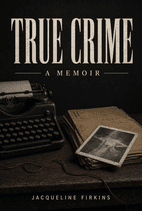
These are the lines you underline and come back to. Patricia Cornwell writes about memory, family, fear, and the strange ways trauma leaves its mark. Some observations are hard and frank. Others have the feel of poetry. What ties them together is a voice that has learned to look closely at pain without turning away. You will find regret, hope, and a lot of quiet wisdom in these pages.
What makes this book so quotable is how personal it is. Cornwell is not keeping readers at arm's length. She shares what it was like to grow up scared, to lose people, and to make sense of a world that can suddenly turn cruel. The best lines hit like small truths. They stay with you long after the page is closed.
Top Quotes from True Crime
“One might suppose that my exposure to virtually any horror you can think of would have made me insensitive. I'd be impervious. It's the opposite, as if I have no emotional skin left as a barrier.”
She describes the emotional result of decades spent researching real crimes.
The image of missing emotional skin captures how witnessing suffering can make empathy deeper rather than dulling it.
“Don't despair and never quit. You'll be shocked to find out what your future holds, I'd confide. Most of it magical and wonderful. And the rest you will survive.”
She imagines speaking words of encouragement to her young self.
The promise that the future holds wonder and pain—and that the pain is survivable—carries hard-won hope.
“Fear and I are old companions. Our introduction was mostly because of Mom, but not entirely.”
The narrator begins to explain the sources of her childhood fear.
It personifies fear as a lifelong presence and hints at a complicated family origin in a single compact confession.
“A metaphor for life, I've always thought. No point in chasing something you can’t catch. But that’s never stopped me.”
On a childhood drive through Miami, the narrator sees heatwave mirages on the pavement.
It turns a simple optical illusion into a philosophy about chasing what cannot be caught, and captures the stubborn refusal to stop trying.
“How unimportant could I be? Obviously, I wasn’t on his nice or naughty list, either one. I wasn’t on any list at all.”
The department-store Santa has just called the narrator Patsy by the wrong name, Kathy.
It distills a child’s feeling of neglect into the terror that she is not even worth remembering.
“The shutting of the door was the most final sound I ever heard.”
On Christmas morning, the narrator’s father shakes her off and walks out of the house.
The plain, sensory language makes abandonment feel absolute through a child’s ears.
“Predators notice things like that, and one did.”
The narrator remembers how unsupervised she and her brothers were.
The short sentence is chilling and direct, connecting neglect with danger.
Themes Behind the Quotes
A central theme is the long shadow of childhood. Cornwell returns again and again to the ways parents can shape or fail a child. There is a father who could not connect, a mother consumed by her own pain, and the lasting ache of feeling invisible. Loss and abandonment come up often, along with the quiet terror of watching a parent fall apart. These moments are not simply recalled. They are examined for clues, the way any good investigator studies a scene.
Another theme is survival and the strange magic of hope. Despite the hard material, the book keeps its eye on resilience and on the small, unexpected graces that keep people going. Fear is treated as a companion, not an enemy. Alongside that runs a fascination with violence and evil, with the predators who wait for someone to look away. The quotes show someone trying to understand why people hurt each other and how a person finds meaning anyway.
Quotes by Chapter
Cover
“We will be gone one day, you know. Off like pilgrims on to progress.”
Epigraph in the book's front matter, attributed to Patsy Daniels.
It frames life as a temporary journey, mixing tenderness with an unstoppable sense of motion.
“This memoir reflects the author's life faithfully rendered to the best of her ability. Some names and identifying details have been changed to protect the privacy of others.”
From the memoir's opening truthfulness disclaimer.
It acknowledges both the ambition of an honest memoir and the necessary protection of other people's lives.
What drove me to it
“Extreme emotions capture scenes the way light etches images on a photographic negative.”
The author explains why powerful moments from her past remain vivid to her.
The metaphor is striking and precise: intense feeling imprints memory the way light imprints film.
“I can't abide violence, which is why I feel compelled to write about it. I hate to think about anything being killed.”
The author explains her relationship to the violence she writes about.
It upends the assumption that crime writers are drawn to violence by presenting it as something she confronts precisely because she abhors it.
1
“I now know that she was in the throes of a psychotic depressive episode, purging in preparation for the end of our world as we knew it.”
The narrator reflects on his mother's behavior while she burns the family's belongings.
This line gives an adult name to the childhood chaos, transforming fear into tragic understanding. It makes the scene both more frightening and more heartbreaking.
“She intended to erase her painful childhood, our years in Miami, her failed marriage and every vestige of the husband who left her. She wanted no reminder of my brothers and me, not a trace.”
The narrator explains why his mother was purging their home.
The catalog of erasures shows how complete and delusional her breakdown was. The final phrase, “not a trace,” is chilling because it includes her own children.
“He covers them over with a robe of whiteness. Then we sully ourselves again and again.”
The narrator's mother says this while looking at the snow outside the window.
The imagery turns snow from a child's delight into a symbol of guilt and cleansing. It foreshadows her later talk of white things and her need to erase the past.
2
“I don't remember being hungry when he was around.”
She remembers trips and outings with her father, who provided meals and treats.
The plain wording quietly links her father's presence with comfort and security.
“In my imagination it was a pirate ship that wrecked with gold and jewels aboard, and I'd search the beach in hopes of finding doubloons, emeralds, and diamonds that we could sell for a fortune.”
At Vero Beach, the narrator turns an actual sunken steamship into a pirate wreck.
It catches the magic of childhood imagination turning an ordinary sight into a story full of treasure.
“I was sorry I'd given away something that mattered.”
After a classmate spurns her gift of fake doubloons, the narrator is left with regret.
It evokes the specific ache of offering something precious to someone who did not value it.
3
“I don't remember him hugging or touching my brothers and me hardly ever. He didn’t ask about our feelings or seem to care if we had them. Even when he whisked us away on fun outings or bought presents, there was a disconnect that made me feel wilted and empty.”
The narrator reflects on a father who provided food and outings but remained emotionally distant.
This passage distills how material care without affection can leave a child feeling unseen and hollow.
“When she cried, so did I, stifling it as I spied from my hiding place.”
The narrator hides nearby while listening to her mother cry after a painful confrontation.
It captures a child's silent empathy and the burden of absorbing a parent's despair.
“Maybe they insisted on being here and came back as my brothers and me.”
After learning of her mother's earlier abortions, the narrator wonders about the children who were never born.
It transforms a painful history into a strange, tender hope that the lost ones somehow returned.
4
“She walked forward, responding to Billy Graham's altar call as the choir sang “Just as I Am” and the organ played.”
The narrator describes her depressed mother answering the altar call at Billy Graham’s 1961 Miami crusade.
This is the quiet turning point of the chapter. The image makes a private conversion feel both personal and cinematic.
“Had my mother not gone, I don't know what would have become of us. I call that synchronicity, the purpose and quantum of our mysterious existence. To her it was God's will or an answer to prayer, and maybe they're the same thing.”
The narrator reflects on the life-changing effect of the crusade on her family.
It states the memoir’s central mystery in both spiritual and existential terms. The line gives equal weight to fate and faith.
“People were outraged, calling my father a communist and a traitor. He was receiving death threats, and somebody decided to make a point by spray-painting our white hound dog bright red. It took Dad hours to scrub Snuffy clean with paint thinner, a pile of red-stained rags on the garage floor.”
The narrator recalls the neighborhood’s fury after her father represents Cuba during the anti-Castro era.
The shockingly specific image of the painted dog makes political hysteria visceral. It shows how public crises invaded the family’s most intimate spaces.
“Anything that had power over her took it away from him. He had no use for religion or those who practiced it, most of all Billy Graham. Dad detested him long before there would be a personal reason.”
The narrator imagines how her father would have reacted to her mother’s born-again Christianity.
It exposes the marriage’s underlying power struggle over her newfound faith. The final aside also foreshadows the personal rupture to come.
5
“It seems we got sick instantly, all of us at once. Most likely, that was our emotional response.”
After their father leaves, the narrator and her brothers all come down with a “bug.”
It shows how children convert grief into physical symptoms, an emotional truth many readers recognize.
“I scribbled all over the ruined picture, frustrated and angry as reality settled over me like darkness when the sun dips below the horizon. My father had replaced my mother with Shirley. He wasn’t going to live with us ever again.”
The narrator colors while overhearing her mother’s anguished phone call about Shirley.
The sunset simile marks the moment childhood certainty ends, and the blunt final sentences show her trying to accept the new reality.
6
“Mom couldn't understand why her father would abandon his three daughters. He must not have loved them very much. For the rest of her life, she would say that to me.”
The author says this about Mom's lifelong reaction to her own father's death.
It captures how a child's logic about abandonment can harden into a lifelong wound. The last sentence shows the author heard that pain repeated for decades.
“Even if he killed himself, it wasn’t because he didn’t care about them. But it’s possible he didn’t end his own life, I’d explained to Mom. We couldn't say for sure that someone didn't help him out that window.”
The author describes the hope behind telling Mom that her father's death may not have been suicide.
It reframes a possible suicide not as rejection but as tragedy while keeping the criminal possibility open. The line resonates because it tries to undo a mother's lifelong belief that she was unloved.
“Suicide is determined by investigation, and it's a shame more witnesses weren't called.”
The author critiques the inquest into the death of Mom's father after noting how little investigation was done.
It condenses the chapter's true-crime argument: a life-or-death ruling was accepted with far too little evidence. The understated wording makes the negligence feel worse.
7
“The street remained empty as hope burned off like dew on the thick, coarse grass.”
The narrator is waiting on the wall for her father, who has not arrived.
It turns abandonment into a single, weather-like image: hope evaporates in the heat.