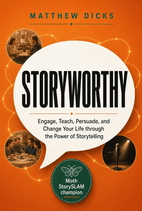
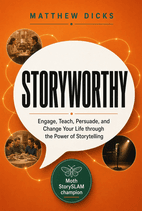
Matthew Dicks's Storyworthy argues that small everyday moments make the best stories, teaching readers to notice and capture them through tools like Homework for Life, Crash & Burn, and the First Last Best Worst grid, then shape them using the five-second moment, stakes strategies, and the but-and-therefore principle. Written for reluctant performers, attorneys, salespeople, leaders, and anyone seeking better conversation or connection.
Feature
Insta.Page
Blinkist
Shortform
Summary Depth
Full Chapter-by-Chapter
15-min overview
Section-by-section guides
Audio Narration
✓
✓
✓
Visual Mindmaps
✓
✕
✕
AI Q&A
✓
✕
✕
Quizzes
✓
✕
✕
PDF Downloads
✓
✕
✓
Price
$89.99/yr
$146/yr (PRO)
$199/yr
*Competitor data last verified July 2026.
1 Page Summary
Matthew Dicks's Storyworthy argues that the smallest moments, not dramatic life events, make the best stories—and that the real work of storytelling is learning to notice them in ordinary life and keep them for later. Drawing on psychologist Daniel Kahneman's insight that people make decisions through stories rather than numbers, Dicks presents storytelling as a practical skill for reaching goals far beyond the stage: in work, relationships, and everyday conversation. The book defines a story as a true personal narrative that must show change over time, distinct from an anecdote that merely entertains without leaving listeners changed.
What makes the book distinctive is Dicks's systematic, exercise-driven approach to both finding and shaping stories. He offers concrete tools like "Homework for Life," a practice of capturing small everyday moments before they slip away; "Crash & Burn," a stream-of-consciousness exercise for recovering memories and ideas; and the "First Last Best Worst" grid for discovering story material. He explains the "five-second moment" at the heart of every successful story, the "Elephant," "Backpack," "Breadcrumbs," and "Hourglass" strategies for building stakes, the principle of "but and therefore" to replace flat "and" sequencing, and the "five permissible lies" of true storytelling. The book also addresses craft and delivery—the "dinner test," the "Cinema of the Mind" emphasis on physical location, the present tense as king, ways to be funny, how to tell a hero story without sounding like a braggart, and how to use nervousness rather than eliminate it.
The intended audience is broad: reluctant participants who never wanted to perform, attorneys, salespeople, business leaders, novelists, screenwriters, professors, clergy, and people simply seeking better dates, dinner conversation, or interviews. Dicks frames the payoff as becoming a "superhero" of communication—someone who can engage, teach, persuade, and hold attention in boardrooms, presentations, and at the Thanksgiving table—grounded in the obligation to entertain and inform any group whose time you take. Readers gain not just performance technique but a method for recognizing, preserving, and shaping the stories already present in their lives.
Foreword by Dan Kennedy
Overview
Most people think a story worth telling needs a dramatic life to go with it, so they wait for something big to happen. Meanwhile the smallest moments pass by, never recognized as material, never captured, never kept.
Small moments, not extreme ones
A hard life does not make someone a storyteller. The smallest moments often make the best stories. Everyone has stories, and the work is to find them in ordinary life and keep them for later. The material is already there.
Daniel Kahneman's idea is that people make decisions through stories, not numbers. Ani DiFranco says writing is how she becomes herself, and her songs later come true. Alan Rickman saw storytelling as a human need that grows stronger when people feel ruled by fools and powerless over their own futures.
Key Takeaways
You don't need a dramatic life to tell a story; ordinary moments give you plenty, and the work is to notice them and keep them.
Stories are how people judge and persuade, not just decoration on top of data and numbers.
Writing can bring a self into being, and the stories a person tells can shape the life that follows.
Storytelling is a basic human need that sharpens when people feel badly governed and powerless, and it gives them dignity and a sense of agency.
Key concepts: Foreword by Dan Kennedy
Foreword by Dan Kennedy
Ordinary Moments as Story Material
A dramatic life isn't required to be a storyteller
The smallest moments often make the best stories
The work is to notice ordinary moments and keep them
Stories Shape Thought and Self
People decide through stories, not numbers (Kahneman)
Writing is how Ani DiFranco becomes herself
The stories we tell can shape the life that follows
Storytelling as Human Need
Storytelling is a basic human need (Alan Rickman)
It sharpens when people feel badly governed and powerless
It gives dignity and a sense of agency
💡 Try clicking the AI chat button to ask questions about this book!
Chapter 1. My Promise to You
Overview
You may have no desire to stand on a stage or perform. So why learn to find and tell stories at all? If storytelling is only for entertainers, what could it offer your work, your relationships, or your everyday conversations?
A man in one workshop asked why he was there, because his wife had enrolled him. His question points to the real promise: finding, shaping, and telling personal stories helps people reach goals far beyond the stage.
A Reluctant Teacher
Speak Up, a Hartford-based storytelling organization founded with Elysha, has drawn sellout crowds of up to five hundred. Audience members asked for lessons, and the author resisted before teaching one workshop: ten people, six evenings, a conference room at the local library. The teaching now reaches performers, from beginners to veterans. Some of them later appeared at The Moth and Speak Up. It also reaches attorneys, salespeople, and business leaders. It reaches novelists, screenwriters, professors, and clergy. And it reaches people seeking better dates, dinner conversation, or interviews.
In August 2016, a student beat him at a Moth GrandSLAM, taking first while he took second. Some people have left therapy for these workshops, a choice he doesn't recommend. Wives have sent husbands who afterward became more forthcoming. A couple spent their anniversary at an all-day workshop and brought champagne. Other students include children of Holocaust survivors preserving family stories, psychiatrists and psychologists helping patients reframe their lives, and politicians and advocates changing hearts and minds.
The Promise
The same skill helps with teaching fifth graders the metric system, pitching a venue, selling DJ services, making professional small talk, compensating for poor golf, and getting along with in-laws. There is no settled curriculum or single rulebook, and storytelling is more art than science. But the method here is practical: lessons, examples of strong stories, exercises for locating meaningful material, and step-by-step instructions for crafting it. The promise is that every student who has followed the instruction has become effective, entertaining, and successful.
Key Takeaways
Treat personal storytelling as a skill you can use for teaching, pitching, interviewing, and family life.
Work through the lessons, model stories, and exercises in order rather than waiting for a single rulebook to emerge.
Expect the payoff offstage: clearer explanations, stronger professional small talk, better dates, and more forthcoming relationships.
Follow the method to the end, since the instruction is meant to produce capable, engaging storytellers, not just informed ones.
Key concepts: Chapter 1. My Promise to You
Chapter 1. My Promise to You
Beyond the Stage
Storytelling benefits work, relationships, and everyday conversations.
A reluctant workshop participant reveals the broader promise.
Skills apply far beyond performance or entertainment.
From Resistance to Teaching
Author initially resisted teaching a workshop.
First workshop: ten people, six evenings, local library.
Teaching now reaches diverse professionals and performers.
Diverse Students, Diverse Goals
Students include attorneys, salespeople, clergy, and novelists.
Some seek better dates, interviews, or family communication.
Others preserve Holocaust stories or help patients reframe lives.
Practical Method, Not Rulebook
No settled curriculum; storytelling is more art than science.
Method includes lessons, model stories, and exercises.
Step-by-step instructions help locate and craft meaningful material.
The Promise of Results
Every student following instruction becomes effective and entertaining.
Payoff includes clearer explanations and stronger small talk.
Follow the method to become capable, engaging storytellers.
Chapter 2. What Is a Story? (and What Is the Dinner Test?)
Overview
Everyone tells stories, yet most of what passes for storytelling is entertaining noise that leaves listeners unchanged. The hard part is telling a real story apart from a polished anecdote, and knowing what a story needs to create a genuine connection rather than just amusement.
Personal narrative means true stories told by the people who lived them, not fables or folktales. Folktales entertain and teach universal truths, but their tellers stay hidden, never revealing themselves or taking a risk. Personal stories require honesty, openness, and putting yourself on the line. Elysha told a woman that storytelling first made her fall in love with Matt. Their first meal alone was at Chili's before a school talent show. It wasn't a date, since both were teachers seeing other people. She asked questions. He answered with stories about himself, and she wanted more. Years before performing onstage, storytelling was already working.
Change
A story must show change over time. It starts with one version of the self and ends with something new. The change can be tiny, and it doesn't have to be an improvement, but it has to happen. Stories without it are anecdotes: romps, drinking stories, vacation stories, bright and fun but finally forgettable.
Matt's Five Rules of Drinking Stories
No one cares about your drinking stories as much as you do.
They never impress the people you want to impress.
More than three excellent drinking stories in a life means you misjudge excellence.
Even the best is compromised in daytime or at work.
A story from after forty is often sad or tragic, unless it is your all-time best or the teller is over seventy, when such stories are acceptable.
Matt's Three Rules of Vacation Stories
No one wants to hear about your vacation.
If someone asks, they are being polite. See rule 1.
A storyworthy vacation moment can be told, but leave out cuisine and destination charm.
Your Story
Tell your own story, not someone else's. Listeners would rather hear what happened to you last night than what happened to Pete, even if Pete's story is better, because when you tell it, it's raw and real and you're exposed. Another person's story works only as your side of it, with yourself at the center. In 1991, Bengi offered Matt a room in the apartment they called the Heavy Metal Playhouse. Bengi held grudges. One stormy night he ran into the rain even though he feared water, came back soaked and changed, kissed Matt and a friend, and let go of every grudge. Matt tells his side: a friend saved his life.
Voices of Hope teaches children of Holocaust survivors to tell their parents' stories, but they tell their own. One woman waits for an ambulance beside her fallen father and finds his freezer packed with Lean Cuisine, because he nearly starved during the Holocaust. She ends at her son's bar mitzvah, where her father has come despite pain.
The Dinner Test
The Dinner Test asks whether the stage, boardroom, or sermon version sounds like the story you would tell a friend at dinner. The two should be close, but not identical. No fluttering gestures, purple prose, or unattributed dialogue. Storytelling is not theater or poetry, but a slightly more crafted version of what you would tell friends over beers. Tellers and audiences pretend the story is made up on the spot. Tellers memorize beats, opening and closing lines, and laugh lines, not the whole script. The best stories sit between the unprepared and the memorized.
Key Takeaways
Tell stories from your own life. If you borrow someone else's material, put yourself at the center and show what you had at stake.
Build each story around who you were before and who you are after. If nothing has changed, keep it short and don't dress it up as a performance.
Pick material that shows real change, and leave out drinking recaps, vacation itineraries, cuisine, and destination charm unless the moment itself earns the telling.
For a stage, boardroom, or sermon version, keep the voice close to what you would use with a friend over a meal. Rehearse only key beats, first and last lines, and places where laughter should land.
Show what the experience cost you or revealed about you, instead of hiding behind polish or borrowed drama.
Key concepts: Chapter 2. What Is a Story? (and What Is the Dinner Test?)
Chapter 2. What Is a Story? (and What Is the Dinner Test?)
Personal Narrative: True Stories Told by the People Who Lived Them
Personal stories require honesty, openness, and risk-taking.
Folktales entertain but tellers stay hidden; personal stories reveal the self.
Elysha's Chili's story shows storytelling's power before performance.
Change: The Essential Ingredient of a Story
A story must show change over time, from one self to another.
Change can be tiny and need not be improvement, but must happen.
Stories without change are anecdotes: fun but forgettable.
Your Story: Tell Your Own, Not Someone Else's
Listeners prefer your raw, real story over someone else's better one.
Another's story works only as your side, with you at the center.
Example: Matt tells his side of Bengi's grudge release.
The Dinner Test: Keep It Conversational
Stage version should sound like telling a friend at dinner.
Avoid theater, purple prose, and unattributed dialogue.
Memorize beats, opening/closing lines, and laugh lines, not full script.
Key Takeaways: Practical Rules for Storytelling
Tell stories from your own life; show what was at stake.
Build around before-and-after; if no change, keep it short.
Leave out drinking recaps, vacation itineraries, cuisine, and destination charm.
Rehearse only key beats, first/last lines, and laugh lines.
Chapter 3. Homework for Life
Overview
Storytellers who depend on dramatic events eventually run out, and the stories that remain seem to land less often than the small, ordinary ones. Small moments are all around us, but they slip by without us noticing and then they're gone. How do you catch them before they disappear?
Elysha told him the pediatrician's advice: when Charlie throws food, take all his food away. She knew this would be hard for her husband because he had been hungry as a boy, a secret he had never told her. She had pieced it together from years of stories, and she had also noticed that he packed Clara's lunch with more food than a child could eat, then quietly unpacked it after he left. At the table he realized she knew his heart better than he did.
Why Small Moments Work
That dinner story is well told, but the material was not rare. Moments like it are everywhere, ordinary and easy to find, and most go unnoticed and unrecorded. By 2013 he had been performing stories for two years and needed more material. A near-death experience, an arrest, and sharing a room with a goat all made good stories, but the small dinner-table scene connected better. Audiences may not have died and been revived, but they know secrets, hunger, shame, and the wish to give children more than they had.
Homework for Life
He assigned himself Homework for Life:
At day's end, ask what five-minute story from today he would tell onstage.
Record a sentence or two in an Excel spreadsheet with two columns, date and story.
Keep it small enough to maintain daily and to catch old memories as they surfaced.
Keeping it small is what made the habit stick: miss one day and two become easy; miss two and a week disappears. The spreadsheet also let him sort and revisit moments worth telling.
Recovered Memories
The practice also brings back memories he had forgotten. Standing in rain with Kaleigh, he suddenly sees Measleman, the beagle mutt named after the doctor who performed his father's vasectomy. The dog follows his father everywhere. The memory brings a realization: when his mother left for another man, his father lost wife, children, home, horse farm, horses, and his dog, which became the property of the man who took his family. For the first time he sees his father's loss as a man, not a boy. His list of untold story ideas now exceeds five hundred. Other storytellers claim they have no more stories. He finds that impossible to understand.
What the Practice Returns
A 52-year-old workshop student called him in tears after three months. She had felt like another face in the crowd, sure she would go out quietly and no one would notice. Recording daily moments made her feel important, part of a larger story, a real part of how the world works. She woke eager to see what would make the day different. The practice also changes how time feels. Days creep by. Weeks feel like months. Any spreadsheet entry takes him right back to the moment.
Commitment and Faith
It takes two things. First, commitment: five minutes each night to reflect. Second, faith: the change comes slowly, over a month, six months, or a year.
One principal missed three days of the practice and was furious at losing them.
The Last Person
One morning nine-year-old Clara asked to be picked up. His arms shook and his torn ligament throbbed, but she whispered that being held close felt wonderful. He realized he was the last person who would ever lift her as a small child. Without the practice, the moment would have been lost.
Key Takeaways
Build the habit around an ordinary moment from the day that you would be willing to tell aloud, rather than waiting for something dramatic to happen.
Keep the record deliberately small, a dated line or two, so the practice survives long enough to become automatic.
Write down scenes that seem minor; they often unlock older memories and later reveal a meaning you could not see while living them.
Capture moments that mark a last time with someone you love, since those pass without announcement.
Give the practice months rather than days, and judge it by whether your ordinary days start to feel more visible and worth noticing.
Key concepts: Chapter 3. Homework for Life
Chapter 3. Homework for Life
The Power of Small Moments
Dramatic events run out; ordinary moments connect better with audiences.
Small moments are everywhere but slip by unnoticed.
A dinner-table scene about a secret hunger resonated more than near-death stories.
Audiences relate to universal experiences like secrets, shame, and love.
The Homework for Life Practice
Each night, ask: what five-minute story from today would I tell onstage?
Record a sentence or two in a spreadsheet with date and story.
Keep it small to maintain daily and catch old memories.
The spreadsheet allows sorting and revisiting moments.
Unlocking Forgotten Memories
The practice brings back forgotten memories, like seeing Measleman the dog.
A rain-soaked memory led to a new understanding of his father's loss.
His list of untold story ideas now exceeds five hundred.
Other storytellers claim they have no more stories, which he finds impossible.
Transformative Effects
A workshop student felt important and part of a larger story after three months.
The practice changes how time feels; days creep, weeks feel like months.
Any spreadsheet entry takes him right back to the moment.
It requires commitment (five minutes nightly) and faith (change comes slowly).
Capturing Last Times
Clara asked to be picked up; he realized he was the last person to lift her as a child.
Without the practice, such moments would be lost.
Capture moments that mark a last time with someone you love.
These moments pass without announcement.
You've reached the end of the free chapters
Next chapter: “Chapter 4. Dreaming at the End of Your Pen” is locked
Keep reading Storyworthy — and unlock all 600+ book summaries with audio, mindmaps and AI Q&A.
$0.00 due today · 7 days free, then $89.99/year ($7.49/mo) · Cancel anytime before day 7
Matthew Dicks is an American author, storyteller, and elementary school teacher known for novels including Memoirs of an Imaginary Friend and The Perfect Comeback of Caroline Jacobs, as well as the nonfiction books Storyworthy: Engage, Teach, Persuade, and Change Your Life through the Power of Storytelling and Someday Is Today. A record-setting champion of the Moth StorySLAM and a co-founder of the storytelling organization Speak Up, he writes and speaks widely on storytelling, communication, and productivity. He lives in Connecticut, where he has taught for more than two decades.
Frequently Asked Questions about Storyworthy
What is Storyworthy about?
This book explains how to find, shape, and tell true personal stories drawn from ordinary life rather than waiting for dramatic events. It defines a real story as one that shows change over time and builds toward a five-second moment, with techniques for beginnings, stakes, structure, honesty, sensory detail, humor, and performance. It also provides practical exercises such as Homework for Life, Crash & Burn, and First Last Best Worst to help people recover memories and uncover story material.
Who is the author of Storyworthy?
Matthew Dicks is a storyteller and teacher who founded Speak Up with Elysha and has performed at Moth events and in his own workshops. His teaching reaches performers, attorneys, salespeople, business leaders, novelists, clergy, and people seeking better dates or conversations.
Is Storyworthy worth reading?
It is worth reading because it offers practical, reusable tools for anyone who wants to communicate more effectively, not just performers on a stage. The methods help readers notice overlooked moments, shape them into compelling stories, and use them in work, relationships, dates, presentations, and family conversations. It also tackles humor, nerves, and delivery, so the advice applies well beyond formal storytelling.
What are the key lessons from Storyworthy?
A real story must show change and center on a five-second moment; a string of events without that change is only an anecdote. Small, ordinary moments often make stronger material than dramatic ones, so storytellers need reliable ways to notice, record, and revisit them. Stories gain momentum when built with a beginning opposite the ending, clear stakes, and the But/Therefore principle rather than a flat chain of “and then.” Truthful storytelling can use permissible omissions and compression, while surprise, strategic humor, concrete locations, and present tense help audiences feel and picture the story.
📚 Explore Our Book Summary Library
Discover more insightful book summaries from our collection