As an Amazon Associate, we earn from qualifying purchases.
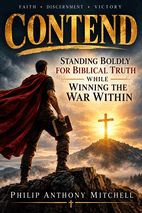
What is the book Contend about?
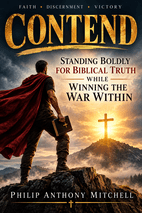
Philip Anthony Mitchell's Contend argues that the Church's greatest threat is internal—watered-down preaching and false teaching from the pulpit—not external opposition. Drawing on Scripture, personal testimony, and cultural observation, it calls young believers, pastors, and parents to contend for biblical truth both publicly and inwardly.
Feature
Insta.Page
Blinkist
Shortform
Summary Depth
Full Chapter-by-Chapter
15-min overview
Section-by-section guides
Audio Narration
✓
✓
✓
Full access to all 700+ summaries
✓
✓
✓
Visual Mindmaps
✓
✕
✕
AI Q&A
✓
✕
✕
Missing a book? Request it, usually live within 48h
✓
✕
✕
Quizzes
✓
✕
✕
PDF Downloads
✓
✕
✓
Send to Kindle
✓
✓
✓
Price
$89.99/yr
$146/yr (PRO)
$199/yr
*Competitor data last verified July 2026.
1 Page Summary
In Contend: Standing Boldly for Biblical Truth While Winning the War Within, Philip Anthony Mitchell argues that the greatest threat facing the Church is not an external adversary but an internal one—specifically, the pulpit. Drawing on Jesus's promise in Matthew 16:18 that the gates of hell will not prevail against the Church, Mitchell contends that evil cannot overthrow the Church from without; rather, the danger comes from within, as Paul warned in Acts 20:29–30 when he described wolves arising from the church's own number. Mitchell identifies watered-down preaching, false teaching, biblical illiteracy, and weak discernment as the forces quietly eroding congregations, and he traces this pattern through Scripture—from Solomon's divided heart to the seven churches of Revelation, where Ephesus abandoned its first love, Pergamum and Thyatira tolerated false teaching, and Sardis looked alive but was dead. Jude's letter serves as a central warning: proximity to the truth is not the same as being changed by it, and the window for response may be closing.
What distinguishes Mitchell's approach is his blend of personal testimony, biblical exposition, and cultural observation. He grounds the argument in his own conversion in November 2003—alone in a bathroom amid suicidal ideation—and in formative experiences including an Isaiah 6 encounter in Israel and a trip to Turkey's biblical ruins, which convinced him that the Western Church's future is already visible in the Eastern Church's past. He names specific cultural pressures: social media that breeds comparison and "strong thumbs and weak souls," entertainment treated as worship, sermons resembling TED Talks, and a credibility crisis in which Gen Z detects inauthenticity and finds faithful preaching on TikTok rather than in sanctuaries. Mitchell also insists that contending is both external and internal—public witness at places like Mars Hill must be matched by private discipline, because public ministry becomes performance when the inner life weakens. His call is not merely to encouragement but to accountability, tailored to different fronts: the young believer in a hostile culture, the exhausted pastor, and the parent raising children to love God.
The book is written for believers across the spectrum of spiritual maturity—young Christians seeking to hold faith in a hostile culture, pastors and church leaders running on empty, and parents invested in the spiritual formation of their children—as well as anyone concerned about the drift of the contemporary church. Readers will gain a diagnostic framework for recognizing slow compromise before it becomes collapse, a deepened confidence in Scripture as a recorder of God's warnings, and a charge to move from the sidelines into the fight. Mitchell's recurring image of a countdown clock—reaching zero at death or Christ's return, when no second chances remain—frames the book's urgency: the hour is late, most people are asleep, and the time to contend for the faith is now.
Chapter One: The Enemy Within
Overview
When a church's influence erodes, the instinct is to look outward at an obvious adversary. Yet the earliest warnings about communal collapse keep pointing back inside, toward what a community trusts and permits. How does a body recognize a danger it may be protecting?
The threat to the Church is not Satan but the pulpit. A conversion in November 2003, alone in a bathroom amid suicidal ideation and after a failed attempt, rescued by a believer named Tiffany, gives the argument its stakes. The argument rests on Jesus's promise in Matthew 16:18 that the gates of hell would not prevail, so evil cannot overthrow the Church; evil will be overthrown. Paul's warning in Acts 20:29-30 names the real pattern: wolves will come from among the church's own number, false teachers who use eloquence to fleece and wound. Biblical illiteracy and weak discernment let them pass. The pulpit is killing the American Church, the UK Church, and churches worldwide through watered-down preaching and false teaching. After an Isaiah 6 encounter in Israel in December 2018 and a trip to Turkey in January 2024, the contrast sharpened: shallowness, materialism, entertainment as worship, sermons like TED Talks. The result is slow poisoning, spiritual starvation dressed as nourishment.
The Pattern Before the Ruin
Ruin rarely starts with catastrophe. It starts with small pulpit concessions:
sin renamed
standards lowered
Scripture quietly abandoned for comfort
worship lyrics turned self-focused
difficult passages about lust, idolatry, and sin skipped
Harmless becomes habit, habit pattern, pattern ruin. Secular humanistic speeches replace biblical preaching, and the Cross gives way to talk-show uplift. The call to take up the cross is swapped for follow your heart. The resulting gospel of self says:
God wants your best life
manifest your dreams
you alone decide who you are
positive thinking aligns the universe
These exalt man over Christ, recast Jesus as life coach, and make worship demand nothing. Online sermons offer more psychology than theology. The New Testament letters aim at spiritual maturation, dying to self and becoming like Christ, but self-help pulpits put the self on a pedestal and dethrone the Lord.
Two Gospels
Authentic preaching opens James 1 and says testing produces steadfastness, that the trial belongs to God's will rather than diverting from it. Prosperity preaching says God never intended suffering. Hardship becomes a blocked spiritual pipeline. Sow a seed, manifest, claim breakthrough, position for abundance. Christ promised tribulation and a prepared place free of pain. Preach prosperity to:
the poor in economically disadvantaged nations
the persecuted
the twenty-one Coptic Christians beheaded by ISIS in Libya in 2015
The counterfeit becomes obvious. The contrast:
Christ versus self
persecution versus promotion
endurance versus ease
generosity versus hoarding
Counterfeit comfort says come to Jesus for happiness and vision. Christ says in Luke 9:23 to deny yourself, take up your cross daily, follow me. If Jesus is the Truth, no one has their own truth. Paul told the Corinthians in 1 Corinthians 6:9 that the unrighteous will not inherit the kingdom and listed disqualifying sins. That is love. Real love tells the truth.
No Other Gospel
"Your truth" does not exist. The universe is not a force to align with positive thoughts. It is created by a sovereign God. The book rejects the claim that God would never allow anyone to go to hell because he is just and justice punishes sin, and Christ took that punishment. One can know Christ now as Savior or meet him later as judge. People walk toward destruction themselves. A counterfeit gospel snares the unsuspecting and those led by unredeemed desires. Paul said in Galatians 1:8-9 that anyone preaching a contrary gospel is accursed, twice in two verses, and "if anyone" exempts no one. It is tempting to look away from beloved pastors and influencers, but the difference is not minor theological variation.
Key Takeaways
The Church's real danger comes from inside its own pulpits, not from an external adversary; the wolves Scripture warns about are insiders whose eloquence wounds the flock rather than outsiders storming the gates.
Collapse arrives through accumulated small concessions rather than a single catastrophe: renaming sin, lowering standards, and quietly trading Scripture for comfort harden into ruin before anyone notices.
A message promising ease, self-discovery, and material breakthrough is not a variation on the faith but a rival gospel, and the anathema Paul pronounced in Galatians applies to it without exception, regardless of how beloved the preacher is.
Any preaching can be measured by what it does with the hearer: exalting the self and its desires, or putting the self to death and conforming it to Christ.
Because the cross is a summons to deny oneself rather than an invitation to happiness, genuine love requires telling people the truth about sin and judgment instead of affirming them along the road to destruction.
Key concepts: Chapter One: The Enemy Within
Chapter One: The Enemy Within
The Internal Threat
Real danger comes from pulpits, not external adversaries
Wolves arise from within the church (Acts 20:29-30)
Biblical illiteracy and weak discernment let false teachers pass
Watered-down preaching slowly poisons and starves believers
The Pattern of Ruin
Ruin starts with small concessions: sin renamed, standards lowered
Scripture abandoned for comfort; worship becomes self-focused
Self-help gospel exalts man, recasts Jesus as life coach
Two Gospels
Authentic preaching: trials produce steadfastness (James 1)
Prosperity gospel promises ease, but Christ promised tribulation
Contrast: Christ vs self, persecution vs promotion, endurance vs ease
Counterfeit comfort says come for happiness; Christ says deny yourself
No Other Gospel
Your truth does not exist; God is sovereign creator
God's justice punishes sin; Christ took that punishment
Paul pronounces anathema on any contrary gospel (Galatians 1:8-9)
Difference is not minor theological variation; it is a rival gospel
Measuring Preaching
Does it exalt self or put self to death?
Does it conform hearers to Christ or to their desires?
Genuine love tells the truth about sin and judgment
The cross is a summons to deny oneself, not an invitation to happiness
💡 Try clicking the AI chat button to ask questions about this book!
Foreword by Matt Chandler
Overview
Most believers think spiritual compromise will be obvious—a clear moment of rebellion they would spot and reject. But it can happen so slowly that someone stays effective, stays affirmed, and has no idea how far they have moved.
False Gospels and the Social Media Mirror
Paul told the Galatian churches that no other gospel exists besides the one they received, yet false gospels multiply and damage unsuspecting believers. The problem isn't occasional public-speaking mistakes but heretical nonsense that passes for the Gospel online and gets shared, liked, and endorsed. Social media can carry the Gospel and connection, but it also breeds competition, covetousness, comparison, depression, jealousy, envy, hatred, and radicalization. Many scrollers end up with "strong thumbs and weak souls." Chandler saw this play out from 2012 to 2018 while leading Victory Church ATL, and it shaped how 2819 began in January 2023. The response: strong prayer, intimacy with Christ, discernment, personal Bible reading, looking up more than across, and running your own race.
Deception Before the Downfall
The modern church can look like faith slowly falling apart: revival churches are fragments, sermons softened then gutted. Compromise creeps in little by little, and before long the shoreline is gone. Leaving the Word starts when Scripture gets twisted to fit an agenda and people chase what they want to hear, expecting sermons to pamper the flesh though Scripture purifies the soul. Decline follows conviction turning into concession.
Samson and Solomon
Samson pursued the Timnite woman against his parents' counsel. He returned to the lion's carcass and took honey, violating his Nazarite vow. He went on to the feast, the wine, and the prostitute in Gaza.
He justified each choice and walked away intact. The Spirit kept moving on him after every failure, and that became a trap. He mistook God's patience for permission. The same happens when delayed consequences and God's continued presence make sin seem harmless. A believer can remain anointed and effective yet spiritually compromised.
Solomon's fall was no sudden idolatry. His marriages were political alliances with Egypt and Moab, his kingdom drew tribute and fame, and unchecked pride made one diplomatic marriage and one shrine seem harmless. Scripture records no single turning point, only 700 wives, 300 concubines, and slow theological drift.
Key Takeaways
Check the teaching you encounter online against the message you first trusted, and don't let clicks and approval decide what counts as faithful.
Read Scripture for yourself so that sermons shaped around your preferences are exposed as the drift they are, not merely a stylistic choice.
Treat God's continued work through you after failure as patience rather than permission, because postponed consequences can hide a compromised interior.
Look at the slow buildup of status, alliances, and small shrines in your own life, since Solomon's collapse had no identifiable turning point.
Key concepts: Foreword by Matt Chandler
Foreword by Matt Chandler
The Subtlety of Spiritual Compromise
Compromise often occurs gradually, not as a clear moment of rebellion.
Believers can remain effective and affirmed while drifting spiritually.
Decline follows when conviction turns into concession.
False Gospels and Social Media
False gospels multiply online and damage unsuspecting believers.
Social media breeds competition, comparison, and other vices.
Many scrollers end up with 'strong thumbs and weak souls'.
The Response: Prayer, Intimacy, and Discernment
Counter compromise with strong prayer and intimacy with Christ.
Practice personal Bible reading and discernment.
Look up more than across and run your own race.
Samson: Mistaking Patience for Permission
Samson repeatedly violated his Nazarite vow without immediate consequence.
He mistook God's patience and continued anointing for permission.
Delayed consequences can make sin seem harmless.
Solomon: Slow Drift Through Unchecked Pride
Solomon's fall was not sudden idolatry but gradual theological drift.
Political alliances and unchecked pride made small compromises seem harmless.
Scripture records no single turning point, only the accumulation of wives and shrines.
Introduction: Birth of a Burden
Overview
A faith can look intact on the outside while its center quietly empties, and the ones most hungry for the real thing are often the first to notice. What happens when the distance between the message and the life behind it grows too wide to defend?
Slow Erosion
Solomon's fall was not youthful rebellion but a lifetime of dilution: his wives turned his heart, and the temple he built for God was soon rivaled by shrines to Chemosh and Molech. A divided heart makes wisdom useless. The same pattern appears in small choices:
A college student skips church after a Saturday out.
A young professional filters faith out of social media.
A woman replaces prayer with crystals and manifestation.
Fourth-century bishop John Chrysostom likened one concession to sin to a drop of dye that eventually colors all the water. Wayward pastors rarely name the moment they drifted; it began with diluted sermons, stories swapped for Scripture, and blessings without repentance.
Credibility Crisis
Gen Z detects inauthenticity and finds faithful preaching on TikTok rather than in sanctuaries. The author's four Gen Z children, including Malachi, say their generation wants the Bible, accountability, and trustworthy leaders, not performance. A youth leader caught in sexual sin while teaching purity, and a ministry director who bullied volunteers, show why sheep drift when shepherds fall. Paul's warning in 2 Timothy 4:3 about itching ears describes the present. One pastor online urged debt as an offering, contradicting Proverbs 22:7.
Counterfeits
When truth goes silent, astrology and worldly spirituality fill the gap: horoscopes beside devotionals, manifesting energy, crystals, psychics. Deuteronomy 18 forbids divination, and Isaiah 47:13 mocks star-based predictions. The book reads Acts 16 as showing that a demonized slave girl spoke accurate words about Paul and his companions; Paul cast the spirit out, and her owners lost their profit. In that account, demons use facts to establish credibility, but facts do not authenticate truth. It treats these practices as demonic, not harmless exploration, and rejects both/and spirituality, citing 1 Corinthians 10:21.
Warning and Reform
Jeremiah 23:14, Ezekiel, and Micah condemn shepherds who soothe consciences, feed themselves, and leave the flock scattered. The book warns that America could resemble Europe: churches closed, sanctuaries turned into museums, a generation unable to articulate the Gospel, Christianity culturally irrelevant. If America falls, global missions suffer because China's underground church is crushed, Europe is spiritually dead, and Africa and Latin America are vibrant but lack resources to send at American scale. The pattern repeats: abandon first love, embrace false teaching, coddle compromise, grow lukewarm, fail to make disciples, become irrelevant.
Congregations tolerate lies from pulpits. Accountability means walking out and withdrawing funding from ministries that desecrate God's house. Jesus rebuked Pharisees as whitewashed tombs, cleared the temple, and warned of false prophets. External pressure has never killed the true Church; internal corruption ruins it. The Reformation began when the Church traded grace for greed, and the Great Awakening shook nations: Jonathan Edwards preached "Sinners in the Hands of an Angry God," while George Whitefield preached sin and grace to twenty thousand in open fields. Martin Luther's Ninety-Five Theses at Wittenberg split the world. In 2023 the author renamed the ministry from Victory to 2819, beginning with 183 disciples at Westside Atlanta Charter School.
The Report That Followed Him Home
In the early fall of 2024, a Sunday evening attendance report showed more than two thousand people in the gatherings. He does not spend his workweek analyzing attendance and finance numbers, and he had been preaching through Matthew and minding his own business. But the number would not leave him. Sitting up in bed, he felt pride creep in, because he had never preached to that many on a Sunday, and the euphoria sat on him for hours. By morning he was convicted and told Lena he had to get away. He took a Bible, a yellow legal pad, a pen and two gallons of water to a local hotel for five days of fasting, prayer, weeping and worship instrumentals by William Augusto, then read the entire New Testament and landed on Paul's word to Corinth: the one who plants and the one who waters are nothing, and God alone gives the growth.
Repentance Without a Bargain
Conviction is evidence of God's love, and no one knows what God is preparing him for while He deals aggressively with a sin. This is not a formula for manufactured repentance aimed at twisting God's arm toward some fleshly desire. It is a call to stop fighting the Holy Spirit. The reward of repentance is not something received from God but being right with God, and nothing in this life satisfies more than the quiet fellowship of intimate prayer. He does not want idolatry; he wants accountability. A pastor who cannot say Christ alone deserves the glory, and mean it, has already begun to drift.
Hypocrisy, Cheap Grace, and a Corpse With a Pulse
When sin is ignored and moral failure goes unchallenged, the sheep bleed while the shepherds guard their image. Paul warned that God's name is blasphemed among the Gentiles because of His people, and scoffers take scandals as permission to say that if this is faith they want no part of it. Tertullian, in the second century, located the Church's growth in the blood of the martyrs rather than in the applause of crowds. A young German pastor resisting the compromise of the German Church under Hitler's rise called cheap grace the deadly enemy of the Church, and that same cheap grace is preached from American pulpits now. What shepherds lack is Isaiah's brokenness before a holy God; the need is for preachers who tremble before the Word, not performers who stir emotion.
The Slow Fade
Jesus looked at a Church full of activity and called it a corpse. Dynamic worship sets and packed events give the appearance of life, but a diluted prescription only numbs symptoms while the disease spreads, and people never learn to lean on the Lord in suffering or to see grace as power for holiness rather than permission to sin. The Western Church is drifting toward the grave the Eastern Church already occupies, and not all at once: Samson lost his strength and Solomon lost his devotion through small concessions that each felt harmless. When enough Believers lose the fire, sermons empty, Scripture slides to the margins, and a generation walks away because it senses a counterfeit faith. The prosperity gospel will not storm the gates; it will stroll through the front door with a microphone and a motivational quote.
The Contender's Charge
Where have you made small concessions you considered harmless?
What would it look like to stop drifting and make one deliberate choice this week toward Truth and away from comfort and compromise?
If the pulpit you sit under every Sunday is not feeding you the Word, what are you going to do about it?
Key Takeaways
Treat the compromise you have quietly excused as the first drop that will color the whole vessel, and address it while it is still small enough to name.
Weigh leaders by their fidelity to the Word and their willingness to be held accountable, not by their reach; if a ministry protects its image while the flock bleeds, take your attendance and your giving elsewhere.
Refuse any spiritual practice that borrows the language of faith while seeking guidance or power apart from Christ; a counterfeit does not become safe because it sometimes tells the truth.
Let conviction lead you into prayer and fasting without turning repentance into a transaction; seek God’s face rather than a result, and let pride be exposed before it takes root.
Judge church life by holiness and dependence on God rather than by crowds and production; a full room can hide a dying body, and a diluted message will numb you instead of heal you.
Key concepts: Introduction: Birth of a Burden
Introduction: Birth of a Burden
Slow Erosion of Faith
Solomon's divided heart made wisdom useless
Small compromises lead to full drift
Chrysostom: one concession colors all
Pastors drift through diluted sermons
Credibility Crisis
Gen Z detects inauthenticity, seeks truth on TikTok
Scandals: youth leader in sin, bullying director
Paul warned of itching ears in 2 Timothy 4:3
False teaching: debt as offering contradicts Proverbs
Counterfeits and Worldly Spirituality
Astrology, crystals, manifesting fill truth's silence
Deuteronomy 18 forbids divination
Acts 16: demons use facts, not truth
Rejects both/and spirituality per 1 Corinthians 10:21
Warning and Call to Reform
Prophets condemn shepherds who scatter flock
America could resemble Europe: empty churches
Global missions suffer if America falls
Reformation and Great Awakening show renewal possible
Personal Conviction and Repentance
Attendance report sparked pride, led to fasting
Five days reading New Testament: God gives growth
Repentance is about being right with God
Stop fighting the Holy Spirit, seek accountability
Hypocrisy and Cheap Grace
Ignored sin causes sheep to bleed
God's name blasphemed among Gentiles
Tertullian: Church grows through martyrs' blood
Cheap grace is deadly enemy, needs broken preachers
The Slow Fade
Activity and crowds can mask a dead church; Jesus called a busy Church a corpse.
Diluted prescriptions numb symptoms while the disease spreads, preventing reliance on God.
Small, harmless-seeming concessions erode strength and devotion, as with Samson and Solomon.
The prosperity gospel enters subtly through motivational messages, not open attack.
Chapter Two: A Spiritual Emergency Unfolding
Overview
A congregation can guard right teaching, endure pressure, and still lose the devotion that once made it alive. The harder question is whether anyone notices before the loss becomes ruin, and whether what is being tolerated in the name of survival is already doing damage.
The corruption in today's Church is not new. A tour through Turkey's biblical ruins makes the case that the Western Church's future is already visible in the Eastern Church's past. Revelation's seven letters to seven cities carry five warnings from Jesus to churches that resemble the present one, and the pattern is not abstract: it is a mirror.
The Seven Churches as a Mirror
Ephesus had tested false apostles and stood firm in doctrine, but it abandoned its first love; service continued while affection cooled.
Smyrna endured persecution, poverty, slander, and martyrdom without recanting, and Jesus gave it no rebuke.
Pergamum held the faith under pressure but tolerated the doctrines of Balaam and the Nicolaitans, letting false teaching speak.
Thyatira protected the false teacher Jesus called Jezebel, who tied sexual immorality and idolatry to economic survival.
Sardis looked alive by reputation but was dead, a church whose city was twice taken at night while guards slept.
Philadelphia kept the Word with little strength and received a door no one could close.
Laodicea was wealthy, self-sufficient, and lukewarm, useful to no one.
Ephesus and the Cost of First Love
Ephesus was a major port, a commercial hub, and a center of pagan worship, with the Temple of Artemis among the Seven Wonders. Paul spent three years there, longer than in any other city on his journeys. Converts burned magic scrolls worth 50,000 drachmas, about 150 years' wages. Silversmiths who made shrines to Artemis saw profits vanish, and their leader Demetrius sparked a riot that filled the theater with 25,000 people shouting for two hours. The church that once risked livelihood and reputation for Christ later preserved the outward form while losing inward fire.
Laodicea and the Geography of Lukewarmness
Laodicea's lukewarm label was not a vague insult. Hierapolis had hot springs known for healing; Colossae had cold springs known for refreshment. Aqueducts carried both into Laodicea, but by arrival the water was warm, mineral-heavy, and undrinkable. Jesus meant the church was useless, neither healing nor refreshing anyone. The city had banks, a renowned medical school, and black wool exports. After an earthquake in AD 60, it refused Rome's aid and rebuilt from its own wealth. Prosperity convinced Laodicea it needed nothing, and the church could no longer distinguish blessing from spiritual numbness.
Prosperity, Illiteracy, and the Vacuum
American churches face the same trap with more resources than any generation of believers. Thousands of Christian books appear each year, conferences fill cities, and sermons stream on demand, yet teenagers cannot name the four Gospels, adults cannot explain the Trinity, church members cannot distinguish justification from sanctification, and longtime pew-sitters do not know Jesus was Jewish. Abundance has produced biblical illiteracy. The surrounding culture does not respect a church that surrenders its convictions; it moves on. Over two centuries, a church once defined by what it would lose became defined by what it kept: power, position, prestige, and stone. The sixth-century Hagia Sophia in Constantinople, built as a monument to Christian permanence, became a mosque in 1453, a museum in 1935, and a mosque again in 2020. When persecution rose in the seventh century, the church had already surrendered its spiritual strength. Five of the seven churches were rebuked for compromise, false teaching, lukewarmness, lost love, and complacency. Those patterns are cyclical: influence erodes, a vacuum forms, and something fills it. In the East, Islam filled it. The pattern has moved through the Middle East, North Africa, and Europe, and Dearborn, Michigan, is not an isolated case but a beginning.
In January 2026, a 2819 Church outreach in London brought volunteers to serve people in need. The author's daughter Israel asked a German volunteer about the church in Germany. She said it does not exist, and mentioning Jesus makes people think you are crazy. The room grieved, yet hoped.
Notre-Dame and the Visible Decline
In Paris in 2025, Notre-Dame stood six years after the April 2019 fire. For over 850 years it had been the heart of French Christianity, where kings were crowned and millions prayed. Scaffolding remained, and tourists photographed the Gothic architecture without speaking of the God it was built to glorify. The fire did not start France's decline; it made the decline visible. France had abandoned the faith long before flames consumed the roof. Notre-Dame burned because France no longer needed it. The building remained history worth rebuilding, but the Gospel it proclaimed had been extinguished decades earlier. Turkey's ruins took centuries to crumble; Notre-Dame burned in hours. The United States has not become Europe, but the trajectory is clear if nothing changes.
The Culture's Catechism
Believers have attended the same church for years and never heard the word sin from the pulpit. Pastors preach the Sermon on the Mount but skip Matthew 5:29, the passage about gouging out an eye that causes sin, calling it too gruesome. Churches brag about weekend attendance like corporations brag about quarterly earnings, and when crowds stop coming, buildings are sold. An online listing advertised renovation-ready churches for as little as $50,000. That is not a real estate problem: buildings do not abandon themselves. Sanctuaries have been filled with lighting, children's spaces, and production, but not with prayer, the Holy Spirit, and people who know Jesus. Without discipleship, what was built cannot sustain itself.
The Algorithm
Parents hand children smartphones while TikTok and Instagram disciple them for hours every day. The culture has its own catechism, and it is effective:
Be true to yourself.
You do not need a church to be spiritual.
If something feels right, it is right for you.
Follow your heart.
This is active indoctrination, with algorithms tuned to disciple young people away from Christ and to reinforce feelings over truth.
The Counter-Catechism
The catechism they need is different:
They are created in God's image, not their own.
They are separated from God by an inherent sinful nature.
Hell exists because sin is serious and God is just.
Christ died to save them from sin's penalty and put them in right standing with God.
That is the Gospel, and it stopped being taught. Paul warned in Colossians 2:8 that philosophy and empty deceit can take people captive according to human tradition rather than Christ.
The Domestic Church
The Puritans' domestic church eroded as Sunday school replaced family devotions, youth group replaced Sunday school, and the phone replaced youth group.
The Way Back
Christ speaks to the seven churches. Revelation 3:19 says those whom he loves he reproves and disciplines, so be zealous and repent. There is time, but no day to waste on comfortable Christianity. Turkey did not fall in a day, and neither will the West, but every Sunday of settling is another degree of drift. Feel-good sermons must be refused, and the Word must pierce and transform. There is deep sorrow over the church in the West, not anger or superiority, and love too strong for silence. No church, nation, or generation is immune; Ephesus lost its love, Sardis its life, and Laodicea its hunger. Turkey shows what happens when the church loses its first love; Europe shows where that leads. America stands at a critical moment, and repentance is the only way forward. The faith Jude tells believers to defend is not a feeling or a tradition. It is a Person, a Book, a truth bought by blood that does not bend to society or time.
Key Takeaways
Treat the seven letters of Revelation as a current diagnostic rather than ancient correspondence: five of the seven rebukes name patterns now reproducing in Western congregations.
Understand Laodicea's lukewarmness as uselessness, not mere indifference; a church that neither heals nor refreshes anyone has stopped doing the work it exists to do.
Expect the cycle to repeat: when conviction drains away, a vacuum forms and something always fills it, as it did across the Middle East, North Africa, and Europe.
See the silent pulpit and the child's smartphone as a single crisis of formation, since whatever catechism a young person absorbs over years will shape them, and the surrounding culture is far more deliberate about supplying one than the church has been.
Repentance is the only way forward and it remains available now, but no congregation, nation, or generation is exempt from the drift that emptied Ephesus, Sardis, and Laodicea.
Key concepts: Chapter Two: A Spiritual Emergency Unfolding
Chapter Two: A Spiritual Emergency Unfolding
The Seven Churches as a Mirror
Ephesus: firm in doctrine but abandoned first love
Smyrna: faithful under persecution, no rebuke
Pergamum and Thyatira: tolerated false teaching and immorality
Sardis and Laodicea: dead reputation and lukewarm faith
Ephesus: The Cost of Lost First Love
Paul spent three years in Ephesus, longer than anywhere else
I don't have reliable information about an author named Philip Anthony Mitchell, so I can't write a factual biography without risking fabrication. If you can share details about their works, field, or background, I'd be glad to help craft one.
Frequently Asked Questions about Contend
What is Contend about?
This work examines why the greatest danger facing the Church comes not from outside enemies but from within — from pulpits that water down Scripture, tolerate false teaching, and substitute entertainment for the Gospel. Drawing on Jesus's warnings to the seven churches in Revelation, the letter of Jude, and the pattern of Ephesus abandoning its first love, it traces how compromise creeps in slowly until a congregation looks alive while its center has emptied. It then moves from diagnosis to action, calling believers to contend for the faith both publicly, in the marketplace and school yard, and privately, in the hidden battle of the heart. The closing chapters press urgency, framing time as a countdown that will reach zero and urging readers off the sidelines and into the fight before it does.
Who is the author of Contend?
Philip Anthony Mitchell is a pastor and church planter who started a congregation from scratch with a launch team of ten believers, holding its first service on October 7, 2012, after years of Wednesday-night prayer gatherings that began in his parents' home in Rex, Georgia. His writing is shaped by personal loss — his father, Leo Lawrence Mitchell, died of illness just months after the church launched, and Mitchell preached the next morning through tears. He and his wife Lena, a potter, have four Gen Z children, and his observations about that generation's hunger for authenticity and biblical accountability run throughout the work. The foreword is contributed by Matt Chandler.
Is Contend worth reading?
It is worth reading because it refuses to treat spiritual decline as an abstract problem, grounding every argument in Scripture, church history, and lived experience — from a November 2003 conversion amid suicidal ideation to a school car-lane flag dispute over his son's classroom. Readers who sense that something is off in modern Christianity will find both a diagnosis and a path forward, including practical counsel on discernment, personal Bible reading, prayer, and looking up more than across. It comforts and convicts in equal measure, which is exactly what a call to action requires.
What are the key lessons from Contend?
First, the threat to the Church is internal, not external: as Acts 20 warns, wolves arise from among a congregation's own number, and biblical illiteracy lets eloquence replace truth. Second, compromise is rarely a single dramatic rebellion — like Solomon's divided heart or a drop of dye in water, it works through small concessions until the whole life is colored by it. Third, contending is both external and inward: the public witness depends on a private life submitted to Christ, and public ministry becomes performance when the inner life weakens. Finally, the call looks different by position — young believer, pastor, or parent — but encouragement without accountability changes nothing, and the clock God has set will not be pushed back.
📚 Explore Our Book Summary Library
Discover more insightful book summaries from our collection