As an Amazon Associate, we earn from qualifying purchases.
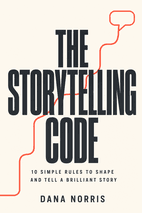
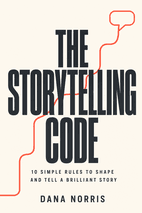
What is the book The Storytelling Code about?
Dana Norris's The Storytelling Code distills her Story Club experience into ten rules for telling true stories aloud, covering goal-setting, plot arcs, editing, and four ending shapes. Written for anyone facing a wedding toast, job interview, or open mic who wants a repeatable process rather than natural charisma.
Feature
Insta.Page
Blinkist
Shortform
Summary Depth
Full Chapter-by-Chapter
15-min overview
Section-by-section guides
Audio Narration
✓
✓
✓
Full access to all 700+ summaries
✓
✓
✓
Visual Mindmaps
✓
✕
✕
AI Q&A
✓
✕
✕
Missing a book? Request it, usually live within 48h
✓
✕
✕
Quizzes
✓
✕
✕
PDF Downloads
✓
✕
✓
Send to Kindle
✓
✓
✓
Price
$89.99/yr
$146/yr (PRO)
$199/yr
*Competitor data last verified July 2026.
1 Page Summary
Dana Norris's The Storytelling Code is built on a straightforward premise: people have stories worth telling, but most never find out whether those stories are any good because they never bring them to an audience. Drawing on her experience founding Story Club, earning an MFA in creative nonfiction from Northwestern, and performing hundreds of times, Norris distills the craft into ten rules. The book opens with her own path from a quiet child at the family Thanksgiving table to a hesitant adult at a poetry slam who wanted the mic but lacked the confidence to take it, framing the rules as what she learned to close that gap. Central to her method are the ideas that a storyteller must first know the goal—what the listener should feel or do—and that plot, mapped onto a clear arc of beginning, problem, failed attempts, solution, and ending, is what turns an ordinary account into something strangers will follow.
Norris's approach is practical and craft-focused rather than inspirational. She treats stories as deliberately made objects: create first, then judge, since calling a story good or bad is subjective—the real question is whether it achieves its purpose. She shows how to gather material through prompts, cut a draft to its essentials with five editing strategies (including mapping it to the plot arc and reading it aloud to someone else), and choose among four ending shapes—Zinger, Callback, Fast Forward, and Full Circle—because the ending is what the audience remembers. What makes the book distinctive is its insistence that storytelling is not reserved for natural performers: Norris illustrates this with a Story Club Cleveland open mic where a woman with a three-month-old baby told a powerful story without notes. She pairs that democratic message with the claim that vulnerability is power—honesty about flaws earns trust, as in her own story about the newborn phase—balanced by respect for the audience, whose age, environment, and expectations shape how a story must be told.
The book is written for anyone facing a moment when stories matter: a wedding toast, an explanation to a boss, a job interview, a first date, a comedy open mic, or an appeal to a legislator. Norris addresses the nervous and inexperienced directly, arguing that a polished delivery can't save weak material but an unpolished teller can still move listeners with a strong story. Readers come away with a repeatable process—know the goal, use plot, gather the best material, make the point, land the ending—along with the discipline to back it up, since practice separates storytellers who can be relied on from those who are merely talented. Her account of requiring drafts at Story Club, which ended the problem of promising performers turning stiff onstage, makes the case concretely. The final rule, Get Ready, sends readers off with a short list of preparations rather than ten, from reviewing first and last lines to breathing exercises, so the book closes as it began: with the conviction that the kitchen-table storyteller can be brought to the stage.
Introduction
Overview
You have stories. What you do not have is any way to know whether they are good enough to be heard, whether they make sense, or whether a stranger would care. Most people never find out. They keep their stories at the kitchen table and never bring them to an audience.
The table and the stage
Thanksgiving’s best stretch came after the meal and before the dishes: the family sat together and told stories, about an aunt’s turbulent flight as an air force nurse, a father’s road trip through a snowstorm, a grandmother’s farm childhood. The child at that table learned to keep quiet and listen.
At 25, in a dull Chicago job, stories poured out, written with no plan to publish or perform. A visiting friend took her to a poetry slam, where strangers held the room with poems about living in cars in Arizona, being evicted, wanting to see a mother one last time. She wanted that outlet and lacked the confidence to take the mic.
Ten rules
So she learned the craft: an MFA in creative nonfiction from Northwestern University, hundreds of performances, and Story Club, a show she founded for true stories told live. The book reduces this to 10 essential rules, among them Rule #2: Use Plot, Rule #6: Anyone Can Do This, and Rule #8: Respect Your Audience. Storytelling also pays off away from the stage, sharpening a point in a business meeting or persuading people to volunteer.
Key Takeaways
Treat storytelling as a skill you build, not a talent you are born with. Study the craft, then perform for live audiences often enough that technique carries you when nerves hit.
Take the microphone before you feel ready. The performers who first made you want this were strangers with no more certainty than you have.
Use the material already around you: the family table, the road trip, the relative who talks too long. Do not wait for a life dramatic enough to be worth telling.
Assume the permission is yours. The skill is not reserved for professionals, and the framework is short enough to keep in your head while you work.
Key concepts: Introduction
Introduction
The Table and the Stage
Family storytelling at kitchen tables remains unheard by audiences.
Poetry slam reveals power of live storytelling.
Transition from listener to performer requires overcoming fear.
Storytelling as a Skill
Craft can be learned through MFA programs and practice.
Hundreds of performances build confidence and technique.
Story Club provides a platform for true stories told live.
The Ten Rules
Rule #2: Use Plot to structure your story.
Rule #6: Anyone Can Do This—storytelling is accessible.
Rule #8: Respect Your Audience to connect effectively.
Take the Microphone
Perform before you feel ready; technique carries you.
Use material from everyday life—no need for dramatic events.
Assume permission; storytelling is not reserved for professionals.
Beyond the Stage
Storytelling sharpens points in business meetings.
Persuades people to volunteer and take action.
Framework is short enough to keep in your head.
💡 Try clicking the AI chat button to ask questions about this book!
Rule 1: Know Your Goal
Overview
When a high-stakes moment leaves little time and the audience isn't on your side, most people freeze or ramble, unsure what their story should accomplish. Having something to say is not the hard part; choosing which effect the story must produce is.
Start With the Effect
A story gives you a simple way to deliver information that is useful, persuasive, and yours alone. Everyone already tells stories without calling them that. How your day went, how your weekend went, what went wrong with your car — that's a story. Pressure rises when time is short and attention is uncertain:
a wedding toast
an explanation to a boss about a late project
a comedy open mic
a ten-minute appeal to a legislator
a first date
a job interview
The first move is to breathe, then decide what the story must accomplish. The goal is what you want your listener to feel or do once you finish, not how the plot ends. Knowing it tells you what to include and what to leave out. Without it, listeners cannot tell why they should listen.
Choose One Main Outcome
The same occasion can support different aims. A wedding toast may be built to get laughs or to make the room understand your affection. At work, the story might seek resources for a project whose scope has grown, or credit for your effort. A comic might want laughter or a return booking. With a legislator, the aim might be a yes vote or an understanding of what defeat would cost. A date might be about making the other person comfortable or deciding whether you want a second date. In an interview, a work gap can become evidence of new skills, or past accomplishments can take center stage. Pick the one outcome that matters most if only one can land. Too many aims produce the awkward wedding speech that tries to tease and honor at once and achieves neither. With one aim, a toast can simply show love. The speaker remembers a college improv tryout where he and Deborah both failed to make the team, and that failure started their friendship. He then ties that beginning to Deborah's role in Mark's life.
Test It Against an Audience
Try this yourself. Name the audience, what they already know, the result you want, where they stand now, and how to move them. Run it across five situations:
persuading a time-pressed doctor to recommend surgery
giving a eulogy for a difficult uncle
presenting on corporate culture to executives
running for school board
facing nosy relatives at a sister's wedding
With the doctor, you need to explain the drugs' downsides and your unwillingness to keep taking them, then shift a wait-and-see attitude by showing harm and readiness. Now take a real scenario of your own. Who is listening, and how open are they? List your goals from small to big. Then name the one goal that matters most, and say why.
Key Takeaways
Decide what should be different in your listener once you stop talking, and let that target pick your material rather than letting the events of the story pick it for you.
Name the single result you would keep if every other aim fell away, because a story chasing two outcomes at once leaves the room unsure how to respond.
Before drafting, write out who is listening, what they already believe, and the specific change you want to move them toward.
Rank your objectives from the trivial to the serious, then commit to the one at the top and cut whatever serves only the others.
Key concepts: Rule 1: Know Your Goal
Rule 1: Know Your Goal
Start With the Effect
Decide what the story must accomplish before speaking.
Goal is the listener's feeling or action, not plot resolution.
Knowing the goal guides what to include and omit.
Without a goal, listeners lack reason to listen.
Choose One Main Outcome
Same occasion can support different aims; pick one.
Multiple aims create muddled stories that achieve neither.
Commit to the outcome that matters most if only one lands.
Example: wedding toast should simply show love.
Test It Against an Audience
Name audience, their knowledge, desired result, and current stance.
Plan how to move them from where they stand.
Practice with scenarios like persuading a doctor or giving a eulogy.
For your real scenario, list goals and choose the top one.
Key Takeaways
Decide what should change in listener; let that pick material.
Name the single result you'd keep if all else fell away.
Before drafting, write audience, beliefs, and desired change.
Rank objectives and commit to the top one, cutting others.
Rule 2: Use Plot
Overview
Most people can describe what happened to them, but description is not a story, and it rarely keeps an audience listening. The missing ingredient is not more detail or a livelier delivery. It's still unclear what turns an ordinary account into something strangers will follow.
Stories are how people make sense of experience. The same missed train can become evidence of personal failure or a signal to take a day off. The event itself isn't the story. Every story, whether film, television, magazine article, short story, novel, or play, can be mapped onto a plot arc.
The Plot Arc
Beginning: set the scene in ordinary life.
Problem: introduce a difficulty that demands a solution.
Failed attempt(s): try one or more solutions that do not work.
Solution: resolve the problem.
Ending: tie loose ends.
A story requires a problem and a real wish to solve it. A trouble-free commute is not compelling. The structure applies to a business meeting, an interview, or a first date. At one comedy open mic, the comedian has just broken up, is living alone, and cleans behind the stove. Moving the stove ruptures a gas line, and the pilot light ignites it. The extinguisher raises doubt, 911 is called, neighbors are warned, and the fire department puts out the fire and shows how to shut off the gas. The ending is simple: no more moving stoves.
Classic tales fit the same shape:
Romeo and Juliet
Star Wars
The Lion King
End at the Solution
The problem powers the story. Once it's solved, the tension is gone, so the ending should arrive quickly. A drawn-out ending risks boring listeners and drifting from the original goal.
Five Classic Narratives
Origin story: the journey of creating something new, useful for explaining a business model to investors.
Started from the bottom story: an underdog triumphs despite the odds, useful for showing how adversity was overcome.
Starting over story: a setback followed by perseverance, showing growth and development.
Overcoming the monster story: ingenuity defeats a specific, overwhelming obstacle, showing problem-solving under high stakes.
Quest story: a search for something specific, showing passion and a desire to grow.
Patterns and Tension
Brains search for patterns. A pattern is an incident that occurs two or more times. Failed attempts are a good place to set one up. Audiences like the markers but love a break even more. The rule of threes repeats something twice and breaks it on the third beat for the biggest laugh. On the first barista visit, she says her day is terrible and the comedian loses nerve. On the second, she says no, he spills coffee, and he leaves. On the third, she asks him out. Each repetition should escalate in speed, intensity, consequences, or risk.
Five ways to break a pattern:
Subtly: weave it in and break it without calling attention.
Suddenly: catch the audience off guard.
Humorously: replace the expected item with something nonsensical, such as a chicken instead of an apple.
Tragically: use a dramatic reversal, such as a daily call that arrives after a death but comes from the cable company.
Call back: set up the pattern early and break it at the end.
Time and tension are separate tools. A story can open in the middle, then jump backward, and tension should rise as it proceeds. If the comedian is late for a train, listeners want to know whether he makes it. Showing that he was warned the day before and that his job is at risk raises the stakes. Closing exercises ask for the five story types to be plotted on the arc and for a recent book or television show to be analyzed the same way.
Key Takeaways
Frame whatever you need to convey, a pitch, an interview answer, an account of your day, as a problem someone genuinely wants solved. That wish to solve it is what pulls an audience in, and it works the same outside formal storytelling.
Stop talking once the problem is solved. Anything after the resolution kills the tension and pulls attention away from the point you were making.
Pick the shape that fits your material: origin, underdog, starting over, overcoming a monster, or quest. Each one highlights a different strength, so the wrong match makes the story say something you didn't intend.
Plant a repeated detail twice so the third occurrence can break it, escalating speed, intensity, or consequences with each pass, and choose deliberately among a subtle, sudden, humorous, tragic, or callback break.
Treat the order of events and the rise of tension as separate tools. You can open mid-crisis and jump backward, as long as the suspense climbs from the first line to the resolution.
Key concepts: Rule 2: Use Plot
Rule 2: Use Plot
The Plot Arc
Every story maps onto a plot arc: beginning, problem, failed attempts, solution, ending.
A story requires a problem and a genuine wish to solve it.
The structure applies to business meetings, interviews, and first dates.
Classic tales like Romeo and Juliet and Star Wars fit the same shape.
End at the Solution
The problem powers the story; once solved, tension disappears.
The ending should arrive quickly after the solution.
A drawn-out ending risks boring listeners and drifting from the goal.
Five Classic Narratives
Origin story: journey of creating something new, useful for explaining a business model.
Started from the bottom: underdog triumphs despite odds, showing adversity overcome.
Starting over: setback followed by perseverance, showing growth.
Overcoming the monster: ingenuity defeats an overwhelming obstacle.
Patterns and Tension
Brains search for patterns; failed attempts are a good place to set one up.
Rule of threes: repeat twice and break on the third beat for the biggest laugh.
Each repetition should escalate in speed, intensity, consequences, or risk.
Five ways to break a pattern: subtly, suddenly, humorously, tragically, callback.
Time and Tension as Separate Tools
A story can open in the middle, then jump backward.
Tension should rise from the first line to the resolution.
Raising stakes (e.g., warning the day before, job at risk) increases suspense.
Rule 3: Gather Your Best Material
Overview
Anyone who has decided to tell a story still faces the blank page, where countless possible versions compete and the fear of choosing a bad or uninteresting one can stall the work. The difficulty is not a lack of material but knowing which material to reach for and how to begin shaping it.
There is no wrong way to tell a story if it reaches your goal. Calling a story good or bad is subjective; ask whether it achieves your purpose. If it does, it works. If not, it needs work. Create first, then judge. Most people cannot improvise a polished tale, so the story must be deliberately made.
Prompts and Conflict
The story you most want to tell is the one to tell. Take the first idea without second-guessing or worrying whom it might upset. These prompts are launching pads:
A time you were wrong
A time you should have said something but didn't
A moment you didn't understand at the time
A family tradition
A moment when everything changed
A moment when you decided to quit
A difficult conversation you had
A time you tried hard but did not succeed
The first time something occurred
The last time something occurred
Every prompt contains conflict. Adversity makes stories easier to write and tell because plot already has a problem. Smooth success bores; bad-to-worse fascinates. If you doubt your story is interesting, show why it matters to you. The book assumes people are naturally empathetic, so that interest can spread. You need not know the plot arc yet. Start with the moment that pulls you, write or talk it out, and find meaning while crafting.
Drafting and Specificity
Choose writing or speaking. Longhand avoids spell-check interruptions; if you speak, record it. Set a timer for 30 minutes, remove distractions, and work from beginning to end. Ignore typos, stutters, and the urge to check messages. If you run dry, keep going until the timer sounds. Creating is not editing. Schedule four 30-minute sessions for the beginning, middle, and end, adjusting as needed, aiming for a complete rough draft.
General descriptions give up control. Saying you were home lets listeners imagine a house, apartment, or cottage. Saying you were in a Chicago basement flat with a mold smell fixes the place, the smell, and even inferences about money and the landlord. Specific, personal details make a story universal.
Truth in the Telling
Listeners assume truth, so cut close to memory. If you remember sun, do not say rain. Your version can differ from someone else's, but do not invent a person's presence.
If assuming a detail, say so: you were probably watching the first Buffy the Vampire Slayer episode in your blue robe.
Research photos, journals, or witnesses when order or presence is unclear.
Dialogue is assumed recreated, but do not put words in someone's mouth they would not say.
Humor can exaggerate, but focus on emotions and reactions; a stubbed toe can be funny if shown well.
Do not lie. If you think you are lying, you are.
Practice and Checklist
A practice exercise asks for a familiar story told in 90 seconds, then adjusted for four audiences to show how goals change the details.
Pick a new prompt and start a 30-minute session.
Read or listen afterward and add concrete sensory details.
Schedule two more 30-minute sessions this week, telling others for accountability.
In each session, continue the story or choose another prompt, aiming for a complete beginning-to-end draft.
Key Takeaways
Treat "good" and "bad" as the wrong question and ask instead whether a story does the job you chose it for; judge only after a draft exists.
Start from whichever prompt stirs something in you and trust conflict to supply the plot, since trouble is easier to dramatize than success and your own stake in the material is what makes an audience care.
Separate making from fixing: draft in one unbroken timed sitting, tolerate misspellings and dead spots, and reserve revision for later passes.
Replace general labels with fixed specifics, because naming the Chicago basement flat and its mold smell hands listeners the details instead of letting them invent their own.
Say so when you are inferring, check records or witnesses when sequence or someone's presence is uncertain, and keep invented lines out of other people's mouths, since audiences grant you truth by default and a detectable lie forfeits it.
Key concepts: Rule 3: Gather Your Best Material
Rule 3: Gather Your Best Material
Purpose Over Judgment
Ask if story achieves your goal, not if it's good or bad
Create first, judge later; most can't improvise polished tales
No wrong way if it reaches your goal
Prompts and Conflict
Use prompts like 'a time you were wrong' as launching pads
Every prompt contains conflict; adversity makes stories easier
Show why it matters to you; empathy spreads interest
Drafting and Specificity
Draft in timed 30-minute sessions without editing
Replace general labels with fixed, sensory specifics
Specific details make story universal
Truth in the Telling
Cut close to memory; don't invent presence or dialogue
Say when assuming; research unclear details
Audiences assume truth; a detectable lie forfeits it
Practice and Checklist
Tell familiar story in 90 seconds for four audiences
Schedule multiple 30-minute sessions for complete draft
Add concrete sensory details after each session
You've reached the end of the free chapters
Next chapter: “Rule 4: Make Your Point” is locked
Keep reading The Storytelling Code — and unlock all 700+ book summaries with audio, mindmaps and AI Q&A.
$0.00 due today · 7 days free, then $89.99/year ($7.49/mo) · Cancel anytime before day 7
Dana Norris is an American writer, editor, and writing coach best known as the founder of Story Club and StoryStudio Chicago, where she has helped thousands of writers develop their craft. Her work focuses on storytelling, essay writing, and creative nonfiction, and her writing has appeared in venues such as Salon, The Rumpus, and Chicago Tribune. She is the author of the essay collection We Was Just Playing, among other works.
Frequently Asked Questions about The Storytelling Code
What is The Storytelling Code about?
It is a practical guide to crafting and delivering true stories that connect with listeners, built around ten rules for storytelling. The chapters walk through choosing a clear goal, shaping material with a plot arc, cutting to what matters, and ending with impact. They also cover vulnerability, audience awareness, deliberate practice, and final preparation for the moment you take the microphone.
Who is the author of The Storytelling Code?
Dana Norris holds an MFA in creative nonfiction from Northwestern University and has performed hundreds of times. She founded Story Club, a live show for true stories, and draws on that experience to teach storytelling craft.
Is The Storytelling Code worth reading?
Yes—it offers clear, actionable rules for anyone who wants to tell a better story, whether on stage, in a meeting, or at a wedding toast. The guidance is grounded in real Story Club examples and focuses on practical choices like cutting weak material, reading the room, and rehearsing aloud.
What are the key lessons from The Storytelling Code?
Start by deciding what you want the audience to feel or do, then shape your material around a plot arc with a problem, failed attempts, and a resolution. Cut anything that does not serve your point, choose an ending that delivers meaning, and reveal something real enough to earn trust. Respect your listeners by fitting your story to the room, and treat practice as essential: rehearse aloud, get feedback, and prepare only the few final details that matter.
📚 Explore Our Book Summary Library
Discover more insightful book summaries from our collection