As an Amazon Associate, we earn from qualifying purchases.
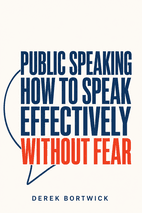
What is the book Public Speaking How To Speak Effectively Without Fear about?
Derek Borthwick's Public Speaking How To Speak Effectively Without Fear treats public speaking as a learnable skill rather than an inborn gift, drawing on clinical hypnotherapy, NLP and thousands of presentations to explain the fight-or-flight response behind glossophobia and how to interrupt it. It covers state control, memory techniques, structuring a talk, hooking attention and rehearsal, aimed at professionals, sales communicators and anyone whose career stalls because they avoid presenting.
Feature
Insta.Page
Blinkist
Shortform
Summary Depth
Full Chapter-by-Chapter
15-min overview
Section-by-section guides
Audio Narration
✓
✓
✓
Full access to all 700+ summaries
✓
✓
✓
Visual Mindmaps
✓
✕
✕
AI Q&A
✓
✕
✕
Missing a book? Request it, usually live within 48h
✓
✕
✕
Quizzes
✓
✕
✕
PDF Downloads
✓
✕
✓
Send to Kindle
✓
✓
✓
Price
$89.99/yr
$146/yr (PRO)
$199/yr
*Competitor data last verified July 2026.
1 Page Summary
Derek Borthwick's Public Speaking How To Speak Effectively Without Fear treats public speaking as a learnable skill rather than an inborn gift, arguing that avoiding it costs people money, status and credibility. Drawing on his own experience—from a disastrous first presentation at twenty-two to more than three thousand talks later—he reframes glossophobia as an unconscious, belief-driven response that was learned and can therefore be unlearned. The book examines the mechanics behind the fear: the autonomic nervous system's fight, flight or freeze response, the predictive brain, and the gap between conscious and unconscious processing. It also pushes back on genetic determinism, contending that no single gene has been identified behind public-speaking anxiety and that genes supply potential rather than a fixed ceiling.
What makes the approach distinctive is its grounding in clinical hypnotherapy, NLP and practical experimentation rather than generic "just relax" advice, which the author dismisses as useless as telling an overweight person to eat less. Chapters address state control through posture and body language (including the power pose), memory and recall using mental pictures and journeys, and managing the narrow, subjective nature of perception and memory. Practical craft is covered in detail: structuring the main body around whether a talk informs, entertains or educates; hooking attention in the first five minutes; timing a script with dictation software at roughly a thousand words per ten minutes; and sustaining attention through devices like the 7/20 rule. Later chapters cover audience questions and the five question types, mingling as research before a talk, stage positioning and confident body language, a three-part rehearsal process covering how you look, how you sound and how you make people feel, and advanced techniques such as the eyebrow flash, cold reading, and pacing and leading. A chapter on storytelling cites Uri Hasson's neural coupling research and Endel Tulving's work on memory and imagination to explain why narrative holds an audience.
The book is aimed at anyone who dreads presenting—professionals whose careers stall because they step back from speaking, sales and business communicators, and readers who simply want to develop self-confidence. Its closing message is that becoming a confident speaker is never finished: readers should break the skill into small parts, practise each one, and keep returning to the material in digestible portions. Supporting tools, including a companion audio track and a bonus download listing public speaking mistakes to avoid, extend the learning beyond the page. What readers gain is a structured, technique-rich framework for understanding their fear, interrupting the response, and building delivery skills through deliberate practice—premised on the idea that even seemingly natural speakers have usually spent hours refining their craft.
CHAPTER 1
Overview
Being asked to present can trigger dread and sleepless nights, even when the request is routine. The discomfort arrives before anything has gone wrong, and stepping back from speaking can quietly stall a career. What do you do when the skill is unavoidable but your body and mind refuse?
Public speaking is a learnable skill, not a birthright, and avoiding it costs money, status and credibility. A first attempt at twenty-two, during a sales-training introduction, brought a racing heart, stomach flutters and anxiety. More than three thousand presentations later, the mistakes have been made, and this process is meant to spare others the same errors. A companion audio track is offered to help reprogram how you think about speaking, with medical cautions.
Fear Before Anything Happens
When someone is told to give a talk, the mind often runs ahead into imagined failure. Nerves arrive before any speaking occurs; some people feel dread or nausea, others lose sleep, and a few invent illness to escape. Tiredness drains energy and makes fear, tension and panic worse. Imagination has taken over before the event even starts; the mind is running away with you. Thoughts therefore matter: they must be noticed and governed.
The Career Cost
Public speaking anxiety is common. Spijck (2011) reported that eighty of every hundred people experience it, and four in ten rank public speaking among their three greatest fears. The ability to present shapes how others judge competence, authority and professionalism, and poor delivery can leave a negative impression rather than a neutral one. Pertaub, Slater and Baker (2001) argue that people who refuse to invest in this skill can lose hundreds of thousands of dollars in earnings, fees and opportunities. Reported figures put the earnings loss at ten per cent or more and the career-prospect impact at fifteen per cent. A 2017 GMAC survey of more than six hundred employers ranked oral communication first among desirable skills and presentation skills fourth. A 2014 Marketwired/Harris poll of 2,031 employees found that twelve per cent would let someone else present even if it hurt how they were perceived at work, while seventy per cent of those who did present called it essential to success.
Proof That People Change
Great speakers are not simply born. Childhood shyness and a refusal to enter nursery school gave way to enjoyment of the stage. At a local public speaking club, a tall, handsome man who had been bullied and lacked confidence could not speak for ten seconds on an impromptu topic; he went red, muttered and retreated. With coaching, practice and the learning audio, his later video was so transformed that he was initially unrecognizable. Another older, life-experienced client changed in less than three hours. Henry Ford's line, “Whether you think you can or think that you can't; you are right,” anchors the point that belief comes before technique.
When the Room Turns
Audiences remember bad judgment. A wedding best man linked the groom's self-pleasure to a national tragedy, disclosed unflattering habits such as eating pizza from public bins, and told bridesmaids they needed diets until one cried and the father of the bride pulled him down. The speech was cut from the official video. A bonus resource covers subjects to avoid. A poor talk leaves you with a flat, sinking feeling, especially when effort meets a bored audience. The goal is to connect with the room, not just get through it.
Key Takeaways
Catch the fear while it is still in your head: when asked to speak, name the imagined failure and correct it before the event, because untreated anticipation drains sleep, energy and confidence and spirals before you reach the room.
Treat presentation training as a career investment with a measurable price: Pertaub, Slater and Baker estimate that refusing to invest in the skill can cost hundreds of thousands in earnings, fees and opportunities, so schedule coaching and practice rather than waiting for confidence.
Set your expectation from the transformations in this chapter: shy, unpracticed speakers have changed in hours and weeks with coaching and repetition, so book the club, coach or audio program and measure progress by recorded attempts rather than by how you feel beforehand.
Check every story and joke against the audience in front of you, and if faces go flat, change course mid-talk; a humiliating line can outlast the speech, and getting through the talk is not the goal.
Key concepts: CHAPTER 1
CHAPTER 1
Anticipatory Fear and Its Impact
Fear arrives before speaking, causing dread, nausea, or insomnia.
Imagined failure drains energy and worsens anxiety.
Notice and govern thoughts to prevent spiraling.
Career Consequences of Avoiding Speaking
80% experience anxiety; 40% rank it among top fears.
Avoidance can cost hundreds of thousands in earnings.
Oral communication ranked top skill by employers.
Transformability Through Practice
Great speakers are made, not born.
Shy individuals can transform with coaching and repetition.
Belief precedes technique: 'Whether you think you can...'
Audience Awareness and Connection
Audiences remember bad judgment; avoid offensive content.
Aim to connect, not just get through the talk.
Adjust mid-talk if faces go flat.
Actionable Strategies for Improvement
Catch and correct imagined failure early.
Invest in coaching and practice as career investment.
Measure progress by recorded attempts, not feelings.
💡 Try clicking the AI chat button to ask questions about this book!
CHAPTER 2
Overview
Almost everyone who dreads speaking in front of a room has tried to talk themselves out of it, and the dread returns anyway. The usual advice to relax or stop worrying lands like an instruction to be someone else. What is actually driving the response, and what can interrupt it, remains unclear.
Glossophobia is widespread. A 2014 Chapman University poll placed public speaking among Americans' top five fears. The familiar claim that people dread it more than death depends on how the question is framed. According to the book, the response is unconscious and belief-driven, not something reasoned away; telling someone not to worry is as useful as telling an overweight person to eat less and move more. Because the fear was learned, it can be unlearned, provided the desire is genuine.
Finding the Pattern
In clinical hypnotherapy and NLP training, a practitioner demonstrated phobia cures by asking anxious clients how they produced the anxiety, then what had to happen first. Step by step, the trigger and sequence emerged. Public-speaking fear follows a similar pattern, and because the sequence can be interrupted, it can be reversed. That work belongs to therapy, and severe anxiety deserves a qualified professional.
Nerves and the Amygdala
Feeling overwhelmed yields to small chunks, much as learning a guitar piece a few bars at a time does; the old phrase is "cinch by the inch." According to the book, the amygdala, an almond-shaped cluster in the limbic system, regulates fear and aggression, ties emotion to memory and drives fight-or-flight. Strong feeling strengthens a memory, but memory can be changed. An inner critic pulls attention from the present into imagined or remembered failure, and Shakespeare's point is that thinking makes things good or bad.
Context, FEAR and PEAR
Speaking itself does not make people nervous; reaction and context do. A narrow countryside footpath is easy, but the same width on a mountain with sheer drops feels impossible, though walking is unchanged. Onstage before thousands, the risk assessment shifts. The common fears are:
making a fool of yourself
forgetting the material
feeling self-conscious
what others think
failure
ridicule
FEAR means future events, or future expectations, appearing real. Nerves are natural and show care; some speakers complain they were not nervous enough. Uncontrolled, nerves become a "runaway state" run by the unconscious, often imagination used badly. PEAR means past events appearing real: memory is selective, as sports arguments and rewatching a film show. Napoleon's line about history being agreed-upon lies makes the point.
Key Takeaways
Accept that your fear of speaking was acquired rather than argued into place, and treat it as a response you can unlearn; if it is severe, work with a clinician who specializes in anxiety.
Chart the exact sequence that carries you from calm to panicked, starting with the earliest trigger, because interrupting a known chain is easier than fighting a vague dread.
Reduce the task to a size you can actually rehearse, then build outward, so you meet a series of manageable moments instead of one overwhelming event.
Distinguish the act of speaking from the setting and stakes around it: the same voice can feel ordinary on a quiet path and impossible on a cliff edge, so assess the context rather than the skill.
Sort your anxiety into imagined futures and replayed past embarrassments, then bring your attention back to the present audience and the material in front of you.
Key concepts: CHAPTER 2
CHAPTER 2
Glossophobia and Learned Fear
Public speaking fear is widespread, affecting many people.
Fear is unconscious and belief-driven, not reasoned away.
Since fear was learned, it can be unlearned with genuine desire.
Finding the Anxiety Pattern
Identify the trigger and sequence that leads to anxiety.
Interrupting the known chain is easier than fighting vague dread.
Severe anxiety requires a qualified professional.
The Amygdala's Role in Fear
Amygdala regulates fear, aggression, and fight-or-flight response.
Strong emotion strengthens memories, but memories can change.
Inner critic pulls attention from present to imagined failure.
Context and Cognitive Distortions
Speaking itself doesn't cause nerves; reaction and context do.
FEAR: Future Events Appearing Real; PEAR: Past Events Appearing Real.
Nerves are natural; uncontrolled, they become a runaway state.
Practical Strategies for Managing Fear
Chart the exact sequence from calm to panicked.
Reduce the task to manageable chunks and build outward.
Distinguish speaking from setting; assess context, not skill.
Sort anxiety into imagined futures and past embarrassments.
CHAPTER 3
Overview
People are expected to manage their emotions with no instruction manual, and stress can hijack thinking and behavior before anyone understands what is happening. The difficulty is not knowing which internal signals to trust or how to regain control when the body reacts faster than the mind.
The brain and nervous system arrive without an instruction manual, so people learn their own wiring by trial and error and often never master it. Understanding the autonomic nervous system, the predictive brain, and the split between conscious and unconscious processing explains why stress derails speaking and why practice can change behaviour.
Two Nerve Centres
The autonomic nervous system runs below awareness. Its two branches regulate organs in response to stimuli, with the hypothalamus maintaining homeostasis. The parasympathetic nervous system manages rest and digestion. The sympathetic nervous system handles fear and stress: the amygdala signals the hypothalamus, and overstimulation triggers fight, flight, or freeze. Blood shifts to large muscles, breathing becomes shallow and high in the chest, heart rate rises, nonessential systems shut down, and peripheral vision narrows to tunnel vision. Digestion and immunity pause. Stress can show as pallor, a pale lower lip, cold or moist hands, and ketosis breath; rest reverses these signs.
Stress and Prediction
In a heated argument, blood drains from the prefrontal cortex and critical function closes down. Words fail, the voice tenses, and reading becomes repetitive without comprehension; memory and social engagement suffer as survival instinct takes over.
The brain is a predictive mechanism, comparing the environment with its model. Mismatches are raised to consciousness. Most people on a street go unremembered unless attractive, unusual, or behaving strangely; a clown breaks the prediction and seizes attention. This saves energy because thinking is hard work.
The Three-Brain Model
Paul McLean's triune model offers a metaphor for three specialised brains:
Reptilian, stem brain, or paleocortex.
Mammalian, midbrain, or limbic system, also called the chimp brain.
Human or neocortex brain.
The reptilian brain filters messages, handles much of fight, flight, or freeze and primitive emotions including procreation, and prioritises survival. It brakes automatically when an animal runs out and judges friend or foe. It wants to know:
Is it new?
Is it exciting?
Is it interesting?
Is it complicated?
Does it get to the point quickly?
The limbic system attaches social meaning and emotion after the reptile assesses information; it is the honest brain. The neocortex handles logic and critique and acts as the lying brain, justifying irrational behaviour. Information passes from reptile to midbrain to neocortex.
A Sales Demonstration, Hijacked
At a free currency-trading session in a hotel, twenty people watched a polished video before a presenter in his early thirties demonstrated a live trade. He refused questions with a stop-sign gesture. The visitor left after ten minutes, later seeing that he lost both the information and the event's formula. Reptile and midbrain had hijacked him before his critical brain could evaluate. A confused or suspicious mind tends to refuse. Plausibility, not truth, can make an idea seem real, and each person's reality is a map built by generalising, distorting, and deleting sensory data.
Plasticity and the Reversed Bicycle
The brain has around a hundred billion neurons. David Eagleman's Livewired puts their connections at about 0.2 quadrillion, with twenty times more connections in a cubic millimetre of cortical tissue than people on the planet. William James coined plasticity, now neuroplasticity, for the brain remoulding itself throughout life.
Engineer Destin Sandlin mastered a bicycle with reversed steering after several weeks of practice and feedback. Returning to a normal bicycle briefly defeated him, but practice let him ride both. Repeated use wears a path through a cornfield; a new path is hard at first, and the old one remains.
Twin Minds and the Bus
The conscious mind is critical and holds limited information. George Miller's 1956 paper gave rise to the 7 plus or minus 2 model, a useful metaphor for conscious capacity. Overload crashes it. The unconscious mind controls breathing, heart rate, blood sugar, body temperature, digestion, and healing; only blinking and breathing can be consciously overridden. It takes things literally and responds to imagery, repetition, emotion, and stories. The conscious mind is the bus driver, the unconscious the bus. A faulty bus veering left has its control room guarded by the conscious, critical mind; getting past requires distracting the guard, waiting until attention sleeps, or making small, subtle changes regularly.
Learning a New Skill
Learning passes through the four stages of learning:
Unconscious incompetence: not knowing a skill is missing.
Conscious incompetence: knowing one cannot do it.
Conscious competence: doing it with concentration, not yet naturally.
Unconscious competence: the skill is hard-wired and automatic.
Breaking skills into small chunks and practising moves conscious competence toward unconscious competence.
Key Takeaways
Regulate your own stress response before you try to regulate your words: slow your breathing, widen your attention, and let rest restore the prefrontal functions that stress shuts down.
Build your message for the oldest brain first by making it novel, clear, and quick to grasp, then give the emotional midbrain a reason to care before you ask the logical neocortex to judge it.
Change a habit by repeating small, deliberate variations with feedback until the new pattern becomes automatic, and test it alongside the old pattern so you can operate under either set of rules.
Expect the middle of skill learning to feel effortful and clumsy; keep drilling the small chunks until they run without conscious supervision instead of treating the awkward stage as proof you cannot do it.
Give the conscious mind a simple, plausible frame to hold while you reach the automatic mind through imagery, repetition, and story, since the critical guard will veto what it cannot make sense of.
Key concepts: CHAPTER 3
CHAPTER 3
Autonomic Nervous System
Two branches: parasympathetic (rest/digest) and sympathetic (fight/flight/freeze).
Confused or suspicious minds tend to refuse; plausibility, not truth, makes ideas seem real.
Each person's reality is a map built by generalizing, distorting, and deleting sensory data.
Neuroplasticity and Learning
Brain has ~100 billion neurons and ~0.2 quadrillion connections; remolds throughout life.
Reversed bicycle experiment: practice and feedback rewire steering, but old path remains.
Four stages: unconscious incompetence, conscious incompetence, conscious competence, unconscious competence.
Conscious and Unconscious Minds
Conscious mind: critical, limited capacity (7±2); overload crashes it.
Unconscious mind: controls breathing, heart rate, digestion; takes things literally.
Conscious is bus driver, unconscious is bus; to change autopilot, distract guard or make subtle changes.
Stress Regulation Before Communication
Slow breathing and widen attention to calm your own stress response first.
Let rest restore prefrontal functions that stress shuts down.
Regulate yourself before attempting to regulate your words.
CHAPTER 4
Overview
Most people treat public speaking ability and the fear of it as inborn traits, fixed before anyone gets a chance to improve. If that were true, effort and awareness would hit a hard ceiling, and the real question would be whether that ceiling exists at all.
No settled evidence identifies a single gene behind public-speaking anxiety, despite media reports of a gene for a condition. Nature and nurture are hard to separate; great speaking comes from a mix of factors, not inheritance alone. A claim need only sound plausible to be accepted.
Genes as Potential
Darwin's 1859 Origin of Species described inherited traits; Watson and Crick's 1953 DNA discovery dominated newspapers, and genes became central to the nature-nurture debate. Darwin later wrote to Moritz Wagner in 1876 that he had undervalued direct environmental effects such as food and climate.
Single-gene disorders affect under two per cent of people, according to the book:
Huntington's chorea
beta thalassemia
cystic fibrosis
Diabetes, heart disease and cancer involve many genes interacting with environment. Media conflates correlation with causation: a link to disease is not a cause. Nijhout's 1990 paper, "Metaphors and the Role of Genes and Development", argues that gene control of biology has been repeated so long it is treated as truth rather than hypothesis. Genes are potential awaiting activation.
The Cell Membrane and Epigenetics
The signal comes from two environments:
Internal physiology.
External surroundings.
The cell membrane is the command centre; the nucleus handles reproduction. Two proteins sit on its surface:
Receptor proteins carry antennae tuned to glucose, insulin or photons.
Channel proteins open to admit the signal.
Perception, interpreted by the brain, shapes behaviour. Epigenetics, meaning control above genetics, shows that stress, emotion and nutrition can modify gene expression without changing the blueprint, and those changes can pass to future generations. The book notes that hormones which suppress immunity during stress are given to transplant patients to conserve energy; chronic stress can bring sickness, and its source is belief, not genes.
The Four-Minute Mile
The mile record stood at 4:01 through the 1940s, and some doctors and scientists called a sub-four-minute mile impossible. On 6 May 1954, in cold, wet conditions at Iffley Road, Roger Bannister ran 3:59.4. John Landy broke it within 46 days. More than 1,400 athletes have since broken four minutes. A limiting belief can constrain what seems possible; genes are potential that thought can alter, and destiny remains in our hands apart from the small share of inherited disease.
Key Takeaways
No gene has been shown to cause public speaking anxiety or most complex human traits; the better model is many genes responding to environment, which makes any single-gene explanation a hypothesis rather than a finding.
A reported association between a gene and a disease is routinely read as a cause, yet a link is not a cause and only a small minority of disorders trace to one gene.
The membrane, not the nucleus, is where the body receives and answers signals, so gene expression is a responsive process that stress, nutrition and emotion can modify, sometimes across generations.
The four-minute mile is evidence that a limit treated as biological can dissolve once someone breaks it; inherited capacity sets a range, not a destiny.
Key concepts: CHAPTER 4
CHAPTER 4
Genes as Potential, Not Destiny
No single gene identified for public speaking anxiety or complex traits
Single-gene disorders affect under 2% of people
Most traits involve many genes interacting with environment
Genes are potential awaiting activation, not fixed outcomes
Correlation vs. Causation in Genetics
Media conflates correlation with causation
A link to disease is not a cause
Gene control of biology treated as truth, not hypothesis
Nijhout argued gene control is a metaphor, not fact
Cell Membrane and Epigenetics
Cell membrane is command centre; nucleus handles reproduction
Receptor and channel proteins receive signals
Epigenetics: environment modifies gene expression without changing DNA
Stress, nutrition, emotion can alter gene expression across generations
The Four-Minute Mile: Breaking Limiting Beliefs
Doctors once called sub-four-minute mile impossible
Bannister broke record in 1954; many have since
Limiting beliefs constrain what seems possible
Inherited capacity sets a range, not a destiny
Implications for Public Speaking Anxiety
Anxiety is not genetically fixed; effort and awareness can improve it
No ceiling exists from inheritance alone
Beliefs about innate ability can be overcome
Destiny remains in our hands apart from rare inherited diseases
You've reached the end of the free chapters
Next chapter: “CHAPTER 5” is locked
Keep reading Public Speaking How To Speak Effectively Without Fear — and unlock all 700+ book summaries with audio, mindmaps and AI Q&A.
$0.00 due today · 7 days free, then $89.99/year ($7.49/mo) · Cancel anytime before day 7
plus sales tax where applicable
More ways to explore Public Speaking How To Speak Effectively Without Fear
Derek Borthwick is a published author whose insightful works explore the intricate dynamics of human psychology and personal development. His expertise lies in demystifying complex concepts, making them accessible and actionable for a broad audience. Borthwick's notable publications, available on Amazon, have garnered praise for their practical wisdom and engaging style. He is dedicated to empowering readers with the tools to enhance their mindset and achieve meaningful growth. Through his writing, he continues to make a significant contribution to the field of self-improvement, establishing himself as a thoughtful and influential voice.
Frequently Asked Questions about Public Speaking How To Speak Effectively Without Fear
What is Public Speaking How To Speak Effectively Without Fear about?
This book is a practical guide to mastering public speaking by addressing both the mechanics of delivering a talk and the unconscious fear that derails so many presenters. It walks through how the nervous system produces anxiety, why the fear is learned rather than innate, and how techniques like state control, anchoring, and body language can interrupt that response. On the practical side, it covers structuring a talk, hooking an audience in the first five minutes, timing your material, memorizing without notes, handling Q&A, and rehearsing with video and audio feedback. Throughout, the emphasis is on small, repeatable practice rather than innate talent.
Who is the author of Public Speaking How To Speak Effectively Without Fear?
Derek Borthwick is a public speaking coach who has delivered more than three thousand presentations, beginning with a nerve-wracking sales-training introduction at age twenty-two. His background includes clinical hypnotherapy, NLP training, and the study of how the mind and nervous system drive fear responses, all of which inform his approach to curing speaking anxiety rather than merely managing it. He writes from hard-won experience, aiming to spare readers the mistakes he made along the way.
Is Public Speaking How To Speak Effectively Without Fear worth reading?
It is worth reading because it treats public speaking as a learnable skill rather than a personality trait, giving readers a clear path from dread to confidence. The book combines an explanation of why the fear response happens with concrete, actionable tools — from posture-based state control and the 7/20 attention rule to rehearsal methods and question-handling tactics. Readers who have tried generic advice to 'just relax' will find a more systematic approach here, one that addresses the unconscious patterns behind the anxiety.
What are the key lessons from Public Speaking How To Speak Effectively Without Fear?
Fear of public speaking is a learned, unconscious response with a trigger and sequence that can be identified and reversed, not a fixed trait you are born with. Managing your emotional state on purpose — using posture, anchoring, and rehearsal — matters as much as the words you say, because audiences remember the feeling you created. Audiences retain very little and decide within minutes whether to listen, so talks need a strong early hook, simplicity, and deliberate changes of pace to hold attention. Finally, mastery comes from breaking the skill into small parts, practising each one until it is automatic, and continuing to refine over time.
📚 Explore Our Book Summary Library
Discover more insightful book summaries from our collection