As an Amazon Associate, we earn from qualifying purchases.
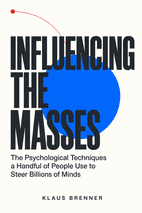
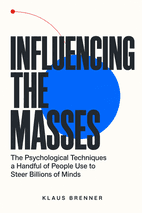
What is the book INFLUENCING THE MASSES about?
Klaus Brenner's INFLUENCING THE MASSES traces mass persuasion through historical episodes from Le Bon's Paris to Bernays' cigarette stunt, Lippmann, Jung, the Chomsky-attributed manipulation list, and Haugen's testimony, arguing awareness alone doesn't protect you. Written for ordinary citizens who want daily habits for guarding their own judgment.
Feature
Insta.Page
Blinkist
Shortform
Summary Depth
Full Chapter-by-Chapter
15-min overview
Section-by-section guides
Audio Narration
✓
✓
✓
Full access to all 700+ summaries
✓
✓
✓
Visual Mindmaps
✓
✕
✕
AI Q&A
✓
✕
✕
Missing a book? Request it, usually live within 48h
✓
✕
✕
Quizzes
✓
✕
✕
PDF Downloads
✓
✕
✓
Send to Kindle
✓
✓
✓
Price
$89.99/yr
$146/yr (PRO)
$199/yr
*Competitor data last verified July 2026.
1 Page Summary
Klaus Brenner's Influencing the Masses argues that mass persuasion is not a mysterious or marginal phenomenon but a describable set of psychological techniques that a small number of actors have used, again and again, to steer the behavior of millions. The book builds its case through a series of historical episodes: Gustave Le Bon walking the burning streets of Paris in 1871 and concluding that a crowd is "a different chemical substance from an individual"; Edward Bernays staging the 1929 "Torches of Freedom" cigarette march as a paid performance of emancipation for the American Tobacco Company; Walter Lippmann's island parable showing that people act not on the world but on the reports of it that reach them; and Jung's diagnosis of a nation in "mass psychosis." Later chapters trace the same logic through the propaganda model of Chomsky and Herman, the Marlboro cowboy's shift from selling a product to selling an identity, Frances Haugen's testimony on engagement-optimized algorithms, the scaling-up of gaslighting and DARVO from the kitchen table to the country, and Orwell's wartime diary as a daily discipline of defending one's own judgment.
What distinguishes the book is its insistence that recognizing manipulation is not the same as resisting it. Brenner shows that the famous "Ten Strategies of Media Manipulation" attributed to Chomsky was written by Sylvain Timsit, reached almost no one under its true author's name, and reached millions once Chomsky's name was attached—a list of manipulation techniques spread by a manipulation technique. The techniques, he concedes, are real and in daily use, and "being aware of them doesn't protect you." The book refuses the comfort of a memorizable checklist, and it also refuses to blame the tools themselves: in its closing chapters, Mandela donning the Springboks jersey at the 1995 Rugby World Cup final makes the case that influence is not bad in itself, since the same instruments Bernays bent toward private profit Mandela channeled toward dignity. The through-line is that the hardest case is no longer the visible rally but influence spread across billions of private screens, each person feeling alone and free.
The intended audience is the ordinary citizen who takes in a constant stream of information and wants to keep their judgment, attention, and outrage from being slowly shaped without a single fix that holds. Brenner writes for readers who suspect that the usual tools for understanding individuals stop working once people gather, and who want a historical and psychological vocabulary for what happens when they do. What they gain is not a guarantee of immunity but a set of daily habits in the spirit of Orwell's notebooks—asking each evening whether a feeling was one's own or had been put there—and the trained eye to spot, in Lippmann's phrase, the gap between events and what reaches them as the place where consent becomes both necessary and dangerous.
CHAPTER ONE
Overview
Ordinary neighbors can become a revolutionary army and then a mob of executioners in a matter of weeks. What changes when people gather is not obvious, and the usual tools for understanding individuals seem to stop working. Anyone who needs to move such a group faces a problem no amount of reasoning appears to solve.
The Question in the Ashes
On 28 May 1871, Paris was still burning: the Tuileries had been ash for three days, the Hotel de Ville was a blackened shell, and the Quai d'Orsay palace still smoked. Versailles troops under Marshal de Mac-Mahon hunted Communards and shot them; the semaine sanglante killed perhaps ten thousand to twenty thousand people in seven days. A thin, dark-bearded man of thirty walked the streets dressed as a military doctor, taking notes but treating no one. Gustave Le Bon carried a question for twenty-four years: what turned his neighbors, the baker's wife and the pharmacist, into revolutionary soldiers and then executioners? His answer was unsettling: no particular event had to occur. People occupied the same place at the same moment, and a crowd is a different chemical substance from an individual.
A Polymath With a Manual
Le Bon was born in 1841 in Nogent-le-Rotrou, took a medical degree, and never practiced. He wrote on anthropology, archaeology, physics, photography, horsemanship, Buddhism, and Arab civilization, patented a device for measuring criminals' heads, published a cavalry manual used for forty years, and traveled to Nepal, India, and North Africa. He was racist and misogynist in the manner of many European intellectuals of his era. The insight survives; the prescriptions do not. In 1895 he published Psychologie des foules, The Crowd: A Study of the Popular Mind, under two hundred pages. It sold slowly, was translated into English, German, Russian, Spanish, and Italian, and by 1920 was the most widely read book on its subject in the West.
Four Claims About Crowds
A crowd is not a sum. A thousand people gathered for the same thing form a new creature with its own mind, will, and memory. Hydrogen and oxygen are gases; combined, they make water. Studying individuals to understand a crowd is like studying hydrogen to learn to swim.
The creature is impulsive, credulous, incapable of sustained reason, and thinks in images. It exaggerates emotion, knows no half measures, forgets its positions, and can cheer a leader in the morning and lynch him in the afternoon. It is not stupider than its members; the critical part that says wait switches off, and something older and faster switches on. The Paris bourgeois knew burning the Tuileries was terrible, but in the crowd he knew it faintly.
To move a crowd there are only three instruments: assertion, repetition, and contagion. Assertion states without proof. Repetition says the same words until they sound like a feature of the world and the hearer forgets who said them first. Contagion follows: a few believe and say it loudly, and others imitate. A chant starts in a stadium and soon twenty-five thousand sing; none decided to sing, their bodies did the rest. The same mechanism carries pogroms.
Every crowd has a leader, a meneur, not necessarily the most intelligent or educated, who possesses prestige: self-assurance, theatricality, and absence of doubt. He is a man of action, not a thinker, and seems to believe what he says in a way reasonable people cannot imitate. The recipe to recognize is assertion, repetition, contagion, prestige.
Le Bon worked this out in 1895, before Hollywood, radio, television, and TikTok, from Boulanger's rallies, Hugo's funeral, Dreyfus-affair demonstrations, and memories of the Commune.
The Readers Who Took It Seriously
Mussolini read Le Bon as a young socialist; in a 1932 interview with Emil Ludwig he called The Crowd his bedside book and the key to leading a people. Hitler's Mein Kampf chapter on propaganda echoes Le Bon: the mass thinks in images and simple emotions, the message must be repeated to exhaustion, and propaganda must never be intelligent because it addresses the least intelligent. Lenin read and used him; Bolshevism made mass propaganda a state art. Freud answered in 1921 with Group Psychology and the Analysis of the Ego, accepting a crowd psychology with its own rules.
Le Bon was conservative, authoritarian, and wrong about democracy, women, and races, but descriptively frighteningly accurate. Goebbels's radio, Bernays's campaigns, Berlusconi's talk shows, and Zuckerberg's feeds all kept finding new ways to assert, repeat, and infect. He gave propaganda a manual and made it a science. Edward Bernays, Freud's nephew, born in Vienna and raised in New York, would take that manual to corporations and manufacture public opinion like a car on an assembly line, made to measure for the client who pays.
Key Takeaways
A crowd behaves as a separate entity with its own impulses and memory, so people who would hesitate alone can be carried into actions none of them would defend afterward.
Belief moves through a crowd by a mechanical loop rather than by argument: a bare claim repeated until it feels like the shape of the world, then echoed by a few loud voices, can produce coordinated action without anyone consciously choosing it.
Crowd leadership flows to performed certainty rather than expertise; the person who seems unable to doubt sets the direction, and theatrical self-assurance matters more than intelligence or education.
The same pattern of assertion and echo became the operating grammar of mass propaganda, advertising, and social media, so it is the pattern to expect wherever large audiences are addressed at once.
Key concepts: CHAPTER ONE
CHAPTER ONE
The Crowd as a New Entity
Ordinary neighbors can become a revolutionary army and then executioners within weeks.
A crowd is a different chemical substance from an individual, not a sum of members.
The critical, hesitant part of the mind switches off; something older and faster switches on.
People who hesitate alone can be carried into actions none would defend afterward.
Le Bon and The Crowd (1895)
Gustave Le Bon, a polymath who never practiced medicine, published Psychologie des foules in 1895.
The book was under two hundred pages and became the most widely read work on its subject by 1920.
Le Bon was racist and misogynist; the insight survives, the prescriptions do not.
He worked from Boulanger's rallies, Hugo's funeral, and memories of the Commune.
Four Claims About Crowds
A crowd forms a new creature with its own mind, will, and memory.
The creature is impulsive, credulous, thinks in images, and exaggerates emotion.
Three instruments move a crowd: assertion, repetition, and contagion.
Every crowd has a leader with prestige: self-assurance, theatricality, absence of doubt.
Readers Who Took It Seriously
Mussolini called The Crowd his bedside book and key to leading a people.
Hitler's Mein Kampf propaganda chapter echoes Le Bon: repeat to exhaustion, never be intelligent.
Lenin read and used him; Bolshevism made mass propaganda a state art.
Freud answered in 1921 with Group Psychology and the Analysis of the Ego.
The Legacy: Propaganda as Science
Le Bon gave propaganda a manual and made it a science.
Edward Bernays took that manual to corporations and manufactured public opinion.
Goebbels's radio, Bernays's campaigns, and Zuckerberg's feeds all assert, repeat, and infect.
The pattern is the operating grammar of mass propaganda, advertising, and social media.
💡 Try clicking the AI chat button to ask questions about this book!
CHAPTER TWO
Overview
A public act can look like a spontaneous demand for freedom and still be a paid performance. The question is what happens to a society when its symbols of independence are designed for it, and nobody can tell the difference.
Torches of freedom
On Easter morning, 31 March 1929, ten young women walked up Fifth Avenue past St. Patrick's Cathedral and lit cigarettes in public. Back then that was a scandal, because people took a woman smoking on the street for loose. Photographers had been tipped off two days earlier, and the one reporter interviewed had memorized her line about "torches of freedom" as a blow for emancipation. The women were paid models; the movement did not exist. Edward Bernays, thirty-seven, staged it for the American Tobacco Company, whose president, George Washington Hill, wanted the half of the market that did not smoke. A. A. Brill, an early Freud follower in New York, had told him that in the female unconscious a cigarette stands for the penis, so denying it to women amounted to a kind of castration. The campaign sold an identity rather than a product, and smoking among American women rose by more than three hundred percent over the following decade, according to the book. Bernays later regretted it; his wife took up the habit in those years and struggled to quit.
Vienna, and the Committee on Public Information
Bernays was born in Vienna in 1891 and raised in New York from the age of one. His mother, Anna Freud, was Sigmund Freud's sister, and his father Ely was the brother of Freud's wife Martha, so he was the analyst's nephew twice over. His real schooling came during the First World War, when Woodrow Wilson created the Committee on Public Information under George Creel to sell a war that fewer than thirty percent of Americans backed. It produced seventy-five million pieces of print and sent seventy-five thousand Four Minute Men onto movie theater stages to speak during reel changes; within six months support passed seventy percent. When propaganda became a dirty word after the war, Bernays renamed the trade and became a public relations counsel, the first to make a living at it openly.
Selling the frame
In 1925 Beech-Nut's bacon was not selling, because Americans ate toast and coffee. Bernays had his family doctor put the question of whether a large breakfast was healthier to the forty-five hundred physicians on his register, and most agreed that it was. Marketed as a national survey, with eggs and bacon offered as the obvious example, it became the standard middle-class breakfast within three years and the American breakfast within ten. The product was never sold, only the setup that made buying it look natural.
United Fruit had been his client for nearly a decade when Guatemala's elected president, Jacobo Arbenz, moved in 1951 to take over uncultivated estates, paying owners the values they had themselves declared for tax. With the State Department and the CIA, Bernays cast a moderate reformer as Moscow's bridgehead near Texas, flying reporters from the New York Times, Time, Newsweek and Life down on United Fruit's money with prepared dossiers. Eisenhower authorized Operation PBSUCCESS; in June 1954 mercenaries crossed from Honduras, aircraft bombed the capital, and the government collapsed in ten days. The civil war that followed ran thirty-six years and left around two hundred thousand dead, mostly Maya farmers, in killings a United Nations commission later called genocide. He never repented of Guatemala.
Propaganda
Crystallizing Public Opinion appeared in 1923, Propaganda in 1928, The Engineering of Consent in 1947. Propaganda argues that manipulation of mass opinion is essential to democratic society, that those who run this unseen mechanism form a hidden government that truly rules, and that our ideas are suggested by men we have never heard of. He published it openly at three dollars fifty and no one cried scandal. He died in 1995 at a hundred and three, telling Boston University historians his techniques were as potent as atomic bombs but bound by no treaty. He never regretted the trade itself.
Ask ten people picked at random in your own neighborhood who Edward Bernays was and none of them will be able to tell you. Yet the breakfast each of them eats, whether they smoke or have given it up, how they dress, what they assume about Latin American politics in the last century, and even their sense of what counts as masculine or feminine have all been shaped, slightly or substantially, by ideas he set circulating a hundred years ago. He got that far, and almost nobody knows his name.
A counterpart
He had a counterpart in the trade, though not a blood relative: Walter Lippmann, born two years before him and dead twenty-one years before him. Lippmann reached the same conclusions from the opposite direction, starting in politics and ending up in advertising, where Bernays travelled the other way. He was one of the most respected journalists in the country, an adviser to presidents, and known around the world as an intellectual. His best-known book appeared in 1922, a year ahead of Bernays's first, and the two men knew each other and read each other's work. They arrived at the same insight twice within a year, from two directions and two very different standings in public life.
The copy and the original
Lippmann's contribution, made as a working journalist rather than a publicist, was an account of how opinion actually forms. People do not deal with the world directly. They work from a rough copy of it, the version the newspapers hand them each morning, and that copy, not the world itself, governs what they do. It is what they fall in love with and what they go to war over. From it they decide whom to believe and whom to lynch.
The consequences run a long way. If the public acts on a copy rather than on events, then the real fight is a fight over the copy, and whoever prints it holds the power. Bernays arrived at that position from the client's side, selling products and then governments; Lippmann arrived at it from the reporter's side, watching how a story becomes the reality people inhabit.
Lippmann's line of work, and the world he spent his career describing, is where the story goes next.
Key Takeaways
The persuasive act that outlasted the cigarette was the sale of an identity rather than a product: a rehearsed line and a tipped-off photographer turned a paid stunt into a claim about freedom, and the habit spread through meaning, not argument.
Bernays's method was to shift the setup until the desired purchase looked like the obvious or healthy choice, and the same technique scales from a doctor's survey about breakfast to the overthrow of a government, with only the budget and the client changing.
The trade sustained itself through a specific kind of invisibility, renaming propaganda when the word became unusable, publishing its own theory in plain sight without scandal, and leaving its founder unknown to the people whose habits he set.
The parallel with Lippmann matters more than the coincidence of dates: if people act on the newspaper's version of events rather than on events, then power belongs to whoever prints that version, and both men reached that position from opposite ends of the same business.
Key concepts: CHAPTER TWO
CHAPTER TWO
Torches of Freedom
1929 staged cigarette lighting by paid models as feminist protest
Bernays orchestrated for American Tobacco to capture female market
Freudian symbolism: cigarette as penis, smoking as emancipation
Female smoking rose over 300% in a decade
Bernays's Background and Wartime Propaganda
Nephew of Sigmund Freud, born Vienna 1891, raised New York
WWI Committee on Public Information sold war to skeptical public
75 million pieces of print, 75,000 Four Minute Men speakers
Support rose from under 30% to over 70% in six months
Selling the Frame: Bacon and Guatemala
Beech-Nut bacon: used doctors' survey to make big breakfast standard
Guatemala 1954: cast reformer as Soviet threat, led to coup
Operation PBSUCCESS resulted in 36-year civil war, 200,000 dead
Bernays never repented for Guatemala
Propaganda and the Engineering of Consent
Key books: Crystallizing Public Opinion (1923), Propaganda (1928)
Argued manipulation of mass opinion essential to democracy
Hidden government of unseen men shapes our ideas
Died 1995 at 103, unrepentant about techniques
Walter Lippmann: The Counterpart
Respected journalist and presidential adviser, opposite path to Bernays
Reached same insights independently within a year
Known as intellectual, unlike Bernays the publicist
The Copy and the Original
People act on a 'rough copy' of reality from newspapers
This pseudo-environment governs beliefs and actions
Lippmann's 1922 book Public Opinion preceded Bernays's 1923
Also influenced assumptions about Latin American politics
Almost nobody knows his name despite pervasive impact
CHAPTER THREE
Overview
A public can act on a world it has never directly seen, and the gap between events and what reaches people is where consent becomes both necessary and dangerous. If collective judgment depends on accounts supplied from elsewhere, how can it be formed without being managed?
The Island
In August 1914, a handful of English, French and German colonists on a Pacific island keep dining together, playing bridge and lending books for six weeks after Europe has gone to war. The mail boat comes every sixty days. On 15 September newspapers arrive, and within seconds the same people become enemies, though nothing on the island has changed except what is in their heads. Walter Lippmann told this story at the start of Public Opinion in 1922 to make a claim that governs his thought: we inhabit not the world itself but the reports of it that reach us.
Lippmann's Education
Lippmann was born in New York in 1889 into a wealthy German-Jewish family, entered Harvard at seventeen and studied with William James and George Santayana. He graduated in 1910, was a convinced socialist, and in 1914 helped found The New Republic. In 1917 he joined the Creel Committee and the secret Inquiry, helping write Wilson's Fourteen Points while also producing propaganda that sold the war. At Versailles in 1919 he watched the old empires carve up colonies and Wilson's ideals dismantled. Public Opinion, published three years later, asked why democracy fails to work as textbooks say.
The Pseudo-Environment
Lippmann called the result the pseudo-environment: a secondhand map that stands in for reality. The real world is too vast for any person to know more than a tiny fraction. Yet we have firm views about places we have never visited, and we vote, buy and feel outrage according to pictures drawn by journalists, editors, photographers, algorithms, governments, advertisers, schools and relatives.
Three Observations
Lippmann's account rests on a few observations:
The map is made largely of stereotypes. Lippmann took a printing term for a reusable plate and gave it its modern meaning: a simplified picture that lets us navigate a world too complex to judge afresh each time. We slot people into boxes marked by types such as the absent-minded professor, the brutal policeman, the precise German and the cold Englishman. They are how perception works, not a defect. Whoever controls a society's stereotypes controls its deepest opinions.
We see signals, not facts. We resemble a man at the bottom of a well who sees a small circle of sky and infers the weather from the cloud or bird that crosses it. The frame decides what reaches us.
Politics demands more time and expertise than citizens have. The world's complexity outpaces the leisure available to citizens, so classical democracy, with an informed public deciding, has become a myth.
Lippmann's response was to hand decisions to experts and manufacture of consent, presenting choices in simplified form. He coined the phrase in 1922 and treated it as a positive necessity, not a scandal.
The phrase "manufacture of consent" has since acquired a sinister reputation, although Lippmann presented it as something positive. The irony sharpens because Noam Chomsky later used the same phrase to dissect the American media system, borrowing it from a man who had offered those words as guidance on improving how the system operated. The borrowing is a crossed wire in the history of ideas: a term meant to describe a necessary function of modern governance became a weapon against the institutions that performed it.
The Lippmann-Dewey debate of 1927 remains just as current. Whenever a political argument opposes:
expertise against democracy
experts against the people
technocrats against elections
it is replaying that exchange. Knowing the debate by name and grasping its two poles sharpens the ear for the political arguments one hears today.
Inside the Machine
Le Bon, Bernays and Lippmann all describe social machinery from the outside. Each observes the apparatus and tries to understand its workings:
Le Bon, a sociologist, studies the crowd.
Bernays, an advertising man, studies its tricks.
Lippmann, a political journalist, studies its maps.
The common stance is that of an outside observer.
A different approach climbs inside the machine, into the people who compose it, to see what is in there. It asks what happens in the brain of a single person who, at a certain moment, stops being an individual and becomes part of a crowd. What is triggered? What switches on? What old, deep and only partly tamed impulse wakes in a civilized human being who finds himself among a hundred thousand people shouting one word?
Carl Gustav Jung supplied the best answer. A Swiss psychiatrist, he had a garden on Lake Zurich, a dream archive that reached the height of a library, and a disturbing idea about what sits in the basement of every mind. His account begins with the individual absorbed into the crowd, and it promises to complete the picture that the external observers had only sketched, better than the others combined.
Key Takeaways
People act on the secondhand version of the world that reaches them, so a shift in that version can turn neighbors into enemies while nothing on the ground has moved.
Stereotypes are the working equipment of perception rather than a flaw in it, which makes the contest over a society's stock figures a deeper form of power than any single message.
Handing decisions to experts and simplifying choices for the public entered political thought as a functional necessity of modern government, and its later career as an accusation is a reversal worth keeping in view.
When expertise is set against the popular will, the Lippmann-Dewey exchange is being replayed, and knowing its two poles makes the present version easier to hear.
The social machine has been mapped thoroughly from outside; what wakes inside one person who dissolves into a crowd is the harder question, and it is the one Jung addresses most completely.
Key concepts: CHAPTER THREE
CHAPTER THREE
The Island Story
Colonists on a Pacific island remain friends for six weeks after war begins.
Newspapers arrive and turn them into enemies overnight.
Lippmann uses this to show we act on reports, not reality.
Lippmann's Background
Born 1889, Harvard-educated, studied under James and Santayana.
Worked on Creel Committee and Inquiry, wrote Wilson's Fourteen Points.
At Versailles saw ideals dismantled; wrote Public Opinion in 1922.
The Pseudo-Environment
We inhabit a secondhand map, not the real world.
The world is too vast for direct knowledge; we rely on pictures from others.
Journalists, editors, algorithms, and governments shape these pictures.
Stereotypes and Perception
Stereotypes are simplified pictures that help us navigate complexity.
They are how perception works, not a defect.
Whoever controls stereotypes controls deep opinions.
Manufacture of Consent
Lippmann proposed experts decide and present simplified choices.
He coined 'manufacture of consent' as a positive necessity.
Chomsky later used the phrase critically, creating irony.
Lippmann-Dewey Debate
The 1927 debate opposes expertise against democracy.
It echoes in modern arguments of technocrats vs. elections.
Knowing the debate sharpens analysis of political rhetoric.
Inside the Machine
Le Bon, Bernays, and Lippmann observed from outside.
Jung climbs inside to study the individual in the crowd.
He asks what deep impulses awaken in a civilized person among a crowd.
CHAPTER FOUR
Overview
What makes a whole society turn a group into the embodiment of evil while ordinary people feel certain they are acting rightly? The question is not why some individuals are cruel, but how collective certainty forms, and it is harder to answer than any familiar account suggests.
In 1936 Carl Gustav Jung, sixty-one, boarded a train for Berlin. He had introduced the collective unconscious, archetypes, the Shadow, and individuation. Berlin meant Hitler three years in power, race laws, and a nation Jung diagnosed with mass psychosis:
loss of critical judgment
identification with an idealized image
projection of evil onto an enemy
omnipotence
detachment from reality
A psychotic individual goes to a clinic; a psychotic nation goes to war.
A House With Several Floors
Jung pictured the psyche as a house. Consciousness is the lit upper floor. Below lies Freud's personal unconscious: repressed memories, childhood wounds, desires we refuse to admit. Jung added a deeper floor no individual built, the collective unconscious, shared by humanity and filled with archetypes. These innate patterns cover:
mother
hero
enemy
journey
death
monster
Shadow
anima
They activate automatically: a child afraid of the dark is not obeying instruction; the monster archetype is doing protective work. Propaganda presses the same buttons. A leader who says an enemy is attacking and asks followers to join him triggers archetypes that work across cultures.
The Shadow and the Enemy
The Shadow is everything a person refuses to be: cruelty, envy, appetite for harm. Balanced people watch it; dangerous people deny it. Denial does not remove it. The Shadow is projected onto the neighbor:
selfishness onto the foreigner
violence onto the enemy
greed onto the immigrant
unconfessed desire onto whoever is different, called perversion and persecuted
Collectively, the target stops being an opponent and becomes Evil, the sole cause of suffering, inhuman, and open to anything. Jung saw this beneath pogroms and genocide. The source is not ignorance or poverty but an unacknowledged Shadow seeking somewhere to unload.
Jung's Compromise
Jung's record is compromised. In 1933 he accepted the presidency of the General Medical Society for Psychotherapy, based in Germany, and stayed as it was nazified. He wrote of Aryan and Jewish psychologies with different collective unconscious layers. He said he remained to protect Jewish colleagues, and documents show interventions; some historians see naivety, others opportunism. Even a man who understood projection could be caught, so understanding manipulation does not confer immunity.
The Individual as Antidote
In The Undiscovered Self (1957) and Civilization in Transition, Jung argued that neither state nor church can defend against mass psychosis. The defense is the individual who has integrated the Shadow through individuation, becoming all of oneself, uncomfortable parts included. The earlier thinkers looked at the crowd from above; Jung looked from inside the person who needs the crowd to feel real, unload the Shadow, and find an enemy who explains inner unease. The crowd is a sign of sickness, not its source. Technical remedies matter, but Jung adds inward work no one can do for another.
Failed Individuation
A paradox: individualism and conformism rise together. Unique people think, buy, and rage alike. Jung called this failed individuation. Without inner work, people substitute surface markers for self-knowledge:
consumer choices
fashionable opinions
identity-group membership
This produces uniformity dressed as individuality. Social media makes it visible: millions repeat the same sentences and share the same outrages within a day, moved by emotional contagion rather than argument, as Le Bon described in 1895. Jung died in 1961, before the internet, but would have recognized it. He quoted Homo homini lupus, man is a wolf to man. The wolf lives where we refuse to look. As long as evil is located only in the neighbor, fear and projected rage leave the strings available to any puppeteer.
Four Views of the Crowd
From Le Bon in 1895 to Jung in 1957:
Le Bon: the crowd is distinct from its members and obeys three levers:
assertion
repetition
contagion
Bernays: those levers can be industrialized, with desire manufactured.
Lippmann: people live in a pseudo-environment, and controlling it shapes opinion unnoticed.
Jung: the unknown self opens us to propaganda.
These are pieces of one puzzle. Next comes practice.
Key Takeaways
The archetypes are the mechanism through which mass persuasion works: propaganda does not install alien feelings but activates patterns already present in every psyche.
Collective cruelty originates in the unacknowledged Shadow of those who commit it; the enemy is chosen because it can carry what the group refuses to see in itself.
Understanding projection offers no immunity, as Jung's own accommodation of the Nazi regime demonstrates; psychological insight and moral failure can coexist in the same person.
The crowd is a symptom of incomplete inner development rather than its cause, so no state, church, or technical fix can substitute for the individual work of integrating what one would rather deny.
Individualism and conformity rise together when inner work is skipped: consumer choices, fashionable opinions, and group identities become substitutes for self-knowledge, producing uniformity that feels like uniqueness.
Key concepts: CHAPTER FOUR
CHAPTER FOUR
Jung's Model of the Psyche
Psyche as a house: consciousness above, personal unconscious below
Collective unconscious is a deeper floor shared by all humanity
I don't have reliable information about an author named Klaus Brenner, so I can't write a factual biography without risking inventing details. If you can share which Klaus Brenner you mean (for example, their field, nationality, or a notable title), I can draft a concise 2-3 sentence biography for you.
Frequently Asked Questions about INFLUENCING THE MASSES
What is INFLUENCING THE MASSES about?
It traces how crowds, publics, and entire nations are moved — from Gustave Le Bon wandering a burning Paris in 1871 and concluding that a crowd is a different substance from an individual, to Edward Bernays paying models to light cigarettes on Fifth Avenue in 1929 as 'torches of freedom.' Along the way it examines Walter Lippmann's argument that we act on reports of the world rather than the world itself, Carl Jung's diagnosis of mass psychosis in 1930s Berlin, and the five filters Chomsky and Herman used to explain how commercial news narrows what reaches the public. Later chapters cover the Marlboro cowboy, Frances Haugen's 2021 Senate testimony about engagement-optimized algorithms, the psychology of gaslighting scaled up to a nation, and Orwell's wartime diary as a daily defense of independent judgment. It closes by weighing Mandela's 1995 Springboks jersey against Bernays's cigarette campaign to ask whether the tools of influence can be judged by their uses.
Who is the author of INFLUENCING THE MASSES?
Klaus Brenner builds the book around a lineage of thinkers and episodes rather than a single argument, drawing on figures such as Gustave Le Bon, Walter Lippmann, Edward Bernays, Carl Jung, Noam Chomsky, Edward Herman, and George Orwell. The narrative moves between historical scenes — the 1871 semaine sanglante, the 1934 Nuremberg rally, the 1995 Rugby World Cup final — and contemporary ones such as Facebook's internal documents and the viral misattribution of a media-manipulation list.
Is INFLUENCING THE MASSES worth reading?
It is worth reading because it connects a century and a half of persuasion technique into one continuous story, showing how Le Bon's 1895 observations were treated as a handbook and how the same mechanics now run quietly through personalized feeds. The case studies are vivid and concrete rather than abstract, moving from paid models on Fifth Avenue to a Pacific island where colonists become enemies the moment the mail boat arrives. Readers come away with a sharper eye for the difference between influence used toward dignity and influence used toward profit.
What are the key lessons from INFLUENCING THE MASSES?
Influence is not inherently corrupt: Mandela wore the Springboks jersey to channel a divided nation's emotions, using the same tools Bernays bent toward cigarette sales, which suggests the moral weight lies in the purpose, not the method. Awareness alone is poor armor — the famous list of manipulation techniques spread virally only after a false attribution gave it authority, proving the tricks work on the people who study them. Modern manipulation is harder to see because it is private and algorithmic, with recommendation systems optimized for engagement favoring outrage and disinformation at scale. The practical counterweight is unglamorous and repetitive: Orwell's evening habit of recording what he was told, what he suspected, and whether his reactions were his own, practiced daily rather than solved once.
📚 Explore Our Book Summary Library
Discover more insightful book summaries from our collection