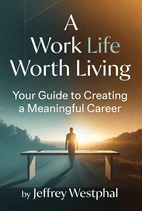
Jeffrey Westphal's A Work Life Worth Living explores how to build a meaningful career by shifting perspective rather than changing jobs, drawing on his journey from activist to CEO through failures, mentorship, and personal crisis. Written for anyone feeling unfulfilled or trapped in their work, from entry-level employees to seasoned leaders.
Feature
Insta.Page
Blinkist
Shortform
Summary Depth
Full Chapter-by-Chapter
15-min overview
Section-by-section guides
Audio Narration
✓
✓
✓
Visual Mindmaps
✓
✕
✕
AI Q&A
✓
✕
✕
Quizzes
✓
✕
✕
PDF Downloads
✓
✕
✓
Price
$89.99/yr
$146/yr (PRO)
$199/yr
*Competitor data last verified July 2026.
1 Page Summary
Based solely on the provided chapter summaries, Jeffrey Westphal’s A Work Life Worth Living is a deeply personal exploration of how to build a career and company rooted in meaning rather than just financial success. The book traces the author’s arc from a passionate college activist to a corporate executive who, despite external success, struggled with imposter syndrome, a compulsive need for approval, and a workaholic lifestyle that nearly cost him his family. The central thesis is that a meaningful career is not found in a new job but in changing how one sees their existing work—shifting from a focus on the “what” to the deeper “why.”
The author’s approach is distinctive for its raw honesty and integration of professional failure with profound personal crisis. He recounts pivotal moments, including a disastrous product launch, a 360-degree feedback survey that shattered his self-image, and a physical altercation that sent him to rehab, as catalysts for growth. Guided by mentors like Jim Patton and Rich Teerlink, who used Socratic questioning, the author discovers that purpose isn’t just a corporate slogan but a feeling of connectedness. He introduces frameworks like the “Rule of Three” for collaborative decision-making, and the “Sphere of Meaning” diagram to illustrate how all work serves fundamental human needs.
The book’s intended audience is anyone feeling unfulfilled, trapped, or disconnected in their career, from entry-level workers to seasoned leaders. Readers will gain not a quick-fix guide, but a reflective journey through one CEO's mistakes and realizations. They will learn that the “ultimate bottom line” is respect for expertise and humility, that meaning must be discovered individually rather than imposed, and that true transformation requires a willingness to be honest about one’s inner compass—the hidden patterns of approval-seeking and avoidance that often drive us. Ultimately, the book argues that meaningful work is built “one brick at a time,” through a shift in perspective, not a change in title.
Foreword by Joseph Jaworski
Overview
In this foreword, Joseph Jaworski reflects on the moment he learned he would succeed his father as head of the company—a moment he now sees as both a gift and a blind spot. With disarming honesty, he confesses the things he completely failed to consider: the impact on his mother and sisters (all of whom worked in the company), the weight the role would place on his marriage, and the unspoken assumptions he and his father made about how others would receive the news. Rather than recounting a triumphant tale of succession, he invites readers into the messy, human side of leadership—the part where you realize you’ve married the company, not just your partner, and where time itself becomes a constant test of your priorities.
The Blindness of Succession
Jaworski’s account reveals how utterly unprepared he was for the emotional and relational dimensions of the transition. He knew his father’s colleagues had poured their lives into building the business, but it never occurred to him to proactively seek their perspectives before the announcement. At thirty-two, with only a few years of relevant experience, he was about to become their boss—and yet no formal or informal conversation was initiated with the family or the team. Looking back, he calls this a profound missed opportunity, one that could have made the transition “more manageable, effective, and respectful of everyone involved.” His regret is palpable, and he holds himself accountable for the silence that surrounded the succession.
Work, Self, and the Inseparable Whole
A deeper realization surfaces as Jaworski considers what leadership actually demands: it isn’t a job you clock out of. Responsibility for an organization’s well-being seeps into every corner of life—waking hours, family dinners, quiet weekends. He notes that even before becoming CEO, many roles (barista, ER doctor) already demand a constant balancing act between self, home, and work. The key insight, he argues, is that you can’t take the self out of work or the work out of self. This isn’t a lament but an honest acknowledgment of the cost of commitment. For Jaworski, the lesson came slowly, through hard experience: leading means your attention is never fully your own.
Action Steps: Impact Assessment
Jaworski includes a pragmatic set of questions for anyone facing a career-defining event. These are not abstract prompts; they emerge directly from his own failure to ask them. The steps guide readers to separate fact from speculation, acknowledge personal feelings, consider how others might interpret the same news differently, and examine the domino effects that ripple outward. Notably, he adds a caution against using AI for this kind of self-reflective work—a reminder that some conversations need to happen in the raw, human space of real relationships.
Key Takeaways
Succession is a relational event, not just a transactional one; ignoring the perspectives of family and colleagues can create lasting regret.
Leadership is inseparable from the rest of life—your attention, priorities, and sense of responsibility become woven into every moment.
Before acting on career news, pause to assess facts versus speculation, understand your own feelings, and consider how the news will land on others.
Some of the most critical conversations—especially those rooted in vulnerability—cannot be outsourced to AI or left unspoken.
Key concepts: Foreword by Joseph Jaworski
1. Foreword by Joseph Jaworski
The Blindness of Succession
Unprepared for emotional and relational dimensions
Failed to seek perspectives of family and team
Missed opportunity for a respectful transition
Holds himself accountable for the silence
Work, Self, and the Inseparable Whole
Leadership is not a job you clock out of
Responsibility seeps into every corner of life
You can't separate self from work or work from self
Leading means your attention is never fully your own
Action Steps: Impact Assessment
Separate fact from speculation before acting
Acknowledge your own feelings about the news
Consider how others will interpret it differently
Examine the domino effects that ripple outward
Key Takeaways
Succession is a relational, not just transactional, event
Leadership is inseparable from the rest of life
Pause to assess facts, feelings, and others' perspectives
Critical conversations cannot be outsourced to AI
💡 Try clicking the AI chat button to ask questions about this book!
Chapter 1: Get a Job!
Overview
Chapter 1 is the story of how a passionate college activist—shocked to learn about US-backed death squads in Guatemala—gradually traded his idealism for the corporate ladder, only to be blindsided by a single, impulsive decision to join his father’s business. The chapter traces that arc from innocence to ambition to realization, and then offers a practical framework for making career choices that actually matter.
From Campus Activist to Ambitious Professional
Back in the early 1980s, I was a typical self-absorbed suburban kid who went off to the University of Richmond and got my world cracked open. A sociology professor, Dr. Ted Lewellen, described how the US government was training death squads in Guatemala that killed over two hundred thousand people. I was stunned. I couldn’t believe my country was backing dictators and helping them repress their own people.
That realization lit a fire. I threw myself into Amnesty International, eventually leading the campus chapter. I organized events, sent mailings, recruited volunteers—and for the first time, I felt connected to something bigger than myself. Being a leader for a cause gave me genuine satisfaction that I could help people in real need.
But after graduation, that fire fizzled. I dropped out of law school, got the classic “get a job” talk from my father, and landed an entry-level role at a Washington DC ad agency. Soon I was selling Hechinger paint and Embassy Suites rooms. I was on top of the world serving big-name clients. The rat race felt exciting, and I never once asked whether the work made a difference to anyone, least of all myself.
The Moment That Changed Everything
Late one afternoon, I told my father I’d accepted a big marketing role with Marriott’s Roy Rogers chain. He listened quietly, then said, “Why don’t you come to work at Vertex?”—his tax compliance software company. Without thinking, without consulting my fiancée or anyone else, I said yes on the spot. At twenty-six, I became employee #29 of Vertex.
That knee-jerk acceptance was really about wanting my father’s approval. But it took me twenty years to realize that. I made the decision with no career plan, no vision, no concept of what it meant. It set my career and life on a path I couldn’t have imagined, and it impacted everyone around me—especially my wife.
The first few years were awful. My father and I disagreed on everything. In advertising I’d been a fish in water; in tax software I was a fish climbing a mountain surrounded by billy goats who’d forgotten more about taxation than I’d ever known. I thought of resigning many times, even as the company grew partly because of my efforts.
Action Steps for Meaningful Decisions
The chapter closes with a simple six-step framework to help anyone facing a sudden, life-changing career opportunity avoid my mistake. The point is that very few decisions need to be made instantly.
What is being proposed? Get clear on the actual offer.
Why are you interested? Identify the personal and professional opportunity.
What future outcomes do you hope for? Imagine the best-case scenario.
Discuss with an experienced, uninvolved person. Get outside perspective.
Discuss with those who are involved, like your significant other.
Now make an informed decision.
And a note: use AI to gather knowledge and imagine different scenarios before deciding.
Key Takeaways
Passion for a cause can fade when ambition takes over—recognize when you’ve lost sight of what matters.
Life-changing career decisions should never be made impulsively, especially out of a desire for parental approval.
Taking time to reflect, consult others, and imagine outcomes can prevent years of regret and friction.
Being good at something doesn’t mean it’s the right path for you or for the people you love.
Key concepts: Chapter 1: Get a Job!
2. Chapter 1: Get a Job!
From Activist to Professional
College activism sparked by US-backed death squads
Led Amnesty International, felt connected to purpose
Post-graduation ambition replaced idealism
Entered ad agency, never questioned work's meaning
The Impulsive Decision
Accepted father's job offer without thinking
Driven by desire for parental approval
No career plan or vision for the future
Impacted wife and set life on unintended path
Struggles at Vertex
First years were awful with constant disagreements
Felt like a fish out of water in tax software
Considered resigning many times
Company grew despite personal friction
Framework for Meaningful Decisions
Clarify what is actually being proposed
Identify personal and professional opportunity
Imagine best-case future outcomes
Consult experienced outsider and involved loved ones
Key Takeaways
Passion fades when ambition takes over
Never decide impulsively for parental approval
Reflection prevents years of regret
Being good at something doesn't make it right
Chapter 2: Imposter? Who, Me?
Overview
Instead of walking into the Marriott Corporation’s marketing department, I walked into a job my father created specifically for me at his tax technology company. The nepotism was impossible to miss—everyone saw it, especially me. I arrived as the founder’s son, with no competitive interview and no other candidates considered. My father offered me the role because he wanted me to succeed him, a tradition passed down from the old Europe of his heritage. I felt torn: I had enough confidence from my prior advertising success, yet I was deeply embarrassed that this job was handed to me. My only coping mechanism was to work obsessively, party hard, and apologize constantly for imagined wrongs.
Despite this confusing start, the company exploded. Between 1988 and 1992, revenue quadrupled from $4.5 million to $16 million, and headcount grew from 29 to nearly 75 employees. My father, seeing that I was managing the role well, stepped back to enjoy the fruits of his life’s work. Meanwhile, I bought my dream home, started a family, and continued to feel the gap between my external success and internal discomfort. The business thrived on external forces, and I rode that wave, but never felt like I deserved it.
The Hidden Cost of Success
What I didn’t see then was the stress building beneath the surface. At twenty-eight to thirty-two years old, I had no language for anxiety or burnout. I thought going hard was winning—working late, partying late, chewing tobacco, drinking beer after the family went to bed. My lower back pain didn’t register as a warning sign; it was just the price of the “good life.”
But I was holding contradictory commitments. I wanted to be a more sensitive husband and father than the men I grew up watching. I wanted to prove to my father that I was capable, yet I refused to become a “serious businessman” who had lost all joy. I tried to bring party energy into work, all while overcommitting to everything. The result was a classic case of burnout waiting to happen—a feeling that something was off even while everything looked perfect on paper.
Action Steps: Taking Stock
Looking back, I wish I had learned to pause. A few quiet minutes with honest questions could have given me perspective before things fell apart. Here are the four questions I would have asked myself then—and that you can ask yourself now:
What is working well in your work life?
Are you experiencing any discomfort or unwanted strain? If so, what is it, and why is it happening?
Can you ask a trusted colleague, family member, or close friend to share their perspective on these first two questions?
With that awareness, reflect weekly on what fuels what’s working and what creates discomfort—and most importantly, why.
You might use a software tool or AI to track these reflections, but always be mindful that anything recorded online can be discovered. Choose your resources wisely and ensure they meet data security standards.
Key Takeaways
Recognition and gratitude for success can coexist with deep internal discomfort—acknowledging both is the first step toward balance.
Burnout often hides behind achievement, especially when we treat constant overwork and partying as signs of winning.
Contradictory commitments (being sensitive yet proving toughness, enjoying life yet avoiding seriousness) create unmanageable stress when left unexamined.
Simple, regular reflection—with input from trusted others—can catch warning signs before they become a crash.
Key concepts: Chapter 2: Imposter? Who, Me?
3. Chapter 2: Imposter? Who, Me?
The Nepotism Paradox
Job created by father, no competitive interview
Felt torn between confidence and embarrassment
Coped by overworking, partying, and apologizing
External Success vs. Internal Discomfort
Revenue quadrupled from $4.5M to $16M
Bought dream home and started family
Never felt deserving of the success
Hidden Burnout Signals
No language for anxiety or burnout at 28-32
Lower back pain ignored as price of good life
Contradictory commitments created unmanageable stress
Contradictory Commitments
Wanted to be sensitive husband and father
Tried to prove capability without losing joy
Brought party energy into work, overcommitted
Action Steps: Taking Stock
Ask what's working and what causes discomfort
Seek trusted perspective from others
Reflect weekly on fuels and strains
Chapter 4: Ugly Wrapping Paper
Overview
A pivotal moment arrives in the form of a very public failure. After years of breakneck growth fueled by chutzpah and a can‑do attitude, a promising new software product crashes and burns in its initial release, forcing a recall. The author describes the experience as a “black eye” for the company and a profound personal shock—but also, in hindsight, as the greatest gift they ever received, wrapped in the ugliest paper. This failure becomes the catalyst for a necessary reckoning: the scrappy, seat‑of‑the‑pants way of working that had carried them so far was no longer sustainable. It forces a hard look inward, a questioning of everything they thought they knew about business, and the beginning of a continuous search for a better, more disciplined way to operate.
The Fast‑and‑Furious Trap
By 1992, Vertex was riding high. The company had grown fourfold in four years, serving major US corporations with innovative tax technology solutions. There was no strategy, no budget, no organization chart—just a relentless drive to sell more, take risks, and meet any customer need. The author recalls the thrilling energy of that era: special bonuses, company trips, and a sense that anything they touched turned to gold. Yet underneath that excitement lurked a dangerous fragility. Without controls, discipline, or collaboration, the business was overcommitted and exhausted, running on adrenaline rather than sound management.
When the Wave Breaks
The fall of 1992 brought a brutal awakening. A new software product, touted as promising, was rushed to market despite not being ready for the demands of major corporations. The left hand didn’t know what the right hand was doing. The product failed spectacularly, forcing a recall. The author describes the humiliation as “a profound shock to my system.” For the first time, a streak of successes came to an end, and the ego that had been riding that long ocean wave was dashed against unseen rocks. It was the end of an era where growth at all costs had seemed invincible.
The Gift in the Wrapping
The reflection that follows is the heart of the chapter. The author recognizes that the failure—though devastating—was exactly what they needed. It forced them to acknowledge that their greatest strength (zeal for growth) had become a great weakness. Until that moment, they had no strategy, no financial forecasts, no awareness of the culture they wanted to build. Adversity became a catalyst for change: it sent them back to the drawing board to build a company that would not embarrass itself. This experience marked the beginning of a lifelong process of questioning limitations and seeking a better way to be at work, both personally and organizationally.
Action Steps: Learning from Adversity
The chapter closes with a practical exercise designed to help readers prepare for future setbacks. The key point: no one has a perfect radar. Work is too complex to control, but you can learn from experience. The suggested steps include reflecting on a past adverse experience, examining why it surprised and disappointed you, identifying what you learned, how you applied that learning, and then listing three things you want to be prepared to feel, think, or do the next time disappointment strikes. The note warns against using AI for this self‑reflective activity, emphasizing the value of genuine personal insight.
Key Takeaways
Rapid, unchecked growth can become a liability without controls and collaboration.
The most valuable lessons often arrive disguised as humiliating failures.
Adversity can be a gift if it forces you to rebuild with stronger foundations.
Regular self‑reflection on past disappointments builds agility and prepares you for future curveballs.
Avoid shortcuts in personal reflection; the messy human process is the point.
Key concepts: Chapter 4: Ugly Wrapping Paper
4. Chapter 4: Ugly Wrapping Paper
The Fast-and-Furious Trap
Vertex grew fourfold in four years without strategy
No controls, budget, or organization chart existed
Jeffrey Westphal is an entrepreneur and technology executive best known as the founder and CEO of Verta, a company specializing in model management and MLOps. With a background in engineering from Cornell University and early experience at Sun Microsystems, he has written extensively on deploying and scaling machine learning systems, sharing insights through technical articles and industry talks. His work focuses on bridging the gap between data science and production engineering.
Frequently Asked Questions about A Work Life Worth Living
What is A Work Life Worth Living about?
This book is a deeply personal account of a CEO's journey from a driven but disconnected leader to someone who found profound meaning in work and life. It chronicles his struggles with imposter syndrome, a catastrophic product failure, and the shattering feedback from a 360-degree review, which ultimately led to transformative coaching. The narrative explores his battles with alcoholism, his son's autism, and the realization that true fulfillment comes from purpose, not profit. Ultimately, it offers a roadmap for anyone seeking to create a more meaningful and connected work life.
Who is the author of A Work Life Worth Living?
Jeffrey Westphal is the former CEO of Vertex, a tax technology company that grew from a small family business into a market leader. He is the founder of MeaningSphere, a platform dedicated to helping people find more meaning in their work. Westphal's own transformation—from a hard-charging executive to a reflective, purpose-driven leader—forms the heart of this book.
Is A Work Life Worth Living worth reading?
Absolutely. This book offers a rare, brutally honest look at what it really takes to build a meaningful career and life, without sugarcoating the personal costs. Westphal's journey through failure, addiction, and self-discovery provides actionable wisdom for leaders and anyone feeling disconnected from their work. It's a compelling blend of personal memoir and practical frameworks that will challenge how you think about purpose and success.
What are the key lessons from A Work Life Worth Living?
One key lesson is that the 'ultimate bottom line' isn't money, but respect for deep expertise and the humility to know what you don't know. Another is the importance of seeking honest feedback through tools like 360-degree reviews to shatter self-deception and drive real growth. The book also emphasizes that meaning at work isn't found in the product itself, but in understanding how your work serves a larger ecosystem. Finally, it shows that personal and professional transformations are deeply connected, requiring us to confront our hidden patterns and choose a different response to life's challenges.
📚 Explore Our Book Summary Library
Discover more insightful book summaries from our collection