A Work Life Worth Living Key Takeaways — Chapter-by-Chapter Lessons | Insta.Page

A Work Life Worth Living Key Takeaways

by Jeffrey Westphal
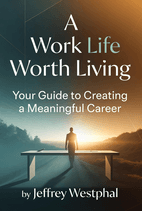
A Work Life Worth Living by Jeffrey Westphal Book Cover

5 Main Takeaways from A Work Life Worth Living

Meaningful work comes from serving a larger purpose, not personal success.

The book shows that even unglamorous jobs like tax software can be part of a meaning chain that sustains human life. Passion fades when ambition takes over, but shifting perspective to see how your work contributes to others' well-being reconnects effort to lasting fulfillment.

True listening transforms relationships and unlocks hidden insights.

The author realized he had never truly listened—he listened to judge or respond. A personal crisis taught him to understand others without agenda, which improved his marriage and later revealed untapped wisdom from his employees. Understanding is not agreement; it's genuine comprehension.

Self-awareness is the foundation for sustainable leadership and fulfillment.

Regular reflection using tools like the Five Whys, the Covey matrix, or stop-start-continue helps catch burnout and misalignment before they become crashes. Examining your hidden inner compass—shaped by early beliefs—allows you to steer toward what you truly value rather than chasing urgency or approval.

Adversity and failure are ugly wrapping paper for essential life lessons.

Rapid unchecked growth can become a liability, and humiliating failures often teach the most valuable lessons. The book calls adversity a gift that forces you to rebuild with stronger foundations—if you pause to reflect rather than shortcut the messy human process.

The journey to meaning cannot be outsourced to AI or shortcuts.

AI can broaden horizons and assist with data, but deepest wisdom comes from lived experience, human mentors, and community. Real change requires sustained practice, vulnerability, and conversations that no algorithm can replicate—the work of feeling and growth is yours alone.

Executive Analysis

These five takeaways form the book's central argument: a work life worth living is built by integrating purpose, deep listening, self-awareness, resilience from adversity, and a commitment to the personal journey over quick fixes. Westphal argues that meaning is relational—found in how you serve others, listen to them, and grow through failure—not in external metrics like money or status. The book links inner work (e.g., examining your inner compass) to outer action (e.g., applying the Rule of Three in disagreements) to dissolve the false boundary between professional and personal life.

This book matters because it offers practical, hard-won tools for leaders and individuals seeking fulfillment in an era of burnout and AI hype. It belongs to the leadership and personal development genre but distinguishes itself through raw vulnerability and a rejection of superficial productivity advice. Westphal's emphasis on human connection, emotional honesty, and ongoing reflection provides a grounded antidote to the shortcut culture, making it a valuable guide for anyone questioning whether their daily work truly matters.

Chapter-by-Chapter Key Takeaways

Foreword by Joseph Jaworski (Foreword)

  • Succession is a relational event, not just a transactional one; ignoring the perspectives of family and colleagues can create lasting regret.

  • Leadership is inseparable from the rest of life—your attention, priorities, and sense of responsibility become woven into every moment.

  • Before acting on career news, pause to assess facts versus speculation, understand your own feelings, and consider how the news will land on others.

  • Some of the most critical conversations—especially those rooted in vulnerability—cannot be outsourced to AI or left unspoken.

Try this: Pause before acting on career news—assess facts, your feelings, and how it will impact others, and don't outsource vulnerable conversations to AI.

Get a Job! (Chapter 1)

  • Passion for a cause can fade when ambition takes over—recognize when you’ve lost sight of what matters.

  • Life-changing career decisions should never be made impulsively, especially out of a desire for parental approval.

  • Taking time to reflect, consult others, and imagine outcomes can prevent years of regret and friction.

  • Being good at something doesn’t mean it’s the right path for you or for the people you love.

Try this: Before making a life-changing career decision, take time to reflect and consult others to avoid impulsive choices driven by parental approval or misplaced ambition.

Imposter? Who, Me? (Chapter 2)

  • Recognition and gratitude for success can coexist with deep internal discomfort—acknowledging both is the first step toward balance.

  • Burnout often hides behind achievement, especially when we treat constant overwork and partying as signs of winning.

  • Contradictory commitments (being sensitive yet proving toughness, enjoying life yet avoiding seriousness) create unmanageable stress when left unexamined.

  • Simple, regular reflection—with input from trusted others—can catch warning signs before they become a crash.

Try this: Acknowledge both your successes and internal discomfort, and use simple regular reflection with trusted input to catch burnout signals before they escalate.

Ugly Wrapping Paper (Chapter 3)

  • Rapid, unchecked growth can become a liability without controls and collaboration.

  • The most valuable lessons often arrive disguised as humiliating failures.

  • Adversity can be a gift if it forces you to rebuild with stronger foundations.

  • Regular self‑reflection on past disappointments builds agility and prepares you for future curveballs.

  • Avoid shortcuts in personal reflection; the messy human process is the point.

Try this: When faced with a humiliating failure, treat it as ugly wrapping paper for a valuable lesson that will strengthen your foundations—avoid shortcuts in personal reflection.

Survey Says! (Chapter 4)

  • A 360‑degree feedback survey can reveal a painful but essential gap between your self‑image and how others perceive you.

  • Low trust scores often stem from poor listening and a lack of employee involvement in decisions.

  • Leadership transformation begins with admitting you need help and being willing to hear hard truths.

  • Empathic listening and treating employees as partners can reconcile competing leadership philosophies.

  • Processing feedback through a trusted facilitator—not an AI—leads to deeper, more actionable insights.

Try this: Use 360-degree feedback to reveal the gap between self-image and others' perceptions, then seek a trusted facilitator to process the hard truths and improve your listening and trust.

When the Student Is Ready (Chapter 5)

  • A mentor’s greatest gift is not advice but a state of pure acceptance and curiosity, which creates space for genuine growth.

  • The student must be ready – disruptive failures and honest feedback can open us to wisdom we otherwise wouldn’t accept.

  • Effective mentors focus on clarifying purpose, not solving problems. Their power lies in the questions they ask, not the answers they give.

  • Finding a mentor requires proactive research and regular check‑ins to assess fit. A human mentor, imperfect as they are, offers real caring that builds confidence in other relationships – something even the most sophisticated AI cannot truly replicate.

Try this: Proactively research and check in with potential mentors, focusing on those who ask powerful questions rather than give answers, and remember that human mentors offer real caring AI cannot replicate.

Riddle Me This (Chapter 6)

  • Probing questions that feel like riddles can crack open unexamined assumptions, revealing a richer, more strategic perspective.

  • Shifting from “fixing problems faster” to understanding the broader context of relationships and motivations transforms team dynamics and personal fulfillment.

  • Aligning daily work with a larger purpose—even if that purpose is small and personal—reconnects meaning to effort.

  • Creating a vivid vision of your future work life, and testing it against imagined limits, can unlock possibilities you hadn’t dared to imagine.

Try this: Shift from fixing problems faster to understanding the broader context of relationships and motivations; create a vivid vision of your future work life and test it against imagined limits.

Across the Chopping Block (Chapter 7)

  • The cost of ignoring what matters: I was destroying my health and neglecting my most important relationships in pursuit of professional success. My chronic back pain was a physical manifestation of a deeper imbalance I refused to acknowledge.

  • Real listening is terrifyingly rare: I had never truly tried to understand another person's perspective. I listened to judge, to respond, to get what I wanted—not to actually comprehend where they were coming from.

  • Personal insight changes professional behavior: The breakthrough with Jen didn't just improve our marriage. The next Monday, I started applying that same principle at Vertex, and discovered that our people had been holding back a wealth of insight because nobody had ever genuinely asked for it.

  • Understanding isn't agreeing: I confused understanding with agreement for years. The goal isn't to validate someone's position; it's to genuinely comprehend why they think and feel the way they do.

  • The AI caution: Real people aren't purely logical. They're messy combinations of thoughts, knowledge, beliefs, and emotions. The only way to truly understand them is to practice with actual human beings, not with artificial intelligence.

Try this: Practice listening to understand, not to judge or respond—start with a close relationship and then apply that same principle at work to unlock hidden insights from others.

My Father’s Therapist? (Chapter 8)

  • Deeply invested relationships (parent, boss, partner) carry emotional risk, but empathic listening can transform them—sometimes more than years of avoidance.

  • Genuine understanding requires setting aside your own agenda and past resentments; it’s not about changing the other person, but about seeing them as a real human being.

  • The moment someone feels truly heard, they often reveal vulnerabilities they’ve never shared before—and that trust is a gift, not a therapy session.

  • Action steps are simple: check your motive, ask permission, use open-ended questions, reflect back, and confirm—then stop. Do not immediately offer your own perspective.

Try this: When seeking to understand someone, set aside your own agenda, ask permission, use open-ended questions, reflect back what you hear, and stop—do not immediately offer your perspective.

In Living Color (Chapter 9)

  • A deep sense of oneness with the world can reveal a transcendent purpose in your work that goes far beyond job titles or profit motives.

  • For-profit companies are inseparable from societal well-being; they serve as essential infrastructure for human dignity, prosperity, and even survival.

  • Strong financial performance is not the end goal—it’s the means to fund greater positive impact on society in a virtuous, self-reinforcing cycle.

  • Meaning is available in any career; it only requires shifting your perspective from black-and-white transactions to living color interconnectedness.

  • Simple reflection questions can help you recognize how your daily efforts contribute to a larger purpose that you may have overlooked.

  • Every role, from stocking shelves to cleaning hospital floors, is part of a meaning chain that sustains human life and well-being.

Try this: Reflect on how your daily work connects to a larger purpose beyond profit, recognizing that every role is part of a meaning chain that sustains human life and well-being.

The Miracle Machine (Chapter 10)

  • The Rule of Three (Advocation, Restraint, Reconciliation) transforms adversarial debates into collaborative discovery.

  • The reconciling force depends on participants’ emotional state and their commitment to the greater good.

  • True creative solutions often emerge only after a period of discomfort and uncertainty—don’t rush past the tension.

  • This approach works in personal relationships, not just at work, when applied with respect and genuine seeking.

  • AI can support group decision-making with data, but it cannot substitute for human empathy, trust, and shared meaning.

Try this: Apply the Rule of Three (Advocation, Restraint, Reconciliation) in your next disagreement, allowing discomfort and uncertainty to generate creative solutions before rushing to resolution.

An Even Bigger Gift (Chapter 11)

  • Your feelings are not automatic reactions. You can interrupt the cycle of frustration or self-blame by examining the beliefs behind them, and choose a different response.

  • Seeking to understand means setting aside your assumptions—especially about people who seem incomprehensible, whether your child or your colleague.

  • Leadership is gardening, not commanding. The same patience, attentiveness, and cultivation that helped Kyle emerge from autism also unlocked collaboration at Vertex.

  • The Five Whys is a powerful self-inquiry tool to surface the deep beliefs driving your choices. Use it in quiet reflection, not with AI, to genuinely develop self-awareness.

Try this: Interrupt automatic emotional reactions by examining the beliefs behind them; use the Five Whys in quiet self-reflection to surface deep drivers and treat leadership as gardening, not commanding.

In Search of the Eternal Buzz (Chapter 12)

  • A profound spiritual insight can change everything, but integrating that change into daily life is a lonely, messy process.

  • Making a major life decision in isolation—especially one like quitting drinking—can strain relationships. Communication and support matter.

  • The “eternal buzz” isn’t found in substances; it’s a lasting sense of connection and purpose that requires ongoing inner work.

  • Your North Star will evolve. Regular reflection—using exercises like the Five Whys or imagining your seventy-five-year-old self—helps you stay on course.

  • Personal growth is a mountain with no summit. The moment you think you’ve “arrived” is the moment you become most vulnerable to your own blind spots.

Try this: When you experience a profound insight, integrate it into daily life with open communication and support from others, using regular reflection to evolve your North Star.

A 100 Percent More Meaningful Work Life (Introduction)

  • Work and personal life are deeply connected; dissolving the boundary between them can be a positive force.

  • Trying to impose your insights on others only breeds resistance; people need to discover meaning for themselves.

  • Even “unsexy” work like tax software can serve the greater good—we don’t all have to join the Peace Corps to make a difference.

  • The quest for a more meaningful work life is a journey, not a destination, and includes both highs and lows.

Try this: Dissolve the boundary between work and personal life as a positive force, but let others discover their own meaning—don't impose your insights on them.

My Inner Compass (Chapter 13)

  • Your hidden inner compass—shaped by early beliefs—steers your feelings and actions whether you know it or not.

  • The Covey matrix reveals whether your urgency is actually importance; most people are stuck in Quadrant 3.

  • Overwork and over-partying are often twin escapes from a deeper unease about worthiness.

  • Self-awareness is not a one-time fix; it requires months or years of honest self-observation.

  • The reward for confronting your hidden compass is the freedom to build one that points toward what you truly value.

Try this: Identify your hidden inner compass by using the Covey matrix to distinguish urgency from importance, and commit to months of honest self-observation to build a compass pointing toward what you truly value.

It’s Not About the Money (Chapter 14)

  • Money meets fundamental needs but rarely sustains deep engagement; beyond that, purpose, relationships, and service become the real drivers.

  • Leaders who prioritize trust and mutual benefit create cultures where people stay, perform, and even go the extra mile without external incentives.

  • The most memorable proof of “it’s not about the money” comes from watching people like Rich Teerlink and Penny Vennerholm—whose legacies are built on how they lifted others, not on their compensation.

Try this: Beyond meeting basic needs, focus on purpose, relationships, and service to sustain deep engagement at work; prioritize trust and mutual benefit to create a culture where people stay and perform.

How Long Will You Live? (Chapter 15)

  • Business exists to serve customers, not merely to generate profit; profit is a necessary condition, not the purpose.

  • Many of us hold unconscious assumptions that work is merely a means to an end; questioning those assumptions can unlock deeper fulfillment.

  • Even seemingly unglamorous work (like tax software) can be a vital enabler of modern life and society.

  • The “life in thirds” perspective invites us to make work as meaningful as personal time, effectively doubling our meaningful existence.

  • Leaders who genuinely care for their people as whole human beings create cultures where employees care for each other and the work in return.

  • Finding meaning in work is a personal journey; it cannot be forced, only invited and explored individually.

Try this: Question unconscious assumptions that work is merely a means to an end; adopt a 'life in thirds' perspective to make work as meaningful as personal time, and treat profit as a condition, not the purpose.

The Ultimate Bottom Line (Chapter 16)

  • Leadership isn’t about knowing everything; it’s about respecting the experts who do.

  • The ultimate bottom line is not shareholder value alone, but respect for deep expertise and the humility to learn from it.

  • The best mentors combine technical depth with the openness to change their minds.

  • Collaboration without expertise is hollow; expertise without collaboration is half as effective.

  • Regularly reflect on your own growing mastery, and make space for others to share theirs.

Try this: Regularly reflect on your own growing mastery and make space for others to share theirs; lead by respecting the experts around you and being humble enough to learn from them.

Who’s on First? (Chapter 17)

  • The PPP framework (Purpose, Products, Process) turns vague meetings into aligned actions, but only after surfacing and reconciling everyone’s hidden assumptions about “why.”

  • Real collaboration cannot be shortcut; it must be experienced and practiced, like a physical skill. Growth comes from the struggle, not from being told the answer.

  • For personal fulfillment, apply the same logic to your own work life: define your why, envision your long-term what, and map the how backward from that future.

  • Sharing your vision with a trusted listener (not an advice-giver) can surface feelings and insights that strengthen your plan.

  • AI can assist with the “how,” but the “why” and the “what” of your dream work life must come from you.

Try this: Use the PPP framework (Purpose, Products, Process) to align meetings and decisions, but first surface hidden assumptions about 'why'; apply the same logic to your own work life by defining your why and mapping backward.

Baby, We Were Born to Learn (Chapter 18)

  • Traditional schooling often kills natural curiosity by assuming one right answer and a teacher’s authority.

  • Children are born learners—they don’t need external motivation to explore and grow.

  • Introverts and extroverts process differently; depth is not determined by volume.

  • A meaningful connection to the why behind work or learning fuels intrinsic motivation.

  • Creating freedom and trust—at home or at work—unlocks agility, creativity, and lasting fulfillment.

  • The reflection questions can be repeated over time to deepen alignment between what you do and who you are.

Try this: Rekindle natural curiosity by connecting work to the why behind it; create freedom and trust in your home or workplace to unlock agility, creativity, and intrinsic motivation.

Ugly Wrapping Paper—Part 2 (Chapter 19)

  • Booms can create a false sense of control; macro forces often drive demand more than internal efforts.

  • Painful cuts may be necessary to survive a downturn, and transparent communication can lessen the damage.

  • Adversity is ugly wrapping paper—every setback holds a lesson that strengthens you for the future.

  • Attitude is everything: viewing change as opportunity opens doors that a crisis mindset keeps shut.

Try this: In a downturn, make necessary cuts with transparent communication and view the adversity as an opportunity to learn—your attitude determines whether you stay stuck or grow.

I’m Fine, No Really! (Chapter 20)

  • Grief and other “unhappy” emotions don’t disappear when we refuse to name them; they just go underground and resurface in unhealthy ways.

  • The cultural pressure to be “fine” can be a dangerous anesthetic, especially when combined with a spiritual or intellectual belief that everything happens for a reason.

  • Real emotional skill isn’t about suppressing feelings or acting on them impulsively—it’s about recognizing, honoring, and thoughtfully responding to them.

  • No amount of AI-generated advice can substitute for the personal conviction required to change. The work of feeling is yours alone.

Try this: When you feel pressure to be 'fine,' stop and honestly name your emotions—grief, anger, or sadness—and respond thoughtfully rather than suppress or impulsively act.

Danger! Success Straight Ahead (Chapter 21)

  • Success can be as dangerous as failure when it masks deeper problems—both in a business and within yourself.

  • Emotional overload is real and often invisible, especially when external metrics look great.

  • Denial of grief and unresolved feelings will eventually catch up with you, no matter how successful you appear.

  • Healthy coping requires connection, honest self-assessment, and sometimes professional help—not just busyness or numbing.

Try this: Beware of success masking deeper problems; if external metrics look great but you feel emotional overload, seek connection and honest self-assessment, not more busyness.

Hitting the Wall (Chapter 22)

  • Hitting a wall can be the jolt needed to see the truth you've been avoiding—but it's better to confront it before the crash.

  • Addiction and denial often mask deeper feelings of guilt, inadequacy, and the need for approval.

  • Recovery and growth come from acceptance, forgiveness, and ongoing support from real people, not from going it alone.

  • The steps after a crisis are simple but require sustained effort: name the problem, reach out, get expert help, and keep checking in.

Try this: If you hit a wall, name the problem, reach out for help from real people, get expert support, and keep checking in—recovery requires acceptance, forgiveness, and sustained effort.

Get On with It! (Chapter 23)

  • Letting go is an act of service—to yourself, your family, and everyone who depends on you. Staying too long can damage more than it protects.

  • A trusted mentor’s honest nudge can break the paralysis of holding on. Seek people who have your best interests at heart.

  • Meaning and happiness are not the same. Meaningful work often involves hardship, risk, and discomfort. Don’t mistake the absence of joy for failure.

  • Regularly take stock of your work life using the stop-start-continue method. It creates space for intentional change.

  • Adopt a beginner’s mind. No matter how much you’ve achieved, there is always another mountain. Stay curious and humble.

Try this: Use the stop-start-continue method to regularly take stock of your work life, and let go when staying longer damages more than it protects—adopt a beginner's mind.

Easy Peasy (Introduction)

  • The author spent years dreaming about meaningful work before finally acting on a direct challenge from a colleague.

  • Letting go of his corporate identity opened the door to a new vision: writing, speaking, and showing how all work is connected.

  • Simple actions like buying a coffee reveal hidden networks of technology and human effort.

  • Most workers don’t realize their contributions matter beyond the company’s bottom line.

  • The plan seemed simple, but the real journey turned out to be messier and more rewarding.

Try this: Act on a direct challenge to let go of your corporate identity and explore how even simple actions like buying coffee reveal hidden networks of meaning—your contribution matters beyond the bottom line.

Why Write a Book? (Chapter 24)

  • A book is an event, not a transformation. Lasting change requires sustained practice, failure, and community support.

  • Rich’s simple question elevated the author’s vision from a book to a broader mission: creating a space for shared, self‑directed growth.

  • Intuitive insight is available to everyone, but it must be welcomed, not forced. Cultivating it means stepping away from analysis and into open reflection.

  • Action steps are designed to spark meaningful conversations and help you rediscover your own intuitive capacities—not to deliver ready‑made answers.

  • AI can broaden your horizons, but your deepest wisdom must come from your own lived experience.

Try this: When writing or creating, remember that a book is an event, not a transformation; lasting change requires sustained practice, community, and intuitive insight cultivated away from analysis.

A Sphere is Born (Chapter 25)

  • All human effort—including all business—ultimately serves a short list of deeply meaningful feelings: safety, joy, love, fun, connection, wellness, significance.

  • Meaning doesn’t come from things; it comes from experiences and states of being.

  • A book can spark insight, but sustained transformation often requires community, mentoring, and interactive tools.

  • You don’t need a grand epiphany or exotic location to find purpose in your work. Even small, unsupervised acts of initiative can set the course of a life.

  • Giving yourself permission to create meaning is the first and most important step—and no one else can do it for you.

Try this: Give yourself permission to create meaning in your work, even in small unsupervised acts; meaning comes from experiences and states of being, not from things or grand epiphanies.

Synchronicity at Your Service! (Chapter 26)

  • Synchronicity is not random luck; it’s the natural result of living with intention and staying alert to what unfolds.

  • The most powerful mentors and opportunities often appear without being sought — when you’re focused on serving your purpose.

  • Paying attention to “too-remarkable-to-be-coincidences” can reveal the direction your work life is meant to take.

  • Practical steps like reviewing your dream, reflecting on past surprises, and sharing aspirations help you stay open to synchronicity.

  • Act on intuition and be patient — the path is rarely straight, but it always leads to the growth you need.

Try this: Live with intention and stay alert to synchronicities—review your dream, reflect on past surprises, and share aspirations to remain open to mentors and opportunities that appear when you're focused on purpose.

The Road to MeaningSphere (Chapter 27)

  • MeaningSphere was designed to scale the meaningful work movement, not start it—it’s a platform to connect, guide, and support those seeking more fulfillment.

  • Unexpected adversity (pandemic, tech issues, cancer, Parkinson’s) tested the vision but ultimately clarified it. Each challenge served as a rock to learn from, not just an obstacle.

  • Health crises can intensify commitment while teaching acceptance. You’re not in control, but you can do your best with trust and gratitude.

  • A “dark night of the soul” is part of the hero’s journey. Prepare with a keel (your values), a destination, a plan, and guides to consult.

  • Going together is better than going alone. Community and tools on MeaningSphere.com can help you navigate toward a work life that truly matters.

Try this: Face unexpected adversity by preparing with your values as a keel, a destination, a plan, and guides to consult; use community and tools like MeaningSphere to navigate toward a work life that matters.

One Brick at a Time (Epilogue)

  • Meaning at work isn't found in the task itself but in how the task serves a larger whole.

  • Every job, no matter how small or mundane, is a brick in the bridge of human progress.

  • The shift toward more meaningful work requires us to consciously ask what we are building and why.

  • No bridge was ever completed without every single brick it needed—your contribution matters.

Try this: Consciously ask what you are building and why, remembering that every job is a brick in the bridge of human progress—your contribution matters.

Continue Exploring