As an Amazon Associate, we earn from qualifying purchases.
What is the book The Price of Becoming about?
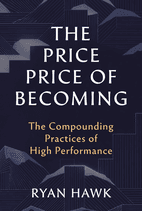
Ryan Hawk's The Price of Becoming explores how high performance emerges from compounding daily habits of curiosity, imitation, and resilience, offering a framework for sustained excellence. Written for professionals and leaders, it provides practical strategies for building mentorship skills, embracing friction, and developing internal security.
Feature
Insta.Page
Blinkist
Shortform
Summary Depth
Full Chapter-by-Chapter
15-min overview
Section-by-section guides
Audio Narration
✓
✓
✓
Full access to all 700+ summaries
✓
✓
✓
Visual Mindmaps
✓
✕
✕
AI Q&A
✓
✕
✕
Missing a book? Request it, usually live within 48h
✓
✕
✕
Quizzes
✓
✕
✕
PDF Downloads
✓
✕
✓
Send to Kindle
✓
✓
✓
Price
$89.99/yr
$146/yr (PRO)
$199/yr
*Competitor data last verified July 2026.
1 Page Summary
This book centers on the idea that high performance is not a single leap but a series of compounding practices, built on deliberate habits of curiosity, imitation, and resilience. Ryan Hawk argues that before one can innovate, one must first copy—as demonstrated by The Beatles’ years as a cover band—and that genuine originality emerges from this foundation. The core of the book is that personal and professional growth compounds over time, much like interest on an investment, through consistent, daily actions and a mindset of continuous learning and questioning.
Hawk’s distinctive approach blends personal anecdotes from his sales career with a wide range of examples from history, science, and the arts, such as Hedy Lamarr’s curiosity-driven innovations and the Wright brothers’ refusal to accept flawed data. The book is structured around key principles like the courage to challenge authority, the power of transferable confidence gained from doing “the hard way,” and the need to take “no off the table” by engineering one’s environment for consistency. A recurring theme is the distinction between external security (relying on circumstances) and internal security (developing capabilities that make you valuable regardless of your situation), encapsulated in the metaphor of a bird trusting its wings, not the branch.
Intended for professionals, leaders, and anyone seeking sustained excellence, The Price of Becoming provides a framework for turning ambition into a repeatable process. Readers will gain practical strategies for building mentorship skills, focusing on deep work, and discovering their own personal “medicine” for peak performance. Ultimately, the book argues that meaningful achievement requires embracing friction, learning to write and sell with clarity, and recognizing that the most secure people are those who could leave their situation and be fine, making them more valuable in the process.
1: Contemplate, Copy, Create
Overview
The Beatles spent years as a cover band, playing marathon eight-hour sets in Hamburg, imitating Little Richard and Chuck Berry before ever writing their own songs. Their lead singer later credited those exhausting shows as the place where they “got good.” The message is clear: imitation isn’t a shortcut or a crutch—it’s a foundation. Before you can innovate, you have to copy. The author ties this to his own experience as a new sales rep at LexisNexis, where he sat in coworkers’ cubicles, listening in and mimicking their exact scripts for months before finding his own voice. The core principle, borrowed from David Perell: “Imitate, then innovate.”
Finding Your Own Voice
There comes a moment when copying gives way to authenticity. The author shares a raw conversation with venture capitalist Mike Maples Jr., who spoke just seven days after his father’s death. With a quiver in his voice, Maples described the unique strand of DNA every person carries—the intersection of passion, skill, and demand. “You won’t be the best. You’ll be the only.” That kind of originality isn’t manufactured; it emerges when you stop trying to be someone else and start leaning into what only you can offer. The most memorable guests on The Learning Leader Show weren’t the most credentialed—they were the ones who fully inhabited their own skin.
The No-Comfort Zone
Growth hurts because it requires leaving something behind. The author recalls a Boy Meets World scene where Mr. Feeny transplants a flower that has outgrown its pot. The flower resisted, but staying in the small pot would have stopped its growth entirely. The lesson: staying comfortable isn’t neutral—it’s a decision to plateau. Whether it’s a relationship ending, a job change, or a new skill that makes you feel clumsy, the discomfort isn’t punishment. It’s the signal that you’re being moved to a bigger space.
Gretzky’s Office
Wayne Gretzky wasn’t the biggest or strongest player. Instead of trying to fix that weakness, he studied the game obsessively as a kid, drawing diagrams while watching Bobby Clarke. He noticed two things: skilled players used the corners, and almost no one used the space behind the net. So he turned that blind spot into “Gretzky’s office.” He made his weakness irrelevant by playing where others didn’t think to play. The same strategy applies in business, careers, and education. Don’t just try to play the same game better. Find the part of the game everyone else ignores.
The Courage to Seek Greatness
Timothée Chalamet’s 2025 SAG award speech is framed as a refreshing antidote to performative nonchalance. He admitted he spent five and a half years on a role and said plainly: “I’m really in pursuit of greatness.” In a culture that often rewards acting like you don’t care, Chalamet owned his ambition. The author challenges the reader to stop apologizing for wanting something badly. The pursuit itself has intrinsic worth. What dreams are you abandoning because you can’t guarantee the outcome?
The Prison, or Potential, of Self-Belief
Most people achieve exactly what they expect of themselves. The story of Cliff Young, a sixty-one-year-old farmer who showed up to a 543-mile ultramarathon in overalls and work boots, proves the point. He didn’t know the “proper” strategy of sleeping six hours, so he ran almost nonstop and shattered the record by two days. Similarly, Roger Bannister’s four-minute mile was considered impossible until he proved it possible—then hundreds followed. Mental barriers are often the strongest and easiest to break once someone shows the way. The same principle works in reverse: believing you’ll fail makes you take fewer risks, creating a self-fulfilling prophecy.
Key Takeaways
Imitation isn’t a weakness; it’s the fastest route to competence. Copy relentlessly before trying to be original.
Your uniqueness comes from the intersection of what energizes you, what you’re good at, and what others will pay for. Aim to be the only, not just the best.
Growth requires leaving comfort. If you feel like a flower being yanked from its pot, that’s a good sign.
Instead of trying to fix your weaknesses, find a way to make them irrelevant. Create your own “office behind the net.”
Don’t hide your ambition. Admitting you want greatness gives you the fuel to endure the struggle.
Most limitations are mental. Test one belief about what you “can’t do” this week.
Key concepts: 1: Contemplate, Copy, Create
1: Contemplate, Copy, Create
Imitate, Then Innovate
The Beatles copied others before creating original music
Imitation is a foundation, not a crutch
Mimic scripts before finding your own voice
Copy relentlessly before trying to be original
Finding Your Unique Voice
Authenticity emerges when you stop copying
Be the only, not just the best
Originality comes from your unique DNA
Memorable people fully inhabit their own skin
Growth Requires Discomfort
Staying comfortable means choosing to plateau
Discomfort signals you're moving to bigger space
Growth hurts because it requires leaving something behind
The no-comfort zone is necessary for development
Create Your Own Office
Gretzky made his weakness irrelevant by playing differently
Find the part of the game everyone else ignores
Don't just play the same game better
Turn blind spots into your competitive advantage
Break Mental Barriers
Most people achieve exactly what they expect
Cliff Young shattered records by not knowing limits
Bannister proved the four-minute mile was possible
Believing you'll fail creates a self-fulfilling prophecy
💡 Try clicking the AI chat button to ask questions about this book!
2: Curiosity Compounds
Overview
Curiosity isn't just a personality quirk—it's a deliberate strategy that compounds over time, like interest on an investment. The chapter starts with a chance encounter in New York where a filmmaker's advice to "follow your curiosity and obsessions with great rigor" reveals that genuine interest in others is a form of respect, and asking thoughtful questions builds unshakable connections. This curiosity is a skill, not a trait, letting you build a mental database of patterns across quantum physics or Renaissance art. Innovation happens when those patterns collide, and adaptability grows when you say "I don't know yet" instead of "I can't." Hedy Lamarr—a movie star obsessed with radio frequencies—shows that the most valuable expertise is the ability to learn new things.
But curiosity doesn't live in isolation. Diverse connections—mixing a tech CEO from India with a high school football coach—create rapid benefits, like California Redwoods whose roots grow outward and intertwine. The Harvard Study of Adult Development confirms good relationships are the core of a flourishing life. That becomes personal with the author's choice of one word for 2025: connection. He books a ski trip for his family and rents a house with twelve high-character strangers, designing focused one-on-one conversations and shared hard hikes. The lesson: pick one word to filter decisions and attract opportunities, then take the first tangible step.
The people you listen to shape everything. Steve Wozniak's boss at HP dismissed his personal computer five times, but Steve Jobs saw the potential and convinced him to build it. The Framingham Heart Study shows happiness spreads three degrees of separation. Kevin Smith's father died screaming in a hospital bed despite playing it safe, showing the logic of "why not?" : if suffering is inevitable, why not pursue every dream? Excellence is contagious—Dave Matthews hired the "baddest drummer I'd ever seen" and gave him creative freedom, building a billion-dollar band on character and skill.
The chapter closes with daily practices: commit thirty days to a passion unrelated to your job, transform conversations by listening for surprise, reach out weekly with genuine appreciation, and put yourself in rooms where you're the least experienced. Document observations constantly, audit your inner circle to ensure they enlarge your ambitions, host one intentional gathering per year that mixes backgrounds, invest in your emotional health, and launch a project that forces you to meet new people. Curiosity compounds, but only when you act on it.
Following Curiosity Obsessively
It started with being lost in New York, trying to find Brian Koppelman's office. He told me to "keep following your curiosity and obsessions with great rigor." Curiosity isn't just a personality quirk—it's a strategy. When you genuinely care about someone's story and ask thoughtful questions, you build connections that can't be faked.
Inquisitive Curiosity as a Skill
Genuine interest in a wide range of topics is a valuable skill. When you're curious about everything, your brain builds a database of patterns that start talking to each other. Most innovation comes from connecting existing ideas in new ways. This happens slowly, then all at once, like compound interest. Adaptability grows when you say "I don't know yet" instead of "I can't." Hedy Lamarr's obsession with radio frequencies led to Bluetooth, GPS, and Wi-Fi. The most valuable skill is the ability to learn new things.
The Power of Diverse Connections
Connecting ideas creates value—the cell phone, iPod, and PalmPilot became the iPhone. Connecting diverse minds is just as powerful. I run Learning Leader Circles where I mix industries, job titles, and geographies. The more disparate the life experiences, the more rapid the benefits. California Redwoods grow over three hundred feet tall, but their roots grow out and enmesh with each other. The Harvard Study confirms that good relationships keep us happier and healthier.
Word of the Year: Connection
I chose one word for 2025: connection. I booked an Airbnb in Utah and spent the first week of January skiing with my family—our favorite vacation ever. I also rented a house in Scottsdale with twelve high-character family men. We shared meals, Dad jokes, and personal stories. We did hard things together—two big hikes. To get close to someone: laugh together, cry together, do something hard together. Pick one word for the year. It becomes a filter for decisions and a magnet for opportunities. The ski trip started by booking the Airbnb.
Who You Listen To Shapes What You Do
In 1976, Steve Wozniak showed his personal computer to his boss at HP, who rejected it five times. But Steve Jobs convinced him to build it in a garage. That became Apple. Sam Altman said, "Surround yourself with people who will make you more ambitious." The Framingham Heart Study found that happiness spreads through social networks up to three degrees of separation. The people around you co-author your life choices.
Surround Yourself with "Why Not?"
Kevin Smith's father died screaming in a hospital bed. He had lived modestly, postponed his dreams, and did everything right. Smith realized: if playing it safe offers no protection from suffering, why not pursue every dream?
Excellence Is Contagious
Dave Matthews hired Carter Beauford because he was "the baddest thing I'd ever seen." He gave him creative freedom. Excellence attracts excellence. The Dave Matthews Band grossed over $1 billion. The question isn't just "Who are the most talented people?" but "Who has the character to make others better?"
Key Takeaways
Curiosity compounds like interest—following it obsessively builds a mental toolkit that reveals hidden connections.
Diverse relationships are the roots that let you grow tall; the Harvard Study proves relationships are the core of flourishing.
Choose a single word for the year to focus your curiosity and actions; then take the first tangible step.
The people you listen to shape your outcomes—surround yourself with those who say "Why not?" instead of "That's too crazy."
Excellence is contagious, but only when combined with high character and the freedom to express it.
The real power lies in daily practices. Commit to obsessive curiosity for thirty days around a topic unrelated to your job. Transform conversations by listening for what someone genuinely cares about, then ask why it matters. Reach out weekly to someone you admire with genuine appreciation. Put yourself in rooms where you are the least experienced. Document observations constantly. Audit your inner circle to ensure they amplify your ambitions. Host one intentional gathering per year that mixes backgrounds. Prioritize your emotional health. Launch a project that forces you to meet new people. When you create value for others, the right people appear to help you succeed.
Key concepts: 2: Curiosity Compounds
2: Curiosity Compounds
Curiosity as a Deliberate Strategy
Follow curiosity and obsessions with great rigor
Genuine interest builds unshakable connections
Curiosity is a skill, not a personality trait
Pattern Recognition and Innovation
Curiosity builds a mental database of patterns
Innovation comes from connecting existing ideas
Say 'I don't know yet' instead of 'I can't'
Hedy Lamarr's obsession led to Bluetooth and Wi-Fi
Power of Diverse Connections
Mix different industries, jobs, and geographies
Diverse connections create rapid benefits
California Redwoods grow by intertwining roots
Good relationships are key to a flourishing life
Word of the Year: Connection
Pick one word to filter decisions and attract opportunities
Design focused one-on-one conversations
Do hard things together to build closeness
Take the first tangible step immediately
Influence of Your Inner Circle
Who you listen to shapes your actions
Steve Jobs saw potential where HP rejected Wozniak
Happiness spreads three degrees of separation
Surround yourself with people who enlarge ambitions
The 'Why Not?' Mindset
Playing it safe offers no protection from suffering
Pursue every dream despite inevitable risks
Kevin Smith's father died screaming despite caution
Excellence Attracts Excellence
Hire the 'baddest' talent and give creative freedom
Character and skill build billion-dollar outcomes
Audit your circle to ensure they make others better
3: Question Everything
Overview
The courage to challenge authority isn't about rebellion—it's about a deeper loyalty. When Steve Jobs wanted to eliminate Apple's warehouses, Donna Dubinsky didn't comply quietly; she gave an ultimatum, proved her own plan worked, and later became a CEO. Katherine Johnson counted steps as a child and asked "Why?" at NASA, earning John Glenn's trust because she refused to accept data at face value. The Wright brothers inherited that habit from their father, building a wind tunnel when the "Glider King" Otto Lilienthal's published tables didn't match reality—they discovered the lift equation was off by 50%, and powered flight followed.
But questioning everything isn't just for history makers. The Seattle Longitudinal Study tracked curious minds for sixty years and found less cognitive decline, while the Max Planck Institute showed that learning something new reshapes gray matter. Curiosity is compound interest on insight. Asking "Why is candy at the checkout?" can unravel impulse buying. Richard Feynman wondered why rubber bands heat up when stretched and uncovered molecular physics; Edwin Land's three-year-old asked why she had to wait for a picture, birthing Polaroid. Isidor Rabi's mother never asked "Did you learn anything?" She asked "Did you ask any good questions?"
Yet even the best questions lose power if the mind is overloaded. The story of coaching a terrified flag football player named Sammi shows the power of narrowing until it's simple: just run. Complexity kills execution. Subtract until only the essential remains. And once you've simplified, don't get comfortable. Perpetual dissatisfaction keeps leaders climbing while others take selfies. Gokul Rajaram observed that founders of multi-billion-dollar companies always have a list of five or six things to improve. Marillyn Hewson delivered F-35s ahead of schedule, then launched a review that dropped the price per jet 60%.
Charlie Munger's three rules distill this mindset: continuous learning (read all the time, build mental models), learning from mistakes (especially others'), and knowing your circle of competence. "Knowing what you don't know is more useful than being brilliant." These rules are simple—yet rare because simplicity demands patience over novelty.
But the hardest questions are the ones you ask yourself. The chapter ends by confronting the goal setting trap: the author realized that avoiding outcome-based goals wasn't wisdom but self-protection. Hiding behind "process over outcomes" keeps you in control and safe from vulnerability. A conversation with lacrosse legend Paul Rabil revealed the truth: most people don't set goals because it invites hope, fear, and regret. Yet massive, scary goals force a level of commitment that process alone cannot generate. The goal gives direction; the process gives the daily path. They dance together. Get honest about what you've been avoiding—write it down, share it, take one action that playing it safe would never allow. The gap between where you are and where you want to be isn't a problem; it's fuel.
Key Takeaways
Process-only thinking can be a sophisticated form of self-protection. We avoid outcome goals because they invite vulnerability, fear, and regret. Recognize when you're hiding behind "just focusing on the process."
Outcome goals force a level of commitment that process alone can't generate. The discomfort of a big, ambitious goal is exactly what ignites sustained effort and leads to breakthroughs.
Balance is the real answer. Use outcome goals to give direction and force commitment; rely on the process to provide the daily path. Neither works well in isolation.
Take action: Write one uncomfortable outcome-based goal this week. Share it. Take one small step toward it. Let the gap between where you are and where you want to be become fuel, not paralysis.
Challenge your own beliefs about goal setting. Are you, like the author, protecting yourself from disappointment at the cost of capping your potential? The answer might reveal exactly what you need to pursue.
Key concepts: 3: Question Everything
3: Question Everything
The Power of Questioning Authority
Donna Dubinsky challenged Steve Jobs and proved her plan
Katherine Johnson asked 'Why?' and earned John Glenn's trust
Wright brothers questioned Lilienthal's data, found 50% error
Questioning isn't rebellion—it's deeper loyalty to truth
Curiosity as a Cognitive Superpower
Seattle study: curious minds show less cognitive decline
Know your circle of competence—what you don't know matters
Simplicity demands patience over novelty
The Goal Setting Trap
Process-only thinking can be self-protection from vulnerability
Outcome goals force commitment process alone cannot
Massive goals ignite sustained effort and breakthroughs
Balance: goals give direction, process gives daily path
4: The Hard Way
Overview
The path to anything meaningful rarely follows a clean map. Sometimes you just have to keep going up, one step at a time—a lesson that comes alive through Anne Lamott’s bird-by-bird approach and a Colorado hiking guide who shrugged off trail maps entirely. Transferable confidence grows from that stubborn forward motion: once you’ve pushed through a genuinely hard thing, the belief that you can handle the next impossible challenge becomes portable. It shows up everywhere—in marathoners learning new languages, in leaders who hire for resilience over résumés, in the quiet knowledge that adversity is a renewable fuel source. That friction isn’t something to rush past; it’s where the meaning lives. Aaron Sorkin’s worship of “intention and obstacle” captures why struggle matters, and the power of adversity proves itself in extreme moments like Michael Jordan’s flu game or Beethoven composing while nearly deaf. The body’s fight-or-flight response, laser focus, dropped expectations, and defiance all combine to reveal that our perceived limits have far more headroom than we think. Real capability isn’t measured when you’re fresh—it’s what you can do when you’re exhausted, when conditions aren’t ideal, when mental stamina becomes the only thing separating you from collapse. The best kind of hard isn’t knowing you’ll succeed; it’s venturing into uncertainty anyway, because that’s what changes who you are. A moderate sense of hunger optimizes performance—whether it’s the immigrant effect driving entrepreneurship or Soichiro Honda sleeping in a repair shop to learn engines—and that drive sharpens thinking rather than dulling it. Edmund Hillary’s refusal to stay defeated on Everest, Warren Buffett forcing himself to teach public speaking, and Leonardo da Vinci’s ostinato rigore all demonstrate that greatness lives in the microscopic details others ignore. Yet even the best lose nearly half the time—Roger Federer won only 54% of points—which is freeing: perfection isn’t the goal, bouncing back is. Entitlement, though, is a trap; the world rewards value, not effort. Let go of what you think you’re owed, and you open doors. The hidden price of keeping options open is depth never gained. Ed Latimore hoped to not just dabble, but to commit fully to being a good husband, dad, and friend. That commitment echoes the simple formula: Difficulty × Persistence = Transferable Confidence. That’s the math that changes everything.
Bird by Bird and the Next Step
The chapter opens with a simple solution to overwhelm: just take it bird by bird. Anne Lamott’s story about her brother’s bird report becomes a lens for why we freeze. We look at the whole novel, the whole business, the whole retirement—and the gap feels impossibly wide. So we procrastinate or hunt for shortcuts that don’t exist. Anthony Consigli reinforces this with a Colorado hiking story. He asked an older local guide for a trail map and got a shrug: "Don't have one... It's right up there. We just need to keep going up." The summit came not from a grand plan, but from one more step, repeated. That’s how everything significant gets done: writing a book means writing a sentence, then a paragraph. Raising good kids means handling one tantrum with patience. Building a business means finding one customer, solving one problem. The people who succeed aren’t necessarily more talented or luckier—they’re just better at breaking intimidating challenges into mundane tasks.
The Magic of Hard Things
The idea that you can do hard things transfers everywhere. Psychologists call this self-efficacy: the confidence that comes from knowing firsthand that improvement is possible because you’ve done it before. This confidence is context-agnostic. The marathoner who pushes through a wall doesn’t just think they can run faster; they believe they can learn Chinese, start a business, or navigate a crisis. Smart organizations look beyond the résumé; they hunt for people who’ve pushed through challenges in any domain. Technical skills can be taught, but the quiet confidence forged in past adversity is what matters when projects go sideways.
Why We Need Friction
Aaron Sorkin says he "worships at the altar of intention and obstacle." Every good story works the same way: someone wants something, something stops them, they fight through it, and eventually get it. The magic lives in the space between desire and earning. The obstacle isn’t something to overcome quickly so you can get to the good stuff—the obstacle is the good stuff. Scarcity creates value. Easy victories feel cheap; hard-won conquests are meaningful. Nobody changes when life is easy. We change when it’s hard.
Alchemy of Adversity
Michael Jordan's "Flu Game" in the 1997 NBA Finals is a classic example. Battling what was likely food poisoning, he could barely get back to the bench without help. Yet he scored 38 points, including the game-winner. The paradox: he took his performance to another level while sick. This pattern repeats everywhere: Kerry Strug's vault on a severely injured ankle, Tiger Woods winning the 2008 U.S. Open with a double stress fracture, Beethoven composing while nearly deaf.
Several mechanisms explain this phenomenon:
The Biological Override – Fight-or-flight floods the system with adrenaline and cortisol. Pain receptors dampen, glucose releases, and the mind sharpens.
The Laser-Focus Effect – Pain cuts through mental noise. Sports psychologists call it "perceptual narrowing." The complexity of basketball momentarily simplifies.
Liberation from Expectations – When you’re sick, expectations drop. The focus shifts from I must succeed to I'm just trying to survive. That release removes the pressure that inhibits peak performance.
The Defiance Dividend – Adversity triggers a deeper competitive drive.
Exercise physiologist Timothy Noakes's Central Governor Theory suggests our brains actively regulate exertion to prevent catastrophic failure—but those neural limiters can adjust based on emotional states. That’s why parents can lift cars off trapped children. The practical takeaway: our perceived limitations have more headroom than we realize.
When Conditions Aren't Ideal
Ultramarathoner Katie Knight put it bluntly: "No one cares what you can do fresh. Anybody, when they're fresh, physically or mentally, can do a lot. It's when you get past that point where... the body starts to get fatigued; your mind starts to feel weak, that's when it matters." Genuine capability is measured when conditions are far from ideal. In professional life, that means performing in month six of a challenging project, maintaining quality during a personal crisis, making clear decisions at the end of a twelve-hour day. This quality is mental stamina—the ability to maintain high standards even when fatigue and adversity give you an excuse to lower them. The solution isn’t to make yourself miserable; it’s to gradually expand your comfort zone by deliberately practicing under less-than-ideal conditions.
The Best Kind of Hard
Bestselling author Alex Hutchinson told me about hiking with his daughter. Halfway up, she asked, "Dad, are we going to make it?" He said he didn’t know—and that was the point. We are wired to explore, to push our limits. If you know before you start a challenge that you’re going to complete it, that challenge loses all its meaning. We pay a premium for uncertainty—the global sports industry is built on not knowing outcomes. The best kind of hard isn’t knowing you’ll get there—it’s not knowing and going anyway.
The Hidden Benefits of Hunger
Psychologist David McClelland's "Need for Achievement" theory showed that individuals with a high need for achievement set challenging goals, take calculated risks, and seek feedback. A 2019 study in Nature Communications proved that moderate stress and hunger don’t hurt your thinking—they improve it. The hormone ghrelin, traditionally known just as a hunger signal, actually enhances memory formation and learning. Historical-sociological research confirms the "immigrant effect": immigrants are twice as likely to start businesses and more likely to file patents. The critical finding is that moderate levels of "hunger" optimize human performance.
Soichiro Honda's story exemplifies this relentless hunger. As an apprentice in Tokyo, he slept in the auto repair shop, spending every free moment learning about engines. When his first company failed and Toyota rejected his piston rings, he pawned his wife's jewelry to fund more experiments. He famously said, "Success represents the 1% of your work which results from the 99% that is called failure." That drive transformed a bombed-out post-war workshop into one of the world's most innovative companies.
Edmund Hillary’s lesson wasn’t just about reaching the top.
After failing to summit Mount Everest, he came back and conquered it. At a dinner honoring his success, he turned to the mountain and said: “You defeated me once. You won’t defeat me again.” That moment captures a deeper truth about doing hard things. It’s not the achievement itself that changes you—it’s what happens inside your brain when you refuse to stay defeated.
Scott Belsky calls this “transferable confidence.” When you push through a genuinely difficult challenge, your brain rewires its sense of what’s possible. Warren Buffett learned this the hard way. Public speaking made him physically ill early in his career. He
Key concepts: 4: The Hard Way
4: The Hard Way
Bird by Bird and the Next Step
Overcome overwhelm by taking it bird by bird
Break big challenges into mundane tasks
Success comes from one more step, repeated
Transferable Confidence
Self-efficacy from past hard things transfers everywhere
Marathoners can learn new skills like languages
Hire for resilience over résumés
Why We Need Friction
Struggle is the good stuff, not an obstacle
Scarcity creates value; easy victories feel cheap
People change only when it's hard
Alchemy of Adversity
Adversity can unlock peak performance
Examples: Jordan's flu game, Beethoven's deafness
Fight-or-flight sharpens focus and dampens pain
Hunger Optimizes Performance
Moderate hunger drives entrepreneurship and learning
Soichiro Honda slept in a repair shop to learn
Immigrant effect shows scarcity sharpens thinking
Greatness in Microscopic Details
Leonardo da Vinci's ostinato rigore (relentless rigor)
Edmund Hillary refused to stay defeated on Everest
Warren Buffett forced himself to teach public speaking
Letting Go of Entitlement
Perfection isn't the goal; bouncing back is
World rewards value, not effort
Commit fully instead of keeping options open
You've reached the end of the free chapters
Next chapter: “Writing and Selling” is locked
Keep reading The Price of Becoming — and unlock all 700+ book summaries with audio, mindmaps and AI Q&A.
$0.00 due today · 7 days free, then $89.99/year ($7.49/mo) · Cancel anytime before day 7
Ryan Hawk is a keynote speaker, executive advisor, and the creator and host of "The Learning Leader Show," a podcast focused on leadership and high performance. He is the author of "Welcome to Management" and "The Pursuit of Excellence," drawing on his experience as a former college football player and consultant to Fortune 500 companies. Hawk is known for his research-backed insights on leadership, communication, and building effective teams.
Frequently Asked Questions about The Price of Becoming
What is The Price of Becoming about?
This book explores the foundational practices and mindset shifts needed for meaningful personal and professional growth. It covers the journey from imitation to innovation, the compounding power of curiosity, the courage to question authority, and the value of embracing difficult challenges. Through stories from figures like The Beatles, Hedy Lamarr, and Steve Jobs, it illustrates how internal security, consistency, and mentorship create lasting success.
Who is the author of The Price of Becoming?
Ryan Hawk is an author, speaker, and former sales professional who draws on his own experiences and extensive interviews with leaders. He shares insights from his time at LexisNexis and his study of high performers across fields, emphasizing practical wisdom over theory. His work focuses on helping others build resilience, curiosity, and the habits that lead to mastery.
Is The Price of Becoming worth reading?
Yes, because it offers actionable frameworks backed by real-world examples that help readers develop transferable skills and a resilient mindset. The book goes beyond abstract advice, providing concrete strategies for curiosity, consistency, and mentorship that can be applied immediately. It’s a guide for anyone seeking to grow through deliberate practice and self-awareness.
What are the key lessons from The Price of Becoming?
One key lesson is the cycle of imitate, then innovate, as seen in The Beatles’ early cover band days. Another is that curiosity compounds like interest, leading to breakthrough innovations when diverse ideas collide. Embracing the hard way builds transferable confidence, and playing the long game with daily disciplines creates luck. Finally, becoming a great mentee by being specific, listening, and following up turns conversations into lifelong growth cycles.
📚 Explore Our Book Summary Library
Discover more insightful book summaries from our collection