The Price of Becoming Quotes
by Ryan Hawk
As an Amazon Associate, we earn from qualifying purchases.
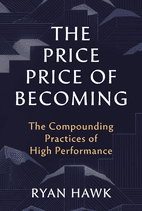
These quotes come from Ryan Hawk's book 'The Price of Becoming'. They capture the raw, honest side of growth and achievement. You will find straight talk about sacrifice, commitment, and the daily grind. No sugarcoating here.
What makes this book so quotable is its refusal to offer easy answers. Instead it hands you hard truths wrapped in simple language. The lines stick with you because they feel earned. They come from real experience, not theory. Each one is a small lesson worth carrying.
Top Quotes from The Price of Becoming
“You don’t know how much time you have in this life. You gotta decide what you wanna do with the gift of your time.”
Mike Maples Jr., speaking just seven days after his father's death, shared this reflection on mortality and purpose.
It's a raw, universal reminder that life is finite, compelling readers to reflect on how they are spending their most precious resource.
“It's understanding what's the intersection of what you're passionate about, what you're good at, and what you can be paid for. And if you do that well, you're impossible to compete with. You won't be the best. You'll be the only.”
Mike Maples Jr., recounting his father's advice about finding one's unique path in life.
This reframes competition from trying to be the best at something to becoming irreplaceable, offering a liberating and actionable framework for personal and professional growth.
“The obstacle isn’t something to overcome quickly so you can get to the good stuff. The obstacle is the good stuff.”
From the section on why we need friction, referencing Aaron Sorkin's idea of intention and obstacle.
It flips the conventional view of challenges, revealing that the struggle itself is where meaning and growth are found.
“The world doesn’t care what you can do on your best day. It cares about what you can do when it's hard.”
From the discussion on performing under non-ideal conditions.
This harsh truth underscores that true capability is measured by resilience, not by peak performance in perfect circumstances.
“Talent is abundant; commitment is rare.”
This line follows the story of Coach Seaman's promise about shooting a hundred shots a day.
It encapsulates the core lesson of the chapter in a single, memorable contrast, challenging the common overvaluation of natural ability.
“Overnight success is just long-term consistency in disguise.”
This line concludes the chapter's discussion of the myth of sudden breakthroughs.
It reframes popular success stories, urging readers to recognize the hidden daily effort that actually creates extraordinary outcomes.
“In a world obsessed with keeping options open, the courage to commit might be the rarest and most valuable asset of all.”
The author argues against the overrated pursuit of optionality, drawing on Palmer Luckey's philosophy and his own career leap.
This line reframes commitment as a competitive advantage, challenging modern cultural obsession with flexibility and providing a powerful call to depth.
Themes Behind the Quotes
A central theme is the tension between comfort and growth. Many quotes emphasize that staying safe keeps you small, while the real reward lies in facing obstacles. The book champions deliberate choice over drifting, and urges readers to take responsibility for their own path.
Another strong thread is the value of consistency over flashy talent. The idea that commitment and showing up day after day trumps natural ability appears repeatedly. Also prominent is the importance of relationships, curiosity, and the courage to commit when others keep options open. The underlying message is that becoming requires paying a price, and that price is discomfort.
Quotes by Chapter
1: Contemplate, Copy, Create
“I’m really in pursuit of greatness. I know people don’t usually talk like that, but I want to be one of the greats.”
Timothée Chalamet during his 2025 Screen Actors Guild acceptance speech for his portrayal of Bob Dylan.
It's a refreshingly honest declaration of ambition in an era that often masks effort, inspiring readers to own their goals without apology.
“Staying in the pot feels good until you realize the walls are keeping you small.”
Mr. Feeny's metaphor from Boy Meets World, explaining why he transplanted a flower that had outgrown its pot.
This vivid, simple image captures how comfort zones can become cages, motivating readers to embrace necessary change for growth.
2: Curiosity Compounds
“Keep following your curiosity and obsessions with great rigor.”
Brian Koppelman said this to the author during an interview.
It distills the book's central thesis into a memorable, actionable directive that validates the power of sustained curiosity.
“Inquisitive Curiosity is a valuable skill disguised as a personality trait.”
The author reflects on the nature of curiosity.
It reframes curiosity as a learnable skill rather than an innate trait, empowering readers to cultivate it deliberately.
“The most valuable skill isn't expertise in any one thing. It's the ability to learn new things.”
The author discusses the importance of adaptability.
It challenges conventional emphasis on specialization and highlights lifelong learning as the true competitive advantage.
“Relationships are at the core of human flourishing. The clearest message that we get from this 80-year study is this: Great relationships keep us happier and healthier. Period.”
Marc Schulz, associate director of the Harvard Study of Adult Development, summarizes the study's key finding on The Learning Leader Show.
It delivers a powerful, evidence-based conclusion that prioritizes connection over other pursuits for a fulfilling life.
3: Question Everything
“Having the conviction to stand behind your expertise when it matters most is a superpower.”
Narrator reflecting on Donna Dubinsky's decision to challenge Steve Jobs.
It distills the chapter's core message that true growth requires courage to stand by one's expertise even when it risks one's position.
“Count everything. Question everything. And then understand it.”
Description of Katherine Johnson's systematic approach to learning and her success at NASA.
This three-part mantra encapsulates the theme of questioning everything, and its rhythm makes it both memorable and actionable.
“Organizations fail because smart people stay silent.”
Narrator summarizing the lesson from Dubinsky's story about why organizations fail.
A simple, blunt truth that resonates with anyone who has witnessed the cost of silence in teams and companies.
“Take a simple idea and take it seriously.”
Charlie Munger's advice on the power of simplicity.
This short, paradoxical statement challenges the desire for complexity and reminds readers that the most profound wisdom is often the simplest, yet hardest to follow.
4: The Hard Way
“Bird by bird, buddy. Just take it bird by bird.”
Anne Lamott's father advises her brother on an overwhelming school report.
This simple metaphor teaches that any daunting task can be conquered by breaking it into small, manageable steps.
“Success represents the 1% of your work which results from the 99% that is called failure.”
Soichiro Honda reflecting on his numerous failures and setbacks.
It powerfully reframes failure as essential data and a necessary ingredient for achieving anything great.
5: The Long Game
“The willingness to show up every single day, regardless of motivation, mood, or circumstances, separates the elite from the average.”
This appears during the discussion of Paul Rabil's consistent daily practice.
It defines the central trait that distinguishes top performers and reinforces the theme of relentless consistency over fleeting effort.
“Most people can handle the work. Few can handle the wait.”
This is from the analysis of Morgan Freeman's decades-long path to success.
It highlights the often-overlooked emotional endurance required for long-term achievement, resonating with anyone facing delayed results.
6: Writing and Selling
“The highest-paid people in business do the same job, regardless of what their title is. They're professional translators.”
Opening of the chapter.
It reframes high-value work as translation, making the core concept instantly relatable and memorable.
“Writing doesn’t just record thoughts, it creates them.”
Reflecting on Joan Didion's insight.
This line challenges the passive view of writing, highlighting its generative power in shaping thinking.
“The price of becoming someone who can do this well is the discomfort of facing your own unclear thinking on paper. The reward is influence.”
Conclusion of the chapter.
It captures the essential trade-off and ultimate payoff of mastering writing and selling.
“Stories are how humans actually process information, even when we pretend we're being rational and data driven.”
Section on the art of selling through story.
It reveals a fundamental truth about human psychology and why storytelling is more persuasive than data alone.
7: Trust Your Wings
“There's a reason a bird can sit calmly on a swaying branch during a storm. Not because it trusts the branch, but because it trusts its wings.”
The author explains the difference between external and internal career security.
This metaphor captures the essence of building internal resilience rather than relying on unstable external circumstances, making it instantly memorable and inspiring.
“You never have to ask permission to take responsibility.”
Ed Catmull, Pixar's co-founder, distilled the lesson from the Toy Story 2 near-disaster where Galyn Susman's initiative saved the film.
It empowers readers to act decisively without waiting for authorization, highlighting a core principle of leadership and ownership.
“You don’t need anyone's signature to become a valuable member of the team. You just need to be the one who says, “I'll handle it” before anyone asks you to.”
The author discusses how Galyn Susman and others take initiative without formal authority.
It offers a simple, actionable mindset shift that removes excuses and puts the power to contribute directly in the reader's hands.
8: Gaining Perspective
“A just cause is a vision of a future state that doesn’t yet exist. Its purpose so inspiring and compelling that people are willing to sacrifice and contribute to making it a reality.”
Bert Bean, CEO of Insight Global, defines what a 'just cause' means to him during a conversation with the author.
It captures the essence of purpose-driven work, inspiring sacrifice and long-term commitment beyond personal gain.
“In a world drowning in data, the superpower isn’t processing more information faster. It's knowing what to tune out.”
From the section about blinkers and focus, drawing a lesson from racehorses.
It highlights a counterintuitive skill in the information age, emphasizing discernment over speed for better decisions.