As an Amazon Associate, we earn from qualifying purchases.
What is the book The Resilient Leader about?
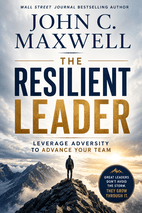
John C. Maxwell's The Resilient Leader provides a practical framework for transforming adversity into a team advantage, identifying eight internal enemies of resilience and eight habits of bounce-back leaders. Written for executives, managers, and aspiring leaders who want to build durable teams that can handle setbacks.
Feature
Insta.Page
Blinkist
Shortform
The Resilient Leader
✓
✕
✕
Summary Depth
Full Chapter-by-Chapter
15-min overview
Section-by-section guides
Audio Narration
✓
✓
✓
Full access to all 700+ summaries
✓
✓
✓
Visual Mindmaps
✓
✕
✕
AI Q&A
✓
✕
✕
Missing a book? Request it, usually live within 48h
✓
✕
✕
Quizzes
✓
✕
✕
PDF Downloads
✓
✕
✓
Send to Kindle
✓
✓
✓
Price
$89.99/yr
$146/yr (PRO)
$199/yr
*Competitor data last verified July 2026.
1 Page Summary
In The Resilient Leader: Leverage Adversity to Advance Your Team, John C. Maxwell argues that resilience is not an innate personality trait but a learnable skill—and that a leader’s ability to bounce back from setbacks directly determines their team’s success. The book’s central thesis is that adversity is not an obstacle to be avoided but a tool to be leveraged. Maxwell reframes failure as a process, not an event, and insists that the leader’s attitude toward trouble is the single most important factor in creating a durable team. Drawing on a survey that shows a vast gap between acknowledging resilience’s importance and actually possessing it, Maxwell positions mindset shift as the first and most critical step toward building lasting resilience in both individuals and organizations.
What makes the book distinctive is its structured, practical approach to what is often treated as an abstract quality. Maxwell identifies eight internal enemies of resilience—such as expecting to fail, taking adversity personally, and living in the past—and offers specific antidotes. He then outlines eight habits of resilient leaders, including the ability to reject rejection, see failure as temporary, and focus on what one can control (attitude and calendar). The book moves from personal resilience to team leadership, dedicating later chapters to coaching team members through fear, championing change, teaching problem-solving, and encouraging calculated risk. Each chapter blends real-world stories (from business, sports, and history) with actionable steps, making the abstract concept of resilience concrete and teachable.
The intended audience is current and aspiring leaders—executives, managers, and team leads—who want to not only strengthen their own ability to handle setbacks but also instill that same capacity in their teams. Readers will gain a clear framework for transforming adversity from a threat into an advantage: problems become puzzles, failure loses its sting, and setbacks become temporary data points rather than permanent verdicts. By the conclusion, Maxwell promises that individual resilience can multiply into a collective, durable unit that can take a hit, regroup, and keep moving—not by becoming invincible, but by becoming bounce-back-able, every single time.
1. Reframe Your Attitude Toward Adversity
Overview
John Maxwell lays the foundation for building resilience by first changing how you see adversity. He draws on a SAS survey revealing that while 97% of executives recognize resilience as critical, over half admit their organizations lack it. The gap, he argues, starts with leaders—when leaders become more resilient, their teams follow. The entire chapter is devoted to reframing our attitude toward adversity, because how we interpret setbacks determines whether we grow or get stuck.
Adversity Is a Given, Not a Surprise
Maxwell reminds us that adversity is normal—“to err is human” is a truth stretching back millennia. Leaders typically face even more problems than average. He presents the “Rules for Being Human,” which emphasize that lessons repeat until learned, and pain is the universe’s way of getting your attention. The key is to stop treating mistakes as exceptions and start seeing them as part of the curriculum.
Failure Is a Process, Not an Event
Growing up, many of us think success and failure happen in a flash—like acing or flunking a test. But Maxwell flips that: a failing grade reveals a neglected process, not a single bad moment. Success is a journey, and failure works the same way. Resilient people understand that until your last breath, you’re still in process. The jury is still out.
Success and Failure Are in the Eye of the Beholder
How do you label a mistake? By the dollar amount? By criticism from others? Maxwell points out that unless an action is morally wrong or illegal, the label “failure” is subjective. Entrepreneurs average 3.8 failures before succeeding—they don’t call them failures, just steps forward. You get to decide what counts.
Don’t Treat Adversity Like an Enemy
Most people run from difficulty, but Maxwell quotes Rick Pitino: “Failure is good. It’s fertilizer.” High achievers don’t see mistakes as enemies; they see them as ordinary hurdles. When you give yourself permission to fail, you also give yourself permission to excel.
Setbacks Are Usually Temporary
“It doesn’t matter how much milk you spill as long as you don’t lose your cow.” Most mistakes aren’t irreversible. Keeping perspective helps you avoid making a big deal out of spilled milk. Every event—good or bad—is just one small step in the process.
Mistakes Aren’t a Sign of Weakness
Edwin Markham’s poem “Victory in Defeat” captures the idea that defeat can “shake the soul and let the glory out.” Mistakes aren’t permanent stains. They can become stepping stones if you don’t let them define you.
Failure Is Neither Fatal nor Final
The story of Sergio Zyman and New Coke illustrates this powerfully. His strategy failed spectacularly, costing $100 million and lasting just 79 days. Yet Zyman refused to call it a failure—he called it a strategy that didn’t work, but the totality ended up positive. The return of Coca-Cola Classic made the company stronger.
The Choice to Embrace Adversity
Maxwell ends with a sobering truth: all roads to achievement pass through adversity. Many people sleepwalk through life, hoping success will arrive effortlessly. The wake-up call is that adversity is simply the price of success. Accept that, and you’re free to move forward—and take your team with you.
Key Takeaways
Adversity is unavoidable; stop resisting it and start learning from it.
Failure is a process, not a single event—you’re never finished until you stop trying.
How you label a setback is subjective; you have the power to reframe it.
Mistakes are temporary and not signs of weakness; they can be fertilizer for growth.
Resilience means seeing errors as normal, learning from them, and bouncing back.
The greatest leaders rise above misfortune because they treat adversity as the price of success.
Key concepts: 1. Reframe Your Attitude Toward Adversity
Reframe Your Attitude Toward Adversity
Adversity Is Normal and Expected
Adversity is a given, not a surprise
Lessons repeat until learned
Pain gets your attention for growth
Stop treating mistakes as exceptions
Reframe Failure as a Process
Failure reveals a neglected process, not an event
Success and failure are journeys, not moments
You're still in process until your last breath
The jury is always still out
Labeling Setbacks Is Subjective
Failure label is subjective unless morally wrong
Entrepreneurs average 3.8 failures before success
You get to decide what counts as failure
Don't let others define your setbacks
Mistakes Are Temporary and Not Weakness
Setbacks are usually temporary, not irreversible
Spilled milk doesn't matter if you keep the cow
Mistakes can shake the soul and let glory out
They become stepping stones if not defining you
Embrace Adversity as the Price of Success
All roads to achievement pass through adversity
Failure is neither fatal nor final
New Coke failure made Coca-Cola stronger
Accept adversity to move forward and lead others
💡 Try clicking the AI chat button to ask questions about this book!
2. Transform Trouble Into Resilience
Overview
We’ve all felt like those monkeys in the classic experiment: drenched by cold water every time we reach for something worthwhile, until we stop trying—and we can’t even remember why. This chapter grabs that image and uses it to show how adversity can either harden us into rigid, excuse-making leaders or forge us into resilient ones. The punchline? Trouble isn’t the problem; how we respond to it is.
The Monkey Trap: How Adversity Shapes Us
The opening story isn’t just a quirky lab tale—it’s a mirror. Four monkeys learn to avoid the bananas because they’ve been sprayed with cold water. Replace them one by one, and the new monkeys get dragged down by the old ones, even though none of them have ever felt the spray. They’re stuck following a rule no one remembers. That’s exactly what happens in organizations and in our own minds: we inherit fears and defenses that once protected us, but now just limit us. We give up on new ideas because we assume we’ll get soaked, and we never stop to ask if the cold water is even still there.
The antidote isn’t to pretend trouble doesn’t exist. It’s to accept adversity as normal, learn from it, and build resilience that makes you stronger. When you handle trouble with grace, your team learns to do the same.
How Not to Handle Trouble: The Rigid Leader’s Playbook
The chapter lays out five classic rigid responses to adversity, each one a dead end. Rigid leaders blow up—they let anger turn a small mistake into a firestorm. (Charles Buxton nailed it: “A man’s venom poisons himself more than his victim.”) They cover up, like the navy pilot who broke radio silence but refused to come forward, or the infamous Nicholas Leeson, whose cover-ups sank Barings Bank. They speed up, working harder and faster in the wrong direction—hammering that square peg instead of pausing to think. They refuse to back up, doubling down on thoughtless remarks instead of apologizing. And eventually, they give up, because pretending to be perfect is exhausting. As Paul J. Meyer observed, ninety percent of failures aren’t defeated—they just quit.
Each of these responses shares a common root: a refusal to take responsibility. Rigidity feels safe, but it’s actually a slow surrender.
The Resilient Response: Bouncing Back and Growing
Resilient leaders do the opposite. They start with three of the hardest words: “I was wrong.” Then they treat every mistake as a fork in the road—a chance to learn, adjust, and try again. Peter Drucker said he wouldn’t promote someone who wasn’t making mistakes, because mistakes mean you’re trying new things.
The chapter offers a memorable acronym to reframe failures: MISTAKES are Messages, Interruptions, Signposts, Tests, Awakenings, Keys, Explorations, and Statements about our progress. It’s a tool to shift your mindset from shame to curiosity.
Ultimately, resilience is an inside job. The fight to take responsibility happens within, and it requires character: the will to do right, the grace to forgive, the patience to learn, and the fortitude to try again. Stewart B. Johnson put it well: our business isn’t to get ahead of others, but to outstrip our own yesterday.
Key Takeaways
Adversity is normal; the real problem is how rigidly you react to it.
Rigid leaders blow up, cover up, speed up, refuse to back up, and eventually give up.
Resilient leaders start with “I was wrong,” take full responsibility, and use mistakes as feedback.
Reframe mistakes using the MISTAKES acronym—they are messages, signposts, and keys to growth.
Building resilience is an internal battle of character, not talent or opportunity.
Key concepts: 2. Transform Trouble Into Resilience
Resilience isn’t about conquering external opponents—it’s about getting out of your own way. Drawing on the insight of South African leader Jan Christian Smuts, John Maxwell argues that the real fight is internal. Most leaders who crumble under pressure do so not because of circumstances, but because of self‑sabotaging behaviors. In this chapter, he identifies eight such enemies that erode resilience and offers practical ways to recognize and avoid them.
1. Expecting to Fail
The law of human behavior states that we eventually get what we expect. People who anticipate failure see themselves as failures, which becomes a self‑fulfilling prophecy. Maxwell illustrates this with Helen Hayes’s first turkey story—her family showed up at the table with coats on before even tasting it. The key is to separate failing (an event) from being a failure (an identity). Expecting to succeed doesn’t guarantee it, but expecting to fail guarantees discouragement.
2. Taking Adversity Personally
Oliver Goldsmith was labeled a “stupid blockhead” and failed at preaching, law, and medicine—yet he didn’t let those failures define him. Instead, he used them to redirect his talents toward writing, eventually becoming a literary giant. Maxwell advises treating mistakes as “the kiss of Jesus”—a term Mother Teresa used for failures that push us toward growth. Neither failure nor success should attack your heart or your head; they’re passing moments, not permanent labels.
3. Refusing to Take Smart Risks
Risk is essential to life and growth. Maxwell quotes poet Christopher Logue’s “Come to the edge” as a metaphor for stepping into uncertainty. People who play it safe end up with “near‑life experiences,” never swinging for the fences. He reminds us that fear and resilience cannot coexist. Even if you reach only 65% of your goals, you’re a champion in the art of living—so aim high and accept the inevitable errors along the way.
4. Feeling Defeated by Adversity
Baseball manager Casey Stengel said, “You gotta lose ‘em sometimes. When you do, lose ‘em right.” The resilient refuse to let losses define them. Snooker champion Steve Davis puts it bluntly: “It may not be your fault for being down, but it is your fault for not getting up.” Cultivating tenacity—determination to get back up—is a choice that separates those who bounce back from those who stay down.
5. Listening to Negative Self‑Talk
The saddest words, said a psychiatrist, are “if only.” Maxwell suggests swapping them for “next time.” Top performers (as Warren Bennis found) never say “failure”; they call mistakes “learning experiences” or “tuition paid.” The language we use shapes our mindset. Adversity won’t defeat you if you tell yourself, “Next time I’ll do better.”
6. Losing Your Sense of Humor
Laughter is a survival tool. Maxwell tells a story of a humorist who received the “no‑bell prize” after a mediocre speech. When you take everything too seriously, every setback feels like life or death. Keeping a sense of humor—even when you’ve done something stupid—lowers the stakes and increases your bounce‑back capacity.
7. Failing to Learn from Mistakes
Wolfgang Puck noted that he learned more from his failed restaurant than from all the successes combined. Maxwell echoes this with his book Sometimes You Win, Sometimes You Learn. The resilient become learners, not losers. They refuse to make excuses or shift blame. Every mistake is a chance to gain wisdom—but only if you stay teachable.
8. Losing Your Perspective
Reinhold Niebuhr’s Serenity Prayer became famous, yet he initially dismissed it as something he’d “have no more use for.” Perspective is fragile. Don Shula’s twenty‑four‑hour rule—celebrate or grieve for one day, then move on—kept his teams resilient. Psychologist Joyce Brothers reminds us that failure is a healthy, inevitable part of reaching the top. The right perspective sees adversity as a companion to success, not its enemy.
Key Takeaways
Identify the internal enemies: Expecting failure, taking failure personally, refusing risks, feeling defeated, negative self‑talk, losing humor, failing to learn, and losing perspective all undermine resilience.
Separate identity from events: You are not your failures. Labels like “failure” become self‑fulfilling; instead, adopt a learner’s mindset.
Change your vocabulary: Replace “if only” with “next time.” Call mistakes “tuition” or “learning experiences.”
Keep perspective and humor: Laugh at yourself, enforce a “twenty‑four‑hour rule” for wins and losses, and remember that adversity is part of the path to success.
Key concepts: 3. Avoid the Enemies of Resilience
Avoid the Enemies of Resilience
Internal Enemies of Resilience
Expecting to fail becomes a self-fulfilling prophecy
Taking adversity personally lets failure define you
Refusing smart risks leads to near-life experiences
Feeling defeated by adversity keeps you down
Mindset Shifts for Resilience
Separate failing (event) from being a failure (identity)
Replace 'if only' with 'next time' in self-talk
Call mistakes 'learning experiences' or 'tuition paid'
Adopt a learner's mindset, not a loser's mindset
Practical Resilience Tools
Use the 24-hour rule: grieve or celebrate, then move on
Keep a sense of humor to lower the stakes
Treat failures as 'the kiss of Jesus' for growth
Learn from mistakes instead of making excuses
Risk and Adversity as Allies
Risk is essential to life and growth
Fear and resilience cannot coexist
Aim high and accept inevitable errors
Adversity is a companion to success, not its enemy
Identity and Perspective
You are not your failures or successes
Labels like 'failure' become self-fulfilling
Perspective sees setbacks as passing moments
Tenacity is a choice to get back up
4. Embrace the Value of Adversity
Overview
Most people accept that a little adversity is necessary for success, but this chapter pushes further: you must actually embrace adversity and make failure a regular part of your life. The natural human tendency is to drift toward inertia, but the successful life is an uphill climb. That climb requires sustained effort through repeated challenges. The key insight? If you're not failing, you're probably not really moving forward. People who have weathered repeated adversity are actually in a stronger position than those who haven't, because they've built the muscles of resilience, tenacity, and wisdom through every stumble and recovery.
The Benefits of Adversity
Adversity isn't just something to endure—it's something to leverage. Here are six powerful ways it makes you better, with real-world stories that bring each point to life.
1. Adversity Creates Resilience
Nothing builds bounce-back ability like repeated failures. A study from the mid-1980s tracked people who had lost their jobs three times due to plant closings. Psychologists expected them to be beaten down. Instead, they found them incredibly resilient. Why? Because each layoff had taught them to recover and adapt. The phrase "whatever doesn't kill you makes you stronger" holds true when challenges stretch beyond your current coping abilities—the more frequent and significant the adversity, the greater the potential for resilience.
2. Adversity Develops Maturity
Wisdom rarely comes from easy wins. As novelist William Saroyan put it, "Good people are good because they've come to wisdom through failure." Adversity forces you to confront your own limits, learn flexibility, and grow up. Harvard Business School professor John Kotter noted that executives today worry more about a candidate who has never failed than one who stumbled early in their career. The problems we face and overcome actually prepare our hearts for future difficulties.
3. Adversity Provides Greater Opportunities
Eliminating problems limits your potential. When Bernie Marcus was fired from Handy Dan hardware in 1978, it felt like a devastating setback. But that firing prompted him to team up with Arthur Blank and start a new business—Home Depot. Today it has over two thousand stores and billions in sales. The door that opened because of a closed one can completely change your trajectory.
4. Adversity Prompts Innovation
A boy from an immigrant family sent twenty-five cents for a photography book and received a book on ventriloquism instead. He adapted, learned ventriloquism, and became the legendary Edgar Bergen, entertaining millions with his dummy Charlie McCarthy. University of Houston professor Jack Matson even created a course called "Failure 101" where students build mock-ups of products nobody would buy—equating failure with creativity, not defeat. When you're forced to adjust, you discover new ways forward.
5. Adversity Brings Unexpected Benefits
Edison discovered the phonograph while failing to invent something else. Kellogg's Corn Flakes came from boiled wheat left in a pan overnight. Ivory soap floats because a batch was over-mixed. Scott Towels launched when a toilet paper machine produced too many layers. And chemist Christian Schönbein, experimenting in his wife's forbidden kitchen, spilled acid on a cotton apron that later exploded—inventing smokeless gunpowder and making a fortune. Resilient leaders look for what's right even when things go wrong.
6. Adversity Motivates
Nothing lights a fire like a crisis. In a famous football story, Bear Bryant's quarterback ignored orders to play it safe, threw a pass that was intercepted, then chased down the faster cornerback from behind to save the game. When asked how, Bryant said: "Your man was running for six points. My man was running for his life." Olympic diver Pat McCormick noted that her narrow loss in the 1948 trials focused her training; she went on to win four gold medals. Adversity sharpens your focus like nothing else.
The Core Mindset Shift
Instead of seeing a mistake as a failure, train yourself to ask: "What can I learn? What opportunity is hiding here?" Bill Vaughan said it best: "In the game of life it's a good idea to have a few early losses, which relieves you of the pressure of trying to maintain an undefeated season." Those losses teach you resilience. The goal isn't to avoid being knocked down—it's to get up one more time than you fall.
Key Takeaways
Repeated failure builds resilience, maturity, and wisdom that easy success never can.
Adversity opens doors to greater opportunities—Home Depot, Kellogg's, and Scott Towels all came from setbacks.
Innovation often springs from forced adaptation; treat failure as a creative starting point.
Look for unexpected benefits in every mistake; resilient leaders search for what's right even when things go wrong.
Adversity is a powerful motivator—use it to sharpen focus and energy.
The successful life is an uphill journey; embrace the climb and the falls that come with it.
Key concepts: 4. Embrace the Value of Adversity
Embrace the Value of Adversity
Core Mindset Shift
Embrace adversity as essential, not just necessary
If you're not failing, you're not moving forward
Ask 'What can I learn?' instead of seeing failure
Success is an uphill climb requiring sustained effort
Benefits of Adversity
Creates resilience through repeated failures
Develops maturity and wisdom from setbacks
Opens doors to greater opportunities like Home Depot
Prompts innovation through forced adaptation
Unexpected Benefits
Edison discovered phonograph while failing at something else
Kellogg's Corn Flakes and Ivory soap came from mistakes
Scott Towels launched from an over-mixed batch
Resilient leaders find what's right when things go wrong
Adversity as Motivator
Crisis lights a fire and sharpens focus
Bear Bryant's player ran 'for his life' to save game
Olympic diver Pat McCormick turned loss into gold medals
John C. Maxwell is a renowned leadership expert, speaker, and author who has sold over 30 million books worldwide. He is best known for works such as *The 21 Irrefutable Laws of Leadership* and *Developing the Leader Within You*, focusing on personal and organizational growth. A former pastor, Maxwell founded The John Maxwell Company and has been consistently recognized by Inc. and Forbes as a top leadership authority.
Frequently Asked Questions about The Resilient Leader
What is The Resilient Leader about?
This book provides a practical framework for leaders to build personal and organizational resilience by changing how they interpret setbacks. It argues that adversity is normal and that failure is a process, not an event, emphasizing that how leaders respond to trouble determines whether they grow or stagnate. Through chapters on reframing attitudes, avoiding internal enemies of resilience, and adopting specific habits, it guides readers to transform challenges into opportunities. Ultimately, it shows that resilience is a choice—a set of habits that can be cultivated to bounce back from any setback.
Who is the author of The Resilient Leader?
John C. Maxwell is a bestselling author and globally recognized leadership expert who has written numerous books on leadership, personal growth, and resilience. His insights draw from decades of experience teaching leaders in business, government, and nonprofit organizations. In this book, he distills his wisdom into actionable strategies for building resilience in both leaders and their teams.
Is The Resilient Leader worth reading?
Yes, because it doesn't just tell you to be resilient—it shows you exactly how, with specific habits, mindset shifts, and coaching techniques derived from real-world examples. The book is highly practical, offering step-by-step guidance for reframing adversity, leading change, and empowering teams to solve problems and embrace risk. Leaders at any level will find it a valuable resource for turning setbacks into stepping stones.
What are the key lessons from The Resilient Leader?
First, resilience starts with reframing your attitude toward adversity: see problems as normal and failure as a learning process rather than an identity. Second, avoid internal enemies like expecting to fail, taking adversity personally, and other self-sabotaging behaviors that erode resilience. Third, adopt the habits of resilient leaders—reject rejection, see failure as temporary, and coach team members to overcome fears and become problem solvers. Finally, champion change and welcome risk, because the ability to bounce back is multiplied when the entire team is equipped with resilience.
📚 Explore Our Book Summary Library
Discover more insightful book summaries from our collection