The Resilient Leader Quotes
by John C. Maxwell
As an Amazon Associate, we earn from qualifying purchases.
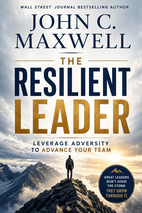
This collection brings together the most memorable lines from John C. Maxwell's book on resilience. You will find short, punchy statements that cut straight to the heart of leading through difficulty. Each quote feels like a conversation with a mentor who has seen it all and wants you to learn faster than he did.
The reason this book is so quotable is that Maxwell has a gift for saying profound things in simple, unforgettable ways. He turns hard earned wisdom into everyday language that sticks with you long after you read it. These are the kind of lines you will write in a journal, share with a teammate, or repeat to yourself when things get tough.
Top Quotes from The Resilient Leader
“When we give ourselves permission to fail, we at the same time give ourselves permission to excel.”
Musicologist Eloise Ristad said this, as quoted in the chapter.
It highlights the paradoxical link between allowing failure and achieving excellence. This quote empowers readers to take risks without fear.
“Sometimes you win and sometimes you learn.”
Author Robert Kiyosaki shared this perspective on failure.
This simple, memorable phrase reframes every outcome as valuable, encouraging a growth mindset crucial for resilience.
“I cannot always choose what happens to me, but I can always choose what happens in me.”
The chapter author's personal mantra for living resiliently.
Empowering reminder that while external events are uncontrollable, internal response is a choice, a core principle of resilience.
“It may not be your fault for being down, but it is your fault for not getting up.”
Professional snooker player Steve Davis stated this about personal responsibility.
It shifts focus from blame to action, empowering leaders to take ownership of their recovery after setbacks.
“What distinguishes winners from losers is that winners concentrate at all times on what they can do, not on what they can’t do.”
Bob Butera, former president of the New Jersey Devils, explains the mindset of winners in the section 'Resilient Leaders Focus on Strengths'.
This quote powerfully reframes failure by focusing on strengths, a core habit of resilient leaders. It inspires readers to concentrate on what they can control.
“Two men looked through prison bars; One saw mud; the other saw stars.”
A mother's advice to her daughter living in harsh desert conditions during WWII.
Powerful metaphor for choosing perspective over circumstance, illustrating resilience in a memorable image.
“A man is not defeated by his opponents but by himself.”
Jan Christian Smuts, a former prime minister of South Africa, observed this.
It powerfully reframes adversity as an internal battle, reminding leaders that self-sabotage is often the real enemy.
Themes Behind the Quotes
One major theme running through these quotes is that failure is not something to avoid but something to embrace as a teacher. Maxwell repeatedly frames mistakes, losses, and adversity as essential ingredients for growth. The message is clear: if you are not failing, you are not pushing yourself hard enough. Resilience is built through repeated attempts and the willingness to get back up.
Another theme is the power of attitude and inner choice. Many quotes emphasize that you cannot always control what happens to you, but you can control how you respond. Fear, doubt, and self pity are portrayed as bigger obstacles than any external circumstance. The resilient leader focuses on what they can do, learns from every setback, and keeps moving forward one step at a time.
Quotes by Chapter
1. Reframe Your Attitude Toward Adversity
“Adversity is simply a price we pay to achieve success.”
This is the concluding line of the chapter, summarizing the author's message.
It reframes adversity as a necessary investment rather than a setback. This simple yet profound statement encourages leaders to embrace challenges.
“Great minds have purposes, others have wishes. Little minds are tamed and subdued by misfortunes; but great minds rise above them.”
Washington Irving's quote appears at the end of the chapter.
It draws a clear contrast between ordinary and extraordinary responses to adversity. The vivid imagery inspires readers to adopt a resilient mindset.
“The fellow who never makes a mistake takes his orders from one who does.”
Herbert V. Prochnow is quoted in the chapter.
It flips the fear of mistakes by suggesting that mistakes are a sign of leadership. This memorable line encourages leaders to act boldly.
2. Transform Trouble Into Resilience
“Once you can handle trouble with grace and skill, you can lead your team to do the same.”
The author summarizes the goal of transforming adversity into resilience.
It captures the essence of resilient leadership—handling adversity gracefully and modeling that behavior for the team.
“The better a man is, the more mistakes he will make, for the more new things he will try.”
Leadership expert Peter Drucker discusses the value of mistakes.
It reframes failure as a necessary component of growth and innovation, encouraging leaders to take risks.
“Our business in life is not to get ahead of others, but to get ahead of ourselves—to break our own records, to outstrip our yesterday by our today.”
Stewart B. Johnson speaks about the internal battle for self-improvement.
It shifts focus from competition with others to personal progress, a core principle of resilience.
“Don't waste energy trying to cover up failure. Learn from your failures and go on to the next challenge.”
Author H. Stanley Judd advises against covering up mistakes.
It offers a direct, actionable mindset shift from hiding mistakes to learning from them.
3. Avoid the Enemies of Resilience
“Failure isn't so bad if it doesn’t attack the heart. Success is all right if it doesn't go to the head.”
Sportswriter Grantland Rice said this about maintaining perspective.
This balanced wisdom helps readers avoid letting either failure or success define their identity, fostering resilience.
4. Embrace the Value of Adversity
“If you're not failing, you're probably not really moving forward.”
The author states this as a core principle for embracing adversity.
It challenges the common fear of failure and reframes it as a sign of progress, motivating action.
“When you fail, and fail, and fail again—and keep getting back up on your feet and keep learning from your failures—you are building strength, tenacity, experience, wisdom, and resilience.”
The author describes the process of building resilience through repeated failure.
The vivid imagery of getting back up and the list of qualities make it a powerful reminder that failure is a teacher.
“Nothing in life breeds resilience like adversity and failure.”
This bold statement appears in the section on how adversity creates resilience.
Its emphatic all-caps delivery drives home the point that failure is essential for developing strength.
“In the game of life it's a good idea to have a few early losses, which relieves you of the pressure of trying to maintain an undefeated season.”
Bill Vaughan's quote is used to encourage embracing early losses.
The sports analogy offers a lighthearted yet profound reframe, reducing the fear of failure.
5. Harness the Power of Resilience
“The winner's edge is not in a gifted birth, a high IQ, or in talent. The winner's edge is all in the attitude, not aptitude. Attitude is the criterion for success. But you can’t buy an attitude for a million dollars. Attitudes are not for sale.”
Denis Waitley, author of The Winner's Edge, as quoted by the chapter author.
It succinctly captures that attitude, not innate talent or intelligence, is the key to success, resonating with anyone striving to overcome circumstances.
“The happiest people in life don't necessarily have the best of everything. They're resilient and try to make the best of everything.”
General observation by the author after the desert story.
Simple yet profound statement that resilience and making the best of things lead to happiness, relatable to all.
6. Adopt the Habits of Resilient Leaders
“A man is literally what he thinks, his character being the complete sum of all this thought.”
This quote appears in the section 'Resilient Leaders Reject Rejection' where the author discusses the importance of mindset.
It resonates because it emphasizes that our thoughts shape our character and destiny, reminding readers to guard their mindset especially during adversity.
“The worst danger we face is the danger of being paralyzed by doubts and fears.”
President Harry S. Truman warns against the paralysis caused by doubts and fears in the section 'Resilient Leaders Prioritize Action'.
It captures a key barrier to resilience—fear of action—and motivates leaders to overcome hesitation. The simplicity and authority of the statement make it memorable.
“A life spent in making mistakes is not only more honorable but more useful than a life spent doing nothing.”
Playwright George Bernard Shaw extols the value of making mistakes at the end of the chapter.
This quote celebrates learning through failure, a central theme of resilience. It encourages readers to embrace mistakes as necessary for growth and success.
8. Coach Team Members to Overcome Their Fears
“Fear is one of the greatest thieves of potential.”
The author opens the chapter by stating this as a core insight about fear.
It succinctly captures how fear limits human potential, making it a memorable and motivating statement for leaders and team members.
“Show me a guy who's afraid to look bad and I'll show you a guy you can beat every time.”
Tony Award-winning actor René Auberjonois said this about the paralyzing effect of fear.
It vividly illustrates that fear of failure gives others an advantage, encouraging readers to push past that fear.
“The hero and the coward both feel the same thing, but the hero uses his fear, projects it onto his opponent, while the coward runs.”
Boxing trainer Cus D'Amato said this to explain how fear can be transformed into strength.
It reframes fear as a shared emotion and shows that the key difference is how one responds, inspiring readers to channel fear productively.
“The joy is in the journey and the journey is the joy.”
Former first lady Barbara Bush used this metaphor about life as a train ride to emphasize living in the present.
This quote beautifully counters the fear of an uncertain future by reminding readers to appreciate the process, not just the destination.
9. Champion Change as Necessary for Success
“The only person who likes change is a wet baby.”
Mark Twain's observation on human nature is cited in the chapter about why people resist change.
This humorous yet profound statement captures the universal resistance to change, making it relatable and memorable for readers.
“Every beginning is a consequence. Every beginning ends something.”
Poet and literary critic Paul Valéry's quote is used to illustrate that change brings both gains and losses.
It eloquently acknowledges the bittersweet nature of change, reminding readers that every new start comes with a cost, which resonates deeply with anyone facing transitions.