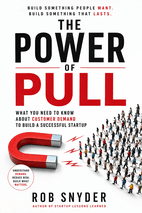
Rob Snyder's The Power of Pull provides a framework for identifying real customer demand by focusing on a buyer's unavoidable project, existing options, and their limitations, rather than building a product first. Written for startup founders struggling to find traction, it offers a counterintuitive toolkit for selling effectively and scaling by treating a business as a factory for successful customers.
Feature
Insta.Page
Blinkist
Shortform
Summary Depth
Full Chapter-by-Chapter
15-min overview
Section-by-section guides
Audio Narration
✓
✓
✓
Visual Mindmaps
✓
✕
✕
AI Q&A
✓
✕
✕
Quizzes
✓
✕
✕
PDF Downloads
✓
✕
✓
Price
$89.99/yr
$146/yr (PRO)
$199/yr
*Competitor data last verified July 2026.
1 Page Summary
The book The Power of Pull argues that startup success is not about building a great product or following conventional best practices, but about discovering and matching what the author calls demand—defined as the top priority on a specific buyer's to-do list at a given moment. The central thesis is that founders often fail because they operate from a "supply-side" mindset, focusing on their own product and research, whereas the key is to find a buyer with an unavoidable project, already considering options that all have serious limitations. The author’s PULL framework (Project, Unavoidable, List, Limitations) provides a method for identifying this true demand, where customers actively pull the solution from the founder rather than needing to be pushed or persuaded.
Rob Snyder’s approach is distinctive for its blunt, experience-driven rejection of traditional startup advice. Drawing from his own painful journey—described as the "pain cave"—and numerous case studies, he emphasizes that selling and delivering is the real research, not upfront planning or validation. The book systematically deconstructs myths, such as the idea that demand comes from pain points or that a polished product is essential, and replaces them with actionable, bottom-up processes. These include earning a PULL hypothesis through direct interaction with a single real person, using a specific "help them buy" sales method, and debugging every objection as raw data. A key concept is the "real-person rule," which holds that success comes from designing for one actual human being, not an abstract persona.
The intended audience is startup founders, particularly those struggling to find traction or feeling overwhelmed by contradictory advice. Readers will gain a practical, counterintuitive toolkit for identifying real customer demand, selling effectively without being pushy, and scaling by treating their business as a "factory for successful customers." The book also addresses the psychological toll of entrepreneurship, offering a mental model for why founders get paralyzed by overthinking and how to break free from the trap of trying to solve a "Gordian knot" intellectually before taking action. Ultimately, it promises a path from building what founders think people want to discovering what people are already desperate to buy.
Introduction: Demand Is All You Need
Overview
Starting a startup should be straightforward, yet the author’s own journey began in what he calls the pain cave—a place where every best practice failed, no one would buy, and pivots only led to more dead ends. After raising over a million dollars, he was ready to quit. Then a customer called with a completely unrelated problem, and in a few hours he built a crude, low-tech fix. It wasn’t the polished product he’d been selling—it was objectively worse—but suddenly revenue jumped from zero to millions. That accidental breakthrough forced a brutal realization: success had nothing to do with his Harvard education, research, or planning. It came from stumbling onto something buyers were already desperate for.
That something is demand—not “people who want our product,” but the top priority on a buyer’s to-do list, right now. Buyers don’t wake up hoping to buy; they have their own agendas. When you find someone with a project that is unavoidable, who has considered options but sees serious limitations in all of them—that’s the PULL framework. In that gap, a new product becomes irresistible. When PULL exists, customers pull the solution out of your hands. When it doesn’t, no amount of selling or polish matters.
A startup, then, is simply the combination of demand (PULL) and supply. Together they form one repeatable customer success story: a single example of one buyer with intense demand, whose situation applies to many others. The founder’s job is to find that story and then repeat it. Yet most startup advice encourages founders to LARP (live action role-play) as successful entrepreneurs before they actually have demand. Those activities feel productive but keep you trapped in the pain cave.
Take Varsha, who had $100k in revenue but felt like a failure because her product came with consulting. She wanted to be all software by step 10, but step 10 isn’t discoverable from step 1. The experienced venture investor confirmed this: he never knows who will succeed in advance; he bets on founders figuring things out, not on plans. Once Varsha stopped planning and just served customers, revenue grew to $500k, and a more scalable opportunity naturally revealed itself as step 2. Step 3 will emerge when it’s time.
Then there’s Parker, whose fifteen months of “scientific” research—customer interviews, spreadsheets, validation experiments—proved a massive need, yet no one bought. Surveys and expressions of interest are worthless. Only when he started using sales as research, forcing uncomfortable conversations and getting money on the table, did he land his first customer. That one sale grew to fifty in ten weeks and millions in revenue within a year.
This book exists because the author struggled through bad advice, watched friends harm their startups, and eventually found a simpler path. It’s for anyone trying to bring something new into the world—founders with ideas, businesses that aren’t growing, even established companies that feel stagnant. The focus is pre-$1M revenue, but the principles apply everywhere. You’ll learn the PULL framework, tactics for selling, delivering, debugging, and scaling, and how to build a fast-growing startup without losing your mind. The key takeaway: you can’t plan step 10 from step 1. Research isn’t validation—only paying customers are. Entrepreneurship isn’t a science experiment; it’s messy and real. And small niches with non-scalable offerings are the soil where real growth takes root.
Key Takeaways
You can't plan step 10 from step 1. Embrace that the path will unfold as you learn from customers. Focus on the obvious next step.
Research is not validation. The only real validation is a customer paying money. Use sales as your primary research tool.
Entrepreneurship is not a science experiment. No amount of analysis can replace the messy reality of serving real customers. Stop LARPing and start selling.
Small niches and non-scalable offerings are okay. They are the soil from which scalable growth grows. Don't let "scalability" fears keep you from starting where the demand is.
Key concepts: Introduction: Demand Is All You Need
1. Introduction: Demand Is All You Need
The Pain Cave and the Breakthrough
Best practices failed, pivots led to dead ends
Accidental low-tech fix generated millions in revenue
Success came from stumbling onto desperate demand
Demand Is the PULL Framework
Demand is a buyer's top priority, right now
PULL exists when buyers have unavoidable projects
Customers pull solutions out of your hands
Startup = Demand + Supply = Repeatable Story
One repeatable customer success story is the goal
Founder's job: find that story and repeat it
Most advice encourages LARPing without demand
Real Validation Comes from Paying Customers
Research and surveys are not validation
Only paying customers confirm demand
Use sales as research to get money on the table
Embrace Messy Steps and Small Niches
You can't plan step 10 from step 1
Small niches with non-scalable offerings foster growth
Entrepreneurship is messy, not a science experiment
💡 Try clicking the AI chat button to ask questions about this book!
1: Demand: What’s on the Buyer’s To-Do List?
Overview
Most founders assume success comes from building a great product—polishing features, solving pain points, and proving ROI. But the chapter opens with a paradox that shatters that assumption: HubSpot grew to $25 million in revenue with a notoriously awful product. The secret wasn’t product quality but something far more fundamental: demand. The real lesson is that demand is not desire for a supply—it exists independently, out in the world, regardless of what you build. A customer asking for a “permissions feature” really has demand for “preventing someone from unknowingly archiving a project for the whole team.” That distinction changes everything.
Equally misleading is the belief that demand comes from problems and pain points. The Stanford MBA who did a hundred interviews found a top-rated pain point yet sold nothing. Problems don't predict action; people cope with terrible situations all the time. Instead, demand reveals itself through action—what buyers actually prioritize on their mental to-do list. Each person has a never-ending list of possible projects, but only one becomes the top priority at any moment. That’s when they enter a demand state—they start pulling toward completion, and anyone with a tool that helps gets pulled along rather than having to push.
Two enemies sabotage this clarity. “Should want” assumes buyers are rational calculators of ROI, but real human motivation is driven by ego, envy, fear, and social perception—like wanting a haircut that makes you look like Matt Damon even though logic says the same haircut should satisfy you. “Will want” is even trickier: buyers in low-stakes interviews confidently describe a future version of themselves that will prioritize your product, then behave completely differently when money is on the line. That’s what happened with MuukTest—CTOs said QA was important, but their real project was making QA go away, not engaging with it. When the founders repositioned from software to a service that matched that PULL (handling QA so buyers didn’t have to), revenue jumped from $10K to $1M in under a year.
The path out of the pain cave is simple: find PULL. If you’re pushing, you haven’t found it yet. PULL explains why some buyers buy fast and others slow, why research often fails to predict revenue, and why conversion rates are low. Your core activity becomes locating people who can’t get their top-priority project done without you—people for whom it would be weird not to buy. Selling itself is the real research; it’s the only way to see PULL in the wild. And because demand is never-ending—tied to situational, unavoidable projects—market size is about when not just who. The supply side is seductive, but the hard truth is that by default nobody wants your product. Kill that fantasy, stop pushing, and start building around what the market is already pulling toward.
The HubSpot Paradox: Growing Despite an Awful Product
How does a company like HubSpot grow to $25 million in annual revenue with thousands of happy customers while its product barely works? Founder Dharmesh Shah admits every product he's ever launched was awful at first. HubSpot famously rebuilt nearly everything after their Series D round. Yet they were the second-fastest-growing SaaS startup in history.
Dharmesh's explanation cuts through the confusion: "It’s easy to take an awful product in which there is strong interest and make it better through iteration. But it’s really hard to take a great product in which there is little/no interest and generate interest." In other words, HubSpot had found something more important than a polished product—they had found demand.
Demand Is Not Desire for a Product
Ryan Singer at Basecamp uncovered this distinction through a classic customer feature request. Users were asking for a permissions feature to prevent people from deleting projects. But when Ryan investigated, he found the real story: A contractor had accidentally archived a project, thinking it was only in her own view, and wiped it out for the whole team. The project manager panicked and requested a permissions feature.
The real demand wasn't for permissions. It was for preventing team members from unknowingly archiving projects for everyone. Basecamp solved this with a simple warning notification that took a few days to build.
This story shatters a common assumption: demand is not "desire for supply." Demand exists independently, out there in the world, whether or not our product exists. It's supply-agnostic. Customers often express themselves in supply language ("I need a permissions feature"), but their real demand is about something happening in their lives. Learn to translate: "I need to prevent one person from archiving a project for everybody" is demand. "I need a permissions feature" is a requested supply solution.
Demand Is Not About Problems
Parker, the Stanford MBA from the introduction, did over a hundred customer interviews. He asked people to rank their problems and pain points on a scale of 1 to 10. He found a pain point consistently ranked 9 or 10, with interviewees complaining for hours. Then nobody bought his product.
Pain points and problems don't predict action. People cope with terrible problems all the time. They have high-ROI opportunities they never prioritize. "Bitchin' ain't switchin'," as Bob Moesta says. We need to focus on action—what buyers are actually prioritizing on their to-do lists.
Demand Is About Action—The To-Do List Model
Imagine everyone has a mental to-do list with infinite possible projects. You can only focus on one at a time. When a project becomes your top priority, you have demand. You're in a "demand state"—in motion, pulling toward completion. Someone with a tool that helps you get the project done doesn't need to push you; you might pull them.
Contrast this with the "no-demand state." You're at point A with problems and pain points. Someone wants you to climb a mountain to point B. You can complain about A and talk about how nice B would be, but you're not climbing. Anyone trying to get you there has to fight gravity, pushing you uphill.
The entrepreneur's job is to find people in a demand state who have bad options—they can't get to point B without you. When you find them, it would be weird if they didn't buy. For everyone else (most people, most of the time), it would be weird if they did buy.
"Should Want" Is Enemy Number 1
When entrepreneurs believe their product makes logical sense, they assume buyers should want it. But that assumption is the quickest way to kill demand. Buyers aren't rational calculators of ROI; they're driven by ego, envy, fear, and social perception. The haircut story illustrates this perfectly: I brought a picture of Matt Damon, and Great Clips gave me the same haircut. By any logic, I should have been satisfied. But my real project wasn't "get a haircut like Matt Damon's" — it was "look like Matt Damon." That project was impossible, but it was real to me. You cannot interview someone and expect them to articulate that irrational desire. Yet if a product promised to make me look like Matt Damon, I would have pulled it out of their hands.
The same dynamic plays out in B2B. A security engineer told a founder that his tool to find more vulnerabilities would actually hurt his bonus and make him look incompetent. The logically perfect pitch was repulsive. Customers may nod along in interviews, agree that your product is important, then do something completely different when it's time to buy. The core task is not to convince them of what they should want — it's to uncover what they actually want, which often reveals itself only through their actions.
"Will Want" Is Enemy Number 2
Even founders who avoid the "should want" trap often fall into another one: trusting what buyers say they will want in the future. MuukTest's story is the cautionary tale. Ivan and Renan built an AI-powered QA tool that was faster and better than alternatives. CTOs in interviews told them QA was important and they wanted to improve it. But when it came time to buy, the sales cycle dragged for months, contracts were tiny, and customers needed constant hand-holding.
The disconnect? In low-stakes interviews, buyers confidently described a future version of themselves that would prioritize QA. But when the rubber met the road, their real project was: "Get QA off my plate and mind so I can get back to building features." They didn't want to do QA; they wanted QA to go away. MuukTest's product forced them to engage deeply with the problem — exactly what they were trying to avoid.
Once Ivan embraced demand instead of fighting it, he repositioned from "the fastest AI-powered QA software" to "Quality as a Service." Same product, same engineers doing the same work. But now the offering matched the buyer's PULL: let us handle QA so you don't have to think about it. Customers bought in three weeks instead of three months, paid ten to twenty times more, and were happier after purchase. Revenue jumped from $10K to $1M in under a year.
The lesson: demand only takes real shape in the moment of action. You cannot trust what people say they will want when nothing is at stake. Selling itself is a form of research — it's the only way to see PULL in the wild.
PULL Is Your Path Out
Key concepts: 1: Demand: What’s on the Buyer’s To-Do List?
2. 1: Demand: What’s on the Buyer’s To-Do List?
The HubSpot Paradox
HubSpot grew to $25M with an awful product
Demand matters more than product quality
Iteration can fix a product, not demand
Demand Is Not Desire for Supply
Demand exists independently of your product
Customers express demand in supply language
Translate requests to underlying needs
Demand Is Not About Problems
Pain points don't predict buying action
People cope with terrible problems daily
Bitchin' ain't switchin'
Demand Is About Action
Focus on buyer's mental to-do list
Only one project is top priority at a time
Demand state means pulling toward completion
Enemy: Should Want
Assumes buyers are rational ROI calculators
Real motivation driven by ego, envy, fear
Logic doesn't predict human behavior
Enemy: Will Want
Buyers describe future selves that don't exist
Low-stakes interviews mislead predictions
Real behavior differs when money is at stake
Find PULL, Stop Pushing
PULL means buyers can't finish without you
Selling is the real research for demand
Market size depends on when, not just who
2: Supply: What Fits the Buyer’s Demand?
Overview
The Campground story sets the stage for a fundamental distinction: what you build—your product—is not the same as what you offer to help a buyer get a job done. That job, their real project, is called PULL, and the way you propose to fulfill it is your supply. When Sruti described her software as a better program management system, buyers saw a risky new project. But when she reframed her supply as a way to fix donor reporting while plugging into existing systems, the same buyers pulled out their wallets. This isn’t about tweaking features; it’s about designing supply that matches the buyer’s unavoidable demand.
Describing your product overwhelms buyers; describing supply that fits their PULL makes them lean in. The key is to answer four simple questions instantly: what is it, how is it different, how does it help their project, and what does it cost? More detail only reduces buying likelihood. And even if they understand you, they may still say no if a competing option—like hiring a consultant or doing nothing—better fits their real priorities. That’s the test of fit. Pricing, too, becomes intuitive: the ceiling is set by the value of the buyer’s project and the cost of their next-best alternative, not by your development costs or feature count.
This logic leads to a radical shift in how you build. Instead of a minimum viable product, focus on minimum viable supply: the simplest way—even manual, even janky—to deliver on the buyer’s PULL. One founder became the product, using spreadsheets and emails to help customers recruit, and learned that customers preferred not having to learn new software. The same principle applies to differentiation: rather than branding exercises, you can reinterpret the buyer’s project or target the limitations in existing options. Innovation works only when it serves an existing PULL—whether that’s a brand-new project created by emerging technology, a new take on an old project, or a better way to deliver an existing project.
Competition looks different through the PULL lens. It’s not just other startups; it’s the spreadsheet the buyer already uses, the person they could hire, or a reframed project that steals their attention. Even upstream or downstream shifts can kill you. All of this circles back to one directive: find the buyer who says “hell yes” because your supply fits their unavoidable demand. Price via project value and alternatives, build minimum viable supply instead of a product, differentiate by reframing projects or targeting limitations, innovate only where PULL already exists, and keep PULL at the center to see every form of competition coming.
The Campground Story: A Demand Mismatch
Sruti, the founder of Campground, faced a frustrating pattern. Her software was clearly valuable, but potential buyers would nod along and never purchase. The problem wasn't the product; it was how she described it. Campground aimed to be an all-in-one tool for nonprofits managing career programs, but buyers heard "painful migration" instead of relief. The turning point came when Sruti used the PULL framework. Buyers weren't seeking a better program management system. Their real project was: "Fix reporting so fundraising is easier." Their alternatives were hiring data analysts or consultants—too expensive and slow. By shifting her supply description to focus on donor reporting that plugged into existing systems, she aligned with their demand. The result? A $25,000 deal closed in a month instead of a year.
Supply vs. Product: The Crucial Distinction
The heart of the chapter is separating supply from product. A product is what we build. Supply is the project plan we propose to help buyers accomplish their specific demand. When we describe our product, buyers get confused. When we describe supply that fits their PULL, they lean in. An AI observability startup founder had a buyer desperate for automated quality checks. Instead of offering supply—"We plug into your system and flag bad conversations"—he launched into a complex explanation of his product's architecture. The buyer left confused and never followed up. This is what happens when we conflate supply with product.
Designing Supply That Fits
Once we've found PULL, designing supply is straightforward. Two criteria determine whether buyers will pull.
Criterion 1: Do Buyers Get It? Our supply description should answer four simple questions instantly: What is it? How is it different? How does it help their project? What does it cost? More description is worse—each extra thought reduces buying likelihood.
Criterion 2: Does It Fit Their True PULL? Even when buyers understand, they might choose a different option if it better matches their real priorities. When supply truly fits PULL, it's weird when buyers with that demand don't buy.
Pricing becomes intuitive. The ceiling is determined by the project's value to the buyer and the cost of their alternatives. When Campground pivoted from a program management tool to a reporting tool, their pricing jumped from $5,000 to $25,000 per year. That reflected the fact that fixing donor reporting was worth far more than managing programs.
Minimum Viable Supply Delivers Demand, Not Products
The MVP concept often leads to "pivot hell" because we mistake the P for "product." When we show an MVP to customers, they don't react because we're speaking in product language while they're operating in demand language. Instead, focus on minimum viable supply—the simplest way to deliver on the buyer's PULL, even if it's manual. One founder became the product, using spreadsheets and emails to help customers recruit. Customers liked it because they didn't have to learn anything new. Two questions guide this approach: "What is their PULL?" and "How can I deliver supply that fits with the least amount of locked-in building?"
Differentiation Through Reinterpretation
Using the PULL framework, you can split differentiation into two clear paths:
P + U: Reframe the project everyone else sees. "Everyone thinks you're trying to accomplish X, but we know you're really trying to accomplish Y."
L + L: Target the limitations in existing options. "Everything else that helps you with X is limited because of Y. We offer the only Y-free solution."
Innovation Fits an Existing PULL
Innovation works only when it serves demand. It takes three forms:
Finding a new project – New technologies create new problems. Entrepreneurs at the frontier spot these projects by living in the future.
Reinterpreting an existing project – Payroll software was clunky until one company reframed it as "make payroll delightful." Then another reinterpreted it as "automate payroll so nobody focuses on it." The better fit for most buyers is automation.
New supply for an existing project – New technologies enable better fit. Financial advisors needed to minimize compliance note-taking. AI allowed automatic transcription, which advisors eagerly adopted.
Competition Is Everywhere, But PULL Makes It Visible
The PULL model reveals four types of competition:
Direct alternatives – Buyers often compare against spreadsheets or hiring a person, not another startup.
Reframed projects – A competitor who nails the buyer's real project can wreck you.
Upstream PULL – Something that happens before your project could make your PULL disappear.
Downstream PULL – After buying you, customers move to their next project, which might eliminate the need for your product.
The Path Forward: Find Your "Hell Yes" Customer
The entire journey boils down to one thing: Find PULL and design supply that fits. With it, you simply look for the buyer who says "hell yes" because your supply matches their unavoidable demand.
Key Takeaways
Price based on the project's value to the buyer and the cost of their alternatives, not your own costs.
Build minimum viable supply instead of a minimum viable product. It tests demand faster, costs less, and often sells better.
Differentiate by reframing the buyer's project or targeting limitations in existing options.
Innovation succeeds only when it fits an existing PULL.
Competition comes from unexpected places: upstream projects, downstream shifts, and reinterpretations of demand. Keep PULL at the center, and you'll see them coming.
Key concepts: 2: Supply: What Fits the Buyer’s Demand?
3. 2: Supply: What Fits the Buyer’s Demand?
Supply vs. Product Distinction
Product is what you build; supply is your project plan
Describing product confuses buyers; supply makes them lean in
Campground succeeded by reframing software as donor reporting fix
Designing Supply That Fits PULL
Answer four questions instantly: what, difference, help, cost
More description reduces buying likelihood
True fit makes it weird when buyers don't purchase
Pricing Based on Project Value
Price ceiling set by buyer's project value and alternatives
Campground jumped from $5K to $25K by aligning with real demand
Ignore development costs and feature count
Minimum Viable Supply (MVS)
Simplest way to deliver PULL, even manual or janky
One founder used spreadsheets; customers preferred no new software
Ask: what is PULL and how to deliver with least locked-in building
Differentiation Through Reinterpretation
Reframe buyer's project or target existing option limitations
Innovation only works when serving existing PULL
Avoid branding exercises; focus on demand fit
Competition Through PULL Lens
Competition includes spreadsheets, consultants, or doing nothing
Upstream or downstream shifts can kill your supply
See all alternatives that fit buyer's real priorities
Finding the 'Hell Yes' Buyer
Target buyers whose unavoidable demand matches your supply
Price via project value and alternatives, not costs
Keep PULL central to see competition and build effectively
3: The Path to PULL and Hell Yes
Overview
Ryan Wan’s story is a brutal lesson in what happens when founders build before finding demand. After two years of products nobody wanted, he met the author and learned he was stuck in supply-side thinking—research, build, push. The breakthrough came when he stopped forcing his ideas and listened to a recruiter’s to-do list. That conversation revealed a real problem (finding candidates), which led to a scrappy LinkedIn scraper, then a cascade of feedback loops: customers canceled, so he debugged the delivery, adjusted the pitch to “batch-by-batch iteration,” added contact details, and shifted his business model. Five months later, CL1CK had PULL—demand so real that customers lean in and pull the solution out of you.
The core lesson is that selling and delivering is the research. You can’t validate your way to truth in advance; you have to get into the messy loop of trying to sell, delivering the wrong thing, and using customer reactions to steer toward the right thing. The milestones are clear: get your first “hell yes” customer—someone who buys fast and doesn’t cancel—then figure out why that person was hell yes, study them deeply, and use their story to find clones. Once you can repeat that, you need a scalable growth lever, a channel that brings in those ideal buyers at volume. Finally, you build the entire business as a system that repeats a single success story.
Sparkwise’s cofounders Vince and Romain lived this. They started with a PULL hypothesis (make McKinsey-style training scalable), built a low-fidelity slide deck, and got two customers for $40,000. But they couldn’t replicate their early success until they stopped averaging their data and focused on their very best customer. By comparing that buyer to lukewarm ones, they discovered the real demand: people who needed to run live training sessions without enough facilitators. That insight reshaped their messaging and sales story without changing the product, powering them to $1 million in revenue and partnerships with top firms.
The success story isn’t a marketing gimmick—it’s the engine of the business. Customers are buying that story: a beginning (their problem), a middle (their unsatisfactory alternatives), and an end (your solution that made them weird not to buy). Every strategic decision reduces to one question: “Does this help us repeat the success story?” The story itself is the minimum information a prospect needs to say hell yes. And if they don’t say hell yes, you get immediate feedback: either the story is wrong, or you’re telling it to the wrong person.
The chapter closes with a sharp reminder: the exact tactics in later chapters are just crutches. They’re useful, but they’re not the goal. The only thing that matters is finding PULL and a repeatable hell yes story. No credit for effort, methodology, or number of experiments. If you don’t have PULL, you haven’t found it yet—and you adapt until you do, by any means necessary.
Key Takeaways
PULL isn’t a theoretical concept—it shows up as customers leaning in, asking for more, and paying before the product is polished.
Selling and delivering is the research. You can’t validate separately; you learn by doing.
Expect the first version to be wrong. Build feedback loops into your pitch so customers teach you what they actually need.
Iterate on everything: product, pricing, trial structure, and customer segment. The right combination emerges from repeated attempts.
Ryan’s Journey from Zero to PULL
Ryan Wan’s startup, CL1CK, spent two years building things nobody wanted. First came an AI-powered website optimizer that grabbed zero users. Then a data-driven discounting tool for small e-commerce brands—one customer paying $30 a month. Then an A/B testing tool for cold emailers, which finally got customers, but every single one canceled within three months. The team was burnt out and ready to quit.
That’s where I met him. Ryan thought his problem was bad ideas. Actually, he was stuck in supply-side thinking: research, build, then push. He had no concept of PULL—demand so real that customers lean in and pull the solution out of you.
How CL1CK Found PULL
Ryan decided to look for PULL instead of forcing his product. In a random conversation with his outsourced HR provider, he asked what was on her to-do list. She said finding candidates for job openings was hard. He showed her his A/B testing tool repurposed for personalized recruiting messages. The recruiter brought her team. Their reaction? “Nice-to-have, but not what we need.” They weren’t pulling.
Then Ryan asked what they really wanted: more candidates to reach out to. That sounded like real PULL. He built a “janky LinkedIn profile scraper” in a few hours and showed them a spreadsheet of profiles. The recruiters leaned in, examined each profile, explained why it fit or didn’t. Ryan offered them a paid trial. They said yes.
To replicate this, Ryan reached out to other recruiters with a low-pressure message: “My company may be a customer of yours someday. I’d love to show you what I’m working on.” It worked—he booked ten or more conversations per week. Using the first recruiter’s story, he sold nearly thirty paid trials in a month. Then almost everyone canceled. The candidate lists were “really bad.”
Debugging Through Delivery
Ryan didn’t give up. One customer gave him a second chance. During an hour-long conversation, the recruiter revealed that the job description’s requirements were wrong—the posting didn’t reflect what the hiring manager actually needed. Ryan delivered a new list. “This is perfect! Can we get more?”
That click was the breakthrough. The problem wasn’t Ryan’s tool—it was that job descriptions didn’t match real needs. So Ryan changed his pitch. Instead of promising a perfect list upfront, he introduced “batch-by-batch iteration.” Customers now expected the first list to be wrong. They gave feedback, got better lists, and stopped canceling.
Next complaint: candidates weren’t replying to LinkedIn messages. Ryan noticed one customer kept using his product without complaining—because they extracted emails and phone numbers and reached out via WhatsApp and email. So Ryan added contact details. Satisfaction jumped. Then he discovered that recruitment firms in Malaysia were happiest because WhatsApp outreach worked there. He doubled down on them.
He also iterated on the business model. Per-candidate pricing made recruiters request fewer candidates. He switched to per-job, unlimited candidates. Then he changed the paid trial from one month with one impossible job to two weeks with two jobs—recruiters got a win on the easier job and converted.
Five months after that first HR call, CL1CK had PULL, fast growth, and a clear path. Then Ryan got an acquisition offer at age twenty-four.
We Can’t Know Everything in Advance
Could Ryan have figured all this out before selling? Technically, yes. But “technically knowable” is useless when there’s an infinite number of irrelevant things to learn. The real process is messy: sell and deliver the wrong thing, then use customer reactions to find the right thing.
Most entrepreneurs follow a broken cycle: research, validate, then sell—and get punched by reality. The valid research step prevents them from ever getting to the sales-and-delivery loop that actually teaches them what works. Smart entrepreneurs eventually say “screw it” and just try to sell.
The honest truth: selling and delivering must be your primary research method. Everything else is supporting cast. The process becomes:
Craft a hypothesis of what you think PULL is.
Try to sell and deliver using that hypothesis.
Iterate based on what happens until customers say “hell yes” and behave like your product is irresistible.
Repeat as many times as possible, as fast as possible.
The milestones are: creating a PULL hypothesis based on real demand, not a product idea; and getting your first customer—which might take dozens or hundreds of attempts even if the hypothesis is right. Treat every sales conversation, every cancellation, every throwaway comment as a signal to debug, not a reason to quit.
Key Takeaways
PULL isn’t a theoretical concept—it shows up as customers leaning in, asking for more, and paying before the product is polished.
Selling and delivering is the research. You can’t validate separately; you learn by doing.
Expect the first version to be wrong. Build feedback loops into your pitch so customers teach you what they actually need.
Iterate on everything: product, pricing, trial structure, and customer segment. The right combination emerges from repeated attempts.
Milestone 3: Getting Your First “Hell Yes” Customer
A “hell yes” customer isn’t just someone who pays—they behave as if the product is irresistible before the purchase and addictive after. Pre-sale, they buy fast; post-sale, they don’t cancel, might upgrade, and often refer others. It’s rare for this to happen with your first customer. In the first ten, maybe one is a true hell yes. Most are lukewarm, and one or two will be unhappy. Unhappy customers are painful but invaluable: they teach you what real PULL isn’t. As you get closer to real PULL, customers
Key concepts: 3: The Path to PULL and Hell Yes
4. 3: The Path to PULL and Hell Yes
The Concept of PULL
Demand so real customers lean in and pull solution out of you
Customers ask for more and pay before product is polished
Opposite of supply-side thinking: research, build, push
Ryan Wan's Failure Cycle
Two years building products nobody wanted
Built AI optimizer, discounting tool, A/B testing tool
Every customer canceled within three months
Stuck in supply-side thinking, no concept of PULL
Finding PULL Through Listening
Asked recruiter about her to-do list
Discovered real problem: finding candidates
Built janky LinkedIn scraper in hours
Recruiters leaned in and wanted more
Debugging Through Delivery
First version was 'really bad' - customers canceled
One customer gave second chance
Discovered job description requirements were wrong
Delivered corrected list - customer said 'perfect'
Selling and Delivering IS Research
Can't validate truth in advance
Learn by trying to sell and delivering wrong thing
Customer reactions steer toward right thing
Build feedback loops into pitch
The Hell Yes Customer and Success Story
First customer who buys fast and doesn't cancel
Study that customer deeply to find clones
Success story is engine of business
Story has beginning, middle, end - makes them weird not to buy
Scalable Growth and System Building
Need scalable growth lever for ideal buyers
Build entire business as repeatable system
Every decision: 'Does this repeat the success story?'
No credit for effort - only PULL matters
You've reached the end of the free chapters
Next chapter: “How to Sell: The PULL Method” is locked
Keep reading The Power of Pull — and unlock all 700+ book summaries with audio, mindmaps and AI Q&A.
$0.00 due today · 7 days free, then $89.99/year ($7.49/mo) · Cancel anytime before day 7
Rob Snyder is an author and expert in urban planning and community development, known for his work on neighborhood revitalization and participatory governance. His notable works include *The Community Planning Handbook* and *The Urban Neighborhood*, which draw on his extensive experience as a practitioner and researcher in the field. Snyder's background includes leadership roles in nonprofit organizations and academic positions, focusing on citizen engagement and sustainable urban design.
Frequently Asked Questions about The Power of Pull
What is The Power of Pull about?
This book offers a practical framework for startup success by shifting focus from building products to finding genuine demand. It introduces the PULL model, which centers on identifying a buyer's top priority (their project) and designing your supply to fit that demand. Through real-world examples and a step-by-step process, it teaches founders how to get to a 'hell yes' customer, debug their approach, and scale by repeating proven success stories.
Who is the author of The Power of Pull?
The author, Rob Snyder, is an entrepreneur who learned the hard way that traditional startup advice often fails. After raising over a million dollars and nearly quitting, he stumbled onto a low-tech fix that generated millions in revenue, leading him to develop the PULL framework. His insights come from hands-on experience and coaching other founders through the Harvard Innovation Labs.
Is The Power of Pull worth reading?
It is worth reading because it challenges common startup myths and provides a counterintuitive, action-oriented approach. Instead of urging founders to build a great product and pitch it, it shows how to uncover real demand by listening to buyers' actual priorities. The book is full of practical tools like the PULL hypothesis, debugging sequences, and the success story factory that can save founders years of wasted effort.
What are the key lessons from The Power of Pull?
The most important lesson is that demand is not desire for a product—it's the buyer's top priority on their to-do list right now. Your supply must match that specific demand, not just solve a pain point. You can't validate in advance; you must get into the messy loop of selling and delivering to learn what works. Finally, scale by treating your business as a factory that repeats a single proven success story, debugging each step from pipeline to delivery.
📚 Explore Our Book Summary Library
Discover more insightful book summaries from our collection