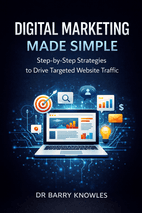
What is the book Digital Marketing Made Simple about?
Barry Knowles's Digital Marketing Made Simple demystifies SEO, content, social media, and email marketing with clear steps for entrepreneurs, strategically integrating these channels and practical AI tools to build a cohesive online presence.
Feature
Insta.Page
Blinkist
Shortform
Summary Depth
Full Chapter-by-Chapter
15-min overview
Section-by-section guides
Audio Narration
✓
✓
✓
Visual Mindmaps
✓
✕
✕
AI Q&A
✓
✕
✕
Quizzes
✓
✕
✕
PDF Downloads
✓
✕
✓
Price
$89.99/yr
$146/yr (PRO)
$199/yr
*Competitor data last verified July 2026.
1 Page Summary
Barry Knowles' Digital Marketing Made Simple serves as a practical, action-oriented guide for entrepreneurs and small business owners navigating the modern online landscape. The book demystifies core digital marketing channels—including search engine optimization (SEO), content marketing, social media, and email marketing—by breaking them into clear, sequential steps. A central theme is the strategic integration of these tools to build a cohesive online presence that systematically attracts a targeted audience and converts them into loyal customers.
The work is firmly situated in the current era of marketing, marked by the disruptive rise of artificial intelligence. Knowles dedicates significant focus to the practical deployment of AI tools, framing them not as a replacement for human strategy but as powerful accelerators for tasks like content ideation, customer service automation, and data analysis. This historical context positions the book as a response to the rapid technological shift that has made sophisticated marketing tactics accessible to businesses of all sizes.
The lasting impact of Knowles' approach lies in its empowerment of the non-expert. By providing a structured, "simple" framework and emphasizing the leverage offered by AI, the book lowers the barrier to entry for effective digital customer acquisition. It moves readers from theory to implementation, offering a durable blueprint for building a sustainable online business foundation that can adapt to ongoing technological changes.
Introduction
Overview
The chapter opens by acknowledging the overwhelm and frustration felt by entrepreneurs and small business owners in the fast-changing digital marketing landscape. It introduces Dr. Barry Knowles, who positions himself as a guide who can cut through the noise, drawing on decades of real-world business experience to provide a clear, actionable, and jargon-free roadmap for growth.
The Author's Credibility
Dr. Barry Knowles establishes his authority by detailing a career spanning over thirty years, which includes starting, building, and selling companies, working with major corporations like IBM and Coors, and being featured in Inc. magazine. He emphasizes that his insights come not just from theory but from practical "hands-on work in the business trenches," equipping him to help others move from confusion to measurable results.
Addressing Core Struggles
The introduction directly names the common, pressing questions that plague business owners, from keeping up with changes and measuring campaign effectiveness to managing multiple platforms on a small budget. By listing these specific pain points, the chapter creates an immediate sense of relatability and trust, assuring readers that the book is designed to provide answers to their exact dilemmas.
A Promise of Clarity and Action
This book distinguishes itself by promising a practical, step-by-step approach focused on action over theory. It is explicitly crafted for entrepreneurs and small business owners, not large corporations with big budgets. The mission is to empower readers to make informed decisions, use data and AI tools effectively, and build a strong online presence without hype or unnecessary complexity.
The Roadmap Ahead
The chapter outlines the book's structured journey, which will progressively cover defining goals and audience, content creation, social media, analytics, budgeting, email marketing, personalization, compliance, SEO, and influencer marketing. Each chapter is designed to build upon the last, concluding with clear action steps, real-world examples, and guidance on avoiding common mistakes, ultimately building the reader's confidence and providing an updatable toolkit.
Key Takeaways
The confusion and frustration with digital marketing are common, but a clear path forward exists.
The guidance offered is grounded in decades of practical business experience, not just theory.
The book is a practical roadmap designed specifically for entrepreneurs and small business owners, addressing their exact challenges.
It promises to cut through jargon and hype, focusing on actionable strategies and step-by-step execution.
Success in digital marketing is presented as an achievable goal for anyone with the right strategy, regardless of their starting point or budget.
Key concepts: Introduction
1. Introduction
Author's Credibility and Experience
Over 30 years of real-world business experience
Background includes starting, building, and selling companies
Worked with major corporations like IBM and Coors
Featured in Inc. magazine
Insights grounded in practical 'hands-on work in the business trenches'
Addressing Entrepreneur Pain Points
Overwhelm from fast-changing digital marketing landscape
Difficulty measuring campaign effectiveness
Challenges managing multiple platforms on small budgets
Keeping up with constant changes and trends
Specific focus on entrepreneurs and small business owners
Book's Practical Approach
Clear, actionable, jargon-free roadmap for growth
Step-by-step approach focused on action over theory
Designed specifically for entrepreneurs, not large corporations
Emphasis on making informed decisions using data and AI tools
Building strong online presence without hype or complexity
Book Structure and Content Roadmap
Progressive journey building from foundational to advanced topics
Covers goals, audience, content, social media, analytics, and budgeting
Includes email marketing, personalization, compliance, SEO, and influencer marketing
Each chapter concludes with clear action steps and real-world examples
Provides updatable toolkit with guidance on avoiding common mistakes
Core Promises to Readers
Cut through noise and confusion in digital marketing
Move from confusion to measurable results
Empowerment to build confidence in digital marketing decisions
Achievable success regardless of starting point or budget
Practical strategies focused on step-by-step execution
💡 Try clicking the AI chat button to ask questions about this book!
1.1 Busting the Myths: What Digital Marketing Is (And What It Isn’t)
Overview
This section cuts through the noise to define digital marketing by contrasting it with traditional methods and directly addressing common misunderstandings that hold businesses back. It establishes that digital marketing is a fundamental, accessible, and measurable discipline, not a mysterious or exclusive domain.
Traditional vs. Digital: A Fundamental Shift
The chapter begins by drawing a clear line between the old and new worlds of marketing. Traditional marketing—like newspaper ads, flyers, and TV commercials—is characterized as a one-way, static broadcast with a broad, untargeted reach. Its impact is difficult to measure and its messages cannot be easily changed once published.
Digital marketing, in contrast, is presented as interactive, dynamic, and data-rich. It enables two-way conversations with audiences, allows for real-time adjustments to campaigns, and provides precise feedback on who is engaging and how. A key advantage highlighted is scalability: a digital campaign can grow from a local to a global audience without the proportional cost increase of traditional media.
What Digital Marketing Is Not: Debunking the Myths
The text actively dismantles several pervasive myths:
It's not just social media posts and spam emails. Merely having an online presence or blasting generic promotions is a shallow and ineffective approach. True digital marketing is a strategic, integrated effort across multiple channels.
It's not a magic bullet for instant success. The chapter warns against the allure of "growth hacks" and promises of quick, easy results. Success requires sustained strategy and effort, not shortcuts.
It's not exclusive to tech giants or large corporations. The opening example of the small-town bakery underscores that businesses of any size and in any industry can and must leverage digital tools to compete and reach wider audiences.
It doesn't require advanced technical expertise. While certain tools exist, the core principles of connecting with an audience and delivering value are accessible to all business owners and marketers.
Key Takeaways
Digital marketing is fundamentally interactive, measurable, and adaptable, unlike the static, one-way nature of traditional marketing.
Its scalable and targeted nature offers a significant advantage, allowing businesses to reach precise audiences locally or globally with greater cost efficiency.
It is a strategic discipline, not merely the act of posting on social media or sending emails.
Effective digital marketing is built on a foundation of sustained effort and strategy, not quick fixes or fleeting trends.
It is a vital and accessible tool for businesses of all sizes and types, not just for large or tech-focused companies.
Key concepts: 1.1 Busting the Myths: What Digital Marketing Is (And What It Isn’t)
2. 1.1 Busting the Myths: What Digital Marketing Is (And What It Isn’t)
Traditional vs. Digital: A Fundamental Shift
Traditional marketing is a one-way, static broadcast with broad, untargeted reach
Digital marketing is interactive, dynamic, and enables two-way conversations with audiences
Digital provides precise, measurable feedback on engagement and allows real-time campaign adjustments
Digital offers scalability: campaigns can grow from local to global without proportional cost increases
Debunking Digital Marketing Myths
Not just social media posts and spam emails: requires strategic, integrated multi-channel effort
Not a magic bullet for instant success: requires sustained strategy and effort, not quick fixes
Not exclusive to tech giants or large corporations: accessible to businesses of all sizes and industries
Doesn't require advanced technical expertise: core principles of audience connection are accessible to all
Core Characteristics of Digital Marketing
Interactive and adaptable, enabling real-time engagement and adjustments
Highly measurable with precise data on audience behavior and campaign performance
Scalable and targeted, offering cost efficiency for reaching specific audiences locally or globally
Strategic discipline built on sustained effort rather than isolated tactics or fleeting trends
1.2 Defining Digital Marketing: Past, Present, and Future
Overview
This section moves beyond common misconceptions to formally define digital marketing, tracing its evolution from traditional methods to its current dynamic state and hinting at its future trajectory. It establishes digital marketing as a fundamental shift in business communication.
From Broadcast to Dialogue
The chapter contrasts the old model of traditional marketing—characterized by one-way broadcasts through TV, radio, print, and billboards—with the interactive nature of digital. Where businesses once paid for broad exposure and hoped for attention, digital platforms enable precise targeting and immediate engagement. A Google Ads campaign reaches people actively searching for a solution, and an Instagram post can start a real-time conversation, transforming marketing from a monologue into a two-way dialogue.
What Constitutes a "Digital Channel"
At its core, digital marketing is defined by its use of digital channels. These are any online spaces where interaction with customers occurs. The text highlights key examples including company websites, social media platforms, email, search engines, and mobile applications. Each channel serves as a point of contact, data collection, and relationship building, forming an interconnected ecosystem for brand communication.
The Strategic Imperative
The definition reinforces that this is a strategic discipline, not just a technical one. Success hinges not on advanced skills alone, but on a coherent plan, deep audience understanding, and careful measurement. It emphasizes that activity without strategy—like untargeted ads or unmeasured website traffic—is wasteful. True growth comes from focused, patient efforts where even small, intelligent investments are tracked and optimized for return.
Key Takeaways
Digital marketing represents a paradigm shift from interruptive, hope-based broadcasting to targeted, interactive communication.
It is practically defined by the use of interconnected digital channels like websites, social media, search engines, email, and apps.
Its effectiveness is rooted in strategy, audience insight, and measurable results, not in technical complexity or sheer scale.
Patience and adaptability are essential, as meaningful results are built through continuous planning and optimization.
Key concepts: 1.2 Defining Digital Marketing: Past, Present, and Future
3. 1.2 Defining Digital Marketing: Past, Present, and Future
The Paradigm Shift: From Broadcast to Dialogue
Contrasts traditional one-way marketing (TV, radio, print) with interactive digital communication
Digital enables precise targeting and immediate engagement rather than broad exposure
Transforms marketing from a monologue into a two-way conversation with customers
Core Components: Defining Digital Channels
Digital channels are online spaces where customer interaction occurs
Key examples include websites, social media, email, search engines, and mobile apps
Channels serve as points of contact, data collection, and relationship building
Forms an interconnected ecosystem for brand communication
Strategic Foundation of Digital Marketing
Success depends on coherent strategy and audience understanding, not just technical skills
Activity without strategy (untargeted ads, unmeasured traffic) is wasteful
True growth comes from focused, patient efforts with tracking and optimization
Emphasizes measurable results and return on investment
Essential Principles for Effectiveness
Requires patience and adaptability as results build over time
Continuous planning and optimization are necessary for meaningful outcomes
Even small, intelligent investments can yield returns when properly tracked
Rooted in audience insight rather than technical complexity or scale
1.3 The Digital Marketing Ecosystem: Channels and Interconnections
Overview
The Interconnected Network of Channels
This section explores the modern digital marketing environment not as a collection of isolated tools, but as a living, interconnected system. A business's online presence is sustained through several core channels, each playing a specific role and amplifying the others when used strategically.
Search Engine Optimization (SEO) as the Foundation
SEO forms the essential groundwork for organic discovery. It’s the practice of optimizing a website and its content to appear in search engine results when potential customers are actively seeking solutions. Unlike paid methods, its value compounds over time, building a sustainable pipeline of interested visitors based on their intent.
Social Media Marketing for Community and Personality
Platforms like Facebook, Instagram, and LinkedIn are the spaces for dynamic interaction. Here, brands develop their voice, foster loyalty, and build communities through direct engagement, storytelling, and real-time conversation. This channel is less about direct selling and more about relationship-building and brand humanization.
Content Marketing: The Engine of Authority
High-quality content is the fuel that powers multiple channels. Through blog posts, videos, and guides, businesses educate their audience, solve problems, and establish themselves as credible authorities. Effective content doesn’t just attract attention—it builds trust and guides the customer’s decision-making process.
Email Marketing for Direct Nurturing
Email serves as a direct, personal line of communication to an audience that has already expressed interest. It’s the primary channel for nurturing leads over time, delivering targeted messages, exclusive content, and offers that encourage progression along the customer journey, from subscriber to loyal advocate.
Paid Advertising for Immediate Reach
Channels like Google Ads and social media advertising offer controlled, immediate visibility. They allow businesses to precisely target demographics, retarget past website visitors, and amplify key messages or promotions to generate quick results and support broader campaign goals.
Strategic Synergy in Action
The true power lies in how these channels interconnect. A blog post (content) improves SEO rankings; that post includes a call-to-action to join an email list; a welcome email series nurtures that new subscriber; paid social ads can then retarget those who visited the blog but didn’t subscribe. Content can be repurposed across channels—a whitepaper becomes a video series and an infographic for social media, maximizing effort.
Prioritizing Your Channel Mix
No business needs to master every channel at once. Success comes from strategically selecting and integrating channels based on specific goals, audience, and resources. A B2B company may prioritize LinkedIn and email nurturing, while a local retailer might focus on local SEO and visually-driven Instagram content.
Key Takeaways
The digital marketing ecosystem is an interconnected network, not a set of standalone tools.
Core channels include SEO (for discovery), social media (for community), content (for authority), email (for nurturing), and paid ads (for immediate reach).
Channels work best in synergy, where each supports and amplifies the others, creating a cohesive customer journey.
Strategy is key; businesses should prioritize the channel mix that best aligns with their specific audience, goals, and available resources.
Key concepts: 1.3 The Digital Marketing Ecosystem: Channels and Interconnections
4. 1.3 The Digital Marketing Ecosystem: Channels and Interconnections
The Interconnected Network of Channels
Modern digital marketing is a living, interconnected system, not isolated tools
Core channels play specific roles and amplify each other when used strategically
A business's online presence is sustained through several core channels
Search Engine Optimization (SEO) as the Foundation
Forms essential groundwork for organic discovery
Optimizes website and content to appear in search results when customers seek solutions
Value compounds over time, building sustainable pipeline based on user intent
Social Media Marketing for Community and Personality
Platforms for dynamic interaction and brand voice development
Focuses on relationship-building and brand humanization rather than direct selling
Fosters loyalty and builds communities through storytelling and real-time conversation
Barry Knowles is a British author and former police officer best known for his memoir "The Lancashire Detective," which details his extensive career in law enforcement. His writing draws upon his deep expertise in criminal investigation and forensics, offering readers an authentic glimpse into the realities of police work.
📚 Explore Our Book Summary Library
Discover more insightful book summaries from our collection