As an Amazon Associate, we earn from qualifying purchases.
What is the book The Beautiful Game of Leadership about?
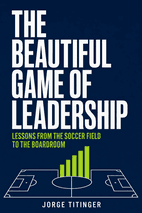
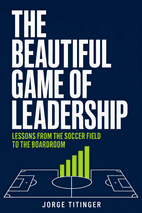
Jorge Titinger's The Beautiful Game of Leadership draws on his journey from Peruvian soccer fields to CEO roles to show how preparation, trust, and teamwork translate from sport to business, covering the shift from peer to leader and turnarounds like SGI. For emerging leaders and executives.
Feature
Insta.Page
Blinkist
Shortform
Summary Depth
Full Chapter-by-Chapter
15-min overview
Section-by-section guides
Audio Narration
✓
✓
✓
Full access to all 700+ summaries
✓
✓
✓
Visual Mindmaps
✓
✕
✕
AI Q&A
✓
✕
✕
Missing a book? Request it, usually live within 48h
✓
✕
✕
Quizzes
✓
✕
✕
PDF Downloads
✓
✕
✓
Send to Kindle
✓
✓
✓
Price
$89.99/yr
$146/yr (PRO)
$199/yr
*Competitor data last verified July 2026.
1 Page Summary
Jorge Titinger's The Beautiful Game of Leadership argues that leadership is not a title conferred but a practice built through preparation, discipline, and trust—lessons first absorbed on Peruvian soccer fields, at the family dinner table, and in demanding schools, then translated deliberately into executive and boardroom settings. Drawing on a foreword by James C. Morgan, the book frames sport and business as related languages that share a "syntax of success": teamwork, preparation, trust, feedback, and perseverance. Titinger traces his own path—from Markham College and Pearson College's international community, through Stanford athletics and engineering, professional soccer alongside a design engineering career at HP, to leading turnarounds such as Silicon Graphics International—to show how the same principles apply whether the scoreboard is immediate, as in sports, or slow and ambiguous, as in business. Central concepts include the outsider's vantage point turning difference into leverage, the difficult shift from peer to pilot and from IQ to EQ, taking ownership as raising the capacity of others rather than hoarding authority, and what he calls the "weight of the jersey."
What makes the book distinctive is its sustained use of athletic experience as a genuine leadership laboratory rather than a decorative metaphor. Titinger treats leadership as constant improvement, learned through repetition, failure, and coaching, and he insists that belonging, inclusion, and trust are daily actions rather than slogans—that high expectations and deep respect can coexist, as modeled by the HP Way. His reflections are grounded in specific formative episodes: the board interview that turned his "black sheep" status among doctors into an asset, the captain's role as one of uniting a team rather than chasing personal glory, the collapse of a professional soccer league as a lesson in reinvention, and his return to SGI as a veteran athlete turned head coach of a revered franchise in decline. Throughout, he emphasizes clarity as a form of kindness, humility and adaptability at higher levels of competition, and the leader's first job as making sure the team is fluent in what excellence looks like.
The intended audience is broad: emerging and newly promoted leaders navigating the transition from individual contributor to manager, experienced executives facing turnarounds or cultural dysfunction, and anyone interested in how competitive sport and global business inform one another. Readers will gain a practical, experience-based framework for building trust before holding authority, handling the relational strains of leadership, reading both fast and slow scoreboards, and continuing to grow when the habits that produced past success begin to work against them—framed by Titinger's conviction that leadership is a never-ending season open to anyone who accepts responsibility for something beyond themselves.
Foreword By James C. Morgan
Overview
Leadership development often starts with a title, as if the title itself makes someone a leader. The harder question is what prepares someone to lead before anyone calls them a leader, and whether that preparation can be done on purpose rather than left to chance.
James C. Morgan first worked with Jorge Titinger at Applied Materials, where leadership meant rigor, humility, and respect rather than title. Morgan places Titinger among the few leaders who combined discipline, curiosity, and humanity, and Titinger stood out for how he listened, learned, and earned trust.
Formed in practice
Titinger's path from Peruvian soccer fields to executive roles and boardrooms shows how discipline, accountability, and teamwork shaped him, especially when mentors modeled those values.
Humanity and standards
Success in sports and business is rarely accidental; it requires repetition, learning from failure, and accepting coaching. Titinger treats leadership as constant improvement. He treats belonging, inclusion, and trust as daily actions, not slogans. Organizations, like teams, perform best when people feel seen, respected, and challenged, with high expectations and deep respect at the same time.
Key Takeaways
Leadership shows up in how a person prepares, listens, and builds trust before holding a title, not in the rank itself.
The habits behind sustained success in sport or business are built through repetition, absorbing coaching, and recovering from failure rather than through native talent.
Belonging and inclusion matter only when they are practiced daily, and they work best when paired with demanding expectations.
Mentors leave their deepest mark by modeling the discipline and accountability they ask of others, because people learn to lead by carrying responsibility themselves.
Key concepts: Foreword By James C. Morgan
Foreword By James C. Morgan
Leadership Before the Title
Leadership is shown in preparation, listening, and trust-building before holding a title.
Morgan values rigor, humility, and respect over rank.
Titinger stood out for listening, learning, and earning trust.
Formed Through Practice and Discipline
Discipline, accountability, and teamwork shaped Titinger from soccer fields to boardrooms.
Success requires repetition, learning from failure, and accepting coaching.
Mentors model the discipline and accountability they ask of others.
Humanity Paired with High Standards
Belonging and inclusion are daily actions, not slogans.
Teams perform best when people feel seen, respected, and challenged.
High expectations and deep respect must go together.
💡 Try clicking the AI chat button to ask questions about this book!
Introduction
Overview
A leader shaped by seemingly unrelated worlds can look like a collection of contradictions, and standing outside the expected path can feel like a liability. What does it take to lead when the rooms you enter were not built for someone like you?
Leadership grows from the overlap of unrelated worlds. Competitive sport and global business, engineering and entrepreneurship, family heritage and international institutions yield the same lessons: discipline, resilience, and the nerve to act when results are uncertain. Leadership is not a reserved role but a practice open to anyone who accepts responsibility for something beyond themselves. The outsider's vantage point recurs: the "black sheep," the immigrant, the businessperson among doctors, the athlete among engineers. Difference first feels isolating, then becomes leverage. A perspective others lack creates opportunity when carried with humility and authenticity. The work is not conformity but drawing out a group's varied strengths and directing them toward a shared vision, with people feeling valued, trusted, and empowered.
Sport and business share a "syntax of success"
Sport and business are treated as related languages, separate in dialect but sharing a common syntax:
teamwork
preparation
trust
feedback
perseverance
Sport compresses the stakes into a single play; business stretches timelines but faces technological change at speed and scale. Both need a clear, motivating vision, and both demand repetition of fundamentals until they become second nature. Communication runs beyond words, through trust, anticipation, and knowing one another's roles. A soccer team can move in flow; a leadership team aligned in purpose can decide faster and cohesively than rivals. Clarity pays in the boardroom, and ambiguity costs.
Experience supplies a framework, not a formula
No rigid checklist can govern something as dynamic as leadership, since an opposing team or a market can always surprise you. What emerges is a framework drawn from playing, leading, building, and learning, with lessons from victory and loss and from navigating unfamiliar contexts through curiosity and resilience. The themes are resilience, belonging, inclusivity, and trust. Preparation and practice produce freedom, clarity, communication, and momentum. Diversity of thought, background, and experience unlocks innovation. Leadership is persistence rather than perfection, and the growth season never ends.
Key Takeaways
Treat leadership as a discipline anyone can take up by owning responsibility for something beyond personal gain, not as a title reserved for formal positions.
Use the gap between your background and the room you are in as leverage; unfamiliarity can become influence when carried with modesty and self-honesty.
Build teams around a shared purpose and repeated fundamentals, because coordinated trust lets a group move faster and more cohesively than rivals with greater resources.
Work from an adaptable framework rather than a fixed recipe, since opponents and markets will always produce conditions no checklist anticipated.
Expect progress through setbacks and continual learning; the goal is to keep going and broaden the mix of thought and experience, not to produce a flawless season.
Key concepts: Introduction
Introduction
Leadership as an Open Practice
Leadership is a practice, not a reserved role
Anyone can lead by accepting responsibility beyond themselves
Outsider status becomes leverage with humility and authenticity
Draw out varied strengths toward a shared vision
Sport and Business Share a Syntax of Success
Common fundamentals: teamwork, preparation, trust, feedback, perseverance
Both require clear vision and repeated fundamentals
Communication runs through trust and anticipation
Clarity accelerates decisions; ambiguity costs
A Framework, Not a Formula
No rigid checklist can govern dynamic leadership
Framework drawn from playing, leading, building, learning
Themes: resilience, belonging, inclusivity, trust
Preparation and practice produce freedom and momentum
Diversity and Inclusion as Innovation Drivers
Diversity of thought, background, and experience unlocks innovation
Difference first isolates, then becomes leverage
Direct varied strengths toward shared purpose
People feel valued, trusted, and empowered
Persistence and Continuous Growth
Leadership is persistence rather than perfection
Progress comes through setbacks and continual learning
The growth season never ends
Keep going and broaden the mix of thought and experience
Chapter 1 | The Rookie Years
Overview
Most leaders learn early that authority depends on distance, yet the strongest lessons often come from moments that erase it. The problem is how to carry those lessons into rooms where status, title, and expectation pull the other way.
The lessons that shaped a leadership playbook began at the family dinner table and on the dusty soccer field at the family ranch, where status dissolved and talent and courage mattered. Early observations become leadership material only when a person deliberately translates them with maturity.
The Board Interview and the Human CEO
At the final interview for the Stanford Children's Hospital Board, now Lucille Packard Children's Hospital at Stanford, the chairperson, who used her married name and was David and Lucille Packard's daughter, said the hospital knew why it wanted Jorge: 40 percent of patients were Hispanic, but no Hispanic person sat on its board, and he was one of very few Hispanic CEOs of public companies. She then asked why he wanted to serve a hospital. He joked that his mother, brother, and sister were doctors and he was merely a business person, an inferiority-complex line that made her laugh and helped admit him. He does not feel inferior; the joke expressed regard for vocations such as medicine, teaching, and professorship, callings chosen for passion and service. In Peru, socialized medicine paid poorly, so doctors came from the heart; teachers, despite their impact, are often underpaid.
The episode carries a leadership principle: humanize yourself. Self-deprecation builds trust, reveals vulnerability, and reminds people of their connection. A CEO is a person with a different title. At his last company, he played lunchtime soccer on a parking-lot court with stockroom clerks and senior executives. Titles vanished, and he was fouled like anyone, which built trust and loyalty. An earlier CEO he worked for did the opposite, isolating himself with a private staircase and private bathroom, which alienated people. At Hewlett-Packard, his first job after graduate school, the HP Way put everyone in cubicles, including Bill Hewlett and Dave Packard. Their cubicles were larger, but still cubicles, creating a level, transparent, accessible field. Later, low-walled cubicles let people read the health of the business from the buzz. The principle is an environment where people can be their best and feel they belong; forcing a tie and khakis on a software developer who thrives in shorts and flip-flops stifles performance. There he learned Management by Walking Around (MBWA).
Lima Foundations
Lima made excellence a tacit expectation. His parents did not pressure him to study; schoolwork was the children's job, and the parents' example installed self-imposed accountability. His mother was an OB/GYN when that path was especially hard for a woman who did not have to work. She funded her education as a radio and TV actress, published poetry, painted, and combined artistic and scientific gifts. She rarely got truly angry and embodied the idea, according to the book, that positive moods enable while negative moods paralyze. She had a doctor's caring temperament. Her tacit lessons were to follow a dream, pursue a vocation, and believe obstacles can be overcome.
His father was an entrepreneur with a gift for marketing and for thinking across multiple time horizons. In the early 1970s, under a communist president in Peru, the economy collapsed, the currency devalued, and foreign companies were expelled. As General Manager of Volkswagen in Peru, he faced buyers who could not afford cars. His solution, which Jorge believes he invented, was Pandero: groups of one hundred people paid one-sixtieth of a car's value monthly for five years. Each month three or four cars were raffled, letting winners get cars early. Volume buying lowered the cost, and a winner who stopped paying could have the car repossessed. The hope of winning early sustained the system; a large appliance company later hired him to apply it to household electronics. He also brought arcades, pinball and then Pac-Man, to Peru when money was scarce; they were full because they offered an inexpensive distraction. Inexpensive pleasure is still pleasure.
His father also shaped inclusion. Though of German and Russian descent and lighter-skinned than Jorge, he did not see color. A butler candidate looked unconventional, with long hair, beard, and mustache, yet was competent and hardworking, so the father hired him. When the man asked whether to cut his hair and shave, the father said to do so only if he wished; good work was what mattered. The man cut and shaved out of appreciation for trust, a lesson in leading by influence rather than command. Many of the father's ventures failed, but he treated failure as part of the journey rather than a verdict, learned from losses, and moved on. The parents did not hand over comforts, believing ease without effort weakens character and confidence comes from self-support. Stanford came with a full scholarship covering room, board, and books, but spending money and extras had to be earned; no car was bought for him. Boundaries taught discipline, self-reliance, and a work ethic.
Cross-Training
The family ranch, about ninety minutes from Lima, gathered roughly thirty-five first cousins because his mother was the oldest of seven. Weekends brought long outdoor days and spontaneous soccer matches against the children of ranch workers. In a society uneasy about mixing across socioeconomic lines, those children became real friends. On the field, effort, skill, teamwork, and heart mattered, and respect was earned rather than offered as charity. Summer work in Peru was not the American waiter or bartender route. His summer job was sports: serious training and competitive soccer in organized leagues with real coaches, plus school tennis and other sports. Later came martial arts, whose dojo discipline joined with team sports to teach focus, resilience, respect, and self-control.
Practice, Grit, and True Competition
Soccer and martial arts share a path to mastery: consistent, deliberate practice, not talent or intention alone. The principle is that "practice makes permanent," not perfect; repetition embeds whatever is repeated, good or bad. Effective practice needs structure, feedback, and correction, which is why coaches and mentors matter. They identify refinements and prevent permanent mistakes. Perfect practice is not flawlessness but alignment among effort, technique, and mindset. Both pursuits also require recurrence and grit. Progress is rarely linear; people fall short, lose, and get knocked down. Resilience comes from returning to the work despite discomfort. Martial arts differs because consequences are immediate and physical: poor technique or hesitation brings pain, making discipline, attention, and preparation hard to ignore. Soccer carries risk and physicality, but the normal flow does not present constant physical threat.
Team sport and individual martial arts differ in control and dependence. Soccer requires relinquishing control of the outcome and trusting teammates; the relationship is codependent. That distinction shaped his view of competition. He dislikes the American mentality that participation matters regardless of winning. In a competitive setting with stakes, the goal is to win; business must deliver to stakeholders. Trying is nice, but winning is better, and it comes from grit and relentless execution. In Peru, not every child played soccer; the better players played and others sat, which motivated improvement. Guaranteed playing time can weaken competitive drive and push wealthier families into expensive travel teams. In Peru, competitive youth teams were often funded by the teams, not parents. His older daughter, then eight or nine, finished seventh in a swim competition and received a participation medal. She refused it, saying only first, second, and third should get medals. He was proud because she had absorbed the value of earning success through osmosis. Those rookie years built a foundation of humility, humanity, purpose, belonging, and competitive excellence. The next stage was Markham College, a British-style high school that would raise the demand for excellence and healthy competition.
Key Takeaways
Make yourself ordinary where people work and compete: take the joke at your own expense, join the lunchtime game, and let the hierarchy go quiet for an hour. Familiarity breeds trust faster than stature does.
Design the setting around how people actually perform, not around how you want them to look. A dress code imposed from above buys conformity and pays for it in output.
Set the standard for the work and leave the how to the person doing it. Cooperation offered freely outlasts compliance that was ordered.
Repeat nothing without correction. Repetition cements whatever it embeds, so put a coach next to every drill and fix the technique before it hardens.
Keep stakes in the game. Hand out medals to everyone and the pull to improve drains away; let the strongest start and make the rest earn their way on.
Key concepts: Chapter 1 | The Rookie Years
Chapter 1 | The Rookie Years
Humanizing Leadership
Self-deprecation builds trust and reveals vulnerability.
CEO is a person with a different title.
Lunchtime soccer dissolved titles and built loyalty.
Isolation by private staircase alienated people.
HP Way and MBWA
Cubicles for all, including founders, created transparency.
Low-walled cubicles let people read business health.
Environment should let people be their best and belong.
Management by Walking Around (MBWA) learned at HP.
Lima Foundations: Parental Example
Excellence was a tacit expectation, not pressured.
Mother pursued medicine despite obstacles, modeling dreams.
Father treated failure as part of the journey.
Parents believed ease without effort weakens character.
Father's Entrepreneurial Lessons
Pandero: group financing made cars affordable in crisis.
Inexpensive pleasure is still pleasure (arcades).
Hired unconventional butler based on competence, not appearance.
Led by influence, not command, earning loyalty.
Inclusion and Trust
Father did not see color; competence mattered most.
Butler cut hair out of appreciation for trust.
Leading by influence rather than command builds loyalty.
Inclusion creates an environment where people belong.
Self-Reliance and Work Ethic
Stanford scholarship covered basics, but extras had to be earned.
No car bought for him; boundaries taught discipline.
Confidence comes from self-support, not handed comforts.
Work ethic instilled through example and accountability.
Translating Early Lessons
Early observations become leadership material when deliberately translated.
Status dissolved on the soccer field and at the dinner table.
Talent and courage mattered more than title.
Carry lessons into rooms where status pulls the other way.
Chapter 2 | Training Days
Overview
What happens when the values someone absorbs early, through family and competition, stop being enough on their own? Potential can remain admired but unproven, and the harder question is whether discipline will become a lived practice or stay an inherited idea.
The values that later looked like leadership were first formed in two places: the soccer pitch, where trust, recovering from errors under pressure, and resilience whether winning or losing were daily lessons, and a home where parents modeled ambition, grit, and persistence. Teamwork, determination, curiosity, and belief in effort were the early inheritance. They were seeds, not achievements. Flourishing required training: deliberate molding, refinement, and at times painful correction. Markham College, the British-style school in Peru, supplied that structure. It was an ecosystem built to shape habits, demand excellence, and teach respect for discipline and competition. If home sketched character, Markham was the testing ground where responsibility for embodying those values moved onto the student.
Education as the Child's Job
In the family, education was the central occupation of childhood, its job. No lectures or direct pressure for top grades came from the parents. The environment simply assumed excellence, much as it assumed attendance at soccer practice. That assumption produced internal commitment rather than obligation. Markham, widely regarded as one of Peru's top schools, turned expectation into a system. It followed British traditions, confused outsiders by calling itself a college while running from kindergarten through high school, and prepared students rigorously for Cambridge O levels and, for some, A levels. Those exams linked students to a global standard, not merely local grades. Later comparisons worldwide suggested Markham might rank among the top schools globally.
The school's culture treated academic achievement as a mark of prestige and respect. A later observation in the United States, including with one of his daughters, was that children sometimes hide intelligence or success to avoid being labeled a nerd. Markham, an all-boys school at the time, removed some of those social calculations. Everyone was expected to perform, rivalry was intense yet constructive, and the boy who studied hard was admired. Sport reinforced the same rhythm: summer breaks were spent training, unlike the typical American summer job, and study was structured and relentless. The classroom became another arena, with exam preparation as its training ground.
Houses, Competition, and the 70/30 World
Markham's four houses gave academic life a second layer of identity, with their own traditions and reputations. Though the school was not a boarding school, the system felt close to Harry Potter. Its main arena was athletics. Attendance and effort were assumed; victory was what earned celebration. That outlook carried into business. The book reports that market share in semiconductors and computers tends to concentrate around 70/30, with the top two suppliers capturing nearly all value while the rest fight for scraps. Below that level lay a "long tail of purgatory," where survival was possible but prosperity was not. Business, like sport, distributes its serious rewards at finals and championships, not consolation prizes or seventh seeding.
In senior year, the house won every sport and the overall championship, a sweep so rare at Markham that it still stands out. The opening came from a discontinuity: the school's top swimmer, from a rival house, broke his arm midway through the year. That opening did not guarantee victory, so the house strategized. It held its strongest swimmers back from extra events, reserving them for races against the rival house, while others absorbed the remaining workload. When the decisive races came, the strongest swimmers were fresh, and their wins tipped the season. The lesson extended beyond sport: a discontinuity, such as a competitor's stumble or a technology shift, requires preparation and a deliberate plan, not mere noticing. Hard work and strategy had to combine.
The Math Teacher's Climate
A math teacher, who also headed the Blue House named after Admiral Guise, supplied a different lesson in leadership. Some Markham teachers, many imported from Britain, used an authoritarian style that relied on punishment, control, and ridicule. A struggling student might be shouted at, made an example of, or mocked with sarcasm. Fear, according to the book, closes the brain: experimentation, questions, and caring stop. The math teacher did the opposite. When a student missed a concept, he found another explanation, sometimes offering clarification privately so the student was not humiliated. His goal was mastery, and performance came from wanting to meet his belief in them rather than from fear; results and real interest in math improved. The practical rule was honey over vinegar: encouragement creates openings that punishment closes. Belonging is not a soft extra; it is foundational to performance. A leader's emotional tone spreads, and fear and encouragement both multiply. That example shaped how he tried to lead organizations: people should not be punished for stumbling but supported in finding another route.
The Pearson Selection
Markham's headmaster chose him to represent the school in a national competition for one scholarship to Pearson College, one of the original United World Colleges. The movement began in 1962 at Atlantic College in south Wales during the Cold War, and drew on Kurt Hahn's belief that school should prepare students for life, not only university. This was the first time a Peruvian student had been allocated a spot in the UWC system. Hundreds of students from English-teaching schools across Peru took written tests in English, math, comprehension, and logic, then sat for interviews. The committee chose him unanimously. The timeline was tight: a Friday deadline in May, with school starting in September. Leaving Peru at seventeen to go to Canada, possibly repeating a year, was no hesitation. Markham's Cambridge O and A level preparation had made the selection possible.
Key Takeaways
Set the default expectation at high performance rather than issuing demands for top grades; children internalize a standard more readily when excellence is treated as ordinary than when it is imposed as a rule.
Build competition with real stakes and a constructive edge: require everyone's effort, let the decisive contest carry the honor, and deploy your strongest people where they can change the outcome rather than spreading them evenly.
Treat a competitor's mishap or a technological shift as an opening only after you have planned how to use it; discontinuity rewards preparation and allocation, not mere recognition.
Lead with encouragement and private correction: give people another explanation and protect their dignity, because a climate of fear suppresses the questions and experimentation that mastery requires.
Measure schooling by whether it prepares a student for life beyond local borders; rigorous external standards and mission-driven international programs widen the paths a young person can take.
Key concepts: Chapter 2 | Training Days
Chapter 2 | Training Days
Foundations of Character
Values formed on soccer pitch: trust, resilience, recovery from errors
Home modeled ambition, grit, persistence; teamwork and effort as inheritance
Early values were seeds, not achievements; required deliberate training
Markham College provided structure to shape habits and demand excellence
Education as the Child's Job
Family assumed excellence without direct pressure, creating internal commitment
Markham's British system prepared students for Cambridge O/A levels
Academic achievement treated as prestige; hard work admired, not hidden
Sports and study structured relentlessly, with exam prep as training
Houses, Competition, and the 70/30 World
Four houses created identity and athletic rivalry, like Harry Potter
Business rewards concentrate 70/30; long tail of purgatory for the rest
Senior year house sweep: strategized around rival's injury discontinuity
Lesson: discontinuity requires preparation and deliberate plan, not mere noticing
The Math Teacher's Climate
Authoritarian teachers used fear, ridicule; fear closes the brain
Math teacher offered alternative explanations and private clarification
Encouragement and belief drove mastery and improved results
Leader's emotional tone spreads; belonging is foundational to performance
The UWC Scholarship Opportunity
Markham chosen by headmaster for national competition to Pearson College.
UWC movement began 1962 at Atlantic College, inspired by Kurt Hahn.
First Peruvian student allocated a spot in the UWC system.
Selection involved written tests and interviews; committee chose him unanimously.
High Expectations and Constructive Competition
Set default expectation of high performance rather than demanding top grades.
Children internalize excellence when treated as ordinary, not imposed.
Build competition with real stakes and a constructive edge.
Deploy strongest people where they can change the outcome.
Preparation and Seizing Discontinuities
Treat competitor's mishap or technological shift as opening only after planning.
Discontinuity rewards preparation and allocation, not mere recognition.
Lead with encouragement and private correction to protect dignity.
Measure schooling by whether it prepares a student for life beyond borders.
You've reached the end of the free chapters
Next chapter: “Chapter 3 | Entering the Minor Leagues” is locked
Keep reading The Beautiful Game of Leadership — and unlock all 700+ book summaries with audio, mindmaps and AI Q&A.
$0.00 due today · 7 days free, then $89.99/year ($7.49/mo) · Cancel anytime before day 7
plus sales tax where applicable
More ways to explore The Beautiful Game of Leadership
Jorge Titinger is a technology executive and author whose career spans leadership roles at KLA-Tencor, Silicon Graphics, and Veritas Technologies, where he has served as CEO and board member. He is the author of “Difference Makers: How to Create Change in a World That Needs It” and writes and speaks on leadership, corporate governance, and innovation. A Stanford-educated engineer, he is known for championing diversity in tech and mentoring emerging leaders.
Frequently Asked Questions about The Beautiful Game of Leadership
What is The Beautiful Game of Leadership about?
This leadership narrative explores how leadership is formed through family, sport, education, engineering, and executive turnarounds. It follows a journey from soccer fields and schools in Peru through Pearson College, Stanford, HP, professional soccer, and a turnaround at SGI. Sport and business are treated as related languages that share teamwork, preparation, trust, feedback, and perseverance. The central argument is that leadership is not a reserved role but a practice open to anyone who accepts responsibility for something beyond themselves.
Who is the author of The Beautiful Game of Leadership?
Jorge Titinger is a Peruvian-born executive, engineer, and athlete whose path moved from soccer and Stanford to engineering at HP, professional soccer with the San Jose Earthquakes, and executive leadership including CEO of SGI. The foreword notes that James C. Morgan worked with him at Applied Materials and highlights his discipline, curiosity, and humanity. He also served on the Stanford Children's Hospital board and represented the United States on the national futsal team.
Is The Beautiful Game of Leadership worth reading?
It is worth reading for its practical, experience-based view of leadership across sports, engineering, and executive turnarounds. Readers will find useful guidance on trust, feedback, accountability, belonging, and leading former peers, presented through concrete career transitions rather than abstract theory.
What are the key lessons from The Beautiful Game of Leadership?
Leadership is a practice, not a title; it is built through preparation, listening, trust, and accountability before authority arrives. Sport and business share a syntax of success—teamwork, preparation, trust, feedback, and perseverance—so lessons can transfer across domains. Moving from peer to pilot requires a shift from IQ to EQ, with clarity and honest feedback coexisting with high standards and support. Ownership means enabling others and raising their decision-making capacity, while leaders must keep adapting and build early warning signals because business lacks sport's immediate scoreboard.
📚 Explore Our Book Summary Library
Discover more insightful book summaries from our collection