Entrepreneurial Leap, Updated and Expanded Edition Summary by Gino Wickman (Free)

1. Know Thyself

Chapter 1 of 4
0:000:00
EN
1x
Voice
PDF

Entrepreneurial Leap, Updated and Expanded Edition

by Gino Wickman

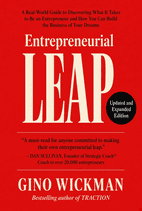
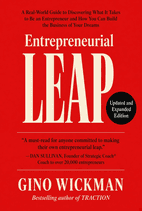
Entrepreneurial Leap, Updated and Expanded Edition book cover

What is the book Entrepreneurial Leap, Updated and Expanded Edition about?

Gino Wickman's Entrepreneurial Leap, Updated and Expanded Edition argues entrepreneurship is an identity built on six inborn Essential Traits, offering self-assessments, a 1-2-3 Roadmap, and tools to help aspiring founders, students, and second-generation successors decide whether to leap.

FeatureInsta.PageBlinkist
Summary DepthFull Chapter-by-Chapter15-min overview
Audio Narration
Visual Mindmaps
AI Q&A
Quizzes
PDF Downloads
Price$89.99/yr$146/yr (PRO)
*Competitor data last verified July 2026.

1 Page Summary

Gino Wickman's Entrepreneurial Leap argues that entrepreneurship is not something you do but something you are—an identity rooted in six inborn Essential Traits: visionary, passionate, problem solver, driven, risk taker, and responsible. Before taking the leap, readers are guided through self-assessment tools like the Entrepreneur-in-the-Making Assessment (where a score of 90 or higher is the target) and profiling instruments such as the Kolbe A Index and Culture Index. The book is candid about the harsh realities: if even one Essential Trait is missing, the leap probably won't work, and second-generation businesses survive at rates of only 32 percent in the second generation, 13 percent in the third, and 3 percent beyond. Wickman frames the journey as a ten-year endeavor, cautioning that stumbling at the start is normal and that patience, not haste, often gets entrepreneurs there faster.

What distinguishes the book is its structure as a practical, tool-driven roadmap rather than a collection of inspirational platitudes. The 1-2-3 Roadmap directs readers to begin with three highest-impact tools—the Entrepreneur-in-the-Making Assessment, MyBiz Match, and the MyVision Clarifier—each designed to build on the last, followed by a broader toolkit including the 8 Critical Mistakes to avoid, the 8 "Must Do's" to increase odds of success, the 9 Stages of Building Your Business, and the 10 Disciplines for Managing and Maximizing Your Energy. Throughout, Wickman grounds his guidance in data and real-world examples: 86 percent of start-ups begin without outside capital, 77 percent of founders rely on personal resources, and 90 percent of interviewed entrepreneurs started without outside funds or a detailed business plan. He also draws on the experiences of both famous founders like Steve Jobs, Henry Ford, and Jeff Bezos and lesser-known successes like Sam Simon of Atlas Oil, reinforcing his point that there is no single right version of entrepreneurial success—a million dollars or a billion, as long as it suits you.

The intended audience spans aspiring founders, young people weighing college against launching a business, and second-generation entrepreneurs considering a family-business handoff. Wickman advises that when in doubt about college, go—though entrepreneurs with degrees overwhelmingly said what mattered was the people, connections, and relationships rather than the coursework. For readers ready to leap, the book offers a blend of honest reality checks and actionable frameworks, from finding a mentor (more than half of successful entrepreneurs interviewed had one) to pricing advice like Dan Sullivan's rule of naming the number that scares you and adding 20 percent, to the closing wish that readers save at least 15 percent of everything they earn and live an ideal life doing what they love with people they love. Ultimately, the book promises not a guaranteed path to success but clarity and improved odds—helping readers discover whether entrepreneurship genuinely fits them and, if so, how to build toward the business of their dreams.

1. Know Thyself

Overview

Before you commit to the entrepreneurial path, you have to judge whether it actually fits you. That's hard to tell, because the same traits that give you drive and vision can also make you volatile and blind to your own flaws. There's no clear signal about whether you belong.

The entrepreneurial profile looks like this: an entrepreneur is an idea generator, a learner, a big-picture thinker, an optimist, and a risk taker who is gritty, persuasive, financially motivated, and accountable. Angela Duckworth defines grit as passion and perseverance for long-term goals. Dr. Edward Hallowell's formula is pop equals grit plus imagination plus optimism. Joe Haney, at thirteen, hired friends to clear concrete for profit.

But there's a challenging side. Entrepreneurs can be unfocused, disorganized, controlling, perfectionist, selfish, and narcissistic, and they often lack financial savvy. John D. Gartner's The Hypomanic Edge links hypomania to entrepreneurial success.

So apply the rule. If 80 percent of these qualities fit, you're on your way to becoming an entrepreneur. The next chapter's six essential traits require 100 percent. Feeling different, scared, or like a misfit is normal. Separate how you feel from who you are. Without 80 percent, don't leap.

Key takeaways:

  • Run the self-check honestly against the whole list. If most of the profile matches, you're ready to start. If it doesn't, the venture can wait.
  • The difficult qualities come from the same place as the useful ones. A need to control outcomes and a short attention span usually come with the imagination and drive that make the work possible.
  • Separate how you feel from who you are. Feeling unlike the people around you, or uneasy about the path, says nothing about whether you have the constitution for it.
  • Expect the next stage to be stricter. The profile here is a starting gate. The qualities that follow require complete alignment.
  • Build grit alongside imagination and optimism. Hallowell treats all three together as the energy entrepreneurs run on, so a missing ingredient is worth naming before you commit.

Key concepts: 1. Know Thyself

Know Thyself

The Entrepreneurial Profile

  • Entrepreneurs are idea generators, learners, big-picture thinkers, optimists, and risk takers.
  • They are gritty, persuasive, financially motivated, and accountable.
  • Grit is passion and perseverance for long-term goals.
  • Hallowell's formula: pop = grit + imagination + optimism.

The Challenging Side

  • Entrepreneurs can be unfocused, disorganized, controlling, perfectionist, selfish, and narcissistic.
  • They often lack financial savvy.
  • Hypomania is linked to entrepreneurial success (Gartner).
  • Difficult qualities stem from the same source as useful ones.

The 80% Rule

  • If 80% of the qualities fit, you're on your way to becoming an entrepreneur.
  • The next chapter's six essential traits require 100% alignment.
  • Without 80%, don't leap; the venture can wait.
  • Run the self-check honestly against the whole list.

Separate Feelings from Identity

  • Feeling different, scared, or like a misfit is normal.
  • Separate how you feel from who you are.
  • Unease about the path says nothing about your constitution for it.
  • Feeling unlike others doesn't determine your fit.

Build Grit, Imagination, and Optimism

  • Hallowell treats all three as the energy entrepreneurs run on.
  • A missing ingredient is worth naming before you commit.
  • Build grit alongside imagination and optimism.
  • Expect the next stage to be stricter; this profile is a starting gate.

💡 Try clicking the AI chat button to ask questions about this book!

2. 6 Essential Traits of an Entrepreneur

Overview

Many aspiring founders think entrepreneurial success can be learned like any other skill. But what if the qualities you need are already fixed before any training starts? Then chasing that path could be a years-long mistake.

Here's the hard truth. A trait is in your DNA, not something you can learn. And essential means absolutely necessary. Three decades of working with thousands of entrepreneurs points to six traits that are inborn.

  1. Visionary
  2. Passionate
  3. Problem solver
  4. Driven
  5. Risk taker
  6. Responsible
Visionary and Passionate

Vision means connecting dots, seeing the big picture, and knowing how money works. How much vision a business needs depends on a few things:

  • the type of industry
  • growth goals
  • how much the market shifts

Passion is a strong belief in your product or service. It carries you through failure. EOS Worldwide took more than 500 full-day sessions with leadership teams.

Problem Solver and Driven

A problem solver sees solutions and loves trial and error. Bob Verdun rebuilt CFI twice, after his market became too common and after the 2000 dot-com crash cut revenue from $28 million to $4 million.

Drive is an internal fire about winning. It's separate from passion for a product. Douglas Brackmann puts the share of people born with the gene behind it at nearly 10 percent.

Risk Taker and Responsible

Risk takers leap knowing they may fail. They weigh reward against risk and treat failure as learning. Responsibility is total accountability, blame turned inward. M. Scott Peck described two opposite mistakes people make about responsibility: taking on too much or too little.

Clearing the Bar

You need all six traits. Yes to all six means you have what it takes to be an entrepreneur. Anything less means you do not. Those who clear the bar face three more chapters that serve as final tests, followed by a look at what entrepreneurial life can actually look like.

Not clearing the bar is nothing to be ashamed of. The whole point is clarity about where you belong instead. Frederick Buechner said your calling is found where your deepest gladness meets the world's deep hunger. Know yourself.

Key Takeaways
  • Accept that these six qualities are fixed at birth. Energy spent trying to acquire a missing one is energy wasted.
  • Judge yourself on all six at once. Strength in a few does not cover for a single absence.
  • Treat a failed result as information about fit, not a verdict on your worth. Let it point you toward work that matches the person you already are.
  • Expect the bar to exclude most people. Douglas Brackmann estimates that only about 10 percent are born with the gene behind drive.

Key concepts: 2. 6 Essential Traits of an Entrepreneur

6 Essential Traits of an Entrepreneur

Inborn Traits, Not Learned Skills

  • Entrepreneurial success depends on fixed traits, not training.
  • Traits are in your DNA and cannot be acquired.
  • Six essential traits are absolutely necessary for founders.

Visionary and Passionate

  • Vision: connecting dots, seeing big picture, understanding money.
  • Vision needs vary by industry, growth goals, and market shifts.
  • Passion: strong belief in product, carries through failure.

Problem Solver and Driven

  • Problem solver sees solutions, loves trial and error.
  • Drive is internal fire about winning, separate from passion.
  • Only ~10% are born with the gene behind drive.

Risk Taker and Responsible

  • Risk takers leap knowing they may fail, treat failure as learning.
  • Responsibility is total accountability, blame turned inward.
  • Avoid taking on too much or too little responsibility.

Clearing the Bar and Finding Fit

  • You need all six traits; strength in a few doesn't cover absence.
  • Failed result is information about fit, not a verdict on worth.
  • Expect the bar to exclude most people; know yourself.

3. What If You’re Missing an Essential Trait?

Overview

Most people who go out on their own think the work itself will be the hard part. The real question is what happens when one essential piece is missing, and you can't see it in yourself. Does that one gap mean you shouldn't do it at all?

Michael Gerber's E-Myth Revisited says most businesses are started by technicians, not entrepreneurs. Gerber calls it an entrepreneurial seizure when someone jumps into starting a business just because they're good at the technical work, without checking whether they have what it takes to run the whole thing. Every company needs three roles filled: the technician, the manager, and the entrepreneur. All six Essential Traits are required. If one is missing, it's like a car missing a vital part. The leap probably won't work.

Where each gap leads
  • If you're not a visionary, you're better off in a sales role where someone else sets the direction.
  • If you're not passionate, early setbacks will end the business.
  • If you're not a problem solver, buy a proven franchise system instead of building your own.
  • If you're not driven, you'll be outworked by people Dan Sullivan calls "batteries-included."
  • If you're not a risk taker, bring in a partner. Or work inside an existing company as an entrepreneur.
  • If you're not responsible, go solo, so there are no employees to blame.
Key Takeaways
  • Check yourself against every trait a founder needs before you commit. If one is missing, delay or restructure. Don't treat it as a small weakness to fix later.
  • If you're a technician and you suddenly want to start a business, that might be an entrepreneurial seizure, not proof you're ready. Fill the three seats every company needs, production, management, and ownership, with people who actually fit them.
  • If you're great at selling and talking to customers but not at setting direction, take the sales role and let someone else carry the vision.
  • If your enthusiasm fades at the first setback, or you know others will outwork you because you lack drive and appetite for risk, bring in a partner, work as an entrepreneur inside a company, or pick a structure that supplies momentum.
  • If systems thinking or personal accountability is your weak spot, buy into an established operating model, or stay a solo operator until you can own results without employees to blame.

Key concepts: 3. What If You’re Missing an Essential Trait?

What If You’re Missing an Essential Trait?

The Entrepreneurial Seizure

  • Most businesses started by technicians, not entrepreneurs
  • Jumping in due to technical skill without checking readiness
  • Every company needs technician, manager, and entrepreneur roles
  • All six Essential Traits required; missing one is like a car missing a vital part

Consequences of Missing Traits

  • No vision: better in sales where someone else sets direction
  • No passion: early setbacks will end the business
  • No problem-solving: buy a proven franchise instead of building
  • No drive: outworked by 'batteries-included' people

Adapting to Trait Gaps

  • No risk-taking: bring in a partner or work inside an existing company
  • No responsibility: go solo to avoid employees to blame
  • If missing a trait, delay or restructure—don't treat as small weakness
  • Fill production, management, and ownership seats with people who fit

Self-Assessment Before Commitment

  • Check yourself against every trait a founder needs
  • Entrepreneurial seizure is not proof you're ready
  • If great at selling but not direction, take sales role
  • If enthusiasm fades or lack drive, bring partner or pick structure that supplies momentum

Choosing the Right Structure

  • Weak systems thinking or accountability: buy into established model
  • Stay solo operator until you can own results without blaming employees
  • Work as entrepreneur inside a company if lacking risk tolerance
  • Pick a structure that supplies missing momentum

4. Second-Generation Entrepreneurs

Overview

A founder ready to step back naturally looks to family for a successor. But handing over what one person built rarely goes as expected. When it goes wrong, everyone pays: the business, the family, and the person stepping in. So what really has to be true before that handoff is worth making?

Who Qualifies

A second-generation entrepreneur joins the family business and transforms it. But entrepreneurship cannot be inherited. There are six traits that matter:

  • visionary
  • passionate
  • problem solver
  • driven
  • risk taker
  • responsible

If even one is missing, don't hand over a company that depends on an entrepreneur's drive. Find someone who has all six, even outside the family. A child who isn't an entrepreneur can still take over, but only if the goal is to keep things running, or they can join in a role that fits.

Odds and Advice

Research cited in the book shows about 32 percent of second-generation businesses survive. That drops to 13 percent in the third generation, and just 3 percent beyond that. Prove yourself elsewhere first. Expect to work harder than anyone else for the same respect.

Key Takeaways
  • Send the next generation out to build a career and a reputation elsewhere first. Inside the family firm, they will have to earn twice over what the founder was granted on arrival.
  • Figure out whether the business you're passing on needs growth or just steady hands. A child who's better at keeping things running can hold a role in the firm, but can't be trusted with a company whose survival depends on an entrepreneur's drive.
  • Treat each handover as the decision that determines whether the company outlives you. Assume survival into the later generations is the exception, not the rule.

Key concepts: 4. Second-Generation Entrepreneurs

Second-Generation Entrepreneurs

Qualifying the Successor

  • Entrepreneurship cannot be inherited; six traits are essential.
  • Traits: visionary, passionate, problem solver, driven, risk taker, responsible.
  • If any trait is missing, don't hand over an entrepreneur-dependent company.
  • Non-entrepreneurial children can run the business or take fitting roles.

Survival Odds and Earning Respect

  • Only 32% of second-generation businesses survive; 13% in third, 3% beyond.
  • Prove yourself elsewhere first to build credibility.
  • Expect to work harder than anyone else for the same respect.

Handover as a Survival Decision

  • Send next generation to build a career and reputation outside first.
  • Inside the firm, they must earn twice what the founder was granted.
  • Decide if the business needs growth or just steady hands.
  • Treat each handover as determining whether the company outlives you.
You've reached the end of the free chapters

Next chapter: “The Entrepreneur-in-the-Making Assessment” is locked

Keep reading Entrepreneurial Leap, Updated and Expanded Edition — and unlock all 500+ book summaries with audio, mindmaps and AI Q&A.

$0.00 due today · 7 days free, then $89.99/year ($7.49/mo) · Cancel anytime before day 7

More ways to explore Entrepreneurial Leap, Updated and Expanded Edition

About the Author

Gino Wickman

Gino Wickman is an entrepreneur and business coach best known as the creator of the Entrepreneurial Operating System (EOS), a management framework used by thousands of companies worldwide. He authored the bestselling book Traction: Get a Grip on Your Business, along with related titles such as Get a Grip, Rocket Fuel, and The E-Myth Revisited co-author status aside, he has also written What the Heck Is EOS? and Entrepreneurial Leap. Wickman founded EOS Worldwide to help business leaders implement his system and has spent decades advising companies on building traction and achieving sustainable growth.

Frequently Asked Questions about Entrepreneurial Leap, Updated and Expanded Edition

What is Entrepreneurial Leap, Updated and Expanded Edition about?
This book is a comprehensive guide for aspiring and current entrepreneurs, focusing on the essential traits that are hardwired rather than learned. It helps you assess whether you have the right DNA by exploring the six essential traits of an entrepreneur: visionary, passionate, problem solver, driven, risk taker, and responsible. It also covers critical mistakes to avoid, how to find your ideal business, and the stages of building a successful venture, all based on decades of research and real-life stories.
Who is the author of Entrepreneurial Leap, Updated and Expanded Edition?
Gino Wickman is an entrepreneur and the author of this book. He skipped college and took his entrepreneurial leap at age 25, and has since spent decades working with and studying thousands of entrepreneurs. His practical insights and tools are drawn from that extensive experience.
Is Entrepreneurial Leap, Updated and Expanded Edition worth reading?
This book is worth reading because it offers a brutally honest and practical look at entrepreneurship, helping you decide if you truly have what it takes before making a costly mistake. It provides actionable assessments, real-life stories, and a roadmap to increase your odds of success, whether you're just starting or looking to grow. The insights are grounded in decades of experience, making it a valuable resource for anyone considering the entrepreneurial path.
What are the key lessons from Entrepreneurial Leap, Updated and Expanded Edition?
The key lessons include that entrepreneurship is not something you do but something you are, rooted in six inborn traits: visionary, passionate, problem solver, driven, risk taker, and responsible. You must honestly assess yourself against these traits, and if you're missing one, consider alternative roles or paths. The book also emphasizes avoiding eight critical mistakes, thinking in 10-year frames, finding mentors, and managing your energy to sustain long-term success. Building a business requires navigating distinct stages, and choosing the right industry, business type, and size is crucial for fit.
0