As an Amazon Associate, we earn from qualifying purchases.
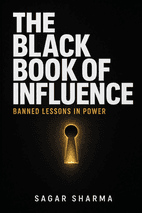
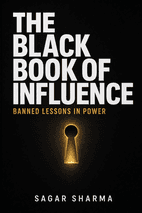
What is the book The Black Book of Influence about?
Sagar Sharma's The Black Book of Influence argues that influence comes from restraint, attention, and reading the forces shaping an interaction, covering silence as a conversational tool, framing, solitude, choosing your circle, walk-away leverage, and the six quiet forces that shape decisions. Written for professionals navigating meetings, negotiations, and trust who want composure and practical vocabulary over performance.
Feature
Insta.Page
Blinkist
Shortform
Summary Depth
Full Chapter-by-Chapter
15-min overview
Section-by-section guides
Audio Narration
✓
✓
✓
Full access to all 700+ summaries
✓
✓
✓
Visual Mindmaps
✓
✕
✕
AI Q&A
✓
✕
✕
Missing a book? Request it, usually live within 48h
✓
✕
✕
Quizzes
✓
✕
✕
PDF Downloads
✓
✕
✓
Send to Kindle
✓
✓
✓
Price
$89.99/yr
$146/yr (PRO)
$199/yr
*Competitor data last verified July 2026.
1 Page Summary
Sagar Sharma's The Black Book of Influence: Banned Lessons in Power argues that influence rarely comes from saying more, working harder, or appearing impressive—it comes from restraint, attention, and a clear-eyed read of the forces quietly shaping any interaction. Across its chapters, the book examines why over-explaining spends rather than earns attention (illustrated by a fifty-minute meeting resolved by one woman's two-sentence proposal), how silence functions as a practical conversational tool that lets others reveal more than they intended, and how framing sets the terms of a discussion before any claim is made—as when "90 percent survival rate" and "one patient in ten dies" describe identical facts but produce different responses. It extends this logic to solitude and mental noise, deliberate selection of one's circle, reading people by their track record and conduct rather than first impressions, and the "two wheels" of health and financial stability that underwrite one's ability to refuse and walk away. Later chapters address identity-based conflict, the leverage of a genuine walk-away option, gatekeeping as either connector or toll collector, the boundary between privacy and misleading omission, and the six quiet forces—environment, choices, social expectations, emotional state, information, and time pressure—that can shape a decision while feeling entirely free.
The book's distinctive approach lies in its method rather than in dramatic revelation: it treats influence as a set of observable mechanics, illustrated through concrete scenarios—a negotiation over a flat, a dinner with near-strangers, a seminar choice made under subtle pressure—and distilled into checklists and short numbered principles. Sharma consistently reframes power as subtraction: the quietest person in the room may hold the most leverage, the expert who answers in one sentence demonstrates command, and the pause is presented not as passivity but as a skill that creates presence and room to maneuver. He is also careful to draw ethical lines, distinguishing boundaries from deception and warning explicitly against exploiting identity or another person's need as a lever. Throughout, the emphasis falls on reversibility, evidence over familiarity, and building alternatives so that wanting an outcome never hardens into needing it.
The intended audience is the reader who suspects that conventional advice—speak up, stay busy, impress others, act fast—has quietly cost them leverage: professionals navigating meetings and negotiations, people evaluating whom to trust with time and plans, and anyone seeking composure under social pressure. What readers gain is a practical vocabulary for reading situations before acting—how to take an argument apart, when urgency is real versus manufactured, how to ask for a day, how to test a promise before trusting a person with a bigger one. The book does not promise a secret edge so much as a disciplined calm: the capacity to stay audible without oversharing, to choose one's circle on purpose, and to decide from a position where walking away remains possible.
Part 1 - Chapter 1
Overview
Speaking more feels like the obvious way to be heard, yet it can leave people with less room than they started with. The hard part is staying audible without giving away more than you mean to, especially when every social instinct says to keep talking.
Talking too much is often a response to discomfort, not a display of authority. Every sentence you add uses up attention and trust, and the more you add, the less each one is worth. The over-explainer's problem isn't a lack of ideas — it's not letting the main point stand. Slow down, then pause. That lets the listener absorb what was said and lets you choose the next sentence instead of racing to fill space.
The pause and the room
Being calm doesn't mean being soft. The public-speaking myth that constant sound signals confidence confuses volume with real confidence. When you stop filling the room, other people often step into the gap: they ask, answer, or share more than they would under a monologue. A small example can carry a long dinner; the aim is not to perform holding back but to notice when the conversation has served its purpose. The pause is part of the message, not an empty gap to be apologized for.
Knowing when to stop
Knowing when to stop is a practical skill. Practice it without making yourself miserable, especially when nerves push you toward more explanation. Under nerves, explaining feels like safety, but it usually adds noise rather than clarity. One caution: holding back can go wrong when it turns into coldness, evasion, or a way to make others carry the discomfort.
The goal isn't silence for its own sake. It's fewer words, chosen well, so the ones that remain have weight.
Key Takeaways
Before adding another sentence, ask what it buys; if it only restates or softens a point already made, cut it.
Leave a gap after your main point so the other person can answer, ask, or share more than they would if you kept talking.
End a conversation once it has served its purpose instead of running it until the energy drains out of the room.
Practice stopping early in low-stakes conversations, so nerves don't push you into extra explanation when the stakes are high.
Watch the line between holding back and pulling away: being brief shouldn't leave the other person carrying discomfort you were avoiding.
Key concepts: Part 1 - Chapter 1
Part 1 - Chapter 1
The Cost of Over-Talking
Talking too much often stems from discomfort, not authority.
Each added sentence dilutes attention and trust.
Over-explainers fail to let the main point stand.
Slow down and pause to choose words wisely.
The Power of the Pause
Pausing lets listeners absorb and respond.
Silence invites others to step in and share more.
Constant sound confuses volume with confidence.
The pause is part of the message, not an empty gap.
Knowing When to Stop
Stopping is a practical skill, especially under nerves.
Nervous explaining adds noise, not clarity.
End conversations once they've served their purpose.
Practice stopping early in low-stakes situations.
Avoiding the Coldness Trap
Holding back can turn into coldness or evasion.
Don't make others carry your discomfort.
Briefness should not leave others feeling abandoned.
Balance brevity with warmth and engagement.
Fewer Words, Chosen Well
The goal is not silence for its own sake.
Choose words that carry weight and meaning.
Ask what each sentence buys before adding it.
Cut restatements and softening phrases.
💡 Try clicking the AI chat button to ask questions about this book!
Part 2 - Chapters 2 to 11
Overview
The urge to explain more, soften more, and fill every silence feels like the safest path to being understood. Yet words that seem to secure attention can quietly spend it, leaving a speaker less heard. What remains unclear is how to earn the room without adding volume.
A meeting of about eight people had to decide whether to delay a project by a month. It needed ten minutes and took fifty. One man spoke for roughly thirty of those minutes, giving background and three outcomes. Asked a direct question, he answered a larger one first. A woman who had been silent said to delay the work by two weeks and call the client that day, then stopped. The room accepted her proposal. The man was not rude or wrong. The shorter contribution carried more weight.
Why We Overfill Silence
Fear of silence: a two-second gap feels like failure, so people insert filler.
Need to be understood: extra context tells listeners they cannot follow and buries the useful sentence.
Need to be liked: nervous talkers fill the air, but connection drops when the other person never speaks.
Liking the sound of your own voice: holding the floor feels important.
Scarcity Gives Words Weight
Words work like currency: constant spending devalues each payment, and constant talking turns a person into background noise. A rare speaker makes people lean in because attention goes to what is scarce. That is why ten calm seconds moved a room that had waited fifty minutes for clarity.
Lead with the Answer
Answer first and explain afterward only if asked. Asked whether a report will be ready by Friday, the over-explainer describes late data and redone sections, protecting himself with small insurance policies. "Yes. Thursday evening" or "No. Monday morning. The data came in late" sounds calmer and more competent. Practice in email by putting the request in the first line, such as moving a Thursday call to Friday. Replies get faster, and nobody takes offense.
The Cost of Justifying Yourself
Over-explaining appears in refusals, requests, mistakes, prices, and declined invitations. Decline with a visiting cousin, poor health, and difficult travel, and the friend hears four reasons, trusts none, and gains four handles to argue with. "Thanks, but I can't make it" leaves nothing to negotiate. A freelancer who says $5,000, then adds flexibility and research, teaches the client that the price is soft. A firm number followed by silence holds its weight. Every extra sentence strengthens or weakens your position, and discomfort usually weakens it.
Pace and Silence
Fast speech signals fear of losing the floor, and urgency sounds like need rather than authority. Calm is not weakness. Aggression gives away doubt, while a steady voice leaves nothing to push against. In one negotiation, the louder side kept escalating and conceded more, while the level-toned side said little. The pause is the most useful tool: it feels long to the speaker, thoughtful to the listener, and lets a point land.
The Public-Speaking Distraction
Public speaking is useful, but courses and coaches overstate it. Influence is won at dinner tables, in small meetings, with clients, managers, friends, and landlords. A plain delivery around a clear idea beats polish around a muddled one.
What Less Talking Produces
Talking less makes people attend more. The person who fills every silence becomes the weather, while a quieter friend's occasional comment turns heads. Less talking also means hearing more: most people listen for their turn and miss hesitations or the topic that changes someone's voice, details that reveal what people worry about and want.
Key Takeaways
Say the answer first and then stop; add the background only when someone asks for it.
Strip the explanations out of a refusal or a quoted price, because each added sentence gives the other person a foothold.
Slow your delivery and let the silence sit; the gap feels long to you and composed to everyone else.
Talk less so that your occasional contribution pulls attention, and use the quiet to catch hesitations and shifts in tone that show what people actually care about.
Put your practice into ordinary conversations with clients, managers and friends rather than into presentation polish.
Key concepts: Part 2 - Chapters 2 to 11
Part 2 - Chapters 2 to 11
Why We Overfill Silence
Fear of silence: gaps feel like failure, so people insert filler.
Need to be understood: extra context buries the useful sentence.
Need to be liked: nervous talk fills air but blocks connection.
Liking your own voice: holding the floor feels important.
Scarcity Gives Words Weight
Words are currency: constant talking devalues each payment.
Rare speakers make people lean in; attention goes to scarcity.
Ten calm seconds can move a room more than fifty minutes.
Lead with the Answer
Answer first, explain only if asked.
Over-explaining sounds like small insurance policies.
Practice in email: put the request in the first line.
The Cost of Justifying Yourself
Over-explaining appears in refusals, requests, mistakes, prices.
Extra reasons give others handles to argue with.
A firm number followed by silence holds its weight.
Pace, Silence, and Less Talking
Fast speech signals fear; calm leaves nothing to push against.
The pause feels long to you, thoughtful to listeners.
Talking less makes people attend more and lets you hear more.
Part 3 - Chapters 12 to 23
Overview
The urge to add one more sentence is hard to resist, and the extra words often cost more than they give. What is not obvious is where useful contribution ends and filling space begins, particularly when silence feels risky.
At a long dinner with near-strangers, a woman who ran a sizable business spoke little, asked a few questions, and listened. A younger man gave an exhaustive account of a deal. She waited, then asked what he would do differently. He stopped, admitted he would change a few things, and the conversation became more honest and interesting than his story. She had the most power and used the least air. Speaking less shapes not only how others hear you but how much you notice.
Knowing when to stop
You do not need to say everything you know. People often ruin a clear point by adding one more sentence. In interviews, a strong answer weakens because silence feels like disapproval, when the interviewer is probably writing. The well-informed often want to display knowledge, but an expert can answer in a sentence because they know what matters. Before adding more, ask whether it helps the other person or only makes you feel better. If the latter, leave it out.
Practice
Small experiments work better than an overnight overhaul:
Answer a direct question in one sentence before adding anything.
Wait one second before replying.
Record yourself explaining something, then listen for rushing, filler, and repetition.
End sentences firmly instead of trailing off or turning statements into questions.
Catch the explanation reflex after a refusal or boundary, then try the short version.
Nervousness stretches time. According to the book, a pause that feels like five seconds is usually one, and a silence that feels disastrous is barely noticed. Breathe before answering, speak slowly, and keep your voice steady. If you ramble, close the sentence and give the short version.
A caution
Speaking less is not going silent, withholding warmth, or making others guess. More words may be needed in some situations:
someone is hurting and needs comfort
you are teaching
a friend wants your view
Ask whether leaving something out would lose anything. If yes, say it plainly. If no, cut it. Calm may read as disinterest at first, but over time people listen more closely and ask for your view because it is worth having.
Learning to stand alone
A confident friend could not eat lunch alone without cycling through his phone, looking around, and finishing in about twelve minutes. Nobody was watching, but the feeling that being alone in public signals something wrong was real. Someone who cannot sit alone for twelve minutes has handed influence to the world around him.
Constant company shapes opinions through repetition. A group's preferences and opinions, including what counts as respectable work or success, can become yours without a decision because you never spend enough time away to compare. A test: what do you think about matters you have never discussed with anyone? Many cannot answer because they have never had a quiet stretch to find out.
Solitude and loneliness
Alone, a thought can run to its end without interruption or correction. Solitude also exposes what you actually want rather than what family, friends, or appearances suggest. Loneliness is wanting connection and lacking it. Solitude is choosing your own company and being at ease. The aim is to enjoy company without needing it. Someone at a party who can leave, speak honestly, and disagree is harder to pressure than someone working the room all evening, managing opinions and fearing exclusion.
Start small:
Eat a meal alone with your phone away.
Walk without headphones.
Visit a film or museum alone.
Spend a weekend morning with no plan.
Each stretch teaches that your own company is not a punishment.
Key Takeaways
Treat a direct question as complete once you have answered it, and add another sentence only if it serves the listener rather than your urge to display.
Run small experiments to locate your stopping point, from shorter answers and deliberate pauses to recordings of your own explanations.
Pair restraint with warmth; when comfort, teaching, or a friend's request calls for more words, give them plainly rather than making people guess.
Spend regular time alone in ordinary places without a phone or headphones, so you can hear your own conclusions before a group's preferences fill the space.
Practice chosen solitude rather than waiting for loneliness to force it, so time with others becomes a pleasure you can take or leave rather than a need that steers you.
Key concepts: Part 3 - Chapters 12 to 23
Part 3 - Chapters 12 to 23
The Power of Speaking Less
Speaking less shapes how others hear you and increases your noticing.
People often ruin a clear point by adding one more sentence.
Ask if extra words help the listener or only make you feel better.
Knowing When to Stop
Answer direct questions in one sentence before adding more.
Pauses feel longer to you than to others; breathe and speak slowly.
End sentences firmly instead of trailing off or turning statements into questions.
Balancing Restraint with Warmth
Speaking less is not going silent or withholding warmth.
More words may be needed for comfort, teaching, or a friend's request.
Ask if leaving something out would lose anything; if yes, say it plainly.
Learning to Stand Alone
Constant company shapes opinions without your conscious decision.
Test: what do you think about matters you've never discussed with anyone?
Start small: eat alone without phone, walk without headphones, visit alone.
Solitude vs. Loneliness
Loneliness is wanting connection and lacking it; solitude is chosen and comfortable.
Solitude lets thoughts run to their end and reveals what you actually want.
Enjoy company without needing it; chosen solitude makes time with others a pleasure.
Part 4 - Chapters 24 to 35
Overview
Spend time alone and what arrives first is not clarity but an uncomfortable noise. Most people read that discomfort as evidence and stop. The question is what happens if you don't, and whether staying changes how easily you are moved.
Solitude and mental noise
Being alone first exposes the noise inside: unfinished tasks, worries, replayed awkward moments, phone urges. Once distraction goes, these surface and feel anxious, but they were already shaping mood beneath it. Stay longer and the noise settles, often after about twenty minutes on a walk or a few days on a break. Thoughts slow and sharpen, real worries separate from passing ones, and decisions simplify. People who stay constantly busy and surrounded remain in the fog and mistake it for ordinary life.
Independence and the audience in your head
Someone who needs constant company, attention, or approval is easy to move. If they dread exclusion, hint at group disapproval; if they need liking, offer warmth and flattery; if they cannot stand silence, wait them out. A person fine alone is not destabilized by disapproval, weighs flattery against self-worth, and lets a pause sit. People sense it: those not hunting approval do not hover, over-agree, or laugh too fast, and often get more respect. That cannot be faked. The same work reveals an audience in your head, absent opinions that make you plan how to describe an experience or photograph a view before looking. Do something good and tell nobody. Ask whether the urge to share is connection or hunger for a reaction. Sharing is healthy, but if experience feels real only once witnessed, attention holds the power.
Solo travel, unpredictability, and influence
Group travel offers help and company, yet it can keep you in a familiar bubble: you remember the people and jokes more than the place. Alone, attention turns outward, and you handle problems yourself. Missing a connecting train in an unfamiliar city brought ten minutes of panic, then a counter, a next option, a four-hour wait, and somewhere to sit. The delay mattered less than the quiet sense of coping that followed home. Travel advice about broadening the mind is not about monuments. Unpredictability is the useful ingredient; a fully booked trip with known people is ordinary life at another address. Influence begins with being someone who can decide. Never deciding without checking with others leaves thin experience; handling small crises alone creates confidence independent of praise. Fear shrinks life: each avoided place or conversation removes experience whose loss you never see. Narrow reference points make people cling to old ideas or follow whoever sounds certain, which makes them easier to influence.
Starting small, strangers, balance
Solo travel can be scaled:
Take a day trip to a nearby town by train or bus, alone, with no plan.
Try a weekend in a simple place, leave time unplanned, talk to the guesthouse keeper, ask where to eat, accept a small invitation.
Take a longer trip, perhaps a week, somewhere more stretching.
Tell someone your plans, organize documents and money, keep copies, use ordinary caution, and trust instincts. Resist filling every hour; gaps are where thinking happens. Familiar companions echo your outlook; strangers do not. A short exchange can widen your sense of what is normal and possible. Balance is not rejecting friends. Rejecting all company out of pride is another leash. Enjoy people without depending on them for stability, make plans because you want to, and be fine when no one is free; belong to groups without dissolving into them.
Choosing who gets close
A man at a business event named a well-known politician, the head of a large company, and a famous cricketer who had called him a gentleman, within about ninety seconds. He showed photos of handshakes and a group dinner where he was half cut off, then asked about work, clients, contacts, and how well things were going. He learned much and revealed almost nothing true, and never introduced anyone. An older man by the window spent fifteen minutes discussing cities and a book, asked good questions, listened, said it was nice to meet, and wandered off.
Key Takeaways
Set aside solo time long enough for the first rush of unfinished tasks and phone urges to settle, so you can separate lasting worries from passing ones and decide with less fog.
Keep one good experience private and notice whether the urge to share comes from wanting connection or from needing a witness; the answer shows how much approval is steering you.
Handle small problems alone, including badly timed travel disruptions, because the quiet proof that you can cope makes disapproval and flattery less able to move you.
Take solo trips in steps, from a nearby day out to a weekend to a longer journey, leave parts of the itinerary empty, and talk to strangers; unfamiliar company widens your sense of what is normal, while friends and groups remain worth keeping as long as you are fine when none are available.
Give closeness to people who ask substantive questions and listen, not to those who display famous contacts while extracting information and revealing nothing.
Key concepts: Part 4 - Chapters 24 to 35
Part 4 - Chapters 24 to 35
Solitude and Mental Noise
Being alone first exposes internal noise: unfinished tasks, worries, phone urges.
Stay past the discomfort; noise settles after ~20 minutes or a few days.
Clearer thinking separates real worries from passing ones and simplifies decisions.
Independence from Approval
Constant need for company or approval makes you easy to manipulate.
A person fine alone resists disapproval, weighs flattery, and tolerates silence.
The 'audience in your head' makes you plan sharing; test if it's connection or reaction hunger.
Solo Travel and Unpredictability
Group travel keeps you in a familiar bubble; alone, attention turns outward.
Handling small crises alone builds confidence independent of praise.
Unpredictability is the useful ingredient; fear shrinks life by avoiding experience.
Starting Small and Finding Balance
Scale solo travel: day trip, weekend, longer journey; leave time unplanned.
Talk to strangers; unfamiliar company widens your sense of normal.
Enjoy people without depending on them; belong without dissolving into groups.
Choosing Who Gets Close
Avoid those who display famous contacts while extracting information and revealing nothing.
Give closeness to people who ask substantive questions and listen.
True connection is mutual; not a performance of status or networking.
You've reached the end of the free chapters
Next chapter: “Part 5 - Chapters 36 to 45” is locked
Keep reading The Black Book of Influence — and unlock all 700+ book summaries with audio, mindmaps and AI Q&A.
$0.00 due today · 7 days free, then $89.99/year ($7.49/mo) · Cancel anytime before day 7
Sagar Sharma is an author and technology professional whose expertise spans software engineering, data systems, and emerging technologies. His notable works include technical books and practical guides on programming and modern computing topics, aimed at helping developers and learners build real-world skills. He is known for translating complex technical concepts into accessible, hands-on content for a broad audience.
Frequently Asked Questions about The Black Book of Influence
What is The Black Book of Influence about?
The book examines how influence is often built through restraint rather than volume: speaking less, using pauses, asking better questions, and framing discussions before claims are made. It also covers choosing relationships deliberately, judging people by conduct over time, negotiating from a walk-away position, using gatekeeping responsibly, setting honest boundaries, and recognizing hidden pressures in decisions. Alongside conversation tactics, it connects influence to physical health and financial stability as the two wheels that support independence.
Who is the author of The Black Book of Influence?
Sagar Sharma is the author of this book. The provided chapters show a practical, example-driven approach to influence, communication, negotiation, and self-command, with an emphasis on restraint and clear thinking.
Is The Black Book of Influence worth reading?
It is worth reading for its practical, example-based guidance on communication, negotiation, and trust. Readers who want concrete ways to speak with more weight, choose relationships deliberately, and spot pressure tactics will find useful frameworks and checklists.
What are the key lessons from The Black Book of Influence?
Key lessons include speaking less and using pauses to preserve attention, letting main points stand, and asking questions instead of rushing to fill silence. Influence also depends on deliberate relationships: judge people by track record, consistency, costly behavior, and how they treat those with no power, while framing discussions carefully and separating identity from ideas. Negotiations favor the side that can walk away, and gatekeepers build lasting standing by connecting rather than obstructing. Boundaries, health, financial stability, and awareness of environmental, social, emotional, informational, and time pressures help protect independent judgment.
📚 Explore Our Book Summary Library
Discover more insightful book summaries from our collection