As an Amazon Associate, we earn from qualifying purchases.
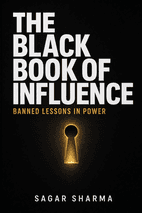
Sagar Sharma's The Black Book of Influence argues that influence comes from restraint, attention, and reading the forces shaping an interaction, covering silence as a conversational tool, framing, solitude, choosing your circle, walk-away leverage, and the six quiet forces that shape decisions. Written for professionals navigating meetings, negotiations, and trust who want composure and practical vocabulary over performance.
On Insta.page you also get an Apply This Book tool that lets you combine insights from up to 3 books to solve your specific situation.
Chapter mindmaps
Free preview: chapters 1–4 are fully interactive. Click any node to expand or collapse. Subscribe to unlock the rest.
Chapter 1: Part 1 - Chapter 1
Key concepts: Part 1 - Chapter 1
Part 1 - Chapter 1
The Cost of Over-Talking
Talking too much often stems from discomfort, not authority.
Each added sentence dilutes attention and trust.
Over-explainers fail to let the main point stand.
Slow down and pause to choose words wisely.
The Power of the Pause
Pausing lets listeners absorb and respond.
Silence invites others to step in and share more.
Constant sound confuses volume with confidence.
The pause is part of the message, not an empty gap.
Knowing When to Stop
Stopping is a practical skill, especially under nerves.
Nervous explaining adds noise, not clarity.
End conversations once they've served their purpose.
Practice stopping early in low-stakes situations.
Avoiding the Coldness Trap
Holding back can turn into coldness or evasion.
Don't make others carry your discomfort.
Briefness should not leave others feeling abandoned.
Balance brevity with warmth and engagement.
Fewer Words, Chosen Well
The goal is not silence for its own sake.
Choose words that carry weight and meaning.
Ask what each sentence buys before adding it.
Cut restatements and softening phrases.
Chapter 2: Part 2 - Chapters 2 to 11
Key concepts: Part 2 - Chapters 2 to 11
Part 2 - Chapters 2 to 11
Why We Overfill Silence
Fear of silence: gaps feel like failure, so people insert filler.
Need to be understood: extra context buries the useful sentence.
Need to be liked: nervous talk fills air but blocks connection.
Liking your own voice: holding the floor feels important.
Scarcity Gives Words Weight
Words are currency: constant talking devalues each payment.
Rare speakers make people lean in; attention goes to scarcity.
Ten calm seconds can move a room more than fifty minutes.
Lead with the Answer
Answer first, explain only if asked.
Over-explaining sounds like small insurance policies.
Practice in email: put the request in the first line.
The Cost of Justifying Yourself
Over-explaining appears in refusals, requests, mistakes, prices.
Extra reasons give others handles to argue with.
A firm number followed by silence holds its weight.
Pace, Silence, and Less Talking
Fast speech signals fear; calm leaves nothing to push against.
The pause feels long to you, thoughtful to listeners.
Talking less makes people attend more and lets you hear more.
Chapter 3: Part 3 - Chapters 12 to 23
Key concepts: Part 3 - Chapters 12 to 23
Part 3 - Chapters 12 to 23
The Power of Speaking Less
Speaking less shapes how others hear you and increases your noticing.
People often ruin a clear point by adding one more sentence.
Ask if extra words help the listener or only make you feel better.
Knowing When to Stop
Answer direct questions in one sentence before adding more.
Pauses feel longer to you than to others; breathe and speak slowly.
End sentences firmly instead of trailing off or turning statements into questions.
Balancing Restraint with Warmth
Speaking less is not going silent or withholding warmth.
More words may be needed for comfort, teaching, or a friend's request.
Ask if leaving something out would lose anything; if yes, say it plainly.
Learning to Stand Alone
Constant company shapes opinions without your conscious decision.
Test: what do you think about matters you've never discussed with anyone?
Start small: eat alone without phone, walk without headphones, visit alone.
Solitude vs. Loneliness
Loneliness is wanting connection and lacking it; solitude is chosen and comfortable.
Solitude lets thoughts run to their end and reveals what you actually want.
Enjoy company without needing it; chosen solitude makes time with others a pleasure.
Chapter 4: Part 4 - Chapters 24 to 35
Key concepts: Part 4 - Chapters 24 to 35
Part 4 - Chapters 24 to 35
Solitude and Mental Noise
Being alone first exposes internal noise: unfinished tasks, worries, phone urges.
Stay past the discomfort; noise settles after ~20 minutes or a few days.
Clearer thinking separates real worries from passing ones and simplifies decisions.
Independence from Approval
Constant need for company or approval makes you easy to manipulate.
A person fine alone resists disapproval, weighs flattery, and tolerates silence.
The 'audience in your head' makes you plan sharing; test if it's connection or reaction hunger.
Solo Travel and Unpredictability
Group travel keeps you in a familiar bubble; alone, attention turns outward.
Handling small crises alone builds confidence independent of praise.
Unpredictability is the useful ingredient; fear shrinks life by avoiding experience.
Starting Small and Finding Balance
Scale solo travel: day trip, weekend, longer journey; leave time unplanned.
Talk to strangers; unfamiliar company widens your sense of normal.
Enjoy people without depending on them; belong without dissolving into groups.
Choosing Who Gets Close
Avoid those who display famous contacts while extracting information and revealing nothing.
Give closeness to people who ask substantive questions and listen.
True connection is mutual; not a performance of status or networking.
You've reached the end of the free mindmaps
Next chapter: “Part 5 - Chapters 36 to 45” is locked
See every chapter of The Black Book of Influence as an interactive mindmap — and unlock all 700+ book summaries with audio and AI Q&A.
$0.00 due today · 7 days free, then $89.99/year ($7.49/mo) · Cancel anytime before day 7