The Social Security Money Code Interactive Mindmaps for The Social Security Money Code (Free)

The Social Security Money Code — Interactive Mindmaps

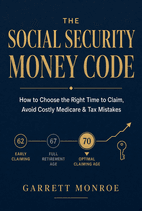
The Social Security Money Code by Garrett Monroe Book Cover

by Garrett Monroe

Garrett Monroe's The Social Security Money Code reveals how claiming age permanently fixes your benefit amount and provides scenario-driven strategies for couples, divorced spouses, and widows to maximize lifetime income. It also exposes hidden tax and Medicare traps, including IRMAA surcharges, for pre-retirees and retirees seeking to avoid costly, irreversible mistakes.

On Insta.page you also get an Apply This Book tool that lets you combine insights from up to 3 books to solve your specific situation.

Chapter mindmaps

Free preview: chapters 1–4 are fully interactive. Click any node to expand or collapse. Subscribe to unlock the rest.

Chapter 1: The Claiming Decision You Only Get to Make Once

Key concepts: Chapter 1: The Claiming Decision You Only Get to Make Once

Chapter 1: The Claiming Decision You Only Get to Make Once

A Permanent Decision

  • Claiming age locks in every future check
  • Filing at 62 vs 70 can differ by $100,000
  • Early filing permanently reduces benefits
  • Only escape: withdraw within 12 months and repay

Household Stakes

  • Early claim shrinks survivor protection
  • Surviving spouse keeps larger of two checks
  • Higher earner's early filing cuts spousal benefits
  • Coordinate filing decisions as a couple

Hidden Costs of Larger Checks

  • Bigger benefits can raise income taxes
  • Higher income triggers Medicare premium surcharges
  • Run full tax math before deciding

Where Guidance Ends

  • SSA explains rules but won't build strategy
  • Answers vary by representative
  • No outsider knows your savings and dependents
  • Use your own benefit estimates as starting point

Key Takeaways

  • Treat claiming as permanent, no do-over
  • Compare household benefits before anyone files
  • Include taxes and Medicare premiums in math
  • Get estimates from SSA, decide for yourself

Chapter 2: What Will You Really Receive?

Key concepts: Chapter 2: What Will You Really Receive?

Chapter 2: What Will You Really Receive?

The Core Problem: Guessing vs. Facts

  • Permanent decision made from outdated or secondhand numbers
  • Most people never check their actual earnings record
  • Gap between assumption and fact can change the decision

Three Key Benefit Figures

  • 62: earliest and smallest benefit
  • Full Retirement Age: baseline amount
  • 70: largest, delayed credits stop
  • FRA ranges from 66 to 67 by birth year

How Benefits Are Calculated

  • Average of highest 35 indexed earnings years
  • Zero years drag down the average
  • Replacing zeros with paid years boosts monthly check
  • Claiming at 62 cuts ~30%; waiting past FRA adds ~8% yearly

Protecting Your Earnings Record

  • Review SSA statement year by year for errors
  • Submit old W-2s or tax returns to correct mistakes
  • Verify self-employment income was recorded properly
  • Underreported income shrinks future benefits

Recent Law Change: WEP and GPO Repeal

  • Social Security Fairness Act signed January 2025
  • Repealed Windfall Elimination Provision and Government Pension Offset
  • Benefits made retroactive to January 2024
  • Recalculation may mean larger benefit and back payments

Chapter 3: When to Claim: The $100,000 Social Security Question

Key concepts: Chapter 3: When to Claim: The $100,000 Social Security Question

Chapter 3: When to Claim: The $100,000 Social Security Question

The Core Decision

  • Claiming age fixes every future Social Security check
  • Age-70 benefit exceeds age-62 by over 75%
  • No universal best age; depends on personal factors
  • Real choice: more checks or bigger checks

Early vs. Delayed Claiming

  • Early fits fragile health, immediate needs, thin savings
  • Waiting earns ~8% annual delayed retirement credits
  • Delayed credits are guaranteed, no market risk
  • Inflation adjustments compound on larger base

Break-Even Age

  • When total lifetime benefits from waiting pass early claim
  • Typically late 70s to early 80s
  • Frames decision but cannot predict lifespan
  • Weigh family history and current health

Situation-Specific Strategies

  • Laid-off 62-year-old can sensibly claim early
  • Early claim prevents draining modest savings
  • Couples: lower earner claims first, higher earner waits
  • Higher earner's larger benefit becomes survivor protection

Insolvency Myth and Action Plan

  • Insolvency fear does not justify early claiming
  • Payroll taxes cover ~75% of benefits if reserves deplete
  • Risk is reduction, not disappearance
  • Verify ssa.gov account and earnings record

Chapter 4: Turning Two Benefits Into One Household Strategy

Key concepts: Chapter 4: Turning Two Benefits Into One Household Strategy

Chapter 4: Turning Two Benefits Into One Household Strategy

The Core Problem

  • Treating two benefits as separate decisions is the first mistake
  • Both checks support one household income
  • Early claims shrink the survivor's check permanently
  • Individually reasonable choices can hurt the couple

The Coordinated Strategy

  • Lower earner claims first, higher earner delays
  • Delayed benefit grows about 8% yearly after full retirement age
  • Larger benefit later protects the surviving spouse
  • Ask what's best for us, not for me

Choosing Among Scenarios

  • Model the stagger and both-wait against cash flow needs
  • Both-wait or stagger should be your default options
  • Both-claim-early is only a fallback for necessity
  • Claiming decisions are a bet on joint longevity
You've reached the end of the free mindmaps

Next chapter: “Chapter 5: Breaking Down the Spousal Benefit: How Couples Can Make the Right Decisions” is locked

See every chapter of The Social Security Money Code as an interactive mindmap — and unlock all 500+ book summaries with audio and AI Q&A.

$0.00 due today · 7 days free, then $89.99/year ($7.49/mo) · Cancel anytime before day 7

Continue exploring The Social Security Money Code