The Social Security Money Code Quotes
by Garrett Monroe
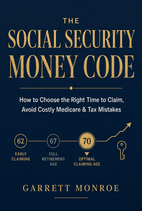
Social Security decisions can feel abstract, but the best lines in this book cut through that. You will not find complicated jargon or dry advice here. Instead, these quotes turn what seems like a dense benefit system into simple choices, honest warnings, and useful reminders for couples, survivors, and anyone approaching retirement.
What makes the book quotable is how it connects dollars to behavior. It points out regular mistakes, gives memorable ways to think about timing, and stresses why the numbers on your own record matter. These are lines designed to stick with you, whether you are planning alone or as a couple.
Top Quotes from The Social Security Money Code
“Most of the money lost in Social Security is lost to a single, very human mistake: filing before running the numbers.”
This line appears in the section about the #1 mistake retirees make when filing.
It names the most common error without jargon. It also gives readers a simple takeaway: compare the numbers first.
“People will spend an entire weekend hunting for a better mortgage rate, then make this much more significant decision in an afternoon.”
The opening argument that the claiming decision deserves more attention than most people give it.
It exposes the mismatch between how much effort people put into smaller financial choices and how casually they make the largest one.
“Imagine a savings account that promised an 8% increase every year you left it alone, with zero chance of loss; you'd probably tell every friend you have.”
In the section about the power of delayed retirement credits.
It makes waiting feel like an unbeatable guaranteed return and removes the abstractness of Social Security math.
“Do you want more checks or bigger checks? The right answer depends on your cash flow needs today and how long you expect to be collecting.”
At the heart of the trade-off explanation, the author frames the entire claiming decision as a question.
It boils a complex decision into a memorable either/or that still depends on the reader's personal timing and needs.
“Most married couples make two separate Social Security decisions, and that's their first mistake.”
Opening line of the chapter.
It flips a common habit into a costly mistake, making the case for couple-level planning immediately.
“Stop asking, “What's the best decision for me?", and flip the question to, “What's the best decision for us?"”
From the section on total household income versus individual benefit.
This is the book's core mental shift in one line, moving readers from individual choices to shared security.
“Claim early, and you lock in a permanently smaller amount.”
The author warns about the impact of claiming a spousal benefit before Full Retirement Age.
It is a crisp warning that early claiming has permanent consequences. The line lingers because 'permanently' makes the stakes impossible to ignore.
Themes Behind the Quotes
One recurring theme is that timing is a real financial decision, not an afterthought. Filing too early can permanently reduce a benefit, while waiting gives it room to grow, in some cases like an investment with no downside. The material encourages people to gather their actual earnings history before making a claim because assumptions and secondhand advice are the usual culprits behind lost money.
Another theme is relationship dynamics. Married couples are told to stop thinking as two separate filers and start seeing the decision as one shared strategy, with special attention to the higher earner. Divorce and widowhood also get their own nuance. A survivor may receive a benefit from a deceased spouse without taking away from anyone else, and there can be a smarter order for claiming those benefits. The main idea is consistent: compare all available amounts, understand how each grows, and choose a sequence that fits your actual life.
Quotes by Chapter
Chapter 1: The Claiming Decision You Only Get to Make Once
“For many, the choice you make is the one you live with and becomes the basis for every Social Security check you'll ever receive.”
This line appears in the opening pages, before the author introduces Mike and David.
It frames claiming as a decision with lasting financial consequences. It makes the case for planning before filing.
“A reduced check at 62 doesn’t jump back to a larger amount later. It stays reduced in perpetuity.”
This line appears in the section explaining why claiming early can follow you for life.
It converts a complicated rule into a plain, unforgettable warning. The word “perpetuity” drives home how much is at stake.
“This money belongs to you, and whether you deserve it doesn't come into question.”
This line appears in the section titled “Social Security Is an Earned Benefit, Not a Handout.”
It reframes Social Security as a right earned through work, not charity. It removes any shame or uncertainty about claiming benefits.
Chapter 2: What Will You Really Receive?
“Before you decide when to claim, you need to know what you're actually working with, and that starts with one real number, pulled from your own record rather than a fuzzy memory or what a colleague told you.”
The author opens the chapter’s core advice about finding your real Social Security figure.
It distills the danger of guessing into one vivid contrast and makes the remedy obvious: look at the record that actually belongs to you.
“Social Security counts your highest 35 years of earnings, not your last 35 years or an average of everything.”
This sentence appears in the explanation of how Social Security calculates benefits.
It overturns a common assumption in one clear sentence and gives readers a factual anchor for planning.
“Your benefit is only as accurate as your earnings record, so if a year of wages is missing or recorded too low, your checks will reflect that gap.”
The author is introducing hidden record-keeping problems that can shrink benefits.
It makes the task of checking earnings history feel urgent and personally relevant.
“Every year you keep earning gives you a chance to replace a zero, or a weak early-career year, with a stronger one.”
This appears in the discussion of how missing years create zeros in the 35-year calculation.
It is practical and hopeful, showing that later earnings can still improve a benefit.
Chapter 3: When to Claim: The $100,000 Social Security Question
“Remember, a smaller check that arrives on time beats a larger one that shows up after you're gone.”
In the section explaining why claiming early can make sense when income or health is limited.
It cuts through financial jargon with a plain, human reminder that a reliable present payment can matter more than a hypothetical future one.
Chapter 4: Turning Two Benefits Into One Household Strategy
“The higher earner has the larger benefit, so that person's timing pulls the bigger lever.”
From the explanation of why the higher earner's claiming age matters more.
The lever metaphor makes a complex Social Security rule feel concrete and easy to prioritize.
“If you only have the energy to think hard about one decision, make it the higher earner's.”
From the discussion of who should wait and who should file first.
It gives readers a clear, practical focus when the decisions feel overwhelming.
Chapter 5: Breaking Down the Spousal Benefit: How Couples Can Make the Right Decisions
“Frequently, a couple will glance at the lower earner’s statement, see a modest number, and assume that it’s the whole story. They don’t realize that a second option has been sitting there the entire time.”
The author is explaining why many couples miss an available spousal benefit.
It captures the exact quiet mistake that can leave money on the table. Readers may feel seen and motivated to check whether they are overlooking an option.
“Pull both numbers, set them side by side, and see which wins.”
The author gives the core method for choosing between a worker's own benefit and a spousal benefit.
It turns a confusing decision into a simple, clear action. The short imperative makes the advice easy to remember and apply.
“You are not getting your own check plus a full spousal check. You are being brought up to the bigger of the two.”
The author explains how Social Security combines a spousal top-up with your own retirement check.
It demolishes the misconception that the two benefits can be stacked. The phrasing is direct, visual, and makes the rule unforgettable.
Chapter 6: Divorced-Spouse Benefits Explained
“Those years mattered for more than sentimental reasons, and they may be worth substantial money to you.”
From the opening discussion of why long-past marriages can still matter to Social Security.
It reframes a painful past as something that can still carry financial value, making readers reconsider their history.
“Most assume that when a marriage ends, every financial connection ends with it.”
From the section explaining why divorced-spouse benefits are so rarely claimed.
It names the hidden assumption that keeps people from checking, and sets up the corrective insight that follows.
“What matters when you claim is your current marital status, not every turn that got you there.”
From the explanation of how remarriage affects eligibility.
It boils a complex rule down to the present moment, reassuring readers that past choices do not permanently lock them out.
“Social Security calculates your benefit on their record separately, without taking anything from them or anyone else tied to that record.”
From the answer to whether claiming divorced-spouse benefits reduces the other person's payment.
The word separately clarifies that this is not a transfer, which helps relieve the guilt that stops many people from applying.
Chapter 7: How Survivor Benefits Work After Losing a Current Spouse
“But one of the most expensive mistakes a widow or widower can make is filing too fast. A calm choice here can mean multiple thousands over the years ahead, so it's crucial to know the facts.”
The author opens the chapter by warning widows and widowers about the cost of rushing a Social Security decision.
It reframes grief-driven urgency as a financial trap and makes patience feel like an act of self-protection. The line gives readers a reason to pause before they file.
“Grief pushes people to act fast, and that’s exactly when money slips away. The wrong filing order is hard to undo, and it can cost a survivor for the rest of their life.”
This appears in the section about the filing mistake that can reduce lifetime survivor income.
It captures how emotional pressure undermines financial judgment. Readers who have lost a spouse may feel seen, while those planning ahead understand the stakes.
“Because these two benefits grow differently, you can sometimes start with one, let the other keep growing, and switch later to the larger amount. That sequence makes all the difference.”
This appears in the chapter's central explanation of choosing between survivor and retirement benefits.
It turns an obscure rule into a simple strategic idea: the right order can build a larger income. This line empowers readers by showing there is a sequence to manage, not just a one-time choice.
“It's like having two savings accounts that grow at different speeds. You draw from the slower one first while the faster one keeps building, then switch once the faster one has grown as large as it ever will.”
The author uses this analogy to explain why delay and switching can improve a survivor's lifetime income.
The savings-account image makes a complex benefits rule feel intuitive and easy to remember. It helps grieving readers see the logic before they make a permanent filing decision.
4 Survivor-Benefit Scenarios That Produce Different Outcomes
“Notice the pattern across all four women. Each one compared her own benefit with her survivor benefit, figured out which would be larger, and claimed the smaller one first while letting the bigger one grow.”
The narrator sums up the lesson from the four widow scenarios.
This line crystallizes a complex strategy into one memorable rule of thumb, giving readers a clear takeaway they can apply to their own situation.
“Comparing the two before you file gives you a much stronger basis for your decision, so take your time, run your numbers, and find the sequence that fits your situation.”
Closing advice to readers weighing retirement versus survivor benefits.
It turns the chapter's examples into an empowering call to action, emphasizing patience and personal analysis over guesswork.