Crazy Simple YouTube Quotes
by Aaron Cuha
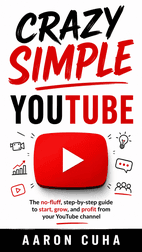
These lines come from a book that refuses to waste your time. You will find sharp, no nonsense advice about building a YouTube channel that actually brings in business. The author strips away the usual fluff and gives you straight talk about what works and what doesn't. Each quote hits on a core principle, often with a memorable twist that makes it easy to recall later.
What makes this book so quotable is its relentless focus on practical truth. Every line is designed to change how you think about content creation. Whether it is the power of evergreen videos or the danger of chasing the wrong metrics, these quotes stick because they cut to the chase. They are the kind of lines you will want to save and share.
Top Quotes from Crazy Simple YouTube
“Year three: Hundreds of leads. Dozens of clients. The revenue equivalent of a full-time employee's salary. From one video.”
The author walks through the timeline of a video's compound effect, culminating in its third-year impact.
This vivid, concrete outcome motivates readers by showing the massive delayed ROI possible from a single piece of content, turning an abstract concept into a compelling goal.
“Subscribers are a vanity metric. I'll say it louder for the people in the back. Subscribers are a vanity metric.”
The author is debunking the myth that subscriber count is the most important metric for YouTube success.
The repetition and emphatic phrasing make this line unforgettable, driving home a counterintuitive truth that liberates creators from vanity metrics.
“By the time you have 50 videos working, you've got 50 employees generating leads around the clock.”
The author explains the machine-like efficiency of a content library in the digital products model.
The metaphor of videos as tireless employees is instantly memorable and vividly communicates the long-term leverage of consistent content creation.
“If you've spent more time researching microphones than researching what your audience actually searches for on YouTube, your priorities are upside down. Flip them.”
The author warns against obsessing over gear instead of understanding audience needs.
This is a sharp, memorable call to action that cuts through the common trap of gear obsession and redirects focus to what truly matters.
“The upgrade you need isn’t a camera or a microphone. The upgrade you need is pressing record.”
This is the final push in the chapter, urging readers to stop waiting and start creating.
It delivers a punchy, almost paradoxical truth that the most important 'upgrade' is simply taking action, which resonates with anyone stuck in analysis paralysis.
“The difference between a YouTube channel that generates leads and one that collects dust isn’t production quality, posting frequency, or subscriber count. It's whether you're answering questions people are actually asking.”
The author's concluding statement in the chapter.
It reframes success by stripping away common distractions and zeroing in on the one factor that truly matters, making it a powerful anchor for creators.
“Great content in bad packaging stays on the shelf.”
The author summarizes the consequence of neglecting title and thumbnail design.
The metaphor is instantly relatable and memorable, driving home the point that even high-quality videos fail without proper packaging.
Themes Behind the Quotes
One major theme is that content should be built to work for you over time, not just for an initial spike. The book emphasizes creating videos that answer real search queries, so they keep generating views and leads long after publication. This shifts focus from short term viral hits to sustainable, evergreen assets.
Another theme is the rejection of common distractions. Subscriber counts, expensive gear, and production polish are downplayed in favor of consistency, audience research, and smart packaging. The author argues that the real game is understanding what viewers actually want and delivering it clearly. The result is a system that values depth over frequency and demand over guesswork.
Quotes by Chapter
Chapter 1: The $387,000 Youtube Video
“Your content keeps working long after you publish it.”
The author explains the YouTube Compound Effect, contrasting YouTube with other platforms.
This line captures the core advantage of YouTube as a long-term asset, emphasizing that a single video can generate returns indefinitely.
“This is the single biggest difference between YouTube and everything else.”
The author states the key distinction after asking if the reader understands the compound effect.
It succinctly defines YouTube's unique value proposition, making readers realize why they should prioritize it over other marketing channels.
“No theory for the sake of theory. No filler. Just the system, chapter by chapter, until you have a YouTube channel that works as hard as you do.”
The author concludes the chapter overview of the book's structure and promise.
It builds trust by promising practical, actionable content without fluff, appealing to readers who want a no-nonsense guide to building a business asset.
Chapter 2: Why Most Youtube Advice Is Wrong
“The algorithm is actually your biggest ally as a business owner because it rewards exactly the kind of content you should be making: educational, specific, search-optimized content that answers real questions.”
The author explains why the YouTube algorithm helps business owners who focus on valuable content.
This reframes the algorithm from a villain to an ally, giving readers a clear, actionable content strategy that aligns with how YouTube works.
“Stop blaming the algorithm. Start studying what it rewards.”
The author contrasts two mindsets creators can adopt toward YouTube's algorithm.
This concise, directive statement empowers readers to take control and shift from victimhood to strategic learning.
“Every myth you carry into your YouTube strategy is dead weight slowing you down.”
The author concludes the chapter by urging readers to abandon common misconceptions.
The metaphor of dead weight makes the cost of bad advice visceral, motivating readers to let go of unhelpful beliefs before moving forward.
Chapter 3: The 2026 Youtube Algorithm Decoded
“A 15-minute video with 40% retention generates 6 minutes of watch time per viewer. A 3-minute video with 60% retention generates only 1.8 minutes.”
The author compares two hypothetical videos to illustrate how watch time accumulates.
This stark numerical contrast makes the case for longer content intuitive and memorable, challenging creators who mistakenly prioritize retention percentage over total watch time.
“Not because long is automatically better, but because the watch-time math almost always works in favor of depth.”
The author clarifies why the algorithm favors longer videos.
This line encapsulates a core strategic insight: depth wins over length for length's sake, and it reframes the algorithm's logic in a simple, quotable way.
“When we shifted to deeper content averaging around 18 minutes per video, growth jumped to 5,000+ subscribers per month.”
The author shares a real-world example from the @VanLife channel.
The dramatic subscriber jump delivers concrete proof that the watch-time strategy works, making the abstract principle feel actionable and credible.
“The accumulation of watch time triggered algorithmic amplification that shorter videos simply couldn't match.”
The author explains the cause behind the growth spike.
This sentence vividly describes the mechanism of algorithmic amplification, giving readers a powerful mental model for why watch time is the primary lever for growth.
Chapter 4: Your Youtube Business Model
“YouTube becomes their stage, and the content becomes a living portfolio that proves they know what they're talking about.”
The author describes the authority building business model for professionals like authors and speakers.
This line captures how YouTube transforms from a platform into a powerful credibility tool, making it feel essential and aspirational for experts.
“Same content. Same audience. Same subscriber count. The only thing that changed was the business model behind the videos.”
After sharing Sarah's dramatic revenue increase, the author highlights the pivotal difference.
This short, rhythmic statement drives home the core lesson that strategy matters more than vanity metrics, motivating readers to rethink their approach.
“I was sitting on a gold mine and didn’t even know it.”
Sarah, a real estate agent, reflects on her channel's hidden revenue potential after implementing a proper business model.
This relatable, triumphant confession turns a common feeling of untapped potential into a hopeful, actionable insight that encourages immediate change.
Chapter 5: The “Good Enough” Equipment Stack
“The equipment that matters most is the equipment that reduces friction.”
This line appears in the section discussing the importance of a simple setup over a complex one.
It reframes the entire concept of gear from technical specs to usability, reminding creators that simplicity drives consistency.
“If your filming process involves 45 minutes of setup time, you're going to find excuses to skip it. If your filming process involves pulling your phone out of your pocket and hitting record, you'll create content consistently. Consistency builds channels. Not cameras.”
This is from the explanation of why reducing friction in your workflow is critical.
It vividly contrasts overcomplicated routines with the simple habit of just filming, driving home the core truth that consistency—not gear—builds success.
Chapter 6: Channel Setup That Converts
“The safe zone, meaning the part that's visible on everything, including mobile, is only 1546 by 423 pixels in the center. If your key text sits outside that zone, half your visitors will never see it.”
From the chapter on channel banner design.
It delivers a startling, specific fact that immediately makes creators realize the cost of ignoring mobile optimization. The concrete pixel numbers and the consequence of lost visitors give this a memorable, actionable punch.
“Your About section serves two audiences: humans who are deciding whether to subscribe, and YouTube's search algorithm that’s deciding whether to surface your channel.”
Explaining the dual purpose of the channel description.
It reframes a mundane setup task as a strategic move that affects both people and algorithms, making the reader see their About section as a conversion tool rather than an afterthought.
“Nobody reads a paragraph of self-congratulation.”
Advice on writing the channel description.
This short, blunt line cuts through fluff and reminds creators to keep their bio humble and value-focused. Its brevity makes it easy to remember and apply.
“Can you answer those three questions within five seconds? What is this about? Should I trust this person? What should I watch? If the answer to all three is immediately clear, you've built a channel that converts.”
The author's test for evaluating channel page effectiveness.
This gives creators a simple, repeatable five-second audit they can perform on their own channel, turning abstract concepts into a clear pass/fail test. The three questions are universally understood and instantly actionable.
Chapter 7: Finding Topics Your Audience Actually Searches For
“When she made content nobody was searching for, nobody watched. When she made content answering real questions, the views, the leads, and the clients followed.”
Describing the Phoenix real estate agent's turnaround after switching to demand-driven topics.
The stark before-and-after contrast makes the central lesson unforgettable, showing the direct cause-and-effect of searching for audience demand.
“Wasted two years making content nobody wanted,” she told me. “If I’d known this from the start, I'd be so much further ahead.”
The real estate agent's personal confession after seeing results from demand-based content.
The raw honesty and regret make the cost of ignoring demand feel personal and urgent, motivating readers to act immediately.
“Start with demand, and everything else gets easier.”
The final piece of advice at the end of the chapter.
This short, actionable mantra encapsulates the entire chapter's wisdom and is easy to remember and apply.
Chapter 8: Titles And Thumbnails That Get Clicks
“Your title and thumbnail are not decorations. They are the marketing campaign for your video.”
The author explains the true purpose of titles and thumbnails in YouTube content.
This reframes titles and thumbnails as essential marketing tools rather than afterthoughts, making creators reevaluate their importance.