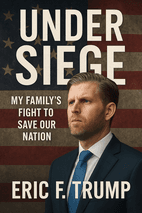
Eric Trump's Under Siege offers a personal defense of the Trump family's political battles, framing their post-2020 election challenges as a necessary fight against establishment forces for committed supporters.
Feature
Insta.Page
Blinkist
Shortform
Under Siege
✓
✕
✕
Summary Depth
Full Chapter-by-Chapter
15-min overview
Section-by-section guides
Audio Narration
✓
✓
✓
Visual Mindmaps
✓
✕
✕
AI Q&A
✓
✕
✕
Quizzes
✓
✕
✕
PDF Downloads
✓
✕
✓
Price
$89.99/yr
$146/yr (PRO)
$199/yr
*Competitor data last verified July 2026.
1 Page Summary
Eric Trump's Under Siege: My Family's Fight to Save Our Nation presents a personal and political defense of the Trump family, particularly during the period following the 2020 presidential election. The book frames the Trump presidency as a historic mission to protect American values and sovereignty against what it describes as entrenched establishment forces, including the media, political opponents, and the "deep state." A central theme is the portrayal of the family as a unified front enduring relentless and unfair persecution, with Eric Trump positioning himself as a key witness to these events from within the inner circle.
The narrative is heavily centered on the contentious aftermath of the 2020 election, echoing claims of widespread voter fraud and a "stolen" election. It details the subsequent investigations, including the impeachments and the raid on Mar-a-Lago, which are characterized not as legal processes but as politically motivated attacks designed to cripple a political movement. The historical context provided is one of a nation at a crossroads, where the "America First" agenda is under direct assault from powerful institutions intent on its destruction.
The lasting impact the book seeks to impart is twofold. First, it aims to solidify the perspective among supporters that the Trump family's political battles are a necessary defense of the nation itself. Second, it serves as a rallying cry, reinforcing the narrative of a political martyrdom that requires continued loyalty and activism from their base to ultimately "save" the country. The work is less an analytical memoir and more a polemic designed to fortify a specific political worldview against its perceived adversaries.
Chapter 1: My Father the Fighter
Overview
This chapter paints an intimate portrait of Donald Trump through the eyes of his son Eric, revealing a man of immense drive, resilience, and unexpected depth. It explores how Donald's unconventional approach to life, business, and family shaped Eric's own values, blending personal anecdotes with broader reflections on leadership and loyalty. From childhood memories in Trump Tower to the high-stakes world of New York real estate and the tumultuous political arena, the narrative highlights the qualities that define Donald Trump as a fighter, visionary, and devoted father.
A Childhood Forged in Ambition
Growing up, Eric witnessed his father's unparalleled work ethic firsthand. Weekends were spent flying on the Super Puma helicopter to Atlantic City, where Donald was building an East Coast "Las Vegas," rubbing shoulders with icons like Mike Tyson and Michael Jackson. Back in New York, Eric would build Lego empires in Trump Tower while his father constructed real ones, from the Plaza Hotel to Trump World Tower. Despite missing some typical childhood moments, Eric describes his upbringing as "incomparable," filled with lessons in ambition and the importance of aiming high. Donald's ability to balance a demanding career with family time left a lasting impression; he always made his children a priority, welcoming them into his office even during meetings with world leaders.
Lessons in Excellence and Opportunity
Donald Trump's keen eye for detail became a cornerstone of Eric's education. He recalls how his father could spot a single burned-out bulb in a casino filled with thousands, instilling a culture of perfection across their properties. This attention to excellence extended to recognizing talent in unlikely places, such as the day Donald pulled over to compliment a mason named Frank Sanzo building a stone wall. Frank later became a key figure in the Trump Organization, mentoring Eric during summers and embodying the hard work and integrity Donald valued. These experiences taught Eric that success isn't about credentials but about spotting potential and fostering it with confidence and opportunity.
The Art of Vision and Execution
As a salesman, Donald Trump excelled at transforming visions into reality. He moved beyond his father's focus on practical, brick-based projects in Brooklyn to embrace the luxury of Manhattan, using materials like glass to create extraordinary spaces. Eric shares how Donald's simple, compelling messaging—like calling Turnberry "the greatest golf course on the planet"—sold not just properties but lifestyles. This skill was crucial in turnarounds, such as the dilapidated Trump Doral, where a rat in the dining room symbolized neglect. Under Donald's leadership, it became a model of pride and precision, mirroring his belief that government, too, can achieve greatness through optimism and execution.
Resilience in the Face of Adversity
Donald Trump's fighting spirit is portrayed as both a personal and political asset. Eric reflects on how his father's philosophy of punching back harder deterred opponents, from business rivals to political adversaries. During the early '90s, when Donald was $900 million in debt, he fought his way to a "Greatest Personal Financial Recovery," focusing on solutions over problems. In recent years, Eric has seen this resilience firsthand, noting Donald's stoic calm during legal battles and media attacks. Despite relentless "lawfare" and false narratives, Donald remained unshaken, teaching his family to navigate challenges without letting emotions cloud judgment.
The Power of Presence and Loyalty
Loyalty emerges as a central theme, with Eric contrasting true friends like Steve Witkoff—who stood by Donald during trials—with fair-weather associates. He emphasizes that Donald has always been more loyal to others than they to him, a lesson Eric carries into his own life. The chapter culminates in Eric's presence at his father's side during court proceedings, where simply "being there" strengthened their bond. Through handshakes and shared silence in tough moments, Eric learned that connection is forged not in success alone but in unwavering support during adversity.
Key Takeaways
Donald Trump's work ethic and ambition were foundational to his success, teaching Eric the value of aiming high and maintaining focus.
Attention to detail and recognizing talent in unexpected places fostered a culture of excellence within the Trump Organization.
As a visionary salesman, Donald combined simple, positive messaging with meticulous execution to transform properties and inspire national pride.
His resilience and fighting spirit, whether in business or politics, underscore the importance of standing firm against adversity.
Loyalty and presence, especially in difficult times, are crucial for building lasting relationships and personal strength.
Key concepts: Chapter 1: My Father the Fighter
1. Chapter 1: My Father the Fighter
A Childhood Forged in Ambition
Weekends spent visiting Atlantic City construction sites and meeting celebrities
Building Lego empires while father constructed real estate empires
Donald's ability to balance demanding career with family priorities
Upbringing described as 'incomparable' despite missing typical childhood moments
Early exposure to ambition and the importance of aiming high
Lessons in Excellence and Opportunity
Donald's keen eye for detail and perfection across properties
Recognizing talent in unlikely places like mason Frank Sanzo
Success measured by potential and hard work rather than credentials
Fostering talent with confidence and opportunity
Culture of excellence and integrity within Trump Organization
The Art of Vision and Execution
Transforming visions into reality through compelling messaging
Moving beyond practical projects to luxury developments
Simple, positive messaging that sold lifestyles not just properties
Turnaround expertise demonstrated at Trump Doral renovation
Belief that government can achieve greatness through optimism and execution
Resilience in the Face of Adversity
Philosophy of punching back harder to deter opponents
$900 million debt recovery as 'Greatest Personal Financial Recovery'
Stoic calm during legal battles and media attacks
Focus on solutions over problems in challenging situations
Navigating challenges without letting emotions cloud judgment
The Power of Presence and Loyalty
Contrast between true friends and fair-weather associates
Donald's loyalty to others exceeding their loyalty to him
Presence during court proceedings strengthening family bonds
Connection forged through unwavering support in adversity
Loyalty as central theme in personal and professional relationships
💡 Try clicking the AI chat button to ask questions about this book!
Chapter 2: Family Business
Overview
The Trump siblings—Don Jr., Ivanka, and Eric—were shaped by a childhood that blended privilege with gritty, hands-on lessons, starting as apprentices in their father's empire long before fame. Growing up, their bond was strengthened through shared experiences, from Don Jr. teaching Eric to hunt to Ivanka's playful antics, all under the watchful eyes of parents who emphasized resilience and earning their keep. Summers in communist Czechoslovakia exposed them to a world of simplicity and hard work, where they drove used cars and crafted their own toys, instilling a deep appreciation for life's intangible values. This foundation fueled a robust work ethic, with Eric tackling demolition and plumbing jobs for $5 an hour, learning to value craftsmanship over abstract finance. After college, Eric faced a career crossroads, choosing the family business over banking, drawn to tangible achievements and guided by his father's mentorship. His start in a windowless cubicle epitomized humble beginnings, reinforcing that no special treatment was given—only hard work and autonomy under Donald Trump's leadership, which set high expectations without micromanaging. A pivotal moment came when the siblings heeded their father's economic foresight, avoiding a risky project in Charlotte just before the 2008 crash, a decision that highlighted trust in experience. The ensuing financial turmoil became a golden opportunity, as the company aggressively acquired distressed properties, expanding globally while Eric navigated legal battles and turned challenges into assets. This era culminated in a symbolic passing the torch, with Donald Trump praising his children's capabilities and shifting focus, underscoring that legacy is built on overcoming adversity and delivering results.
The Siblings' Dynamics
Don Jr., Ivanka, and Eric Trump grew up as the real-life apprentices to their father, Donald Trump, training to lead the Trump Organization long before The Apprentice became a cultural phenomenon. Each sibling brought unique strengths to the family business: Don Jr. excelled in marketing and overseas deals with his loud, adventurous personality, while Ivanka combined natural sophistication with business acumen, effortlessly moving from high-stakes negotiations to family moments filled with humor. Eric described himself as a blend of both—equally at home in a suit or work clothes, with a keen eye for operational details and a passion for construction and finance. Their bond was forged in childhood, with Don Jr. teaching Eric to hunt and fish, and Ivanka often playfully shifting blame for childhood mishaps, like the time she destroyed a chandelier with a beach ball.
Childhood Foundations
Their parents, Donald and Ivana Trump, worked to keep the children grounded despite their privileged upbringing. Summers spent in communist Czechoslovakia with Ivana's parents exposed them to a starkly different world—one of simplicity, hard work, and resourcefulness. They learned to drive stick shift on a used Skoda, played in the woods with handmade bows and arrows, and gained a deep appreciation for life's intangible values. Ivana, a former ski champion and model, instilled discipline and resilience, often using old-world methods like spankings and her trademark phrase, "Too fucking bad. Deal with it." She emphasized earning their keep, from working on golf courses for $5 an hour to cleaning boats, teaching them that "you don't ask, you don't get."
Shaping Work Ethic
Eric's early work at the Seven Springs estate in Westchester involved hands-on labor like demolition, plumbing, and masonry, earning $5 an hour but gaining priceless experience. This grind fostered a respect for craftsmanship and kept them away from distractions like drugs, as they were too exhausted to pursue them. Eric developed a lifelong love for tools and construction, often handling electrical work in his own home years later. These experiences highlighted the contrast between the tangible results of real estate and the abstract nature of Wall Street, where Eric briefly worked in investment banking, analyzing bankruptcies for firms like WorldCom.
Career Crossroads
After college, Eric faced a choice between joining the family business or pursuing finance full-time. A managing director at Houlihan Lokey advised him to follow his heart, noting that the Trump Organization's culture of excellence and tangible achievements outweighed the spreadsheet-driven world of banking. Eric ultimately chose to work alongside his family, drawn to building something real and celebrating craftsmanship over corporate restructuring. This decision underscored the family's ethos of blending hard work with opportunity, guided by their parents' lessons on work ethic, avoiding drugs, and standing firm in their beliefs.
The Humble Beginning
Eric Trump's entry into the family business began not in a corner office, but in a modest, windowless cubicle at the Trump Organization, where he handled licensing deals and small projects. This no-frills start mirrored his upbringing—there was no special treatment, just hard work. Reflecting on it, he credits this experience as one of his best decisions, as it ultimately enabled his father, Donald Trump, to feel confident enough to step away from the company and pursue the presidency. A nod of gratitude goes to Derron for the initial guidance that set this path in motion.
Donald Trump's Leadership Approach
Despite his reputation for meticulous attention to detail, Donald Trump was not a micromanager. He set clear, high expectations: give 110% to every project, master the details, fight to win, and love what you do. He served as an invaluable mentor, offering sharp insights and perspective, while granting his children significant autonomy. This "sink or swim" environment fostered a culture where the team poured their heart and soul into every acquisition and development, with results speaking for themselves. Failure wasn't an option—underperformance would have led to a gentle but firm push toward other pursuits.
Averting Disaster in Charlotte
In 2007, Eric, Don, and Ivanka identified a prime piece of land in Charlotte, North Carolina, envisioning a billion-dollar project with a luxury hotel and office space—their chance to make a lasting mark. However, their father repeatedly cautioned against it, sensing an overheated economy on the brink of collapse. Despite the allure of a booming market with banks like Bank of America and Wachovia thriving, they heeded his warning. Months later, the 2008 financial crash validated his intuition, sparing them from a catastrophic commitment. This foresight positioned the company to capitalize on the downturn while competitors floundered.
Capitalizing on Economic Turmoil
The 2008 crisis became a golden opportunity for the Trump Organization. While other developers struggled with debt and plummeting values, the company diversified and expanded internationally. They aggressively acquired distressed properties—golf courses, hotels, and even Trump Winery—often at steep discounts. Eric's experience in restructuring deals proved crucial, allowing them to transform liabilities into assets. This strategic pivot during chaos highlighted Donald Trump's calmness under pressure, a trait forged from his own battles during the 1980s and 1990s financial crises.
Overcoming Challenges and Expanding
The post-crash period wasn't without hurdles. A wave of "buyer's remorse" led to lawsuits from condo depositors seeking refunds, plunging Eric into a legal battle he describes as "hell." Yet, the company emerged victorious in every dispute. Simultaneously, struggling golf properties flocked to the Trump brand, drawn by its reputation for excellence. Eric traveled extensively, snapping up top-tier courses in prime locations, where members eagerly embraced the upgrades and global network the Trump name promised. These acquisitions reinforced their dominance in the industry.
Passing the Torch
A pivotal moment came when Eric received a framed New York Post article with the headline “OK, Boys, Biz Is All Yours,” accompanied by a handwritten note from his father praising him and his siblings as "the best in the world." This symbolized the official transition of responsibility, easing the burden on Donald Trump as he shifted focus. Co-authoring a letter to employees about this change deepened Eric's sense of duty, fueling his determination to uphold the family legacy and make his father proud.
Key Takeaways
Embrace humble beginnings: Starting from the bottom builds resilience and earns trust, paving the way for greater responsibilities.
Trust in experience: Heeding seasoned intuition, like Donald Trump's economic foresight, can avert disasters and unlock opportunities.
Thrive in adversity: Economic downturns can be leveraged for strategic growth, turning crises into advantages.
Autonomy drives excellence: Clear expectations combined with freedom foster innovation and accountability.
Legacy is built on results: Overcoming legal and market challenges solidifies reputation and expands influence.
Key concepts: Chapter 2: Family Business
2. Chapter 2: Family Business
Siblings' Dynamics and Bonding
Don Jr., Ivanka, and Eric trained as apprentices in Trump Organization from childhood
Don Jr. excelled in marketing and overseas deals with adventurous personality
Ivanka combined sophistication with business acumen and family humor
Eric blended operational skills with construction and finance expertise
Childhood bond strengthened through shared activities like hunting and playful antics
Childhood Foundations and Values
Summers in communist Czechoslovakia exposed to simplicity and hard work
Learned resourcefulness driving used cars and crafting handmade toys
Ivana Trump instilled discipline with old-world methods and resilience
Emphasis on earning their keep through manual labor jobs
Parents worked to keep children grounded despite privileged upbringing
Work Ethic Development
Eric's hands-on labor at Seven Springs estate for $5/hour
Experiences in demolition, plumbing, and masonry fostered craftsmanship
Physical exhaustion kept them away from distractions like drugs
Developed lifelong love for tools and construction work
Contrast between tangible real estate results vs abstract Wall Street
Career Choices and Business Philosophy
Eric chose family business over investment banking career
Drawn to tangible achievements and celebrating craftsmanship
Started in windowless cubicle with no special treatment
Trump Organization culture emphasized excellence over spreadsheets
Family ethos blended hard work with opportunity and autonomy
Business Strategy and Legacy Building
Heeded father's economic foresight before 2008 crash
Aggressively acquired distressed properties during financial turmoil
Navigated legal battles and turned challenges into assets
Symbolic passing of torch as Donald Trump shifted focus
Legacy built on overcoming adversity and delivering results
Donald Trump's Leadership Approach
Set clear high expectations without micromanaging
Granted significant autonomy while providing mentorship
Created sink-or-swim environment fostering intense commitment
Emphasized results over process with failure not being an option
Economic Foresight and Risk Avoidance
Heeded warnings about overheated economy before 2008 crash
Avoided catastrophic Charlotte development project
Trusted seasoned intuition over market allure
Positioned company to capitalize on coming downturn
Strategic Crisis Management
Turned 2008 financial crisis into growth opportunity
Aggressively acquired distressed properties at discounts
Diversified internationally during market turmoil
Leveraged experience from previous financial crises
Navigating Post-Crisis Challenges
Successfully defended against buyer's remorse lawsuits
Expanded golf portfolio as struggling properties sought Trump brand
Maintained reputation for excellence during industry struggles
Transformed liabilities into valuable assets
Leadership Transition and Legacy
Official passing of responsibility to next generation
Symbolic recognition of children's capabilities
Deepened sense of duty to uphold family legacy
Enabled founder to shift focus while maintaining standards
Chapter 3: The Apprentices
Overview
The Apprentice premiered in 2004 and instantly became a television phenomenon, shattering ratings records and transforming its host into a global star while rescuing NBC from cancellation woes. Conceived in a single meeting by producer Mark Burnett, the show's success was built on a brutal production schedule that demanded six-day work weeks, filming three episodes back-to-back each week. This relentless pace created raw, unscripted drama, especially in the boardroom scenes where sleep-deprived contestants revealed their true colors under extreme pressure. That high-stakes environment proved to be invaluable training for political life, teaching family members how to handle media scrutiny and unscripted moments with confidence.
The Celebrity Apprentice amplified the dynamics by assembling powerhouse personalities from diverse fields, leading to unexpected friendships and career revivals, all while raising millions for charity without any participant compensation. Central to the show's appeal was its unscripted authenticity, where every reaction was spontaneous, contrasting sharply with the canned responses of traditional politics. In a stunning move, the host terminated the series in 2015 to pursue a presidential bid, abandoning billions in revenue for a gamble with minuscule odds. This decision triggered an immediate media backlash, as former allies and networks like NBC distanced themselves, highlighting how quickly relationships soured in the political arena. Events like the Alfred E. Smith Dinner underscored the tensions, where the host called out hypocrisy among erstwhile friends while breaking fundraising records. The physical transition of Trump Tower sets into the 2016 campaign headquarters symbolized how the show humanized its star, showcasing leadership and humor that resonated with voters and paved the way for the family's entry into public service, marking their own political apprenticeship.
Television Revolution
The reality television phenomenon premiered in January 2004 and immediately shattered ratings records, becoming the number one show on television. The first season finale attracted 41.5 million viewers—the highest-rated program that year after the Super Bowl. This unprecedented success continued for fourteen seasons, earning the host a star on the Hollywood Walk of Fame and arguably saving NBC from cancellation struggles.
The concept emerged when Mark Burnett, producer of the competing Survivor series, proposed an "urban survivor" idea. Within a single meeting, the concept and handshake deal were secured, transforming a well-known entrepreneur into the world's biggest television star almost overnight.
Production Demands
Contrary to popular assumption that the Trump family merely showed up for brief camera appearances, the production required six-day work weeks for everyone involved. The relentless schedule featured three complete episodes filmed weekly, with Monday morning task deliveries, Tuesday progress checks and boardroom scenes, followed by immediate repetition of the cycle.
This punishing timetable created raw, explosive television as sleep-deprived contestants revealed their true personalities under extreme pressure. The format became increasingly focused on extended boardroom scenes as ratings confirmed viewers' fascination with the central figure's unscripted decision-making process.
Pressure Cooker Environment
The boardroom set presented an intimidating arena where even seasoned executives faltered. With multiple cameras capturing every facial expression, jib cameras overhead, and blinding studio lights, the environment separated those who thrived under pressure from those who crumbled. One CEO sponsoring a Celebrity Apprentice episode froze completely when camera lights activated, requiring reassurance to stumble through his segment.
This environment proved invaluable training for political arenas where there are no second takes. Family members credit their comfort with national media appearances and campaign events directly to their experience navigating the unscripted television pressure cooker.
Celebrity Dynamics
The Celebrity Apprentice assembled an electric mix of powerhouse personalities from diverse fields—crab fishermen alongside Hollywood legends, sports icons with business moguls. Despite their varied backgrounds, contestants shared Type-A personalities and accustomed leadership roles, creating undeniable tension when they had to cooperate as teams.
The show revitalized careers like Joan Rivers, who admitted her career had stalled before winning the 2009 season. Genuine friendships developed across unusual pairings, including the unlikely bond between a New York billionaire and NBA superstar Dennis Rodman. Contestants played solely for charity, with no compensation beyond exposure for their causes.
Unscripted Authenticity
No participants received coaching or scripts—not even the judges. Every question and reaction emerged spontaneously, creating genuine emotional energy that canned political responses lack. This authenticity contrasted sharply with rehearsed political debate zingers that consistently fall flat with audiences.
The host's signature comeback lines—like "Because you'd be in jail" to Hillary Clinton or "Only Rosie O'Donnell"—demonstrated the power of unrehearsed authenticity that resonated with viewers in ways scripted moments never could.
The Ultimate Gamble
In 2015, during what should have been a routine contract renewal discussion worth hundreds of millions per season, the host delivered the most shocking firing in the show's history: he terminated the series himself. Network executives practically begged him to reconsider, but he'd already decided to pursue something else—despite having never run for elected office.
The financial implications were staggering—abandoning not only the show's direct revenue but billions in development deals. Statistical analysis gave the presidential bid approximately 1% success probability against establishment favorite Jeb Bush and his massive war chest. No other billionaire would have taken such odds, but the decision had been decades in the making.
The Media's Swift Turn
Immediately following the presidential announcement, a dramatic shift occurred in how Donald Trump was perceived by the media and former associates. Where he had once been celebrated as a non-partisan figure and entertainment icon, he was rapidly recast as a political adversary. Networks like NBC, which had profited from his presence on The Apprentice, abruptly distanced themselves, illustrating how business relationships soured once his brand no longer served their interests. Personal friendships with media personalities such as Joe Scarborough, Mika Brzezinski, and Oprah Winfrey—who had previously featured the family in positive segments—cooled or dissolved entirely. This transformation highlighted a broader cultural and political realignment, where authenticity and independence were met with resistance from established institutions.
A Night at the Alfred E. Smith Dinner
The 2016 Alfred E. Smith Memorial Foundation Dinner served as a poignant example of the new political landscape. Attended by the author, this event traditionally fosters bipartisan camaraderie for charity, but it became a stage for Donald Trump to address the hypocrisy he perceived among former allies. In his speech, he humorously yet pointedly called out figures like Senator Chuck Schumer and media executives for their shifting allegiances, noting how they had once sought his support and friendship. His remarks underscored the tension between his longstanding philanthropic contributions and the sudden criticism he faced. The dinner not only broke fundraising records but also reinforced his commitment to religious liberty and pro-life values, themes that resonated with his base.
From TV Set to Campaign Headquarters
The physical spaces where The Apprentice was filmed in Trump Tower were quickly repurposed into the 2016 campaign headquarters, symbolizing a seamless transition from entertainment to politics. The author reflects that the show played a crucial role in humanizing Donald Trump for the American public, showcasing his leadership style, humor, and ability to mentor others. This exposure allowed voters to see him as a decisive figure who valued integrity and could navigate high-stakes situations—qualities that translated directly into his campaign strategy. The author emphasizes that this foundation enabled Donald Trump to connect with people on a personal level, setting the stage for the family's involvement in the political arena and marking the beginning of their own "apprenticeship" in public service.
Key Takeaways
The presidential announcement triggered an immediate and widespread reversal in media and personal relationships, revealing how quickly alliances can shift in politics.
Events like the Alfred E. Smith Dinner highlighted the tensions between Donald Trump's authentic style and the expectations of the political establishment.
The transformation of The Apprentice sets into a campaign headquarters underscored the show's role in building a relatable public image that was pivotal to the 2016 election victory.
Key concepts: Chapter 3: The Apprentices
3. Chapter 3: The Apprentices
Television Revolution
Premiered in 2004 and instantly became #1 show on television
First season finale attracted 41.5 million viewers
Concept created in single meeting by Mark Burnett
Ran for fourteen successful seasons, saving NBC from cancellation
Production Demands
Six-day work weeks with three episodes filmed weekly
Sleep-deprived contestants revealed true personalities under pressure
Extended boardroom scenes became viewer favorites
Pressure Cooker Environment
Intimidating boardroom set with multiple cameras and bright lights
Separated those who thrived under pressure from those who crumbled
Proved invaluable training for political arenas with no second takes
Family members credit media comfort to this experience
Celebrity Dynamics
Assembled powerhouse personalities from diverse fields
Created tension as Type-A leaders had to cooperate as teams
Revitalized careers like Joan Rivers' 2009 season win
Contestants played solely for charity with no compensation
Unscripted Authenticity
No coaching or scripts for any participants, including judges
Spontaneous questions and reactions created genuine emotional energy
Contrasted sharply with rehearsed political responses
Signature comeback lines demonstrated power of unrehearsed authenticity
The Ultimate Gamble
Host terminated series in 2015 during routine contract renewal
Abandoned hundreds of millions per season in revenue
Decision made to pursue presidential bid despite no political experience
Network executives begged for reconsideration
The Media's Swift Turn
Immediate media reversal from celebrating Trump as entertainment icon to treating him as political adversary
NBC and other networks distanced themselves despite having profited from The Apprentice
Personal friendships with media figures like Scarborough, Brzezinski, and Winfrey dissolved
Highlighted cultural realignment where authenticity faced institutional resistance
A Night at the Alfred E. Smith Dinner
Traditional bipartisan charity event became platform to address perceived hypocrisy
Trump humorously called out shifting allegiances of former allies like Senator Schumer
Underscored tension between his philanthropic history and sudden criticism
Reinforced commitment to religious liberty and pro-life values that resonated with base
From TV Set to Campaign Headquarters
Physical spaces from The Apprentice repurposed into 2016 campaign headquarters
Show humanized Trump by showcasing leadership style, humor, and mentoring ability
Exposure allowed voters to see him as decisive figure who valued integrity
Foundation enabled personal connection with voters and family's political apprenticeship
Chapter 4: 2016
Overview
The 2016 political landscape is painted as a system where self-serving politicians from both parties have turned public service into personal enrichment, contrasting sharply with Donald Trump's decision to run for president as a step back from his luxurious life. Instead of relying on seasoned consultants, the campaign assembled an unconventional team of outsiders like Dan Scavino, Brad Parscale, and Kellyanne Conway, who brought energy and street smarts to the effort. This grassroots approach kicked off in Iowa, where the family connected directly with voters in humble settings like Pizza Ranch restaurants, revealing a genuine bond that polished rivals lacked. Despite massive rally crowds, media narratives and manipulated polls consistently underestimated Trump's support, highlighting a disconnect that only fueled the campaign's resolve.
As primary wins mounted, the team had to quickly adapt to the complex delegate system, with Eric Trump personally stepping in to secure Pennsylvania delegates through unscripted calls. Donald Trump's authenticity became a cornerstone, with his unscripted rallies drawing huge crowds and serving as effective infomercials for the movement. A pivotal moment came during an unexpected stop in Indiana, where a flat tire led to a deeper connection with Mike Pence, ultimately shaping the vice-presidential pick. Throughout, the campaign faced resistance from the Republican National Committee and establishment figures, reflecting a broader struggle between populist appeal and traditional GOP dynamics.
Media-driven controversies over blunt statements like "Build that wall" were met with a base that valued honesty over political correctness, strengthening support. Encounters with voters, such as at the Nevada caucus, underscored how the campaign mirrored the Trump Organization's ethos—valuing feedback from everyday Americans and promoting from within. Media battles, like a tense CNN interview, exposed "gotcha" journalism that only reinforced Trump's outsider image. The GOP convention saw chaos when Ted Cruz refused to endorse, but a teleprompter failure during Eric Trump's speech turned into a triumph of adaptability and heartfelt messaging.
Election night defied all polls and pundits, with small-donor enthusiasm overcoming Hillary Clinton's financial edge, leading to a stunning victory. The team's impromptu victory speech focused on unity and renewing the American Dream, symbolizing the triumph of a grassroots movement over establishment arrogance. Core themes like authentic connections, media bias backfiring, and the power of adaptability underscore how the MAGA slogan resonated with those feeling left behind, cementing a new political era built on direct engagement and unwavering loyalty.
The Political System and Self-Serving Politicians
The chapter opens with a scathing critique of the American political landscape, where public service has become a facade for self-enrichment. Eric Trump observes that many politicians, from both parties, have seen their wealth balloon through practices that would land ordinary people in jail for insider trading. He contrasts this with the original intent of a representative republic, where working people were meant to govern, not career politicians with little real-world experience. The perks of power—marble walls, lobbyists, media exposure—are described as intoxicating, but the author emphasizes that for Donald Trump, running for president was a step backward from a life of luxury and success, not a pursuit of perks.
Building an Unconventional Campaign Team
In 2016, the Trump campaign defied political norms by relying on a team of outsiders rather than seasoned consultants. Key figures included Dan Scavino, a former golf club manager with a knack for social media; Brad Parscale, a digital strategist hired from previous business dealings; Corey Lewandowski, a believer who instilled confidence in early states; Christl Mahfouz, who created the iconic Make America Great Again hats; Jared Kushner, who brought operational expertise; and Kellyanne Conway, the first female campaign manager who understood the nation's pulse. This group, lacking political experience, compensated with energy, passion, and street smarts, forming a tight-knit unit built on trust and shared history.
Grassroots Beginnings in Iowa
The campaign's early efforts centered on Iowa, where the family and team engaged in intense grassroots outreach. Eric Trump recounts speaking at informal venues like Pizza Ranch restaurants, often standing on tables to deliver speeches without security or entourages. This hands-on approach revealed a genuine connection with voters, contrasting with the polished but ineffective campaigns of rivals. The Iowa caucuses, a community-based voting process, were a learning curve, but the energy on the ground signaled a growing movement, even as the campaign faced organizational challenges from opponents like Ted Cruz.
Media Disconnect and Polling Realities
A recurring theme is the stark contrast between on-the-ground enthusiasm and negative media narratives. Eric describes how rallies drew tens of thousands, yet polls and pundits consistently dismissed Trump's chances. He explains that polls were often manipulated through oversampling and weighting, and many Trump supporters avoided pollsters altogether. Personal anecdotes, like a bet with ABC News executives over the election outcome, highlight the media's detachment from the campaign's real momentum, fostering a sense of disbelief among the team.
Navigating the Delegate System
After early primary wins, the campaign struggled with the delegate system, where popular votes didn't always translate to delegate support. Ted Cruz's mastery of delegate wooing exposed gaps in the Trump team's strategy. Eric Trump stepped in to personally call Pennsylvania delegates, leveraging his familiarity with the state from his school days. These direct, unscripted conversations humanized the campaign and secured nearly all delegates, demonstrating how the team quickly adapted to political intricacies.
The Power of Authenticity and Rallies
Donald Trump's unscripted, media-savvy approach became a cornerstone of the campaign. His rallies, broadcast live for free, drew massive crowds and high ratings, serving as effective infomercials. Eric reflects on the gamble of packing stadiums and the birth of a movement fueled by patriotism and common sense. The family's involvement added a personal touch, with Lara Trump emerging as a formidable spokesperson, effortlessly handling media hostility with composure and grace.
A Fateful Stop in Indiana
A pivotal moment occurred when a flat tire on Trump's plane stranded the team in Indianapolis, leading to an impromptu dinner with Governor Mike Pence and his wife. This unexpected delay facilitated a deeper connection, culminating in Pence's selection as vice president. Eric notes Pence's thoughtfulness and stability, though he later reflects on the importance of unwavering loyalty in politics, hinting at future tensions.
Challenges Within the Republican Party
Even as the campaign gained traction, it faced resistance from the Republican National Committee (RNC) and establishment figures. Eric describes a passive-aggressive undercurrent where the party machinery seemed half-hearted in its support, reflecting a broader disconnect between Trump's populist appeal and traditional GOP dynamics. This foreshadowed ongoing struggles in later elections.
Responding to Manufactured Outrage
The campaign routinely faced media-driven controversies over Trump's blunt statements, such as "Build that wall" or "America First." Eric frames these as predictable attempts to stir outrage, contrasting them with the genuine love and energy from supporters. He emphasizes that Trump's authenticity resonated with voters tired of political correctness, solidifying a base that felt unheard by the elite.
Authentic Support
The campaign's momentum grew as voters connected with Donald Trump's unvarnished honesty and genuine concern for everyday Americans. At the Nevada caucus, long lines of supporters expressed heartfelt encouragement, fueling the family's resolve. This moment symbolized the merging of the Trump Organization's ethos with the political arena, where feedback from hardworking individuals—like electricians on construction sites—was valued over elite endorsements. The campaign mirrored the business's culture of promoting from within, exemplified by Brian Baudreau's rise from driver to general manager of a Las Vegas hotel, showcasing a commitment to doers over consultants.
Media Battles
Interactions with the media revealed a stark disconnect. On Erin Burnett's CNN show, a friendly pre-show dynamic vanished once cameras rolled, with dishonest questions about fundraising designed to undermine the campaign. This pattern of "gotcha" journalism highlighted how insulated media figures were from realities outside New York and D.C., yet their attacks only strengthened Trump's appeal. Critics like President Obama and Chris Christie questioned his temperament, but their hypocrisy was evident—such as Christie's later plea for the vice presidency. Amid this, Mike Huckabee stood out for his consistent integrity, privately and publicly supporting Trump despite the cost to his own campaign.
Convention Chaos
The GOP convention was a pivotal moment, intended to unify the party after a contentious primary. However, Ted Cruz's refusal to endorse Trump backfired, sparking boos and energizing the crowd. Just before Eric Trump's prime-time speech, teleprompters failed, forcing him to rely on memory until they flickered back on. His address emphasized Trump's outsider status and commitment to justice, resonating deeply with delegates and viewers. The incident underscored the campaign's ability to thrive under pressure, turning potential disaster into a triumph of authenticity.
Election Victory
As polls consistently underestimated Trump's support, the campaign relied on small-donor enthusiasm to counter Hillary Clinton's financial and institutional advantages. Election night defied expectations: states flipped to Trump, culminating in a stunning win. At Trump Tower, the team drafted a unifying victory speech on the fly, focusing on healing divisions and renewing the American Dream. The contrast with Clinton's prepared glass-ceiling celebration was stark, symbolizing the triumph of a grassroots movement over establishment arrogance. Trump's heartfelt call to Clinton and his speech at the Hilton marked the dawn of a new political era.
Key Takeaways
Authentic connections with everyday Americans fueled the campaign's success, bypassing traditional political and media gatekeepers.
Media bias and establishment criticism often backfired, strengthening voter resolve and highlighting a cultural divide.
Key moments, like the convention speech and election night, demonstrated the power of adaptability and grassroots energy over pre-packaged politics.
The MAGA slogan encapsulated a widespread desire for national renewal, resonating deeply with those feeling left behind by the status quo.
Key concepts: Chapter 4: 2016
4. Chapter 4: 2016
Political System Critique
Public service transformed into self-enrichment for politicians
Contrast between career politicians and Trump's step back from luxury
Original intent of representative republic vs current reality
Insider trading practices that would jail ordinary citizens
Unconventional Campaign Team
Outsiders replacing seasoned political consultants
Key figures: Dan Scavino, Brad Parscale, Kellyanne Conway
Team built on trust, shared history and street smarts
Lack of political experience compensated by energy and passion
Grassroots Strategy and Voter Connection
Direct engagement in humble settings like Pizza Ranch restaurants
Genuine bond with voters that polished rivals lacked
Family involvement in grassroots outreach
Mirroring Trump Organization's ethos of valuing feedback
Media Disconnect and Polling Challenges
Massive rally crowds contrasted with negative media narratives
Manipulated polls through oversampling and weighting
Trump supporters avoiding pollsters altogether
Media detachment from real campaign momentum
Authenticity as Campaign Cornerstone
Unscripted rallies serving as effective infomercials
Base valuing honesty over political correctness
Blunt statements like 'Build that wall' strengthening support
Media 'gotcha' journalism reinforcing outsider image
Adaptability and Improvisation
Quick learning of complex delegate system
Eric Trump's personal delegate securing in Pennsylvania
Teleprompter failure turning into triumph of heartfelt messaging
Unexpected events like flat tire leading to Pence connection
Eric Trump is a published author and influential voice in the realms of business and leadership. Drawing from his extensive experience as an executive in the Trump Organization, his written works offer unique perspectives on entrepreneurship, corporate strategy, and the principles of success. His books, available on Amazon, provide readers with practical insights and are celebrated for their direct and impactful approach. Through his publications, Eric Trump continues to contribute to contemporary business literature, establishing himself as a significant figure for aspiring leaders and professionals.
📚 Explore Our Book Summary Library
Discover more insightful book summaries from our collection