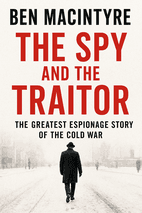
Ben Macintyre's The Spy and the Traitor details the true story of KGB officer Oleg Gordievsky, who spied for Britain and escaped a dramatic exfiltration. It's for readers fascinated by Cold War espionage and the human stories that shaped history.
Feature
Insta.Page
Blinkist
Shortform
Summary Depth
Full Chapter-by-Chapter
15-min overview
Section-by-section guides
Audio Narration
✓
✓
✓
Visual Mindmaps
✓
✕
✕
AI Q&A
✓
✕
✕
Quizzes
✓
✕
✕
PDF Downloads
✓
✕
✓
Price
$89.99/yr
$146/yr (PRO)
$199/yr
*Competitor data last verified July 2026.
1 Page Summary
The Spy and the Traitor by Ben Macintyre is the gripping true story of Oleg Gordievsky, a high-ranking KGB officer who became one of the Cold War's most valuable Western intelligence assets. The book details Gordievsky's ideological disillusionment with the Soviet Union's oppressive regime, which led him to begin spying for the British Secret Intelligence Service (MI6) in 1974. For over a decade, he provided a stream of priceless intelligence from the heart of the KGB's London station, including crucial insights into Soviet leadership paranoia and NATO war plans, fundamentally altering the West's understanding of its adversary.
The narrative's climax centers on one of the most dramatic exfiltrations in espionage history. In 1985, Gordievsky was abruptly recalled to Moscow under suspicion of being a mole, a crisis likely triggered by the betrayal of CIA officer Aldrich Ames. The book meticulously reconstructs the incredibly tense and dangerous MI6 operation to smuggle him out of the Soviet Union, using a pre-arranged escape plan that involved evading relentless KGB surveillance. This successful exfiltration was a monumental intelligence victory for Britain and a devastating, humiliating blow to the KGB.
The book's lasting impact lies in its profound illustration of how human conviction can shape history. Gordievsky's intelligence did more than just win spy games; it provided Western leaders, particularly Margaret Thatcher and Ronald Reagan, with the confidence to pursue a more assertive strategy against the Soviet Union without triggering a nuclear war. By revealing the regime's internal weaknesses and genuine fears, his espionage helped shorten the Cold War and usher in its peaceful conclusion, cementing his legacy as a pivotal, if controversial, figure of the 20th century.
Introduction: May 18, 1985
Overview
The chapter opens on May 18, 1985, with the KGB's Directorate K conducting a covert operation to bug the Moscow apartment of Colonel Oleg Gordievsky, a high-ranking KGB officer who is secretly a British spy. As Gordievsky returns from London, where he has just been promoted to lead the KGB station, he grapples with the immense risk of his double life. The narrative builds tension as he arrives in Moscow, noticing subtle signs of surveillance, and culminates in his chilling discovery that his home has been compromised, signaling that he is under suspicion and his cover may be blown.
The Covert Bugging Operation
In a swift and meticulous hour-long operation, KGB technicians break into Gordievsky's eighth-floor flat on Leninsky Prospekt. They implant hidden microphones, video cameras in light fixtures, and even sprinkle radioactive dust on his clothing to track his movements. This routine counterintelligence effort leaves no corner of the apartment unmonitored, setting the stage for a high-stakes cat-and-mouse game.
Gordievsky's Dual Identity and Career
Oleg Gordievsky stands at the peak of his KGB career, having risen through the ranks with an impeccable record. Unbeknownst to his wife and colleagues, he has been working for MI6 under the code name NOCTON for over a decade, providing critical intelligence that shaped Cold War dynamics. His promotion to London rezident offered MI6 unprecedented access to Soviet secrets, but the sudden summons to Moscow raised alarms among his handlers, who feared a trap.
The Critical Decision and Escape Plan
Faced with the choice to defect or return, Gordievsky opts to go back to Moscow, despite MI6's concerns. He and his team review the emergency escape plan, code-named PIMLICO—a risky, untested exfiltration strategy meant as a last resort. This decision underscores his bravery and the precarious balance between gaining invaluable intelligence and facing potential capture.
Arrival and Mounting Suspicion
Upon landing at Sheremetyevo airport, Gordievsky's anxiety heightens as he encounters delayed passport checks and absent greetings—subtle indicators of heightened KGB scrutiny. His internal monologue reveals a spy hyper-aware of his surroundings, trying to rationalize the signs of danger while clinging to the hope that his cover remains intact.
The Revealing Discovery
The tension peaks when Gordievsky attempts to enter his apartment and finds the third lock engaged—a lock he never uses. This small detail confirms his worst fears: the KGB has searched and bugged his home, indicating he is under active surveillance. The moment crystallizes the betrayal and the imminent threat to his life, leaving him paralyzed with the realization that his double life may be unraveling.
Key Takeaways
The chapter highlights the intense psychological and physical risks faced by double agents during the Cold War, where trust is fragile and betrayal lurks in everyday details.
Gordievsky's story underscores how espionage operations could sway global politics, with his intelligence directly influencing Western strategies and leadership decisions.
It emphasizes the meticulous planning involved in spycraft, from bugging techniques to emergency protocols, while showcasing the human element of fear and resolve in high-stakes scenarios.
Key concepts: Introduction: May 18, 1985
1. Introduction: May 18, 1985
KGB Surveillance Operation
Directorate K conducts covert bugging of Gordievsky's Moscow apartment
Technicians implant microphones, video cameras, and radioactive dust tracking
Hour-long operation leaves no corner of the apartment unmonitored
Routine counterintelligence effort sets stage for cat-and-mouse game
Gordievsky's Double Life
High-ranking KGB officer secretly working for MI6 as NOCTON
Over a decade of providing critical Cold War intelligence
Recent promotion to London rezident gave MI6 unprecedented Soviet access
Wife and colleagues unaware of his true allegiance
Critical Decision and Escape Protocol
Chooses to return to Moscow despite MI6's concerns about a trap
Emergency escape plan PIMLICO reviewed as last-resort option
Decision highlights balance between intelligence value and personal safety
Arrival and Surveillance Indicators
Delayed passport checks and absent greetings at Sheremetyevo airport
Hyper-awareness of surroundings and subtle KGB scrutiny signs
Internal rationalization of danger signals while hoping cover remains
Growing anxiety about potential exposure
Discovery of Compromise
Third lock engaged on apartment door - a lock he never uses
Confirms KGB has searched and bugged his home
Realization of active surveillance and imminent threat
Moment crystallizes betrayal and potential unraveling of double life
Espionage Context and Impact
Intense psychological and physical risks of Cold War double agents
Gordievsky's intelligence directly influenced Western strategies
Meticulous spycraft planning from bugging to emergency protocols
Human element of fear and resolve in high-stakes scenarios
💡 Try clicking the AI chat button to ask questions about this book!
Chapter 1: The KGB
Overview
Oleg Gordievsky’s story begins in a world where loyalty to the KGB was a family tradition, shaping his earliest years in a closed community of spies. His father, Anton, a career intelligence officer who had served in Stalin’s brutal NKVD, embodied the regime’s harsh realities, while his mother privately harbored resentments, teaching Oleg the art of living a double life from childhood. Growing up in wartime Moscow, he absorbed Communist ideology at school but secretly indulged in forbidden Western media like British Ally, catching glimpses of a truth beyond Soviet propaganda. This duality deepened during his university years, where hopeful discussions of reform were crushed by events like the 1956 invasion of Hungary, fueling his growing disillusionment.
His path into espionage began with a translator posting in East Berlin, where he witnessed the Berlin Wall’s brutal rise and carried out his first KGB tasks, blending excitement with moral unease. Upon returning to Moscow, he was formally recruited in 1962, despite his mother’s opposition, rationalizing that foreign intelligence might be less tainted—a decision underscored by friendships with skeptics like Standa Kaplan. Oleg’s training at the elite School 101 honed his skills in dry-cleaning and spycraft, from brush contacts to dead-letter drops, preparing him for a life of secrecy. However, his first assignment at the Center was a bureaucratic letdown, miring him in crafting false identities for illegal agents instead of the fieldwork he craved.
Inside the KGB’s headquarters, he encountered disillusioned legends like Konon Molody and Kim Philby, whose faded glory revealed the grim aftermath of a spy’s career. To escape this desk-bound role, Oleg strategically married Yelena Akopian, viewing the union as a ticket to an overseas posting rather than a romance. His persistence paid off with a long-awaited assignment to Denmark, placing him on the front lines of Cold War intelligence and fulfilling his ambition to engage directly with the West, all while carrying the weight of his family’s legacy and his own simmering doubts about the system he served.
Family Roots in the KGB
Oleg Gordievsky was born into a family deeply embedded in the KGB, with his father, Anton Gordievsky, serving as a lifelong intelligence officer who wore his uniform even on weekends. The family lived in a designated apartment block for spies, enjoyed special food rations, and socialized exclusively within the spy community. Anton’s career began in the NKVD, Stalin’s secret police, where he participated in enforcing policies that led to atrocities like the 1932 Kazakh famine, which killed 1.5 million people. During the Great Purge of 1936–1938, Anton helped identify “enemies of the state,” while the family endured nightly raids in their building. Oleg’s mother, Olga, harbored silent resentment toward the regime, having seen her own family suffer under Communist policies, but she kept her dissent hidden. This environment of outward conformity and inner deception shaped Oleg’s early understanding of living a double life.
Childhood in a World of Secrets
Growing up in wartime Moscow, Oleg’s earliest memories included watching German prisoners paraded through the streets. He absorbed Communist ideology at School 130, excelling in history and languages, and joined the Komsomol youth league as expected. Despite the state’s atheism, his grandmother secretly had his older brother baptized, revealing the family’s hidden layers. Oleg developed a fascination with the West through censored materials like British Ally and covertly listened to BBC broadcasts, catching “the first faint scent of truth.” The family’s facade of loyalty masked deep-seated fears and private doubts, teaching Oleg to compartmentalize his thoughts and emotions from a young age.
University Years and Growing Disillusionment
Enrolling at the Moscow State Institute of International Relations during the “Khrushchev Thaw,” Oleg engaged in hopeful discussions about reforming socialism. However, a naive speech defending freedom led to warnings from peers, highlighting the limits of dissent. The 1956 Soviet invasion of Hungary crushed his optimism, as news of the crackdown filtered through censorship. At the institute, he studied Swedish on his brother’s advice, gaining access to redacted foreign periodicals that offered glimpses of the outside world. While still a committed Communist, Oleg’s disillusionment grew, fueled by friendships with skeptical students like Standa Kaplan, a Czechoslovakian who openly criticized the system.
First Encounters with Espionage
Oleg’s path into the KGB began subtly when his brother Vasili, already an “illegal” spy, recommended him to Directorate S. In 1961, Oleg accepted a translator posting in East Berlin, arriving just as the Berlin Wall was erected. Shocked by the brutal division, he nonetheless carried out his first KGB task—contacting a German informant—later realizing it was a test of his loyalty. During a visit with Vasili, he concealed his horror at the wall and was moved by cultural experiences like Bach’s Christmas Oratorio, which contrasted sharply with Russia’s “spiritual desert.” This period solidified his interest in intelligence work, blending excitement with unease.
The Recruitment and Family Tensions
Upon returning to Moscow, Oleg was formally recruited into the KGB on July 31, 1962, drawn by the promise of foreign travel, secrecy, and privilege. His mother openly opposed his decision, arguing against the oppressive system, while his father remained silent, perhaps burdened by guilt over past crimes. Oleg rationalized joining the foreign intelligence wing as less morally compromising. In his final summer as a civilian, he bonded with Standa Kaplan, who later requested a copy of Yevtushenko’s anti-Stalin poem, signaling their shared ideological doubts. This friendship underscored Oleg’s growing inner conflict as he stepped into a career built on the very system he was beginning to question.
Spycraft Training at School 101
The KGB's elite training academy, codenamed School 101, served as the crucible where Gordievsky and 120 other recruits were initiated into Soviet intelligence. The curriculum was exhaustive, covering espionage fundamentals like intelligence gathering, recruiting spies, and unarmed combat. A central focus was "dry-cleaning" (proverka), the art of detecting and evading surveillance without appearing to do so deliberately. Instructors emphasized that an officer who was obviously "surveillance aware" would only provoke a more determined and covert tail from the enemy.
Gordievsky excelled in the grueling, competitive exercises where students had to complete tasks like making secret contacts or exchanging items while being monitored by the KGB's professional Seventh Directorate watchers. He mastered essential spy techniques: establishing "signal sites" (secret signs like chalk marks), executing "brush contacts" (surreptitiously passing items), and organizing "dead-letter drops" (leaving messages in hidden locations). His training also extended to codes, ciphers, secret writing, microdots, and political indoctrination to reinforce Marxist-Leninist ideology, which one fellow student described as "ritual incantations" of loyalty.
Life Inside "The Center"
After training, Gordievsky's hopes for an undercover overseas post were dashed when he was assigned to Directorate S at KGB headquarters in Moscow—known as "the Center" or "the Monastery." Instead of thrilling fieldwork, he became a "galley slave," meticulously crafting false identities for "illegal" agents. His work in the German section involved inventing complete life stories and forged documentation for spies destined for countries like Britain, which was considered ideal due to its lack of identity cards.
The Center was a paradoxical environment: a ruthless, amoral bureaucracy where international crimes were planned with fastidious detail, yet it was also prissy and puritanical. Officers were forbidden from drinking during work hours (though heavy drinking was common otherwise), and the KGB maintained an intrusive interest in employees' private lives, believing a married officer with a family left behind was less likely to defect.
Encounters with Espionage Legends
Within the corridors of Directorate S, Gordievsky met living legends of Soviet espionage, whose postwar realities starkly contrasted with their heroic myths. He was introduced to:
Konon Molody (Gordon Lonsdale), the mastermind behind the Portland spy ring in Britain, who had recently been swapped in a spy exchange and was descending into alcoholism.
Vilyam Fisher (Rudolf Abel), a famed illegal who spied in the US and was exchanged for U-2 pilot Gary Powers, now a disillusioned figure.
Kim Philby, the high-ranking MI6 officer who defected to Moscow, now living a melancholic existence, clinging to English comforts while drinking heavily and occasionally assisting the KGB.
These encounters revealed the grim aftermath of a spy's career; Molody died under mysterious circumstances, Fisher became deeply disenchanted, and Philby attempted suicide.
A Marriage of Ambition
Frustrated by his desk-bound role and recognizing that the KGB rarely sent unmarried men abroad, Gordievsky deliberately sought a wife to expedite his overseas posting. He married Yelena Akopian, a German teacher, in a union both recognized as a practical arrangement rather than a romantic one. He saw her as a ticket to a foreign assignment, while she viewed him as her passport out of a cramped Moscow life. Their engagement and marriage were conducted with little self-examination, founded on shared ambition rather than deep affection.
The Longed-for Break
In late 1965, Gordievsky's patience and strategic marriage paid off. He was offered a post in Denmark, where his cover would be a consular official handling visas, while his real work would be running the "Line N" network of illegals. He accepted immediately with delight, echoing Kim Philby's sentiment about eagerly joining an elite force. This assignment finally offered the adventure and direct engagement with the West that his bureaucratic role in Moscow had denied him.
Key Takeaways
The KGB's training was intensely practical, with a major emphasis on the psychologically demanding art of evading surveillance without detection.
Gordievsky's first assignment was a profound disappointment, miring him in the bureaucratic paperwork of creating false identities rather than the fieldwork he desired.
The celebrated legends of Soviet espionage often faced bleak, disillusioned lives after their operational careers ended, highlighting a stark contrast between KGB mythology and reality.
The KGB was a hypocritical institution—simultaneously ruthless in its global operations and priggishly moralistic in controlling the personal lives of its officers.
Gordievsky's marriage was a strategic career move, calculated to improve his chances of receiving a coveted foreign posting.
His persistence was ultimately rewarded with an assignment to Denmark, placing him on the front lines of Cold War intelligence operations.
Key concepts: Chapter 1: The KGB
2. Chapter 1: The KGB
Family Roots in Soviet Intelligence
Father Anton served in NKVD and KGB, participated in Stalin-era atrocities
Family lived in exclusive spy community with special privileges
Mother Olga harbored secret resentment against the regime
Environment taught Oleg early lessons in living a double life
Childhood Formation and Early Duality
Grew up in wartime Moscow absorbing Communist ideology
Secretly consumed forbidden Western media like British Ally
Grandmother arranged secret baptism despite state atheism
Learned to compartmentalize public loyalty and private doubts
University Years and Ideological Crisis
Studied at Moscow State Institute during Khrushchev Thaw
Studied Swedish to access censored foreign materials
Friendship with skeptic Standa Kaplan deepened disillusionment
Entry into KGB and Early Espionage
Brother Vasili recommended him to Directorate S
First posting to East Berlin during Berlin Wall construction
Initial KGB tasks tested loyalty while causing moral unease
Cultural experiences highlighted contrast with Soviet reality
KGB Training and Career Development
Formal recruitment in 1962 despite mother's opposition
Trained at elite School 101 in spycraft techniques
First assignment at The Center involved bureaucratic work
Strategic marriage to secure overseas posting to Denmark
Spycraft Training at School 101
Intensive curriculum covering espionage fundamentals including intelligence gathering, recruitment, and unarmed combat
Mastery of 'dry-cleaning' techniques to detect and evade surveillance without appearing surveillance-aware
Excelled in competitive exercises monitored by Seventh Directorate professionals
Learned essential spy techniques: signal sites, brush contacts, and dead-letter drops
Training included codes, ciphers, secret writing, and mandatory political indoctrination
Bureaucratic Reality at The Center
Assigned to Directorate S creating false identities for 'illegal' agents instead of overseas fieldwork
Work involved meticulously crafting complete life stories and forged documentation
Paradoxical environment: ruthless international operations combined with puritanical internal controls
Heavy drinking culture despite official prohibition during work hours
Intrusive monitoring of personal lives, believing married officers were less likely to defect
Disillusioning Encounters with Espionage Legends
Konon Molody (Gordon Lonsdale): Portland spy ring mastermind descending into alcoholism
Vilyam Fisher (Rudolf Abel): Famed US illegal now deeply disenchanted after spy exchange
Kim Philby: Defected MI6 officer living melancholic existence with heavy drinking and suicide attempt
Stark contrast between heroic spy mythology and grim postwar realities
Revealed the psychological toll and disillusionment of long-term espionage careers
Strategic Marriage for Career Advancement
Deliberately sought marriage to improve chances of foreign posting
Married Yelena Akopian in practical arrangement rather than romantic union
Mutual recognition of marriage as transactional: his ticket abroad, her escape from Moscow
Conducted with minimal self-examination, founded on shared ambition
Reflected KGB's preference for sending married officers overseas
Breakthrough Foreign Assignment
After three years, offered Denmark posting as consular official handling visas
Real work involved running 'Line N' network of illegal agents
Immediate acceptance with delight, echoing Philby's enthusiasm for elite service
Assignment provided direct engagement with the West denied in Moscow bureaucracy
Strategic patience and calculated marriage ultimately paid off with coveted foreign posting
Chapter 2: Uncle Gormsson
Overview
Arriving in Copenhagen in 1966, Oleg Gordievsky was immediately captivated by the city's cleanliness, wealth, and cultural vibrancy, which starkly contrasted with the drabness of Soviet life. This exposure to Western freedoms sparked early doubts about the system he served. At the Soviet embassy, he discovered it was largely a front for KGB operations, where colleagues often engaged in corruption and laziness. Determined to excel, he balanced consular duties with spy work, managing dead drops and pioneering identity forgeries by tampering with Danish church records. His recruitment efforts, under the alias "Gornov," included handling informants like a schoolteacher couple, while forming a key alliance with Mikhail Lyubimov, a charismatic KGB officer who shared his cultural interests and skepticism of Soviet rigidity.
Personally, Gordievsky embraced Danish liberties, exploring everything from sports to the red-light district, where he openly displayed homosexual porn magazines as a symbol of freedom—a move that later drew unwanted attention. His marriage to Yelena frayed over disagreements about children and domestic roles, with her secret abortion fueling his resentment. This personal turmoil coincided with the political upheaval of the Prague Spring in 1968, which he saw as a hopeful reform movement. The Soviet invasion crushed those hopes, deepening his disillusionment, especially since his brother Vasili was involved in KGB operations to sabotage the Czech reforms.
Under surveillance by the Danish Security and Intelligence Service (PET), code-named "Uncle Gormsson," Gordievsky grew cautious after his apartment was bugged. In a bold move, he deliberately condemned the invasion in a call to Yelena, hoping PET would intercept it as a signal of his dissent, but it went unnoticed. As his tour ended, Moscow restricted his activities due to PET's interest, and a failed honeytrap attempt over the gay porn incident highlighted the ongoing espionage games. Returning to the Soviet Union in 1970, he found it even more oppressive under Brezhnev, with his work in Directorate S feeling stagnant and his marriage reduced to a silent coexistence. His loneliness and cultural withdrawal led him to half-heartedly learn French, while applying for Western postings was thwarted by his prior identification.
Meanwhile, in London, MI6 officer Geoffrey Guscott reviewed the DANICEK file from a defector, which highlighted Gordievsky as a "thinking man" with signs of political disillusionment. Guscott cross-referenced this with Danish reports, noting Gordievsky's elusive nature, troubled marriage, and the gay pornography incident, leading him to code-name Gordievsky SUNBEAM and flag him as a potential recruit. The espionage landscape shifted with Operation FOOT in 1971, when Britain expelled 105 Soviet intelligence officers, causing chaos within the KGB and leading to leadership changes. This upheaval, combined with the tragic death of Gordievsky's brother Vasili, provided the "moral lever" he needed to secure a new posting back to Copenhagen. Danish intelligence and MI6, aware of his return, prepared to monitor him closely, speculating that his hidden vulnerabilities—such as the unresolved sexuality questions—made him ripe for approach, setting the stage for a pivotal moment in Cold War espionage.
Gordievsky and his wife Yelena arrived in Copenhagen in January 1966, stepping into a world that felt like a vibrant contrast to Soviet life. The city’s cleanliness, wealth, and cultural offerings—from well-stocked libraries to classical music concerts—left a profound impression. He was struck by the abundance of goods, the lack of visible police, and the general sense of freedom, which made him question why ordinary Soviets were barred from such experiences.
Soviet Embassy and KGB Operations
The Soviet embassy in Copenhagen housed mostly KGB and GRU personnel, with only a handful of genuine diplomats. Gordievsky observed that many colleagues were lazy or corrupt, often fabricating reports and embezzling funds. Determined to stand out, he learned Danish and balanced his consular duties with spy work, which involved managing dead drops and signal sites for illegals. These tasks sometimes led to comical misunderstandings, like debating the meaning of a ginger beer bottle cap left as a signal. He also pioneered efforts to forge identities by tampering with Danish church registers, creating fictional citizens through burglaries and forgeries.
Recruitment and Alliances
Under the alias "Gornov," Gordievsky focused on recruiting informants, such as a schoolteacher couple who acted as a "live letterbox." He grew wary of a Danish policeman he befriended, suspecting mutual manipulation. His work gained a new dimension with the arrival of Mikhail Lyubimov, a charismatic KGB officer with a deep affection for British culture. Lyubimov became a mentor, appreciating Gordievsky’s intellect and cultural interests, and their bond strengthened over shared skepticism toward Soviet rigidity.
Personal Transformation and Marital Strain
Gordievsky embraced Danish liberties, exploring everything from badminton to the red-light district, where he bought homosexual porn magazines out of curiosity. He displayed them openly as a symbol of freedom, unaware this would draw attention. His marriage to Yelena deteriorated over disagreements about children and domestic roles; she had secretly aborted a pregnancy, fueling his resentment. He channeled his frustration into long runs, while his cultural and political horizons expanded.
The Prague Spring and Family Divisions
The 1968 reforms in Czechoslovakia captivated Gordievsky, who saw them as a beacon of hope. He and Lyubimov bet against a Soviet invasion, but were horrified when tanks rolled in that August. The crushing of the Prague Spring deepened Gordievsky’s disillusionment with the Soviet regime. Unbeknownst to him, his brother Vasili was involved in KGB operations to sabotage the Czech reforms, including failed kidnapping plots and fabricating evidence of counterrevolution.
Surveillance and a Missed Signal
The Danish Security and Intelligence Service (PET) monitored Gordievsky closely, code-naming him "Uncle Gormsson." After PET bugged his apartment—detected by a broken glue seal—he became cautious. In a calculated move, he called Yelena to vehemently condemn the invasion of Czechoslovakia, hoping PET would intercept it as a signal of his dissent. However, this gesture went unnoticed by Western intelligence.
Winding Down in Copenhagen
As his tour ended, Moscow restricted his operations due to PET’s interest. Gordievsky spent his final months compiling a KGB manual on Denmark, while grappling with his future. A failed honeytrap by PET, attempting to exploit his alleged interest in gay porn, revealed the ongoing cat-and-mouse game. He left Denmark with a simmering anger toward the Soviet system, poised at a personal and professional crossroads.
Gordievsky's Disillusionment in Moscow
Oleg Gordievsky's return to the Soviet Union in January 1970 plunged him into a world that felt even more grim and oppressive than the one he had left. The Brezhnev era had smothered the country in a blanket of conformity, where queues, grime, and pervasive fear were the norm. He was repelled by the shabbiness of everything—the propaganda blaring from loudspeakers, the rude officials, and the constant surveillance. The "totalitarian cacophony" of patriotic music felt like a daily assault, contrasting sharply with the vibrant life he had experienced in Denmark. Assigned back to Directorate S, his work preparing identities for illegals felt stagnant, and his marriage to Yelena had devolved into a silent "working relationship" in their dreary Moscow flat. Despite a promotion, he felt trapped, applying to learn English in hopes of a Western posting, only to be rebuffed due to his prior identification by Danish intelligence. Sinking into loneliness and cultural withdrawal, he began learning French half-heartedly, with Morocco as a vague possibility.
Geoffrey Guscott and the DANICEK File
Meanwhile, in London, a young MI6 officer named Geoffrey Guscott was reviewing a defector's file that would eventually cast a spotlight on Gordievsky. Guscott, a sharp, multilingual intelligence officer with a working-class background, was no James Bond—more of a cerebral, dogged analyst. He had cut his teeth running spies in Czechoslovakia during the Prague Spring and was now sifting through the DANICEK dossier on Stanislaw Kaplan, a Czech intelligence officer who had defected to the West. Kaplan's file contained over a hundred names, but one stood out: Oleg Gordievsky, described as a "thinking man" with "clear signs of political disillusionment." Guscott cross-referenced this with Danish intelligence reports, which painted Gordievsky as an elusive KGB officer linked to illegals support, with a troubled marriage and a bizarre incident involving gay pornography that had led to a failed blackmail attempt. Guscott flagged Gordievsky as a "person of interest" with the code name SUNBEAM, noting that if this freethinking KGB officer ever resurfaced in the West, he might be ripe for approach.
Operation FOOT and KGB Upheaval
The espionage landscape shifted dramatically with Operation FOOT in September 1971, when Britain expelled 105 Soviet intelligence officers—the largest spy expulsion in history. Triggered by the defection of Oleg Lyalin, a KGB sabotage expert who revealed plans to flood the London Underground and assassinate British figures, the operation decimated the KGB's presence in the UK. This sent shockwaves through the KGB's First Chief Directorate, leading to the sacking of the head of the British-Scandinavian section and his replacement by Dmitri Yakushin, the "Gray Cardinal." A loud, cultured, and committed Communist, Yakushin's first interaction with Gordievsky was a thunderous reprimand for spreading news of Danish expulsions, but it soon turned into an opportunity. Impressed by Gordievsky's language skills, Yakushin offered him a role in rebuilding the Copenhagen station, though initial resistance from Directorate S stalled the move.
A Brother's Death and a New Posting
Gordievsky's path out of Moscow was unexpectedly paved by tragedy when his older brother Vasili, a decorated KGB illegal, drank himself to death. The funeral, attended by KGB dignitaries, elevated Oleg's status within the agency, giving him the "moral lever" to press for a transfer. With Directorate S reluctantly releasing him, the Soviets applied for a Danish visa, listing him as a second secretary at the embassy while he actually served as a political-intelligence officer. Danish intelligence, aware of his KGB ties, decided to allow his return and monitor him closely, informing MI6. The unresolved question of his sexuality—stemming from the earlier gay pornography incident—led MI6 to speculate that Gordievsky had hidden the approach from his bosses, making him potentially vulnerable. As MI6 and PET prepared to welcome him back, the stage was set for a renewed effort to recruit him.
Key Takeaways
Gordievsky's deepening disillusionment with Soviet life made him psychologically primed for recruitment by Western intelligence.
Geoffrey Guscott's identification of Gordievsky through defector intelligence highlighted MI6's methodical approach to spotting potential assets.
Operation FOOT's mass expulsion created organizational chaos within the KGB, inadvertently opening doors for Gordievsky's return to the West.
Personal tragedy, combined with bureaucratic maneuvering, played a crucial role in advancing Gordievsky's career and positioning him for future espionage.
Key concepts: Chapter 2: Uncle Gormsson
3. Chapter 2: Uncle Gormsson
Initial Copenhagen Experience and Cultural Shock
Arrival in 1966 revealed stark contrast between Western abundance and Soviet drabness
Captivated by city's cleanliness, wealth, and cultural vibrancy
Exposure to Western freedoms sparked early doubts about Soviet system
Struck by abundance of goods and lack of visible police control
KGB Operations at Soviet Embassy
Embassy primarily functioned as front for KGB operations with few genuine diplomats
Colleagues often engaged in corruption, laziness, and fabricated reports
Balanced consular duties with spy work including dead drops and signal sites
Pioneered identity forgeries by tampering with Danish church records
Recruitment Activities and Key Alliance
Operated under alias 'Gornov' to recruit informants like schoolteacher couple
Managed 'live letterbox' operations while growing wary of mutual manipulation
Formed crucial alliance with Mikhail Lyubimov, charismatic KGB officer
Bond strengthened over shared cultural interests and skepticism of Soviet rigidity
Personal Liberation and Marital Breakdown
Embraced Danish liberties including sports and red-light district exploration
Openly displayed homosexual porn magazines as symbolic act of freedom
Marriage frayed over disagreements about children and domestic roles
Yelena's secret abortion fueled resentment and emotional distance
Political Disillusionment and Prague Spring Impact
Saw Prague Spring in 1968 as hopeful reform movement
Soviet invasion crushed hopes and deepened political disillusionment
Brother Vasili involved in KGB operations to sabotage Czech reforms
Personal and political disillusionment became increasingly intertwined
Surveillance and Deliberate Dissent Signals
Code-named 'Uncle Gormsson' by Danish Security and Intelligence Service (PET)
Grew cautious after apartment bugging by Danish intelligence
Deliberately condemned Soviet invasion in intercepted call as dissent signal
Failed honeytrap attempt over gay porn incident highlighted espionage games
Return to Soviet Union and Stagnation
Found Soviet Union more oppressive under Brezhnev upon 1970 return
Work in Directorate S felt stagnant and unfulfilling
Marriage reduced to silent coexistence amid cultural withdrawal
Western posting applications thwarted due to prior identification
MI6 Interest and Recruitment Assessment
Geoffrey Guscott reviewed DANICEK file identifying Gordievsky as 'thinking man'
Cross-referenced Danish reports noting political disillusionment and troubled marriage
Code-named SUNBEAM and flagged as potential recruit
Operation FOOT expulsions created KGB chaos and leadership changes
Path Back to Copenhagen and Intelligence Preparation
Brother Vasili's death provided 'moral lever' for new posting
Danish intelligence and MI6 prepared to monitor his return closely
Hidden vulnerabilities including sexuality questions made him ripe for approach
Set stage for pivotal moment in Cold War espionage
Gordievsky's Disillusionment in Moscow
Returned to grim Soviet reality under Brezhnev era with queues, grime, and pervasive fear
Repelled by shabbiness, propaganda, and 'totalitarian cacophony' of patriotic music
Stagnant work in Directorate S preparing identities for illegals
Marriage to Yelena devolved into silent 'working relationship'
Rebuffed for English training due to prior identification by Danish intelligence
Geoffrey Guscott and the DANICEK File
MI6 officer Geoffrey Guscott identified as cerebral, multilingual analyst from working-class background
Reviewed defector Stanislaw Kaplan's DANICEK dossier containing over 100 names
Gordievsky stood out as 'thinking man' with 'clear signs of political disillusionment'
Cross-referenced with Danish intelligence reports about KGB illegals support role
Codenamed SUNBEAM and flagged as potential recruitment target if he returned West
Operation FOOT and KGB Upheaval
Britain expelled 105 Soviet intelligence officers in largest spy expulsion in history
Triggered by defection of KGB sabotage expert Oleg Lyalin
Decimated KGB presence in UK and caused major organizational shakeup
Dmitri Yakushin appointed as new head of British-Scandinavian section
Yakushin initially reprimanded then offered Gordievsky role rebuilding Copenhagen station
A Brother's Death and a New Posting
Brother Vasili's alcohol-related death provided 'moral lever' for transfer request
Funeral attended by KGB dignitaries elevated Oleg's status within agency
Directorate S reluctantly released him for Danish posting under diplomatic cover
Danish intelligence aware of KGB ties but allowed return for monitoring
MI6 speculated unresolved sexuality questions made him potentially vulnerable to recruitment
Psychological Preparation for Recruitment
Gordievsky's growing disillusionment with Soviet political repression and economic failures
Exposure to Western living standards during Copenhagen posting created cognitive dissonance
Personal experiences with KGB brutality and hypocrisy eroded ideological commitment
Intellectual curiosity about alternative political systems beyond Soviet dogma
MI6's Targeted Identification Process
Geoffrey Guscott's systematic analysis of potential recruitment candidates
Use of defector intelligence to identify disaffected KGB officers
Assessment of Gordievsky's posting history and psychological profile
Strategic timing of approach based on career progression and personal circumstances
Organizational Chaos as Recruitment Opportunity
Operation FOOT's mass expulsion of Soviet intelligence officers created staffing gaps
KGB's internal disarray reduced security vigilance and oversight
Urgent need for experienced officers created accelerated promotion opportunities
Bureaucratic confusion enabled Gordievsky's strategic positioning for future operations
Personal and Professional Convergences
Family tragedy provided legitimate cover for career advancement requests
Bureaucratic maneuvering within KGB exploited for operational advantage
Combination of personal circumstances and organizational needs created ideal conditions
Strategic positioning in Copenhagen residency enabled future intelligence collection
Chapter 4: Green Ink and Microfilm
Overview
In the shadowy world of Cold War espionage, Richard Bromhead, MI6's charismatic head of station in Copenhagen, used his theatrical flair and sharp intellect to engage Oleg Gordievsky, a disillusioned KGB officer grappling with the Soviet regime's corruption. Gordievsky's return to Denmark marked a professional ascent, but his secret reading of banned works and sympathy for defectors like Standa Kaplan hinted at his growing ideological rift. Bromhead's subtle courtship began at social events, leading to a high-stakes "litmus test" where Kaplan's visit confirmed Gordievsky's potential willingness to cooperate. Their first official meeting at the Østerport Hotel was a tense dance of suspicion, with Gordievsky's calm demeanor leaving Bromhead uncertain of his true intentions.
An eight-month silence followed, which ironically strengthened Gordievsky's resolve, as the delay suggested MI6's seriousness rather than a KGB trap. When Bromhead reinitiated contact, he revealed his impending transfer and pressed for commitment, leading to a breakthrough where Gordievsky admitted his unsanctioned cooperation, birthing the SUNBEAM operation. MI6 debated the risks but authorized further meetings, transitioning Gordievsky to Philip Hawkins, a stern handler whose rigorous interrogations contrasted with Bromhead's warmth. Despite Gordievsky's non-negotiable conditions—no harm to colleagues, no recordings, and no pay—the Ballerup safe house was secretly bugged, straining trust but yielding vital intelligence on KGB structures and Scandinavian spies like Gunvor Haavik and Arne Treholt.
As Gordievsky's marriage to Yelena crumbled, he found emotional solace in an affair with Leila Aliyeva, adding layers of personal deception to his double life. A close call with Danish surveillance nearly exposed him, but intervention by PET's Jorn Bruun protected the operation. The arrival of Mikhail Lyubimov, a friendly KGB rezident, deepened the irony as Gordievsky betrayed his confidant while maintaining a facade of loyalty. Handler Geoffrey Guscott brought fluency and rapport, revolutionizing intelligence gathering with microfilm smuggling—a nerve-wracking process involving brush contacts and portable copying devices that delivered classified documents directly to MI6. Formal recognition came through a green-ink letter from MI6 chief Maurice Oldfield and financial deposits, cementing Gordievsky's role as a pivotal asset driven by ideology, even as he navigated the moral complexities of betraying friends and the emotional toll of his fractured personal life.
Richard Bromhead: The Unconventional Spymaster
Richard Bromhead cut a distinctive figure as MI6's head of station in Copenhagen—a charming, public school-educated Englishman who embraced his role with theatrical flair. Descended from poets and adventurers, he navigated a winding path into intelligence after stints in National Service, a failed bakery job, and a bohemian artist phase in London. His career began in Cyprus under colonial service, where an MI6 officer "recruited me" into what he fondly called "the Firm." By 1970, at forty-two, he was senior officer in Denmark, using his gregarious personality to blend into the diplomatic circuit while secretly tormenting Soviet adversaries. Bromhead partnered with PET's deputy head, Jorn Bruun, and two Danish officers nicknamed "Asterix and Obelix" for their creative harassment campaigns. One prank involved announcing a KGB officer's presence over a department store loudspeaker until the embarrassed agent was recalled to Moscow. Bromhead’s approach to espionage was deceptively casual; he masked a sharp intellect behind a facade of jollity, making him a formidable opponent for the KGB.
Gordievsky's Homecoming and Professional Ascent
Oleg Gordievsky returned to Copenhagen in October 1972 with his wife Yelena, slipping back into Danish life with ease. Promoted to political-intelligence officer, his duties shifted from running illegals to actively recruiting spies and influencing Western institutions. He sought out Danish politicians, officials, and journalists, though he found most Danes too principled for treachery. Exceptions like Gert Petersen, a Socialist leader code-named ZEUS, provided classified information while draining KGB funds on beer and schnapps. Gordievsky's new role as deputy to rezident Alfred Mogilevchik came with a promotion to major, yet internally, he grappled with deepening disillusionment. His time in Moscow had amplified his disgust with Soviet corruption, and back in Denmark, he secretly devoured banned works by Solzhenitsyn and Orwell, questioning the regime's legitimacy. News of his friend Standa Kaplan's defection to Canada left him wondering if Western intelligence had noted his own silent protest after the Prague Spring.
The Diplomatic Dance Begins
Bromhead, armed with photos of Gordievsky, found the Soviet officer stern-faced but approachable. Their first direct interaction occurred at a Copenhagen art exhibition, where Bromhead used his social skills to engage Gordievsky in a halting conversation about art, noting his "ready smile" and natural humor. Language barriers—Bromhead's rusty Russian and Gordievsky's lack of English—complicated matters, but they managed superficial exchanges at diplomatic parties. MI6, skeptical of Bromhead's subtlety, worried his "bull in a china shop" style might scare off the target. Undeterred, Bromhead hosted a party with a pretty badminton player as potential bait, but Gordievsky remained aloof. The stage was set for a more calculated approach, with MI6's Geoffrey Guscott and veteran officer Mike Stokes devising a "litmus test" using Gordievsky's old friend, the defector Standa Kaplan.
The Kaplan Gambit: A Test of Loyalty
On November 2, 1973, Kaplan's unexpected knock on Gordievsky's door triggered a cascade of fear and calculation. Gordievsky knew instantly that Kaplan—a convicted traitor—was a proxy for Western intelligence, and inviting him in risked everything. Over a tense whisky, Kaplan spun a tale of defection and life in Canada, while Yelena watched warily. The next day's lunch, monitored by Stokes from a nearby café, became a high-stakes assessment. Gordievsky carefully signaled sympathy for Kaplan's views on the Prague Spring without committing to treason, walking "on the edge of an abyss." Kaplan's debrief confirmed Gordievsky's interest and lack of alarm, prompting MI6 to escalate. Bromhead, meanwhile, endured freezing mornings staking out a badminton club where Gordievsky played with a Danish Communist student, Anna. On the third day, Bromhead confronted him mid-game, proposing a private talk. Gordievsky, calmly accepting, suggested a lunch at the Østerport Hotel—directly opposite the Soviet embassy—a move that left Bromhead questioning whether he was the hunter or the hunted.
A Game of Shadows and Suspicions
Bromhead's elation at Gordievsky's agreement was tempered by unease; the chosen venue seemed designed for KGB surveillance, hinting at a possible "dangle" where Gordievsky might be luring him into a trap. Back at the embassy, Bromhead cabled MI6 in alarm: "For God's sake, I think he’s trying to recruit me!" Unbeknownst to him, Gordievsky had already secured KGB approval for the contact, framing it as an "offensive" move sanctioned by Moscow's Gray Cardinal, Dmitri Yakushin. This clever maneuver gave Gordievsky a layer of protection, allowing him to explore MI6's intentions without immediate suspicion. Both men now stood on a precipice, each doubting the other's motives, yet drawn into a dangerous pas de deux that could end in betrayal or a historic intelligence coup.
The Initial Encounter
Richard Bromhead and Oleg Gordievsky's first official meeting took place at the @sterport Hotel, a carefully orchestrated event where both men were acutely aware of the high stakes. Bromhead positioned himself to monitor the entrance, having insisted on no PET surveillance to avoid spooking the Russian. Gordievsky arrived precisely on time, appearing relaxed and friendly, which only deepened Bromhead's suspicions. Their conversation over the Scandinavian buffet was deliberately broad, covering religion, philosophy, and music—a tactic Bromhead used to build rapport. When Bromhead asked if Gordievsky would report the meeting to the KGB, the reply—“Probably, yes, but I'll make it a very neutral one”—offered the first flicker of potential collaboration. Yet Bromhead left more confused than ever, uncertain whether he was the hunter or the prey.
A Prolonged Silence
For eight months, the case went cold with no contact between the two. This unexplained hiatus left Gordievsky initially concerned, then angry, and finally reassured—the delay suggested this wasn't a hasty KGB trap. MI6's Geoffrey Guscott later admitted this was an operational "cock-up," with Bromhead distracted by other cases. Ironically, the lapse worked in their favor, allowing Gordievsky time to reflect and solidify his willingness to engage. The pause amplified his desire to proceed, a psychological dynamic akin to romantic courtship where distance fuels commitment.
The Critical Breakthrough
Bromhead reinitiated contact at a badminton court, revealing his impending transfer to Northern Ireland and the urgency to act. Their next meeting at the SAS hotel marked a seismic shift. Bromhead dropped all pretense, directly stating MI6's knowledge of Gordievsky's KGB role in Line N and asking if he'd cooperate. Gordievsky's grinning admission that he was the PR Line deputy stunned Bromhead, who struggled to reconcile his instinctual trust with professional caution. The true turning point came when Gordievsky confirmed this meeting was unsanctioned—"No one is aware that I am meeting you"—effectively crossing the Rubicon. In that moment, SUNBEAM was born, and Gordievsky's life split into two parallel, secret existences.
MI6's Calculated Risk
Back in London, senior MI6 officers debated the authenticity of Gordievsky's offer at Fort Monckton. Concerns about a KGB provocation were weighed against the unprecedented opportunity: a serving KGB officer volunteering secrets. They concluded the risk was worth taking, authorizing further clandestine meetings. The decision underscored a key intelligence paradox—the Soviets' paranoia made them unlikely to dangle a real officer, as they feared losing control.
Handing Over the Reins
With Bromhead's departure imminent, he arranged a final safe-house meeting to introduce Gordievsky's new handler, Philip Hawkins. The transition was tense; Hawkins, a stern Scottish barrister, exuded none of Bromhead's warmth, putting Gordievsky on edge. Bromhead bid a solemn farewell, haunted by doubts that he might have led MI6 into a "heffalump trap." Despite his misgivings, the case was now in Hawkins' hands, and the espionage partnership entered its next phase.
The Psychology of Betrayal
This section delves into the complex motivations behind Gordievsky's decision to spy. Unlike ideologues like Kim Philby, Gordievsky's shift was a gradual rejection of Soviet dogma, fueled by political disillusionment (the Berlin Wall, Prague Spring) and personal factors—rebellion against his father's blind loyalty, cultural elitism, and a craving for intellectual and emotional fulfillment. The KGB's MICE framework (Money, Ideology, Coercion, Ego) only partially explains his actions; deeper drivers included a hunger for secret influence, romantic adventure, and the need for a meaningful connection with his handlers—a bond he initially found with Bromhead but feared was absent with Hawkins.
The First Encounter
Philip Hawkins, the British case officer assigned to Gordievsky, approached their initial meeting with deep skepticism. He subjected Gordievsky to a rigorous cross-examination, demanding details about the KGB station's structure and personnel. This aggressive interrogation left Gordievsky feeling unappreciated and questioning the British approach. In response, he laid out three non-negotiable conditions for his cooperation: no harm to his KGB colleagues, no secret recordings or photographs, and no financial compensation—he was motivated purely by ideology.
Hawkins was taken aback by these demands, seeing them as unorthodox for a new informant. He reluctantly agreed to convey the conditions to MI6 while establishing the operational plan. They would meet monthly in a safe flat in Ballerup, a quiet suburb chosen for its low risk of detection by Soviet or Danish surveillance. Gordievsky was provided with an emergency contact method, including secret ink and a London address for urgent messages.
Setting Up the Ballerup Safe House
The safe flat in Ballerup was a modest, Danish-furnished apartment rented jointly by British and Danish intelligence. Unbeknownst to Gordievsky, PET technicians had bugged the premises with hidden microphones and a tape recorder, directly violating his second condition. Despite this breach of trust, the meetings began, starting tense but gradually becoming more productive. Hawkins meticulously recorded and transcribed their conversations, sending reports and tapes to London via diplomatic bag.
A Relationship Built on Respect
Over time, Gordievsky and Hawkins developed a working relationship grounded in mutual professional respect rather than personal affection. Gordievsky provided exhaustive details on KGB structures, including Directorate S and its network of illegals, proving his authenticity through his precise recall and lack of probing into MI6 affairs. Hawkins' thorough preparation and questioning helped build confidence in Gordievsky's bona fides, with MI6 headquarters soon convinced he was a genuine asset.
Personal Turmoil and a New Love
Amid his double life, Gordievsky's marriage to Yelena deteriorated further, and he began an affair with Leila Aliyeva, a typist for the World Health Organization. Leila, from a KGB family herself, was charmed by Gordievsky's intellect and humor. Their secret relationship added another layer of risk, as adultery and divorce were severely frowned upon by the KGB. Gordievsky managed this personal deception alongside his espionage, finding emotional solace in Leila while maintaining a facade of normalcy in his professional and marital life.
A Close Call with Surveillance
The operation nearly unraveled when a vigilant Danish intelligence officer spotted Gordievsky's car in Ballerup and traced him to the safe flat. The officer filed a report, but Jorn Bruun, head of PET counterintelligence, intervened to quash the investigation, protecting the operation. This incident prompted Gordievsky to switch to using the underground for future meetings, heightening his awareness of the constant peril.
Uncovering Scandinavian Spies
Gordievsky's intelligence revealed the KGB's limited but significant operations in Scandinavia. He identified key agents like Gunvor Haavik in Norway, a long-time spy in the Foreign Ministry, and Arne Treholt, a rising political star compromised by the KGB. This information was carefully passed to Norwegian authorities without revealing Gordievsky as the source, illustrating the delicate balance of acting on intelligence while safeguarding the asset.
The Delicate Art of Intelligence Handling
MI6 faced the ongoing challenge of utilizing Gordievsky's high-value information without exposing him. They adopted a long-term strategy, sharing intelligence sparingly with allies through cutouts and masking its origins. The small circle of officers aware of Gordievsky ensured operational security, learning from past betrayals like the Philby case to protect their most valuable spy inside the KGB.
Lyubimov's Arrival and Deepening Friendship
Mikhail Lyubimov, Gordievsky's old friend and an Anglophile KGB officer, replaced Mogilevchik as the rezident in Copenhagen. Their bond strengthened over shared interests in literature, art, and espionage, with Lyubimov viewing Gordievsky as competent and modest, though some colleagues found him "arrogant." In hindsight, Lyubimov noted subtle red flags: Gordievsky avoided social gatherings, buried himself in dissident literature, and his wife Yelena hinted he wasn't as open as he seemed. Despite the strain in Gordievsky's marriage, Lyubimov dismissed the warnings, unaware his protégé was leading a double life.
Geoffrey Guscott: A New Case Officer
Philip Hawkins introduced Geoffrey Guscott as his replacement, an MI6 highflier who had previously identified Gordievsky as a potential asset. Guscott, fluent in Russian and a fellow long-distance runner, built an immediate rapport with Gordievsky, treating him as a valued individual rather than just a source. Operating in deep secrecy, Guscott devoted himself full-time to the SUNBEAM case, elevating its intensity and personal connection.
Microfilm Smuggling and Technical Innovation
Gordievsky declined using a miniature camera due to high risks but devised a method to smuggle microfilm strips from the KGB rezidentura. These strips, containing classified documents, were copied using a portable device developed by MI6's technical team at Hanslope Park. Brush contacts in public spots like Sankt Annee Plads allowed Gordievsky to pass microfilm to Guscott, who copied it in under 35 minutes using lightproof equipment. The process was nerve-wracking, with Gordievsky returning to the embassy sweating and shaky after each exchange.
Operational Risks and Close Calls
Each microfilm transfer carried immense danger, as Gordievsky risked exposure if caught with stolen materials outside the embassy. Guscott described the contacts as "highly charged," with one near-disaster at a railway station where a prolonged phone call almost caused a missed deadline. Despite precautions, the stress was palpable, but the intelligence flow grew exponentially, encompassing directives, code names, and even a 150-page review of Soviet strategy in Denmark.
Personal Life Under Strain
Gordievsky's marriage to Yelena deteriorated amid his frequent absences for espionage and an affair with Leila, a KGB secretary. Yelena accused him of infidelity, leading to loud arguments overheard by neighbors. To protect their careers, they maintained a facade of marriage, but the relationship turned cold. Leila provided emotional refuge, though Gordievsky struggled with the secrecy required by his double life, fearing it would undermine any chance of authentic intimacy.
Intelligence Sharing and Formal Recognition
The stolen intelligence was carefully distributed to MI5, the Foreign Office, and Danish allies, with select details reaching Prime Minister James Callaghan. Gordievsky began accepting monetary payments from MI6, deposited in a London bank, and received a personal thank-you letter from MI6 chief Maurice Oldfield, signed in green ink—a tradition symbolizing the service's highest authority. This gesture reinforced Gordievsky's value and formalized his commitment, with his heartfelt reply emphasizing his ideological motives.
Betrayal and Internal Conflict
Gordievsky's friendship with Lyubimov became a source of intelligence, as he passed on details about Lyubimov's interactions and documents. Lyubimov later realized he was being "played like a penny whistle." A risky proposal for Oldfield to personally recruit Lyubimov was vetoed over security concerns. Meanwhile, the arrest of Norwegian spy Gunvor Haavik, linked to Gordievsky's tip-off, sparked fears of exposure, though no immediate fallout occurred. Gordievsky grappled with the moral duality of his actions—honest in his espionage but deceptive in his personal relationships.
Key Takeaways
Gordievsky's espionage intensified with innovative microfilm smuggling, yielding vast intelligence while escalating personal risk.
His relationships with Lyubimov and Guscott highlighted the blend of friendship and betrayal inherent in spycraft.
Personal turmoil, including a failing marriage and a secret affair, complicated his double life, underscoring the emotional toll of loyalty and deception.
Formal recognition from MI6, through green-ink correspondence and financial support, cemented Gordievsky's role as a pivotal asset driven by ideological conviction.
Key concepts: Chapter 4: Green Ink and Microfilm
4. Chapter 4: Green Ink and Microfilm
Richard Bromhead: The Unconventional Spymaster
Charismatic MI6 head in Copenhagen with theatrical flair and sharp intellect
Unconventional career path from National Service to intelligence via colonial service
Partnered with PET's Jorn Bruun for creative anti-KGB harassment campaigns
Masked sharp intellect behind facade of jollity to torment Soviet adversaries
Gordievsky's Ideological Transformation
Returned to Copenhagen as promoted KGB major with growing disillusionment
Secretly read banned works by Solzhenitsyn and Orwell questioning Soviet legitimacy
Sympathized with defector Standa Kaplan, signaling ideological rift with regime
Grappled with moral conflict between duty and personal beliefs
The Diplomatic Courtship
Bromhead's subtle approach through social events and art exhibitions
Language barriers complicated initial interactions despite Gordievsky's natural humor
MI6 skepticism about Bromhead's 'bull in a china shop' style
Strategic planning of 'litmus test' using defector Standa Kaplan as bait
The SUNBEAM Operation Begins
Eight-month silence paradoxically strengthened Gordievsky's trust in MI6
Bromhead's transfer prompted breakthrough confession of unsanctioned cooperation
Gordievsky's non-negotiable conditions: no harm to colleagues, no recordings, no pay
Transition to handler Philip Hawkins despite secret bugging of safe house
Intelligence Harvesting and Personal Turmoil
Provided vital intelligence on KGB structures and Scandinavian spies
Marriage collapse and affair with Leila Aliyeva added layers of personal deception
Close call with Danish surveillance nearly exposed operation
Betrayal of friendly KGB rezident Mikhail Lyubimov deepened moral complexity
Microfilm Smuggling Revolution
Handler Geoffrey Guscott introduced sophisticated document smuggling system
Nerve-wracking brush contacts and portable copying devices
Delivered classified documents directly to MI6 via microfilm
Formal recognition through green-ink letter from MI6 chief Maurice Oldfield
The Initial Encounter
Meeting at Østerport Hotel with both men acutely aware of high stakes and potential surveillance
Bromhead insisted on no PET surveillance to avoid alarming Gordievsky
Conversation deliberately broad, covering religion and philosophy to build rapport
Gordievsky's admission he would report meeting to KGB but 'make it very neutral'
Bromhead left uncertain whether he was hunter or prey in the encounter
A Prolonged Silence
Eight-month unexplained hiatus with no contact between the two
Gordievsky's emotional journey from concern to anger to reassurance
MI6 later admitted operational 'cock-up' with Bromhead distracted by other cases
Ironically, the delay worked in their favor by reducing suspicion of KGB trap
Psychological dynamic similar to romantic courtship where distance fuels commitment
The Critical Breakthrough
Bromhead reinitiated contact revealing his impending transfer to Northern Ireland
Meeting at SAS hotel marked seismic shift with Bromhead dropping all pretense
Gordievsky's grinning admission he was PR Line deputy stunned Bromhead
Crucial confirmation that meeting was unsanctioned by KGB authorities
Moment marked birth of SUNBEAM and Gordievsky's split into dual secret existences
MI6's Calculated Risk
Senior officers debated authenticity at Fort Monckton security facility
Concerns about KGB provocation weighed against unprecedented opportunity
Decision to proceed underscored key intelligence paradox about Soviet operations
Soviets' paranoia made them unlikely to dangle real officer due to control fears
Risk assessment concluded potential gain outweighed operational dangers
Handing Over the Reins
Bromhead arranged final safe-house meeting for handler transition
Introduction of new handler Philip Hawkins, stern Scottish barrister
Hawkins' cold demeanor contrasted sharply with Bromhead's warmth
Bromhead's solemn farewell haunted by doubts about 'heffalump trap'
Espionage partnership entered new phase under Hawkins' management
The Psychology of Betrayal
Gradual rejection of Soviet dogma fueled by political disillusionment
Personal factors included rebellion against father's blind loyalty
KGB's MICE framework only partially explained his motivations
Deeper drivers included hunger for secret influence and romantic adventure
Craved meaningful handler connections, found with Bromhead but feared with Hawkins
Initial Conditions and Operational Setup
Gordievsky laid out three non-negotiable conditions: no harm to KGB colleagues, no secret recordings/photos, and no financial compensation
Hawkins reluctantly agreed to convey conditions while establishing monthly meetings in Ballerup safe flat
Gordievsky provided with emergency contact methods including secret ink and London address
Initial aggressive interrogation created tension, with Gordievsky questioning British approach
Ballerup Safe House Compromise
Safe flat secretly bugged by PET technicians with hidden microphones and tape recorder
Direct violation of Gordievsky's second condition about no secret recordings
Meetings started tense but gradually became more productive despite breach of trust
Hawkins meticulously recorded and transcribed conversations for diplomatic bag to London
Professional Relationship Development
Relationship built on mutual professional respect rather than personal affection
Gordievsky proved authenticity through exhaustive KGB details and precise recall
He avoided probing MI6 affairs, building confidence in his bona fides
Hawkins' thorough preparation helped convince MI6 headquarters of asset's genuineness
Personal Life Complications
Marriage to Yelena deteriorated amid double life pressures
Began affair with Leila Aliyeva, WHO typist from KGB family
Added layer of risk as adultery and divorce were severely frowned upon by KGB
Managed personal deception alongside espionage, finding emotional solace in Leila
Operational Security Challenges
Close call when Danish officer spotted Gordievsky's car in Ballerup and traced to safe flat
Jorn Bruun intervened to quash investigation, protecting the operation
Incident prompted switch to underground for future meetings
Heightened awareness of constant surveillance peril
Intelligence Revelations on Scandinavian Operations
Identified key agents like Gunvor Haavik in Norwegian Foreign Ministry
Exposed Arne Treholt as compromised rising political star
Information carefully passed to Norwegian authorities without revealing source
Illustrated delicate balance of acting on intelligence while safeguarding asset
MI6 Intelligence Handling Strategy
Adopted long-term strategy of sharing intelligence sparingly with allies
Used cutouts and masked origins to protect asset identity
Small circle of officers ensured operational security
Learned from past betrayals like Philby case to protect valuable spy
Lyubimov's Arrival and Missed Warnings
Mikhail Lyubimov replaced Mogilevchik as rezident, strengthening friendship with Gordievsky
Bonded over shared interests in literature, art, and espionage
Lyubimov noted subtle red flags: avoiding social gatherings, dissident literature interest
Yelena hinted Gordievsky wasn't as open as he seemed, but warnings were dismissed
Guscott's Leadership and Personal Connection
Geoffrey Guscott replaced Hawkins as case officer, building immediate rapport
Fluent in Russian and fellow long-distance runner created personal connection
Treated Gordievsky as valued individual rather than just source
Devoted full-time to SUNBEAM case, elevating intensity and personal commitment
Microfilm Smuggling Operations
Gordievsky declined miniature camera but devised microfilm strip smuggling method
Used portable copying device developed by MI6 technical team at Hanslope Park
Brush contacts in public spots like Sankt Annee Plads for microfilm exchanges
Guscott copied microfilm in under 35 minutes using lightproof equipment
Process was nerve-wracking, leaving Gordievsky sweating and shaky after exchanges
Operational Risks and Close Calls
Each microfilm transfer carried immense danger of exposure outside the embassy
A near-disaster occurred at a railway station where prolonged phone call almost caused missed deadline
Contacts described as 'highly charged' with palpable stress despite precautions
Intelligence flow grew exponentially to include directives, code names, and strategic reviews
Personal Life Under Strain
Marriage to Yelena deteriorated due to espionage absences and affair with KGB secretary Leila
Loud arguments about infidelity overheard by neighbors, forcing maintenance of marital facade
Leila provided emotional refuge but secrecy undermined chances for authentic intimacy
Struggled with the moral and emotional contradictions of his double life
Intelligence Sharing and Formal Recognition
Stolen intelligence carefully distributed to MI5, Foreign Office, and Danish allies
Began accepting monetary payments from MI6 deposited in London bank
Received personal thank-you letter from MI6 chief Maurice Oldfield signed in green ink
Green ink tradition symbolized service's highest authority and reinforced Gordievsky's value
Betrayal and Internal Conflict
Exploited friendship with Lyubimov for intelligence, who later realized he was being 'played'
Risky proposal for Oldfield to personally recruit Lyubimov vetoed over security concerns
Arrest of Norwegian spy Gunvor Haavik sparked exposure fears despite no immediate fallout
Grappled with moral duality - honest in espionage but deceptive in personal relationships
You've reached the end of the free chapters
Next chapter: “A Plastic Bag and a Mars Bar” is locked
Keep reading The Spy and The Traitor — and unlock all 600+ book summaries with audio, mindmaps and AI Q&A.
$0.00 due today · 7 days free, then $89.99/year ($7.49/mo) · Cancel anytime before day 7
Ben Macintyre is a British historian, author, and columnist for *The Times*, renowned for his gripping narratives on espionage and historical intrigue. His books, such as *Agent Zigzag* and *The Spy and the Traitor*, combine meticulous research with compelling storytelling, bringing real-life spy stories vividly to life for a broad audience.
📚 Explore Our Book Summary Library
Discover more insightful book summaries from our collection