As an Amazon Associate, we earn from qualifying purchases.
What is the book Your Perfect Portfolio about?
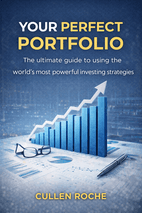
Cullen Roche's Your Perfect Portfolio presents an evidence-based framework for constructing resilient investment portfolios, guiding thoughtful individual investors through a process of matching proven global asset allocation models to their unique financial profiles and long-term goals.
Feature
Insta.Page
Blinkist
Shortform
Your Perfect Portfolio
✓
✓
✕
Summary Depth
Full Chapter-by-Chapter
15-min overview
Section-by-section guides
Audio Narration
✓
✓
✓
Full access to all 700+ summaries
✓
✓
✓
Visual Mindmaps
✓
✕
✕
AI Q&A
✓
✕
✕
Missing a book? Request it, usually live within 48h
✓
✕
✕
Quizzes
✓
✕
✕
PDF Downloads
✓
✕
✓
Send to Kindle
✓
✓
✓
Price
$89.99/yr
$146/yr (PRO)
$199/yr
*Competitor data last verified July 2026.
1 Page Summary
In "Your Perfect Portfolio: The ultimate guide to using the world's most powerful investing strategies," Cullen Roche, founder of the investment firm Orcam Financial Group, presents a pragmatic and evidence-based framework for constructing a resilient investment portfolio. The central thesis argues that there is no single "perfect" portfolio for everyone, but rather a "perfect portfolio process" that individuals can follow. This process involves understanding one's own personal financial profile—including risk tolerance, time horizon, and goals—and then selecting from a curated set of timeless, academically-supported global asset allocation models. Roche moves beyond chasing performance to emphasize durability, simplicity, and the psychological discipline required for long-term success.
Roche's approach is distinctive for its synthesis of major investing philosophies—such as those of Benjamin Graham, Harry Markowitz, and David Swensen—into a single, accessible guide. He demystifies complex strategies like the Permanent Portfolio, Global Asset Allocation, and Endowment Model, breaking them down into their core components and historical rationale. The book is not about stock-picking or market-timing; instead, it serves as a clear-eyed curator of strategic frameworks, evaluating each model's pros, cons, and appropriate use cases. This empowers readers to become informed architects of their own financial future rather than followers of fleeting trends.
The intended audience is the thoughtful individual investor seeking to cut through industry noise and build a portfolio designed to weather various economic climates. Readers will gain a robust understanding of how to match a proven investment strategy to their unique life situation. By providing the tools for self-assessment and a menu of vetted options, Roche equips investors with the confidence to implement and stick with a rational plan, ultimately aiming to reduce costly behavioral mistakes and achieve financial security over the long term.
Introduction: Does The Perfect Portfolio Exist?
Overview
The author’s financial journey began with a humbling lesson: as a college student, he managed to lose almost everything day trading futures, a stark introduction to the perils of leverage and impatience. This experience, followed by amateurish forays into value investing and a professional stint disrupted by the Great Financial Crisis, taught him that robust, long-term planning is essential. It’s from these costly mistakes that a central truth emerges: just like dieting, there’s no universally perfect portfolio—only the one that fits your unique goals, needs, and behavioral temperament, which you can stick with over time.
This personal fit starts with a mental shift: you are primarily a saver, not an investor in the economic sense. Your so-called investment portfolio is more accurately a Savings Portfolio, where you steward liquid assets for future expenses, distinct from spending on skills or education that enhance earning power. Building this portfolio requires confronting a harsh reality: you are your portfolio’s worst enemy. Our prehistoric instincts often urge us to sell in a panic, locking in losses. Winning means constructing a plan robust enough to withstand these impulses, turning market downturns into opportunities rather than threats.
Compounding this challenge is the fact that beating the market is hard. Really hard. For most, outperformance is a futile goal—after fees, nearly all active managers fail over the long run. Instead, focus on a sustainable plan that meets your personal objectives. A cornerstone of such a plan is diversification, famously called the only free lunch in finance. By mixing assets that don’t move in lockstep, you can smooth out volatility without sacrificing return, making your portfolio easier to live with.
But returns are easily eroded. The brutal math of fees shows how even small percentages can cost hundreds of thousands over decades, a drag best minimized. Equally critical is focusing on real, real returns—after inflation and taxes—because nominal gains that don’t outpace rising prices leave you running in place. This ties directly to a deeper view of risk as uncertainty of lifetime consumption. It’s not just about volatility; it’s about whether your portfolio will reliably fund your future needs. Different assets hedge different risks: cash guards principal short-term but loses to inflation, while stocks protect long-term purchasing power despite short-term swings.
Navigating this requires grappling with asset allocation as a temporal conundrum. Markets operate on long time horizons—stocks deliver returns over decades, not years—yet we crave short-term certainty. Matching your future liabilities with appropriately timed assets is key. However, the limits of history and the need for realism remind us that past data is thin; a good portfolio rests on sound principles but must adapt to an uncertain future. Set realistic expectations: wealth primarily comes from your labor, and your portfolio’s role is to preserve and grow savings, not promise get-rich-quick miracles.
All this underscores that portfolios are tools, not ends in themselves. The foundation of a financial plan must come first—clear goals and a prudent process before selecting any strategy. This means aligning investment strategy with life goals, balancing a portfolio manager’s return focus with a planner’s risk-aware, goal-oriented approach. Finally, embracing portfolio diversity offers freedom: you’re not locked into one approach. Mixing and matching strategies can create a customized blend that better suits your evolving life, ensuring your savings support your ambitions rather than dictate them.
A Personal History of Costly Lessons
The author’s financial education began in 1999 not with theory, but with a spectacular, simulated failure. As a college student, he managed to vaporize a $100,000 futures trading account down to $100 by day trading soybean and lean hog contracts—a humbling experience highlighted by his professor’s succinct “WOW” in red ink. This early lesson in the dangers of leverage and impatience led him to Warren Buffett and value investing, though his application remained amateurish. He poured his earnings into “value” tech stocks like Sirius Satellite Radio, only to learn that a stock down 75% can easily fall another 75%.
His professional career began at Merrill Lynch, but a distaste for the sales-commission model and his own impatience drove him to manage his own event-driven strategy. He successfully capitalized on the “overnight effect” for several years, posting strong returns until the Great Financial Crisis (GFC) sideswiped his approach. This macro shock was formative, revealing the critical need for a robust, long-term, all-weather portfolio strategy. The experience spurred a deep dive into macroeconomics and a pivot toward sustainable, planning-oriented portfolio construction, culminating in his widely-read 2011 paper, “Understanding the Modern Monetary System.”
The Search for a "Perfect Portfolio" is Personal
Drawing a powerful analogy, the author compares portfolio management to dieting. The core challenge isn't finding a theoretically perfect plan, but finding one you can stick with consistently. Research on fad diets shows the only diet that works is the one you remain faithful to; the same is true for portfolios. There is no single perfect portfolio for everyone. The goal is to find the portfolio that is perfect for you—one that aligns with your goals, needs, and behavioral temperament—and then maintain the discipline to stay with it long enough for it to work. This portfolio may also need to evolve over time alongside changes in both the markets and your own life.
Essential Principle #1: You Are a Saver, Not an Investor
This principle clarifies a crucial semantic and philosophical distinction. In economics, investment means spending for future production (like a company building a factory). In finance, it often means buying assets like stocks. When individuals buy stocks on a secondary market, they are not directly financing a company’s investment; they are reallocating existing savings. Therefore, what’s commonly called an “investment portfolio” is more accurately a “savings portfolio.”
This reframing is vital because “investing” carries connotations of aggression and high returns, while “saving” implies prudence and stewardship. The author introduces the “Total Portfolio” concept: your income funds consumption, and the remainder flows into this portfolio as savings. Your Savings Portfolio holds liquid financial assets for future expenses. Your Investment Portfolio (in the economic sense) is where you spend to enhance your future earning power (e.g., education, skills training). The strategies in the book are designed for building a prudent, long-term Savings Portfolio, not for get-rich-quick schemes.
Essential Principle #2: You Are Your Portfolio’s Worst Enemy
Human psychology, evolved for survival in a prehistoric world, is poorly suited for the modern financial markets. When portfolio values fall, our ingrained fight-or-flight instinct often triggers a desire to flee—to sell assets and seek safety, which typically locks in losses and sabotages long-term plans.
The key is to acknowledge these behavioral flaws in advance and construct a portfolio robust enough to withstand them, thereby “arming” yourself psychologically. Portfolio management is often a “loser’s game,” won not by making brilliant moves but by avoiding catastrophic mistakes. The author suggests adopting what he calls the “Viktor Frankl life hack”: the market doesn’t make you feel fear; you choose your reaction to it. By understanding your own weaknesses and building a behaviorally-sound portfolio, you can become the investor who “runs into the store” when assets are on sale during a panic.
Essential Principle #3: Beating the Market is Hard. Really Hard.
For most individuals, beating the market is an irrelevant and counterproductive goal. A sound financial plan focuses on meeting personal objectives, not outperforming an index. The data is stark: over 20-year periods, approximately 94% of active fund managers fail to beat their benchmark after fees.
This is explained by William Sharpe’s “Arithmetic of Active Management”: after costs, the average actively managed dollar must underperform the average passively managed dollar. The pursuit of market-beating returns usually involves higher costs, greater risk, and increased behavioral challenges. The wiser approach is to build a good, sustainable plan you can stick with, recognizing that a “suboptimal portfolio you can stick with is better than an optimal one you can't.”
Essential Principle #4: Diversification is the Only Free Lunch
Pioneered by Harry Markowitz, this principle states that by combining assets with returns that are not perfectly correlated, an investor can reduce a portfolio’s overall volatility (risk) without necessarily sacrificing long-term return. This reduction in risk "for free" is the "free lunch."
A simplified example shows two assets, each finishing with a 6% annual return but with opposing paths of monthly gains and losses. Held alone, each ride is bumpy. Held together in a portfolio, the combined return stream is a much smoother path to the same 6% outcome. Effective diversification, therefore, is a fundamental tool for constructing a more stable and behaviorally manageable savings portfolio.
The Brutal Math of Fees
John Bogle’s "Cost Matters Hypothesis" states a simple, undeniable truth: the net return you earn is the gross return of the market minus the costs of financial intermediation. High fees are a guaranteed drag on performance, and their long-term impact is staggering. An example illustrates this powerfully: over 30 years, a seemingly small difference between a 1% annual fee and a 0.5% fee on a $100,000 investment in U.S. stocks results in a $264,671 shortfall—a 14% smaller ending portfolio. The chapter reframes these abstract fees into visceral terms: imagine handing your advisor a briefcase with $10,000 in cash at each annual meeting for a $1 million portfolio. This perspective challenges whether the cost aligns with the value received, emphasizing that while some fees are necessary, those exceeding 0.5% greatly increase the odds of diminishing your returns.
Focusing on Real, Real Returns
Fees are just one part of the return-dilution equation. Taxes and the silent, persistent toll of inflation are equally—if not more—damaging. A nominal return that merely matches inflation means your purchasing power is stagnant; you are running in place. Therefore, intelligent portfolio construction must balance the risk of principal loss with the risk of purchasing power loss. Stocks offer poor short-term principal protection but strong long-term inflation protection, while cash provides the opposite. The ultimate goal is to build a portfolio that hedges against both, which is why the analysis in this book emphasizes real, after-inflation returns.
Risk as Uncertainty of Lifetime Consumption
Moving beyond textbook definitions, the chapter frames risk in a more profound, personal way: as the uncertainty of being able to pay for things throughout your life. This holistic view encompasses volatility, principal loss, and inflation risk, all of which threaten your future consumption. Different assets play specific roles in managing this uncertainty. Cash protects principal in the short term but fails against long-term inflation. Stocks protect against long-term inflation but expose you to short-term principal risk. A blended portfolio of stocks and bonds diversifies across these two spectrums—purchasing power protection and permanent loss protection—thereby increasing your overall certainty of consumption over time.
Asset Allocation is a Temporal Conundrum
Your investment time horizon is critically misunderstood. The financial industry focuses on short-term noise, but the assets themselves operate on much longer clocks. The average S&P 500 company has an 18-year lifespan, and the U.S. bond market has an average maturity of over 8 years. A five-year Treasury note is designed to pay its stated yield over its full term; you cannot force it to deliver its average return in a single year. Similarly, the stock market delivers its ~5-6% real return over decades, not years. Data shows that while the probability of a positive return in stocks over any single year is only 74%, it rises to 88% over 10-year periods. This creates a fundamental behavioral challenge: we crave short-term certainty but must commit to long-term instruments. Understanding your personal "temporal conundrum"—matching your future liabilities with appropriately timed assets—is key to choosing the right portfolio.
The Limits of History and the Need for Realism
While historical data is used to analyze portfolios, the chapter issues a strong warning: past performance is not indicative of future results. Financial datasets are "thin," covering only a handful of true economic regimes. Therefore, a good portfolio must be rooted in sound first principles and empirical support, yet flexible enough to adapt to a future that will inevitably differ from the past. This ties directly to setting realistic expectations. The stock market is not a wealth-creation engine; that primarily comes from your skills and labor. Your portfolio is for growing and preserving savings. Chasing sensationalized stories of astronomical returns leads to frustration. The final, overarching principle is to "stay the course," nurturing your own financial plan rather than constantly abandoning it for a seemingly greener pasture.
The Foundation of a Financial Plan
The selection of potential portfolios is presented with the care of choosing suitors, emphasizing that these strategies are tools to be utilized within a broader financial approach. However, it's crucial to have a clear plan and process in place before committing to any investment relationship. Asset allocation is just one component of a comprehensive financial plan, and the text encourages investors to first construct overarching goals and a prudent plan. Only then should you select strategies that align with those objectives, ensuring that your investments serve your life's ambitions rather than dictating them.
Aligning Investment Strategy with Life Goals
A nuanced conflict often arises between the perspectives of portfolio managers and financial planners. Portfolio managers typically focus on generating the highest returns relative to risk, while financial planners aim to build plans that rely on appropriate returns tailored to an investor's specific risk profile and financial needs. Blending these two worlds is described as a delicate balancing act—one that requires harmonizing the pursuit of optimal performance with the practical realities of sustaining a long-term financial plan.
Embracing Portfolio Diversity
You are not confined to choosing just one portfolio. While many presented strategies are designed as all-in-one solutions, there's significant flexibility to mix and match different approaches. The text reassures with a touch of humor that your stocks won't mind if you diversify your affections with bonds or alternative investments. This openness encourages customization, allowing investors to create a blended strategy that better fits their unique circumstances and comfort levels.
Key Takeaways
A sound financial plan and clear personal goals must precede the selection of any investment portfolio, as asset allocation is merely a piece of a larger puzzle.
Successful investing involves balancing the return-focused mindset of portfolio management with the goal-oriented, risk-aware approach of financial planning.
There is no requirement to stick to a single portfolio strategy; mixing and matching different approaches can provide a more tailored and flexible investment solution.
Key concepts: Introduction: Does The Perfect Portfolio Exist?
1. Introduction: Does The Perfect Portfolio Exist?
Personal Fit Over Perfection
No universally perfect portfolio exists
Find one that fits your goals and temperament
The key is long-term discipline and consistency
Mindset: Saver vs. Investor
You are primarily a saver, not an investor
Manage a Savings Portfolio for future expenses
Distinct from spending on skills or education
Behavioral Enemy & Robust Planning
You are your portfolio's worst enemy
Prehistoric instincts urge panic selling
Build a plan to withstand impulses
Market Realities & Core Strategy
Beating the market is extremely hard
Focus on a sustainable personal plan
Diversification is the only free lunch
Erosion of Returns
The brutal math of fees erodes wealth
Focus on real returns after inflation and taxes
Risk is uncertainty of lifetime consumption
Temporal Conundrum & Realism
Asset allocation matches long-term assets to liabilities
Past data is thin; adapt to an uncertain future
Wealth primarily comes from labor, not the portfolio
Portfolio as a Tool for Goals
Foundation is a clear financial plan first
Align investment strategy with life goals
Embrace diversity and customization of strategies
💡 Try clicking the AI chat button to ask questions about this book!
Chapter 1: The Warren Buffett Portfolio
Overview
The author's investing journey starts with a classic tale of hubris, where an early dive into Warren Buffett's letters led to a simplistic and arrogant belief that picking good, cheap stocks was the secret. This misunderstanding resulted in falling for value traps and penny stocks, but the hard lesson was that Buffett's real magic isn't in stock selection—it's in the architectural genius of his cash-flow machine and an unshakeable process.
Buffett's own strategy transformed over time. He began with the aggressive, concentrated plays of the Buffett Partnership, but the game changed with Berkshire Hathaway. After a contentious takeover, he pivoted from "cigar butt" investing to seeking wonderful businesses, supercharged by the masterstroke purchase of National Indemnity Company. This brought insurance float into the picture—a steady stream of premium dollars acting like a perpetual, interest-free loan. This unique structure became the engine for building a low-cost, cash-generating empire, blending cash flow optimization with surgical patience.
For the everyday investor, copying that machine is out of reach, but the chapter explores four avenues. The clear winner is adopting Buffett's own advice for most people: a 90/10 portfolio split between a low-cost S&P 500 index fund and U.S. Treasury bills. This straightforward approach sidesteps the folly of trying to pick stocks like Buffett and instead embraces his core public equity philosophy without the leverage he enjoys.
Digging into that 90/10 "Buffett Portfolio", historical data shows it can deliver strong long-term returns, but it's no smooth ride—volatility and deep drawdowns are part of the package. Success hinges on the discipline to dollar-cost average into equities and the mental fortitude to potentially deploy the T-bill portion as dry powder when markets panic.
This strategy presents a clear trade-off: it's volatile and won't replicate Buffett's legendary alpha, but its simplicity, cost-effectiveness, and foundation in long-term principles make it a compelling core holding. It's best suited for investors with a decades-long horizon and the temperament to ignore market noise.
Crucially, the chapter extends beyond portfolio mechanics to highlight Buffett's personal frugality, like his modest home in Omaha, which minimizes liabilities and grants him a behavioral edge. This behavioral bandwidth allows for patient, pressure-free investing. For anyone, the actionable lessons are clear: treat consistent cash flow from savings as the lifeblood of your portfolio's moat, leverage tax-advantaged accounts and legal structures to boost net returns, and ground everything in the non-negotiable virtues of patience and discipline. By demystifying Buffett's success, the chapter underscores that true wisdom lies in keeping investments simple, cheap, and steadfast—a setup that naturally leads to wondering if going all-in on stocks might be the next logical step.
A Novice's Arrogant Misunderstanding
The author's journey began with a deep, youthful dive into Warren Buffett's shareholder letters, which led to an inflated sense of his own investing potential. He initially reduced Buffett's genius to a simple mantra: find good companies at reasonable prices and hold them forever. This misunderstanding caused him to fall into classic "value traps," mistakenly equating low stock prices with intrinsic value and wasting time on penny stocks. His early investing years, coinciding with the dot-com bubble burst, tested his discipline but ultimately taught him that Buffett's true brilliance lay not in simple stock-picking, but in a sophisticated institutional structure and an unwavering process.
The Evolution of Buffett's Investment Machine
Warren Buffett's approach has evolved dramatically. It began with the aggressive, concentrated, and activist strategies of the Buffett Partnership, where a young Buffett operated more like a hedge fund manager, taking controlling stakes in companies like Dempster Mill to force turnarounds. The pivotal shift occurred with the acquisition of the struggling textile company Berkshire Hathaway. After a dispute over a buyback offer, Buffett took control, but soon realized he was sitting on a dying business. This led to his famous transition from "cigar butt" investing to seeking wonderful businesses to "marry."
The masterstroke was the 1967 purchase of National Indemnity Company. This introduced the engine of Berkshire's success: insurance float. This steady stream of premium dollars, held before claims are paid, acts like a perpetual, interest-free loan. Buffett leveraged this unique structure to build a low-cost, cash-generating machine that could continuously acquire undervalued public and private companies. His strategy combines two superpowers: building an investment infrastructure optimized for cash flow and margin of safety, and exercising extraordinary patience to insert pieces into that infrastructure at the right time.
Building Your Own Buffett-Inspired Portfolio
Given the impossibility of replicating Buffett's unique structure, the author outlines four potential ways for an individual to emulate the approach:
Build a Mini-Berkshire: Start a fund, buy an insurance company, and master both public and private equity. This is dismissed as virtually impossible for an individual.
Buy Berkshire Hathaway Stock (BRK): This is the simplest, low-cost method. However, it comes with "key man" risk due to Buffett's advanced age and the challenge of a $1 trillion company continuing its historic growth.
Replicate Buffett's Stock Picking: This is actively discouraged, as the author argues most investors should not spend time on individual stock selection.
Implement Buffett's Own Advice: A 90% allocation to an S&P 500 index fund and a 10% allocation to U.S. Treasury bills.
The chapter strongly advocates for option #4. Buffett himself has consistently recommended a low-cost S&P 500 index fund for most people. The 10% T-bill allocation is not just a safe haven; it is Buffett's version of an insurance policy, providing principal stability, certainty, and the optionality to act aggressively when others are fearful.
Analyzing the 90/10 "Buffett Portfolio"
Research, such as the paper "Buffett's Alpha," identifies the core drivers of his success as the use of cheap leverage (1.6:1) through insurance float and a focus on low-beta, high-quality, value stocks. While an individual cannot easily replicate the leverage, the 90/10 stock/T-bill portfolio captures the essential public equity philosophy.
Historically, a 90/10 portfolio has generated strong real returns of approximately 6.3% annually, but with high volatility (15.67%) and significant drawdowns, including peaks over -50%. The strategy requires discipline to dollar-cost average into the equity portion and the fortitude to potentially use the T-bill "dry powder" during market declines.
Weighing the Pros and Cons
The strategy presents a clear trade-off:
Cons:
It is a volatile portfolio that will test an investor's patience.
Replicating Berkshire's low-cost leverage is impractical, and adding leverage increases risk.
Berkshire's future returns may be muted by its enormous size.
Simply owning the S&P 500 will not match Buffett's historic alpha.
It lacks diversification into alternative asset classes.
Pros:
It emphasizes the critical importance of tax and operational efficiency in portfolio structure.
It is incredibly simple, lean, and cost-effective to implement and maintain.
The core principles are sound: long-term focus, quality, and value (which can be enhanced with factor tilts).
It is a reliable long-term return generator.
The 10% T-bill allocation provides a behavioral buffer and strategic optionality.
A Suitable Suitor?
The Buffett Portfolio, particularly the 90/10 implementation, is presented as a strong candidate for a core portfolio strategy. It is best suited for investors with a very long time horizon, the discipline to stay the course through severe volatility, and the temperament to use cash reserves opportunistically. The key takeaway is to separate the mythology of Buffett's stock-picking from the architectural genius of his cash-flow machine and the profound wisdom of his advice for the everyday investor: keep it simple, cheap, and disciplined.
The Behavioral Edge of Low Liabilities
Warren Buffett's personal financial habits are a cornerstone of his success. He lives modestly, exemplified by his long-time home in Omaha, which keeps his liabilities minimal compared to his vast income and assets. This frugality grants him a critical advantage: the ability to be aggressively patient with his investments without the pressure of needing consistent cash flow for short-term expenses. This creates what can be called behavioral bandwidth—the mental space to endure market volatility without making impulsive decisions driven by personal financial need.
Extracting Actionable Principles
The chapter concludes by distilling Buffett's approach into three fundamental lessons for any investor:
Cash Flow is Your Moat's Lifeblood: A portfolio's "moat," or margin of safety, isn't static. It is sustained and strengthened by regular, disciplined cash contributions. Optimizing your personal savings rate is how you continuously fortify your investment foundation against uncertainty.
Infrastructure as a Strategic Tool: While Buffett utilizes unique corporate structures, individual investors can leverage available tools like tax-advantaged accounts (e.g., IRAs, 401(k)s), trusts, or corporate entities to minimize taxes and fees, thereby maximizing the capital that compounds over time.
The Non-Negotiable Virtues: Ultimately, any strategy is futile without the core behaviors of patience and discipline. A successful plan must be built on long-term principles yet remain flexible enough to calmly exploit short-term market fluctuations.
The narrative naturally leads to a provocative question: if a Buffett-inspired portfolio can approach 90% stocks, why not go all the way? This curiosity sets the stage for examining the 100% Stock Portfolio as the next logical suitor for an investor's consideration.
Key Takeaways
Personal frugality creates a behavioral advantage by reducing financial pressure, allowing for more disciplined, long-term investment decisions.
Consistent cash flow from savings is essential to maintain and grow your portfolio's protective "moat."
Strategically using tax-advantaged accounts and legal structures can significantly enhance net returns by minimizing costs.
Patience and discipline are the indispensable behavioral foundations that enable any sophisticated strategy to succeed.
Key concepts: Chapter 1: The Warren Buffett Portfolio
2. Chapter 1: The Warren Buffett Portfolio
Author's Initial Misunderstanding
Reduced Buffett to simple stock-picking mantra
Fell for value traps and penny stocks
Learned Buffett's genius is in structure, not selection
Evolution of Buffett's Strategy
Began with aggressive Buffett Partnership
Pivoted from cigar butts to wonderful businesses
Masterstroke was acquiring insurance float via National Indemnity
Berkshire's Cash-Flow Engine
Insurance float acts as perpetual, interest-free loan
Creates low-cost, cash-generating machine
Enables patient acquisition of undervalued companies
The 90/10 Buffett Portfolio
90% S&P 500 index fund, 10% Treasury bills
Buffett's own advice for most individual investors
Embraces his equity philosophy without his leverage
Implementing the Strategy
Requires discipline to dollar-cost average
Use T-bills as dry powder during market panics
Demands long-term horizon and mental fortitude
Trade-Offs and Suitability
Volatile with deep drawdowns
Won't replicate Buffett's alpha
Best for investors with decades-long horizon
Behavioral and Structural Lessons
Buffett's frugality creates behavioral bandwidth
Treat consistent cash flow as portfolio's moat
Leverage tax-advantaged accounts and legal structures
Chapter 2: Why Not 100% Stocks?
Overview
The chapter examines the alluring yet perilous idea of investing a portfolio entirely in stocks. It begins by acknowledging the powerful emotions of the market cycle, where raging bull markets tempt investors to abandon diversification, while crushing bear markets make stocks seem unappealing. The text warns against this "all-in or all-out" gambling mentality, positioning the investor as a disciplined saver instead. However, it also establishes that a 100% equity allocation can be appropriate in specific, long-term segments of a financial plan, setting the stage for a deeper exploration of its mechanics, historical performance, and suitability.
The Theoretical Foundation for 100% Stocks
The strategy's viability rests on understanding stocks as long-term claims on corporate profits. The market, inefficient and emotional in the short term, acts as a "weighing machine" for corporate value over decades. By owning a diversified index fund, an investor hitches their wagon to global capitalism's engine of innovation and profit growth. Corporations are inherent inflation hedges, buying inputs and selling outputs at a markup. A broad market index fund systematically maintains exposure to this dynamic by reconstituting itself, shedding declining companies and adding growing ones, thus applying a form of fundamental momentum at low cost.
The Reality of Risk and Volatility
This long-term appreciation comes at the price of severe short-term volatility. Historical drawdown charts illustrate that regular, painful declines of 20%, 30%, or even more are the norm, not the exception. The "Ulcer Index"—a measure of portfolio stress—is exceptionally high for a 100% stock portfolio. While stocks work because they are compensated for bearing the uncertainty of corporate cash flows, this results in a dramatic and emotionally taxing ride. The chapter emphasizes that these downturns are the essential price of admission for achieving superior long-term returns.
Constructing the Portfolio
For an investor committed to this path, the chapter advises against stock-picking, reiterating the wisdom of using low-cost, diversified index funds. The simplest approach is a single global fund like VT or ACWI. For those preferring more control, the global market can be disaggregated into US (VTI), International Developed (VXUS), and Emerging Markets (VWO) components, rebalanced to global market weights. The core principle is broad diversification across thousands of companies worldwide to mitigate single-country and single-entity risk.
Performance Analysis and Academic Debate
Historically, a 100% US stock portfolio has generated high real returns (6.65% annually since 1900) alongside high volatility (17.70%) and deep drawdowns. The chapter highlights a contentious academic debate: a 2023 paper argued retirees should hold 100% global equities for trillions in "welfare gains," while critic Cliff Asness lambasted this as poor economic reasoning. The critique centers on the fallacy that everyone can be 100% invested in stocks simultaneously and ignores the role of lower-returning assets (like bonds or "insurance" products) in a rational financial plan.
Critical Drawbacks: Sequence Risk and Behavioral Tests
The most significant practical drawback is sequence-of-returns risk. This is the danger that an retiree beginning withdrawals will encounter a major bear market early in retirement, forcing them to sell depreciated assets to fund living expenses, which can permanently cripple the portfolio's longevity. A 100% stock portfolio is supremely vulnerable to this. The strategy also represents the ultimate behavioral test, requiring an investor to stay committed through devastating losses without capitulating—a feat very few can achieve.
Ideal Candidates for the Strategy
Despite its risks, a 100% stock allocation can be suitable in specific contexts:
Ultra-aggressive investors with high, stable income, which acts like a "bond" in their overall personal balance sheet, allowing for more risk in their investment portfolio.
Individuals with a very long time horizon (decades), who can truly wait out volatility.
Those with an exceptionally high psychological risk tolerance.
For targeted "asset location," such as in a young person's retirement account that won't be touched for 40+ years, where the time horizon justifies pure equity exposure.
Key Takeaways
A 100% stock portfolio offers the highest expected long-term returns by providing pure exposure to global corporate profit growth, which historically outpaces inflation.
This potential is counterbalanced by extreme volatility, deep periodic drawdowns, and severe behavioral challenges, making it unsuitable as a total portfolio strategy for most people.
Its most critical flaw is exposure to sequence-of-returns risk, which can devastate a retiree's plan if a major downturn occurs early in withdrawal phase.
The strategy can be appropriately implemented using low-cost, globally diversified index funds and may be suitable for specific, long-term segments of a portfolio (like a young person's IRA) or for investors whose entire financial picture (e.g., high human capital/income) allows for extreme risk-taking.
Key concepts: Chapter 2: Why Not 100% Stocks?
3. Chapter 2: Why Not 100% Stocks?
Theoretical Foundation for 100% Stocks
Stocks are long-term claims on corporate profits
Market acts as a 'weighing machine' over decades
Index funds provide exposure to global capitalism's growth
Corporations are inherent inflation hedges
Reality of Risk and Volatility
Severe short-term volatility is the price of admission
Regular 20-30%+ declines are historical norm
High 'Ulcer Index' indicates extreme portfolio stress
Emotionally taxing ride for superior long-term returns
Critical Drawbacks and Risks
Sequence-of-returns risk devastates retirees
Ultimate behavioral test during market crashes
Requires selling depreciated assets in bear markets
Few investors can stay committed through losses
Portfolio Construction Approach
Use low-cost, diversified index funds only
Global fund (VT/ACWI) or disaggregated components
Broad diversification across thousands of companies
Rebalance to global market weights for control
Ideal Candidates and Suitability
Ultra-aggressive investors with stable high income
Very long time horizons (decades) to wait out volatility
Exceptionally high psychological risk tolerance
Targeted asset location in young retirement accounts
Chapter 3: T-Bill And Chill (Or Why Not 100% Cash?)
Overview
This chapter explores the underappreciated power and utility of cash, specifically through the lens of U.S. Treasury bills (T-bills). It challenges the default assumption of parking money in bank accounts and makes a compelling case for a more hands-on, optimized approach to cash management, which the author terms the "T-Bill and Chill" strategy. The discussion centers on overcoming hidden fees, understanding cash as a legitimate asset class, and providing a practical guide to implementing a personalized, efficient cash portfolio.
A memorable scene from The Gambler frames the core idea: once you have a financial base, you should put your money "into the system at 3-5%." While acquiring that base is hard, optimizing it is easier than many think. The chapter argues that Wall Street profits from the often-invisible, high fees on cash management products, and that individuals can easily bypass these fees by managing their cash more directly.
The Dirty Secret of "Cash" Fees
The term "cash" is misleading, encompassing everything from physical dollars to deposits, T-bills, and money market funds. While investors obsess over fees for stock picking and financial advice, the most egregious fees are often on these cash equivalents.
A prime example is the spread between what a bank earns and what it pays you. While a 3-month T-bill might yield 4%, a prominent "high-yield" savings account (HYSA) might offer only 3.25%. That 0.75% difference is a nearly 19% reduction in your gross return—a massive, hidden fee. The tax treatment makes it worse: T-bill interest is exempt from state and local taxes, while savings account interest is fully taxable. All told, you could be forfeiting over 25% of your gross return to these hidden costs.
The Surprising Power of T-Bills
Citing a pivotal 2017 study by Hendrik Bessembinder, the chapter reveals a startling fact: since 1926, the majority of individual stocks have failed to outperform one-month Treasury bills. This underscores that cash is not a dead asset; it's an insurance-like instrument providing nominal principal stability, optionality, and some inflation protection.
Contrary to the common belief that holding cash guarantees losing purchasing power, a dollar invested in T-bills since 1900 would have grown to the equivalent of $1.36 in today's dollars, essentially maintaining its purchasing power against inflation. This positions T-bills as a legitimate tool for capital preservation.
Constructing Your Personal Cash Portfolio
The author advocates for proactive, hands-on cash management. While stocks are long-term assets best left alone, cash is short-term and benefits from more active oversight.
The preferred method is building a T-bill ladder. Individual T-bills can be purchased in maturities from 1 to 12 months. A ladder involves staggering purchases so that portions mature at regular intervals, providing predictable liquidity. For example, with $100,000, you could buy $25,000 each in 3-, 6-, 9-, and 12-month bills. As each matures, you either use the cash or "roll" it into a new 12-month bill to maintain the ladder. Most brokerages allow this process to be automated.
For those who prefer a fund structure, several low-cost alternatives exist:
SPDR 1-3 Month T-Bill ETF (BIL)
Vanguard Government Money Market Fund
iShares and BulletShares ETFs for customizable ladders
Alpha Architect 1-3 Month Box ETF (BOXX) – a synthetic ETF that can convert T-bill income into long-term capital gains for a tax advantage.
Weighing the Strategy: Pros and Cons
The "T-Bill and Chill" strategy is powerful but not perfect.
Cons:
It will likely only keep pace with inflation, rarely beating it consistently.
In a near-zero interest rate environment, it will lose purchasing power.
It carries currency risk; T-bills offer nominal safety but would be devastated by hyperinflation.
Pros:
It provides a nominally safe, highly liquid asset for short-term needs.
It offers superior tax efficiency and lower fees compared to bank products, especially for residents of high-tax states.
A structured ladder gives near-certainty over future cash flows.
Who Is This For?
This portfolio is ideal for the portion of your assets that must remain highly liquid for emergencies, short-term goals, or specific withdrawals. Because it primarily preserves capital rather than grows it, it should be part of a broader, diversified portfolio designed for long-term purchasing power protection.
Key Takeaways
Beware of Hidden Fees: The most expensive fees in finance are often the invisible ones on cash products offered by banks and brokerages.
Cash is an Active Asset: Treat cash management with the same intentionality often misapplied to stock picking. It's a short-term instrument that deserves proactive management.
T-Bills Offer Real Benefits: They provide principal stability, some inflation protection, and have historically been a tougher benchmark for stock-picking than many realize.
Ladders Provide Control & Certainty: Building a T-bill ladder is a straightforward way to optimize returns, manage cash flow predictably, and maintain liquidity.
It's a Component, Not a Complete Solution: The "T-Bill and Chill" strategy is best for the liquid, conservative portion of a portfolio. True wealth building requires diversifying into other assets for growth.
Key concepts: Chapter 3: T-Bill And Chill (Or Why Not 100% Cash?)
4. Chapter 3: T-Bill And Chill (Or Why Not 100% Cash?)
The Hidden Cost of Cash Management
Banks profit from spreads on cash products
High-yield savings accounts have hidden fees vs T-bills
Tax inefficiency worsens the real return loss
T-Bills as a Legitimate Asset Class
Most stocks historically underperform one-month T-bills
Cullen Roche is the founder of the investment firm Orcam Financial Group and the author of the book "Pragmatic Capitalism: What Every Investor Needs to Know About Money and Finance." He is widely recognized for his expertise in monetary economics and modern portfolio theory, drawing from his background as a former portfolio manager and financial advisor.
📚 Explore Our Book Summary Library
Discover more insightful book summaries from our collection