Your Perfect Portfolio Key Takeaways
by Cullen Roche
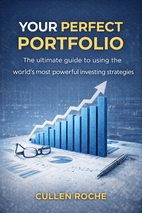
5 Main Takeaways from Your Perfect Portfolio
Start with a financial plan, not a portfolio strategy.
The book emphasizes that asset allocation is merely a tool to achieve personal goals, not the starting point. For instance, the Defined Duration Strategy matches assets to specific future liabilities, ensuring investments directly serve life needs like retirement or education.
Your behavior is more critical than your portfolio's design.
Successful investing requires patience and discipline to avoid emotional mistakes during market swings. Strategies like the Countercyclical Rebalancing Portfolio enforce behavioral rules, and Warren Buffett's success is rooted in frugality and long-term thinking, not just stock picking.
Diversify beyond stocks and bonds for true risk management.
While classics like the 60/40 portfolio are useful, they may not hedge all risks. The book explores alternatives like the Permanent Portfolio (with gold and cash) and Trend Following to protect against different economic environments and improve risk-adjusted returns.
Simplicity and low costs often outperform complex strategies.
The Boglehead Three-Fund Portfolio shows that a minimalist, low-cost approach can deliver competitive returns without hassle. Many complex strategies, such as some factor investing or hedge funds, may not justify their fees and complexity for most investors.
Blend multiple strategies to create a personalized, resilient portfolio.
There's no one-size-fits-all portfolio; the book advocates mixing approaches like using a core 60/40 fund with satellite positions in trends or alternatives. This polygamous method allows customization based on individual risk tolerance, time horizon, and goals.
Executive Analysis
The book's central argument is that the 'perfect portfolio' is not a universal formula but a personal construct derived from one's financial plan, behavioral tendencies, and life stage. By prioritizing financial planning over asset allocation, emphasizing behavioral discipline, and advocating for strategic diversification, Roche guides readers away from chasing mythical optimal returns and towards building practical, resilient investment systems. The key takeaways collectively underscore that investing success hinges on aligning portfolio structure with individual goals and constraints, rather than emulating generic models.
'Your Perfect Portfolio' stands out in the personal finance genre by synthesizing a wide array of investment strategies into a coherent framework for decision-making. It empowers readers to move beyond cookie-cutter advice and make informed choices about complexity, costs, and risk management. By demystifying strategies from Buffett to Bogleheads and beyond, the book provides a practical toolkit for investors to navigate market uncertainties and build portfolios they can actually stick with for the long haul.
Chapter-by-Chapter Key Takeaways
Does The Perfect Portfolio Exist? (Introduction)
A sound financial plan and clear personal goals must precede the selection of any investment portfolio, as asset allocation is merely a piece of a larger puzzle.
Successful investing involves balancing the return-focused mindset of portfolio management with the goal-oriented, risk-aware approach of financial planning.
There is no requirement to stick to a single portfolio strategy; mixing and matching different approaches can provide a more tailored and flexible investment solution.
Try this: Define your financial goals and risk tolerance before selecting any investment mix, as asset allocation is only a tool to achieve your personal objectives.
The Warren Buffett Portfolio (Chapter 1)
Personal frugality creates a behavioral advantage by reducing financial pressure, allowing for more disciplined, long-term investment decisions.
Consistent cash flow from savings is essential to maintain and grow your portfolio's protective "moat."
Strategically using tax-advantaged accounts and legal structures can significantly enhance net returns by minimizing costs.
Patience and discipline are the indispensable behavioral foundations that enable any sophisticated strategy to succeed.
Try this: Cultivate personal frugality and consistent savings to build a financial moat that supports disciplined, long-term investing in tax-advantaged accounts.
Why Not 100% Stocks? (Chapter 2)
A 100% stock portfolio offers the highest expected long-term returns by providing pure exposure to global corporate profit growth, which historically outpaces inflation.
This potential is counterbalanced by extreme volatility, deep periodic drawdowns, and severe behavioral challenges, making it unsuitable as a total portfolio strategy for most people.
Its most critical flaw is exposure to sequence-of-returns risk, which can devastate a retiree's plan if a major downturn occurs early in withdrawal phase.
The strategy can be appropriately implemented using low-cost, globally diversified index funds and may be suitable for specific, long-term segments of a portfolio (like a young person's IRA) or for investors whose entire financial picture (e.g., high human capital/income) allows for extreme risk-taking.
Try this: Consider allocating only a portion of your portfolio to 100% stocks for long-term growth, but protect against sequence-of-returns risk by diversifying with other assets, especially near retirement.
T-Bill And Chill (Or Why Not 100% Cash?) (Chapter 3)
Beware of Hidden Fees: The most expensive fees in finance are often the invisible ones on cash products offered by banks and brokerages.
Cash is an Active Asset: Treat cash management with the same intentionality often misapplied to stock picking. It's a short-term instrument that deserves proactive management.
T-Bills Offer Real Benefits: They provide principal stability, some inflation protection, and have historically been a tougher benchmark for stock-picking than many realize.
Ladders Provide Control & Certainty: Building a T-bill ladder is a straightforward way to optimize returns, manage cash flow predictably, and maintain liquidity.
It's a Component, Not a Complete Solution: The "T-Bill and Chill" strategy is best for the liquid, conservative portion of a portfolio. True wealth building requires diversifying into other assets for growth.
Try this: Actively manage your cash holdings using T-bill ladders for better returns and stability, but recognize that cash alone cannot build wealth.
The Gold Standard Of Portfolios – The 60/40 Stock/Bond Portfolio (Chapter 4)
The 60/40 portfolio emerged as a practical response to market trauma, evolving through the Great Depression, academic theory, and the proven success of balanced funds like Wellington.
It works by blending the growth potential of stocks with the stabilizing income of bonds, creating a smoother investment journey than 100% stocks.
While a classic benchmark, it is not perfectly balanced in terms of risk; the majority of its volatility is driven by the stock allocation.
It can be implemented simply with a single fund or built flexibly with separate ETFs, allowing for customization, tax management, and liquidity planning.
The strategy is a strong core holding for a long-term portfolio but may require complementary assets to address specific needs like liquidity or inflation hedging.
Try this: Use a 60/40 stock/bond portfolio as a core, stable foundation, but complement it with other assets to address specific risks like inflation or liquidity needs.
The Global Financial Asset Portfolio (Chapter 5)
The debate between active and passive investing is less black-and-white than often presented; the critical choice is the selection of a benchmark.
The Global Financial Asset Portfolio (GFAP)—the aggregate of all global stocks and bonds by market value—serves as the ultimate philosophical benchmark for a truly passive, neutral market portfolio.
Constructing a GFAP is complex, with a major practical rift between "free float" indexes (used by funds) and "full market cap" (theoretical total value), the latter dramatically increasing exposure to emerging markets.
Historically, the GFAP has a heavier bond allocation and exhibits procyclical tendencies. Interestingly, inverting its stock/bond weight has led to better risk-adjusted returns, suggesting a strategic, countercyclical allocation can be more efficient than blindly following market capitalization.
While the GFAP is a brilliant conceptual tool for understanding market structure and neutrality, its practical implementation involves trade-offs, particularly regarding foreign bond volatility and the exclusion of alternative assets.
Try this: Understand the Global Financial Asset Portfolio as a benchmark for market neutrality, but consider strategic tilts away from it for potentially better risk-adjusted returns.
The Factor Investing Portfolio (Chapter 6)
Factor strategies are supported by long-term evidence but face valid criticisms, including reliance on historical data and the risk of factor picking.
Implementation can be low-cost and efficient, with particular promise in combining factors like momentum and value for better risk-adjusted returns.
Factors can be aligned with an investor's behavioral risk profile, using tilts toward volatility or stability as needed.
This approach is ideal for informed investors willing to make deliberate, modest portfolio tilts in pursuit of a premium, with a clear understanding of the risks involved.
Try this: If pursuing factor investing, make modest, deliberate tilts based on long-term evidence and align them with your behavioral risk profile, using low-cost ETFs.
The Forward Cap Portfolio (Chapter 7)
Active & Theoretical: The Forward Cap Portfolio is an active, forward-looking bet on specific mega-trends, not a passive market replication.
Trend-Driven Allocation: Its 100% equity structure is built on five macro themes: Technology (40%), Consumer Discretionary (14%), Emerging Markets (15%), Healthcare/Biotech (14%), and Small-Cap Growth (17%).
High-Risk Component: It is an aggressive, volatile portfolio designed to be a high-growth component within a broader asset allocation, not a complete strategy.
Ideal Investor Profile: Suitable only for investors with a very long time horizon, high risk tolerance, and the emotional fortitude to endure significant volatility while waiting for trends to potentially play out.
Simple Implementation: Despite its complex rationale, it can be implemented simply with a handful of low-cost ETFs and annual rebalancing.
Try this: Only allocate a small, speculative portion of your portfolio to the Forward Cap Portfolio if you have a very long time horizon and can tolerate high volatility.
The Risk Parity Portfolio (Chapter 8)
Risk Parity focuses on equalizing the risk contribution from each asset class, not the capital allocation, aiming for a more genuinely diversified portfolio than traditional mixes like 60/40.
Implementation is complex, often requiring leverage and many uncorrelated assets, making pre-packaged funds a practical choice for most investors.
Historical performance shows lower nominal returns but potentially better risk-adjusted metrics (like Sharpe ratio) and smaller drawdowns compared to balanced portfolios.
It introduces unique costs and risks, including management fees, leverage costs, and the potential for return drag from over-diversification.
The strategy is best suited for sophisticated investors seeking portfolio stabilization and who are comfortable with its complexity and costs, rather than those chasing maximum absolute returns.
Try this: Evaluate risk parity funds for portfolio stabilization if you are a sophisticated investor comfortable with leverage and complexity, but don't expect them to maximize returns.
The Permanent Portfolio (Chapter 9)
The Permanent Portfolio is a simple, rules-based strategy that allocates 25% each to stocks, cash, gold, and long-term Treasury bonds to hedge against the four primary economic environments.
Its core philosophy is insurance-based, dedicating significant portions to assets that protect against less common but devastating recessions and deflations.
The portfolio’s strength is its diversification across fundamentally different asset drivers, leading to historically smooth returns and strong risk-adjusted performance compared to a global 60/40 portfolio.
Its major trade-off is potentially lower long-term growth due to a heavy allocation to lower-returning “insurance” assets (cash, gold, bonds) and a relatively small 25% stake in equities.
Try this: Allocate a portion of your portfolio to the Permanent Portfolio's 25% equal splits for insurance against economic extremes, but accept lower growth potential.
The Flying Ladder Strategy (Chapter 10)
The Flying Ladder Strategy is a barbell portfolio combining a rolling bond ladder for stable income and an aggressive equity allocation for long-term growth.
Inspired by a Vietnam War rescue device, it aims to "rescue" investors by providing structural stability and growth potential in one portfolio.
It offers predictable cash flows, low volatility, and tax efficiency but requires active management and may face behavioral risks during market stress.
Ideal for retirees or those needing near-term income with a tolerance for equity risk, and it can be customized to fit various financial goals.
Try this: Implement a Flying Ladder Strategy by combining a bond ladder for income with aggressive equities for growth, ideal for retirees needing predictable cash flows.
The Boglehead Three-Fund Portfolio (Chapter 11)
The Boglehead Three-Fund Portfolio distills John Bogle's philosophy into a practical, three-fund allocation using total market index funds for U.S. stocks, international stocks, and bonds.
Its strength lies in extreme simplicity, low costs, broad diversification, and the elimination of active management risks, as highlighted by Taylor Larimore's 21 reasons.
Historically, it has provided competitive risk-adjusted returns with manageable drawdowns, proving that minimalist strategies can be effective.
Investors should be aware of its limitations, such as the need for a separate cash emergency fund and potential behavioral discomfort with only three holdings.
This approach is best suited for disciplined, long-term investors who value ease of management and want to avoid the complexities of active investing.
Try this: Build a Boglehead Three-Fund Portfolio with total market index funds for simplicity, low costs, and broad diversification, but ensure you have a separate emergency fund.
The Countercyclical Rebalancing Portfolio (Chapter 12)
Primary Goal is Behavioral: The strategy’s main objective is to help investors stick to a long-term plan by systematically managing risk and countering emotional impulses, not to beat the market.
Systematic Over Subjective: It relies on a rules-based, multi-metric index (valuations, credit spreads, yield curve, unemployment) to guide allocation shifts within set boundaries (e.g., 30/70 to 70/30).
Performance Trade-Offs: It often sacrifices some upside during powerful bull markets (by being underweight stocks) but aims to provide superior protection during bear markets, leading to potentially better risk-adjusted returns.
Ideal Investor Profile: Best suited for conservative or behaviorally-prone investors who value stability and a disciplined, contrarian framework, but may frustrate aggressive investors seeking maximum growth or those in taxable accounts due to rebalancing costs.
Try this: Adopt a countercyclical rebalancing strategy with clear rules to enforce discipline and manage risk, especially if you are prone to emotional investing.
The Bernstein No-Brainer Portfolio (Chapter 13)
Sticking Power Trumps Perfection: The most elegant theoretical portfolio is worthless if you abandon it during a downturn. A good-enough, understandable portfolio you can hold forever is the true goal.
Bonds for Safety, Not Glory: The primary role of bonds in a portfolio is to provide stability and match future liabilities, not to chase high returns. TIPS ladders can be a powerful tool for this purpose.
Sophistication is Optional: Bernstein’s own journey shows a path from simple diversification to complex factor tilting. However, the core tenets—diversify, minimize costs, and stay the course—remain foundational whether your portfolio uses 3 funds or 13.
Know Your Own Brain: A portfolio must align with your personal risk tolerance, cognitive biases, and capacity to manage complexity. The "updated" No-Brainer is excellent for some but overwhelming for others.
Try this: Choose a portfolio you understand and can stick with through market cycles, even if it's not theoretically perfect, focusing on diversification and cost minimization.
Dividend Investing And Anti-Dividend Investing Portfolios (Chapter 14)
Dividends have a long history as symbols of corporate health, but modern alternatives like share buybacks offer tax efficiency and flexibility.
Shareholder yield—combining dividends, net repurchases, and debt reduction—provides a more holistic view of how companies return capital.
Dividend-focused strategies generally don’t outperform the market and aren’t safe havens; they can be as volatile as other equities during downturns.
Portfolio options range from traditional dividend ETFs to shareholder yield funds, but investors should beware of high-fee, complex income products.
These strategies are best suited for income-seeking investors who prioritize behavioral comfort over outright outperformance, especially in conservative or retirement-focused portfolios.
Try this: If seeking income, consider shareholder yield funds over traditional dividend ETFs for a more holistic approach, but beware of high fees and recognize that dividends don't guarantee safety.
The Trend Following Portfolio (Chapter 15)
Trend Following is a systematic, rules-based strategy that exploits persistent price trends driven by behavioral biases, requiring no fundamental analysis.
Its primary value is diversification, offering historically uncorrelated—and often negatively correlated—returns during major stock market declines.
Performance comes in bursts; it acts as portfolio insurance, potentially delivering large gains during crisis periods after potentially long stretches of muted results.
Successful implementation demands strict discipline to follow its mechanical rules, thereby removing emotional decision-making.
It is best considered a strategic allocation within a broader portfolio for investors seeking true diversification, not as a standalone equity replacement.
Try this: Add a trend following allocation to your portfolio for crisis-period diversification, but maintain discipline to follow its rules during both quiet and volatile markets.
The Vice And Virtue Portfolio (Chapter 16)
The Behavioral Benefit is Primary: The core argument for a values-based portfolio is that it increases your comfort and discipline, helping you stay invested.
It's Active Investing in Disguise: Excluding companies from a broad index is an active bet that lowers diversification and, according to economic theory, should result in lower expected returns due to the "sin stock" premium paid to other investors.
Limited Real-World Impact: Trading shares in secondary markets has a minimal direct impact on a company's operations or capital. More effective change is enacted in the real economy (e.g., consumer boycotts, legislation).
Performance Mirrors the Market: ESG portfolios typically behave like the broader market with very similar risk and return characteristics, often at a slightly higher cost.
Customization is a Double-Edged Sword: While custom indexing offers precision, it can introduce significant tax and complexity burdens compared to a simple, broad ETF.
Try this: If values-based investing helps you stay disciplined, use it, but acknowledge it's an active bet that may reduce diversification and increase costs.
The Endowment Portfolio (Chapter 17)
The Endowment Portfolio evolved from Keynes’ equity focus to Swensen’s emphasis on private markets, driven by the illiquidity premium.
Replication is challenging; Swensen’s simplified Unconventional Success Portfolio offers an accessible but less potent alternative.
Private equity exposure is central to the strategy, but requires resources and patience most individuals lack.
While ultra-diverse, the approach may not consistently outperform simpler portfolios after fees, underscoring the importance of aligning investments with personal time horizons and access.
Try this: Recognize that replicating endowment portfolios is challenging for individuals; instead, consider simplified versions like Swensen's Unconventional Success Portfolio if you lack access to private markets.
Retirement Bond Tent Strategy (Chapter 18)
Retirement is a psychologically fraught financial transition where the loss of your paycheck (your "human capital bond") dramatically increases your portfolio's risk profile.
Sequence-of-returns risk—the danger of poor market performance in the first years of withdrawal—is the greatest threat to a retirement plan's success.
The Retirement Bond Tent is a dynamic allocation strategy that deliberately increases bond holdings above traditional guidelines in the years surrounding retirement to create a buffer against this risk.
The strategy is a behavioral and planning tool first, designed to provide stability and prevent costly emotional mistakes, not to maximize short-term returns.
It requires active management and rebalancing, and is best implemented in tax-advantaged accounts to minimize friction.
Try this: As you approach retirement, gradually increase your bond allocation to create a 'bond tent' that protects against sequence-of-returns risk, focusing on behavioral stability.
Target Date Portfolios (Chapter 19)
Target Date Portfolios are a behavioral solution designed for simplicity and long-term discipline, not for maximizing returns.
Their core function is to systematically reduce risk via a "glide path," protecting against sequence-of-returns risk as retirement nears.
Investors can implement them through a single low-cost fund or a customized DIY portfolio.
While they automate investing effectively, their "one-size-fits-most" glide path may not be optimal for all retirees, particularly in its permanent post-retirement conservatism.
For set-it-and-forget-it retirement savings, especially in employer-sponsored plans, they are a robust and highly practical choice.
Try this: Use target date funds for set-it-and-forget-it retirement savings, but be aware their glide path may not suit all retirees, and consider customizing if needed.
Defined Duration Strategy (Chapter 20)
The Defined Duration Strategy integrates multiple investing concepts into a single framework by matching assets to specific future spending liabilities across different time horizons.
It prioritizes financial planning and behavioral robustness over attempting to "beat the market."
The portfolio can be structured in layers—from cash and short-term bonds for immediate needs, to balanced funds for intermediate goals, to aggressive equities for long-term growth, with an optional "insurance" bucket for systemic risks.
Its main strength is creating a clear, purpose-driven portfolio that is easier to maintain during market stress, though it requires upfront planning and may involve holding underperforming assets as part of its diversified design.
It is especially well-suited for retirees or anyone seeking greater clarity and certainty in aligning their investments with their specific financial plan.
Try this: Structure your portfolio in layers matching different time horizons, from cash for immediate needs to equities for long-term growth, to align investments with specific financial goals.
Polygamous Portfolios (Chapter 21)
Bitcoin is best understood as volatile, satellite-position "fiat currency insurance," particularly valuable for those in unstable economic regimes.
Hedge fund strategies are complex and expensive; if pursued, focus on top-tier managers or their publicly-traded replicators.
Return-Stacked/Portable Alpha funds use leverage to efficiently combine market exposure with alternative return streams, akin to using a mortgage to free up investment capital.
All-in-one funds like Vanguard's LifeStrategy series offer simplicity but may need to be complemented with other assets.
Option-based strategies provide income or defined outcomes through insurance-like mechanics, but this insurance comes at the cost of lower expected long-term returns.
Tail-risk funds are specialized tools for hedging catastrophic market events and should be used tactically, like term insurance, not held indefinitely.
The overarching theme is that these are all specialized tools for blending into a broader portfolio, not foundational solutions. Each requires thorough research and a clear understanding of its role, costs, and risks.
Try this: Treat alternative investments like Bitcoin, hedge funds, or options as specialized tools for specific roles within a broader portfolio, and thoroughly research their costs and risks before adding them.
Odds And Ends (Chapter 22)
Avoid using the curated financial successes of others as your benchmark; they often present a distorted and incomplete picture.
Personal finance is a marathon, not a sprint, focused solely on your individual goals and timeline.
Your only meaningful benchmark is your own financial plan and the specific needs it is designed to meet.
Try this: Focus on your personal financial plan as the only benchmark that matters, avoiding comparisons with others' curated successes.
Portfolio Management (Chapter 23)
Risk profiling is best done through asset-liability matching, not generic questionnaires, to build certainty and reduce emotional reactions.
ETFs are ideal for most investments, but exceptions exist for illiquid strategies or direct bond holdings.
Optimize account types like IRAs and HSAs for tax efficiency and long-term growth.
Rebalance annually or less to minimize costs and taxes, adjusting based on strategy needs.
Allow limited active trading if it helps maintain discipline in your core portfolio.
Consume financial media critically to stay informed without overreacting.
Make consistent contributions to fuel growth and reinforce dollar-cost averaging.
Personalize withdrawal rates in retirement based on detailed expense analysis.
Plan for retirement early to manage the transition with confidence.
Incorporate estate planning to ensure your portfolio benefits your loved ones seamlessly.
Cultivate patience and discipline as foundational virtues for enduring investment success.
Try this: Systematize your portfolio management with annual rebalancing, tax-optimized accounts, and consistent contributions, while cultivating patience and discipline for long-term success.
Continue Exploring
- Read the full chapter-by-chapter summary →
- Best quotes from Your Perfect Portfolio → (coming soon)
- Explore more book summaries →