As an Amazon Associate, we earn from qualifying purchases.
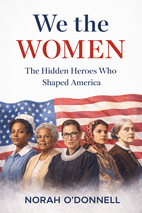
What is the book We the Women about?
Norah O'Donnell's We the Women spotlights the multi-generational fight for the Equal Rights Amendment, chronicling the overlooked mothers, lawyers, and activists behind this century-long struggle for constitutional equality. This narrative history connects pivotal figures from Alice Paul to modern organizers, offering crucial context for anyone engaged with women's rights and American political history.
Feature
Insta.Page
Blinkist
Shortform
Summary Depth
Full Chapter-by-Chapter
15-min overview
Section-by-section guides
Audio Narration
✓
✓
✓
Full access to all 700+ summaries
✓
✓
✓
Visual Mindmaps
✓
✕
✕
AI Q&A
✓
✕
✕
Missing a book? Request it, usually live within 48h
✓
✕
✕
Quizzes
✓
✕
✕
PDF Downloads
✓
✕
✓
Send to Kindle
✓
✓
✓
Price
$89.99/yr
$146/yr (PRO)
$199/yr
*Competitor data last verified July 2026.
1 Page Summary
In We the Women: The Unstoppable Mothers of the Equal Rights Amendment, acclaimed journalist and CBS Evening News anchor Norah O'Donnell shifts the historical lens to spotlight the often-overlooked women who fought for over a century to enshrine gender equality in the U.S. Constitution. The book’s central thesis is that the long battle for the ERA, far from being a relic of the 1970s, is a continuous, multi-generational struggle driven by the relentless efforts of mothers, lawyers, activists, and legislators. O'Donnell argues that understanding this unfinished fight is crucial to comprehending the current state of women's rights in America, framing the ERA not as a historical footnote but as a vital, ongoing project for full legal equality.
O'Donnell's approach is deeply journalistic and narrative-driven, weaving together archival research, legal analysis, and original interviews to tell a cohesive story. The book is distinctive for its focus on the personal stories of key figures—from early pioneers like Alice Paul to contemporary champions like Rep. Carolyn Maloney and the activists of the "Generation Ratify" movement—placing their individual sacrifices and strategic brilliance at the forefront. This creates a compelling, character-centered history that connects the dots between past and present, demonstrating how each generation of women built upon the work of the last, facing persistent political and cultural opposition.
The intended audience is broad, appealing to readers of history, politics, and current affairs, as well as anyone interested in the evolution of the women's movement. Readers will gain a nuanced understanding of the complex political, legal, and social dynamics that have both propelled and stalled constitutional equality, moving beyond simplistic narratives. Ultimately, O'Donnell provides not just a history lesson but a call to action, equipping readers with the knowledge of how change is forged and empowering them to see their own role in this unfinished chapter of American democracy.
Introduction
Overview
The chapter opens with a powerful, overlooked moment from America's centennial celebration on July 4, 1876. While the nation commemorated its founding, suffragists like Susan B. Anthony and Elizabeth Cady Stanton, barred from the official program, stormed the stage at Independence Hall to deliver their own declaration. They denounced the hypocrisy of a country celebrating liberty while denying women basic civil and political rights. This act, the author notes, is a profound but forgotten piece of American history, emblematic of the countless stories of women that have been erased from the mainstream narrative.
The Author's Personal Journey
This discovery sparked the author's curiosity about what else was missing from her education. She realized the history she was taught was not only difficult to relate to but overwhelmingly centered on the achievements of privileged white men. This book was born from a desire to uncover the "hidden heroines" whose relentless struggle over 250 years secured the rights women have today—from voting to owning property to having a professional career. She connects this mission to her own heritage, sharing the story of her Irish grandmother, Mary Teresa Monaghan O'Kane, who bravely immigrated to America, inspired by the promise of opportunity symbolized by the Statue of Liberty—a monument created by a woman with words by a female poet at its base.
The Purpose and Scope of We the Women
The book aims to correct a historical record where, as the National Women's History Museum found, less than 15% of taught history highlights women's achievements. It is not a comprehensive biography of every famous woman but a curated collection of profiles focused on "changemakers" who, through grit and determination, pushed America to live up to its founding ideals of liberty and equality. The women featured are often "firsts" in their fields or pivotal figures in social movements, chosen for their significant yet underappreciated impact. The research was a collaborative, nearly two-year effort involving deep archival work and interviews to bring these complex, imperfect, and courageous lives to light.
A Shared Arc of History
Ultimately, the stories in this book are presented as essential chapters in the long American struggle for justice. The author draws on Dr. Martin Luther King Jr.'s metaphor of the moral universe's arc bending toward justice, arguing that women have been central to that bending force. By rediscovering these architects of society, the author hopes to inspire readers with their resilience and to affirm every citizen's role in the ongoing work of forming a more perfect union.
Key Takeaways
A pivotal 1876 protest by suffragists exemplifies the long fight for women's equality and the tendency to omit such stories from mainstream history.
This book is a corrective to that omission, seeking to highlight the "hidden heroines" whose efforts over 250 years won the rights women exercise today.
The selection focuses on barrier-breaking and influential women whose stories are particularly impactful yet often overlooked, not on providing exhaustive biographies of the most famous figures.
The narrative connects personal history (the author's immigrant grandmother) to the national story, emphasizing America's promise and the women who have fought to extend it to all.
The collective struggle of these women represents a crucial force in bending the arc of American history toward justice.
Key concepts: Introduction
1. Introduction
The 1876 Suffragist Protest
Suffragists stormed Independence Hall during centennial
Protested hypocrisy of liberty celebrations denying women's rights
Emblematic of women's stories erased from mainstream history
Author's Motivation & Personal Connection
Realized education centered on privileged white men's history
Inspired by immigrant grandmother's story of opportunity
Seeks to uncover 'hidden heroines' of 250-year struggle
Book's Purpose: Correcting Historical Record
Addresses less than 15% of taught history highlighting women
Curated profiles of changemakers, not comprehensive biographies
Focuses on 'firsts' and pivotal figures with underappreciated impact
Research & Collaborative Effort
Nearly two-year collaborative research project
Involved deep archival work and interviews
Aims to bring complex, imperfect lives to light
Women's Role in Bending History's Arc
Women central to bending moral arc toward justice
Stories essential to American struggle for equality
Inspires readers to continue forming a more perfect union
💡 Try clicking the AI chat button to ask questions about this book!
Chapter 1: Mary Katherine Goddard: The Printer
Overview
The chapter introduces Mary Katherine Goddard at a moment of righteous indignation in 1789, as she writes to President George Washington to protest her abrupt dismissal as Baltimore's postmaster. This injustice serves as a springboard to explore her remarkable contributions during the American Revolution, particularly her courageous work in printing the Declaration of Independence. Through her story, we see a woman who defied the rigid gender norms of her time to play a vital role in the birth of a nation, only to be later sidelined by the very system she helped sustain.
The Unjust Dismissal
Just before Christmas in 1789, a fifty-one-year-old Mary Katherine Goddard penned an angry letter to President Washington. After fourteen years of service as the first female postmaster in the United States, she had been removed from her position. The reason was purely political: a powerful man needed to repay a favor, so she was replaced by someone with no experience. The official excuse from Postmaster General Samuel Osgood was that the job required more travel than a woman could undertake. This dismissal, rooted in cronyism and sexism, ignored her proven track record and dedication.
Printing the Declaration of Independence
In January 1777, with British troops threatening Philadelphia, the Second Continental Congress sought refuge in Baltimore. There, they turned to Mary Katherine Goddard for a critical task. She was ordered to print an official copy of the Declaration of Independence that included the names of the signers, something earlier versions had omitted for safety. Congress needed each state to have a permanent record, and Goddard's printing shop, already trusted with congressional documents, was just blocks away. She accepted the dangerous assignment without hesitation.
The Goddard Broadside: A Legacy of Bravery
Within two weeks, Goddard produced the historic "Goddard Broadside." This version was the first to bear the title "The Unanimous Declaration of the Thirteen United States of America" and listed fifty-five signers, from John Hancock to Thomas Jefferson. Most strikingly, at the bottom, she printed her full name: Mary Katherine Goddard. In an era where women often signed with an "X," this was a bold declaration of her role and a serious risk, as signers like Richard Stockton faced imprisonment. Today, rare copies survive in libraries, a testament to her bravery, though her name is seldom remembered alongside the founders'.
A Revolutionary Publisher
Long before printing the Declaration, Goddard was a force in revolutionary media. As publisher of the Maryland Journal and Baltimore Advertiser, she used her press to challenge British rule. She serialized Thomas Paine's "Common Sense" and wrote fiery editorials herself. After the battles of Lexington and Concord, she proclaimed that Americans would rather die than live as slaves, bringing the war's urgency to her readers. Her newspaper was a hub of patriotic dissent, openly describing British "savage barbarity" and rallying support for independence at great personal risk.
Service as Postmaster and Betrayal
In 1775, as the Revolution began, Goddard was appointed postmaster of Baltimore under Benjamin Franklin. This role was crucial for wartime communication, allowing colonists to coordinate resistance through letters. She performed her duties diligently, often dipping into her own pocket to pay carriers. Yet, in 1789, the new administration dismissed her, claiming a woman couldn't handle the travel involved—a feeble excuse that contradicted her years of effective service. This betrayal highlighted the stark limitations placed on women, even those who had proven their capability and patriotism.
Key Takeaways
Mary Katherine Goddard was a key but overlooked figure in the American Revolution, risking her safety to print and distribute the Declaration of Independence.
By including her full name on the Goddard Broadside, she publicly aligned herself with the treasonous act of independence, demonstrating extraordinary courage.
She broke gender barriers as a successful publisher and the first female postmaster, using her positions to advance the revolutionary cause.
Her dismissal from the postmaster role exemplifies the gender discrimination and political favoritism that persisted despite her contributions.
Her story serves as a poignant reminder of the many unsung individuals, particularly women, whose work was essential to the nation's founding.
Key concepts: Chapter 1: Mary Katherine Goddard: The Printer
2. Chapter 1: Mary Katherine Goddard: The Printer
The Goddard Broadside & Declaration of Independence
Printed first official copy with all signers' names
Included her own full name, a bold and risky act
Created a permanent record for states during war
Revolutionary Publishing & Advocacy
Published the Maryland Journal to challenge British rule
Serialized 'Common Sense' and wrote patriotic editorials
Used her press as a hub for dissent and rallying support
Postmaster Service & Unjust Dismissal
First female postmaster, crucial for wartime communication
Dismissed in 1789 due to political cronyism and sexism
Official excuse claimed women couldn't handle travel demands
Defiance of Gender Norms
Operated successfully in male-dominated fields
Publicly claimed her work in a treasonous document
Her capability was proven yet later sidelined by system
Legacy as an Overlooked Founder
Key but forgotten contributor to American Revolution
Story represents unsung women of the founding era
Bravery and contributions overshadowed by discrimination
Chapter 2: Phillis Wheatley: The Poet
Overview
This chapter presents the extraordinary life and work of Phillis Wheatley, an enslaved woman who became a celebrated poet and a pivotal, though often overlooked, intellectual voice in the American Revolution. It traces her journey from being forcibly brought to America as a child to achieving international literary fame, highlighting how she wielded her poetry to advocate for both national independence and the abolition of slavery.
From Captivity to Literary Prodigy
The narrative begins with Phillis Wheatley’s traumatic arrival in Boston at age seven, after a harrowing Middle Passage voyage from Senegambia. Purchased by the Wheatley family, she was remarkably given an education, quickly mastering English, literature, Latin, and the Bible. She began writing poetry by age eleven, displaying a prodigious talent that soon attracted attention on both sides of the Atlantic. Her early poems, like “On Being Brought from Africa to America,” already confronted themes of race and salvation, challenging the prejudices of her era.
Poetry as Political Tool
Wheatley’s work became deeply entwined with the revolutionary cause. Her 1772 poem to the Earl of Dartmouth drew a direct parallel between her personal loss of freedom through slavery and the colonies’ political struggle against British tyranny. This bold linkage established her as a unique political voice. Her fame grew, leading to the 1773 London publication of Poems on Various Subjects, Religious and Moral, which required attestations from prominent Bostonians to prove a Black woman could indeed be the author. This made her the first published African American poet.
Patriotism and its Contradictions
Despite the nation's contradictions, Wheatley passionately supported the American fight for liberty. Her 1775 poem to George Washington so impressed him that he invited her to his headquarters—an unprecedented honor for a Black person at the time. The chapter emphasizes that by publishing such pro-independence works, she risked severe punishment, aligning her courage with that of any white patriot. Yet, she consistently used her verse, as in her elegy for General Wooster, to point out the hypocrisy of fighting for freedom while upholding slavery.
Legacy and Struggle
The chapter concludes by noting the harsh dismissals Wheatley faced, most notably from Thomas Jefferson, and the financial and social hardships she endured after being freed. However, her legacy as a foundational African American literary and political figure endures, inspiring future generations like poet Amanda Gorman. Her life stands as a testament to the power of using art to challenge oppression and expand the meaning of freedom.
Key Takeaways
Phillis Wheatley was a literary prodigy who, despite being enslaved, used her poetry to engage directly with the political ideals and contradictions of the American Revolution.
She pioneered a powerful rhetorical strategy, linking the colonists' desire for political freedom with the imperative to abolish slavery.
Achieving international publication and recognition, she became the first published African American poet, though her work was met with both acclaim and racist skepticism.
Her correspondence with figures like George Washington demonstrates she was respected as a political voice, yet she faced enduring prejudice and hardship.
Wheatley’s legacy lies in her courageous insistence, through art, that the promise of American liberty must apply to all.
Key concepts: Chapter 2: Phillis Wheatley: The Poet
3. Chapter 2: Phillis Wheatley: The Poet
Early Life and Education
Forcibly brought to Boston as a child
Received an extensive education from the Wheatley family
Began writing poetry by age eleven
Poetry as Political Advocacy
Linked personal slavery to colonial struggle for freedom
Used verse to advocate for abolition and independence
Publication required attestations of her authorship
Revolutionary Engagement
Corresponded with and impressed George Washington
Publicly supported the patriot cause at personal risk
Highlighted national hypocrisy regarding slavery
Literary Achievement
First published African American poet
Gained international fame with 1773 London publication
Work challenged contemporary racial prejudices
Enduring Legacy
Faced dismissal and hardship despite fame
Inspired future generations of poets and activists
Used art to expand the definition of American freedom
Chapter 3: Mercy Otis Warren: The Intellectual
Overview
The chapter opens with the stark contrast between John Adams's early admiration for Mercy Otis Warren and his later, bitter dismissal of her historical work. This tension frames her story as one of a formidable intellectual whose principles and pen challenged the most powerful men of her era, ultimately securing her legacy as a foundational political thinker.
A Friendship Fractured by Principle
The long and collaborative friendship between Mercy Otis Warren and John Adams disintegrated following the 1805 publication of her magnum opus, History of the Rise, Progress and Termination of the American Revolution. Adams, stung by her candid assessment that he possessed a "partiality for monarchy" and let passions override his judgment, responded with the sexist rebuke that "History is not the Province of the Ladies." This reaction revealed how threatened he was by her independent analysis. Their rift began decades earlier during the Constitutional debates, where Warren’s anonymous 1788 Anti-Federalist pamphlet, Observations on the New Constitution, criticized the centralized power Adams supported. She refused to retract her views, believing principle was more important than personal loyalty.
An Unorthodox Education and Influential Marriage
Mercy Otis Warren’s intellectual development was exceptional for a woman in the 18th century. Born in 1728, she successfully petitioned her father to be educated alongside her brother, studying history and classical literature. This foundation prepared her for a life at the center of revolutionary politics. Her 1754 marriage to James Warren created a powerful political partnership. Their Plymouth home became a vital salon for radicals like Samuel Adams and John Hancock to strategize. Critically, James actively encouraged his wife’s writing and political engagement, a rare support that allowed her to flourish.
The Pen as a Political Weapon
Unable to vote or hold office, Warren wielded immense influence through anonymous and pseudonymous publications. Her 1772 play, The Adulateur, was a sharp satire predicting violent rebellion against British officials like Governor Thomas Hutchinson. At John Adams's personal request, she wrote the poem “The Squabble of the Sea Nymphs,” a clever satire supporting the Boston Tea Party. Her writings translated complex political ideals into accessible, stirring rhetoric that helped galvanize public opinion toward revolution.
Architect of the Bill of Rights
Mercy Otis Warren’s most direct and lasting political contribution was her forceful advocacy for a bill of rights. Her pamphlet, Observations on the New Constitution, systematically warned that the document lacked explicit protections for individual liberties like freedom of the press and protection from unreasonable search and seizure. Her arguments provided the intellectual framework for the Anti-Federalist position, and the suggested amendments from Massachusetts, which influenced the final Bill of Rights, bore her imprint. For this, she has been called the "secret muse of the Bill of Rights."
A Complex Legacy
Despite her own unprecedented public role, Warren did not advocate for expanded legal or political rights for women. Instead, she promoted the concept of "Republican Motherhood," which confined women’s civic duty to educating sons for citizenship. Her legacy is thus complex: she was a revolutionary intellectual who operated within the gendered constraints of her time. She is celebrated today by those who champion limited government and individual liberty, her writings serving as a powerful testament to the role of principle and critical thought in the American founding.
Key Takeaways
Mercy Otis Warren was a premier political intellect of the Revolution whose writings directly influenced the founding era’s debates and the creation of the Bill of Rights.
Her decades-long friendship with John Adams shattered over her principled criticism in her historical writings, highlighting the personal costs of her intellectual independence.
Leveraging a rare classical education and a supportive marriage, she used satire, poetry, and pamphlets to shape public opinion when women were formally excluded from politics.
While a trailblazer for female intellectual engagement, she upheld the era’s social order, advocating for "Republican Motherhood" rather than women’s legal equality.
Her legacy endures as a model of unwavering commitment to republican principles over personal loyalty.
Key concepts: Chapter 3: Mercy Otis Warren: The Intellectual
4. Chapter 3: Mercy Otis Warren: The Intellectual
Conflict with John Adams
Friendship fractured over her historical criticism
Adams dismissed her work with sexist rebuke
Rift began during Constitutional debates over principle
Education and Marriage
Received exceptional classical education for a woman
Marriage to James Warren created political partnership
Home became salon for revolutionary strategizing
Political Writing and Influence
Used satire and poetry to shape public opinion
Wrote anonymously due to gender constraints
Works translated political ideals into accessible rhetoric
Advocacy for Bill of Rights
Authored Anti-Federalist pamphlet on Constitution
Systematically warned of lacking individual liberties
Provided intellectual framework for Bill of Rights
Complex Legacy and Constraints
Did not advocate for women's political rights
Promoted Republican Motherhood concept
Operated within gendered constraints of her era
You've reached the end of the free chapters
Next chapter: “Elizabeth Ellet: The Historian” is locked
Keep reading We the Women — and unlock all 700+ book summaries with audio, mindmaps and AI Q&A.
$0.00 due today · 7 days free, then $89.99/year ($7.49/mo) · Cancel anytime before day 7
Norah O'Donnell is an American broadcast journalist and author best known for her role as anchor and managing editor of the "CBS Evening News." Her expertise lies in political reporting, having served as a chief White House correspondent and co-host of "CBS This Morning." She is also the author of the children's book "Grace Goes to Washington."
📚 Explore Our Book Summary Library
Discover more insightful book summaries from our collection