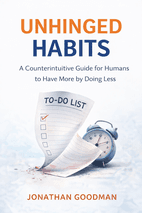
Jonathan Goodman's Unhinged Habits critically examines the modern fitness industry's culture of extremes, deconstructing unsustainable trends to advocate for simple, evidence-based practices. It's for anyone seeking a sustainable, compassionate approach to health beyond quick fixes and burnout.
Feature
Insta.Page
Blinkist
Shortform
Unhinged Habits
✓
✕
✕
Summary Depth
Full Chapter-by-Chapter
15-min overview
Section-by-section guides
Audio Narration
✓
✓
✓
Visual Mindmaps
✓
✕
✕
AI Q&A
✓
✕
✕
Quizzes
✓
✕
✕
PDF Downloads
✓
✕
✓
Price
$89.99/yr
$146/yr (PRO)
$199/yr
*Competitor data last verified July 2026.
1 Page Summary
Unhinged Habits by Jonathan Goodman is a critical examination of the modern fitness industry, arguing that it has become detached from its foundational principles of sustainable health. Goodman posits that the industry promotes a culture of extremes—from obsessive workout regimens and restrictive diets to the quick-fix promises of supplements and "biohacking"—which he collectively terms "unhinged habits." The book situates this trend within a broader historical context of wellness movements, tracing how the pursuit of physical improvement has shifted from a component of holistic well-being to a commercialized, often anxiety-driven performance metric influenced heavily by social media and marketing.
The core of Goodman's analysis deconstructs these habits, highlighting how they frequently lead to burnout, injury, and a disordered relationship with one's body, rather than to lasting health. He emphasizes the neglect of fundamental, evidence-based practices—such as consistent strength training, balanced nutrition, adequate sleep, and stress management—in favor of more sensational and monetizable trends. The work serves as a critique of an industry capitalizing on insecurities and the human desire for rapid transformation, often at the expense of genuine, long-term physiological and psychological health.
The lasting impact of Unhinged Habits lies in its call for a recalibration of personal and industry standards. Goodman advocates for a return to "hinged" habits: simple, sustainable practices rooted in patience and self-compassion. The book encourages readers to become more discerning consumers of fitness information and to prioritize consistency over intensity, making it a significant contribution to the ongoing conversation about sustainable health and a counter-narrative to the often-toxic culture of modern fitness.
1. Birds Never Sing in Caves
Overview
It begins by challenging our modern obsession with treating life like a scavenger hunt, where checking experiences off a list becomes more important than truly feeling them. The author suggests that genuine wonder is often killed by over-preparation and haste, arguing instead for the art of lingering—to engage the world with childlike curiosity, or as he calls it, "brailling the world." This sets up a central paradox: to experience more, you must schedule less, valuing depth of engagement over the hollow tally of places visited.
This naturally leads to the idea that getting lost is not a failure, but a powerful practice. When we step out of autopilot and into confusion, our senses sharpen. We become present and alert to details and opportunities we'd otherwise miss, transforming even a mundane bus ride into a scene of potential discovery. To embrace this kind of uncertainty, however, requires rethinking our relationship with safety. The principle of "ranking safety third" emerges, not as a call for recklessness, but as a warning that making absolute security our top priority is a sure path to a stagnant life. The goal is to become "less boring to yourself" by taking calculated, local risks that retrain your brain to seek novelty.
These concepts crystallize into a practical framework for navigating life's inherent uncertainty. The author proposes that since we are always somewhat lost, the solution is to cultivate two key abilities: knowing your instruments (building versatile skills and basic preparedness) and maintaining the correct general trajectory (having a flexible direction instead of a rigid plan). This framework is later expanded into the Explorer's Compass, a tool designed to intentionally inject meaningful challenge into daily life. It involves building personal capabilities, navigating a personal risk spectrum from safe experiments to bold adventures, setting flexible goals, and reflecting on each experience to solidify growth.
Ultimately, exploration is framed as a path to self-discovery. By stepping into the "sweet spot of challenge"—where novelty meets our abilities—we grow and feel most alive. But its deepest value may be in how it liberates us. In unfamiliar settings, free from the weight of our established identity, we can experiment with being different versions of ourselves. This process of getting lost, of embracing radical curiosity and viewing mistakes as valuable information, becomes a conversation that gently leads us back to our core. True exploration, then, is a continual state of being that finds its richest rewards not in destinations, but in the transformative nature of the journey itself.
The Illusion of Completion and the Art of Lingering
The author challenges the modern obsession with checking off experiences as if life were a scavenger hunt. He contrasts the family at Crater Lake, whose prepared reaction—“It looks just like the picture”—with the profound, sensory-rich experience of truly being present. The sad irony is that over-preparation and a rush to "do it all" actually diminish wonder. The advice is counterintuitive: don’t research, don’t rush, and accept that you will miss most things. The goal is to linger—to smell, touch, taste, and listen. This is framed as "brailling the world," a tactile, childlike engagement with one's surroundings that is stifled by maps and smartphones.
This theme extends to the notion of "visiting" a place versus truly being there. The story of the Japanese traveler checking off "Mexico" from a tarmac and the passport stamp collector in Saint Pierre and Miquelon exemplify a hollow pursuit of completion. The paradox is clear: to genuinely experience more, you must schedule less. The magic lies not in the number of stamps collected but in the depth of engagement with a single place—whether that's sharing a loot bag in a Mexican alley or learning local history.
Finding Clarity by Getting Lost
Getting lost is presented not as a failure of navigation but as a deliberate practice for becoming present. The author contrasts the autopilot of daily life—where days blur into nothingness—with the heightened awareness forced upon you when you’re physically or mentally lost. In Montevideo, being confused by bus routes and street names forces you to read signs and observe details, opening your eyes to opportunities you’d otherwise miss.
The tale of "Trita-Man," the Band-Aid salesman on the bus, perfectly illustrates this principle. His simple, brilliant business model—identifying a "starving crowd" of women with blistered feet from cobblestone streets—was only noticeable to someone paying attention. Exploration, therefore, becomes a state of alertness. It’s a tool to jolt yourself out of passive gliding and into active engagement, turning everyday commutes into scenes of potential discovery.
Ranking Safety Third
Stepping into uncertainty requires re-evaluating our instinct for safety. The story of Andrew and his "month of yes" demonstrates how deliberately introducing unpredictability can break a stifling routine and lead to transformative life changes—in his case, a marriage. The principle of "safety third" is introduced: not as a call for recklessness, but as a recognition that prioritizing absolute safety above all else is the surest path to a stagnant, unfulfilled life.
The author distinguishes between being boring (having niche, quiet hobbies) and being vacant (having no curiosity or passions at all). The key is to "be less boring to yourself." Exploration can start small and local: eating at an unknown restaurant, being a tourist in your own city, or diving into a random year of award-winning books. These are calculated risks that retrain the brain to seek bewilderment, building the muscle for handling larger uncertainties.
The Two Laws of Living Lost
The section culminates in a practical framework for embracing a state of perpetual exploration. Accepting that we are always somewhat "lost" in the complexity of life is the first step. The solution is not to find a permanent map, but to learn how to navigate uncertainty through two laws:
Know your instruments. This means acquiring basic, versatile skills: learning key phrases in a new language, understanding fundamental jargon of a new hobby, maintaining physical preparedness, and knowing basic first aid.
Maintain the correct general trajectory. Have a broad direction or intention, but allow for detours and spontaneous exploration. This provides enough confidence to go off-path without feeling completely adrift.
The arduous hike up Monkey Mountain’s north trail serves as the extended metaphor. By trusting their instruments (language, physical ability, first-aid knowledge) and keeping a general trajectory (heading for the summit), the family could safely embrace getting lost, leading to a more rewarding and memorable adventure than the predictable south trail. The instruments don’t prevent you from getting lost; they empower you to navigate it confidently.
The battered truck jolted over the rough road, its passengers clinging to a wooden plank in the back. For Calvin, it felt dangerous, but his parent recognized it as the good kind—the kind that sharpens your senses, roots you firmly in the present, and makes you feel vibrantly alive. This acute awareness, born from manageable uncertainty, is a gateway to truly experiencing life before moments slip away unnoticed.
The Sweet Spot of Challenge
This experience underscores a deeper principle: we thrive in a specific zone of optimal challenge. Referencing the Wundt Curve, the narrative suggests that peak enjoyment and growth occur not when things are too easy or impossibly hard, but in that satisfying midrange where novelty and complexity meet our current abilities. It’s here that we pursue the relief of uncertainty, with happiness flickering to life whenever we successfully figure something out. As we explore and overcome challenges, our personal “challenge line” expands, making us crave more novel experiences, much like seasoned travelers seeking obscure destinations or music lovers appreciating greater complexity over time.
The Explorer's Compass: A Framework for Intentional Uncertainty
Modern life, with its cushioned comfort, often stagnates this challenge line, breeding fear over minor inconveniences. To counteract this, the chapter introduces a practical tool: the Explorer’s Compass. This framework is designed to safely introduce meaningful uncertainty into daily life through four instruments:
Instruments: Build personal capabilities—like learning key phrases in a new domain, improving physical preparedness, or cultivating a mental toolkit through small, intentional discomforts.
Risk Spectrum: Categorize and gradually escalate challenges:
Safe Experiments: Trying a new route to work or speaking to a stranger.
Moderate Challenges: Joining an unfamiliar class or traveling with minimal planning.
Bold Adventures: Embarking on solo international travel or starting a side hustle.
Trajectory: Set flexible, compass-like directions rather than rigid, GPS-perfect plans, allowing for rewarding detours.
Reflection: After any exploration, ask three key questions to solidify growth and expanded comfort zones.
Shaking Off the Shackles
A poignant personal story reveals exploration’s deepest value. The author confided a secret about a pregnancy and subsequent miscarriage to René, a hotel waiter—a stranger they’d never see again. This act highlights how exploration breaks the shackles of our accustomed identity. In unfamiliar settings, we grant ourselves permission to be different versions of ourselves, to test new ways of being without the weight of established reputation or routine. It’s an experiential, not just intellectual, path to self-knowledge.
Exploration, therefore, is not about destinations or checklists. It is a continual way of being—a commitment to radical curiosity, a comfort with not knowing, and an acceptance of mistakes as valuable information. It’s a conversation between who you are and who you might become, a process that gently leads you back to your core self through the very act of getting lost.
Key Takeaways
Seek the optimal challenge. Growth and enjoyment flourish in the middle ground between boredom and overwhelm, where uncertainty is digestible and motivating.
Use the Explorer’s Compass. Intentionally introduce uncertainty by building capabilities, progressing through a personal risk spectrum, setting flexible trajectories, and reflecting on each experience.
Embrace exploration as identity. It is a mindset that breaks the chains of routine, allows you to experiment with different versions of yourself, and finds value in the journey over the destination.
Value mistakes and discomfort. View failures as information and prolonged comfort as a risk. Cultivate radical curiosity and a beginner’s mindset to stay perpetually alive to new discoveries.
Key concepts: 1. Birds Never Sing in Caves
1. Birds Never Sing in Caves
The Illusion of Completion and the Art of Lingering
Challenges the modern scavenger-hunt approach to life where checking off experiences kills genuine wonder.
Advocates for 'brailling the world'—engaging with surroundings through sensory, childlike curiosity instead of over-preparation.
Highlights the paradox: to experience more, you must schedule less, valuing depth of engagement over quantity of places visited.
Contrasts hollow 'visiting' (e.g., checking off a country from a tarmac) with truly being present in a single place.
Finding Clarity by Getting Lost
Reframes getting lost as a deliberate practice to break autopilot and become fully present and alert.
Illustrates how confusion sharpens the senses, forcing observation of details and opportunities otherwise missed.
Uses the 'Trita-Man' story to show how exploration as a state of alertness can reveal simple, brilliant solutions in everyday settings.
Posits that being lost transforms mundane routines into scenes of potential discovery and engagement.
Ranking Safety Third
Argues that making absolute safety the top priority leads to a stagnant and unfulfilled life.
Distinguishes between being 'boring' (having quiet hobbies) and being 'vacant' (lacking curiosity), urging readers to 'be less boring to yourself.'
Encourages calculated, local risks (e.g., trying a new restaurant, being a tourist in your own city) to retrain the brain for novelty.
Shows, through Andrew's 'month of yes,' how introducing deliberate unpredictability can break routines and lead to transformative change.
A Framework for Navigating Uncertainty
Proposes two key abilities for living with inherent uncertainty: knowing your instruments (skills/preparedness) and maintaining a correct general trajectory (flexible direction).
Introduces the Explorer's Compass as a tool to intentionally inject meaningful challenge into daily life.
Involves navigating a personal risk spectrum—from safe experiments to bold adventures—and setting flexible goals.
Emphasizes reflection on experiences to solidify growth and learning from the journey.
Exploration as Self-Discovery
Frames the 'sweet spot of challenge'—where novelty meets ability—as where we grow and feel most alive.
Suggests that unfamiliar settings free us from our established identity, allowing experimentation with different versions of ourselves.
Posits that the process of getting lost and embracing curiosity becomes a conversation that leads back to our core.
Concludes that true exploration is a continual state of being, with the richest rewards found in the transformative journey, not the destinations.
The Framework for Perpetual Exploration
Accept being 'lost' as a natural state in life's complexity, not a problem to solve with a permanent map
Learn to navigate uncertainty through two core laws: knowing your instruments and maintaining a general trajectory
Instruments are versatile skills like basic language, physical preparedness, and first aid that empower confident navigation
A general trajectory provides broad direction while allowing for spontaneous detours and exploration
This framework transforms getting lost from a threat into an opportunity for more rewarding experiences
The Metaphor of Monkey Mountain
The arduous north trail hike illustrates how instruments and trajectory enable safe exploration
Trusting instruments (language, physical ability, knowledge) allows embracing uncertainty without fear
Keeping a general trajectory (heading for summit) provides enough confidence to go off-path
This approach leads to more memorable adventures than predictable, safe routes
Instruments don't prevent getting lost—they empower navigating it confidently
The Sweet Spot of Challenge
We thrive in an optimal zone where challenge meets ability, referenced as the Wundt Curve principle
Peak enjoyment occurs not when things are easy or impossibly hard, but in satisfying midrange complexity
Happiness emerges when we successfully figure things out and pursue relief from uncertainty
Our personal 'challenge line' expands as we overcome obstacles, creating craving for more novelty
This explains why seasoned travelers seek obscure destinations and music lovers appreciate greater complexity
The Explorer's Compass Framework
A practical tool to counteract modern life's cushioned comfort and stagnating challenge lines
Designed to safely introduce meaningful uncertainty through four key instruments
Risk Spectrum categorizes challenges from Safe Experiments to Bold Adventures for gradual escalation
Trajectory involves setting flexible, compass-like directions rather than rigid GPS-perfect plans
Reflection through three key questions solidifies growth and expands comfort zones after exploration
Exploration as Identity Liberation
Unfamiliar settings grant permission to be different versions of ourselves without established reputation weight
Breaking shackles of accustomed identity allows testing new ways of being
Sharing secrets with strangers illustrates how exploration enables identity experimentation
This is an experiential, not just intellectual, path to deeper self-knowledge
Exploration gently leads back to core self through the very act of getting lost
The Philosophy of Radical Exploration
Exploration is a continual way of being, not about destinations or checklists
Requires commitment to radical curiosity and comfort with not knowing
Views mistakes as valuable information rather than failures
Represents a conversation between who you are and who you might become
Values the journey over the destination as a process of perpetual discovery
💡 Try clicking the AI chat button to ask questions about this book!
2. Define Your Season
Overview
It starts with a feeling many of us know: the exhausting, paralyzing desire to excel at everything at once. The chapter draws a line from Sylvia Plath’s fig tree—where choosing one perfect fig means watching all the others wither—to the modern guilt that focusing on one area of life means failing another. This, the chapter argues, is why so many hardworking people are busy but deeply unfulfilled. It directly challenges the common self-help mantra of slow, daily progress, suggesting that this often leads to being "consistently mediocre" rather than creating real transformation.
To cut through this noise, the chapter introduces a foundational framework: life’s Golden Three of money, health, and relationships. Imagine them as the three sides of a triangle. The structure only holds when all three are intact, but you can’t effectively strengthen all three at the same time. The solution? Stop trying to. Instead, adopt a seasonal approach, focusing intensely on one priority while maintaining the others. This hinges on a crucial distinction: transformative change requires intensity, while consistency is for maintenance. Like a rocket using 90% of its fuel in the violent, focused thrust of liftoff before gliding in orbit, we need defined bursts of obsessive effort to level up in any domain.
The story of Taylor, a personal trainer, brings this to life. After three years of dabbling yielded almost nothing, she committed to a single, premeditated twelve-week season of intensity focused on her online business. The result was transformative, breaking her free from a time-for-money trap and proving that a short season of ruthless focus creates disproportionate results. This idea is rooted in natural patterns, illustrated by Richard Feynman’s ants—where excellence comes through iteration, not a perfect first attempt. The author shares his personal rhythm of 8:4 habits: eight months of frenetic hustle followed by four months of slow, exploratory renewal. This isn’t about travel, but about intentionally engineering contrast into life to combat hedonic adaptation—our brain’s tendency to numb to constant stimuli.
Committing to a season means going "all-in" on one priority. To manage the inevitable guilt of letting other areas coast, the chapter introduces the Off-Season Checklist: a minimal set of non-negotiable maintenance tasks for health, work, and relationships that act as a guardrail, ensuring nothing collapses. This framework is highly adaptable, with practical strategies for parents (using micro-seasons like 30:10 day sprints), demanding careers (aligning with business cycles), and tight budgets (cycling between skill-acquisition and monetization seasons).
A critical ritual is the seasonal reset: wiping your calendar clean and rebuilding it from zero, prioritizing fitness, essentials, and your in-season goal to systematically eliminate accumulated clutter. This directly addresses the modern "notification-tsunami" and the guilt of comparative ignorance—knowing you’re neglecting some areas. The 8:4 framework provides permission to be selectively excellent.
Ultimately, the chapter frames the dizzying pressure to "have it all" as an unwinnable race. The antidote is embracing contrast and the principle of "more of less": you must explore broadly to discover your vital 20%, then pour intense focus into it. Life involves uncompensated loss—sacrificing one good thing for another without a clear scorecard. The seasonal approach doesn’t try to perfectly calculate these trades. Instead, it grants you permission to be gloriously unbalanced for a time, to focus on leveling up money, health, or relationships one season at a time, making life feel less like a desperate scramble and more like a purposeful, rhythmic adventure.
The Problem with "Having It All"
The chapter opens with a relatable modern dilemma: the paralyzing desire to excel in every area of life simultaneously. The author connects this to Sylvia Plath's fig tree metaphor, where choosing one perfect fig (a career, a relationship, an adventure) feels like losing all the others, leading to indecision and wasted opportunity. This pervasive guilt—the feeling that focusing on one thing means neglecting another—is identified as a core source of unhappiness for hardworking people who are busy but not fulfilled.
The chapter positions itself as a challenge to conventional self-help wisdom. It rejects the "lie" that slow, incremental daily progress is the ideal path to transformation, arguing that this approach often leads to being "consistently mediocre." While consistency has value, it is presented as insufficient for creating real, transformative change.
The Golden Three: Your Life's Foundation
To create a framework for focus, the author establishes life's three fundamental, competing priorities:
Money
Health
Relationships
These are visualized as the three sides of a triangle. The structure is strong only when all three are intact; ignoring one causes collapse. The goal of betterment is to "thicken" this triangle—strengthening each side—without letting the overall structure fail. This sets the stage for the seasonal approach: you can't effectively thicken all three sides at once, so you must choose which to focus on intensively at a given time.
Intensity for Gain, Consistency for Maintenance
The core argument crystallizes here: transformative change is born from intensity, while consistency is for maintenance. Using a fitness analogy from the author's career as a trainer, it’s noted that people often work hard in the gym without seeing physical transformation because they lack periods of dedicated, obsessive focus. The analogy of a rocket is used: 90% of its fuel is burned during the intense effort of liftoff (the transformation), after which it glides in orbit (maintenance) with minimal effort.
This principle applies to any domain. Writing a book, for instance, isn't effectively done by squeezing in 500 words daily between other tasks. While daily reps matter, the book gets finished during defined "seasons" where it becomes the undeniable priority, receiving uninterrupted focus and best working hours.
Taylor's Transformation: A Case Study in Seasons
The theory is illustrated with the story of Taylor, a personal trainer stuck in a time-for-money trap. For three years, she dabbled in building an online business with sporadic effort ("progress measured in molecules"). Everything changed when she set a deadline: her wedding date. This created a defined twelve-week season of intensity.
During this season, she maintained her training schedule but dedicated all evenings and weekends to her business. She streamlined her life (ordering meal delivery, declining social events) and focused with clarity on identifying her ideal client and having direct conversations. The result: after three years of balance yielded one client, twelve weeks of intensity generated $21,000 in revenue and fourteen new clients, freeing her from the time-for-money trap. This story demonstrates how a premeditated season of focus creates disproportionate results.
Feynman's Ants and the 8:4 Rhythm
The chapter then roots the seasonal approach in natural patterns. It recounts physicist Richard Feynman's experiment with ants finding sugar. The first ant’s path was wiggly and full of errors, but each subsequent ant traced a straighter line. The lesson: excellence comes through iteration, not a perfect initial plan. You "sketch a lousy line first," then go over it repeatedly.
The author shares his personal "8:4" seasonal rhythm: eight months of frenetic, productive hustle in Toronto followed by four months of slow, exploratory living abroad with his family. This contrast is applied to his son's education—eight months of structured public school followed by four months of unstructured, self-directed "jungle school." The point is that we can have different priorities, but not all at once. Defined seasons allow for depth in one area while others are maintained, preventing the "gliding" state of comfortable complacency that feels safe but leads nowhere.
The Problem Isn't the Problem, It's the Symptom
The author reflects that before his travels, he had built a life his brain couldn't sustain, leading to internal burnout despite external success. His practice of leaving Toronto each winter and returning in the spring became a forced reset mechanism. This rhythm led to the discovery of 8:4 habits: eight months with one primary focus, followed by four months with another. This framework isn't about travel but about intentionally creating seasons of contrast in life. The core idea is to define a season, dive in completely with "laser" focus, and then shift. This approach redefines consistency as honoring natural rhythms of intensity and recovery, rather than rigid daily sameness.
The Necessity of Contrast and Hedonic Adaptation
Our brains are wired for change and contrast. The author illustrates this with the story of witnessing a breathtaking sunset in Thailand every night, only to stop noticing its beauty within a week or two—a classic example of hedonic adaptation. This psychological process causes us to return to a baseline level of happiness regardless of constant good (or bad) stimuli. To combat this numbing, we must engineer contrast and renewal into our lives. Just as our hunter-gatherer ancestors lived in sync with natural seasons, we need "stops and starts," periods of work followed by rest, to feel invigorated and avoid the blind numbness of a monotonous, always-on existence.
The Mechanics of an 8:4 Season
Committing to a season means going "all-in" on a single priority while other life areas are maintained in "off-season" mode. The author shares his current season of writing: aggressive time blocking, canceled meetings, and deep focus for three months. This intensity is challenging but creatively fulfilling. The key to managing the guilt and fear of neglecting other areas is the Off-Season Checklist—a minimal set of non-negotiable maintenance tasks for health, relationships, and work. This checklist acts as a guardrail, ensuring nothing completely falls apart while the primary season goal is pursued.
Practical Applications for Every Life
The 8:4 principle is adaptable. The chapter provides tailored strategies:
For Parents: Use micro-seasons (e.g., 30:10 day sprints), synchronize complementary seasons with a partner, or invest in short-term seasonal childcare.
For Demanding Careers: Align intensive personal seasons with natural business cycles, use weekends for focused "sprints," or batch vacation time for immersion.
For Financial Constraints: Cycle between "investment seasons" (acquiring skills) and "harvest seasons" (monetizing them), or use community-based bartering and resource-sharing.
The message is clear: focused intensity becomes a necessity, not a luxury, when resources are limited. Spreading yourself thin guarantees stagnation.
The Perfect Calendar: A Seasonal Reset
A critical practice is to wipe your calendar clean at the end of each season and rebuild it from scratch. The author recommends a specific order:
Fitness First: Schedule workouts first; other commitments arrange themselves around this anchor.
"Have to Do": Insert essential life maintenance tasks (like his parents' morning walks).
In-Season Priority: Block your best hours for your main focus.
"Need to Do": Fill remaining time with lower-cognition administrative tasks.
Outsource/Delegate/Ignore: Eliminate or assign anything left that doesn't align with your season or strengths.
This process of subtraction and intentional repopulation prevents the slow accumulation of pointless commitments, moving you closer to your "perfect" calendar with each seasonal cycle.
Managing the Guilt of Focus
Focus inherently creates guilt through "comparative ignorance"—you'll always know more about your area of focus than the areas you're maintaining, making the other grass seem greener. This guilt is exacerbated by our digital world, which bombards us with demands across all life domains simultaneously. The 8:4 framework is an antidote to this modern "notification-tsunami," providing permission to be selectively excellent in one area while being merely "okay" in others, temporarily. It replaces the impossible mandate to "optimize everything" with the sustainable rhythm of sequential, passionate focus.
Key Takeaways
Burnout is a symptom of a life lacking contrast. 8:4 habits intentionally create seasons of intensity and recovery, aligning with our natural wiring.
Focused intensity outperforms constant, scattered effort. Commit to a single priority per season for transformative results.
Use an Off-Season Checklist to maintain baseline stability in other life areas, quieting fear and guilt while you focus.
Rebuild your calendar from zero at each season's start, prioritizing fitness, essentials, and your core goal to eliminate accumulated clutter.
The framework is universally adaptable. Whether you're a parent, professional, or on a tight budget, you can design micro-seasons or use resource-sharing to apply the principle.
Embrace the guilt of focus. It's a sign you are prioritizing correctly in a world demanding your attention everywhere at once.
The Unwinnable Race and the Antidote of Contrast
The chapter confronts the dizzying reality that technological evolution now outpaces human adaptability, creating a pervasive background hum of angst and a sense of being perpetually behind. Attempting to keep up with everything is framed as an impossible, losing race. The resulting feeling of missing out (FOMO) is presented not as a personal failing, but as an inevitable byproduct of a world filled with wonderful, varied opportunities—a single life cannot encompass it all.
While philosophy helps name the problem, the practical solution lies in adopting 8:4 habits: a rhythm of dynamic stability built on intentional contrast. Just as a palate cleanser resets the senses between courses, life requires deliberate shifts in focus—stopping and starting different priorities in defined seasons. This practice doesn’t eliminate FOMO, but it mitigates it. By actively planning for contrast, you become more engaged in your current focus and less fearful of what you’re missing, because you know its dedicated season is on the calendar.
The "More of Less" Principle
This philosophy is crystallized in the concept of doing “more of less.” The author illustrates this with a personal example: while the vast majority of their income and reputation came from a single program and book, those outputs were only identified and perfected after years of broader exploration. The critical insight into the Pareto Principle (the 80/20 rule) is that you must do the seemingly less productive 80% of work to discover what the vital 20% actually is. Once identified, you can then pour outsized effort into it. The pattern is one of intensity creating growth, flanked by periods of “consistently good enough” actions that maintain other areas.
Most life choices involve "uncompensated loss"—sacrificing one good thing for another with no clear metric to judge the trade-off (e.g., sacrificing sleep for creative work). An 8:4 habits approach doesn’t try to perfectly calculate these losses. Instead, it’s about granting yourself permission: permission to be gloriously unbalanced in pursuit of a priority, to let some areas coast, and to live with bold, imperfect strokes. In a world of overwhelming choice and pressure to improve everywhere at once, it is a profound relief to consciously designate a season for leveling up one area—money, health, or relationships—while simply maintaining the others. This intentional reduction of guilt is what makes life feel freeing.
Key Takeaways
Prioritize focused intensity over scattered consistency. True transformation comes from periods of intense, almost unhinged focus on a single priority rather than marginal improvements across many fronts.
Work with your natural rhythms, not against them. Humans are wired for seasonality—periods of intensity followed by recovery and renewal. Respecting these cycles leads to greater fulfillment and prevents burnout.
Strengthen one life priority at a time. Focus intensely on improving one area (money, health, or relationships) while maintaining a baseline in the others. Over time, each dimension of your life strengthens through dedicated seasons.
Schedule regular calendar resets. Twice a year, wipe your calendar clean and rebuild it intentionally. Reprioritize your time based on your current season's focus, removing previous commitments that no longer serve you.
Key concepts: 2. Define Your Season
2. Define Your Season
The Problem with 'Having It All'
The paralyzing desire to excel in all areas of life simultaneously leads to guilt and unfulfillment.
Sylvia Plath's fig tree metaphor illustrates the fear that choosing one path means losing all others.
Challenges the conventional self-help mantra of slow, daily progress as a path to 'consistent mediocrity' rather than transformation.
The Golden Three Framework
Life's foundational priorities are Money, Health, and Relationships, visualized as a triangle.
The structure only holds when all three are intact, but they cannot be strengthened effectively at the same time.
The goal is to 'thicken' the triangle by focusing on one priority intensely per season while maintaining the others.
Intensity vs. Consistency
Transformative change requires periods of intense, focused effort (like a rocket's liftoff).
Consistency is for maintenance, not for creating breakthrough results.
Real-world example: Taylor's 12-week season of intensity on her business created disproportionate, transformative outcomes.
The Seasonal Approach in Practice
Adopt a rhythmic, seasonal model (e.g., 8 months of hustle, 4 months of renewal) to engineer contrast and combat hedonic adaptation.
Use an 'Off-Season Checklist' of minimal maintenance tasks to prevent collapse in non-focus areas.
Practical adaptations exist for parents (30:10 day sprints), careers (aligning with business cycles), and tight budgets.
Rituals and Mindset Shifts
Conduct a seasonal reset by wiping your calendar clean and rebuilding it around your in-season priority.
Embrace 'more of less': explore broadly to find your vital 20%, then focus intensely on it.
Accept 'uncompensated loss'—the necessary sacrifice of one good thing for another—and grant yourself permission to be gloriously unbalanced for a season.
Taylor's Transformation: A Case Study in Seasons
A defined deadline (her wedding) created a twelve-week season of intensity for her online business.
She streamlined her life (meal delivery, declining social events) to dedicate evenings and weekends to her priority.
The result: $21,000 in revenue and 14 new clients, versus one client from three years of sporadic effort.
Demonstrates how a premeditated season of focus creates disproportionate results and breaks the time-for-money trap.
Feynman's Ants and the 8:4 Rhythm
Excellence comes through iteration, not a perfect initial plan (like ants tracing a straighter path over time).
The author's personal rhythm: eight months of frenetic hustle followed by four months of slow, exploratory living.
Applied to his son's education as eight months of structured school and four months of unstructured 'jungle school'.
Defined seasons allow for depth in one priority while others are maintained, preventing comfortable complacency.
The Problem Isn't the Problem, It's the Symptom
Before adopting seasons, the author built a life his brain couldn't sustain, leading to internal burnout.
A forced travel reset led to the discovery of 8:4 habits: alternating primary focuses for set periods.
Consistency is redefined as honoring natural rhythms of intensity and recovery, not rigid daily sameness.
The core action: define a season, dive in with laser focus, and then intentionally shift.
The Necessity of Contrast and Hedonic Adaptation
Hedonic adaptation causes us to stop noticing constant good (or bad) stimuli, leading to a numb baseline.
Our brains are wired for change and contrast, similar to our hunter-gatherer ancestors' seasonal living.
To combat numbness, we must engineer 'stops and starts'—periods of work followed by rest and renewal.
Contrast is essential to feel invigorated and avoid the blind numbness of a monotonous, always-on existence.
The Mechanics of an 8:4 Season
Going 'all-in' on a single priority while other areas are maintained in 'off-season' mode.
Intensity is challenging but creatively fulfilling (e.g., author's writing season with aggressive time blocking).
The Off-Season Checklist provides guardrails: a minimal set of non-negotiable maintenance tasks for health, relationships, and work.
This checklist manages guilt and fear by ensuring nothing completely falls apart during the focused season.
Practical Applications for Every Life
For Parents: Use micro-seasons (30:10 day sprints), sync complementary seasons with a partner, or use short-term childcare.
For Demanding Careers: Align personal seasons with business cycles, use weekends for sprints, or batch vacation time.
For Financial Constraints: Cycle between 'investment seasons' (skill acquisition) and 'harvest seasons' (monetization).
Focused intensity is a necessity, not a luxury, when resources are limited; spreading thin guarantees stagnation.
The Perfect Calendar: A Seasonal Reset
At each season's end, wipe your calendar clean and rebuild it from scratch in a specific order.
Fitness First: Schedule workouts as the non-negotiable anchor.
'Have to Do': Insert essential life maintenance tasks.
In-Season Priority: Block best hours for the main focus.
'Need to Do': Fill remaining time with lower-cognition admin tasks.
Outsource/Delegate/Ignore: Eliminate or assign non-aligned tasks.
The Antidote to Modern Overwhelm
The 8:4 framework counters the 'notification-tsunami' of modern life by providing permission for selective excellence.
It replaces the impossible mandate to 'optimize everything' with a sustainable rhythm of sequential, passionate focus.
The framework allows you to be gloriously unbalanced in one area while being merely 'okay' in others, temporarily.
The Principle of Intentional Contrast
Burnout is a symptom of a life lacking deliberate shifts between intensity and recovery.
Intentional contrast, like a palate cleanser, resets engagement and mitigates the fear of missing out (FOMO).
By planning for contrast, you become more engaged in your current focus, knowing other priorities have a dedicated season on the calendar.
The 'More of Less' Strategy
True productivity comes from doing 'more of less'—pouring outsized effort into a vital few priorities identified through broader exploration.
You must complete the seemingly less productive 80% of work to discover the vital 20% that yields disproportionate results.
The pattern involves intense focus on a core goal, flanked by periods of 'consistently good enough' actions to maintain other life areas.
Embracing Uncompensated Loss
Life involves 'uncompensated loss'—sacrificing one good thing for another without a clear metric to judge the trade-off.
The 8:4 approach grants permission to live with bold, imperfect strokes instead of trying to perfectly calculate every loss.
It is a profound relief to consciously designate a season for leveling up one area while simply maintaining others, reducing guilt and creating freedom.
Sustainable Implementation Framework
Rebuild your calendar from zero at each season's start to eliminate accumulated clutter and pointless commitments.
Use an Off-Season Checklist to maintain baseline stability in non-focus areas, quieting fear and guilt.
The framework is universally adaptable through micro-seasons or resource-sharing, applicable to parents, professionals, and those on tight budgets.
3. Make More Mistakes
Overview
As we gain experience, we often fall into a confidence trap of expertise, feeling pressure to project certainty even when we're unsure. This overconfidence builds walls, restricting us to familiar paths. The antidote lies in the liberating power of "I don't know," a humble admission that opens the door to exploration, wonder, and the freedom to make mistakes. This mindset aligns with Yhprum's Law—the idea that things tend to work out for those willing to try—which reframes mistakes not as failures but as potential pathways to serendipity.
To put this openness into practice, the chapter offers two core frameworks. The Five Stages of Yes describes how our approach to opportunities should evolve throughout a career, from saying yes to almost everything early on to more selective stages later. Meanwhile, the Hats, Haircuts, and Tattoos model helps us assess decisions based on their reversibility, preventing us from treating low-risk "hat" decisions with the gravity of permanent "tattoos."
For those feeling stuck in rigid routines, the concept of a Season of Yes provides a structured yet liberating experiment: a defined period of saying yes to normally declined invitations to break patterns and invite chance. This can be tailored for different life situations, whether one is professionally stuck, in transition, overly optimized, or seeking a new identity, as illustrated by the transformative story of Alice Lemée. This practice of spontaneity complements, rather than contradicts, focused structure; they work together in a necessary rhythm, like breathing in and out.
The final piece extends this renewal beyond the individual. Collective restoration—synchronizing pauses with others, as seen in traditions like a shared day of rest—strengthens relationships and deepens the value of stopping. Ultimately, this journey is about breaking free from the metaphorical cave of our routines, using deliberate openness and shared rest to step into a wider, more serendipitous world.
The Confidence Trap of Expertise
The chapter opens with a provocative question about Gandhi's birth year, not to test trivia knowledge, but to expose a common cognitive trap. As we gain experience and success, we often feel pressure to project certainty, offering narrow, confident answers even when we're unsure. In contrast, younger people, with less pressure to "know," freely admit ignorance with wide, honest guesses. This demonstrates a critical insight: the more we know, the worse we often become at accurately calibrating our confidence, leading us to underestimate what we don't know. This overconfidence builds walls, constricting our world to familiar people, ideas, and paths, creating a "hopeless prison" of our own making.
The Liberating Power of "I Don't Know"
Admitting ignorance isn't a weakness; it's the starting point for exploration and discovery. When young people say "I don't know," they grant themselves permission to explore, take risks, and make mistakes. This posture leads to more varied experiences and unexpected brilliance. The text challenges us to embrace this humility in the face of a fundamentally mysterious world—from the magic of a smartphone to the complexities of human existence. Delegating the need to fully understand everything (a form of "belief") allows us to engage with wonder rather than fear.
Yhprum's Law: Why Things Tend to Work Out
Counter to the pessimistic Murphy's Law, the chapter proposes Yhprum's Law: "Everything that can work out will work out." This isn't naive optimism, but an observation that life has a tendency to unfold positively for those willing to try things, often in unplanned and wonderful ways. Embracing this law reduces the paralyzing fear of mistakes, framing them not as disasters but as potential pathways to serendipity. The willingness to be unproductive, to meander and explore, becomes the fertile ground where meaningful chance encounters and discoveries grow.
A Practical Framework for Saying "Yes"
To operationalize this openness, the chapter introduces the Five Stages of Yes, a model illustrating how our relationship with opportunities should evolve throughout a career:
Stage One: Say yes to (almost) everything to gain experience.
Stage Two: Say yes unless it's a "hell no."
Stage Three: Say yes only to what pays off financially or emotionally.
Stage Four: Ruthlessly say no to almost everything to focus on core goals.
Stage Five: Delegate the evaluation of requests to others.
This model emphasizes that "reputation" is not a portable asset but is rebuilt in each new context, so returning to Stage One is common when starting fresh.
Categorizing Decisions: Hats, Haircuts, and Tattoos
A key barrier to saying yes is misjudging a decision's reversibility. The Hats, Haircuts, and Tattoos framework helps categorize decisions:
Hats: Easy to try on and take off (e.g., visiting a café, attending a one-off event).
Haircuts: Decisions that stick for a while but eventually grow out (e.g., a job project, a short-term lease).
Tattoos: Hard-to-reverse commitments (e.g., marriage, having a child, a career change).
The insight is that we often treat "hat" decisions with the gravity of "tattoos," leading to excessive deliberation and missed opportunities for low-risk exploration.
Implementing a "Season of Yes"
For those stuck in over-optimized routines, the chapter proposes a structured experiment: a Season of Yes. This is a deliberate, time-limited period (e.g., 30 days) where you commit to saying yes to invitations and opportunities you'd normally decline. It’s not about reckless abandonment but a strategic reset to break entrenched patterns, rediscover curiosity, and invite serendipity. The story of Bruce, the professor who built a new life in Mexico through such a season, illustrates its transformative potential in refreshing one's perspective and uncovering new passions.
Seasons of Yes for Specific Profiles
The framework for a Season of Yes is most effective when tailored to your current life situation. If you're professionally stuck, try the cross-pollination challenge—reading outside your industry for fifteen minutes daily—or a skills rotation to develop adjacent abilities. For those in life transition, rebuild community with the 5x5x5 challenge or experiment with new identities through weekly activities. The overly optimized can practice inefficiency, keep a curiosity journal, or take deliberate detours to reintroduce serendipity. Identity seekers might revive childhood passions or explore shadow careers through informational interviews. Each approach is designed to disrupt routines and spark unexpected growth.
Alice Lemée's Summer of Yes in Action
Alice Lemée's story brings the concept to life. Feeling burned out in New York, she left for Bali, then returned to launch a "Summer of Yes." By saying yes to new experiences in the city, she expanded her social network, landed freelance opportunities, and gained thousands of email subscribers. More importantly, she transformed New York into a place where she could thrive as her evolved self, not the person she was before. Her experience underscores how a deliberate season of openness can redefine your relationship with your environment.
The Dance Between Structure and Spontaneity
You might wonder how to reconcile the rigid focus from earlier chapters with the free-flowing nature of Seasons of Yes. They complement each other like breathing: structure is the inhale, spontaneity the exhale. Default to structure when pursuing specific goals, building skills, or feeling scattered. Embrace spontaneity between intense seasons, when stuck in patterns, seeking inspiration, or after major projects. This rhythm prevents aimlessness and rigidity, allowing each mode to fuel the other.
Collective Restoration: The Power of Stopping Together
Beyond personal exploration, synchronized rest with others—collective restoration—offers profound renewal. Traditions like Shabbat in Judaism or Sweden's daily fika break emphasize taking the same time off as a community. The value isn't in religion but in shared pauses that strengthen relationships and combat workaholism. As one orthodox Jewish father noted, observing Shabbat forces more structured weeks and creates a day to anticipate. Planning collective restoration involves identifying needs, finding partners, designing a rhythm, and setting boundaries to protect these moments.
Breaking Free from the Cave
The chapter closes with Plato's cave allegory: we're like prisoners chained to routines, seeing only shadows on the wall. Seasons of Yes help break free into the wider world, while collective restoration allows us to stop and truly see. Embracing uncertainty—admitting what you don't know—and saying yes, even when it scares you, unlocks serendipity and wonder. Whether through a personal Season of Yes or synchronized pauses with others, checking out of familiar patterns is essential for checking in with what matters.
Key Takeaways
Customize Your Season of Yes: Identify whether you're professionally stuck, in transition, overly optimized, or seeking identity, and apply targeted challenges to inject novelty and growth.
Balance Focus and Openness: Structure and spontaneity are complementary rhythms; use structure for goal-driven periods and spontaneity for renewal and inspiration.
Prioritize Collective Rest: Synchronize pauses with others to deepen relationships and enhance renewal, drawing from traditions like shared days off or daily breaks.
Embrace Liberation Metaphors: Remember Plato's cave—your routines may be limiting shadows; deliberate disruption and shared rest reveal a broader, more fulfilling world.
Key concepts: 3. Make More Mistakes
3. Make More Mistakes
The Confidence Trap of Expertise
Pressure to project certainty increases with experience and success
Overconfidence leads to underestimating what we don't know
Creates restrictive walls around familiar people, ideas, and paths
Contrasts with younger people's willingness to admit ignorance
The Liberating Power of 'I Don't Know'
Admitting ignorance is starting point for exploration and discovery
Grants permission to take risks and make mistakes
Leads to more varied experiences and unexpected brilliance
Allows engagement with wonder rather than fear of the unknown
Yhprum's Law: Reframing Mistakes
Counter to Murphy's Law: 'Everything that can work out will work out'
Reduces paralyzing fear of mistakes by framing them as pathways to serendipity
Encourages willingness to be unproductive and meander
Creates fertile ground for meaningful chance encounters
Five Stages of Yes Framework
Stage 1: Say yes to (almost) everything to gain experience
Stage 2: Say yes unless it's a 'hell no'
Stage 3: Say yes only to what pays off financially or emotionally
Stage 4: Ruthlessly say no to focus on core goals
Stage 5: Delegate evaluation of requests to others
Hats, Haircuts, and Tattoos Decision Model
Hats: Easy to try on and take off (low-risk, reversible decisions)
Haircuts: Stick for a while but eventually grow out (medium-term commitments)
Tattoos: Hard-to-reverse commitments (major life decisions)
Common error: Treating 'hat' decisions with 'tattoo' gravity
Helps prevent excessive deliberation over low-risk opportunities
Implementing a Season of Yes
Defined period of saying yes to normally declined invitations
Breaks rigid patterns and invites chance encounters
Tailorable for different life situations (stuck, in transition, etc.)
Illustrated by transformative story of Alice Lemée
Complements focused structure rather than contradicting it
Collective Restoration and Shared Rhythm
Synchronizing pauses with others strengthens relationships
Shared traditions like days of rest deepen value of stopping
Breaks free from metaphorical cave of routines
Combines deliberate openness with shared rest for serendipity
The Season of Yes Framework
A structured, time-limited experiment (e.g., 30 days) to say yes to normally declined invitations and opportunities.
Acts as a strategic reset to break entrenched patterns, rediscover curiosity, and invite serendipity.
Illustrated by transformative stories like Bruce, who built a new life in Mexico through this practice.
Tailoring Seasons of Yes to Life Profiles
For the professionally stuck: Use cross-pollination challenges or skills rotations to develop adjacent abilities.
For those in transition: Rebuild community with the 5x5x5 challenge or experiment with new identities through weekly activities.
For the overly optimized: Practice inefficiency, keep a curiosity journal, or take deliberate detours.
For identity seekers: Revive childhood passions or explore shadow careers through informational interviews.
Case Study: Alice Lemée's Summer of Yes
Demonstrates the concept in action after returning from Bali to New York feeling burned out.
By saying yes to new experiences, she expanded her network, gained freelance opportunities, and grew her email list.
Transformed her relationship with her environment, allowing her to thrive as her evolved self in a familiar place.
Balancing Structure and Spontaneity
Structure and spontaneity complement each other like breathing: inhale (structure) and exhale (spontaneity).
Default to structure when pursuing specific goals, building skills, or feeling scattered.
Embrace spontaneity between intense seasons, when stuck in patterns, seeking inspiration, or after major projects.
This rhythm prevents both aimlessness and rigidity, allowing each mode to fuel the other.
Collective Restoration
Synchronized rest with others offers profound renewal and strengthens relationships.
Draws from traditions like Shabbat in Judaism or Sweden's daily fika break.
Combats workaholism by creating shared, protected pauses that the entire community anticipates.
Involves identifying needs, finding partners, designing a rhythm, and setting boundaries to protect these moments.
The Metaphor of Liberation
Uses Plato's cave allegory: routines are like chains showing only shadows; disruption reveals the wider world.
Seasons of Yes help break free from the 'cave' of familiar, limiting patterns.
Collective restoration allows us to stop and truly see what matters.
Embracing uncertainty and saying yes, even when scared, unlocks serendipity and wonder.
4. Choose Your Hard
Overview
This chapter challenges the modern obsession with eliminating struggle, arguing that the real goal is to carefully select which hardships to embrace. It introduces the mantra “choose your hard,” suggesting that the right kind of struggle is a source of energy and purpose, not something to be avoided. It begins by reframing the concept of a good life, shifting the focus from seeking effortless comfort to actively pursuing meaningful challenge.
The narrative dismantles the common parable of the contented fisherman, presenting it as a false choice. It introduces a more useful framework: finite vs. infinite activities. Our society trains us to live for finite outcomes, leaving us feeling empty upon completion, yet a life without any projects feels equally hollow. The author shares a personal story of profound emptiness after finishing a major book, illustrating that the real growth and reward happen in the messy middle of a project, not at its end. This leads to a crucial distinction: your job is what you do for money, while your work is the meaningful, transformative activity you do for yourself.
The ideal state is a “good-tired” sweet spot, balancing enough challenge to be energizing but not so much that it causes burnout. This principle applies even in situations with limited options, like financial hardship. By changing one’s mindset and approach to unavoidable difficulties, a person can reclaim agency, transforming a draining job into valuable work. Furthermore, modern life’s efficiency has engineered out the shared hardships that historically built deep human connection. The chapter argues for reclaiming “work worth doing”—manual or household tasks that, while sometimes inefficient, build family bonds, teach skills, and create lasting pride. It proposes a framework to evaluate tasks based on connection, growth, pride, and legacy, rather than just time or cost.
Managing this energized life requires tending to your mental state. The enemy of focus is constant task-switching, which exhausts the brain. The solution is taking intentional “cognitive snacks”—brief, restorative breaks that help reset focus without slipping into distraction. For sustained energy, physical exertion is non-negotiable; the body is the hardware for the mind. A disciplined physical practice tires the body to energize and focus the mind, though it must be kept in a “Goldilocks Zone” to avoid overtaking creative capacity.
Ultimately, the wisdom of “choosing your hard” is about building a resilient life with intentional margin. The author contrasts meticulously scheduled, “full-cup” lifestyles with one that intentionally leaves space for the unexpected. This “half-full cup” philosophy is about preventative preparedness—making choices that create capacity, not just for your own challenges, but to be fully present and supportive when others face crises. This path can invite the comparison trap, making others’ conventional successes seem alluring, but the preserved capacity becomes a profound gift, allowing you to meet life’s inevitable hardships with strength, gratitude, and the ability to contribute meaningfully when it matters most.
The Paradox of Purposeful Struggle
The chapter opens by reframing struggle not as something to avoid, but as a source of energy, introducing the core mantra: “Choose your hard.” It illustrates this with the story of a multimillionaire who, after selling his company, took a minimum-wage job as a garden caretaker, finding a “torture” he was comfortable with. This establishes a central theme: a bad job can still be good work if it constitutes a worthy struggle. The physical analogy is extended to the mind—both brain and body require the right kind of resistance to stay sharp. The chapter posits that our culture’s goal of an effortless life is backward; the real aim is to select the right hardship.
Redefining the Parable: Finite vs. Infinite Games
The familiar parable of the Mexican fisherman and the American investment banker is presented not as a simple lesson in contentment, but as a false dichotomy. The author argues it wrongly suggests perpetual contentment is possible without purpose, and that purpose must be sacrificed for contentment. To dissect this, a crucial distinction is made between finite and infinite activities.
Finite activities have a terminal state (e.g., getting married, writing a book, driving home).
Infinite activities describe an ongoing process with no end goal (e.g., an aimless walk, a marriage as a continuous practice).
Our society, the author notes, trains us to be finite—always striving for a future outcome and leaving the present unoccupied. The story of Isaac, a happy, fit man living an idyllic life in a Mexican village, is used to probe the limits of pure contentment. The author senses that without contrast or a project to work toward, such perfection leads to desensitization and a kind of burnout, creating a paradox: a project-driven life is exhausting, but a life without projects is empty.
The Project-Driven Life and the Emptiness of Completion
The narrative becomes personal, exploring the author’s own struggle to “fall in love with the process and ignore the outcome.” He contrasts writing purely for money (a finite, empty endeavor) with writing the current book, which has become transformative “work”—activity that makes him a better person while he’s doing it. This leads to a key distinction: your job is what you do for money; your work is what you do for you.
A powerful anecdote describes the deep funk and emptiness the author felt after the successful launch of his previous book, The Obvious Choice. Despite the external validation, the completion of the three-year project left him feeling lost and depressed. The lesson drawn is stark: the rewards from the outcome of a finished project are never as great as the rewards from the project itself. The growth happens in the “messy middle.” Therefore, the worst thing that can happen is to finish a meaningful project, and the smartest response is to start the next one immediately. This isn’t about relentless hustle, but about maintaining the energizing “consistent movement” of meaningful challenge.
Finding Your "Good-Tired" Sweet Spot
The concept is visualized with a simple graph: the optimal state for growth lies between the boredom of too little challenge (e.g., outsourcing everything) and the burnout of too many projects (e.g., 80-hour workweeks). The sweet spot is having a single creative project alongside the inherent work of caring for home and loved ones. The chapter argues that while there is such a thing as “enough” money, with work, the goalposts should keep moving—so long as you can “find the infinite within the finite.” A life of perfect, struggle-free repetition is framed as a “miserably empty existence.”
Reclaiming Agency Within Constraint
The principle of “choosing your hard” is then applied to circumstances where choice seems absent, like financial hardship. Using the story of Maria, a single mother working two exhausting jobs, the chapter shows how shifting mindset—treating manual labor as paid exercise, studying her restaurant job as a business case—reclaimed agency and created pathways for improvement. This isn’t about magical thinking, but about the critical internal choices we always retain: approach vs. avoidance, growth vs. stagnation, and connection vs. isolation within our struggles. The person who transforms their relationship to a job they can’t leave makes as powerful a choice as the person who quits to follow a passion.
The Glue of Shared Struggle
Finally, the chapter examines how modern life has “engineered hardship out,” which has inadvertently eliminated a primary source of human connection. Using an example from a grueling camping trip in Greenland, it argues that the strongest bonds are forged in mutual struggle, not over resort drinks. This extends to daily life: the author realizes that outsourcing tasks like mowing the lawn, while economically logical, robbed him of the simple pride and connection that comes from doing meaningful work yourself. Some jobs are simply worth doing for the intrinsic value they provide, a lesson he connects to setting an example for his children.
The Hidden Value of Manual Labor
The author reflects on a story from Harvard professor Clayton Christensen, who expressed gratitude for being too poor to hire tradesmen when his children were young. The constant need for DIY repairs created a family environment "rich in opportunities for us to work together." This sparks a realization: outsourcing all household tasks for efficiency can deprive a family of connection and shared purpose. The author illustrates this by describing a two-month project to move three tons of stone for garden beds with his young sons. Initially, the boys merely watched, but leadership "by doing, not demanding" eventually led them to participate. Though they made the job slower and harder, their involvement transformed the work. A pivotal moment came when his son Calvin started building a retaining wall on a slope—an idea the author hadn't considered. In that moment, they became collaborators.
This experience highlights a crucial distinction: play teaches children you enjoy their company, while work teaches them you value their contribution. Shared effort builds a deeper family bond rooted in mutual respect and the pride of creating something tangible together.
The "Work-Worth-Doing" Framework
This leads to a proposed new calculus for deciding what tasks to do yourself versus outsource, moving beyond a simple cost-of-time analysis. The author introduces four tests to uncover a task's hidden value:
The Connection Test: Does this activity help build meaningful relationships? (e.g., making dinner together).
The Growth Test: Will this teach me something valuable? (e.g., building furniture to gain skills).
The Pride Test: Will saying "I did that" bring genuine satisfaction? (Achievements often feel hollow when purchased).
The Legacy Test: Will this create memories or pass down a skill? (e.g., teaching a child to change a tire).
Work worth delegating typically fails these tests. The author uses the vivid analogy of winning an Olympic gold medal versus buying one on eBay: hired work provides the result but leaves it "empty" of meaning, memory, and connection. He admits that tasks like mowing the lawn with kids "helping" can be a frustrating hassle in the moment, but the memory imprinted on the finished work—the spot where a child rode on his back—makes that part of the lawn the most valuable.
Cognitive Snacks: The Art of Constructive Restoration
The narrative shifts to managing mental energy. The difference between a good, productive day and a bad, foggy one isn't workload or difficulty; it's how well you maintain your focus. The core problem is constant task-switching, which forces your brain to repeatedly "boot up" different mental schemas, leading to exhaustion. Multitasking is a myth; we merely switch attention rapidly.
The solution is to intentionally take "cognitive snacks"—brief, constructive diversions that allow your brain to restore focus. These are distinct from distracting, addictive time-wasters. Drawing from Dr. Gloria Mark's research, the author lists six types of restorative breaks:
Physical snacks: Light gardening, washing dishes.
Nature snacks: Cloud-gazing, listening to birds.
Analog game snacks: Crosswords, puzzles.
Digital game snacks: Brief, timed games.
Creative microactivity snacks: Doodling, writing a haiku.
Mindfulness exercise snacks: Deep breathing, body scans.
For remote workers, who lack the natural breaks of an office environment, it's critical to create these pauses deliberately. Suggestions include the "meeting margin" rule (ending meetings 5 minutes early), scheduling a fake "commute" walk, or designing a workspace with multiple stations to encourage physical movement between tasks.
The Body as Hardware for the Mind
For sustained all-day energy, however, you need more than short breaks; you need physical exertion. The author posits that if the brain is software, the body is its essential hardware. A regular physical discipline (running, lifting, etc.) is necessary for mental achievement. Exhausting the body paradoxically energizes and focuses the mind, taming distraction and anxiety. Jerry Seinfeld's quote underscores this: "You got to put the ox in the plow."
Yet, there is a "Goldilocks Zone." Drawing from research on the inverted-U relationship of benefits, the author notes that excessive exercise can cut into creative time or cause injury, becoming detrimental. The goal is to maintain fitness to optimize creative output, not to pursue fitness as an end in itself. The ultimate aim is to "tire the body to energize the mind," achieving the honest tiredness that leads to restorative sleep.
Preparing for the Unexpected: The Half-Full Cup
The final segment is a personal, time-stamped reflection on resilience. During an incredibly busy period—writing a book, running companies—the author's wife becomes severely ill with pregnancy-related nausea, adding the roles of caregiver and homemaker to his load. Logically, this should be the most stressful time of his life, yet he feels a sense of ease.
He contrasts his family's approach with friends who have meticulously scheduled lives, full-time help, and strict household rules. His conclusion isn't that one style is better, but that his friends' "cups are full." They have no margin for error or the unexpected. His family, by making past decisions that prioritized flexibility over fast-track careers, living near family support, and avoiding over-scheduling their children, intentionally left room in their cup.
This principle is immediately tested when a close friend is diagnosed with cancer and needs support. Because they have space, they can help. The author argues that resilience is less about reactive coping strategies (like yoga or meditation) and more about preventative preparedness—making decisions today that create margin for future unknowns. He prefers "work-life harmony" over "balance," as harmony suggests a flowing adaptability to life's inevitable shocks. The best way to handle future hardship is to build a healthy, spacious life now, because "the only thing you can expect... is that the unexpected will come and kick you in the ass."
The Comparison Trap
The section acknowledges the very real temptation to compare our choices—especially the "hard" we've chosen that leaves our "cup" with more capacity—to those who appear more successful by conventional measures. It paints a relatable picture: seeing others reap visible rewards like acclaim, wealth, or even seemingly perfect families, which can seed doubt about our own path of intentional restraint.
Capacity as a Gift
The narrative pivots powerfully by illustrating how that preserved capacity isn't a deficit, but a reservoir of strength. It provides concrete examples: when a spouse faces a difficult pregnancy or a friend receives a cancer diagnosis. The "hard" of discipline and boundaries you've already endured now pays a profound dividend. You are not crushed by these new hardships because you have the emotional and practical space to meet them. The focus shifts from what you've "missed" to the deep gratitude and purpose found in being fully present and able to support loved ones during true crises. The chosen "hard" transforms into the very thing that allows you to appreciate life’s miracles and serve others from a place of strength, not depletion.
Key Takeaways
The visible success of others can make your chosen path of restraint feel questionable.
Preserved personal capacity is a strategic resource, not a lack of achievement.
Life's inevitable major hardships reveal the true value of your earlier difficult choices, allowing you to face challenges with resilience and gratitude.
The ultimate reward for choosing your "hard" wisely is often the profound ability to be present for life's most meaningful moments.
Key concepts: 4. Choose Your Hard
4. Choose Your Hard
The Core Philosophy: Choose Your Hard
Struggle is not to be eliminated but carefully selected as a source of energy and purpose
The mantra 'choose your hard' reframes hardship as essential for a meaningful life
A bad job can still be good 'work' if it constitutes a worthy, transformative struggle
Both brain and body require the right kind of resistance to stay sharp and healthy
Finite vs. Infinite Activities
Society trains us to live for finite outcomes (completion, achievement), leaving us empty afterward
Infinite activities are ongoing processes with no end goal, like a marriage as continuous practice
The parable of the contented fisherman presents a false dichotomy between contentment and purpose
Pure contentment without contrast or projects leads to desensitization and a form of burnout
Job vs. Work: The Transformative Distinction
Your job is what you do for money; your work is meaningful activity you do for personal transformation
Real growth happens in the messy middle of a project, not at its completion
Writing for money is a finite, empty endeavor versus writing as transformative 'work'
The goal is to fall in love with the process, not just focus on the outcome
The Good-Tired Sweet Spot and Reclaiming Agency
The ideal state balances enough challenge to be energizing but not so much it causes burnout
Even in limited-option situations (like financial hardship), mindset shifts can reclaim agency
Transforming a draining job into valuable 'work' is possible through changed approach
Modern efficiency has engineered out shared hardships that historically built deep human connection
Work Worth Doing: Building Connection and Legacy
Manual or household tasks, while sometimes inefficient, build family bonds and teach skills
Evaluate tasks based on connection, growth, pride, and legacy rather than just time or cost
Reclaiming 'work worth doing' creates lasting pride and meaningful human connection
Shared hardship in purposeful tasks fosters deeper relationships than purely efficient activities
Managing Energy: Cognitive Snacks and Physical Discipline
Constant task-switching exhausts the brain; the enemy of focus is fragmentation
Intentional 'cognitive snacks' are brief, restorative breaks that reset focus without distraction
Physical exertion is non-negotiable—the body is the hardware for the mind
Physical practice must be kept in a 'Goldilocks Zone' to energize the mind without overtaking creative capacity
The Half-Full Cup: Building Resilient Margin
Contrasts meticulously scheduled 'full-cup' lifestyles with intentionally leaving space
The 'half-full cup' philosophy is about preventative preparedness and creating capacity
Preserved capacity allows being fully present when others face crises
This approach invites the comparison trap but provides strength to meet inevitable hardships
The Post-Accomplishment Void
External validation from finishing a major project is often followed by emptiness and depression.
The greatest rewards come from the process of the project itself, not its completion.
Growth occurs in the 'messy middle' of creative work.
The smartest response to finishing a meaningful project is to immediately start the next one to maintain energizing movement.
The Good-Tired Sweet Spot
Optimal growth lies between the boredom of too little challenge and the burnout of too many projects.
The ideal state is having one primary creative project alongside the inherent work of caring for home and family.
While there is 'enough' money, with meaningful work the goalposts should keep moving.
A life of perfect, struggle-free repetition is a 'miserably empty existence.'
Reclaiming Agency in Difficult Circumstances
The principle of 'choosing your hard' applies even when choice seems absent, like in financial hardship.
Shifting mindset (e.g., treating manual labor as paid exercise) can reclaim agency within constraint.
Critical internal choices always remain: approach vs. avoidance, growth vs. stagnation, connection vs. isolation.
Transforming your relationship to a job you can't leave is as powerful a choice as quitting to follow a passion.
The Glue of Shared Struggle
Modern life has engineered hardship out, inadvertently eliminating a primary source of human connection.
The strongest bonds are forged in mutual struggle, not in comfort or leisure.
Outsourcing tasks for efficiency can rob you of the pride and connection that comes from doing meaningful work yourself.
Some jobs are worth doing for the intrinsic value and example they provide, especially for children.
The Hidden Value of Manual Labor and Shared Work
Financial constraint that necessitates DIY work can create a family environment 'rich in opportunities to work together.'
Play teaches children you enjoy their company; work teaches them you value their contribution.
Shared effort builds family bonds rooted in mutual respect and the pride of creating something tangible.
Leadership 'by doing, not demanding' invites collaboration and turns children into co-creators.
The Work-Worth-Doing Framework
A new calculus for tasks moves beyond simple cost-of-time analysis to assess hidden value.
The Connection Test: Does the activity build meaningful relationships?
The Growth Test: Will this teach me something valuable?
The Pride Test: Will saying 'I did that' bring genuine satisfaction?
The Legacy Test: Will this create memories or pass down a skill?
Cognitive Snacks and Managing Focus
The difference between a good, productive day and a bad one is how well you maintain your focus.
Constant task-switching forces the brain to repeatedly 'boot up' different mental schemas, leading to exhaustion.
Multitasking is a myth; we merely switch attention rapidly, which depletes mental energy.
Restorative Cognitive Snacks
Intentional, constructive diversions allow the brain to restore focus, distinct from distracting time-wasters.
Six types include physical, nature, analog/digital games, creative microactivities, and mindfulness exercises.
Critical for remote workers who lack natural office breaks; must be deliberately created.
Jonathan Goodman is a British true crime author and historian, best known for his meticulously researched works such as "The Killing of Julia Wallace" and "The Passing of Starr Faithfull." His expertise lies in re-examining classic historical crimes with rigorous analysis, a pursuit stemming from his background as a former chairman of the Crime Writers' Association.
📚 Explore Our Book Summary Library
Discover more insightful book summaries from our collection