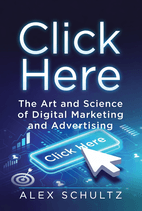
Alex Schultz's Click Here demystifies digital marketing as a deliberate, learnable engine of business growth, offering a timeless framework centered on a North Star goal, incremental measurement, and channel mastery. Written for anyone from local business owners to tech executives seeking a practical, no-nonsense playbook for driving measurable results.
Feature
Insta.Page
Blinkist
Shortform
Click Here
✓
✓
✕
Summary Depth
Full Chapter-by-Chapter
15-min overview
Section-by-section guides
Audio Narration
✓
✓
✓
Visual Mindmaps
✓
✕
✕
AI Q&A
✓
✕
✕
Quizzes
✓
✕
✕
PDF Downloads
✓
✕
✓
Price
$89.99/yr
$146/yr (PRO)
$199/yr
*Competitor data last verified July 2026.
1 Page Summary
This book demystifies digital marketing as a deliberate, learnable engine of business growth, arguing that it is the most powerful tool available to companies of any size. Alex Schultz, drawing on experience turning around companies like eBay and Facebook, establishes a foundational framework built on timeless principles rather than fleeting tactics. The core of this framework begins with a clear "North Star" goal and its accompanying metric, which serves as a decision-making anchor, and an understanding of the marketing funnel (Awareness, Intention, Decision, Action, plus word-of-mouth). The author stresses that mastery starts with the basics—like ensuring creative matches the channel—and that even sophisticated teams must continually refine them.
The book is structured to first build the necessary infrastructure for success before diving into specific channels. This infrastructure includes: defining and accurately logging the right conversion action (e.g., an activated user, not just a sign-up); using behavioral targeting and re-targeting over simple demographics; and, most critically, a rigorous approach to measurement. Schultz emphasizes that marketers must focus on incremental and marginal returns, not misleading average ROI, and that this requires honest experimentation to prove an ad actually caused a result. He also provides practical advice on building the right team, negotiating with finance for budget credibility, and developing cross-functional relationships.
The second half of the book provides a detailed, principle-driven analysis of individual marketing channels—product-led (in-app merchandising, direct mail), partner-led (display, affiliates), search (SEO/SEM), and social—treating each as having a historical doppelgänger. The final chapter on AI grounds the reader in its fundamentals (data, algorithms, compute) and its tactical applications in ranking, moderation, and creative generation, all while reinforcing the book’s central thesis: tools evolve, but principles (especially incremental measurement) are timeless. The intended audience is anyone from a local business owner to a tech company executive, and readers will gain a practical, no-nonsense playbook for driving real, measurable growth through digital marketing.
Introduction
Overview
Growth is often misunderstood as unchecked expansion, but it is fundamentally a force for good—lifting people out of poverty, creating jobs, and funding public services. Stagnation, by contrast, breeds insecurity and declining living standards. Businesses are the engines of this growth, and the environment in which they operate matters greatly; regulation can either enable or stifle their efforts. The author makes a compelling case that growth rarely happens by accident—it is a choice that requires deliberate action, and the most powerful tool for pursuing it today is digital marketing. This book exists to demystify that tool, making it accessible whether you run a local coffee shop or a trillion-dollar tech company.
The advertising channels born in the 1990s—search and social media—have matured, but there has been a gap in the literature covering the digital era. This chapter fills that gap, drawing on the author’s firsthand experience turning around companies like eBay and Facebook (now Meta). The key insight that transformed advertising was user IDs, which allowed marketers to measure true incremental impact rather than relying on flawed last-click attribution. Even more exciting, digital marketing gave superpowers to small and medium businesses, leveling a playing field that had long favored only the biggest players. Great marketing can produce 10x or 100x differences in outcomes, and the same opportunity is available to anyone who learns the underlying principles.
Two guiding principles anchor everything that follows. First, tools evolve, but principles are timeless. Push notifications, email, SMS, and direct mail all boil down to the same marketing question: how do you deliver a compelling message, measure its effect, and prove it caused something to happen? Recognize those commonalities, and you can leverage decades of knowledge regardless of the channel. Second, incremental results are everything. You must be able to prove that your marketing actually caused a change—if you hadn’t run that ad, would the same outcome have occurred? The author illustrates this with examples from eBay and Uber, where leaders discovered that some of their biggest marketing spends were completely wasted. These principles are just the start; the real power lies in the details.
The chapter also explains why this book was written: everyone the author spoke to—experts, publishers, professors—said a comprehensive, practical resource on digital marketing for the internet age was missing. The author’s own journey began in high school with a GeoCities site about paper airplanes, learning SEO and eventually earning tens of thousands of dollars from banner ads. That experience taught the importance of testing, measurement, and tracking—ideas that trace back to Claude Hopkins’ Scientific Advertising but are more relevant than ever in a digital world where entire channels can be wasted.
The book is structured into three main areas. First, the basics: conversion (what you want people to do), channel (where to find them), targeting (who to reach), and creative (what to show). Second, the infrastructure needed to support great marketing: technology, teams, measurement, incrementality testing, vetting agencies, and collaborating with engineers (no coding required beyond a PHP and MySQL for Dummies level). Third, the four most important channels—product-led channels (emails, push notifications, in-app merchandising) and the other major online channels.
Those primary channels are presented as the four pillars of online marketing: your own app or website, where you control the experience; partner-led channels like affiliates and retail ad networks (Amazon, Walmart); search marketing, which extends beyond Google to include the principles that will remain valuable even as AI changes how people ask questions; and social media marketing, the author’s specialty and now the largest channel, with foundational principles that apply to Meta, YouTube, TikTok, and whatever comes next.
All of this leads to a powerful realization: the internet has created a new golden age of marketing. What was once the exclusive domain of massive corporations is now available to small businesses, startups, and nonprofits. You can connect with a highly specific niche audience anywhere in the world more efficiently than ever before. The author’s ultimate goal is not just to show the how, but to give you the confidence and vocabulary to advocate for these methods—to prove to your CEO, peers, or finance department that growth is a choice, and that smart, well-executed marketing is one of the most effective ways to achieve it.
Growth and the Economy
Growth gets a bad rap sometimes—people hear it and imagine rapacious, unchecked expansion. But when you look at the big picture, growth is what lifts people out of poverty, creates jobs, funds public services, and makes children better off than their parents. Stagnation does the opposite: job insecurity, falling living standards, and a sense that the future is worse than the past. Businesses are the engines of this growth. A growing business can hire more people, invest in new ideas, and return value to shareholders. A shrinking one has to lay people off and watch returns dwindle. There’s a virtuous cycle at work: businesses grow, economies grow, and as economies grow, businesses find even more room to expand. The net result is a society that’s better off across the board.
Growth is also a choice. It rarely happens by accident; it takes deliberate effort. And the environment matters—regulation can either enable or stifle that effort. The author has seen a worrying uptick in anti-tech regulation, especially in Europe, and while the intent may be good, the effect is often a drag on business growth. To succeed today, organizations have to choose growth and then take action to make it happen. And there’s no better tool for doing that than online digital marketing. It’s part art, part science, and for too many people it remains a mystery or a gamble. This book exists to demystify twenty-first-century digital marketing and help you become brilliant at it. Whether you run a local coffee shop or a trillion-dollar tech company, growth is within reach.
Enter Marketing
The advertising channels born in the 1990s—search and social media—came of age in the 2010s and are still evolving. Classic resources like David Ogilvy’s Ogilvy on Advertising cover the pre-digital era beautifully, but there’s been a gap in the literature for everything that came after. This book fills that gap, focusing on the bottom of the marketing funnel (which the author explains in depth later). Whether you’re a student, an experienced marketer, or a business owner, the goal is to give you the tools to achieve growth that would otherwise be impossible.
The author knows digital marketing works because he has seen it turn companies around. At eBay in 2004, the stock crashed nearly 50% the quarter after he joined. At Facebook (now Meta), growth stalled shortly after he arrived. Both companies came roaring back—and brilliant marketing was a key reason. He joined Facebook in 2007 because he believed it would transform advertising. The key insight was user IDs: for the first time, advertisers could compare the behavior of people who saw an ad with a “holdout” group that didn’t. That let them measure true incremental impact, not just last-click attribution. At eBay, he had been frustrated that they couldn’t run those long-term experiments. Facebook made it possible.
Even more exciting, Facebook gave superpowers to small and medium businesses. Historically, only big companies could afford to target niche audiences—say, gay men like the author through a show like RuPaul’s Drag Race. SMBs couldn’t buy those custom ad spots. But with digital marketing, any business could test their way in, reaching exactly the audience they could afford. It didn’t just level the playing field; it created a new, more egalitarian one. The author started helping small businesses use Facebook’s self-service ads, then led the SEO team to grow non-brand search users by 100x, and eventually became Meta’s CMO. Marketing and analytics have been two sides of the same coin for him since high school, and they have shaped his entire career.
Great marketing can produce 10x or 100x differences in outcomes. Amazon built a marketplace that dominated Google search results while eBay debated whether to open up to SEO. Snapchat built a social success but didn’t pursue aggressive growth, leaving room for TikTok to buy billions in paid marketing and explode. The author would rather be in Amazon’s or TikTok’s position. The same opportunity is available to you, starting with two guiding principles.
Guiding Principles
First, tools evolve, but principles are timeless. When push notifications became popular, people got lost in the technical details—how to build an app, prompt for permission, register a token. They forgot to ask the marketing question. Push notifications are just the latest descendant of direct mail. In the 1980s, you sent letters that had to be compelling, with a valid address, and you paid per piece. In the 1990s, email was free, but you needed a good subject line and avoided spam. In the 2000s, SMS had shorter messages and costs again. Now it’s push notifications. The principles of delivery, measurement, and impact are exactly the same. Recognize those commonalities, and you can leverage decades of marketing knowledge no matter the channel.
Second, incremental results are everything. You need to prove that your marketing actually caused something to happen. If you hadn’t run that ad, would the same outcome have occurred? Professor Steve Tadelis proved at eBay that buying the keyword “eBay” was mostly wasted.
**Key Takeaways
Key concepts: Introduction
1. Introduction
Growth as a Force for Good
Growth lifts people out of poverty
Growth creates jobs and funds public services
Stagnation breeds insecurity and declining living standards
Businesses are the engines of economic growth
Digital Marketing as the Growth Tool
Growth requires deliberate action, not accident
Digital marketing is today's most powerful growth tool
User IDs enabled true incremental impact measurement
Digital marketing leveled the playing field for small businesses
Two Guiding Principles
Tools evolve, but marketing principles are timeless
Incremental results are everything
Prove marketing caused a change, not just correlation
Biggest marketing spends can be completely wasted
Why This Book Was Written
No comprehensive digital marketing resource existed
Author's journey from GeoCities to eBay and Facebook
Testing, measurement, and tracking are foundational
Principles trace back to Claude Hopkins' Scientific Advertising
💡 Try clicking the AI chat button to ask questions about this book!
1. THE BASICS
Overview
Mastering the basics isn’t just for beginners—it’s the foundation that even the most seasoned professionals return to again and again. The author shares a real-world example from his time as CMO at Meta: one of the most effective marketing suggestions his team ever made was simply that the creative should match the channel. That meant shooting video in the orientation people actually hold their phones, and weaving in music that fits the surrounding content. It sounds obvious, but the impact on revenue was concrete.
The real insight here is that no business—no matter how sophisticated—gets the basics perfectly right. In fact, the author admits he kept discovering gaps in his own teams’ execution while writing this chapter. The beauty of the basics is that they scale: when you zoom in from high-level strategy and ground yourself in fundamentals, two things happen. You get better results immediately, and you often find new inspiration to push the broader strategy forward.
The most basic—and most important—advice is to be crystal clear on your goal and how you’ll measure success. Notice the distinction: goals aren’t metrics. Metrics describe goals. Once you know what you’re aiming for, you can diagnose where the marketing funnel is failing. Are enough relevant people aware of your product? If yes, what’s stopping them from taking action? Only after you’ve answered those questions should you dive into implementation—optimizing conversion flows, targeting the right audience, and delivering the right message in the right channel at the right time.
Key Takeaways
Basics aren’t just for beginners – Even top-performing teams have room to improve fundamental practices; revisiting them consistently drives better results and fresh strategic insights.
Creative must match the channel – Small adjustments like video orientation and background music can significantly boost performance because they respect where and how the audience is consuming content.
Separate goals from metrics – A goal is what you want to achieve; metrics are how you measure progress toward it. Confusing the two leads to misdirected effort.
Diagnose before you act – Work through the marketing funnel step by step: awareness, consideration, conversion. Understand where the bottleneck is before optimizing tactics.
Practical implementation follows clarity – Once you know your goal and where the funnel breaks, you can effectively optimize flows, targeting, messaging, and timing.
Key concepts: 1. THE BASICS
2. 1. THE BASICS
Basics Scale to All Levels
Even top teams have room to improve fundamentals
Revisiting basics drives better results and insights
Example: Meta CMO saw revenue from channel-matching creative
Creative Must Match the Channel
Shoot video in phone orientation people use
Weave in music that fits surrounding content
Small adjustments can significantly boost performance
Separate Goals from Metrics
Goals are what you want to achieve
Metrics measure progress toward the goal
Confusing them leads to misdirected effort
Diagnose the Funnel Before Acting
Work through awareness, consideration, conversion
Identify where the bottleneck is
Understand what stops people from taking action
Implement After Clarity
Optimize conversion flows and targeting
Deliver right message in right channel at right time
Practical execution follows clear diagnosis
Chapter 1: The North Star
Overview
Great marketing doesn’t happen by accident. It starts with crystal‑clear intent—a single, unifying goal that cuts through the noise and gives everyone a reason to row in the same direction. That’s what I call a North Star. It’s not just a slogan; it’s the decision‑making anchor for your team, your campaigns, and your entire company. A real North Star pairs that ambition with a metric so tightly defined that there’s no room for confusion. Whether your goal is as straightforward as “maximize income” or as lofty as Facebook’s “connect the world online,” the magic happens when the goal and its measure are both sharp enough to settle arguments, guide tradeoffs, and keep the organization moving fast without losing alignment.
The Danger of a Second‑Best Goal
The biggest threat to your North Star isn’t irrelevance—it’s that other, nearly as good, goal you’re tempted to chase. Splitting focus between two priorities means splitting resources, breeding internal competition, and failing at both. A great goal forces real tradeoffs. As Deb Liu once put it, “It isn’t prioritization if it doesn’t hurt.” If your North Star is “connect the world online,” you have to decide: do you mean registered users or monthly active users? Does “the world” include people not yet online? That level of detail matters because the metric you choose will shape every decision that follows.
Facebook’s North Star in Practice
When I joined Facebook in 2007, the company had just walked away from a Yahoo acquisition—an exit that many executives wanted. Founder Mark Zuckerberg held fast to his vision: connect the world through social media, and do it as an independent company. That decision cost him a lot of talent, but it forged a North Star that was anything but theoretical.
The chosen metric was monthly active users (MAU)—anyone who logged in at least once in the past thirty days. That seemed radical at the time. Most companies bragged about registered users, a vanity metric that included long‑dormant accounts. Facebook was the first major company to publicly ditch that number for MAU, and it pushed the whole industry forward.
Why did MAU work so well? Because it forced clarity. Revenue had to serve MAU, not undermine it. When the ads team floated “homepage takeovers”—those obnoxious, Hulk‑smashing ads that other social networks sold—the idea was killed without senior review. Why? Because any monetization that annoyed users enough to stop logging in would hurt MAU. That single constraint saved Facebook from hundreds of bad revenue ideas and helped build an ad system that, for many users, actually adds value rather than taxing it.
Moving Fast While Staying Aligned
There was internal debate too. Some colleagues argued for daily active users (DAU) instead. But DAU measures engagement, not reach. MAU measures the base of people who give you the option to eventually build a habit. You can’t upsell someone to daily use if you haven’t first gotten them to come back monthly. Focusing on MAU also forced us to think about the marginal user—the person who doesn’t use the product like a Silicon Valley power user. Notification defaults, for example, look very different for someone visiting once a month versus ten times a day. If you design only for the fanatics, you miss the people who are just starting their journey.
Of course, any metric can be gamed. You could count a single email click as “active” and blast a million emails to juice MAU—but that wouldn’t build real value. So we added a guardrail: the percentage of MAU who were weekly active. That kept us from acquiring low‑quality, one‑and‑done users. (More on guardrail metrics in Chapter 7.)
The real payoff? Speed. With a clear North Star and a crisp metric, we stopped arguing about what mattered. We didn’t need endless meetings or escalations to Mark. We could move fast and stay aligned—not just in marketing, but in product, engineering, and every decision that touched the user.
Key Takeaways
One goal rules them all. Choose a single North Star and protect it from the pull of your second‑best priority. Split focus splits results.
The metric matters as much as the goal. Vague aspirations lead to fuzzy decisions. Define exactly how you measure progress—MAU, revenue, free cash flow—and stick to it.
Tradeoffs are the point. If a decision doesn’t hurt somewhere, you haven’t truly prioritized. Let your North Star guide which good ideas you say no to.
Guard against metric gaming. Any metric can be exploited. Add a simple guardrail (like weekly active percentage) to prevent short‑term tricks from undermining long‑term value.
Clarity creates speed. When everyone knows the goal and how it’s measured, you spend less time debating and more time executing. That’s the real power of a North Star.
Key concepts: Chapter 1: The North Star
3. Chapter 1: The North Star
Defining the North Star
A single, unifying goal that guides all decisions
Pairs ambition with a tightly defined metric
Settles arguments and keeps teams aligned
Not just a slogan but a decision-making anchor
The Danger of Split Focus
Second-best goals split resources and breed competition
True prioritization requires painful tradeoffs
Vague goals lead to fuzzy decisions and confusion
One goal must rule them all to avoid failure
Facebook's North Star in Practice
Chose monthly active users (MAU) over registered users
MAU forced revenue to serve user engagement
Killed bad ideas like homepage takeovers automatically
Built an ad system that adds value, not taxes it
Choosing the Right Metric
MAU measures reach, DAU measures engagement
Focus on marginal users, not just power users
Guardrails like weekly active prevent metric gaming
Metric must drive real value, not short-term tricks
Clarity Creates Speed
Clear North Star eliminates endless debates
Teams move fast without losing alignment
No need for constant escalations to leadership
Works across marketing, product, and engineering
Chapter 2: The Marketing Funnel
Overview
The marketing funnel is older than you might think, but that doesn’t make it stale. It traces back to Elias St. Elmo Lewis and his AIDA model—Awareness, Intention, Decision, Action—created around 1900. Over time, it evolved into a funnel shape, with awareness at the wide top and action at the narrow bottom. I prefer a slightly modified AIDA that adds a word-of-mouth loop: if people have a great experience, they’ll talk about it and feed back up the funnel. The real power of the funnel isn’t in predicting any single person’s moves (humans are too messy for that), but in understanding where your target audience as a whole sits. That insight tells you what kind of campaign to run right now.
The AIDA stages:
Awareness: Do people know you exist and that your product might serve them?
Intention: Do they want or desire what you offer?
Decision: Are they teetering on the edge, just needing a nudge to convert?
Action: Did they do the thing you wanted—buy, sign up, download?
Word of mouth/Virality: Did they share their experience, positively or negatively? This loop influences every stage above.
Other marketers tweak the model—adding “consideration” or “preference”—but I stick with AIDA. The key is remembering that people bounce around the funnel; they forget, remember, jump forward, slip back. Yet as a group, audiences become pretty predictable. Since your product or service lives through different phases of its life, the funnel helps you choose the right battle.
Evaluate Your Pool Sizes First
Before you plan a single ad, figure out how many people are in each stage. This shows you where the biggest growth opportunity lives. Then tailor your campaigns:
Awareness stage: Keep the message simple and run it on channels that match your target audience. For WhatsApp in the US, we broadcast “more private alternative to iMessage” everywhere—TV, our other products.
Intention stage: Get sharper. Highlight the specific problem you solve. WhatsApp ads emphasized the pain of cross-platform messaging between iOS and Android.
Decision stage: Help people over the hump. If price is a barrier, show pricing clearly. RayBan Meta glasses ads that mentioned “starting at $299” pushed fence-sitters into decision mode. Use direct-response ads and in-store merchandising here.
Action stage: This is all about clear calls to action—buy now, register now—placed as close to the moment of action as possible. For getting new users to import contacts, we promoted that function right inside the app during registration.
A classic example: GoDaddy realized almost nobody knew they could buy domain names. So they ran Super Bowl ads to create awareness for the whole category. That grew the pool so large that competitors could skip awareness entirely and compete at the decision and action stages—offering better storage, discounts, and features. Same logic works for brands like Mercedes, which already have massive awareness but need to convince buyers to choose them over Audi or BMW.
Moving People Down the Funnel: A Real-World Example
Imagine you run a small hotel in North Norfolk, England, a coastal holiday destination. Come summer, lots of people are thinking about seaside getaways. But do they know about North Norfolk? And do they know about your specific hotel?
You can’t single-handedly build awareness of the region. Instead, band together with local tourism boards and other businesses to create a “Visit Norfolk” campaign. That lifts the whole top of the funnel. Once people know the area, you shift to selling your hotel:
Awareness of your hotel: Use Booking.com, Google search, past guest lists, WhatsApp contact.
Intention and decision: Promote your best reviews via email, WhatsApp, or boosted social posts. Buy Google ads targeting people searching for North Norfolk. Post walkthroughs and testimonials on social media.
Action: Be right there when they’re ready to book. Offer a discount on Booking.com or through a WhatsApp message. Use clear calls to action.
This same funnel logic scales from a twelve-room B&B to a company with billions of users. Once they take action, a great experience generates word-of-mouth, which feeds back to the top.
Stay Focused and Save Money
Where someone sits in the funnel dictates your channels, creative, and landing pages. Don’t serve a “book now” discount to someone still in awareness; they need “visit Norfolk” first. As you see their behavior evolve, your targeting should hand them off through a user journey.
Practically, you can apply the funnel today:
Research your funnel. For a small business, talk to people around town and trust your gut. For larger companies, run surveys or commission research.
Apply logic. Find where the biggest drop-offs happen between stages, then adjust focus.
Plan campaigns based on the suggestions in this chapter. Start wherever feels comfortable.
Run the campaigns, then iterate based on results.
The funnel isn’t perfect—no model ever perfectly captures human behavior—but used well, it saves time, money, and effort by keeping you focused on what truly matters at each stage of your business.
Key Takeaways
The AIDA model (Awareness → Intention → Decision → Action) plus a word-of-mouth loop remains a practical way to plan marketing campaigns at different stages of a product’s life.
Before launching anything, evaluate your pool sizes at each funnel stage to find the biggest growth opportunity.
Tailor your message, channel, and call to action to the specific stage—don’t use a bottom-of-funnel tactic on a top-of-funnel audience.
Even small businesses can use the funnel: collective awareness efforts (like “Visit Norfolk”) expand the pool, then you compete on intention, decision, and action.
The funnel saves resources by preventing wasted spend on the wrong message for the wrong audience.
Key concepts: Chapter 2: The Marketing Funnel
4. Chapter 2: The Marketing Funnel
The AIDA Model and Its Evolution
AIDA: Awareness, Intention, Decision, Action
Originated by Elias St. Elmo Lewis around 1900
Adds word-of-mouth loop for great experiences
Predicts group behavior, not individual actions
Evaluate Pool Sizes First
Count people in each funnel stage before ads
Find biggest growth opportunity in your audience
Tailor campaigns to stage-specific needs
Example: GoDaddy created category awareness via Super Bowl
Alex Schultz is an American author and media analyst known for his expertise in digital culture and internet trends, notably writing the influential book *The Online Tribe*. His background includes leading research on user behavior for major tech platforms, and his work often explores the societal impact of social media. Schultz's clear, data-driven analysis has made him a sought-after commentator for outlets like *Wired* and *The Atlantic*.
Frequently Asked Questions about Click Here
What is Click Here about?
This book provides a comprehensive, practical guide to digital marketing, drawing on the author's experience as a CMO at Meta and eBay. It covers foundational principles like setting a 'North Star' metric, understanding the marketing funnel, and mastering conversion optimization. It also dives into specific channels—search, social, product-led, and partner-led—and emphasizes the importance of measuring incremental impact. The book is designed for anyone from local business owners to tech executives who want to use digital tools to drive real growth.
Who is the author of Click Here?
The author is Alex Schultz, a seasoned digital marketing executive who served as CMO at Meta (formerly Facebook) and previously at eBay. He has firsthand experience turning around major companies and scaling their marketing efforts. The book is built on his practical insights from leading some of the world's largest digital marketing teams.
Is Click Here worth reading?
Yes, this book is absolutely worth reading because it delivers battle-tested strategies that work across business sizes—from a coffee shop to a trillion-dollar tech company. It demystifies complex topics like incrementality measurement and AI in marketing with clear, actionable advice. Whether you're a beginner or a seasoned marketer, you'll find timeless principles that will improve your campaigns and help you avoid common pitfalls.
What are the key lessons from Click Here?
Key lessons include the critical importance of defining a single, measurable 'North Star' goal to align all marketing efforts. Another is mastering the marketing funnel (Awareness, Intention, Decision, Action) and understanding that conversion tracking must be accurate and tied to real business value. The book also stresses that incremental ROI—not average ROI—should drive budget decisions, and that building strong cross-functional relationships with finance and product teams is essential for long-term success. Finally, it teaches that while tools change, timeless principles like behavioral targeting and creative relevance remain foundational.
📚 Explore Our Book Summary Library
Discover more insightful book summaries from our collection