Jonathan Smith's Fight Less, Win More dismantles the adversarial win-lose mindset, providing a system for collaborative negotiation that builds trust and uncovers mutual gains. It's for business professionals and anyone seeking less stressful, more rewarding agreements through strategic empathy and psychological insight.
Feature
Insta.Page
Blinkist
Shortform
Summary Depth
Full Chapter-by-Chapter
15-min overview
Section-by-section guides
Audio Narration
✓
✓
✓
Visual Mindmaps
✓
✕
✕
AI Q&A
✓
✕
✕
Quizzes
✓
✕
✕
PDF Downloads
✓
✕
✓
Price
$89.99/yr
$146/yr (PRO)
$199/yr
*Competitor data last verified July 2026.
1 Page Summary
In 'Fight Less, Win More: How Master Negotiators Influence Hearts, Minds, and Deals,' author Jonathan Smith argues that the most effective negotiations are not battles to be won, but collaborative processes aimed at creating sustainable value. The central thesis dismantles the adversarial, win-lose mindset, proposing instead that true success comes from influencing the other party's perceptions and emotions to build trust and uncover mutual gains. Smith posits that by shifting focus from claiming value to creating it, negotiators can achieve superior outcomes while preserving and even strengthening relationships.
The book's distinctive approach lies in its synthesis of psychological insight with practical, actionable frameworks. Smith draws on principles from behavioral economics, social psychology, and communication studies to explain how master negotiators read subtle cues, manage emotional undercurrents, and reframe positions to align interests. Rather than offering a simple bag of tricks, it provides a system for preparing for and conducting negotiations that emphasizes curiosity, strategic empathy, and the deliberate building of rapport long before the first formal offer is made.
This guide is designed for a broad audience, from business professionals and salespeople to anyone who navigates agreements in their personal or professional life. Readers will gain a robust toolkit for moving beyond positional bargaining, learning how to de-escalate conflict, uncover hidden interests, and craft agreements that all parties are committed to upholding. Ultimately, 'Fight Less, Win More' promises not just better deals, but a less stressful and more rewarding way to handle any critical conversation.
Foreword
Overview
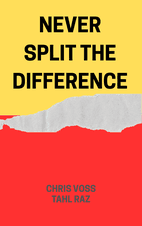
This foreword, written by Chris Voss, bestselling author of Never Split the Difference, serves as a powerful introduction and endorsement. He positions the book you're about to read as the essential, practical companion to his own work—the "missing operations manual" for applying high-stakes negotiation principles to every aspect of life and business.
The Origin of a Necessary System
Voss begins by diagnosing a universal problem: most people fail to recognize they are in a negotiation. He asserts that negotiation is a constant of daily life, from corporate deals to parenting, and that failing to see this reality means you are "already losing." This book, Fight Less, Win More, is presented as the solution—a battle-tested system born from real hostage crises and refined for universal application.
Meet Your Guides: The Practitioners
The foreword introduces the book's authors, Jonathan B. Smith and Derek Gaunt, framing them as the ideal guides. Derek Gaunt’s credibility is rooted in his extensive career as a frontline hostage negotiator and his role as Head of Coaching for Voss’s company, The Black Swan Group. Jonathan Smith is highlighted as an expert in the Entrepreneurial Operating System (EOS) who became a masterful practitioner of the negotiation methods, applying them across corporate and personal contexts. Together, they offer both tools and mindset.
The Core Philosophy: Emotion is the Engine
Voss reiterates the foundational truth of The Black Swan Method™: emotion is the primary driver of all decision-making. Logic alone cannot overcome it, and argument does not win the day. Victory in negotiation comes from making the other party feel heard and understood. Mastering this, he states, provides an "unfair advantage" that most negotiators never acquire.
A Warning and a Promise
He explicitly warns that this book is not about manipulative tricks or fast-talking. Instead, it’s a guide to forging better deals, building stronger relationships, and understanding the hidden dynamics of human behavior. It is framed as the essential resource for anyone who has ever left a conversation feeling regretful, dismissed, or outmaneuvered.
The Call to Action: Practice is Non-Negotiable
The foreword concludes with a crucial point: negotiation is a perishable skill. Merely reading is insufficient. True mastery, like that of an elite athlete, requires consistent practice and feedback. Voss directs readers to The Black Swan Group’s community and resources, urging them to transform the book’s lessons into instinct through "live-fire" repetition.
Key Takeaways
Negotiation is ubiquitous. If you don't think you're negotiating, you are likely losing by default.
This book is the applied manual. It builds on the principles of Never Split the Difference with a proven, practical system for implementation.
Success hinges on emotion. The core competitive edge is understanding that people are emotionally driven and need to feel heard, not out-argued.
Credibility matters. The techniques come from the high-stakes world of hostage negotiation and have been rigorously tested in business and life.
Skill requires maintenance. True expertise demands ongoing practice; knowledge alone is not enough.
Key concepts: Foreword
1. Foreword
The Problem & Solution
Negotiation is a constant in daily life
Failing to recognize this means you are losing
This book provides a battle-tested system as the solution
Author Credibility & Approach
Authors are practitioners from hostage negotiation
Combine negotiation methods with business systems (EOS)
Offer both practical tools and essential mindset
Core Negotiation Philosophy
Emotion is the primary driver of all decisions
Victory comes from making others feel heard
Mastering this provides an unfair advantage
Book's Purpose & Warning
Not about manipulative tricks or fast-talking
A guide to better deals and stronger relationships
For those who leave conversations feeling outmaneuvered
Path to Mastery
Negotiation is a perishable skill
Reading alone is insufficient for mastery
True expertise requires consistent practice and feedback
💡 Try clicking the AI chat button to ask questions about this book!
Chapter 1: You Have a Negotiation Problem
Overview
Everyone faces moments where they feel unfairly blocked, ignored, or frustrated by another person, from a bureaucratic rejection to the daily clashes at home or work. These aren't just annoyances—they are negotiations. This chapter argues that a negotiation occurs in any interaction where someone wants or needs something, reframing these often-stressful moments as "sensitive conversations." The typical instinct is to push harder with logic, persuasion, or emotion to get what we want, but this usually backfires, damaging relationships and creating resistance.
The counterintuitive but powerful alternative is Tactical Empathy. This approach flips the script: the most critical first step is not to advocate for yourself but to make the other person feel heard and understood. This isn't about sympathy or agreement, but about the calibrated application of emotional intelligence to recognize and articulate their perspective. The impact is neurological; when people feel understood, it disarms threat responses and builds the trust and openness necessary for real collaboration. This makes it a learnable superpower that transforms adversaries into partners.
The concept, with origins in high-stakes hostage negotiation, is presented as a practical, transformative skill for everyday life. Mastery is a non-linear journey of learning, adopting a new mindset, practicing in low-stakes settings, and applying it under pressure. A personal story illustrates its power: when faced with an erroneous FBI rejection, the author used polite, collaborative questions rooted in Tactical Empathy to quickly resolve a mistake that an angry response would have likely exacerbated. Ultimately, this is more than a set of techniques; it’s a philosophical shift in engagement. By dedicating effort to understanding others, we build better relationships, achieve goals more efficiently, and contribute to a more understanding world. The journey requires consistent practice to make these skills an instinctive part of how we communicate, saving time and energy by preventing protracted conflict and unlocking deeper cooperation.
The Unexpected Rejection
The chapter opens with the author’s visceral reaction to being declared “ineligible” for the FBI Citizens Academy due to a failed background check—a result he knew was a mistake. This moment of personal frustration and offense serves as a relatable entry point into the universal experience of encountering obstacles posed by other people.
The Terrible, No-Good, Very Bad Tuesday
To illustrate how pervasive these conflicts are, the narrative paints a picture of a stress-filled typical day. From a grumpy stranger at the coffee shop to unresponsive clients, dismissive colleagues, and tense family dynamics, the example highlights how daily life is filled with moments where our desires clash with others’, leaving us feeling misunderstood, ignored, or frustrated.
Redefining "Negotiation"
The chapter challenges the conventional view of negotiation as a formal, high-stakes event. Instead, it posits that any interaction where someone wants or needs something is a negotiation. This includes mundane moments like deciding bathroom order, getting a child to bed, or ordering coffee. The Starbucks barista example underscores that even simple transactions involve unspoken negotiations about respect and fairness. These are reframed as "sensitive conversations" because the act of wanting or needing something triggers vulnerability and threat, priming everyone for a stress response.
Why the Typical Approach Fails
Most people navigate these sensitive conversations by focusing intently on what they want and using logic, reason, or persuasion to get it. When that fails, they may resort to passive aggression, pleading, or anger. This approach seems sensible but fundamentally backfires: it alienates the other person, damages relationships through resentment, and creates a vicious cycle of pushback, even if you occasionally "win."
Introducing a Counterintuitive Solution
The proposed alternative is Tactical Empathy. The first and most critical step in any negotiation is not to advocate for yourself, but to make the other person feel heard and understood. This is defined as the calibrated application of emotional intelligence to recognize and express your counterpart's perspective. It is distinctly different from sympathy (feeling what they feel); it is about understanding their point of view, regardless of agreement.
The Power of Being Understood
The text explains the biological and psychological impact of feeling understood. When we don’t feel understood, the other person is perceived as a threat, triggering a stress response that clouds judgment. When we do feel understood, our brains release hormones that promote relaxation, trust, and openness. By satisfying this universal human need, you transform the other person from a defensive adversary into a calmer, more collaborative partner. This opens the door to honest communication and makes them more willing to help you achieve your goals.
A Learnable, Practical Superpower
Mastering Tactical Empathy is presented as a learnable skill that feels like a superpower. It replaces judgment with curiosity, allowing you to uncover the unspoken emotions, beliefs, and fears driving behavior. Remarkably, the attempt to understand is often as powerful as being correct; the genuine effort itself makes people feel valued and more inclined to engage. This skill strengthens relationships, reduces future conflict, and unlocks access to support and opportunities.
Origins and Authors' Credibility
The concept’s origins are traced to Chris Voss’s Never Split the Difference and the work of The Black Swan Group. Co-author Derek Gaunt’s long history as a police hostage negotiator and his partnership with Voss is established, lending high-stakes credibility. The other co-author, Jonathan, brings a practitioner’s perspective from the worlds of entrepreneurship and business coaching. Their collaboration aims to make these transformative skills accessible beyond expensive training.
The Path to Mastery
The chapter concludes by outlining the non-linear, four-step process for mastering these skills:
Learn (engaging with material like this book).
Adopt (shifting your mindset for every sensitive conversation).
Practice (in low-stakes environments and through reflection).
Apply (in real, higher-pressure situations).
The emphasis is on consistent practice to make the skills habitual, ensuring they are available under pressure. It clarifies that Tactical Empathy is not a rigid script but a flexible set of tools for building better relationships in business and life. It is not about being "nice" or manipulative, but about genuine engagement that allows for both assertiveness and empathy, ultimately saving time by preventing protracted conflict.
Tactical Empathy operates on a counterintuitive principle: it feels like a detour, but it's actually the most direct route to achieving your goals. By dedicating the majority of a conversation—70 to 80 percent—to understanding the other person's perspective and emotions, you invest in the relationship. This investment pays dividends not only in the current interaction, where empathy fosters reciprocity and collaboration, but also in all future engagements. The other person is more likely to approach you with a cooperative rather than adversarial mindset, saving significant time and energy down the line.
More Than a Skill: A Transformative Practice
This approach transcends mere technique; it's a philosophical shift in how we engage with the world. Drawing a parallel to the Maharishi Mahesh Yogi's belief that meditation by a small fraction could promote global peace, the text suggests that widespread adoption of Tactical Empathy could similarly lead to a more understanding and joyful society. It trains you to step outside your own head, making you more tolerant, less prone to anger, and better equipped to build deep, fulfilling relationships. Our interdependent lives mean that the quality of our communication fundamentally shapes our success and happiness at work, at home, and in every interaction.
A Real-World Test: The FBI Email
The author illustrates this power with a personal story. Upon receiving an erroneous FBI email declaring him ineligible for a program due to a criminal record, his initial instinct was fury. However, employing Tactical Empathy, he resisted the urge to send an indignant reply. Instead, he responded with polite deference, calmly noting the discrepancy, suggesting a possible mix-up due to his common name, and asking a collaborative question: “How hard would it be for you to clarify the reason for my ineligibility?” This approach resolved the issue—a simple data entry error—within 24 hours, securing his acceptance. The author contrasts this with a likely past reaction of sending a scathing email, which would have damaged the relationship and delayed or derailed the desired outcome.
Beginning the Journey
Mastering this mindset is not an overnight transformation. It requires consistent practice to become second nature. This book is positioned as a practical guide and companion for that journey, meant to be used actively—dog-eared and annotated—as readers apply the principles in real life. The chapter closes by previewing that the upcoming section of the book will lay the foundational principles of Tactical Empathy and deep listening before delving into specific negotiation techniques.
Key Takeaways
Tactical Empathy is a strategic shortcut. Investing time upfront to understand others accelerates agreement and builds collaborative relationships for the future.
It's a transformative practice. Regularly focusing on others' thoughts and feelings cultivates personal growth, deeper relationships, and a more positive impact on your world.
Override instinct with strategy. In high-stakes interactions, pausing to choose a tactically empathetic response—often polite and collaborative—is far more effective than reacting emotionally.
Mastery requires commitment. Like any vital skill, Tactical Empathy demands dedicated practice to become an effortless part of your communication toolkit.
Key concepts: Chapter 1: You Have a Negotiation Problem
2. Chapter 1: You Have a Negotiation Problem
Redefining Negotiation
Any interaction where someone wants something is a negotiation
Includes mundane daily moments and sensitive conversations
Triggers vulnerability and stress responses in all parties
The Problem with Typical Approaches
Focusing on logic and persuasion usually backfires
Creates resistance and damages relationships
Leads to a vicious cycle of pushback and resentment
Introducing Tactical Empathy
First step: make the other person feel heard
Calibrated application of emotional intelligence
Understanding perspective without requiring agreement
Neurological Impact of Being Understood
Disarms threat responses in the brain
Promotes relaxation, trust, and openness
Transforms adversaries into collaborative partners
Tactical Empathy as a Practical Skill
A learnable superpower for everyday life
Replaces judgment with curiosity
The effort to understand is often as powerful as being correct
Mastery Requires Practice
Non-linear journey of learning and application
Practice in low-stakes settings first
Aims to make skills instinctive under pressure
Philosophical Shift in Engagement
More than techniques—a new way of communicating
Builds better relationships and achieves goals efficiently
Contributes to a more understanding world
Chapter 2: Tactical Empathy
Overview
The chapter opens with a story about a tense situation at a medical lab, where choosing curiosity over frustration—making it about the technician, not the problem—led to a surprisingly positive outcome. This introduces the foundational mindset: It’s not about you. True influence, defined as Tactical Empathy, isn’t about persuasion but about making others feel understood. It’s like "crossing the street" to see the world from their perspective, which can trigger a powerful "That's right" moment of emotional buy-in. This works because humans are emotional decision-makers; logic is often just a post-hoc justification.
To genuinely make someone feel understood, you must get curious about the latent dynamic—the fears and thoughts they aren't saying—beneath the surface of the spoken words. While this might seem time-consuming, it follows a "slow down to speed up" principle. Investing patience upfront, as shown in an example with a difficult supplier, saves immense time and resources later by building collaboration instead of resistance.
Developing this skill is like building a muscle, requiring three key elements. First, mindfulness through frameworks like CAVIAAR, which helps manage your own reactions and focus on the other person. Second, consistent practice in everyday, low-stakes interactions to rewire habitual responses. Third, and crucially, reflection. Keeping a Tactical Empathy Logbook and discussing experiences in a community of practice accelerates learning by turning everyday conversations into deliberate training.
It’s vital to set realistic expectations, however. Tactical Empathy is not a magic wand. You will still get triggered, you won't always get your way, and you can't maintain this high level of focus indefinitely. The skills also help you identify "7 Percenters"—those acting in bad faith—so you can disengage rather than waste effort. The chapter concludes with the Tactical Empathy Pledge, a mental checklist to cement the core philosophy before important conversations: prioritize understanding the other person to build trust and uncover their truth.
The Power of "It's Not About You"
The author recounts a frustrating experience at a medical lab, where missing paperwork threatened to derail a blood test appointment. Despite feeling triggered, he chose to engage the lab technician, Chamel, with curiosity about her name rather than venting his frustration. This small connection transformed the interaction. Chamel became helpful, and through a series of collaborative steps with another staff member, the issue was resolved amicably and efficiently. The author even received a second needle prick with good humor. This story underscores the core mindset of Tactical Empathy: It’s not about you. Making the interaction about his own anger would have created resistance. By focusing on the other person, he achieved his goal and built goodwill.
Influencing by "Crossing the Street"
Tactical Empathy is defined as influencing others by making them feel understood, which is fundamentally different from persuasion. Persuasion is like shouting at someone from your side of the street, trying to pull them to your viewpoint. Influencing, however, involves "crossing the street" to stand in their shoes, see the world from their perspective, and articulate that understanding. When someone feels truly heard, they often respond with a phrase of emphatic agreement like "That's right," signaling emotional buy-in. This happens because humans are not purely logical; we are emotional decision-makers who later justify our choices with logic. The "Ultimatum Game" experiment is cited, showing people will reject unfair offers even when it's against their financial self-interest, proving that emotions like the desire for fairness or revenge often override logic. Therefore, the key to influence is not better arguments but removing yourself as a threat by demonstrating understanding.
The Dynamics Beneath the Surface: Getting Curious
Making someone feel understood requires more than just saying "I understand." That phrase, especially when followed by "but...," often backfires. True understanding is demonstrated by getting curious about the latent dynamic—everything the other person is not saying, including their fears, desires, and unspoken thoughts. Every conversation has a presenting dynamic (the words spoken) and this deeper latent dynamic. While our intuition often clues us in, the challenge is articulating these observations. Showing you grasp the underlying feelings and thoughts—mirroring their perspective—is what makes a person feel truly heard and begins to lower their defenses.
Investing Time to Save Time: Slow Down to Speed Up
A common objection to Tactical Empathy is that it takes too much time. The author counters this with an example about a delayed generator order. Instead of snapping at the unhelpful supplier, Tom, he listened patiently for thirty minutes as Tom vented his frustrations. By acknowledging Tom's stress, the author made him feel understood. The result was a free upgrade, a priority placement, and delivery within two weeks, saving months of further delay. This illustrates the principle of "slow down to speed up." Investing time upfront to build understanding saves significant time, money, and stress later. This is a trade of "short-term greed" for "long-term greed." The principle holds even when you have power in a situation; using empathy builds lasting goodwill and collaboration, whereas wielding power alone sows seeds for future resistance and revenge.
Building the Empathy Muscle: Mindfulness, Practice, and Reflection
Adopting this mindset requires undoing lifelong self-focus. Three elements are essential: mindfulness, practice, and reflection.
Mindfulness is the conscious awareness of your own emotional state and the deliberate choice of how to respond. To cultivate this, the CAVIAAR method is introduced:
Curiosity: Shifting your focus to curiosity naturally dampens reactive anger.
Acceptance: Accept that attacks may happen and let them pass without fighting.
Venting: Clear your own negative emotions before a sensitive conversation.
Identifying: Seek to understand your counterpart's personality and goals.
Accusations Audit: Preemptively voice the negative thoughts your counterpart might have about you to defuse tension.
Remembering: Remind yourself that you and your counterpart are collaborators, not enemies.
Practice is non-negotiable. Tactical Empathy is a perishable skill that requires real-world repetition to build and maintain new neural pathways. Low-stakes daily interactions (with cashiers, colleagues, family) are perfect training grounds. Initial discomfort is normal, akin to learning a language; proficiency comes through consistent, immersive practice.
Reflection is the final component, allowing you to analyze your interactions, learn from mistakes, and continuously improve your application of these principles.
Reflection as the Accelerator of Skill
Moving beyond mindfulness and practice, the chapter emphasizes the transformative power of reflection—an often-overlooked step that crystallizes learning. It’s the deliberate practice of analyzing past conversations: How well did you listen? What tools did you employ? What was the outcome? The author shares a personal breakthrough from his early days as a coach: keeping a Tactical Empathy Logbook. By jotting down daily notes on successes, failures, and lessons, he identified patterns and dramatically accelerated his progress. This retrospective analysis sharpened his real-time awareness, making him more adept during conversations themselves.
The advice is direct: start your own logbook today. Dedicate fifteen minutes daily to reflect and write. To amplify the effect, create a community of practice—a small group that meets regularly to share experiences. This builds accountability and allows you to learn from others' triumphs and mistakes, supercharging your development.
Tactical Empathy is Not a Magic Wand
Before concluding, the chapter sets crucial, realistic expectations. Mastering these skills doesn’t create superhuman communicators.
You Will Get Triggered: In sensitive conversations, attacks are likely. Tactical Empathy doesn’t prevent the sting of criticism or hostility, but it trains you to control your response. Instead of reacting defensively, you learn to pause, get curious, and ask what’s motivating the attack. Preparation—knowing an attack is probable—is key, which is a core function of mental frameworks like CAVIAAR.
You Won’t Always Get Your Way: Tactical Empathy is a more effective influence tool than pure logic, but it’s not a guaranteed win. Each empathetic intervention is like a swing of an axe against a tree; sometimes one swing works, sometimes it takes a hundred. Critically, sometimes the “tree” is a steel pole. The authors introduce the concept of “7 Percenters”—individuals (like the 7% of hostage takers who will never surrender) who have no intention of good-faith negotiation. Here, the value of Tactical Empathy is that it quickly reveals this reality, allowing you to exit gracefully and not waste time.
You Can’t Always Be “On”: The skills require significant mental energy, focus, and awareness. Even experts have limits. An anecdote about Derek, tired after a night shift, failing to listen to his daughter’s unspoken fear, illustrates that lapses happen. The lesson is to schedule important conversations for when you are rested and to allow recovery time after intense engagements.
The Tactical Empathy Pledge
To solidify commitment, the chapter presents the Black Swan Tactical Empathy Pledge, used in their workshops. It serves as a pre-conversation mantra to center the practitioner on the core mindset: it’s not about winning, but about building trust, making the other person feel understood, and uncovering their truth. The pledge incorporates key concepts (like “Proof of Life” and “That’s Right”) that are explored later in the book, framing them as promises to oneself.
Key Takeaways
Reflection is non-negotiable for mastery. Maintaining a daily Tactical Empathy Logbook and discussing experiences within a community of practice dramatically accelerates skill development.
Manage your expectations. Tactical Empathy is a powerful tool, not a magic wand. You will still face emotional triggers, you won’t always achieve your desired outcome, and using the skills requires sustained mental energy you can’t maintain indefinitely.
Know when to walk away. The skills help identify “7 Percenters”—those negotiating in bad faith—allowing you to disengage quickly and avoid wasting time on impossible scenarios.
Commit to the mindset. The Tactical Empathy Pledge encapsulates the core philosophy: prioritizing the other person’s perspective to build trust and enable genuine influence.
Key concepts: Chapter 2: Tactical Empathy
3. Chapter 2: Tactical Empathy
Core Mindset: It's Not About You
Shift focus from your own emotions to the other person
Curiosity over frustration builds collaboration, not resistance
Making it about them transforms tense situations positively
Defining Tactical Empathy
Influencing by making others feel understood, not persuading
Cross the street to see their perspective
Aim for That's right moments of emotional buy-in
Understanding Latent Dynamics
Go beyond spoken words to unspoken fears and thoughts
Articulate the underlying feelings to demonstrate true understanding
Avoid the empty I understand followed by but
Slow Down to Speed Up Principle
Invest patience upfront to save time and resources later
Trade short-term greed for long-term greed
Builds collaboration instead of future resistance
Building the Skill: Three Key Elements
Mindfulness to manage your own reactions
Practice in low-stakes interactions to rewire habits
Reflection through a logbook and community discussion
Realistic Expectations and Limitations
Not a magic wand; you will still get triggered
Helps identify bad-faith actors (7 Percenters) to disengage
Cannot maintain this high focus indefinitely
The Tactical Empathy Pledge
Mental checklist before important conversations
Prioritize understanding the other person to build trust
Uncover their truth to achieve better outcomes
Chapter 3: The 5 Levels of Listening
Overview
This framework introduces a hierarchy for how we connect with others, moving from ineffective habits to profound understanding. It begins with Level 1: Listening Intermittently, a state of divided attention where one's own internal monologue competes with the speaker, leading to immediate disconnection and damaged trust. The next common pitfall is Level 2: Listening to Hijack, where the listener is merely waiting for a turn to speak, focused on their own rebuttal or agenda rather than on comprehending the other person's perspective. This approach misses critical information and signals that one's own views are more important.
The model then shifts to the foundations of effective listening. Level 3: Listening for Internal Logic represents the first genuine step forward, where the listener focuses on understanding the speaker's train of thought, assumptions, and personal reasoning. Building on this, Level 4: Listening for Emotion Attached to the Logic involves detecting the unspoken feelings—like fear, disappointment, or embarrassment—that fuel that logic, going beyond the surface words to the emotional core.
The pinnacle of the framework is Level 5: Empathetic Listening, which involves listening for the full context and worldview that shapes a person's emotions and logic. This requires synthesizing verbal, nonverbal, and situational information to understand the broader pressures, background, and beliefs at play. While mentally demanding and not meant for constant use, mastering this level is crucial for high-stakes, emotionally charged conversations.
To build this skill, one must practice deliberately in low-stakes environments. This involves focusing solely on receiving the multiple layers of communication—words, logic, emotions, and context—without the pressure to formulate a response. Practical exercises include asking open-ended questions to explore passion, observing conversations for unspoken dynamics, and practicing paraphrasing what was left unsaid. The goal is to develop the muscle memory for Level 5 when it matters most, using Levels 3 and 4 as a solid foundation for daily interactions while consciously avoiding the relationship-harming patterns of Levels 1 and 2.
Level 1: Listening Intermittently
This is the lowest form of listening, where you’re physically present but mentally absent. You offer superficial nods and “mm-hmms,” but your brain is divided between the speaker and your own internal monologue. The chapter likens this to a schizophrenic experience, where competing voices make focus impossible. The brain can only truly focus on one voice at a time.
When you listen intermittently, the damage is clear and immediate. Your counterpart can sense your disengagement through your tone and body language, leading them to feel hurt, disrespected, and irrelevant. This active disconnection pushes people into fight-or-flight mode, damaging trust and rapport. The advice is stark: if you catch yourself here, either elevate your focus or respectfully pause the conversation until you can.
Level 2: Listening to Hijack
Here, you listen just enough to formulate your own response. Your focus isn't on understanding but on waiting for your turn to speak, to insert your advice, defend your position, or correct the other person. This is the default mode for many, driven by the belief that our value in a conversation lies in what we say. Even quiet individuals often spend the other person’s speaking time composing their internal rebuttal.
This level is particularly tempting during emotional or competitive exchanges. The dangers are twofold: you miss critical information (both presenting and latent dynamics), and you actively offend your counterpart by demonstrating that your agenda matters more than their perspective. The solution is to embrace pauses and slow down. When you notice yourself hijacking the conversation, refocus on a single question: What’s motivating their behavior? This shifts you back into a receptive, curious mode.
Level 3: Listening for Internal Logic
This marks the first level of genuine “good” listening. You move beyond the words to understand your counterpart’s train of thought. You focus on the thinking behind their words: what information they’re prioritizing, what assumptions they’re making, and how they’ve reached their conclusions. You acknowledge that their internal logic—their personal reasoning—may differ entirely from your own or from objective reality.
While this is a major step forward and should be the minimum standard for engagement, it still only scratches the surface. It reveals what they think but not why they think it. You understand their mental journey but not the landscape it's moving through.
Level 4: Listening for Emotion Attached to the Logic
People are not purely rational; we make decisions based on emotion and then justify them with logic. Level 4 listening involves identifying the feelings—especially the unspoken, negative ones—that fuel your counterpart’s internal logic. Beyond the surface emotion they state (“I’m mad”), you listen for the deeper, more nuanced feelings they might not articulate: disappointment, fear, embarrassment, or feeling undervalued.
You gather clues from word choice, tone, facial expressions, and body language to form hypotheses about these underlying emotions. Articulating these feelings back to the person is a powerful step toward making them feel truly understood, as it addresses the latent dynamic driving the conversation.
Level 5: Empathetic Listening
The highest level involves listening for context. You seek to understand the broader situation shaping your counterpart’s emotions and logic: the pressures they’re under, their personal and professional background, their fears, desires, and core beliefs. This allows you to grasp their worldview.
When behavior seems irrational, the explanation almost always lies in context. Articulating someone’s worldview—simply reflecting it back without judgment or agreement—is the most powerful way to make them feel understood and to lower their defenses. It demonstrates that you see the full picture of where they’re coming from, which builds safety and opens the door to productive dialogue.
Practicing Level 5 listening is mentally exhausting, as it requires synthesizing a vast amount of verbal, nonverbal, and situational information. You can’t sustain it indefinitely, but you must develop the muscle memory to engage it when stakes are high and emotions are strong. The chapter’s example of the client enraged by a small software fee illustrates how Level 5 listening transforms confusion into curiosity, preventing a defensive reaction and preserving the relationship.
Practicing Level 5 Listening
Mastering empathetic listening is compared to a tennis player refining a new serve on the practice courts—it requires a safe, low-pressure environment to build competence. Begin by intentionally selecting one or two inconsequential conversations each day to apply this skill. In these moments, consciously direct your attention to the multiple layers of communication without the distraction of high stakes or emotional triggers.
Focusing on the Layers of Information
As you listen, deliberately parse the different streams of information: the explicit words spoken, the internal logic guiding the speaker's thoughts, the emotions underlying those thoughts, and the broader context shaping their perspective. For now, resist the urge to formulate a response or articulate your understanding; that step comes later in the book. By fully immersing yourself in receiving and synthesizing these layers, you'll find your self-consciousness fading, naturally embodying the principle that deep listening is about them, not you.
The Five Levels of Listening: A Recap
The chapter consolidates the framework for clarity:
Level 1: Listening Intermittently – Your attention is split between the speaker and your internal monologue.
Level 2: Listening to Hijack – You listen only to seize the conversation and steer it toward your own agenda.
Level 3: Listening for Internal Logic – You focus on understanding the speaker's train of thought.
Level 4: Listening for Emotions – You discern the feelings attached to the logical content.
Level 5: Empathetic Listening – You seek to comprehend the context that gives rise to those emotions.
Levels 1 and 2 actively harm relationships and should be avoided. Levels 3 and 4 represent solid, everyday listening. Level 5, while too cognitively taxing for constant use, is indispensable for navigating sensitive or critical conversations.
Low-Stakes Practice Exercises
To systematically develop this skill, engage in these exercises:
Ask about Passion: Pose the question, “What do you love about your job?” and challenge yourself to listen at Level 5, noting not just the logical details but the emotions and worldview behind them.
Observe Latent Dynamics: Eavesdrop on a conversation you're not part of, listening for unspoken dynamics or subtext that the participants might be missing, and reflect on the impact of those omissions.
Paraphrase the Unsaid: After someone shares with you, focus on what they didn't say. Verbally reflect back the latent message you perceive, based on intuition and observed cues.
Use the Tactical Empathy Logbook to document your progress and consider joining the Black Swan Community to share experiences and receive feedback.
Key Takeaways
Build Level 5 listening skills gradually by practicing in low-stakes, everyday conversations where there's no pressure to perform.
During practice, focus solely on receiving and synthesizing the multiple layers of communication—words, logic, emotions, and context—without preparing your response.
Remember the five-level framework: avoid the self-centered Levels 1 and 2, employ Levels 3 and 4 for daily interactions, and deploy Level 5 for moments that require deep understanding.
Strengthen your ability through targeted exercises that train you to hear both the said and the unsaid, enhancing your capacity for empathy.
Key concepts: Chapter 3: The 5 Levels of Listening
4. Chapter 3: The 5 Levels of Listening
The 5-Level Hierarchy
Progresses from ineffective to profound understanding
Jonathan Smith is a contemporary historian and author specializing in 20th-century political history, with a focus on post-war reconstruction. He is best known for his acclaimed works *The Unfinished Peace* and *Architects of a New World*. His research is informed by his prior career as a policy analyst in international development.
📚 Explore Our Book Summary Library
Discover more insightful book summaries from our collection