Profile One: The Never-Ending Quest for the Perfect Restaurant
Chapter 1 of 4
0:000:00
EN
1x
Voice
PDF
Runnin' Down a Dream
by Bill Gurley
What is the book Runnin' Down a Dream about?
Bill Gurley's Runnin' Down a Dream analyzes Uber's unprecedented rise through ten key enablers, from smartphone proliferation to dynamic pricing. This insider account provides entrepreneurs, investors, and students a masterclass in modern market disruption and scaling.
Feature
Insta.Page
Blinkist
Shortform
Summary Depth
Full Chapter-by-Chapter
15-min overview
Section-by-section guides
Audio Narration
✓
✓
✓
Visual Mindmaps
✓
✕
✕
AI Q&A
✓
✕
✕
Quizzes
✓
✕
✕
PDF Downloads
✓
✕
✓
Price
$89.99/yr
$146/yr (PRO)
$199/yr
*Competitor data last verified July 2026.
1 Page Summary
Runnin' Down a Dream by venture capitalist Bill Gurley, co-authored with journalist Len Sherman, is not a conventional business book but a deep, analytical biography of a single, transformative company: Uber. Its central thesis is that Uber’s unprecedented global ascent was not merely a story of disruptive technology or a charismatic founder, but the result of a unique and potent convergence of ten distinct "enablers." These range from technological shifts like the proliferation of smartphones and GPS to business model innovations like dynamic pricing and a capital-rich environment. The book argues that understanding this specific alignment of factors is crucial for comprehending how Uber achieved such scale and speed, and what it reveals about the modern era of innovation.
Gurley’s approach is distinctive because he writes from the privileged, insider perspective of having been Uber’s earliest institutional investor and a board member for nearly a decade. He combines this firsthand narrative with rigorous business analysis, avoiding both hagiography and sensationalism. The book is structured around the framework of the ten enablers, using Uber’s journey as the case study to examine each one in detail. This methodology moves the story beyond mere corporate chronicle into a broader exploration of the conditions that allow a "dream" of such magnitude to be pursued and realized in the 21st century.
The intended audience includes entrepreneurs, investors, students of business and technology, and anyone fascinated by the dynamics of Silicon Valley and market disruption. Readers will gain a nuanced, multi-layered understanding of how a startup can explode into a global phenomenon, the immense challenges of scaling at that pace, and the complex interplay of strategy, timing, technology, and finance required. Ultimately, Runnin' Down a Dream offers more than the story of Uber; it provides a masterclass in the anatomy of a modern business revolution.
Profile One: The Never-Ending Quest for the Perfect Restaurant
Overview
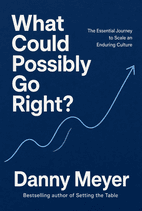
It all starts with a simple question over pasta in Manhattan. Danny Meyer, feeling lost and defaulting to law school, is jolted by his uncle asking why he isn't pursuing his obvious passion for food and restaurants. This sparks a complete life change, leading him to abandon the LSAT for Restaurant Management 101. His journey begins with a hands-on apprenticeship at Pesca, where he falls in love with the orchestrated chaos of service.
Determined to learn from the source, he embarks on a formative culinary pilgrimage across Italy and France. He returns to New York filled with ideas, having solidified both his culinary vision and his relationship with his future wife, Audrey.
Back home, he makes two critical decisions: choosing the emerging Union Square neighborhood for its European market feel, and defining his own role not as a chef, but as the architect of the front-of-house experience. He hires a talented chef and settles on the strategically simple name Union Square Cafe.
The opening night is a tearful, joyful culmination, a culinary autobiography for seventy-five loved ones. Every dish maps his journey. This project, built on intentionality and a passion for bringing people together, becomes the foundation for an empire. Union Square Cafe earns lasting acclaim, but Meyer's vision expands into a brand of hospitality that plants fine-dining landmarks in emerging neighborhoods. This same community-building philosophy, applied to revitalizing a park, unexpectedly births the global phenomenon of Shake Shack.
The engine behind this never-ending quest is a lifelong, studious passion. Meyer operates with the same methodical enthusiasm as that young man who first changed his course. His story proves that sustained success is fueled by the relentless, joyful pursuit of excellence in hospitality.
A Life-Changing Dinner at Elio’s
In 1983, Danny sits at Elio's in Manhattan, his mind churning over the LSAT he must take the next morning. He felt lost, defaulting to law school as a seemingly sensible path. His perceptive uncle pierced through Danny's anxiety, demanding to know why he would pursue a passionless career when his lifelong obsession had always been food and restaurants. The question was a revelation; Danny had never considered his love for restaurants as a legitimate professional path. The next day, he took the LSAT with relaxed detachment. On Monday, he enrolled in Restaurant Management 101.
The Apprenticeship at Pesca
Danny’s first intentional step was a job at Pesca. As the assistant lunch manager, he took a massive pay cut but immersed himself in every detail. He was enthralled by the orchestrated chaos and the collective goal of creating a wonderful guest experience. Here, he began to understand the alchemy that makes a restaurant succeed. He supplemented this hands-on education with a wine appreciation course and studied the careers of pioneering American chefs. At Pesca, he also met Audrey, a waitress, with whom he felt an immediate connection.
Culinary Pilgrimage: Stages in Europe
Determined to learn from the best, Danny spent the last months of 1984 on a self-funded culinary tour of Italy and France. In Rome, he absorbed the rhythms of a family-run establishment and meticulously documented everything. A disappointing, costly mentorship in Milan marked a low point, but he persevered. His fortune turned in Bordeaux, where he staged at a restaurant. He earned his stripes by cooking a family meal of his grandmother's spareribs for the French crew. The trip culminated in a reunion with Audrey. On the flight home, Danny filled notebooks with synthesized ideas and the first concrete plans for his own restaurant.
Laying the Groundwork in New York
Back in New York, Danny faced two critical decisions: location and his own role. After viewing over a hundred spaces, he was drawn to the emerging Union Square neighborhood, reminiscent of European markets. Simultaneously, he realized his genius lay not in the kitchen but in the dining room—in building relationships and orchestrating the front-of-house experience. He hired a young, talented chef named Ali Barker after a practical tryout. With a potential location and a chef partner secured, Danny sought validation from his mentor, who approved of his sketched-out plans.
Securing the Space and a Name
Danny finalized the deal to take over the lease. The financial commitment was enormous. At twenty-seven, he invested nearly all his savings and borrowed from family. Audrey helped train the new waitstaff. Danny envisioned a restaurant blending Italian trattorias, French bistros, and San Francisco's bar and grill cafés. The final hurdle was a name. After his father dismissed ideas like “Gorgonzola,” he suggested a simple, strategic choice: Union Square Cafe.
The Opening Night: A Culinary Autobiography
Union Square Cafe’s opening night party was a gathering of about seventy-five family and friends. A swirl of emotion, Danny burst into tears at the door. The menu was a curated map of his life: dishes learned in Europe, family recipes reimagined, and personal favorites. Every detail filtered through Danny’s tastes, aimed at creating a singularly lovely experience. He spent the night in “overdrive pleasing people,” cementing his dual passion for culinary creativity and bringing people together through hospitality.
Evolution of an Empire
Opening Union Square Cafe was both a culmination and a beginning. He soon brought chef Michael Romano from Pesca, who earned the restaurant decades of acclaim. But Danny’s ambition was broader than one enduring restaurant; it was about a brand of hospitality. He launched high-end restaurants in the city, consistently planting them in emerging neighborhoods, believing a great restaurant could uplift a community. This philosophy led him to Madison Square Park, where a simple kiosk meant to complement the park’s revitalization evolved into the first Shake Shack in 2004.
The Enduring Engine: Methodical Intentionality
Danny Meyer’s success stems from more than charm; his “secret ingredient” is intentionality. Once committed to hospitality, he pursued knowledge with relentless, methodical tenacity. This approach never faded. Before opening his barbecue joint, Blue Smoke, he toured legendary spots across America. Decades later, he still organizes culinary research trips with his chefs to dissect classic dishes. This perpetual student’s enthusiasm continues to drive him. He remains as enthralled as the twenty-five-year-old who first changed his life’s course.
Key Takeaways
Personal Vision as Foundation: Union Square Cafe’s identity was a direct reflection of Danny Meyer’s life experiences, proving that authentic, personal vision can form the core of a successful enterprise.
Hospitality as Community Building: Meyer’s strategy of placing restaurants in emerging neighborhoods shows a belief that businesses and communities can lift each other up, a philosophy that fueled both his fine-dining empire and Shake Shack.
Sustained Success Through Studious Passion: Long-term achievement is powered by a lifelong, methodical commitment to learning and intentional improvement. Meyer’s enduring enthusiasm for the craft is his true engine.
Key concepts: Profile One: The Never-Ending Quest for the Perfect Restaurant
1. Profile One: The Never-Ending Quest for the Perfect Restaurant
Catalyst: The Pivotal Dinner
Uncle's question redirects Danny from law to food
Revelation that his passion could be a profession
Abandons LSAT for Restaurant Management 101
Foundational Apprenticeship at Pesca
Immersed in orchestrated chaos of service
Learned the alchemy of a great restaurant
Met future wife Audrey
Formative European Culinary Pilgrimage
Studied family-run trattorias in Italy
Endured lonely mentorship in Milan
Earned respect in Bordeaux kitchen
Strategic Vision for First Restaurant
Chose Union Square for European market feel
Defined role as front-of-house architect
Hired chef, took major financial risk
Union Square Cafe Opening & Philosophy
Opening night as culinary autobiography
Built on intentionality and bringing people together
Foundation for hospitality empire
Evolution into Hospitality Brand
Expanded fine dining to emerging neighborhoods
Community philosophy birthed Shake Shack
Brand built on studious passion
Lifelong Pursuit of Excellence
Methodical research trips decades later
Relentless, joyful pursuit of hospitality
Sustained success from continuous learning
💡 Try clicking the AI chat button to ask questions about this book!
Principle I: Chase Your Curiosity
Overview
Jerry Seinfeld once urged graduates to swap the sweaty pursuit of passion for a calmer, deeper fascination—a curiosity that turns hard work into fun and makes you a standout. This idea finds a surprising ally in psychologist Angela Duckworth, who revised her famous concept of grit to emphasize that finding an obsessive interest is actually harder than learning to persevere. For most people, discovering what truly captivates them isn't a lightning bolt moment but a gradual process of trial and error, and that's perfectly normal.
To navigate this, there are practical tools like personality tests, exercises mapping loves and strengths, and life design plans that help clarify values and dream up alternative futures. But thinking isn't enough; you have to immerse yourself. Reading deeply about fields that intrigue you or launching side hustles can test your interest and maximize serendipity, much like Ben Gilbert did before co-founding a hit podcast. Angela Duckworth offers a handy metaphor here: be like a paramecium, consciously moving toward people, projects, and environments that feel warm and engaging—what she calls "wandering with a purpose."
The real litmus test for a true fascination comes from coach Bobby Knight: it's the will to prepare. If the idea of endless practice in a craft brings joy, not dread, you're on the right track. This journey requires voracious curiosity, so dive into books, podcasts, and long-form content to let ideas connect in your mind. Todd Burach's story proves a spark can come from anywhere—a single magazine article fused his finance skills with a care for athletes, leading to his dream career.
Beyond consuming ideas, get out and talk to people. Ask about their jobs, shadow professionals, or even take an entry-level role to taste the reality of a field. If you're already working, propose internal side hustles to explore budding interests. Underpinning all this is purpose—the why that transforms work into a calling. Without it, persistence feels like drudgery. Finding your path takes patience and self-compassion; it's like nurturing a plant, paying attention to what grows, and learning to marvel at the ordinary, from which the extraordinary naturally emerges.
Jerry Seinfeld's Case for Fascination Over Passion
Jerry Seinfeld’s 2024 commencement address at Duke University provocatively advised graduates to forget the cliché of “following your passion.” He called the concept “sweaty” and embarrassing. Instead, he championed “fascination”—a calmer, more substantive curiosity that drives a deep, endless desire to understand something. This shift in language is critical; a true personal fascination makes hard work feel like fun and transforms you into a standout candidate, a “candidate of one,” because people are drawn to hire those with genuine passion.
Angela Duckworth’s Revised View of Grit
The chapter introduces the work of psychologist Angela Duckworth, famous for her research on “grit”—the combination of passion and perseverance for long-term goals. Notably, Duckworth has revised her thinking: she now believes the “passion” component is actually the harder part. While many can learn to persevere and work hard, finding that core “obsessive interest” to persevere toward is the rare and difficult challenge. This obsessive interest, which she compares to a childhood photo that only makes sense in hindsight, is the engine of true grit.
The Common Struggle to Find Purpose
Supporting Duckworth’s point, research indicates that only about 20% of young people have a clear sense of purpose. For the majority, finding what to be passionate about is a process of trial and error, not a single decision. The text reassures readers that this is normal and that early choices, like a college major, are merely first steps on a longer path. Most people end up in careers unrelated to their major, and every field contains a variety of roles beyond the most visible ones.
Practical Tools for Uncovering Curiosity
For those unsure of their fascination, the chapter suggests several practical exercises:
Myers-Briggs Test with Career Matching: A psychological type indicator that can suggest potential career fields for exploration.
“Loves and Strengths” Exercise: Created by Tito Beveridge, this involves listing what you love doing and what you’re skilled at, then seeking careers at their intersection.
Life Design Compass (from Designing Your Life): Writing two short essays—“What is work for?” and “What is a good life?”—to clarify core values and seek alignment in a career.
Odyssey Plan (also from Designing Your Life): Drafting three different, detailed five-year life plans to creatively explore alternatives and “dream” about possibilities.
Learning Through Immersion and Side Hustles
Beyond exercises, proactive discovery is key. Reading biographies or industry-defining books (like Liar’s Poker for Wall Street) is recommended as a way to test your genuine interest in a field. The chapter also highlights the power of “side hustles” and hobbies as discovery tools, using the example of Ben Gilbert, who used side projects at each job to “maximize his surface area for luck to hit,” ultimately co-founding the massively successful Acquired podcast.
The “Paramecium” Principle: Move Toward Warmth
Angela Duckworth offers a guiding metaphor: be like a paramecium, a simple organism that moves toward warmth and nutrients and away from negative stimuli. Applied to a career, this means consciously moving toward people, projects, and environments that make you feel engaged, better about yourself, and like you’re learning—“wandering with a purpose.” The key is to heed your emotional reactions: if you’re chronically bored and grinding, change course; if you’re intrigued and happy, keep going.
The Ultimate Test: The Will to Prepare
The section concludes with a definitive test for a true fascination, quoting basketball coach Bobby Knight: “The will to win is not nearly as important as the will to prepare to win.” You’ve likely found a deep curiosity worth pursuing if the idea of endlessly practicing and honing the craft itself brings joy, not dread. The work must be intrinsically fulfilling, like chess is for Magnus Carlsen, not just a means to an external reward. A “no” to this test is equally valuable, signaling a need to keep searching.
Look Under Every Rock
The chapter reinforces the critical importance of voracious, high-quality consumption of ideas. It champions reading books, magazines, and long-form essays—formats that demand and reward deep thought. This practice allows ideas to connect in your mind, revealing your true interests. The same approach applies to podcasts, videos, and even AI chatbots; these are tools for falling down “rabbit holes” into subjects that put you into a state of flow. The goal is to explore with vigor, as you never know which piece of content might spark a life-changing fascination.
Real-World Discovery: Todd Burach's Story
The power of this exploratory reading is illustrated through Todd Burach. Working in finance but uninspired, he read a Sports Illustrated article about athletes going broke. While millions read it, for Burach, it was a revelation. He saw a societal problem he deeply cared about solving. This single article allowed him to fuse his knowledge of finance with his passion for sports, leading him to a dream career as a financial advisor to professional athletes. His story shows that your catalyst can come from anywhere.
Practical Exploration Through People and Experience
Beyond consuming media, you must engage directly with the working world. Ask people about their careers. Use a simple, effective script: ask someone to tell you about their job, then ask for three things they love and three things they don’t. Listen for what resonates. If something sounds intriguing, take the next step: shadow someone in that field for a day. To truly test a potential path, get an entry-level job in that industry—work in the “mailroom” to get your foot in the door and see the reality of the work. If you’re already employed but feel off-track, propose a “side hustle” within your organization that aligns with a budding interest, leveraging your unique perspective or skills.
It's the Why
A crucial, often overlooked element of fascination is purpose—the why. Research shows that finding a career fulfilling is tied to seeing it as a calling, where you believe your work contributes something important. Whether it’s a comedian wanting to bring joy or a professor seeking to spread useful knowledge, this sense of purpose is vital. As Angela Duckworth notes, “Persistence without passion is drudgery.” Well-meaning advice to pursue solely practical careers often backfires without this intrinsic interest.
The journey to finding this passion requires patience and self-compassion. It’s compared to nurturing a plant: you water it, provide sunlight, and pay attention to what grows. The chapter closes with a poignant poem by William Martin, which reframes the quest not as a striving for the extraordinary, but as learning to find the wonder and marvel in the ordinary. The extraordinary, it suggests, grows naturally from that grounded appreciation.
Key Takeaways
Consume ideas deeply and widely: Read books, listen to thoughtful podcasts, and use tools like AI to explore rabbit-hole subjects that captivate you.
Your spark can come from anywhere: Be open, as a single article, conversation, or video could
Key concepts: Principle I: Chase Your Curiosity
2. Principle I: Chase Your Curiosity
Fascination Over Passion
Jerry Seinfeld champions fascination over sweaty passion
Fascination makes hard work feel like fun
Creates a standout 'candidate of one'
Revised View of Grit
Angela Duckworth says passion is harder than perseverance
Finding obsessive interest is the rare challenge
Obsessive interest is the engine of true grit
Normalizing the Search
Only 20% of young people have clear purpose
Finding passion is trial and error, not a single decision
Early choices are just first steps on a longer path
Practical Discovery Tools
Personality tests and career matching exercises
'Loves and Strengths' exercise to find intersection
Life design plans and Odyssey Plans for alternatives
Active Immersion Strategies
Read deeply about fields that intrigue you
Launch side hustles to test interests
Maximize surface area for luck and serendipity
The Paramecium Principle
Move toward people and projects that feel warm
Wander with purpose toward engaging environments
Heed emotional reactions as navigation signals
The Litmus Test
True fascination shows in 'the will to prepare'
Joy in endless practice indicates right track
Purpose transforms work from drudgery to calling
Profile Two: Reading Every Script in Hollywood
Overview
Lorrie Bartlett built a pioneering career as a Hollywood talent agent. She rose from a movie-loving girl in Monrovia, California, to become the first African American board member and head of a talent department at a major agency. Her early passion for storytelling, combined with a strategic work ethic of exhaustive research and relationship-building, allowed her to carve out a unique and influential space in the competitive entertainment industry.
A Foundation in Story and Community
Lorrie’s love for cinema was forged in the now-demolished Crest Theatre in her hometown of Monrovia, where film provided a weekly escape. This passion was paralleled by the example of her father, Bob Bartlett, Monrovia’s first Black mayor, whose skills in diplomacy and community building left a lasting impression. Though she initially pursued diplomacy in college, aiming for the Foreign Service, she felt a pull toward the business of the entertainment world she had always adored.
Discovering the Hidden Engine of Hollywood
A pivotal internship at a movie advertising agency introduced Lorrie to the behind-the-scenes mechanics of Hollywood and to the concept of a talent agent. Recognizing that an agent’s role mirrored the diplomatic skills she admired in her father, she secured an entry-level assistant position at the William Morris Agency. There, despite invaluable mentorship from powerhouse agent Joan Hyler, she faced a blunt ceiling, being told she would never be promoted, which catalyzed her next move.
The Apprenticeship and a Defining Strategy
Lorrie found a new home at the boutique Gersh Agency, where partners Bob and David Gersh valued her insight. Here, she developed her career-defining strategy: to read every script she could get her hands on, especially those others overlooked. She immersed herself in this research, visualizing projects and potential castings. She also closely studied Bob Gersh’s masterful negotiation style, absorbing a low-key but firm approach she still uses today.
Building a Career Through Patience and Insight
Her exhaustive research and patience became her superpowers. Lorrie cultivated a niche for spotting talent early or recognizing actors poised for a comeback. She pursued actor Kelly Macdonald for a decade before signing her just as Macdonald’s career soared with No Country for Old Men. Lorrie voraciously consumed films at festivals and read industry trades, believing that "information is power." This depth of knowledge allowed her to make meaningful connections, like her early recognition of Taylor Sheridan’s script for Sicario and a memorable, script-based conversation with Bob Dylan at a party.
Legacy and Principles for Success
Lorrie Bartlett’s journey led to historic firsts at ICM and leadership roles advocating for equity in Hollywood. In an award acceptance speech, she distilled her wisdom into principles: always "stay ready" for opportunity; build consistent credibility; celebrate communal wins; learn from losses; and cultivate a trusted circle for honest feedback. Her career shows the power of combining a deep love for the art with disciplined, strategic work.
Key Takeaways
Strategic Preparation is Foundational: Lorrie’s commitment to "reading every script" built unique expertise and helped her spot opportunities others missed.
Information is Power: Continuously consuming films, scripts, and industry knowledge creates a valuable reservoir for making connections and informed decisions.
Observe and Absorb: Learning from masters, like studying Bob Gersh’s negotiation tactics, is a critical form of on-the-job education.
Patience and Long-Term Vision Pay Off: Building a career and cultivating relationships, as with Kelly Macdonald, often requires persistence over years.
Principles Over Politics: Her advice—to stay ready, be consistent, learn from losses, and find your trusted circle—provides an ethical and strategic compass for success.
Key concepts: Profile Two: Reading Every Script in Hollywood
3. Profile Two: Reading Every Script in Hollywood
Early Influences & Career Foundation
Passion for cinema forged at hometown Crest Theatre
Father's diplomacy skills as influential model
Internship revealed talent agent role as ideal fit
Core Career Strategy: Exhaustive Research
Read every script, especially overlooked ones
Information is power: consumed films, trades, journalism
Visualized projects and castings as essential preparation
Building Success Through Patience & Insight
Patience as superpower: pursued Kelly Macdonald for decade
Spotting talent early or recognizing comeback potential
Depth of knowledge enabled meaningful industry connections
Learning from Masters & Negotiation Style
Studied Bob Gersh's masterful negotiation tactics
Absorbed low-key but firm approach to deals
Mentorship from Joan Hyler despite promotion ceiling
Principles for Success & Legacy
Always 'stay ready' for opportunity
Build consistent credibility and celebrate communal wins
Cultivate trusted circle for honest feedback
Combine love for art with disciplined strategic work
Principle II: Hone Your Craft
Overview
A visit to the Picasso Museum shows something simple: before he broke the rules, he mastered them. This idea is true for greats in every field. Their journey starts with a playful curiosity. They learn their craft so deeply that the work feels like fascination, not labor.
This lifelong process begins with knowing your field’s history—its pioneers, disruptions, and language. This knowledge builds credibility, tests your passion, and helps you make lasting connections. But you can’t stop there. True craft needs continuous learning. It’s a proactive, never-ending hunt for new knowledge, like a champion going back to learn from a retired legend.
With that solid base, you can then develop your own unique knowledge. You find a niche by exploring the gaps and corners your peers ignore. The best go even further. They study fields completely outside their own. Using these “far analogies” from different areas has always sparked breakthrough ideas.
Today, this journey is easier than ever. The old problems of geography, cost, and time are gone. Answers are a few clicks away. Wikipedia, YouTube, and podcasts give you instant overviews and deep dives. AI also acts as a constant learning partner. It can summarize, explain, and tailor information on demand, making learning much simpler.
The core rule is the same: mastery demands relentless learning. But the conditions have changed. The barriers that made learning slow and exclusive have fallen. The modern world gives you an incredible chance. The tools for knowledge are in your hands. Now, the most important thing is your own commitment to getting better.
The chapter opens at the Picasso Museum in Barcelona. The display of his work teaches a clear lesson. Before his famous rule-breaking art, a teenage Picasso first mastered the impressionist style of his time. His precise, prize-winning painting First Communion proves it. This shows a universal pattern: real innovation is built on mastering the existing rules first.
The Pattern of Masterful Learning
You see this pattern of deep, continuous learning in leaders everywhere. Danny Meyer studied every part of the restaurant business. Lorrie Bartlett consumed stories constantly. Jerry Seinfeld broke down the best comics. Quentin Tarantino built his directing knowledge from a video store. Stephen King says to read relentlessly to learn how stories work. For all of them, the drive is a natural, playful curiosity. As producer Rick Rubin says, it “always starts with curiosity.” The work stops feeling like work when it’s fueled by real fascination. Loving what you do is the key to a great career.
Know the History of Your Field
The first essential step is learning your field’s history. Study its pioneers, key contributions, disruptions, and special language. This is standard in fields like medicine, but it’s a critical step in any industry.
Knowing this history gives you three big benefits:
Useful Knowledge: You learn information that will help you for your entire career.
A Test for Passion: If digging into your field’s history bores you, it’s a sign you might be in the wrong field.
A Social & Professional Key: Deep knowledge builds credibility. It helps you connect with mentors and peers, and can make you stand out in interviews. A story about a dinner with Pixar’s John Lasseter shows how passionate, detailed knowledge can be inspiring and memorable.
Commit to Learning That Never Stops
After building a foundation, you must commit to continuous learning. This means actively seeking new information beyond your job, especially about new trends. Pablo Picasso never stopped experimenting. Warren Buffett never stopped reading. Kobe Bryant, a veteran with four championships, traveled in his offseason to learn post-moves from retired legend Hakeem Olajuwon. That dedication helped him win his fifth title the next year.
This shift in mindset—from “know-it-all” to “learn-it-all”—is powerful. Microsoft CEO Satya Nadella said this philosophy was central to the company’s comeback. In fields that resist new ideas, continuous learning gives you an even bigger edge.
Develop Your Unique Knowledge
With a solid foundation and a learning habit, you can start to build unique knowledge. Find specialized areas where you can go deeper than anyone else. Look for the holes in your industry, or explore ideas your peers ignore.
Examples include:
Lorrie Bartlett focusing on underrepresented talent in Hollywood.
Danny Meyer spotting Manhattan neighborhoods ready for growth.
A young Dave Chappelle learning from the raw style of street performer Charlie Barnett.
A twenty-year-old student in England, Kacper Surdy, becoming an expert on obscure Washington D.C. parliamentary rules just because he loved reading the rulebooks.
Cross-Pollinate Your Mind with Far Analogies
The most advanced move is to study fields outside your own. Connecting ideas from different areas is a proven way to spark innovation. UCLA professor Keith Holyoak calls these “far analogies.”
Charles Darwin’s theory of evolution was supported by his reading of geology. Nobel laureates often have serious artistic hobbies. Steve Jobs’ study of calligraphy shaped Apple’s typography. By expanding where you get ideas, you make room for new connections. As biologist Stephen Jay Gould said, genius often involves “the ability to construct fruitful analogies between fields.”
The Unprecedented Ease of Learning
The chapter ends by looking at how much easier learning is today. For most of history, getting a simple answer took real work. You needed experts, libraries, or specific communities. Learning was slow, limited by where you lived, money, and time.
Now, that blockage is gone. If something interests you, you’re a few clicks from a flood of resources. Wikipedia gives you an overview. YouTube has lectures and tutorials. Podcasts let you hear experts talk. Platforms like X and Reddit host real-time conversations. A basic search finds all this in minutes.
When you want to go deeper, you can. Books, documentaries, and research papers are easier to get, often for free. What once needed a university library is now on the phone in your pocket.
AI as a Constant Learning Companion
On top of this, there’s a new tool: artificial intelligence. Each week, AI gets better at organizing information. It can summarize complex topics, compare views, and explain things clearly.
Unlike a human mentor, AI doesn’t get tired or impatient. It’s available any hour, can repeat explanations, and adapts to your pace. It doesn’t replace real teachers or experience, but it’s a powerful partner that makes learning smoother.
The author notes that as these systems improve, their answers will get faster, more accurate, and more nuanced. The trend is clear: the cost of getting good information is falling fast.
The Core Principle: Learning as the Path to Mastery
All this abundance leads back to a simple, demanding truth. If you want to succeed, you have to learn. Skill and mastery don’t appear from nowhere. They come from sustained curiosity, practice, and a willingness to keep asking questions.
What’s changed is not the need to learn, but your ability to do it. The barriers that made learning hard are lower than ever. This is both a chance and a responsibility. You can’t control where you start, but you can control how you use the tools you now have.
The closing point is hopeful: if you truly want to learn, there has never been a better time. The world is full of knowledge, and the way to access it is already in your hands. Now, it’s up to you to commit to getting better.
Key Takeaways
Information that once took major effort to find is now seconds away on Wikipedia, YouTube, podcasts, and forums.
Deeper resources like books, documentaries, and research papers are increasingly free and easy to get.
AI tools act as tireless learning partners, giving clear, tailored explanations anytime.
The basic requirement for success hasn’t changed: you must keep learning.
What has changed is the environment. Right now offers the best conditions in history for anyone serious about mastering their craft.
Bill Gurley is a prominent venture capitalist and general partner at Benchmark, known for his early investments in companies like Uber, Zillow, and OpenTable. His expertise lies in technology business models and marketplaces, and he is a widely followed commentator on tech industry trends, drawing from his earlier background as a Wall Street analyst.
📚 Explore Our Book Summary Library
Discover more insightful book summaries from our collection