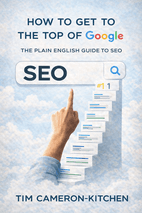
How To Get To The Top of Google: The Plain English Guide to SEO
by Tim Cameron-Kitchen
What is the book How To Get To The Top of Google: The Plain English Guide to SEO about?
Tim Cameron-Kitchen's How To Get To The Top of Google provides actionable SEO strategies focused on user-centric content and technical health, moving beyond quick tricks. It empowers small business owners and marketers to build sustainable online visibility by creating genuinely helpful websites.
Feature
Insta.Page
Blinkist
Shortform
Summary Depth
Full Chapter-by-Chapter
15-min overview
Section-by-section guides
Audio Narration
✓
✓
✓
Visual Mindmaps
✓
✕
✕
AI Q&A
✓
✕
✕
Quizzes
✓
✕
✕
PDF Downloads
✓
✕
✓
Price
$89.99/yr
$146/yr (PRO)
$199/yr
*Competitor data last verified July 2026.
1 Page Summary
Tim Cameron-Kitchen's How To Get To The Top of Google demystifies the complex world of Search Engine Optimization (SEO) by framing it not as a technical dark art, but as a fundamental marketing discipline. Written in an accessible, "plain English" style, the core premise is that Google's primary goal is to satisfy its users, so the key to ranking is to create an outstanding online experience that answers searchers' questions better than any competitor. The book systematically breaks down this philosophy into actionable strategies, covering essential areas like thorough keyword research, creating high-quality "pillar" content, ensuring technical website health, and building authoritative backlinks. It positions SEO as a long-term investment in a business's digital foundation, rather than a series of quick tricks.
The book's historical context is crucial; it was written as a direct response to the era of aggressive, often spammy SEO tactics that aimed to "game" older, simpler search algorithms. Cameron-Kitchen emphasizes the seismic shifts brought by Google's major algorithm updates (like Panda, Penguin, and Hummingbird), which punished low-quality content and manipulative link-building, rewarding instead genuine expertise, authority, and trustworthiness (encapsulated in the concept of E-A-T). This guide represents the maturation of SEO into a user-centric practice aligned with Google's evolving mission to understand user intent and context, moving beyond mere keyword matching.
The lasting impact of the book lies in its empowerment of small business owners and marketing professionals. By translating complex, ever-changing algorithmic concepts into clear, principle-based actions, it provides a sustainable framework for online visibility that withstands Google's updates. Its emphasis on creating genuinely useful content for a human audience has helped shift the broader SEO industry's focus toward quality and value. As a foundational text in digital marketing, it continues to serve as a vital primer, teaching that success in search rankings is ultimately achieved by building a better, more helpful website for your target audience.
Introduction
Overview
The book’s journey from a 2011 SEO guide to a modern essential is a testament to the enduring power of its core principles. These fundamentals have not only remained relevant but have become the critical foundation for ranking in today’s landscape, which now includes generative AI search platforms like ChatGPT. This new edition is presented as the key to navigating this evolution, where a strong SEO base is more important than ever.
Its advice is far from theoretical; it’s the same battle-tested methodology used to deliver staggering, real-world results for clients. These include transforming an e-commerce store’s daily sales from $15 to over $100,000 and generating a 3,357% sales increase for a B2B business—all without paid ads. These stories are shared to build credible authority and prove what’s genuinely possible.
While the rise of AI search tools causes anxiety for some, the author views it as a thrilling opportunity. He argues that Google isn’t vanishing but adapting, and user habits are incredibly hard to break. Most importantly, the fundamentals needed to succeed—a great website, quality content, and authoritative backlinks—are identical for both traditional search and new generative AI engines. This convergence is framed as a new channel to monetize, a practice he calls Generative Engine Optimisation (GEO).
The guide’s purpose is to demystify this entire field, sharing the exact strategies that drove those remarkable results. It’s designed for all skill levels, explaining concepts in plain English, and is born from hands-on experience with countless client campaigns. The ultimate promise is a clear roadmap to more leads and sales, encouraging readers to adapt the strategies to their own situation.
A central theme is the competitive mindset. The very difficulty of certain SEO tasks is what creates opportunity; if a process feels tedious to you, your competitors likely avoid it too. Pushing through this barrier becomes a key advantage. The author urges readers to learn about all strategies to build comprehensive knowledge, arguing that with this guide and your own business insight, you can effectively compete, even against those who hire expensive agencies.
The book itself is structured as a practical journey. It starts by explaining how search engines work, then moves to optimizing your website for both search engines and visitors, emphasizing that user experience is inseparable from strong performance. It tackles the ongoing work of content and link building before showing how to assemble a complete, dominant strategy, complete with real-world examples.
Finally, the author addresses the book’s direct style, framing it as a strength. It’s written by practicing marketers whose livelihoods depend on executing successful SEO, not by theoretical “wizards.” This practitioner’s perspective is offered as a crucial filter in a field filled with unverified advice. The core message is one of empowerment: with proven knowledge and effort, any business can compete and win.
The author reflects on the book's unexpected and enduring success since its first edition in 2011. Originally a guide to SEO, its core principles have proven remarkably resilient, remaining not just relevant but essential as search evolves with the advent of generative AI platforms like ChatGPT and Perplexity. He positions this edition as a vital resource for navigating this new landscape, asserting that a solid SEO foundation is the key to ranking in both traditional and emerging AI-powered search engines.
A Track Record of Real-World Results
The book’s recommendations are not theoretical; they are battlefield-tested methods used by the author’s agency, Exposure Ninja. To demonstrate their efficacy, he shares specific, anonymized client results:
E-commerce Business: Increased average daily sales from $15 to over $100,000 using only the SEO and content marketing strategies outlined in the book, with no paid advertising.
Lead Generation Client: Grew lead volume from 35 per month to a peak of 400 per day, again relying solely on SEO.
B2B E-commerce Store: Achieved a 3,357% increase in sales following foundational website optimizations.
These examples are shared not to boast, but to provide tangible proof of what’s possible and to establish the author’s credible, results-backed authority.
Embracing the AI Search Evolution
While many in the industry view the rise of AI search tools with fear, the author and his team are enthusiastic. He argues that Google is not disappearing, but adapting, citing research predicting only a 25% shift away from traditional search. He outlines three core reasons for his confidence:
Inertia of Habit: Billions of users are conditioned to "google" their queries, a habit incredibly difficult to break.
Foundation is Everything: The fundamentals required to rank in new generative engines (a great website, quality content, and authoritative backlinks) are the same as for traditional SEO.
Google’s Competitive Response: Google is aggressively integrating AI (like AI Overviews) to improve user experience and retain its commercial dominance.
He reframes the change as an opportunity: a new channel to monetize. Businesses with a strong SEO foundation are already well-positioned to capture traffic from these new sources, a practice he terms Generative Engine Optimisation (GEO).
The Purpose and Promise of This Guide
This book exists to demystify SEO and GEO by sharing the exact strategies that have driven the results shown. It’s designed for everyone from complete beginners to experienced marketers, with all concepts explained in plain English. The advice is drawn from hands-on experience with hundreds of client campaigns and thousands of free website reviews, giving the authors a vast, practical knowledge base across virtually every industry.
The author’s ultimate aim is to provide a clear roadmap to generate more leads and sales. He encourages readers to "cherry-pick" the strategies that fit their situation, from quick wins to long-term campaigns, and offers a free, personalized website review as a starting gift. The underlying message is one of empowerment: with the right knowledge and effort, any business can compete and win in search, regardless of size.
The Competitive Mindset: Your Advantage
The section argues that the very difficulty of certain SEO tasks is what creates opportunity. If a strategy feels time-consuming or tedious to you, your competitors likely feel the same way—and are avoiding it. Your willingness to push through this barrier is a key differentiator. The author encourages reading about all strategies, even those not immediately actionable, to build a comprehensive understanding that allows you to recognize tactics in the wild and arm yourself for highly competitive niches. A crucial point is made that hiring an expensive SEO agency does not guarantee a competitor's victory; with the knowledge in this book and your inherent understanding of your own business, you are well-positioned to compete.
A Roadmap to Dominance
The book’s structure is outlined as a clear, practical journey:
Foundation: It begins by demystifying how Google works, reassuring readers that core, time-tested principles still apply and are effective across all major search engines, including Bing and generative AI platforms like ChatGPT Search.
Website Optimization: The focus then shifts to making your website both search-engine and visitor-friendly, stressing that a good user experience is inseparable from strong SEO performance.
Promotion & Links: The third section tackles the ongoing, crucial work of content marketing and link building, identified as the engine for achieving and maintaining top rankings.
Strategy Assembly: Finally, the book provides a framework for building a dominant strategy, complete with real-world examples from the author's agency for readers to adapt.
The tone is efficiency-focused, assuming the reader's goal is to attract customers and generate revenue, regardless of their specific website type. Numerous free resources, including software trials and a proprietary website review, are highlighted as valuable accelerators for the learning process.
Credentials from the Front Lines
The author directly addresses the book's style, acknowledging it is written by practicing digital marketers, not professional writers. This is framed as a strength, not a weakness. The content is born from daily, real-world experience in generating significant revenue for clients. A sharp warning is issued against theoretical "wizards" and forum experts, positioning this guide as the antithesis: proven strategies from practitioners whose livelihoods depend on successful SEO execution.
Key Takeaways
Embrace the Grind: The unattractive, time-consuming work in SEO is often where the greatest competitive advantage lies because others avoid it.
Knowledge is Arsenal: Understand all available SEO strategies, even if you don't use them immediately, to build situational awareness and competitive readiness.
Universal Principles: Core SEO strategies that work for Google are effectively universal, providing strong results across other search and generative AI platforms.
User Experience is Non-Negotiable: Never sacrifice a good visitor experience for a perceived SEO gain; Google's algorithms increasingly reward user-friendly sites.
Trust Practitioners, Not Theorists: The advice comes from hands-on professionals with a proven track record, a crucial distinction in a field filled with unverified "experts."
Key concepts: Introduction
1. Introduction
Evolution and Enduring Relevance of SEO
Core principles from 2011 remain critical foundation for modern search
Adaptation to include generative AI search platforms like ChatGPT
Strong SEO base is more important than ever in evolving landscape
Proven Real-World Results and Authority
Battle-tested methodology used for client transformations
E-commerce store increased daily sales from $15 to over $100,000
B2B business achieved 3,357% sales increase without paid ads
Results establish credible authority and demonstrate possibilities
AI Search as Opportunity, Not Threat
Google is adapting rather than disappearing
User search habits are difficult to break due to inertia
Same fundamentals work for traditional and AI search (GEO)
Generative Engine Optimisation (GEO) as new monetization channel
Guide's Purpose and Practical Approach
Demystifies SEO and GEO with exact strategies
Designed for all skill levels with plain English explanations
Born from hands-on experience with countless client campaigns
Provides clear roadmap to more leads and sales
Competitive Mindset and Advantage
Difficulty of SEO tasks creates opportunity barriers
Tedious processes avoided by competitors become advantages
Comprehensive knowledge enables competition with expensive agencies
Combines guide strategies with business insight for effectiveness
Book Structure and Practitioner Perspective
Practical journey from search engine basics to complete strategy
User experience inseparable from strong SEO performance
Written by practicing marketers, not theoretical experts
Practitioner perspective filters unverified advice in the field
The Competitive Mindset: Your Advantage
Difficulty in SEO creates opportunity—if a task feels tedious to you, competitors likely avoid it too.
Willingness to push through time-consuming barriers serves as a key competitive differentiator.
Understanding all strategies builds comprehensive awareness for recognizing tactics and competing in tough niches.
Knowledge from the book combined with your business understanding can outcompete expensive SEO agencies.
A Roadmap to Dominance
Foundation: Demystifies how Google works, emphasizing core principles that apply across all major search and AI platforms.
Website Optimization: Focuses on making sites search-engine and visitor-friendly, linking user experience directly to SEO success.
Promotion & Links: Identifies content marketing and link building as the engine for achieving and maintaining top rankings.
Strategy Assembly: Provides a framework with real-world examples from the author's agency for readers to adapt.
Efficiency-focused tone aimed at attracting customers and generating revenue, supported by free resources and tools.
Credentials from the Front Lines
Content is written by practicing digital marketers, not professional writers, ensuring real-world, revenue-driven insights.
Strategies are proven through daily experience generating significant client revenue, not theoretical expertise.
Warns against unverified 'wizards' and forum experts, positioning the guide as actionable advice from practitioners.
The author's livelihood depends on successful SEO execution, adding credibility and practical relevance.
Key Takeaways
Embrace the Grind: Time-consuming SEO work offers competitive advantage because others avoid it.
Knowledge is Arsenal: Build situational awareness by understanding all strategies, even if not immediately used.
Universal Principles: Core SEO strategies effective for Google also work across other search and AI platforms.
User Experience is Non-Negotiable: Google rewards user-friendly sites; never sacrifice UX for perceived SEO gains.
Trust Practitioners, Not Theorists: Rely on advice from hands-on professionals with proven track records.
💡 Try clicking the AI chat button to ask questions about this book!
Chapter 1: Five Free Ways to Appear on the First Page of Google
Overview
The chapter opens by challenging a common assumption: that there's only one type of "top result" on Google. It introduces five distinct, free methods to achieve prominent visibility on the search engine's first page, emphasizing that modern SEO success requires understanding and optimizing for all of them. The landscape is dynamic, with Google constantly evolving its results based on perceived user intent, making a multi-faceted approach essential.
Method 1: AI Overviews
Presented as the future of search, AI Overviews are generative AI responses that directly answer a user's query, often formatted like a short article with bullet points or headings. They are described as "Featured Snippets on steroids." While still rolling out globally, they are predicted to become the dominant result for informational, commercial, and transactional searches. The chapter stresses that ranking within these AI-generated answers—and being cited as a source via the linked references—should be the primary SEO goal for the coming year, as they are set to capture a huge share of user attention.
Method 2: Featured Snippets
These are the curated "position zero" text blocks that appear above all other organic results. They provide a direct answer and a link for more detail, offering immense visibility and click-through rates. The author shares that successfully capturing Featured Snippets for clients since their 2014 launch has been a major source of traffic and conversions. This proven success is cited as the reason for being equally bullish on aggressively pursuing visibility within the newer AI Overviews.
Method 3: Google Organic Results
These are the classic, non-paid listings running down the page. However, their value and visibility are under pressure. Citing a click-through rate study, the chapter reveals the staggering disparity in traffic: the #1 organic result earns 46% of clicks, while #2 gets only 12%. By page two, clicks plummet to 4%. This "winner-takes-most" dynamic is compounded by Google's increasingly crowded results page, which now integrates maps, videos, "People Also Ask," and other features that push traditional organic links further down. The key insight is that complacency with a non-#1 ranking is a costly mistake, as the financial rewards for the top spot are disproportionately high.
Method 4: Google Local
For businesses serving a specific geographic area, Google's map pack (displayed horizontally or vertically) is a critical visibility tool. These listings appear for searches with clear local intent, such as "solicitors near me" or "plasterer Nottingham." Appearing here puts a business directly in front of ready-to-buy local customers and is separate from competing in the national organic results.
Method 5: Using Other People’s Websites
This method involves gaining visibility and credibility by being featured on reputable third-party websites. An endorsement or mention on another site can sometimes generate more qualified leads than your own website, as it carries the weight of a third-party recommendation. Furthermore, these mentions create valuable backlinks, which are a powerful signal to Google that boosts the authority and ranking of your own site.
Key Takeaways
The SEO game has expanded beyond just ranking #1 in the traditional blue links. Success requires a strategy for five key areas: AI Overviews, Featured Snippets, Organic Results, Local Maps, and Third-Party Sites.
AI Overviews are the new frontier. Prioritizing strategies to be sourced and referenced within these generative AI answers is critical for future visibility.
The traffic reward for the #1 organic ranking is astronomically higher than for #2 or #3. Settling for a "good enough" ranking on page one leaves massive opportunity on the table.
Credibility and leads can come directly from appearances on other authoritative websites, making public relations and content outreach a core SEO activity.
Key concepts: Chapter 1: Five Free Ways to Appear on the First Page of Google
2. Chapter 1: Five Free Ways to Appear on the First Page of Google
Modern SEO Landscape
Multiple types of 'top results' exist on Google's first page
SEO success requires optimizing for five distinct free methods
Google's results are dynamic and based on perceived user intent
A multi-faceted approach is essential in the evolving search landscape
AI Overviews
Generative AI responses that directly answer user queries
Described as 'Featured Snippets on steroids' with article-like formatting
Predicted to dominate informational, commercial, and transactional searches
Primary SEO goal should be ranking within and being cited in AI Overviews
Expected to capture a huge share of user attention in the coming year
Featured Snippets
Curated 'position zero' text blocks above organic results
Provide direct answers with links for more detail
Offer immense visibility and high click-through rates
Proven success source for traffic and conversions since 2014
Strategic pursuit of Featured Snippets informs approach to AI Overviews
Google Organic Results
Classic non-paid listings running down the page
Value and visibility are under pressure from other features
#1 result earns 46% of clicks vs. 12% for #2 (winner-takes-most dynamic)
Clicks plummet to 4% by page two of results
Complacency with non-#1 rankings is a costly financial mistake
Google Local
Map pack displays for searches with clear local intent
Critical visibility tool for geographically-focused businesses
Puts businesses directly in front of ready-to-buy local customers
Separate competition from national organic results
Using Other People's Websites
Gaining visibility through features on reputable third-party sites
Third-party endorsements can generate more qualified leads than own website
Mentions create valuable backlinks that boost site authority
Public relations and content outreach are core SEO activities
Strategic Imperatives
SEO requires strategy across five areas: AI Overviews, Featured Snippets, Organic Results, Local Maps, and Third-Party Sites
AI Overviews represent the new frontier for SEO prioritization
Massive opportunity cost in settling for non-#1 organic rankings
Credibility building through authoritative websites is essential
Chapter 2: How Google Decides Where to Rank You and Your Competitors
Overview
This chapter explores the fundamental principles behind Google's ranking decisions, framing the entire SEO endeavor not as an exercise in control but as one of persuasion. It introduces the core concept that websites must earn their position by proving their worth across three critical dimensions, which together form the foundation of how search results are ordered.
The Cat, Not the Dog: SEO as Persuasion
Trying to force a website to rank highly on Google is a futile exercise. The search engine operates more like a cat than a dog; it cannot be commanded, only encouraged. The ultimate goal of SEO is to make a website so obviously the best and most logical answer for a specific search query that Google would look broken or incomplete if it didn't rank it at the top. This means providing everything Google needs to justify that placement, aiming to create the same level of expectation a user would have if Wikipedia didn't appear for "online encyclopedia."
The Three Pillars of Ranking
Google uses complex, secret algorithms evaluating over 200 factors to rank websites. These can be effectively grouped into three essential pillars that form the basis of its decision-making:
Relevance to the searcher's query.
The Popularity and Authority of the website across the web.
The overall Quality of the website itself.
Pillar 1: Relevance
Google's dominance stems from its ability to deliver relevant results. Sophisticated AI systems like RankBrain, BERT, MUM, and the evolving Gemini large language model help Google understand the intent and nuance behind searches. Relevance is measured primarily through:
On-Page Content: Google's "robots" crawl and index the text on web pages. To rank for specific terms, those terms must be present and contextually used within the site's content. The rise of features like Featured Snippets and AI Overviews makes being the referenced source even more critical.
User Interaction Signals: Google observes how searchers behave on the Search Engine Results Page (SERP) and on the websites they visit. A website that is consistently ignored (low click-through rate) or immediately abandoned (a high "bounce back" rate) sends negative signals. Conversely, a site that attracts clicks, holds attention, and satisfies the searcher (leading them not to return to the SERP) sends powerful positive signals, creating a virtuous cycle of improved ranking, more traffic, and greater success.
Pillar 2: Popularity and Authority
Authority is measured through the lens of links, often colloquially called "link juice." This system treats links from other websites as votes of confidence. The core concept is PageRank (named after co-founder Larry Page), a mathematical assessment of a page's authority based on these link votes.
Quantity and Quality of Links: A page with more links generally has higher authority than one with fewer. Crucially, not all links are equal. A link from a trusted, high-authority source (like a university's .edu site) passes far more "PageRank" or authority than a link from a spammy, low-quality site.
The Flow of Authority: PageRank flows from one page to another through links. A high-authority page can share its authority with pages it links to, but this authority is divided among all the outbound links on that page. Creating new pages generates new PageRank, which is why larger, well-structured websites can build significant internal authority by linking between their own pages.
Pillar 3: Quality
Google explicitly prioritizes high-quality websites to serve its users best. A key self-assessment question for any site owner is: "Does this website genuinely deserve to rank #1?" Several key areas define quality:
Content Depth and Helpfulness: "Thin," unhelpful, or poorly written content struggles to rank. Google's "Helpful Content Update" prioritizes original, expert-led, authoritative information that genuinely aims to assist the searcher. A website must demonstrate its expertise through substantive content, much like a knowledgeable salesperson provides detailed information to make a sale.
Technical Health: High-quality sites are free from excessive errors, broken links, and painfully slow load times. Identifying and fixing these technical issues can often provide quick ranking wins.
Mobile-Friendliness: With over half of all searches happening on mobile devices, a website that isn't optimized for mobile is at a severe disadvantage. This is a non-negotiable aspect of modern website quality.
Key Takeaways
SEO is about persuasion, not control. Your goal is to make your website the undeniable best choice for Google to rank.
Google's ranking decisions rest on three pillars: Relevance, Authority (via links), and Quality.
Relevance is determined by your content's match to search intent and by positive user engagement signals (clicks, time on site, low bounce rates).
Authority is built primarily through earning quality backlinks, which act as votes of confidence. The PageRank algorithm measures both the quantity and, more importantly, the quality of these links.
Quality is assessed through content depth, technical performance, and mobile usability. Creating genuinely helpful, expert content is paramount.
Improvements in these areas create a positive feedback loop: better rankings lead to more traffic, which can lead to more authority signals and further ranking gains.
Key concepts: Chapter 2: How Google Decides Where to Rank You and Your Competitors
3. Chapter 2: How Google Decides Where to Rank You and Your Competitors
SEO as Persuasion, Not Control
Google cannot be commanded like a dog, but encouraged like a cat
Goal: Make your website the undeniable best answer for a query
Success is when Google would look broken if it didn't rank you at the top
The Three Pillars of Google Ranking
Relevance to the searcher's query
Popularity and Authority of the website across the web
Overall Quality of the website itself
Pillar 1: Relevance
Determined by AI systems (RankBrain, BERT, MUM, Gemini) understanding search intent
On-page content must contain target terms and serve as source for SERP features
User interaction signals (CTR, bounce rate, time on site) provide critical feedback
Pillar 2: Popularity and Authority
Measured through links as 'votes of confidence' (PageRank algorithm)
Quality of links matters more than quantity (e.g., .edu vs. spammy sites)
Authority flows through links and can be divided among outbound links
Pillar 3: Quality
Content must be deep, helpful, and expert-led (Helpful Content Update)
Technical health (speed, errors, broken links) affects ranking
Mobile-friendliness is non-negotiable for modern websites
Key Principles and Outcomes
SEO success creates a positive feedback loop of ranking and traffic gains
Self-assessment: 'Does this website genuinely deserve to rank #1?'
Improvements across pillars justify Google's ranking decisions
Chapter 3: How to Find and Rank for the Most Profitable Keywords
Overview
This chapter provides a comprehensive, step-by-step guide for building a strategic list of target keywords. It shifts the focus from simply chasing high-volume search terms to identifying the most profitable phrases—those that attract qualified visitors ready to engage with your business. The process balances data from tools like Google Search Console and Semrush with essential human judgment and common sense.
Building Your Initial Keyword List
The process begins with a creative, non-scientific brainstorm. You start by listing your core "seed" keywords—the direct names of your products or services. The crucial next step is to adopt your customer's perspective: what problems are they trying to solve, and what phrases would they use to search for solutions? This often uncovers valuable keywords based on intent rather than industry jargon. For unfamiliar markets, forums like Reddit or Quora are excellent for discovering the natural language of your audience.
Leveraging Data from Your Site and Competitors
If your website already exists, Google Search Console is your first data source, revealing the actual search queries that bring people to your site. The next level involves using a tool like Semrush to uncover a much broader set of keywords your site is ranking for, as well as those your competitors rank for. A critical mindset shift introduced here is to treat all search volume data as an estimate. A phrase with low reported volume can be extremely valuable if it perfectly matches a searcher's intent to buy your specific offering.
Evaluating and Prioritizing Your Keywords
With a large list assembled, you must filter and prioritize. Four key metrics guide this, though the final decision requires your judgment:
Search Volume: An estimate of monthly searches. Balance high-volume (competitive) terms with lower-volume (attainable) ones based on your site's current authority.
Competition: Measured via Paid Ads Competition (0-1) and Keyword Difficulty (KD 0-100). Higher scores often indicate higher commercial value but are harder to rank for.
CPC (Cost-Per-Click): A strong proxy for commercial intent. If advertisers pay a lot for a click, it suggests searchers are in a buying mindset.
Search Result Relevance: Always manually Google your target phrases. This "sanity check" ensures the search intent aligns with your business and helps you avoid broad, irrelevant traffic. It’s better to rank for a precise, low-volume phrase than to attract untargeted visitors from a generic one.
Mapping Keywords to Your Website's Pages
Keywords alone are not enough; they must be assigned to specific "key pages" on your site. These are not just your homepage, but also your primary product/service pages and high-performing blog posts. Use Google Search Console and Semrush to identify which pages already attract traffic and what they rank for. Then, create a map in a spreadsheet, assigning each priority keyword to the most relevant page. If a target keyword has no logical page to target it, that signals the need to create new content.
Optimising Your Key Pages
Finally, you audit each key page against its assigned keywords. Ask critical questions: Does the page mention each keyword? Is there sufficient, in-depth content (300+ words, often 500-1000+)? Would a searcher immediately see the page as the answer to their query? Improving page content to better target these phrases is a proven method to significantly increase the number of keywords you rank for and the quality of traffic you receive.
Key Takeaways
Start with the customer's language, not just your industry terms, to uncover high-intent keywords.
Use data as a guide, not a gospel. Always combine tool data (Search Console, Semrush) with manual checks and common sense. Low-volume keywords can be highly profitable.
Prioritise using a mix of metrics: Balance search volume, competition (CPC & KD), and, most importantly, search intent and relevance.
Keywords must be mapped to pages. SEO success requires assigning target phrases to specific, optimisable pages on your site, primarily product/service pages and cornerstone content.
Keyword research is never finished. It’s an ongoing process that should be revisited regularly as your site's visibility and the market evolve.
Key concepts: Chapter 3: How to Find and Rank for the Most Profitable Keywords
4. Chapter 3: How to Find and Rank for the Most Profitable Keywords
Building Your Initial Keyword List
Start with a creative brainstorm of core 'seed' keywords for your products/services
Adopt the customer's perspective to identify keywords based on problems and search intent
Use forums like Reddit or Quora to discover natural audience language in unfamiliar markets
Leveraging Data from Your Site and Competitors
Use Google Search Console to see actual search queries bringing traffic to your site
Employ tools like Semrush to discover competitor keywords and broader ranking opportunities
Treat search volume data as estimates—low-volume phrases can be highly valuable if intent matches
Evaluating and Prioritizing Keywords
Balance search volume between high-competitive and low-attainable terms based on site authority
Analyze competition via Paid Ads Competition and Keyword Difficulty scores
Use CPC as a proxy for commercial intent and buying mindset
Always manually check search result relevance to ensure intent alignment
Mapping Keywords to Website Pages
Assign keywords to specific 'key pages' like product/service pages and high-performing blog posts
Use analytics tools to identify which pages already attract traffic and what they rank for
Create a spreadsheet map linking priority keywords to relevant pages
Create new content when target keywords lack logical existing pages
Optimising Your Key Pages
Audit each page against assigned keywords for proper keyword mention and placement
Ensure sufficient, in-depth content (300+ words, often 500-1000+)
Evaluate if searchers would immediately see the page as answering their query
Improve page content to target phrases and increase ranking keywords and traffic quality
Core Principles of Profitable Keyword Research
Start with customer language rather than industry jargon for high-intent keywords
Use data as a guide combined with manual checks—low-volume keywords can be profitable
Prioritize using balanced metrics: volume, competition, CPC, and search intent
Map keywords to specific optimizable pages for SEO success
Treat keyword research as an ongoing, evolving process
You've reached the end of the free chapters
Next chapter: “Analysing Your Competition and Identifying Their Strengths and Weaknesses” is locked
Keep reading How To Get To The Top of Google: The Plain English Guide to SEO — and unlock all 600+ book summaries with audio, mindmaps and AI Q&A.
$0.00 due today · 7 days free, then $89.99/year ($7.49/mo) · Cancel anytime before day 7
plus sales tax where applicable
If you like this summary, you probably also like these summaries...
Tim Cameron-Kitchen is a British author and digital marketing expert, best known for his book "SEO For Dummies." His expertise lies in search engine optimization (SEO), where he founded the agency Exposure Ninja, and he frequently writes and speaks on topics related to online business growth and digital strategy.
📚 Explore Our Book Summary Library
Discover more insightful book summaries from our collection