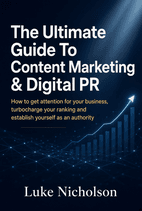
The Ultimate Guide To Content Marketing & Digital PR Interactive Mindmaps for The Ultimate Guide To Content Marketing & Digital PR (Free)

The Ultimate Guide To Content Marketing & Digital PR — Interactive Mindmaps

The Ultimate Guide To Content Marketing & Digital PR by Charlie Marchant Book Cover

by Charlie Marchant

Charlie Marchant's The Ultimate Guide To Content Marketing & Digital PR is a metrics-driven handbook for small business owners and marketers, covering audience avatars, content calendars, brand voice, sponsored content, influencer and blogger outreach, reviews, giveaways, and events, with real case studies and frameworks for building visibility and authority on a budget.

On Insta.page you also get an Apply This Book tool that lets you combine insights from up to 3 books to solve your specific situation.

Chapter mindmaps

Free preview: chapters 1–4 are fully interactive. Click any node to expand or collapse. Subscribe to unlock the rest.

Chapter 1

Key concepts: Chapter 1

Chapter 1

Metrics of Success

  • Sales: track via Google Analytics or call-tracking, not by asking leads.
  • Website traffic: evaluate alongside conversion and bounce rates.
  • Authority: domain authority (DA) based on age, size, popularity.
  • Influence: Klout score measures engagement across networks.

SMARTer Goals

  • Goals must be Specific, Measurable, Agreed, Realistic, Time-bound.
  • Break long goals into short stages and review regularly.
  • Example: if traffic hasn't grown 2.5% by week three, rethink strategy.

Example Goals

  • Direct sales: start from current/projected sales, seasonality, target, deadline.
  • Sales = traffic × conversion rate; expensive items can sell with low conversion.
  • Digital PR drives traffic via keyword-rich content, paid ads, publications, blogger outreach, social campaigns.
  • Authority: DA rests on age, size, popularity; build via original content and earned links.

Gain Followers and Influence Them

  • Social media rarely closes direct sales; engage customers to become advocates.
  • Goal: move Klout score from one number to another by a set date.
  • Platforms reward engagement; weak self-promotion shrinks reach.
  • Reaching goal requires strong profiles and shareable content, not product shots.

Create an Email Database

  • High-performing sites sort visitors by willingness to buy.
  • Offer free guide or sample in exchange for email address.
  • Goal: set number of signups; test what visitor gets.
  • Giveaways work: run competition, collect addresses via Rafflecopter.

Chapter 2

Key concepts: Chapter 2

Chapter 2

The Attention Problem and Content Marketing Solution

  • Audiences tune out promotional messages, but businesses still need attention.
  • Content marketing embeds the pitch inside interesting, useful content.
  • Advertorials in newspapers worked better than regular ads.
  • With regular ads, pitch sits next to value; with content marketing, pitch is built inside.

Historical Roots and Modern Revival

  • Hasbro's 1984 Transformers cartoon sold toys by being entertaining content.
  • Internet age brought massive reach and far cheaper content creation.
  • McDonald's answered critics with its own content before they could.

Advertorials and Native Advertising

  • Advertorials copy article style, also called native advertising.
  • Split testing found advertorials pull 81% more orders than standard ads.
  • Pure sales pitches annoy readers; useful content alongside pitch does not.

Press Releases: Use Sparingly

  • Half of journalists don't read press releases anymore.
  • Only send when you have a genuinely newsworthy story.
  • Use attention-grabbing headline and subject line; keep body under 500 words.

Choosing the Right Content Format

  • Options include articles, blogs, podcasts, videos, newsletters, advertorials, press releases, social media.
  • Pick the form your ideal customer already spends time with.
  • Start by figuring out who your ideal customer is.

Chapter 3

Key concepts: Chapter 3

Chapter 3

Identifying the Target Audience

  • Answer six demographic questions: age, location, gender, education, ethnicity, income.
  • Build an avatar to shape content around typical customer behavior.
  • Narrowing audience prevents wasting resources on everyone.

Understanding the Teenage Audience

  • Teens watch less TV; viewing dropped 30% from 2011 to 2015.
  • They prefer YouTube and Snapchat over Facebook due to privacy.
  • TV and Facebook ads may fail; use YouTube, bloggers, or Snapchat.

Building a Persona

  • Sketch a persona with demographics, problems, and product solutions.
  • Keeps focus and prevents targeting everyone.
  • Use persona to guide content creation.

DIY Market Research

  • Observe customers in competitor shops for behavior and timing.
  • Use focus groups, surveys, and competitor analysis.
  • Study your own data: landing pages, search terms, top sellers.

Building a Digital PR Strategy

  • Align with business goals and audience interests.
  • Consider budget, differentiation, and competitor actions.
  • Choose content types that appeal to target audience; expect trial and error.

Chapter 4

Key concepts: Chapter 4

Chapter 4

Ideas, Goals, and Limits

  • Written content is easiest for small businesses to produce.
  • Long pieces get shared more; readers engage with text.
  • Every piece needs a goal: explain, hit metrics, win client.
  • Set limits: time, budget, skills, and tools.

Where Ideas Come From

  • Start with sites that move you; analyze how they do it.
  • Keep good ideas in a swipe file: bookmarks, Evernote, Trello.
  • If unlike your audience, read what they read.
  • Note recurring themes to tailor content.

Trends, News, and Rivals

  • Catch trends early for exposure; late makes you an imitator.
  • Use Google Trends for keyword volumes and comparisons.
  • News rewards speed; Google News shows coverage.
  • Analyze competitor backlinks with Moz and Backlink Watch.

Choosing an Idea

  • Cross out ideas that miss goals or break limits.
  • Eliminate anything boring.
  • Get feedback until everyone agrees.

Research Tools

  • Buzzsumo: what gets read and shared.
  • Google Trends: keyword search volumes.
  • Google News: news-only search results.
  • Twitter: breaking news, influencers, journalists.

Editors as Gatekeepers

  • Editors decide what runs; they get many ideas.
  • Find them via publication contact pages.
  • Build a press list with name, position, contact details.
  • Missing emails are encouragement; try Twitter DMs.

Crafting a Pitch

  • Show clear benefit; be read in under two minutes.
  • Strong headline and subject line with (story idea) tag.
  • Opening line as second headline; body under 500 words.
  • Answer 'why you'; check grammar; avoid copy-paste.
You've reached the end of the free mindmaps

Next chapter: “Chapter 5” is locked

See every chapter of The Ultimate Guide To Content Marketing & Digital PR as an interactive mindmap — and unlock all 500+ book summaries with audio and AI Q&A.

$0.00 due today · 7 days free, then $89.99/year ($7.49/mo) · Cancel anytime before day 7

Continue exploring The Ultimate Guide To Content Marketing & Digital PR