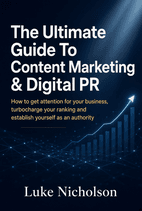
The Ultimate Guide To Content Marketing & Digital PR
by Charlie Marchant
What is the book The Ultimate Guide To Content Marketing & Digital PR about?
Charlie Marchant's The Ultimate Guide To Content Marketing & Digital PR is a metrics-driven handbook for small business owners and marketers, covering audience avatars, content calendars, brand voice, sponsored content, influencer and blogger outreach, reviews, giveaways, and events, with real case studies and frameworks for building visibility and authority on a budget.
Feature
Insta.Page
Blinkist
Shortform
The Ultimate Guide To Content…
✓
✕
✕
Summary Depth
Full Chapter-by-Chapter
15-min overview
Section-by-section guides
Audio Narration
✓
✓
✓
Visual Mindmaps
✓
✕
✕
AI Q&A
✓
✕
✕
Quizzes
✓
✕
✕
PDF Downloads
✓
✕
✓
Price
$89.99/yr
$146/yr (PRO)
$199/yr
*Competitor data last verified July 2026.
1 Page Summary
Charlie Marchant's The Ultimate Guide To Content Marketing & Digital PR argues that content marketing is successful only when it is measured, targeted, and built around the audience rather than the brand. The book opens by stressing that digital PR is marketing, and marketing must return more than it costs, so businesses need to track sales, website traffic, and authority, set clear goals, and adjust campaigns as they run. It then traces the shift from interruptive advertising to content that carries value, citing early advertorials, Hasbro's Transformers cartoon, and McDonald's transparent responses to critics as examples of embedding the pitch inside useful or engaging material. The central thread is that effectiveness, not volume or polish, determines whether content earns attention and delivers business results.
The author's approach is practical, metrics-driven, and example-led. Chapters move from identifying a target audience and building a customer avatar through generating ideas, creating content calendars, writing for the audience, and developing a consistent brand voice. Marchant then examines sponsored content and native advertising, including labelling and Google's treatment of paid links, before turning to influencer and blogger outreach, product reviews, giveaways, and events. The book is distinctive in grounding its advice in real cases, such as a glass jar seller whose blogger giveaway produced thousands of entries for £12.50 and a boutique hotel that generated more than thirteen linked blog posts by partnering with Lush and a local chocolatier for under £400. It also offers concrete tools and frameworks, including swipe files, colour-coded calendars, and planning steps for events, while addressing common barriers like blank-page paralysis and stalled blogs.
The intended audience is small business owners, marketers, and anyone responsible for building visibility and authority without a large budget or established media relationships. Readers will learn how to set meaningful digital PR goals, identify and understand their audience, produce content that is shared and engaged with, pitch bloggers and influencers ethically, and use reviews, giveaways, events, and a consistent business blog to attract customers and improve search visibility. The book's broader promise is that disciplined, audience-focused content marketing and digital PR can turn attention into authority and sales, even for unknown brands competing in crowded markets.
Chapter 1
Overview
Most marketing spend is supposed to pay off, but with digital PR it's often hard to see what you're getting back. Without a clear way to judge it, effort goes in every direction, goals get fuzzy, and no one can tell what's working or what to change.
Digital PR is marketing, and marketing has to bring in more than it costs. Most businesses can't say whether it does, because they never track the numbers. So there are three things to do: figure out where the business stands today, set clear goals, and check and adjust the campaign as it runs.
Metrics of success
Sales, which every business tracks. The best way to measure them is through tools like Google Analytics or call-tracking numbers, not by asking leads where they found you.
Website traffic, which only means something alongside how many visitors buy and how many leave right away. If few visitors buy, the traffic is unqualified or the site is poor. The top organic result takes over 30% of clicks, according to the book.
Authority, measured by domain authority, or DA. It's scored one to a hundred, based on a site's age, size and popularity.
Influence, measured by Klout score, also one to a hundred.
Brand trust, built through reviews and coverage in high-authority publications. It lifts sales and supports higher prices.
SMARTer goals
Goals must be Specific, Measurable, Agreed on, Realistic and Time-bound. Break long goals into short stages and review each one: if traffic hasn't grown 2.5% by week three, rethink the strategy.
Example goals
Direct sales start from current and projected sales, seasonal factors, a target and a deadline. Sales come from traffic multiplied by how many visitors buy, and expensive items can sell even when few visitors buy. Digital PR mainly drives traffic through keyword-rich content, paid advertising, relevant publications, blogger outreach and social campaigns.
Authority: the expertise a business finds obvious is not obvious to its market. DA rests on age, size and popularity. Age comes with time; size from original, engaging pages; popularity from links earned by placing articles where the audience reads.
A blog builds brand, links and SEO value, tracked by blog traffic, subscribers, clicks and shares.
A blog goal can be a number of new leads per month against a set quantity of content. Writing posts on a topic while doing outreach about it is efficient, producing a writing sample to show publishers from research already done.
Gain followers and influence them
Social media rarely closes direct sales. It's where customers are engaged until some become advocates who tweet, like and share on a business's behalf. A goal might be moving a Klout score from one number to another by a set date. Klout tracks across several networks and measures engagement rather than activity. Platforms reward engagement: profiles that draw responses gain visibility and those that draw none lose it, so weak self-promotion shrinks the reach of later posts while content that spreads lifts an occasional promotional one. Reaching the goal takes strong profiles where customers are and shareable content, not product shots and invitations to visit a website. A companion book covers the detail, and regular review keeps the effort pointed at what works.
Create an email database
Most underperforming sites offer visitors one action, buy now, which leaves anyone still researching with nothing to do. High-performing sites sort visitors by willingness to buy and give the not-yet-ready a free guide or sample in exchange for an email address, so they can be marketed to later. Emails make it easy to reach people who were once interested. The goal is a set number of signups, and the test is what the visitor gets, since a newsletter signup persuades almost nobody. Giveaways work: run a competition and hand sought-after products to a few winners in return for entrants' addresses, social media included. Rafflecopter gets one online in minutes. If products are too costly early on, give information instead. An HR software company can run webinars on HR topics and collect addresses for free places.
Key Takeaways
Track before you spend. Conversion tracking or call-tracking numbers will show what a campaign returns, and traffic volume only means something when read beside how many visitors buy and how many leave.
Set goals that name a number, a deadline and the people who have agreed to them, then review in short stages and change the strategy when a checkpoint comes in short.
Build authority over time by publishing original work and earning links from articles placed where your audience already reads, writing about the same subjects you pitch.
Treat social platforms as a way to turn customers into sharers rather than a direct sales channel, aim influence at a stated target, and expect constant promotion to shrink your reach.
Give visitors who are not ready to buy something worth an email address, such as a guide, a sample, a webinar place or a contest prize, so you can market to them later.
Key concepts: Chapter 1
Chapter 1
Metrics of Success
Sales: track via Google Analytics or call-tracking, not by asking leads.
Website traffic: evaluate alongside conversion and bounce rates.
Authority: domain authority (DA) based on age, size, popularity.
Influence: Klout score measures engagement across networks.
SMARTer Goals
Goals must be Specific, Measurable, Agreed, Realistic, Time-bound.
Break long goals into short stages and review regularly.
Example: if traffic hasn't grown 2.5% by week three, rethink strategy.
Example Goals
Direct sales: start from current/projected sales, seasonality, target, deadline.
Sales = traffic × conversion rate; expensive items can sell with low conversion.
Digital PR drives traffic via keyword-rich content, paid ads, publications, blogger outreach, social campaigns.
Authority: DA rests on age, size, popularity; build via original content and earned links.
Gain Followers and Influence Them
Social media rarely closes direct sales; engage customers to become advocates.
Goal: move Klout score from one number to another by a set date.
Reaching goal requires strong profiles and shareable content, not product shots.
Create an Email Database
High-performing sites sort visitors by willingness to buy.
Offer free guide or sample in exchange for email address.
Goal: set number of signups; test what visitor gets.
Giveaways work: run competition, collect addresses via Rafflecopter.
💡 Try clicking the AI chat button to ask questions about this book!
Chapter 2
Overview
Audiences tune out promotional messages, but businesses still need attention. Most workarounds either look like ads or get skipped right past. Figuring out what actually gets a message through is tricky, and guessing wrong means nobody sees it.
Content is anything that carries a message to customers. Content marketing means creating that content and promoting it to hit marketing goals. Advertorials in newspapers came first, and they often worked better than regular ads, because people read articles and skip ads. The content has to be interesting and give people something useful. With regular advertising, the pitch sits next to the value. With content marketing, the pitch is built inside it.
This idea is older than the internet. In 1984, Hasbro made a twenty-minute cartoon to sell Transformers toys instead of a twenty-second commercial, and the toys sold like crazy. Two things brought this approach back in the internet age: you can reach millions of people, and creating content is far cheaper than it used to be. McDonald's answered every question people had, even whether its meat was made of cardboard, and put its own reply right out front before the critics could.
Advertorials copy the style of regular articles, which is why they're also called native advertising. According to the book, split testing found that advertorials pull in 81 percent more orders than the same words in a standard ad. When a piece turns into nothing but a sales pitch, it annoys readers. When it offers something useful alongside the pitch, it doesn't.
A press release asks journalists to pick up a story, but according to the book, half of journalists don't read them anymore. Only send one when you have a genuinely newsworthy story, with a headline and subject line that grab attention, and a body under five hundred words.
You've got options: articles, blogs, podcasts, videos, newsletters, advertorials, press releases, and engaging with people on social media. Pick the form your ideal customer already spends time with, and that starts with figuring out who your ideal customer is.
Key Takeaways
Put your sales message inside content your customer actually wants to read, watch, or listen to, instead of interrupting them with a standalone ad.
Learn who you're trying to reach before you pick a format, then make the kind of content that person already spends time with.
Content marketing isn't an internet invention. It sold toys and ran in newspapers long before distribution got cheap.
Give people real value alongside your pitch, because a piece that reads like nothing but a sales pitch turns them off.
Save press releases for announcements that are truly newsworthy. Lead with a headline that earns attention, and keep the body under five hundred words.
Key concepts: Chapter 2
Chapter 2
The Attention Problem and Content Marketing Solution
Audiences tune out promotional messages, but businesses still need attention.
Content marketing embeds the pitch inside interesting, useful content.
Advertorials in newspapers worked better than regular ads.
With regular ads, pitch sits next to value; with content marketing, pitch is built inside.
Historical Roots and Modern Revival
Hasbro's 1984 Transformers cartoon sold toys by being entertaining content.
Internet age brought massive reach and far cheaper content creation.
McDonald's answered critics with its own content before they could.
Advertorials and Native Advertising
Advertorials copy article style, also called native advertising.
Split testing found advertorials pull 81% more orders than standard ads.
Pure sales pitches annoy readers; useful content alongside pitch does not.
Press Releases: Use Sparingly
Half of journalists don't read press releases anymore.
Only send when you have a genuinely newsworthy story.
Use attention-grabbing headline and subject line; keep body under 500 words.
Choosing the Right Content Format
Options include articles, blogs, podcasts, videos, newsletters, advertorials, press releases, social media.
Pick the form your ideal customer already spends time with.
Start by figuring out who your ideal customer is.
Chapter 3
Overview
Publishing more content won't help a brand if nobody is waiting for it. But narrowing your audience can feel like shrinking your market. The truth is, different people like different things. The same message that turns one person off will draw another one in. And trying to reach everyone costs more than it gives back.
Identifying the target audience
You can't make content that works if you don't know who will read it and why. Target marketing still matters, even though demographics aren't as clear-cut as they used to be. To find your audience, answer six questions:
How old are they?
Where do they live?
What gender are they?
What is their education status?
What ethnicity are they?
What is their income or buying power?
These answers help you build an avatar, a picture of your typical customer, so you can shape your content around what they're likely to do.
The teenage audience
Teenagers aged twelve to seventeen watch less television than any other age group. Viewing hours dropped thirty percent between 2011 and 2015. They've moved to online video sites like YouTube. Facebook has become uncool for them because their parents and grandparents use it now. They prefer Snapchat because it feels more private. For this audience, TV and Facebook ads may fail. YouTube videos, blogger coverage, or a Snapchat campaign work better.
Building a persona
Sketch out a persona for your target customer. Include their demographics, their problems, and how your product helps them. It sounds like a grade school activity, but it keeps you from losing focus and trying to target everyone.
Applying audience identification to digital PR
A London cosmetic dental clinic targeting young professionals in their late twenties and early thirties with good income and concern for their appearance and oral health should make content about cosmetic dentistry options and costs. Use targeted keyword discovery based on what the audience wants, not just what's already on your website, to optimize for terms like teeth whitening or invisible braces.
DIY market research
To learn what interests customers, try doing your own research. For a new coffee shop, spend hours in a competitor's shop watching what customers order, whether they stay or take away, and when it gets busiest. For other products, run focus groups or hire a market research company. For e-commerce, look at competitors' homepages, sales, social media, reviews, and what makes them stand out. Test your site with Peek User Testing. Study your own data: landing pages, search terms, top sellers. Survey current customers with on-site surveys or SurveyMonkey about products, pricing, and what draws them in.
Building a digital PR strategy
When choosing a digital PR strategy, think about:
Your main business goals and how digital PR supports them.
What appeals to your audience, where they spend time online, what they read, who they follow.
What makes you different and how much it matters.
Your budget and what's realistic.
What the big players in your industry are doing and what you can learn.
What competitors are doing. If they're doing nothing, outrank them. If they're doing something, do it better.
Every content type, advice articles, how-to guides, blogs, newsletters, infographics, videos, social media posts, has to appeal to your target audience. Plan carefully with clear reasoning. Expect some trial and error.
Key Takeaways
Figure out who your audience is before you make anything. Answer the demographic questions first, then turn those answers into one profile you can picture while you write.
Draw up a persona that states your customer's problems and how your product solves them. Keep it visible so you don't drift into targeting everyone.
Put your effort into the channels your age group actually uses. Younger consumers have left television and the social networks their parents joined.
Do your own market research where you can: watch customers in a competitor's shop, run surveys or focus groups, study rivals' reviews and bestsellers, and build keyword lists from what your audience searches rather than from what's already on your site.
Nail down your digital PR approach only after you can name the business goal, your audience's interests and where they hang out online, what makes you different, your budget, and what the biggest players and direct competitors are already doing.
Key concepts: Chapter 3
Chapter 3
Identifying the Target Audience
Answer six demographic questions: age, location, gender, education, ethnicity, income.
Build an avatar to shape content around typical customer behavior.
Narrowing audience prevents wasting resources on everyone.
Understanding the Teenage Audience
Teens watch less TV; viewing dropped 30% from 2011 to 2015.
They prefer YouTube and Snapchat over Facebook due to privacy.
TV and Facebook ads may fail; use YouTube, bloggers, or Snapchat.
Building a Persona
Sketch a persona with demographics, problems, and product solutions.
Keeps focus and prevents targeting everyone.
Use persona to guide content creation.
DIY Market Research
Observe customers in competitor shops for behavior and timing.
Use focus groups, surveys, and competitor analysis.
Study your own data: landing pages, search terms, top sellers.
Building a Digital PR Strategy
Align with business goals and audience interests.
Consider budget, differentiation, and competitor actions.
Choose content types that appeal to target audience; expect trial and error.
Chapter 4
Overview
Coming up with ideas on demand is the first wall, and it is not the last. Even a strong piece goes nowhere if the people who decide what gets published never see it. Most small operations stall at both points without knowing which one is actually stopping them.
Ideas, goals and limits
A blank page stops most businesses. That is why getting past it matters. Written content is the easiest thing for a small business owner to produce. Long pieces get shared more than short ones, and readers engage with text more than with other formats.
Every piece needs a goal. Maybe you want to explain one idea well, hit a page-view or share number, win a specific client, or get a share from a chosen influencer. Then set your limits: how much time you have, what you can spend, and which skills and tools you already have.
Where ideas come from
Start with the sites that move you. Work out how they do it, and keep the good ones in a swipe file - bookmarks, Evernote, Trello, Pinterest. If you are nothing like your audience, read what they read instead. Note the themes and concerns that keep coming up, so you can say who each piece is for and why it will land.
Trends, news and rivals
Catch a trend early and you get exposure. Catch it late and you look like an imitator. Google Trends shows keyword search volume and lets you compare terms. A local personal trainer shows what is possible. His waist training content ran as a guest blog on a popular site. Newspapers picked it up, and the BBC interviewed him live.
News rewards speed too. Google News shows what the papers are covering. A letter to the editor of a major title can add your side of a debate.
Competitor analysis is fair game. Moz's Open Site Explorer and Backlink Watch reveal a rival's backlinks. Heavily linked articles are the successful ones. Followerwonk tracks the Twitter equivalent. The aim is not to copy but to understand why something worked.
Choosing an idea
Go back to your goals and limits. Cross out whatever misses them or breaks a limit.
Cross off anything boring.
Get feedback from the people around you until everyone agrees.
Research tools
Buzzsumo: what gets read and shared.
Google Trends: keyword search volumes and comparisons.
Google News: news-only search results.
Twitter: breaking news, plus influencers and journalists.
Evernote: one place for ideas.
Trello Board: a shareable ideas board.
Pinterest: images to draw on later.
Response Source: a paid service that connects journalists and PR people, used by the UK national press.
Open Site Explorer: a site's backlinks and their sources.
Backlink Watch: free, slightly different results.
National newspapers are harder than smaller outlets. Their fees are beyond most small businesses, and their large journalistic teams mean they do not need content. They will still pick up a story you have created. The other route is through journalists. They are incredibly busy and ask for help on Twitter or Response Source. Be quick and useful, and politely ask to be credited. A health-sector client followed health journalists and watched Response Source. Answering a healthy heart week request won the client and its service a link on one of the UK's biggest news websites.
Editors as gatekeepers
Editors decide what runs, and they get an enormous volume of ideas. Find them through a publication's contact page. Then build a press list in Excel or Google Sheets with name, position, publication, contact details and social profiles.
Missing email addresses are encouragement, since most people give up. A short Twitter direct message works.
Where staff are unnamed, read the author bylines.
Crafting a pitch
An editor is thinking about being too busy to breathe and about what is in it for them. So a pitch must show a clear benefit and be read in under two minutes.
A headline and subject line strong enough to intrigue people who write headlines all day, plus a tag such as (story idea).
An opening line that works as a second headline.
A body under five hundred words, naming benefits such as getting the story first, payment, or help promoting the story.
An answer to "why you," either by making your business inseparable from the story or by stressing your qualifications.
Have the grammar checked. Avoid copy-and-paste mail. Name the editor and publication. Most pitches will be ignored. Follow up politely once.
One pitch that worked
Tom Hunt won coverage in The Daily Express with no budget or connections. His pitch, featured on HubSpot's blog, rode a trending topic about male leggings. It cited earlier Telegraph and Daily Mail coverage with its 4,000 shares and 200 comments. It offered to create the content itself and framed a London startup against a Chicago rival.
Networking and follow-ups
A first story is like a first job. Many doors shut first, but contacts make promotion much easier. An editor may even start coming to you for industry information. After a success, ask about a follow-up or a regular contributor slot. Stay in touch with editors who decline.
Key Takeaways
Give every piece a goal and its limits up front: what it must achieve, how long you have, what you can spend, and which skills and tools you already have.
Keep a swipe file of the sites that move you and work out how they do it. If your audience looks nothing like you, read what they read instead and log the themes that keep coming up.
Watch Google Trends and Google News so you publish on a topic while it is still rising. Use backlink tools to learn why a rival's article earned links, not to clone it.
Write your pitch for an editor who has no time: lead with the benefit, keep it readable in under two minutes, answer why you are the right person, and offer to produce the content yourself.
Treat a placement as the beginning of a relationship. Follow up once if ignored, ask about a follow-up or regular slot after a win, and stay in touch with editors who said no.
Key concepts: Chapter 4
Chapter 4
Ideas, Goals, and Limits
Written content is easiest for small businesses to produce.
Long pieces get shared more; readers engage with text.
Every piece needs a goal: explain, hit metrics, win client.
Set limits: time, budget, skills, and tools.
Where Ideas Come From
Start with sites that move you; analyze how they do it.
Keep good ideas in a swipe file: bookmarks, Evernote, Trello.
If unlike your audience, read what they read.
Note recurring themes to tailor content.
Trends, News, and Rivals
Catch trends early for exposure; late makes you an imitator.
Use Google Trends for keyword volumes and comparisons.
News rewards speed; Google News shows coverage.
Analyze competitor backlinks with Moz and Backlink Watch.
Choosing an Idea
Cross out ideas that miss goals or break limits.
Eliminate anything boring.
Get feedback until everyone agrees.
Research Tools
Buzzsumo: what gets read and shared.
Google Trends: keyword search volumes.
Google News: news-only search results.
Twitter: breaking news, influencers, journalists.
Editors as Gatekeepers
Editors decide what runs; they get many ideas.
Find them via publication contact pages.
Build a press list with name, position, contact details.
Missing emails are encouragement; try Twitter DMs.
Crafting a Pitch
Show clear benefit; be read in under two minutes.
Strong headline and subject line with (story idea) tag.
Opening line as second headline; body under 500 words.
Charlie Marchant is a travel writer and content specialist known for her practical, research-driven guides to destinations across Europe and beyond. She has contributed to a range of travel publications and served as a writer and editor for travel blogs and resource sites, focusing on sustainable tourism and off-the-beaten-path experiences. Her work draws on extensive firsthand travel and a background in digital content strategy within the travel industry.
Frequently Asked Questions about The Ultimate Guide To Content Marketing & Digital PR
What is The Ultimate Guide To Content Marketing & Digital PR about?
This guide explores how businesses can use content marketing and digital PR to achieve measurable results. It covers setting clear goals, tracking metrics like sales and website traffic, and understanding domain authority. The chapters detail strategies for identifying target audiences, creating content calendars, crafting brand voice, and leveraging sponsored content and influencer partnerships. It also provides practical tactics for blogger outreach, product reviews, giveaways, and hosting events to build visibility and trust.
Who is the author of The Ultimate Guide To Content Marketing & Digital PR?
The author is Charlie Marchant. The provided chapter summaries do not contain any biographical information about them. No details about their expertise or background are included in the content provided.
Is The Ultimate Guide To Content Marketing & Digital PR worth reading?
This book is worth reading for its practical, numbers-driven approach to digital PR and content marketing. It offers clear frameworks for measuring success and aligning content with business goals. The case studies and actionable tactics—from blogger outreach to giveaways—make it a valuable resource for small businesses and marketers.
What are the key lessons from The Ultimate Guide To Content Marketing & Digital PR?
Key lessons include tracking sales, website traffic, and domain authority to prove digital PR value. Businesses should define a specific target audience and tailor content to their demographics and interests. Successful content marketing requires a consistent calendar, a distinct brand voice, and a focus on being useful rather than promotional. Tactics like sponsored content, influencer partnerships, giveaways, and blogger events can amplify reach when done ethically and with clear goals.
📚 Explore Our Book Summary Library
Discover more insightful book summaries from our collection