The Ultimate Guide To Content Marketing & Digital PR Quotes
by Charlie Marchant
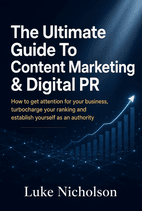
This page collects lines from Charlie Marchant's guide to content marketing and digital PR. You will find blunt reminders about knowing your audience, choosing the right traffic, writing with purpose, and earning attention instead of begging for it. Some lines are practical, some are funny, and a few are the kind of thing you might stick above your desk.
The book works well as a quote source because it turns common marketing advice into sharp images. It talks about dartboards, nets, blank pages, and soapboxes without losing the point. If you want useful reminders without a lecture, these lines are easy to borrow, share, or argue with.
Top Quotes from The Ultimate Guide To Content Marketing & Digital PR
“Basically we're looking to sneak a promotional message into our audience's brains via something that they really want to consume.”
The author defines content marketing as a very simple concept.
It captures the core strategy in a vivid, memorable image.
“People read newspapers for the articles not the ads, after all. And if it looks like an article, smells like an article, then it's going to get read.”
The chapter explains why advertorials can outperform traditional ads.
It shows how content earns attention by feeling like what readers already want to read.
“It’s a very simple concept: you can’t hit the bullseye if you don't know where the dartboard is.”
The chapter uses this metaphor to explain how targeting makes marketing efforts effective.
It turns a strategic principle into a vivid image anyone can remember. It reminds marketers that aim precedes effort.
“The goal isn’t getting into your favourite or even the world’s biggest publication — it’s getting into your target audience's favourite publication.”
While compiling target publications, the author warns against chasing prestige over relevance.
It refocuses PR on the customer's reading habits rather than vanity outlets. That shift is central to effective content marketing.
“There's no such thing as good writing or bad writing — only effective writing and ineffective writing.”
In the section on writing for your target audience, the chapter reframes what makes marketing writing successful.
It liberates non-writers by defining good writing through business impact rather than literary polish.
“Brands don't speak; people do. So when your brand starts to speak, the aim is that customers stop thinking of your brand as a faceless entity and start thinking of it as a person.”
In the brand voice section, the chapter explains why brands need to sound human.
It captures the shift from faceless corporate messaging to trust-building personification.
“In other words, now that you've paid for the soapbox you better be sure that you have something interesting to say!”
The chapter explains that sponsored content must be high quality rather than a substandard advertorial.
It is a punchy, memorable way to say that paid placement does not excuse boring or weak content. The soapbox image makes the lesson instantly shareable.
Themes Behind the Quotes
The quotes keep returning to intention. Content only matters when it serves a clear business goal and reaches people who are likely to care. That means knowing the audience, understanding where they already spend time, and measuring whether the traffic actually does anything useful. Volume and vanity metrics show up as traps rather than wins.
Another theme is trust and persuasion. Paid placements, influencer partnerships, sponsored posts, and blogger outreach all borrow credibility from someone else, so they only work when the message is honest and the fit feels natural. The writing advice follows the same idea: speak like a person, keep the reader in mind, and write for effect rather than applause. Attention is valuable, but it has to be earned and respected.
Quotes by Chapter
Chapter 1
“If you set out to sea without any idea where you are going or how you are going to get there, it will likely be a very long time until you reach land again.”
The chapter uses this sailing metaphor to explain why digital PR campaigns need clear goals.
It turns an abstract planning lesson into a vivid journey, making the cost of aimless effort easy to picture.
“Doing more of what works and less of what doesn’t is an admirable business strategy, but to be effective you need to have “working” and “not working” clearly defined for your business.”
The chapter argues that measurement and adjustment only work when you define what success and failure mean.
It captures the essence of optimization: iteration is meaningless unless you first define what actually works.
“Getting a lot of traffic is important, but it won’t mean anything for your business if you have a low conversion rate or a high bounce rate, because these generally mean that either your website isn’t up to scratch or the traffic you are generating isn't qualified.”
In reviewing website traffic as a metric, the chapter warns that raw visitor numbers can hide deeper problems.
It separates vanity traffic from valuable traffic and reminds marketers that conversion matters more than volume.
“While a good digital PR campaign will increase your website's traffic, a Ninja digital PR campaign will emphasise driving the right kind of traffic.”
The chapter distinguishes standard digital PR from more advanced Ninja digital PR.
It neatly raises the bar from simply attracting visitors to attracting the right visitors.
Chapter 2
“Content marketing is creating and promoting content that is specifically designed to help your business achieve its marketing goals.”
The chapter opens with a definition of content marketing.
It cuts through the hype with a clear, goal-oriented definition.
“While adverts are just placed next to something of value in order to be seen by the viewer, the commercial message in content marketing is built in so as to be indistinguishable from the content.”
The chapter contrasts content marketing with advertising.
It clarifies the subtle but crucial shift from interruption to integrated value.
Chapter 3
“You can't just create a heap of content and hope it will be a success. You have to know who you are creating it for and why they will consume it.”
Opening of Chapter 3, introducing the necessity of audience-first content.
It frames content marketing as a question of audience intent, not volume. The line is blunt, memorable, and immediately actionable.
“Casting a wide net is expensive, and it pulls up all kinds of crap, but putting the right net in the right place at the right time nets you the exact results you were looking for at a fraction of the cost.”
The author argues that broad marketing wastes resources compared with precise targeting.
It captures the economic case for niche targeting in a colorful way. The net metaphor makes precision feel practical and profitable.
“You need to come to the place that your target audience is already at if you want to get their attention.”
After noting teenagers' shift away from TV and Facebook, the author advises following the audience online.
It is a clear call to meet people where they already are. It applies to every platform and PR tactic.
Chapter 4
“Few things in life are more terrifying than a blank page, but this is a hurdle that you can’t afford to stumble at now.”
The chapter opens its advice on finding content ideas by acknowledging the fear of starting.
It names the universal creative block and immediately raises the stakes. Readers feel seen and challenged to push past it.
“Take heart in the fact that many more people will give up at the blank page stage, making your success even more valuable for being the exception rather than the rule.”
The author encourages writers who feel stuck at the beginning of content creation.
It reframes the competition: most people quit early, so persistence itself becomes a competitive advantage.
“By catching trends early you can gain massive exposure for your business, by jumping on a trend too late you can be seen as an imitator, outdated, or worst of all, boring.”
In the section on staying on trend, the author explains why timing matters.
It captures the upside and downside of trend-jacking in one memorable line. Miss the window and you risk looking derivative.
Chapter 5
“If you are a plumber, write like a plumber. If you are a gardener, write like a gardener.”
In the section on writing for your target audience, the chapter encourages business owners to write in a natural, authentic voice.
It turns abstract advice about authenticity into a concrete, memorable rule.
“The key to writing effectively is to always keep your reader in mind. You are not writing for yourself; you are writing for your potential customers.”
In the article-writing section, the author states the core mindset before drafting.
It reminds marketers that content exists to serve readers, not the writer.
Chapter 6
“Newspapers and news sites have a reputation for being trustworthy sources of information, but marketers can buy a portion of that trustworthiness and use it to achieve their business goals.”
The chapter introduction explains how sponsored content exploits publications' reputations for trust.
It crystallizes the ethical tension at the heart of sponsored content: credibility itself can be bought. This line is memorable because it names the hidden transaction behind a trusted byline.
“Everything has its price, and a slot in a newspaper or on a website is no different.”
The chapter introduces sponsored content as a paid path into otherwise trusted publications.
It reduces the entire practice to a simple transactional truth, making paid placement instantly memorable. Readers grasp both the opportunity and the ethical cost in one sentence.
“It is important that both publishers and marketers realise that misleading sponsored content erodes the trust between readers and publishers, and that trust is a resource that is quickly spent but very difficult to regain.”
The chapter warns about the controversy and reader distrust surrounding sponsored content.
It reframes trust as a finite resource, making the consequences of deceptive advertising feel concrete. The warning is both practical and ethical, and it applies far beyond publishing.
Chapter 7
“A whopping 81% of the population trusts the advice they get from bloggers, making them very powerful advocates for any brand online.”
The chapter opens by establishing the power and reach of bloggers as influencers.
The statistic instantly quantifies why bloggers can be valuable brand advocates. It makes the case for influencer marketing with a single memorable number.
“Influencer marketing is the practice of encouraging influential people to recommend your product or service to the people that they have influence over.”
The author defines the chapter's central concept early on.
It gives readers a clear, practical definition they can apply to their own campaigns. It strips away hype and focuses on the core mechanic of borrowed trust.
“A study from McKinsey found that marketing-induced consumer-to-consumer word of mouth generates more than twice the sales of paid advertising as well as an improved retention rate.”
A research finding is cited to justify the value of influencer marketing.
It provides hard evidence that peer recommendations can outperform paid ads. The sales and retention detail makes the business case concrete.
“Remember that having a mismatched blogger/brand relationship is awkward for both the blogger (who risks losing the respect and trust of their readers) and the brand (who won't see much of a return on their investment with a disengaged blog audience).”
The author warns brands about the consequences of choosing the wrong influencer.
It highlights that authenticity and audience fit matter more than reach alone. The dual-risk framing makes the warning memorable and practical.
Chapter 8
“There's an art to pitching and negotiating with bloggers, and part of that art is knowing what makes them tick.”
In the chapter introduction about pitching and negotiating with bloggers.
It frames blogger outreach as a relationship-building craft rather than a mechanical task. Success depends on understanding what motivates bloggers.
“Before you even think about sending out emails pitching bloggers a giveaway with your product, make sure that what you're offering means they're getting as much benefit from running the competition as you are.”
From advice before sending pitch emails about giveaways and product collaborations.
It puts mutual benefit at the center of outreach, warning that one-sided asks are doomed. It is a concise test for whether a pitch is worth sending.