The Ultimate Guide To Content Marketing & Digital PR Key Takeaways
by Charlie Marchant
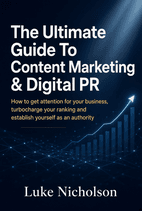
5 Main Takeaways from The Ultimate Guide To Content Marketing & Digital PR
Track Conversions Before You Spend a Single Marketing Dollar
The book insists on conversion tracking or call-tracking numbers so traffic is read beside how many visitors buy and how many leave. Goals should name a number, a deadline, and the people accountable, then get reviewed in short stages so strategy can change at a checkpoint. Without this, content and PR spending is guesswork.
Know Exactly Who You Serve Before Making Any Content
Before choosing a format or channel, answer demographic questions and turn them into one visible persona that states the customer's problems and how your product solves them. Put effort into the channels your age group actually uses, and research rivals' reviews, surveys, focus groups, and keyword lists rather than guessing. This keeps you from targeting everyone and reaching no one.
Wrap Your Sales Message Inside Content People Want
Content marketing works when the sales message sits inside something the customer already wants to read, watch, or listen to—not in a standalone interruption. Give real value alongside the pitch, study the old newspaper and toy examples, and save press releases for genuinely newsworthy announcements with strong headlines under 500 words. That is how original work earns links and authority over time.
Earn Real Authority Through Fit-Based Pitches and Relationships
Digital PR succeeds when editors and influencers are chosen for topical and audience fit, not just reach or domain authority. Write pitches an editor can read in under two minutes, follow up once, and treat a placement as the beginning of a relationship that can lead to follow-ups or regular slots. Target publications that overlap with your subject and location so keywords and links sit naturally in the copy.
Turn Content, Reviews, Giveaways, and Events Into Leads
Use email-for-value offers, product reviews, giveaways, and blogger events to convert attention into leads and sales, especially on a small budget. Match partners to your category, judge bloggers by engagement and reader behavior, treat free as a no-strings prize rather than a discount, and settle disclosure, sharing, costs, and timelines upfront. Keep your blog on your own domain, publish consistently, and monitor traffic, engagement, and leads so you can cut what does not return.
Executive Analysis
The book's five takeaways form a single operating system: measure before you spend, define the audience before choosing a format, embed the sales message inside content people value, earn authority through fit-based outreach and relationships, and convert attention into leads with offers, reviews, giveaways, and events. Together they argue that content marketing and digital PR are not separate stunts but one measurable pipeline—research creates relevance, relevance earns attention, attention builds authority, and authority produces trackable conversions. Every tactic, from personas and editorial calendars to blogger partnerships and blog CTAs, is judged by whether it moves a named goal rather than vanity metrics.
For readers, the practical impact is a repeatable process they can run on a small budget: set tracking and goals, build a persona, schedule valuable posts, pitch editors and bloggers who already fit, and scale only what returns leads. It matters because it treats digital PR as relationship-driven and content as a business asset, not a creative gamble. In the crowded marketing genre, it sits as a tactical field guide that bridges SEO, PR, influencer outreach, and conversion tracking, making it useful for founders, small teams, and marketers who need to show revenue impact.
Chapter-by-Chapter Key Takeaways
Chapter 1 (Chapter 1)
Track before you spend. Conversion tracking or call-tracking numbers will show what a campaign returns, and traffic volume only means something when read beside how many visitors buy and how many leave.
Set goals that name a number, a deadline and the people who have agreed to them, then review in short stages and change the strategy when a checkpoint comes in short.
Build authority over time by publishing original work and earning links from articles placed where your audience already reads, writing about the same subjects you pitch.
Treat social platforms as a way to turn customers into sharers rather than a direct sales channel, aim influence at a stated target, and expect constant promotion to shrink your reach.
Give visitors who are not ready to buy something worth an email address, such as a guide, a sample, a webinar place or a contest prize, so you can market to them later.
Try this: Set conversion tracking and call-tracking in place, then define goals with numbers, deadlines, and owners before spending; publish original content, treat social as sharing, and capture emails with a lead magnet.
Chapter 2 (Chapter 2)
Put your sales message inside content your customer actually wants to read, watch, or listen to, instead of interrupting them with a standalone ad.
Learn who you're trying to reach before you pick a format, then make the kind of content that person already spends time with.
Content marketing isn't an internet invention. It sold toys and ran in newspapers long before distribution got cheap.
Give people real value alongside your pitch, because a piece that reads like nothing but a sales pitch turns them off.
Save press releases for announcements that are truly newsworthy. Lead with a headline that earns attention, and keep the body under five hundred words.
Try this: Learn who you're reaching and give them valuable content—not an interruptive ad—with your sales message woven in; reserve press releases for genuinely newsworthy announcements under 500 words.
Chapter 3 (Chapter 3)
Figure out who your audience is before you make anything. Answer the demographic questions first, then turn those answers into one profile you can picture while you write.
Draw up a persona that states your customer's problems and how your product solves them. Keep it visible so you don't drift into targeting everyone.
Put your effort into the channels your age group actually uses. Younger consumers have left television and the social networks their parents joined.
Do your own market research where you can: watch customers in a competitor's shop, run surveys or focus groups, study rivals' reviews and bestsellers, and build keyword lists from what your audience searches rather than from what's already on your site.
Nail down your digital PR approach only after you can name the business goal, your audience's interests and where they hang out online, what makes you different, your budget, and what the biggest players and direct competitors are already doing.
Try this: Build a detailed audience persona and use it to choose channels and topics, then validate it with surveys, focus groups, competitor reviews, keyword research, and a clear digital PR goal, budget, and competitive audit.
Chapter 4 (Chapter 4)
Give every piece a goal and its limits up front: what it must achieve, how long you have, what you can spend, and which skills and tools you already have.
Keep a swipe file of the sites that move you and work out how they do it. If your audience looks nothing like you, read what they read instead and log the themes that keep coming up.
Watch Google Trends and Google News so you publish on a topic while it is still rising. Use backlink tools to learn why a rival's article earned links, not to clone it.
Write your pitch for an editor who has no time: lead with the benefit, keep it readable in under two minutes, answer why you are the right person, and offer to produce the content yourself.
Treat a placement as the beginning of a relationship. Follow up once if ignored, ask about a follow-up or regular slot after a win, and stay in touch with editors who said no.
Try this: Define each piece's goal, time, budget, and skills, keep a swipe file, monitor Trends/News and backlink data, pitch editors in under two minutes, and treat each placement as the start of a relationship.
Chapter 5 (Chapter 5)
Build a yearly content calendar that pins posts to conferences, holidays, themes and target keywords, so a blog reads as one connected body of work instead of a pile of one-off ideas.
Match the demographic mix of your customers when splitting topics, because a piece that reaches its readers beats one that is merely well turned out.
Fix a brand voice that stays recognisable across everything you publish, then let tone shift with who you are addressing, ordering the customer ahead of the product in a sentence.
Give each article a single concrete problem to solve, and label links with the words a searcher would actually use; a link dropped somewhere it does not belong costs more than leaving it out.
Target publications that already overlap with your subject and your location, since a tight fit is what lets keywords and links sit in the copy without looking forced.
Try this: Create a yearly content calendar tied to events, holidays, themes, and keywords; match topics to your customer demographic, fix a consistent brand voice, solve one concrete problem per article, and target overlapping publications so links fit naturally.
Chapter 7 (Chapter 7)
Approach influencers now, while many still undervalue their own reach, and budget for rates climbing as the channel matures.
Choose the collaboration format that fits your budget and goal, whether that is a sponsored post, a product review, a feature, a giveaway or a blogger event, and label paid placements as advertising.
Judge partners on engagement and topical fit ahead of follower counts or domain authority, since a smaller, responsive blogger often delivers more than a large, silent one.
Build your shortlist through blog directories, social bookmarking and shared-link sites, blogger networks and past collaborators, as influencers tend to recommend peers with similar content.
Verify each candidate's reach and search ranking through their media kit and keyword tools, then settle on ten targets with contact details and a clear note of niche and style fit.
Try this: Recruit influencers now by budgeting for rising rates and choosing sponsored posts, reviews, features, giveaways, or events; shortlist via directories, networks, and peers, then vet engagement, topical fit, reach, and search ranking before settling on ten well-researched targets.
Chapter 8 (Chapter 8)
Check a blogger's past collaborations, topical fit, content quality, and responsiveness before you spend any effort on outreach.
Use social media only to become a familiar name. Keep the actual proposal in a private email where you can explain the terms.
Send a personal message with their name that states plainly what you're offering and what you want back. Skip generic templates and gushing praise.
When a blogger pitches you, judge the fit honestly. Negotiate or counter instead of accepting every demand, and give them the same courtesy you'd give a customer.
Lock the terms down in writing and add a small extra like a preview, reader discount, or affiliate link so the exchange clearly pays off for both sides.
Try this: Vet bloggers for past collaborations, fit, quality, and responsiveness; approach them personally by email, negotiate terms instead of accepting demands, and lock the agreement in writing with an extra like a preview, discount, or affiliate link.
Chapter 9 (Chapter 9)
Send products to bloggers who already write about your category. A niche match persuades readers better than a large follower count alone.
Treat review placements as a faster route to search visibility than guest posting. Keep paid link arrangements out of the deal.
Decide your giveaway budget before you start. Cheap physical goods and time-based services handle the cost of free samples far better than high-ticket products.
Match the review format and the calendar to what you need to sell. Pitch gift guides in season and offers for quiet months when bookings are thin.
Sort out social sharing and disclosure upfront. Top-tier bloggers bill for promotion separately, and recipients must state that the item was supplied.
Try this: Send products to bloggers who already cover your category, use reviews for search visibility without paid links, set a giveaway budget, match format/calendar to sales needs, and settle social sharing, disclosure, and paid promotion upfront.
Chapter 10 (Chapter 10)
Budget for a giveaway rather than pay-per-click when your product is inexpensive, photogenic and broadly appealing; a small prize paired with a blogger's post can buy more attention than a month of ad spend.
Treat free as a category of its own rather than a deep discount: no price at all removes the comparison a bargain still invites, so give the prize outright with nothing attached.
Choose bloggers by how their readers behave rather than by follower counts, and ask them directly which prize would move their audience.
Keep entry to a like, a share or a retweet, and build your list from the opt-in rather than making an email address the toll for entering.
To go bigger, run linked giveaways with several bloggers in the same niche and schedule them to land in the weeks before your peak buying season.
Try this: Choose giveaways over PPC for inexpensive, photogenic products; treat free as no-strings prize, select bloggers by audience behavior, ask what prize moves them, keep entry simple, build your list from opt-ins, and link multiple niche giveaways before peak season.
Chapter 11 (Chapter 11)
A small budget can go far when partners supply the venue, products, and services in exchange for publicity.
Set clear goals first, whether you want blog posts, backlinks, social reach, or new contacts.
Plan the details: pick a weekend, track every cost, choose a venue that fits your brand, and plan activities and goody bags.
Invite local bloggers with personalised emails, promote the event, then thank them and follow up within a week to ask for links.
Big brands like Pizza Hut and Laura Ashley have run similar events, and niche targeting often earns better coverage.
Try this: Plan a low-budget blogger event by securing partner-supplied venue/products/services, setting clear goals, choosing a brand-fit weekend venue, inviting local bloggers personally, promoting it, and following up within a week to request links.
Chapter 12 (Chapter 12)
Keep the blog on your own domain and give it a standing slot in the calendar, because an irregular archive and thin keyword-padded posts neither rank nor get read the way a steady weekly rhythm does.
Choose a subject wider than your own product line so that visitors with no intention of buying still show up, and close every post with one free offer that trades an email address for a discount, download or short course.
Draft the headline before the body, leaning on a number, the word you, or a promise that dissolves the reader's main objection, then keep paragraphs, subheadings and images short enough for someone who lingers about fifteen seconds.
Publish at least 300 words per post with alt tags and a meta description, and rewrite the share by hand for each network rather than firing one automatic update at all of them.
Watch traffic, engagement and leads from the outset, since flat numbers after roughly three months point to a flaw in substance, delivery, reach or offer; budget for what the work returns, and decline guarantees of placements or link counts from anyone who does not control the publications.
Try this: Keep your blog on your own domain with a weekly rhythm, choose a subject wider than your product, close every post with one email-for-value offer, draft headlines first, publish 300+ words with alt tags/meta descriptions, hand-write social shares, and watch traffic, engagement, and leads—declining placement or link guarantees.