As an Amazon Associate, we earn from qualifying purchases.
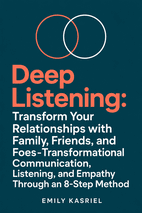
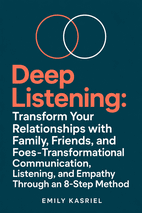
What is the book Deep Listening about?
Emily Kasriel's Deep Listening offers an eight-step method—from Create Space to Go Deeper—paired with eight traps like I Want to Win, for anyone whose relationships have thinned into routine or who faces disagreement across political divides.
Feature
Insta.Page
Blinkist
Shortform
Deep Listening
✓
✓
✕
Summary Depth
Full Chapter-by-Chapter
15-min overview
Section-by-section guides
Audio Narration
✓
✓
✓
Full access to all 700+ summaries
✓
✓
✓
Visual Mindmaps
✓
✕
✕
AI Q&A
✓
✕
✕
Missing a book? Request it, usually live within 48h
✓
✕
✕
Quizzes
✓
✕
✕
PDF Downloads
✓
✕
✓
Send to Kindle
✓
✓
✓
Price
$89.99/yr
$146/yr (PRO)
$199/yr
*Competitor data last verified July 2026.
1 Page Summary
Emily Kasriel's Deep Listening argues that our closest relationships have grown strained and routine because the way we ordinarily listen leaves people feeling dismissed and unheard, pushing us to avoid views we disagree with and turning conversation into talking past each other. Drawing on an opening example of Nelson Mandela moving through a crowd of disgruntled former ANC fighters—drawing out their sense of unfairness and humiliation before addressing them—Kasriel proposes an eight-step method: Create Space, Listen to Yourself First, Be Present, Be Curious, Hold the Gaze, Hold the Silence, Reflect Back, and Go Deeper. She pairs these steps with eight "traps" that catch us out—patterns such as I Want to Win, I Am in Charge, and I Must Solve and Sort—framing them not as defects but as old survival strategies that, left unchecked, block understanding. The book's central claim is that listening can be taught and practiced, and that doing so enriches both personal life and public life, from a São Paulo family divided over politics to communities splitting into sides that no longer hear each other.
What makes the book distinctive is its integration of concrete method with real-world narrative and diverse sources of wisdom. Kasriel moves between an eight-step framework and examples that illustrate it in practice—Sofiya, a former British Embassy worker in Moscow, moving through all eight steps in a forty-minute conversation; a Belfast youth worker relocating a police meeting to a youth club so teenagers would speak; a Lebanese teacher holding her gaze steady while a Syrian refugee student airs a grievance. She grounds the steps in research and concepts such as Amy Edmondson's psychological safety, Daniel Kahneman's System 1 and System 2 thinking, Carl Jung's shadow, Carl Rogers on reflecting back, and the Australian Ngangikurungkurr practice of Dadirri. The method also carries an ethical dimension: chapters on deep listening ethics and risks to the listener address confidentiality, boundaries, and the toll of absorbing others' distress. Kasriel is candid that the eight steps are "a teaching tool, not how listening really goes"—they overlap, and the goal is to be fully with someone, all at once—and that reading alone cannot make anyone a skilled listener.
The intended audience is broad: anyone whose family, friendships, or working relationships have thinned into routine, and anyone confronting disagreement across political or ideological divides. Kasriel notes that polling for the book found one in four Americans avoid listening to people whose views they dislike—one in three among Generation Z—yet also reveals an overlooked "Exhausted Majority" tired of polarization. Readers will gain a practical vocabulary for spotting their own listening traps, a step-by-step practice illustrated through stories, guidance on opening questions rooted in "Beginner's Mind," and a method for reflecting afterward so that listening becomes a habit chosen rather than automatic—including the suggestion of a Deep Listening buddy to take turns speaking and listening. The book does not promise transformation from reading alone; it offers the tools, the evidence, and the encouragement to practice.
Introduction
Overview
Close relationships have become strained and routine. People are left wanting to feel seen and understood. The way we usually listen leaves people feeling dismissed and unheard. It pushes us to avoid views we disagree with and turns conversation into talking past each other or shouting. What would it take to listen in a way that changes this?
Just months after the birth of the new South Africa, hundreds of former ANC armed-wing fighters gathered outside the Union Buildings in Pretoria, demanding to see the president. They complained of being underdogs in the newly integrated defence force, with white officers and food they considered unfit. Nelson Mandela arrived by helicopter, but instead of taking the waiting podium he moved through the crowd, greeting fighters. He asked a soldier where he lived, then which street, and said he could picture the corner in Alexandra township. For an hour he drew out their sense of unfairness and humiliation, listening without judgement. Only then did he address them, acknowledging real grievances and asking for discipline and patience. The soldiers dispersed quietly, satisfied at having been heard. For a new BBC Africa reporter, it was a first encounter with the power of deep listening.
The fraying of relationships
Relationships with family, friends, neighbours, colleagues and strangers give life meaning and identity. Yet they have become strained and routine. The cause is a failure to invest in listening. In a YouGov poll for the book with the NGO More in Common, two in three Americans said people used to listen better. Ordinary listening often fails because of an unspoken assumption: why hear someone out when you are sure they are wrong? Children hold back what is happening in their lives; partners, parents, siblings and colleagues fall into misunderstanding. At work, differences of generation, background and belief are hard to bridge. So people avoid contrary views, talk past one another, or shout in person and on social media, and the divide grows wider.
Key Takeaways
Listening the way Mandela did can defuse a confrontation without granting a single demand; an hour of genuine attention did more than any podium speech.
The strain in families, workplaces and public argument comes more from a failure to invest in hearing others than from a shortage of opinions.
People often hold back what matters to them because they expect to be dismissed, so feeling recognized, not agreed with, is what reopens the channel.
Believing listening is pointless when you are sure you are right turns disagreement into avoidance or shouting, and it quietly drives people further apart.
Key concepts: Introduction
Introduction
The Listening Crisis
Relationships strained and routine due to failure to invest in listening
Two in three Americans believe people used to listen better
Unspoken assumption: why hear someone out when sure they're wrong?
Avoidance of contrary views leads to talking past each other or shouting
Mandela's Deep Listening
Met angry former fighters by moving through crowd, not taking podium
Asked personal questions, pictured their neighborhood, listened without judgment
Drew out grievances for an hour before speaking
Soldiers dispersed quietly, satisfied at being heard
Consequences of Poor Listening
Children hold back; partners, parents, colleagues fall into misunderstanding
Workplace differences of generation, background, belief hard to bridge
People expect dismissal, so they withhold what matters
Divide grows wider in person and on social media
Power of Being Heard
Feeling recognized, not agreed with, reopens communication
Genuine attention can defuse confrontation without granting demands
Listening acknowledges real grievances and builds trust
Deep listening transforms relationships and public argument
💡 Try clicking the AI chat button to ask questions about this book!
What Is Deep Listening?
Overview
Listening is easy to agree with and hard to do when the person in front of you isn’t asking for advice. What do you do with your own thoughts, your intentions, and the silence when you feel the urge to steer, fix, or just look like you’re paying attention?
Eight Steps in Practice
Sofiya’s forty-minute conversation at the St Pancras station hotel shows all eight steps of Deep Listening. Sofiya had worked at the British Embassy in Moscow when Russia’s full-scale invasion of Ukraine began in 2022. The Russian state called her a traitor, and she fled. The setting, plush blue velvet seating that absorbed other guests’ voices, helped create privacy. The agenda was hers.
Create Space
Listen to Yourself First
Be Present
Be Curious
Hold the Gaze
Hold the Silence
Reflect Back
Go Deeper
The conversation moved through all eight steps. There was steady eye contact and a silence of about ten seconds. Reflections came back that echoed Sofiya’s words and emotional tone. She said the eye contact helped her feel heard, the setting gave her safety, and the summaries unlocked extra thoughts and feelings. She moved from saying there was “no way forward” to treating her pain of exile as part of her identity and possibly a source of strength.
The Term and the Definition
Pauline Oliveros, an American accordionist and composer, popularized the term after recording in an underground cistern 14 feet below the earth’s surface. The album was called Deep Listening. She described going below the surface of sound, expanding to the whole field while finding focus. The practice begins with being entirely present and safe. Having listened to yourself first, you invite someone to share. Guided by curiosity, empathy and respect, you listen to understand, releasing judgement and the urge to agree, disagree, obey, solve or change. After silence, you reflect back the essence of words, feelings and underlying thoughts, then go deeper. The third-century rabbi Samuel ben Nahmani said, “we see things as we are.” That’s why this is hard: what we’ve lived through and what we already believe shape what we can hear.
What It Is Not
Deep Listening is an invitation, not a duty, and it suits high-stakes encounters where trust matters. You can use it selectively. Asking for tea is not the moment to wait ten seconds and reflect back hidden meaning. Carl Rogers, who coined Active Listening with a colleague, advocated accepting the person without judgement, understanding their feelings, and giving no advice or direction. Business training often shrinks that into nodding and paraphrasing to look like you’re listening. An analysis of business websites found techniques that were closer to pushing and manipulating people than to understanding them. Deep Listening also attends to what is unsaid and to your own internal responses. You won’t do it perfectly every time.
Key Takeaways
Set up the conditions before the conversation. Let the other person set the agenda, find privacy, and allow enough time for attention to settle. The room and the pace shape what can be said.
Start with your own state. Then bring steady attention, curiosity and eye contact to help the speaker feel safe. Don’t treat these as boxes to tick.
Wait through silence. Reflect back the emotional core before asking the next question. Summaries can help the speaker find thoughts they hadn’t formed yet.
Leave room for what’s unsaid and for your own reactions. Accept that you’ll meet this unevenly. It’s not a persona to perform.
Key concepts: What Is Deep Listening?
What Is Deep Listening?
The Eight Steps of Deep Listening
Create space, listen to yourself, be present, be curious
Hold gaze, hold silence, reflect back, go deeper
Sofiya's conversation demonstrated all eight steps
Eye contact, silence, and reflections helped her feel heard
Definition and Origins
Pauline Oliveros popularized the term after recording in a cistern
Practice begins with being present and safe
Listen to understand, releasing judgement and urge to fix
Reflect back essence, then go deeper
What Deep Listening Is Not
Not a duty; use selectively for high-stakes encounters
Not active listening reduced to nodding and paraphrasing
Not about pushing or manipulating people
Not about performing a persona
Key Takeaways for Practice
Set conditions: privacy, agenda, time
Start with your own state, then bring steady attention
Wait through silence and reflect emotional core
Leave room for unsaid and accept imperfection
Challenges and Mindset
We see things as we are; past shapes what we hear
Requires releasing urge to agree, disagree, or solve
Attend to what is unsaid and your internal responses
You won't do it perfectly every time
Why We’re Not Listening – Eight Traps That Catch Us Out
Overview
People rarely set out to ignore someone, yet attention slips away in conversations that matter, often without anyone noticing. You often don't notice it. It can feel reasonable, even useful, in the moment.
Homer Simpson promises his family his full attention while the camera shows a dancing farmyard band inside his head. This shows the gap between claiming to listen and actually being present. The obstacles come in eight patterns you can learn to spot. Many are old survival strategies that can still serve us; they aren't accidents or defects. Left unchecked, they get in the way of understanding and closer relationships — the kind Deep Listening makes possible. Once you see them, you have choices.
The Eight Traps
I Want to Win treats conversation as a contest, scanning for weakness and a comeback.
I Am in Charge assumes authority means explaining, instructing and controlling the exchange.
I Have Expertise (and You Don’t) acts as if superior knowledge leaves nothing new to hear.
I Must Prove I’m a Man lets gendered ideals push toward dominance and unsolicited guidance.
I Must Solve and Sort turns care into instant advice, taking over the speaker’s problem.
I Don’t Have Time narrows attention to deadlines, sound bites and pre-formed stories.
If I Listen, I Must Obey equates attention with submission and lost power.
My Brain Is Wired to Judge uses rapid prediction and labels to keep threat at bay.
Winning, Authority, and Expertise
Joe left a Cape Town start-up for an MBA at Harvard. He describes debate training as learning to project confidence and never give up a point. His body stayed tense. Winning leaves the speaker dismissed or angry and the next exchange cautious. Makiko Shinoda, a former McKinsey & Company consultant and CFO, once believed speaking up proved her worth and that listening was passive and lazy. Now she tells executives that they set the tone by how they listen as well as how they speak. Expertise is a close relation: doctors, teachers and professors can assume they already know and correct instead of hearing. Enthusiasm can hide the same arrogance.
Gender, Rescue, and Time
In The Odyssey, Telemachus sends his mother to the loom and claims speech for men; that old script still echoes in assumptions about listening. Psychologist Adam Grant points to a double standard: an assertive woman is called aggressive, while an insufficiently assertive man is called weak. In the global Deep Listening project, women volunteers outnumbered men two to one. A survey for the book found American men far more likely than American women to seek listening skills to get others to listen. Lina, a Lithuanian social worker trained in Vilnius in 2023, listened well to teenagers at work but fought the urge to advise her partner at home, who kept describing work as draining. Solving can feel kind, yet it takes the choice away from the speaker. Asking a child whether they need a hug, advice or just listening keeps the choice with them.
Time, Obedience, and Judgement
Nick Grono, chief executive of the Freedom Fund, still catches himself cutting decisions short and signaling that he has heard enough. Professionals often name time pressure as the top obstacle; journalists on deadline hunt for the usable sound bite. The brain handles about 400 words a minute while speech arrives at roughly half that pace, so attention drifts into planning. Yet the quality of attention matters more than the minutes available. Amina, raised in Tanzania, learned that listening to elders and men meant agreement and submission; she was taught to lower her head and avoid gestures suggesting power. Listening need not mean obeying. The judging brain quickly sorts friend from foe — a survival function that now labels opponents and once branded women fighting for the vote as unmarried or unladylike threats. Judgement makes speakers wary. Carl Rogers observed that threatening atmospheres prevent effective communication. The brain can change: curiosity, empathy and respect can retrain the response.
Key Takeaways
Catch the pattern as it runs: if you are scanning for a comeback, explaining instead of hearing, correcting from expertise, rushing to a fix, or treating attention as submission, name it and choose a different move.
Before you answer a problem, ask what kind of support the person wants: comfort, a plan, or silence. Handing that choice back keeps the problem theirs.
Separate giving attention from agreeing or obeying. You can listen fully without giving up a point or surrendering authority, and saying so plainly can make you safer to talk to.
Check the scripts you carry about gender and seniority. They can make you expect submission from some speakers and dominance from others, and either expectation costs you information.
Treat your first judgment as a guess, not a verdict. Stay curious long enough for the person in front of you to contradict the label.
Key concepts: Why We’re Not Listening – Eight Traps That Catch Us Out
Why We’re Not Listening – Eight Traps That Catch Us Out
The Gap Between Claiming and Listening
People rarely intend to ignore others; attention slips unnoticed
Homer Simpson's dancing band shows claimed vs. actual presence
Eight traps are old survival strategies, not defects
Spotting the pattern lets you choose a different move
Winning, Authority, and Expertise
I Want to Win turns talk into a contest for the comeback
I Am in Charge equates authority with instructing and controlling
I Have Expertise assumes superior knowledge leaves nothing to hear
Leaders set the tone by how they listen, not just speak
Gender and the Rescue Trap
I Must Prove I'm a Man pushes dominance and unsolicited guidance
Double standard: assertive women called aggressive, quiet men called weak
I Must Solve and Sort turns care into instant advice
Ask whether they want a hug, advice, or just listening
Time, Obedience, and Judgement
I Don't Have Time narrows attention to deadlines and sound bites
Brain outpaces speech, so attention drifts into planning
If I Listen, I Must Obey equates attention with submission
My Brain Is Wired to Judge labels threats; treat judgment as a guess
Practical Takeaways
Name the pattern as it runs, then choose a different move
Hand the choice of support back to the speaker
Separate giving attention from agreeing or obeying
Check gender and seniority scripts; stay curious past first judgment
How Deep Listening Will Enrich Your Life
Overview
When people disagree fiercely, closeness can break down, and each side becomes sure that only their own view makes sense. The question is whether people can be taught to hear each other without giving up their beliefs, especially when the topic feels like a dealbreaker.
Ana Luiza Ribeiro's Wednesday communal cooks in São Paulo mix chopping, wine, dancing to the Bee Gees, and vegetarian peperonata with her mother, brother, and stepfather, Manoel. The warmth could collapse when politics came up. She is a human rights lawyer and he is an engineer. They fought hard over climate change, gender pronouns, human rights, and Jair Bolsonaro. She would go to her room, and the whole household felt drained. Both wanted to be less reactive. She joined a Deep Listening course open only to young people and shared each week's lessons with Manoel. The change came when they agreed to listen properly:
be present
stay curious
reflect back the core of the other's thinking
not interrupt
They still disagree. She now sees his economic frame and her human rights frame, and they no longer try to convert each other. She finds colleagues harder than family, but is learning that declining to fight does not mean losing. The story shows how political difference can harden into a wall, and how structured listening can reset it.
Listening Through Time
For most of the last 2,000 years, Western culture treated speech as the divine gift that separates humans from animals. Homer's heroic ideal combined eloquent speech with decisive action. Listening ranked lower. Ancient Egyptians valued listening and silence as moral virtues. Pythagoras, after studying with them, reportedly required disciples to keep five years of silence and lectured from behind a veil so they would attend to his words rather than his body. Contemporary culture celebrates self-expression: everyone supposedly contains a polished talk worth delivering, an elevator pitch ready for a powerful person, and universities and MBA programmes prize confident public speaking. Listening is rarely treated as a skill to learn.
The Global Test
Crossing Divides Across the Globe, launched for the BBC's centennial with the British Council, trained 1,000 young people from 119 countries over three weeks on Zoom, then paired them with a stranger who held the opposite view on a high-stakes topic such as social media, reparations, or whether success depends on social class. A control group, designed with Netta Weinstein of the University of Reading and Guy Itzchakov of Haifa University, talked without training. Trained participants reported deeper connection, greater safety to speak, and feeling understood. Reduced defensiveness fell below the reliability threshold. Libyan participant Rana Bushreida said the training let her listen, understand, and even change her mind, contrary to her debating habits.
Listening has measurable effects on financial performance. In injection-moulding factories, training employees to listen attentively so colleagues felt heard raised sales and profits compared with similar factories without the training. Research also links good listening to stronger bonds, feelings of respect, and greater commitment and motivation when employees feel heard by a boss. Some managers still resist being labelled good listeners, fearing it weakens the barrier between them and subordinates. Psychologist Adam Grant has observed a shift over the past decade: more leaders accept that a vision imposed from above will not suffice. Effective leaders may ask others to speak first, noting that disclosing their own view would pressure conformity and that listening may change their opinion.
Leaders Who Speak Last
That approach pays off in tasks as well as morale. In one experiment, two teams raced for 10 minutes to fold the most T-shirts. Extroverted leaders pursued their own approach; introverted leaders, more open to team ideas, learned a faster Japanese folding method and won. Research on nurses found that a positive listening climate reduced insults, humiliation and sexual harassment, improving well-being.
Stories Told Under Good Listening
The field is still young, but researchers are shifting from studying what distraction costs to studying what excellent listening can do, including unlocking honest stories. People who are listened to well pay closer attention to themselves and answer more openly. Coach and author Nancy Kline argues that sustained deep interest takes a speaker to places the listener could not have led them, with more meaning and relevance. That fuller story builds trust, strengthens relationships and improves decisions. Journalism's ideal of extracting objective truth independent of the interviewer is only partly right: basic facts matter, but a journalist's curiosity, empathy and manner shape how authentic and deep an interviewee's account becomes.
Results as a Distraction
The benefits of listening can undermine it. Caring too much about outcomes, including the hope of being listened to in return, pulls your attention away from the speaker. While listening, those rewards must be set aside. The wider payoff is different: listening to people whose views challenge your own can nourish the relationship and work against polarization, making the act more than a personal exchange.
Key Takeaways
Agree on clear listening rules with someone you disagree with: stay in the moment, stay curious, paraphrase what matters most to them, and hold your interruptions. That structure can preserve the relationship even when neither position moves.
Treat listening as a trainable skill rather than a fixed trait. Short structured practice can produce measurable gains in connection, openness, and even business performance.
If you lead, invite others to speak before you state your own view. The group may find a better method, and people who feel heard contribute more.
Listen without waiting for the favor to be returned. Caring too much about what listening will get you pulls your attention off the speaker and weakens the relationship you are trying to build.
Expect good listening to change the story you hear. Speakers who feel deeply attended to share more honest and useful accounts, which strengthens trust and improves decisions.
Key concepts: How Deep Listening Will Enrich Your Life
How Deep Listening Will Enrich Your Life
Deep Listening Defuses Conflict
Ana and Manoel's political fights eased through structured listening.
Agreement: be present, curious, reflect back, don't interrupt.
They still disagree but no longer try to convert each other.
Declining to fight does not mean losing.
Listening Has Been Undervalued
Western culture has prized speech over listening for 2,000 years.
Ancient Egyptians valued listening and silence as moral virtues.
Modern culture celebrates self-expression and public speaking.
Listening is rarely treated as a skill to learn.
Global Listening Experiment
1,000 young people from 119 countries trained on Zoom.
Paired with someone holding opposite views on high-stakes topics.
Trained participants felt deeper connection and safety to speak.
Rana Bushreida listened, understood, and even changed her mind.
Listening Improves Performance
Factory listening training raised sales and profits.
Good listening strengthens bonds, respect, commitment, and motivation.
Some managers fear being labelled good listeners weakens authority.
Leaders who speak last benefit from team ideas.
Leaders Who Speak Last
Introverted leaders open to team ideas won a T-shirt folding race.
Positive listening climate reduced workplace harassment and improved well-being.
Effective leaders ask others to speak first.
Listening may change the leader's own opinion.
Good Listening Unlocks Stories
People listened to well pay closer attention to themselves.
Sustained deep interest takes speakers to new places.
Fuller stories build trust and improve decisions.
Journalists' curiosity and empathy shape authentic accounts.
Results Can Distract from Listening
Caring too much about outcomes pulls attention from the speaker.
Hope of being listened to in return undermines listening.
Rewards must be set aside while listening.
Listening to challenging views works against polarization.
You've reached the end of the free chapters
Next chapter: “Step One: Create Space” is locked
Keep reading Deep Listening — and unlock all 700+ book summaries with audio, mindmaps and AI Q&A.
$0.00 due today · 7 days free, then $89.99/year ($7.49/mo) · Cancel anytime before day 7
Emily Kasriel is a British author, journalist, and leadership coach best known for her book "Deep Listening: Transform Your Relationships, Communication and Leadership" (2023), which draws on her expertise in compassionate leadership and conflict resolution. She has worked as a BBC journalist and editor and serves as a senior visiting research fellow at King's College London, where she developed the "Transformational Listening" framework. Her writing and consulting focus on listening, empathy, and bridging divides in both personal and professional settings.
Frequently Asked Questions about Deep Listening
What is Deep Listening about?
This book explores why everyday conversation so often leaves people feeling dismissed, and sets out a practical method for listening in a way that genuinely changes relationships. It breaks the practice into eight overlapping steps — from creating a safe space and listening to yourself first, through presence, curiosity, steady eye contact, silence and reflecting back, to going deeper beneath the polished story people present. Alongside the method, it maps eight common traps that quietly steal attention, such as wanting to win, needing to solve, or assuming expertise, and shows how these patterns play out in families, communities and divided societies. Real encounters — Nelson Mandela calming former fighters in Pretoria, a couple in São Paulo arguing over politics, a dairy farmer denying climate change, a teacher in southern Lebanon holding a difficult classroom — anchor each idea in lived experience.
Who is the author of Deep Listening?
Emily Kasriel is a journalist whose career at the BBC included reporting in Africa and confronting high-profile interviewees such as Ethiopia's president Meles Zenawi. She developed the Deep Listening method into workshops taught internationally, including training sessions in Lebanon and online groups for young people. Her work draws on interviews, neuroscience and psychology, and on projects like the BBC's centenary storytelling initiative, in which she helped staff share personal journeys with school students.
Is Deep Listening worth reading?
It is worth reading because it treats listening as a learnable skill rather than a personality trait, breaking it into eight concrete steps you can practise the same day. The examples are vivid and honest — including the author's own missteps and the awkward, uncomfortable moments most guides skip — which makes the advice feel achievable rather than idealistic. It also goes further than most communication books by addressing the ethics of hearing things people never meant to disclose, and the genuine emotional cost that deep listening can have on the listener.
What are the key lessons from Deep Listening?
The first lesson is that attention slips through eight recognisable traps — wanting to win, needing to be in charge, assuming superior expertise, proving yourself, solving too fast and others — and simply naming them gives you a choice in the moment. Second, you cannot hear someone else until you notice what is getting in your own way, whether that is unresolved grief, prejudice or a hidden agenda. Third, understanding has to be confirmed rather than assumed: reflect back what you think you heard, check it, and keep refining until the speaker gives a wholehearted yes. Finally, people rarely lead with the truth, so patient curiosity, held silence and steady attention can help them move from their rehearsed account towards what is really driving them — while care, boundaries and self-protection remain essential throughout.
📚 Explore Our Book Summary Library
Discover more insightful book summaries from our collection