As an Amazon Associate, we earn from qualifying purchases.
What is the book The Psychology of Selling about?
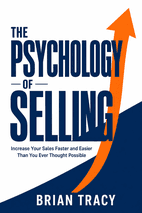
Brian Tracy's The Psychology of Selling treats selling as an inner game, showing working salespeople at any level how to set written income targets, understand buyer motivation, handle resistance, and close more effectively. Tracy argues that top-tier income follows specific causes that ordinary performers can learn to reproduce.
Feature
Insta.Page
Blinkist
Shortform
Summary Depth
Full Chapter-by-Chapter
15-min overview
Section-by-section guides
Audio Narration
✓
✓
✓
Full access to all 700+ summaries
✓
✓
✓
Visual Mindmaps
✓
✕
✕
AI Q&A
✓
✕
✕
Missing a book? Request it, usually live within 48h
✓
✕
✕
Quizzes
✓
✕
✕
PDF Downloads
✓
✕
✓
Send to Kindle
✓
✓
✓
Price
$89.99/yr
$146/yr (PRO)
$199/yr
*Competitor data last verified July 2026.
1 Page Summary
Brian Tracy's The Psychology of Selling argues that successful selling begins as an inner game: since sales offers no income ceiling, the gap between top performers and everyone else comes down to how salespeople think, set goals, and understand buyers. Tracy frames selling as the engine that moves the entire economy—funding businesses, salaries, and public services—and notes that more Fortune 500 CEOs have risen through sales than any other function. He applies the 80/20 rule to the profession, observing that the top 20 percent of salespeople earn 80 percent of the money, and presents success in selling as a law of cause and effect: high income has specific causes, and reproducing what top performers do produces similar results.
Tracy's approach is practical and psychological rather than product-focused. He urges readers to set exact, written income targets (raising their best year by 25 to 50 percent) and to treat creativity as a trainable skill—"the ability to improve something by doing it differently"—stimulated by clear goals and pressing problems. He explains that buyers act for their own reasons, weighing three choices (buy from you, buy elsewhere, or buy nothing) and seeking gains that justify the price plus the time and energy of implementation, while intangible "psychic values" and fear of losing freedom drive resistance. He also addresses the mechanics of the craft: spending more time with better prospects, opening conversations that break preoccupation, and managing the subconscious impressions created by setting, appearance, voice, and attitude. Because prospects carry "generalized sales resistance" from roughly three thousand commercial messages a day, Tracy recommends an "approach close" that asks only for a brief hearing, an open mind, and a yes-or-no answer.
The book is intended for working salespeople at any level who want to cross the gap between ordinary effort and top-tier income. Rather than relying on talent, Tracy insists that excellence is a decision: you need not be the best in the world, only a little better in the critical areas, and excellence comes from years of dedicated effort in one direction. Readers will gain a goal-driven system for prospecting, understanding buyer motivation, handling resistance, and closing, along with the mindset—self-acceptance grounded in recognized competence and a commitment to constant improvement—that Tracy presents as the foundation of lasting sales success.
1. THE INNER GAME OF SELLING
Overview
A sales career promises no income ceiling, yet people selling the same products at the same prices can end up in radically different financial worlds. The problem is the gap between the few who reach the top tier and everyone else, and what it takes to cross it.
The economic case for selling
Nothing moves until a sale is made. Businesses produce goods and services, generate profit and wealth, and pay salaries and benefits; sales keep that engine running. Without them even large, sophisticated companies stop. The profession funds schools, hospitals, charities, libraries, parks, and government at every level, including welfare, unemployment insurance, Social Security, and Medicare. Sales was long treated as second-rate; a Fortune 500 president called it "the sleazy side of our business." That view is changing. The strongest companies have the strongest salespeople, the second-best have the second-best, and the third-best are on their way out. Hundreds of universities now teach professional selling, and more Fortune 500 CEOs have risen through sales than through any other function. Carly Fiorena of Hewlett Packard came up through sales.
Income and the 80/20 rule
Selling offers high income and lifelong security, with no ceiling for a skilled person selling the right product in the right market. Someone can start with little training or background and earn a strong living within three to twelve months. Seventy-four percent of self-made millionaires in America are entrepreneurs, and for entrepreneurs the ability to sell is the single most important skill; every other skill can be hired. Five percent of self-made millionaires are salespeople who spent their careers working for others. The Pareto principle, or 80/20 rule, concentrates the rewards: the top 20 percent of salespeople make 80 percent of the money, while the bottom 80 percent make 20 percent. Within that top group, the top 20 percent, or top 4 percent overall, earn 80 percent of the money. The top 20 percent earn on average sixteen times the income of the bottom 80 percent. The reward is not only money but freedom from financial worry; people in the top 20 percent or better are among the happiest in society.
The winning edge
The difference between top and average performers is not a vast gap in talent. It is a few small things done consistently well, a winning edge: small differences in ability produce enormous differences in results. A horse that wins by a nose does not run ten times faster, yet it takes ten times the prize money. Selling is less forgiving than racing because only the winner is paid; there is no consolation prize for second place. A skill increment of 3 or 4 percent can move a salesperson into the top 20 percent, then the top 10 percent, and it compounds as the better results reinforce the better skills.
Self-concept and the income thermostat
The self-concept is the bundle of beliefs a person holds about themselves, the master program of the subconscious, an operating system that shapes what they say, think, feel, and do. Performance on the outside matches the self-concept on the inside. A Harvard study of sixteen thousand salespeople found that the basic qualities determining success or failure were mental, and the qualities are learnable rather than inborn. Income has its own self-concept. Psychologists have found that a person cannot earn 10 percent more or less than their self-concept level without compensating: above it, they spend or otherwise shed the surplus; below it, they scramble to return to the comfort zone. A $50,000 earner and a $100,000 earner may differ little in talent, only in the level they refuse to settle below. The income thermostat resets behavior to the set point. A salesperson who hits $50,000 by September may stall until January 1.
Seven key result areas
Selling has seven key result areas, or KRAs. They work like the digits of a telephone number: each must be dialed in sequence to get through and make a sale.
The seven skills must be worked in sequence, like the digits of a phone number.
Prospecting
Building rapport
Identifying needs
Presenting
Answering objections
Closing
Getting resales and referrals
Self-concept in each area drives performance there and sets overall income. Every top 10 percent performer began in the bottom 10 percent, and anyone who can drive or use a phone can learn these skills through practice. A poor self-concept in an activity produces avoidance; the fear only shows that the skill has not been mastered yet. Mastery is the cure: learn to prospect, build trust, ask and listen, qualify with more and better questions, present, answer objections until they vanish, close at the right moment, and create a "golden chain" of referrals while selling more to existing customers.
Self-esteem and self-talk
Self-esteem, defined as how much you like yourself, is the reactor core of self-concept psychology. The degree of self-liking in any area determines performance there and shapes income, relationships, sales, and quality of life. People who like themselves tend to like others, and customers are more willing to buy from and recommend them; low-self-esteem sellers struggle to build the same trust. According to the book, repeating "I like myself!" releases endorphins and produces confidence. People also become what they think about and say to themselves most often, so successful sellers control their inner dialogue.
After a sale
The best time to sell is right after a sale. Self-esteem rises, and the next prospect meets a more confident seller whose bearing can trigger a subconscious desire to buy. One sale can cascade into several; only the seller's self-concept has changed. After a difficult close, go straight to a stubborn prospect, because you will be more persuasive then than at any other time.
Fear of failure and fear of rejection
Fear of failure and fear of rejection are the two major mental obstacles. Fear of failure is the biggest single reason for failure in adult life: anticipation, not failure itself, freezes performance, and it often develops early through destructive parental criticism. Customers carry the same fear from countless bad purchases, and that fear is the number one reason they do not buy; reducing it is central to building trust. Self-limiting beliefs are usually illusions built on erroneous information, and William James argued that "belief creates the actual fact"; Louise Hay calls the feeling "I'm not good enough" the core problem. Rejection is triggered by possible rudeness, disapproval, or criticism. About 80 percent of sales calls end in no for reasons unrelated to the seller or product. Rejection is not personal, it is like rain or sunshine, and the motto is "Some will; some won't; so what? Next!"
The brake and the fifth call
A Columbia University study found the average salesperson works about one and a half hours a day, with only about ninety minutes face-to-face with customers. Fear of rejection is the brake. If a research firm handed over fifty prospects guaranteed with 90 percent accuracy to buy within twenty-four hours, that same salesperson would start at dawn and keep going until midnight. Courage is a habit, strengthened like a muscle.
Eighty percent of sales are not closed before the fifth meeting or closing attempt, and at least eight of ten first purchases from a new supplier occur after the fifth call or visit. Only about 10 percent of salespeople make more than five attempts, while half or more quit after one. Switching suppliers usually takes about five visits to wear down skepticism. One study found 48 percent of sales calls end without a single closing attempt; the seller asks "Well, what do you think?" and hears "I'd like to think it over." Prospects do not think it over. Once you leave, they forget you and your product.
The polite exit means the interview has ended and the time invested in that prospect is gone. The more you like yourself, the less you feel rejection and the less you fear failure. Two escalators moving in opposite directions make the point: one rises toward high self-esteem, courage, and confidence, the other descends toward fear of failure and rejection. Thinking about rejection puts you on the down escalator. Taking a no personally can make you believe something is wrong with you, your product, or your company, and that discouragement cuts prospecting. Excuses multiply as fear rises. Fear produces make-work such as reading the newspaper to be fully informed, and it makes calls easy to avoid before lunch, right after lunch, and late in the afternoon. Another evasion is spreading appointments across town so a long drive can impersonate work.
The friendship factor
Customers are demanding and disloyal, and they insist on being treated extremely well. More than anything, they buy from people they like. The friendship factor says a prospect will not buy until genuinely convinced that you are a friend acting in his best interests, so the first task in an interview is to create a bond. Heinz Goldman's book title How to Win Customers captures the job. Talk about the product before building a bridge of friendship and the customer loses interest. Without genuine care, the customer has no reason to care about you or your offer. A useful definition of a healthy personality is the degree to which you can get along with the greatest number of different types of people; an unhealthy personality gets along with few. Self-esteem tracks that health. People who like themselves enjoy others more spontaneously and make friends more easily. People who feel genuinely liked are more open to listening and buying. A buyer who dislikes the salesperson will walk away even when product and price are ideal. The best customers tend to be the ones you like and who like you.
Enthusiasm and persistence
The book puts enthusiasm at 50 percent or more of sales ability and ties self-esteem directly to income. A sale happens when enthusiasm moves from seller to prospect. When emotional commitment and belief in the product move into the prospect's mind, hesitation disappears. Self-esteem feeds enthusiasm, and feelings spread from person to person. You cannot transmit a feeling you lack, so top salespeople genuinely love their merchandise and their field; prospects pick up that feeling unconsciously and want to buy and recommend. Anything that lowers self-esteem, including illness or a fight with a boss or spouse, can sometimes stop sales altogether. Willpower matters too. Resolve in advance never to give up, and you become mentally prepared to bounce back. Persistence eventually produces sales, and each sale creates a winner feeling that raises self-esteem and improves self-concept. Many people fail in sales because they do not persist long enough to get those first winning experiences. Mental rehearsal helps: preprogram the bounce-back, talk yourself through fear with "I can do it!" The decision never to quit raises self-esteem immediately, improves your reputation with yourself, and makes you more composed. Seven action exercises accompany the ideas, from daily self-talk to modeling top performers.
Key Takeaways
Treat selling as a first-class profession and a learnable craft rather than a fallback, because the entire economy funds itself through completed sales and the top fifth of practitioners take most of the reward.
Set your income goal above your current comfort zone and improve your skills by small consistent increments, because earnings drift back to the level you privately accept and a few percentage points separate the top tier from the rest.
Work the seven selling skills in their fixed order every time, because a single missing stage blocks the sale no matter how well you perform the others.
Commit to at least five genuine attempts with each prospect and decide in advance that refusals will not stop you, because most buyers say yes only after the point where most sellers have already quit.
Build genuine rapport and enthusiasm before presenting, and use the confidence from each completed sale to approach your hardest prospect, because buyers purchase from people they like and from sellers who believe in what they are offering.
Key concepts: 1. THE INNER GAME OF SELLING
THE INNER GAME OF SELLING
The Economic Case for Selling
Nothing moves until a sale is made; sales drive all business
Sales funds schools, hospitals, charities, and government programs
More Fortune 500 CEOs rose through sales than any other function
Strongest companies have the strongest salespeople; weakest fade out
Income and the 80/20 Rule
No income ceiling for skilled sellers in the right market
Top 20% of salespeople earn 80% of the money
Top 4% overall earn 80% of that top-tier income
Top performers earn ~16x the bottom 80% and enjoy financial freedom
The Winning Edge
Top vs. average differs by small things done consistently well
Small ability differences produce enormous result differences
Only the winner is paid; no consolation prize in selling
A 3-4% skill gain can move you into the top 20%
Self-Concept and the Income Thermostat
Self-concept is the master program shaping thoughts and actions
Outer performance matches inner self-concept; qualities are learnable
People can't sustain income far above or below their self-concept level
The income thermostat resets behavior to its set point
Skills must be worked in sequence like phone number digits
Self-concept in each area drives performance and overall income
Anyone can learn these skills through practice; mastery cures fear
Self-Esteem and Self-Talk
Self-esteem—how much you like yourself—is the reactor core
People who like themselves build trust and win more sales
Repeating 'I like myself!' releases endorphins and builds confidence
Successful sellers control their inner dialogue and self-talk
Selling After a Sale
Best time to sell is right after a sale, when confidence peaks
A confident bearing triggers subconscious desire to buy
One sale can cascade into several referrals and resales
After a tough close, go straight to a stubborn prospect
💡 Try clicking the AI chat button to ask questions about this book!
2. SET AND ACHIEVE ALL YOUR SALES GOALS
Overview
Salespeople are told to work harder and stay busy. But activity without a clear target leaves effort scattered and results unpredictable. The real problem isn't motivation. It's knowing what to aim at and how to turn an intention into daily action.
A Visible Income Target
Top salespeople are intensely goal oriented, and every study links goal orientation to high achievement. The highest earners know in advance what they will make each week, month, quarter, and year. They know how many calls produce a given sales volume, and what they will do with the money. Start with an exact annual income target. Without one, you're like a marksman aiming into fog. Make it realistic but challenging: take your best income year so far and raise it by 25 to 50 percent. A ridiculous target demotivates, because you know it can't be reached and you quit at the first difficulty. Top performers can state their daily target within a dollar. Weak performers wait for tax forms to learn what they earned.
Write It Down and Divide It
Write your goals down. According to the author, writing a goal raises the likelihood of achieving it by 1,000 percent, ten times, and often brings the result faster than expected. Even a missed written goal beats no written goal. Calculate your annual sales goal from the income you want, including base-plus-commission pay. Break annual income and sales targets into monthly, then weekly, then daily goals. A $50,000 income goal becomes about $4,200 per month and $1,000 per week over fifty working weeks. Clear goals often produce results ahead of schedule: many seminar students reached one-year goals in six or seven months, and some hit an entire year's sales target in three months.
Activity Goals and Control
Define the activities that produce sales: how many calls create how many appointments, and how many presentations and callbacks create a given sales level. Accurate daily and monthly records make these ratios predictable. If you need ten prospecting calls a day, make ten before noon. Start by eight or eight thirty, by phone or cold call, until it becomes a habit. You can't control which prospect buys, but you can control the inputs. Control your activities and the results follow. Some days and weeks are strong, some dry; the averages still hold. Keep making the calls and the sales arrive on schedule.
Programming the Subconscious
Writing a goal down programs it into the subconscious, which works day and night. It alerts you to opportunities, supplies useful ideas and words, and sometimes helps you read a prospect's face. The author's premise is that people use only 10 percent of their potential. Clear goals are presented as a route to the other 90 percent. Personal and family goals supply the reasons for the work and make setbacks easier to absorb. If your income could double in two or three years, what would change? Make a long list of what you would be, have, and do. One or two reasons collapse under discouragement; ten or fifteen add determination; fifty or one hundred make a person nearly unstoppable. More reasons mean stronger desire and more subconscious power in each sale.
One Hundred Goals
Write 100 goals in a spiral notebook, imagining each arrives at the right time and in the right way. A friend new to sales wrote more than 350 goals, adding items from newspapers and television and reviewing the list weekly. Within a year, from a standing start in a competitive market, he became one of the most successful salespeople in his field. He broke every sales record in his industry and was featured in newspapers as a star salesperson. He credited writing and reviewing the goals for his motivation. Work with more than 500,000 salespeople in the United States and twenty-five countries is reported to show that commitment to goal setting is the number one reason top people succeed. The highest-paid professionals write and rewrite their goals daily and tap into deeper levels of focus and drive.
Visualization and Affirmation
Visualization is the most powerful way to program the subconscious. See yourself calm, confident, powerful, successful, influential, and competent in prospecting, presenting, and closing. Before a meeting, imagine the prospect responding positively, smiling, engaged, and signing the order or writing the check. The subconscious responds to pictures and to strong affirmative statements. The best all-purpose affirmation is "I like myself," repeated with confidence and enthusiasm. It raises self-esteem and improves performance. "I feel happy. I feel healthy. I feel terrific!" works the same way. A young salesman with limited experience became the top producer in his entire country within six months. He repeated "I'm the best" in his car before every call, naming himself best in the company, industry, and country while picturing himself selling as a top performer. He radiated confidence and rapport, and customers bought in record numbers.
Mental Rehearsal and Mental Content
Top salespeople replay their best past selling experiences and imagine repeating them. Mediocre salespeople replay recent negatives, such as wasted time and disappointing encounters with rude or indifferent customers. Both repeat what they picture. The subconscious is neutral like clay and obeys commands, so think and talk only about what you want. Top salespeople also rehearse calls in advance as athletes do. Visualization has two forms:
Direct visualization sees the customer and sale through your own eyes, with the customer smiling and agreeing.
Indirect visualization watches yourself and the customer from outside as a third party.
Alternating both improves performance. Imagine being the best in the field, model the highest-paid salespeople, and treat others as a superstar would.
Key Takeaways
Fix an exact annual income figure, then work backward to the sales, presentations, and daily calls it requires, so your effort has a number attached instead of a vague hope.
Aim meaningfully above your best earning year, but not so high that you know it can't be reached; an unbelievable target drains the persistence you need at the first setback.
Write out a long list of goals, well past a hundred if you can, and read it regularly, because the written list keeps your attention on openings you would otherwise miss.
Gather many reasons for wanting the income, including family and personal ambitions, so a bad stretch meets a stack of motives rather than a single one that can collapse.
Rehearse each call in advance and replay your best past performances rather than your worst, since what you picture repeatedly is what you tend to reproduce.
Key concepts: 2. SET AND ACHIEVE ALL YOUR SALES GOALS
SET AND ACHIEVE ALL YOUR SALES GOALS
Set a Visible Income Target
Top salespeople know their exact annual income target.
Make it realistic but challenging: raise best year by 25-50%.
Know daily target within a dollar, not waiting for tax forms.
Write Goals Down and Break Them Down
Writing a goal increases achievement likelihood by 1,000%.
Calculate annual sales goal from desired income.
Break annual targets into monthly, weekly, and daily goals.
Clear written goals often produce results ahead of schedule.
Focus on Activity Goals for Control
Define activities that produce sales: calls, appointments, presentations.
Track daily and monthly records to predict ratios.
Control inputs (activities) because you can't control which prospect buys.
Make required prospecting calls before noon to build habit.
Program Your Subconscious with Goals
Writing goals programs them into the subconscious, which works 24/7.
Clear goals tap into the 90% of unused potential.
Personal and family goals provide reasons and resilience.
More reasons (10-100) increase determination and subconscious power.
Write 100 Goals for Motivation
Write 100 goals in a spiral notebook, imagining each achieved.
Review the list weekly to maintain focus.
A friend wrote 350+ goals and became top in his field within a year.
Commitment to goal setting is the #1 reason top people succeed.
Use Visualization and Affirmation
Visualization is the most powerful way to program the subconscious.
See yourself confident and successful in all sales situations.
Use affirmations like 'I like myself' to boost self-esteem.
A salesman repeated 'I'm the best' and became top producer in six months.
Practice Mental Rehearsal
Top salespeople replay best past experiences; mediocre replay negatives.
Rehearse calls in advance as athletes do.
Use direct visualization (through your eyes) and indirect (from outside).
Alternate both forms to improve performance.
3. WHY PEOPLE BUY
Overview
Most sales pitches argue from the seller's own reasons and assume the buyer shares them. The buyer is weighing something else, and the pitch never touches it.
Buyers act for their own reasons, not the salesperson's. Identifying a prospect's needs accurately is the step on which the whole sale depends; without it, the process stalls.
The Three Choices and Freedom
Every human action seeks an improvement of some kind. People buy because they expect to be better off than if they bought from someone else or bought nothing. Each offer presents three choices: buy from you, buy elsewhere, or buy nothing now. The gain must justify the price plus the time and energy of implementation, not a small increment. Freedom explains much buying resistance: money preserves options, and an unsatisfactory purchase leaves the buyer without money and stuck with the product. Economists describe units of satisfaction; buyers want more physically, emotionally, and spiritually, and varied satisfactions ease buying. Psychic values are invisible, intangible values that make a product feel more valuable. A prospect may prefer a known name at a higher price; stressing an unknown product's low price can hurt the sale. People anticipate others' reactions; criticism from a boss or spouse can stop a purchase. Price and quality are assumed, not reasons to buy.
What the Product Does
Needs analysis begins with questions and close listening, enough to find the most intense need the product can satisfy; the presentation then shows overwhelmingly that buying will meet it. The chief distinction is what a product is versus what it does. Salespeople dwell on features and construction, but buyers care about the result. The pipeline image is simple: the product enters at one end, and the improvement in the customer's life or work drops into a bucket at the other. Life insurance is the example. Affordability, company size, easy payments, and planning matter, but the purchase is peace of mind. A top agent asks new prospects whether they feel responsible for providing for their family if something happens to them; if the answer is not an immediate yes, he stops. Question choice is often the key to correct needs identification.
Gain, Loss, and Believability
The two major motivations are desire for gain and fear of loss. The book assigns desire for gain a motivational power of 1.0 and fear of loss a negative power of 2.5, making loss avoidance two and a half times stronger. The best presentation shows both how much better off the buyer will be and how much worse off if he delays. Selling a car, a salesperson can note it is the last one for two months or the last at that price; indecision often becomes immediate purchase. Believability is the single most crucial requirement. If a prospect were fully convinced of greater benefit and full support, almost nothing would stop the purchase; raising credibility is the main mission.
The Eleven Needs
Money
Security
Being liked
Status and prestige
Health and fitness
Praise and recognition
Power, influence, and popularity
Leading the field
Love and companionship
Personal growth
Personal transformation
Emotion, Fear, and Value
The book treats buying as emotional: buyers choose emotionally and rationalize afterward, and the strongest emotion wins. Reducing fear matters as much as increasing desire. Jay Abraham helped companies sell hundreds of millions of dollars with unconditional guarantees, including a better-than-money-back guarantee that adds bonuses to a refund. Thinking it over signals weak desire or weak persuasion. Focus on value, not lower price. Small-business owners focus on sales and customers, have little patience for detail, and may reject accounting software because they do not link accounting to profitability.
Selling to Businesses
Businesses buying for resale care about one thing: net profits. What the product is matters little; what it does to the bottom line matters entirely. Larger companies buy only what improves performance, cuts costs, or boosts cash flow and profit, so the test is whether what you sell makes or saves more time or money than it costs.
The Betty Dean Rewrite
A seminar participant selling office automation systems could not get meetings. Her pitch described her company and products, and prospects said they were too busy, lacked budget, or were not interested; she was selling on the phone instead of getting an appointment in order to sell. The revised call asked for the head of administration and offered a process that could cut office administration costs by 20 to 30 percent, demonstrated in ten minutes. She got every appointment she needed, and sales doubled and then tripled.
Two Ways to Raise Profit
Profit rises only by increasing revenues while costs hold constant, or by cutting costs while revenues hold constant. Administration wants costs cut, marketing and sales want revenue raised, and the owner wants the bottom line improved. Ask what the person does, what results he owns, what his key performance indicators are, what she is paid for, and how her superiors appraise her. A sales training pitch should stress the salespeople's results, because the sales manager is rewarded on those, not on profitability.
Questions and Control
Skillful questioning and patient listening do the needs analysis. The strongest salespeople dominate the listening and let the customer dominate the talking, because people think mostly about their own problems and will eventually blurt out what is really on their minds, an effect the book compares to a Freudian slip. Open-ended questions beginning with what, where, when, how, who, why, and which cannot be answered yes or no and draw out the real need. Talking at a prospect is not selling; questioning is.
Whoever asks the questions holds control. When a prospect asks something, pause, say "That is a good question. May I ask you something first?" and ask your own question to take the exchange back.
Quality Is Not the Argument
Quality is never the primary reason for buying; it is a logical appeal, and buying is emotional. Utility matters more: will the thing do the job? Quality becomes an argument only against a cheaper rival, when the extra quality can be shown to matter. A snowmobile sold in Alaska earns that argument from the polar ice cap, where a breakdown means freezing to death. Every quality claim must answer the customer's silent "So what?" and suitability comes before quality.
Everything Counts
Nothing in a sale is neutral; everything helps or hurts. A halo effect means one strong impression leads prospects to assume quality everywhere else, and appearance carries much of it: according to the book, 95 percent of a first impression comes from clothing, since clothes cover 95 percent of the body. A late, disorganized seller is assumed to represent a second-rate company and product. IBM and Hewlett Packard interview candidates repeatedly, take them to dinner to watch their manners, and meet their families, because so much of the decision rides on the person selling.
The 80/20 of Buying
Every sale has a key benefit that must be believed and a key objection that must be answered. The 80/20 rule applies: 80 percent of the buying decision rests on 20 percent of the benefits, sometimes 90 percent on 10 percent of the features. Emphasizing the rest damages the sale.
Dwelling on the lower-value benefits does not merely waste time; it can lower the chance of a sale. Even if the product is the best in the world on those secondary points, they will not move the buyer. A seller should concentrate all energy on the small share of benefits that decide the purchase and build overwhelming conviction that this choice delivers them better and faster than any alternative. That concentration is the logic behind the hot-button close.
The Hot-Button Close
The hot button is the leading benefit a particular customer wants. Through questions and careful listening, the seller finds it, then keeps proving that the buyer will get it. The method depends on discovering the prospect's most important reason for buying and repeating that one point until the decision rests on it. When the prospect hesitates, ask what would have to happen for them to buy at some future time, then stay completely silent. The hypothetical form often lets the real reason slip out. Once it does, show the buyer that the benefit arrives immediately if they go ahead. The seller presses the same button again and again, making the whole choice hang on that single question.
Ten Calls
A cheap form of market research begins with a list of the last ten customers. Call each one, thank them for buying, ask how things are going and whether there is any way to help. If a problem comes up, promise to fix it right after the call. Then ask why they chose this company rather than another. Say nothing while they think. The book reports that roughly 80 percent of the ten will name the same reason, and it may be one the seller never recognized. Write it down. In later meetings, tell a new prospect that most best customers give that reason and ask whether it matters to them.
The Flowering Cherry Tree
A real estate agent shows a couple a house that is not in particularly good shape. They get out of the car and walk through the house. The woman sees a flowering cherry tree in the backyard and says she had one in her childhood yard and always wanted to live in a house with one. Her husband, Harry, complains about the carpet, the small kitchen, the old plumbing, the small bedrooms and the dated wallpaper. The agent agrees with each point but keeps bringing the couple back to the view of the tree from the dining room, the kitchen and the master bedroom. The woman smiles at the tree. He knows she is the primary decision maker and focuses on her. By the end she cannot see anything else, and they buy the house because the agent found the hot button: the flowering cherry tree.
Every product or service has an equivalent. Some benefit in what is being sold is the one the prospect really wants to enjoy. Find it by questioning and listening, then assure the customer that buying from you will deliver it.
Key Takeaways
Begin with questions and silence rather than a pitch, and identify the single most intense need your product can satisfy before you describe anything you are selling.
Frame the offer by the result it produces in the buyer's life or work; construction, price and quality are taken for granted, so the improvement at the far end is the only thing being purchased.
Show the buyer both how much better off he is for acting and how much worse off he is for waiting, then pour your effort into proof, since complete belief leaves almost nothing else blocking the decision.
Concentrate your energy on the small share of benefits that carry the decision, then ask what would have to happen for the prospect to buy at some later point and stay quiet while the real reason surfaces.
Call your last ten customers, ask why they chose you over anyone else, and lead your next conversation with whichever reason most of them give.
Key concepts: 3. WHY PEOPLE BUY
WHY PEOPLE BUY
Buyer's Perspective and Three Choices
Buyers act for their own reasons, not the salesperson's
Every offer presents three choices: buy from you, buy elsewhere, or buy nothing
Gain must justify price plus time and energy of implementation
Buyers care about results, not features or construction
Needs analysis begins with questions and close listening
Find the most intense need the product can satisfy
Life insurance example: purchase is peace of mind, not affordability
Gain, Loss, and Believability
Fear of loss is 2.5 times stronger than desire for gain
Show how much better off buyer will be and worse off if delayed
Believability is the single most crucial requirement
Raising credibility is the main mission
The Eleven Core Needs
Money, security, being liked, status and prestige
Health and fitness, praise and recognition, power and influence
Leading the field, love and companionship
Personal growth and personal transformation
Emotion, Fear, and Value
Buyers choose emotionally and rationalize afterward
Reducing fear matters as much as increasing desire
Unconditional guarantees reduce fear and boost sales
Focus on value, not lower price
Selling to Businesses
Businesses buying for resale care about net profits
Larger companies buy only what improves performance, cuts costs, or boosts cash flow
Test: does what you sell make or save more time or money than it costs?
Ask about key performance indicators and how superiors appraise results
Questions and Control
Skillful questioning and patient listening do the needs analysis
Strongest salespeople dominate listening, let customer dominate talking
Open-ended questions (what, where, when, how, who, why, which) draw out real need
Talking at a prospect is not selling; questioning is
4. CREATIVE SELLING
Overview
Most salespeople assume creativity belongs to artists, not to them. But selling means creating business where none existed before. The real question is how to make that kind of imagination dependable in prospecting, understanding buyers, handling resistance, and closing, instead of waiting for inspiration to strike.
Creativity is not a rare gift reserved for artists. It is simply the ability to improve something by doing it differently, and salespeople can train it until it becomes automatic. Top performers treat creativity as a natural part of the job. People who believe they are creative generate more ideas, and the belief itself changes output. Finding alternate roads to avoid traffic, planning a party, designing a presentation, matching clothes into an overall impression — these are all creative acts. Selling works the same way at a higher level. It creates business where none existed, through prospecting, rapport, needs identification, solutions, objections, closing, resales, and referrals.
Three Ways to Stimulate Creativity
Three factors stimulate creative thinking, and all three should be used continually:
Clear goals: the more intensely a specific goal is desired, the more creative the search for ways to reach it.
Pressing problems: determination to solve a problem produces resourcefulness and alternative solutions.
Focused questions: specific questions, whether asked internally or by others, produce more innovative answers.
Practice Thinking Creatively
Creativity pays in several selling areas:
Prospecting: success here largely sets income, and imagination limits the ability to find more and better prospects.
Uncovering buying motives: creative questioning is needed to learn what a customer needs and what will cause a purchase. Prospects have automatic buying resistance and do not want to reveal why they might buy, because they fear that once they reveal it, a salesperson will convince them to purchase.
Discovering new product uses: new applications create sales where none existed. Bringing together the whole transaction, including company, customer, product, price, terms, delivery, installation, and the rest, takes a great deal of creativity.
Overcoming buyer resistance and answering objections: creativity is essential to success here.
Closing: the ability to get the customer to act determines how much is sold and earned.
Product Knowledge and Prospecting
Creative selling begins with thorough product knowledge. The better the product and its superiority over competitors are understood, the more creative the selling becomes. Product information should be read, studied, and memorized. Competitors should be studied for what they sell, what they emphasize, and what they charge. The market should be mastered. The fastest income increase comes from a six-word formula: "Spend more time with better prospects." Creative prospecting starts with planning and three questions:
What are the five to ten most attractive features of the product?
What specific needs of the prospective customer does the product satisfy?
What does the company offer that others do not, its area of excellence?
For the first question, list features in importance and answer why anyone should buy the product at all, why from this company, and why from this salesperson. For the second, place each feature beside the benefit the customer gains. Customers buy benefits and solutions, not features or products. They care about what comes out for them. For the third, clarify the company's or product's area of excellence and superiority in the market. Greater clarity on these answers makes prospecting and selling more creative, and it leads to better prospects and more sales.
Buying behavior follows season and the business cycle. Some products suit startups, growing firms, or stabilized large companies. According to the book, impulse buyers are roughly 5 to 10 percent of customers: they try a new movie on opening night or a new restaurant as soon as it opens without knowing whether it is good. A larger group waits for two to four years of history showing a product is popular and accepted. Many products do not take off until four or five years in the market, when the mass market has gained confidence. Other buyers enter only when the product is mature and nearing the end of its life cycle, as faster, better, cheaper replacements appear and profits thin.
A hesitant prospect often needs a recommendation from someone trusted, a conversation with a satisfied customer, or encouragement from another person. Two questions help: "What would have to happen before you went ahead with this offer?" and "What would you have to be convinced of to buy this product or service?" The answers often give the key to the sale.
Testimonial Letters
A testimonial letter is powerful because a prospect discounts a salesperson's praise but believes another customer's assessment. When the author was new in the market, he spent a week collecting letters from satisfied customers. Most agreed. He assembled a three-ring binder of letters in plastic page protectors, highlighted the best sentences in yellow, and handed it to prospects before meetings. Prospects often looked up and asked how soon they could start. Sales doubled, tripled, and quadrupled. In the first two months he made more sales than in the previous year.
If a busy customer will not write, draft the letter for them to sign. If the same objection keeps coming up, especially about high price or being new, have satisfied customers answer it in their letters. One example has the customer say she initially worried about price but found benefits and results far greater than the small difference. Half a dozen such letters can double or triple sales.
Word of Mouth
According to the book, 85 percent of all sales happen only after someone says the product or service is good. All other advertising tries to get people to try the product so word of mouth can begin. Movie studios spend most of their advertising in release week to fill theaters before reviews spread. In 2004, Mel Gibson's The Passion of the Christ and Michael Moore's Fahrenheit 9/11 generated extraordinary word of mouth and became blockbusters.
Ask Satisfied Customers
Satisfied customers are the best source of referrals: ask why they bought from you rather than someone else, then repeat those reasons to prospects.
The 20 Idea Method
Mindstorming, or the 20 Idea Method, stimulates creativity and spots opportunities.
Write the biggest goal or most pressing problem at the top of a page as a question.
Be clear and concrete: "How can I double my income in the next twelve months?"
Write at least twenty answers in the personal, positive, present tense: instead of "Make more calls," write "I make five extra calls each day."
Select at least one idea and implement it immediately. The twentieth answer is often the breakthrough.
Earl Nightingale said more people have grown wealthy with this method than with any other creative-thinking technique. Twenty ideas a day, five days a week, produce 100 a week and 5,000 a year. Acting on one a day puts 250 ideas into practice annually.
Key Takeaways
Decide that creativity is a skill you can build, then attach it to a specific goal, a problem you are determined to solve, and pointed questions. Vague encouragement to "be creative" will not produce the same ideas.
Before prospecting, rank the product's strongest features, pair each with the benefit a customer gains, and define what your company does better than competitors. Use those answers to concentrate on prospects whose needs and timing fit.
When a buyer hesitates, ask what would have to happen before they proceed and what they would need to be convinced of. Then shape the next step around their answer instead of pushing harder.
Build a testimonial file by requesting letters from satisfied customers, drafting them for busy customers, and having those letters answer your most common objections. Then ask customers why they chose you and reuse their reasons with new prospects.
Attack your biggest goal or toughest problem by writing twenty specific, positive, present-tense answers, then put one into action the same day. Generating many options will surface possibilities that a single pass misses.
Key concepts: 4. CREATIVE SELLING
CREATIVE SELLING
Creativity as a Trainable Skill
Creativity is not a rare gift; it's improving things by doing differently
Top salespeople treat creativity as a natural part of the job
Believing you are creative increases idea generation and output
Selling creates business where none existed, requiring imagination
Three Ways to Stimulate Creativity
Clear goals: intense desire for a specific goal fuels creative search
Pressing problems: determination to solve produces resourcefulness
Focused questions: specific questions yield more innovative answers
Use all three continually to keep creativity dependable
Creative Applications in Selling
Prospecting: imagination limits ability to find more and better prospects
Brian Tracy serves as Chairman and CEO of Brian Tracy International, a firm focused on training and developing individuals and organizations. He has advised over 1,000 companies and spoken to millions of people across the United States, Canada, and many other countries as a keynote speaker and seminar leader. He has spent three decades studying and speaking on economics, history, business, philosophy, and psychology, and is the author of more than 45 books translated into dozens of languages. Before starting his company, he was the Chief Operating Officer of a development company and built careers in sales, marketing, investments, real estate, and management consulting.
Frequently Asked Questions about The Psychology of Selling
What is The Psychology of Selling about?
This book explores the inner game of selling, explaining why salespeople offering the same products at the same prices can achieve radically different incomes. It covers setting and achieving concrete income goals, understanding why people actually buy, developing creative approaches to prospecting, and winning more appointments with qualified prospects. Readers learn how suggestion, appearance, and attitude shape buyer impressions, how to overcome the generalized resistance every prospect brings to a first meeting, and the ten keys that separate top performers from everyone else.
Who is the author of The Psychology of Selling?
Brian Tracy is a sales authority whose work draws on the principle that success in selling follows a law of cause and effect, where high income has specific and reproducible causes. He argues that excellence in sales is a decision backed by years of dedicated effort rather than innate talent, and his material emphasizes trainable skills such as goal setting, creativity, and prospecting.
Is The Psychology of Selling worth reading?
It is well worth reading because it treats selling as a learnable discipline rather than a mysterious gift, offering concrete techniques for everything from writing down an exact income target to opening a conversation with a preoccupied stranger. The book's emphasis on copying what top performers do and adapting it makes its advice practical for anyone who wants to move into the top tier of earners.
What are the key lessons from The Psychology of Selling?
Set an exact annual income target, write it down, and divide it into daily, weekly, and monthly goals, since top performers can state their daily target within a dollar. Understand that buyers act for their own reasons and weigh buying from you, buying elsewhere, or buying nothing, so identifying real needs is the step the whole sale depends on. Treat creativity as a trainable ability stimulated by clear goals and pressing problems, and spend more time with better prospects rather than scattering effort. Expect generalized sales resistance, use an approach close that asks only for a fair hearing, and remember that appearance, voice, and attitude shape the impression before you ever speak.
📚 Explore Our Book Summary Library
Discover more insightful book summaries from our collection