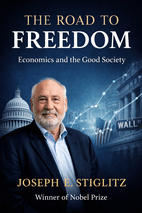
Joseph E. Stiglitz's The Road to Freedom critiques neoliberal ideology and argues true liberty requires collective action and government to manage conflicts between freedoms, offering a blueprint for progressive capitalism. It is for readers seeking to understand the roots of inequality and democratic crisis and a coherent alternative to market fundamentalism.
Feature
Insta.Page
Blinkist
Shortform
Summary Depth
Full Chapter-by-Chapter
15-min overview
Section-by-section guides
Audio Narration
✓
✓
✓
Visual Mindmaps
✓
✕
✕
AI Q&A
✓
✕
✕
Quizzes
✓
✕
✕
PDF Downloads
✓
✕
✓
Price
$89.99/yr
$146/yr (PRO)
$199/yr
*Competitor data last verified July 2026.
1 Page Summary
In The Road to Freedom, Nobel laureate Joseph E. Stiglitz presents a powerful and urgent critique of the neoliberal, free-market ideology that has dominated global policy for decades. His central thesis is that this ideology, which frames liberty as the absence of government intervention, is a profound misunderstanding that has led to weakened democracies, soaring inequality, and diminished real freedom for most people. Stiglitz argues that true freedom is not the absence of rules but the presence of meaningful choices and the capacity to act, which often requires collective action and government to manage the inevitable conflicts between one person's freedom and another's. He systematically dismantles market fundamentalism by showing how concepts like property rights and contracts are social constructs that can be designed to either promote exploitation or ensure justice.
Stiglitz's approach is distinctive for its rigorous economic analysis grounded in a broader philosophical and social vision. He moves beyond abstract theory to examine the concrete failures of neoliberalism, from the "Lost Decade" in Latin America to the exploitative use of market power and intellectual property by modern corporations. The book distinguishes itself by framing issues like climate change, public goods, and social cohesion as inherent problems of conflicting freedoms that markets alone cannot solve. Stiglitz introduces the concept of a "learning society" that must continuously adapt and advocates for a "progressive capitalism" that actively uses rules, taxation, and public investment to correct market failures, curb corporate power, and build a more equitable social contract based on principles like John Rawls's "veil of ignorance."
This book is written for readers seeking to understand the roots of our current political and economic crises—from democratic backsliding to extreme inequality—and who are looking for a coherent alternative to the prevailing narrative of deregulation. Readers will gain a clear framework for understanding why unrestrained markets often undermine both freedom and efficiency, and how a redesigned system that balances individual liberty with social responsibility and justice is not only possible but necessary. Stiglitz provides a hopeful, pragmatic blueprint for rebuilding a society where freedom is meaningfully available to all, not just the powerful.
1. Introduction: Freedom in Danger
Overview
Freedom is declining around the world. This chapter calls for a fresh look at what liberty really is. It starts by noting that democracy is weakening, even in long-standing nations. To understand this crisis, we must see how connected we all are. One person's choices often limit another's. That's why we need government—to balance these competing freedoms. This is the American paradox: a story of liberty told alongside a history of oppression and current attacks on democracy.
The chapter defines the political Right as those who want a very limited government. It then makes a case for a more active government in the name of freedom. From an economic view, real freedom is your ability to act, based on the choices you have. This shows that society always faces trade-offs. Rules can actually increase overall freedom by stopping harmful acts. Key things like property rights and contracts are human inventions, not unchangeable natural laws. We have to design them carefully.
The analysis then questions the idea that people have fixed beliefs. Instead, it says our minds can be shaped by the economy and society around us. This power is dangerously used by concentrated media and advertising, which can spread harmful beliefs and lies that hurt democracy. Education has two faces: it can be used for control, or it can set people free. This links to a growing attack on tolerance—the old idea that people should be free to think differently, as long as they don't hurt others.
In response, the chapter suggests a different model: progressive capitalism. This system looks for a better balance between markets, government, and community groups. It supports an active government that keeps competition fair, stops exploitation, invests in public goods, and shares wealth to protect democracy. It rejects the neoliberal idea that free markets automatically bring political freedom. Instead, it argues that unchecked capitalism creates unfair inequality and a system where money buys power, which destroys democratic trust.
The Global Decline of Freedom
Freedom is under threat worldwide. For sixteen years in a row, global freedom has shrunk. Now, 80% of people live under authoritarian or partly free governments. This isn't just happening far away. We see it in established democracies like the European Union and in the United States, with its authoritarian trends and the attack on the Capitol on January 6, 2021. The author sees this as a global fight over ideas. Democracies can be better, but they are currently failing in areas like economics because they're using the wrong idea of freedom.
Interdependence and the Balance of Freedoms
To rethink freedom, we must see how deeply we affect each other. In our connected world, your actions always impact others. Your freedom can take away someone else's. We need collective action, through government, to balance these competing freedoms. Good rules and government actions can be freeing for most people. They create a structure where different freedoms can live together. This leads to an ongoing public debate about where to set the limits of freedom.
The American Paradox of Freedom
The American story shows the complexity of freedom. While the nation's story is full of talk about liberty, its history included slavery, the killing of Native Americans, and backing foreign coups. The American Revolution was about who held power, not just an idea of freedom. This paradox continues today. People who attacked the Capitol on January 6 said they were "defending freedom" while trying to stop a core democratic freedom: the peaceful transfer of power. For a divided country to heal, it needs a shared, deeper understanding of what freedom means.
Defining the "Right" and the Book's Scope
The term "the Right" here is a broad label for groups who want to limit the role of government and collective action. They support a state for defense and property rights, but want it tightly constrained everywhere else. This book will argue for a larger role for the state, all through the lens of freedom.
Core Principles from an Economic Perspective
The chapter lays out key ideas from a standard economic view, which treats people's wants as fixed.
Meaningful Freedom as the Freedom to Act
To an economist, a person's freedom is their opportunity set—all the actions and choices they can actually make. This changes how we see policy. For example, while libertarians call taxes force, this view questions why market incomes are so sacred. It argues there's little moral reason not to tax them to create more opportunity for everyone.
Freedom from Want and to Fulfill Potential
People in poverty or just surviving have very little real freedom. A good society would fix this. The Right's focus on how taxes limit the freedom of the rich often ignores how social programs expand the freedom of the poor. It's a trade-off for society.
The Inevitability of Freedom Trade-Offs
The idea that "one person's freedom is another's unfreedom" means we always need rules. Society has to choose between competing rights. Often, the choice is clear. Requiring vaccines, for instance, limits one freedom to protect the health and freedom of the whole community.
Markets, Exploitation, and Coercion
Free markets are often more about the "right to exploit" than the "right to choose." Exploitation happens when one side has more power or information. It helps the exploiter and hurts the exploited. Stopping this exploitation can expand freedom for most people. This leads to a surprising point: sometimes force, like traffic lights, makes everyone more free by preventing chaos and harm.
Property Rights as Social Constructions
Property rights are a basic form of rule-making. They aren't natural or set in stone. They are human inventions that need to be defined, and defining them means making trade-offs between freedoms. Even the U.S. Constitution admits limits, like the government's power to take property for public use.
The Limits of "Voluntary" Contracts
The Right believes strongly in enforcing private contracts. But not every deal people agree to should be enforced, because some can make society worse off. Public policy has to decide which contracts are allowed. Banning certain harmful contracts can make society better.
The Malleability of Mind: Shaping Beliefs and Preferences
The chapter pushes back on the economic idea that people are born with fixed wants and beliefs. It says our minds are shaped by the economy and society around us. This shaping can encourage good behavior, but it can also be misused. Marketing, ads, and media owned by a few can create selfish beliefs and political lies. This power to shape minds hurts democracy, because it changes what voters believe and what rules they will vote for.
Education as Liberation and Indoctrination
Education has two roles. Beyond teaching skills, it's a powerful tool for shaping people. It can be used for social control, but at its best, a liberal education sets you free. It widens your view and increases your power to choose. This liberating power is why those who fear an open society often try to control what is taught.
The Assault on Tolerance and Thought
The chapter points to growing intolerance on all sides for different thoughts and actions. This attacks a core Enlightenment value. It repeats the classic liberal rule: freedom must protect your right to think what you want and to act, as long as you don't hurt others. Losing this tolerance is a direct threat to freedom itself.
Proposing an Alternative: Progressive Capitalism
The final section offers an alternative to the failed neoliberal model, called "progressive capitalism." This system is built on:
A Better Balance: It looks for a healthier mix between the market, the government, and community groups.
An Active, Balanced Government: It supports a state that ensures competition, stops exploitation, invests in public projects, and uses taxes to share wealth.
Checks on Power: It stresses that a working democracy must stop too much wealth and power from gathering in few hands.
The False Link Between Markets and Political Freedom
The chapter directly rejects the neoliberal claim that free markets guarantee political freedom. It argues the opposite: the inequality and corporate power created by neoliberalism weakens democracy, moving us toward a system where money equals political power. It challenges the neoliberal distrust of government, pointing out that strong democratic states that protect their citizens see higher living standards and more real freedom.
Key Takeaways
People's beliefs and wants are not fixed. They are shaped by economic and social systems. Concentrated media power is a danger to democratic freedom.
Education has two sides. It can control people, or it can liberate them. True liberal education is key to creating independent thinkers.
Tolerance for different thought is a foundation of the Enlightenment. It is under attack and needs defending.
Neoliberalism destroys itself. It eats away at the trust, fairness, and competition needed for a healthy society and democracy.
The proposed alternative, progressive capitalism, argues for a balanced government role to regulate, share wealth, and protect democracy. This kind of collective action is needed to expand real freedom for everyone.
Key concepts: 1. Introduction: Freedom in Danger
1. Introduction: Freedom in Danger
Global Decline of Freedom
Freedom has declined globally for 16 consecutive years
80% of people now live under authoritarian or partly free governments
Decline visible even in established democracies like the US and EU
Interdependence and Competing Freedoms
Individual actions always impact others in a connected world
One person's freedom can limit another's freedom
Government needed to balance these competing freedoms
The American Paradox
Narrative of liberty coexists with history of oppression
January 6 Capitol attack claimed to defend freedom while undermining democracy
Need for shared, deeper understanding of freedom to heal divisions
Economic View of Freedom
Freedom as the ability to act based on available choices
Poverty severely limits real freedom and opportunity
Society faces inevitable trade-offs between competing freedoms
Rules as Enablers of Freedom
Well-designed rules can increase overall freedom
Property rights and contracts are human inventions, not natural laws
Government action can create structure for freedoms to coexist
Threats to Democratic Freedom
Concentrated media and advertising can spread harmful beliefs
Education can be used for control or liberation
Growing attacks on tolerance and free thought
Progressive Capitalism Alternative
Seeks balance between markets, government, and community
Active government needed to ensure fair competition and prevent exploitation
Rejects neoliberal link between free markets and political freedom
💡 Try clicking the AI chat button to ask questions about this book!
2. How Economists Think About Freedom
Overview
The idea that unfettered markets guarantee both efficiency and freedom came to dominate policy. But this idea has failed. It starts with thinkers like Friedrich Hayek and Milton Friedman, who framed “free enterprise” as an inherent good. They often invoked a simplified Adam Smith. But Smith himself warned that business collusion and market power undermine both efficiency and liberty.
Smith's warnings became urgent during the Industrial Revolution, a period of growth built on exploitation. The Great Depression discredited pure laissez-faire, leading to the pragmatic and successful mixed economy model of John Maynard Keynes. This era of shared prosperity ended in the 1970s. A concerted intellectual movement from the Mont Pèlerin Society successfully pushed a return to radical free-market principles. This neoliberal agenda, packaged as liberalization and codified globally as the Washington Consensus, promoted deregulation, privatization, and unfettered trade.
In practice, this created a system of “fake capitalism,” where profits were private but losses were public. It hardened into a market fundamentalist religion. The results were clear: slowed growth, increased instability, and soaring inequality. Case studies from Latin America’s “Lost Decade” to Russia’s catastrophic deindustrialization show the human cost.
A closer look shows why these outcomes were predictable. The core efficiency claims depend on impossibly perfect conditions, ignoring pervasive market failures. Moral justifications for inequality through “just deserts” theories fall apart when real-world exploitation is acknowledged. Finally, the inequality and instability fostered by neoliberalism have become major drivers of modern authoritarianism, undermining the very political freedom it promised. Today's crises create an opening for a renewed, pragmatic vision of tempered capitalism, where government plays an essential role in securing stability and equity as the true foundations for freedom.
From Adam Smith to the Laissez-Faire Distortion
Conservative economists like Hayek and Friedman championed “free markets” as inherently virtuous. This language was designed to shut down debate. Their core claim was that unfettered capitalism promotes both efficiency and freedom—a claim this chapter tests.
That test starts with Adam Smith, whose “invisible hand” is often cited by free-market advocates. But Smith was far more cautious. He warned explicitly about the tendency of businesses to conspire against the public, highlighting how market power distorts efficiency and constrains freedoms.
The Industrial Revolution and Diverging Schools of Thought
Smith’s warnings proved right during the Industrial Revolution. Growth was accompanied by profound squalor and worker exploitation. This period saw two opposed economic schools: classical liberalism, which championed laissez-faire, and the critique associated with Karl Marx, which emphasized systemic exploitation. The era’s growth was fueled not just by innovation but also by slavery, colonial exploitation, and oppression.
The Great Depression and the Rise of the Mixed Economy
The catastrophe of the Great Depression made it impossible to ignore the failures of unregulated markets. John Maynard Keynes argued for a significant government role in managing the economy. This gave rise to the post-WWII “mixed economy,” where private enterprise remained dominant but government ensured competition, provided a safety net, and stabilized the economy. This model worked, producing strong, broadly shared growth and stability.
The Neoliberal Turn and the Washington Consensus
This successful era ended with the economic turmoil of the 1970s. Seizing this moment, the political Right—joined eventually by centrist leaders—pushed for a radical shift. This new era was defined by liberalization, deregulation, privatization, and trade liberalization. Championed by Reagan and Thatcher and embraced by figures like Clinton and Blair, this agenda was packaged as “liberalization.” In the developing world, it was codified as the “Washington Consensus,” imposed by international financial institutions.
The Intellectual Foundation: Mont Pèlerin and Market Fundamentalism
The political movement was built on an intellectual project led by Hayek and Friedman through the Mont Pèlerin Society. Founded in 1947, it pushed a radical anti-state vision, linking political freedom to free markets. The text questions this commitment, noting Friedman’s advisory role to dictator Augusto Pinochet. With the fall of the Berlin Wall, a consensus emerged around a “third way,” but in practice, the implemented system was neoliberalism—a revived form of 19th-century laissez-faire.
Neoliberalism as "Fake Capitalism" and Economic Religion
In practice, neoliberalism created “fake capitalism,” where profits are privatized and losses are socialized, as seen in the 2008 bailouts. It became a market fundamentalist religion. Despite evidence of its failures, believers clung to their ideology, blaming any negative outcome on insufficient liberalization. This belief system was aggressively promoted through media and academia.
The Documented Failures of the Experiment
The results of this forty-year experiment were clear. Its promises were broken. Growth slowed, economic instability increased, and inequality soared. The American Dream faded, with declining intergenerational mobility. Beyond statistics, systemic social failures emerged: the opioid crisis, predatory scams, public health epidemics, and environmental destruction. These are shown as natural outcomes of an underregulated system. The failures extended globally, with Africa experiencing deindustrialization and Latin America suffering a “Lost Decade.”
The Real-World Failures of Ideological Theory
The chapter details the catastrophic real-world consequences of applying rigid free-market ideology, contrasting them with the flawed theories that justified such policies.
Case Studies: From Lost Decades to Deindustrialization
Neoliberal policies had devastating global effects. Latin America’s “Lost Decade” in the 1980s was characterized by capital flow volatility and repeated crises. More starkly, the imposition of the Washington Consensus on post-Soviet Russia led to catastrophic deindustrialization, creating an oligarchic class that set the stage for Vladimir Putin’s rise.
The Theoretical Collapse of Market Efficiency
The foundational theory that competitive markets lead to efficiency was a dead end, valid only under impossibly perfect conditions. Efforts to prove it instead revealed pervasive market failures: lack of competition, missing markets, and imperfect information. When confronted with mathematical proofs showing markets fail to handle risk efficiently, figures like Friedman fell back on ideological faith.
The Predictive Power of Critical Theory
Modern economic theory, incorporating these complexities, predicted that unfettered markets would be inefficient, unstable, exploitative, and shortsighted, leading to inequality and environmental degradation. These predictions have been overwhelmingly proven right. The work of Hayek and Friedman is presented not as sound science but as persuasive arguments driven by ideology.
Questioning the "Moral" Defense of Inequality
Neoliberal thinkers sought a moral argument to justify inequality, primarily the "just deserts" theory where people are rewarded for their social contribution. This position is labeled as both morally wrong and factually incorrect, as research shows greater equality supports better economic performance. The moral legitimacy of market incomes is undermined by pervasive exploitation and market power.
The Flawed Link Between Markets and Freedom
A central neoliberal claim is that free markets are essential for political freedom. The chapter argues this gets it backwards. It states that neoliberalism itself, through the inequality and instability it generates, has paved the road to modern authoritarianism and populism.
The Decline of Neoliberalism and the Path Forward
The 2008 financial crisis, declining life expectancy, rising inequality, and global crises like climate change have exposed the fatal shortcomings of neoliberalism. This breakdown creates an opportunity for change. The chapter concludes by advocating for an updated version of tempered capitalism, where government plays a key role in ensuring stability, efficiency, and equity as the foundation for meaningful human freedom.
Key Takeaways
Neoliberal policies led to documented economic disasters, such as Latin America’s Lost Decade and Russia’s deindustrialization.
Core theoretical claims about market efficiency are mathematically invalid outside of impossibly perfect conditions, a reality proponents ignored due to ideology.
The moral argument for market-based inequality (“just deserts”) collapses when markets are understood to be inefficient and exploitative.
The neoliberal assertion that free markets guarantee political freedom is challenged; the inequalities created by neoliberalism are key drivers of modern authoritarianism.
Systemic failures have created an opening for change, with a revived progressive capitalism—emphasizing a necessary role for government—presented as the alternative.
Key concepts: 2. How Economists Think About Freedom
Global failures: Latin America's Lost Decade, Russian collapse
Created social crises: opioids, scams, environmental damage
3. One Person’s Freedom Is Another Person’s Unfreedom
Overview
It begins with a powerful truth: the freedom to own a gun directly undermines the freedom to live without fear of gun violence. This clash is fundamental. The author argues these conflicts arise from negative externalities, where one person's actions impose costs on others, and they are everywhere. From climate change and public health to urban noise and financial risk, our freedoms are constantly intertwined and in tension.
This makes any absolutist view of liberty impractical. Society has always managed these trade-offs. The real question isn't whether to balance freedoms, but how. This leads to a critique of free-market thinking, which the author argues has dangerously underestimated the problem.
Thinkers like Milton Friedman treated externalities as rare exceptions, a profound misreading of our world. This flaw is exposed in several ways. The conservative focus on government debt as a burden on future generations is misplaced; the real, inescapable cross-generational externality is environmental degradation. The theory that property rights and voluntary deals can solve issues collapses for problems like a warming planet and the free-rider problem.
Even the favored neoliberal tool of a corrective tax, like a carbon price, is insufficient alone. For complex challenges, relying solely on price signals is uncertain and often unfair. France's fuel tax protests show that without complementary policies, such measures crush the vulnerable. The answer is a pragmatic blend. The chapter makes the case for smart regulation and mixed policy packages—combining taxes, direct rules, and public investment—as the most effective way to navigate these trade-offs and expand freedom for the greatest number.
The Pervasive Reality of Conflicting Freedoms
The chapter opens with a stark example: widespread gun ownership, framed as a right, results in a loss of freedom for others—the freedom from fear of gun violence. This is a negative externality. The author argues such externalities are not rare but fundamental and ubiquitous, and markets alone cannot resolve the trade-offs they create.
The Ubiquity of Externalities
Externalities are a central feature of modern life, intensified by population growth and urbanization. Key examples include:
Climate Change: The quintessential global externality, where one generation's emissions restrict the freedoms of future generations.
Public Health: The pandemic showed how an individual's choice not to vaccinate increases risks for others.
Urban Life: Congestion, noise, and pollution necessitate communal rules.
The Financial System: The 2008 crisis showed macroeconomic externalities, where risky behavior by banks threatened the whole economy.
Globalization: Economic and public health "contagions" cross borders.
The text notes that externalities can be positive, like in a knowledge economy where innovation sparks further advances. But the core societal challenge is managing the harmful, negative ones.
The Multiple Dimensions of Externalities
The chapter also highlights subtler forms:
Misinformation and Disinformation: These act as pollution in the information ecosystem, imposing costs on everyone seeking truth.
Erosion of Trust: Dishonesty forces everyone else to spend time and resources verifying information and writing protective contracts.
Managing Externalities is Foundational to Civilization
The author states that civilization involves creating rules—from morals to laws—to mitigate the harmful effects of one person's actions on others. A digression into economics challenges the model of humans as purely selfish, referencing Adam Smith's writings on moral sentiments. Functional societies cultivate "other-regarding" behavior, based on enlightened self-interest or genuine empathy.
Evaluating Trade-offs and Rejecting Absolutism
Once we accept the interdependence of freedoms, the absolutist libertarian position becomes incoherent. Freedoms constantly clash, requiring societies to make judgments. The chapter explores this balancing act:
Seemingly Simple Cases: Some trade-offs appear straightforward, like the minor inconvenience of a mask versus the risk of loss of life.
The Role of Belief and Science: Disagreements often stem from differing beliefs (e.g., mask efficacy). Science can inform, but values determine how freedoms are weighed.
Nuanced Principles: Even "thou shalt not kill" has qualifications (e.g., self-defense). The "polluter pays" principle exists within a context where society has already decided which freedoms are prioritized.
The point is to establish that a reasoned public discourse about balancing freedoms is necessary.
Externalities and the Conservative Perspective
This section engages with free-market conservative thought. It notes that while thinkers like Hayek and Friedman acknowledged externalities, the author sees a fundamental philosophical flaw in much right-leaning ideology: a failure to fully grapple with the reality that one person's freedom is often another's unfreedom. In an integrated society, liberty cannot be assessed in isolation from its consequences for others.
The Pervasiveness of Externalities
The chapter argues neoliberal thinkers treated externalities as rare exceptions. This is a fundamental misreading. Externalities are ubiquitous and central. This flawed perspective is a step backward from earlier economists like Adam Smith. It's ironic, as neoliberal policies—especially financial deregulation—have created devastating new externalities by increasing systemic risk.
The Misplaced Focus on Debt
A common argument from the Right frames government debt as a crippling externality on future generations. This analysis exposes flaws. First, debt must be assessed alongside the assets it finances. Borrowing for high-return public investments (infrastructure, education) enhances a nation's productive capacity. Second, the real, non-negotiable burden on future generations is environmental degradation, not financial debt. Financial liabilities can be restructured; the costs of climate change are unavoidable and will force massive future spending on adaptation. This is the true cross-generational trade-off.
The Limits of Voluntary Market Solutions
Some, like Ronald Coase, argued that clearly defined property rights could allow markets to solve externalities voluntarily. The "tragedy of the commons" was thought solvable through privatization. This theory fails in practice. Historically, enclosing common lands in Britain made most people worse off. Theoretically, it collapses for large-scale problems like climate change (we cannot privatize the atmosphere) and due to the pervasive free-rider problem. With many affected parties, individuals have an incentive to let others pay, ensuring no collective action is taken.
Why a Carbon Tax Alone Is Insufficient
Friedman’s preferred tool was a corrective tax (like a carbon price). While prices are important incentives, exclusive reliance on them is flawed. In reality, multiple market failures (imperfect competition, information asymmetries, inequality) coexist. A single tax cannot address these complexities optimally. Furthermore, a tax's effects are uncertain—we cannot be sure it will reduce emissions to a specific, necessary level. For critical issues like climate change, direct regulations can provide more certainty of outcome.
The Case for Smart Regulation and Policy Packages
Elinor Ostrom’s work showed community-based regulation of commons could be fair and efficient, debunking the notion that privatization is always necessary. Regulation, while a form of collective coercion, often expands overall freedom for the majority. The optimal response to major externalities like climate change is therefore a mix of policies: carbon taxes, tailored regulations, and public investments. Regulations can be simpler to enforce and designed to mitigate unfair impacts. Subsidies often just transfer costs to taxpayers.
France’s 2018 fuel tax protests—the "yellow vests"—illustrate this. A standalone price signal crushed the working poor who depended on cars. A comprehensive package with reinvestment in transit and targeted support would have been fairer and more viable. The lesson is that well-designed regulation and mixed policy packages are tools to manage trade-offs in a way that can expand societal freedom.
Key Takeaways
Externalities are the norm, not the exception, in a complex economy. Neoliberal thought dangerously underestimates their scale.
The true cross-generational externality is environmental degradation, not government debt (especially when debt funds productive investment).
Voluntary market solutions fail due to practical impossibilities (e.g., privatizing the atmosphere) and the pervasive free-rider problem.
No single policy is sufficient. Addressing major externalities requires a blended approach of taxes, smart regulations, and public investment for certain and fair outcomes.
The goal is to expand society's overall opportunity set. Sometimes, collective rules (regulation) are less coercive and more freeing than privatization or simplistic taxation.
Key concepts: 3. One Person’s Freedom Is Another Person’s Unfreedom
3. One Person’s Freedom Is Another Person’s Unfreedom
The Core Conflict of Freedoms
One person's freedom often creates another's unfreedom
This conflict arises from negative externalities
Absolutist views of liberty are therefore impractical
Ubiquity of Negative Externalities
Externalities are fundamental, not rare exceptions
Examples: climate change, public health, urban noise
Intensified by population growth and globalization
Flaw in Free-Market Thinking
Neoliberalism treats externalities as minor exceptions
This underestimates systemic interdependence
Leads to dangerous policy failures like deregulation
Limits of Market Solutions
Property rights fail for global problems like climate
Corrective taxes alone are insufficient and unfair
Free-rider problem prevents voluntary solutions
Civilization as Managing Externalities
Rules and morals exist to mitigate harmful actions
Requires cultivating 'other-regarding' behavior
Balancing freedoms is foundational to society
Pragmatic Policy Approach
Need mixed policy packages, not single tools
Combine taxes, regulation, and public investment
Goal: expand freedom for the greatest number
The Necessity of Balancing
Societies must make reasoned trade-off judgments
Science informs, but values determine weights
Public discourse about balancing is essential
4. Freedom Through Coercion: Public Goods and the Free-Rider Problem
Overview
Sometimes, the rules we agree to follow—even if they feel coercive—actually give us more real freedom. Consider traffic laws: they restrict our choices to prevent chaos and grant us the greater liberty of safe travel. This principle extends far beyond the road. Our modern world is built on foundational public goods like the internet and life-saving vaccines, all fruits of deliberate, collective investment. Left to individual choice, however, these shared benefits would often go unrealized because of the free-rider problem, where everyone has an incentive to let others pay the cost.
Coercive taxation is the essential, if imperfect, tool for overcoming this problem and securing the infrastructure, research, and services that enrich society. The need for such collective action isn't limited to pure public goods. Many everyday situations, from setting store hours to preventing price-gouging, are coordination problems where voluntary individual decisions lead to worse outcomes for all. Enforced rules can resolve these dilemmas, making everyone better off.
This challenges a deep-seated faith in the market's "invisible hand." While markets coordinate in remarkable ways, their profound failures—evident in depressions and recessions—demonstrate they cannot efficiently solve large-scale coordination problems on their own. Government interventions are coercive measures that have historically expanded economic stability and, with it, a more fundamental freedom from ruin. The chapter also confronts the cynical view that people are too selfish for public service or too altruistic to need rules, arguing instead for building trustworthy institutions that channel our mixed motives toward the common good.
These dynamics explode in scale and complexity on the global stage. Issues like climate change represent the ultimate global public good, yet the world lacks any overarching authority to enforce cooperation, leading to a dangerous deficit of collective action. The chapter contrasts this with the triumphant success of the Montreal Protocol, which used the threat of trade sanctions to coerce nations into phasing out ozone-depleting chemicals. This global agreement powerfully illustrates the book's core paradox: by mutually surrendering the narrow freedom to pollute, humanity secured the far greater freedom of a healthier planet.
The Paradox of Freedom Through Coercion
Rules that seem to restrict our choices can actually expand our freedom. Traffic laws are mildly coercive, but they give everyone the greater freedom to travel safely and efficiently. This leads to a broader principle: collective action, funded by coercive taxation, can provide goods and services that make everyone better off, thereby enriching our "positive freedom"—what we are actually able to do.
This coercion is not about stopping one person from hurting another, but about compelling contributions to achieve shared benefits that would otherwise be impossible. While there are disagreements on what public goods to fund, the underlying principle is sound: certain government expenditures, funded by taxes, unambiguously expand our collective options.
Public Investments: The Foundation of Modern Life
Our daily existence is profoundly shaped by past public investments. The internet, a cornerstone of the 21st-century economy, originated from a deliberate research program by the U.S. Defense Department. Similarly, advances in medical science are built on a foundation of publicly funded basic research.
The Covid-19 pandemic served as a powerful recent example. The rapid development of mRNA vaccines was only possible because of decades of government and university-funded research. While private companies were involved in the final stages, their success was built upon this public science infrastructure and was bolstered by massive government support.
The Inescapable Logic of the Free-Rider Problem
The necessity of coercion becomes clear with the "free-rider problem." Public goods like national defense, infrastructure, and parks benefit everyone, regardless of whether any single person pays for them. In a large society, each individual has a strong incentive to let others shoulder the cost.
This creates a critical market failure. Markets underproduce goods with positive externalities. Voluntary contributions to public goods are a positive externality—the contributor benefits, but so does everyone else. If everyone tries to be a free rider, the public good isn't provided at all. Therefore, compulsory taxation is the essential mechanism for securing the public goods that enrich our lives and freedoms.
Coordination: Where Coercion Creates Better Outcomes
Beyond public goods, there is a wide class of "coordination problems" where government action can expand opportunity. These are situations where individuals interact and everyone is better off if they coordinate, but market forces alone lead to inferior outcomes.
Simple Coordination: Rules of the road are a pure coordination game—it doesn't matter if we all drive on the left or the right, only that we all do the same thing.
Prisoner's Dilemmas: The classic example is store hours. All store owners might prefer a day of rest, but if one stays open to capture sales, competitors are forced to follow. A law mandating closure solves this dilemma, making all owners better off through a rule each might wish to individually break.
Welfare-Reducing Speculation: The chapter posits a scenario where speculators, by gaining early weather information, can price-gouge on umbrellas. This forces everyone else to spend money on information just to avoid being exploited. An anti-price-gouging law removes the speculator's incentive, stopping the cascade of wasteful spending.
The Limits of the "Invisible Hand" in Systemic Coordination
The chapter critically examines the faith in the market's ability to coordinate complex economies efficiently. It acknowledges elegant mathematical proofs that showed that under a set of impossibly ideal conditions, a market equilibrium is efficient.
However, the author argues this actually proves markets are not efficient in reality. When the unrealistic assumptions are relaxed, the result collapses. Prices do coordinate, but often in inefficient ways. The profound macroeconomic failures of capitalism, like the Great Depression, are stark evidence of massive coordination failures that markets cannot self-correct.
Government interventions like financial regulations and fiscal stimulus are coercive measures that have demonstrably reduced the frequency and severity of these crises. By enhancing economic stability, they expand freedom in the most fundamental senses: freedom from hunger, fear, and ruin.
Enlightened Self-Interest and the Trap of Celebrated Selfishness
A final rebuttal is offered to the argument that people might solve these problems voluntarily through charity or NGOs. While humans are indeed more altruistic than standard economic models assume, we cannot rely solely on this for large-scale problems. Society must be structured to account for those who will act as free riders.
The Right, the author argues, falls into a trap. It celebrates ruthless selfishness as a social virtue while simultaneously arguing that this same selfishness makes government officials inherently untrustworthy. This is a flawed and cynical view. People are not purely selfish; many enter public service to advance the public interest. More importantly, we can and have built public institutions with checks and balances to limit abuse. The neoliberal project, by contrast, has eroded trust in all institutions, undermining the very cooperation it needs to function.
Global Public Goods and Coordination Challenges
The dynamics of public goods and externalities play out on a global scale with even greater complexity. The world's political architecture, built on sovereign nation-states, lacks an effective overarching authority to regulate transnational issues. This institutional gap leads to less coordination and a serious under-provision of global public goods.
Climate Change: A Critical Global Public Good
The most urgent example is the stabilization of the Earth's climate. Voluntary national efforts fall drastically short of what is scientifically required. This starkly illustrates the free-rider problem at a planetary level, where each nation may hope others will bear the cost, leading to collective inaction and immense global risk.
The Enforcement Gap in Global Governance
Establishing international agreements is only half the battle; enforcing them is equally critical. Without a world government, there is no reliable mechanism to ensure compliance, often dooming well-intentioned accords to failure.
Success Story: The Montreal Protocol
A shining counterexample demonstrates that effective global coercion is possible. The 1987 Montreal Protocol successfully phased out ozone-depleting chemicals because it included a powerful element of coercion: non-compliant nations faced severe trade sanctions. This mutual agreement to surrender the "freedom" to use harmful chemicals yielded a far greater freedom—protection from millions of cases of skin cancer and the restoration of the ozone layer. It stands as a powerful testament to how structured, enforced cooperation can expand human freedom.
Key Takeaways
The provision of global public goods, like climate stability, is severely hampered by the lack of a supranational enforcement authority, leading to a dangerous coordination deficit.
Effective international agreements require not just promises but credible enforcement mechanisms, as demonstrated by the successful, coercion-backed Montreal Protocol.
The concept of "freedom through coercion" applies internationally; nations can gain greater security and well-being by collectively agreeing to and enforcing mutually beneficial restrictions.
Key concepts: 4. Freedom Through Coercion: Public Goods and the Free-Rider Problem
4. Freedom Through Coercion: Public Goods and the Free-Rider Problem
The Core Paradox
Coercive rules can expand real freedom
Taxation enables collective benefits
Enriches positive freedom (what we can do)
Public Goods Foundation
Modern life built on past public investments
Examples: internet, medical research
Covid-19 vaccines built on public science
Free-Rider Problem
Individuals benefit without paying
Leads to underproduction of public goods
Compulsory taxation as essential solution
Coordination Problems
Market forces lead to inferior outcomes
Examples: store hours, price-gouging
Enforced rules create better collective results
Limits of Markets
Invisible hand fails at large-scale coordination
Markets underproduce positive externalities
Government intervention expands economic stability
Global Scale Challenges
Climate change as ultimate public good
Lacks global enforcement authority
Montreal Protocol shows successful coercion
Institutional Design
Build trustworthy institutions
Channel mixed motives toward common good
Move beyond selfish vs altruistic assumptions
You've reached the end of the free chapters
Next chapter: “Contracts, the Social Contract, and Freedom” is locked
Keep reading The Road to Freedom — and unlock all 600+ book summaries with audio, mindmaps and AI Q&A.
$0.00 due today · 7 days free, then $89.99/year ($7.49/mo) · Cancel anytime before day 7
Joseph E. Stiglitz is an American economist and professor at Columbia University, known for his critical analyses of globalization, inequality, and market failures. He received the Nobel Memorial Prize in Economic Sciences in 2001 for his work on information asymmetry and is the author of influential books such as *Globalization and Its Discontents* and *The Price of Inequality*. Stiglitz previously served as Chief Economist of the World Bank and chaired the U.S. Council of Economic Advisers.
📚 Explore Our Book Summary Library
Discover more insightful book summaries from our collection