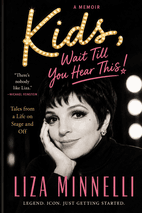
What is the book Kids, Wait Till You Hear This! about?
Liza Minnelli's Kids, Wait Till You Hear This! delivers an unflinching firsthand account of surviving Hollywood's glamour and dysfunction, from her mother Judy Garland's addiction to her own battles with cocaine and OxyContin. Written for readers seeking raw honesty and resilience, it chronicles her legendary career, disastrous marriages, and ultimate sobriety at seventy.
Feature
Insta.Page
Blinkist
Shortform
Summary Depth
Full Chapter-by-Chapter
15-min overview
Section-by-section guides
Audio Narration
✓
✓
✓
Visual Mindmaps
✓
✕
✕
AI Q&A
✓
✕
✕
Quizzes
✓
✕
✕
PDF Downloads
✓
✕
✓
Price
$89.99/yr
$146/yr (PRO)
$199/yr
*Competitor data last verified July 2026.
1 Page Summary
From the moment of her birth, Liza Minnelli was destined for the spotlight, yet her childhood was a turbulent mix of Hollywood glamour and deep dysfunction. She grew up in the "friendly neighborhood" of MGM stars, playing with Mia Farrow and Candice Bergen, but also witnessed the dark underside of her mother Judy Garland's world—a life of pills, alcohol, and suicide attempts. The book opens with Liza as a child navigating her mother's terrifying mood swings and her father Vincente Minnelli's gentle, stabilizing presence, shaping her into a fierce protector and an expert at reading the room.
As a young woman determined to make it entirely on her own, Liza moved to New York, sleeping on a Central Park bench before landing her first stage role. Her career was defined by legendary collaborations—with Kander and Ebb, who crafted her Tony-winning persona, and with Bob Fosse, who transformed her into Sally Bowles for Cabaret. Yet success was always shadowed by devastation: discovering her husband Peter Allen in bed with a man, her mother's death, a punishing cocaine-fueled amour fou with Martin Scorsese, and a series of physical breakdowns from hip replacements to encephalitis that led to a severe OxyContin spiral. Through it all, her survival mantra became "Reality is something you rise above," a commitment to celebrate life despite the pain.
This memoir is written for readers who want an unflinching, firsthand account of survival against overwhelming odds. Minnelli does not sugarcoat her struggles—from a disastrous marriage to a con man who stole millions to a moment she collapsed drunk on a New York sidewalk where hundreds stepped over her. Her distinctive voice combines brutal honesty with wry humor, as when she shares that upon hearing her ex-husband had died, her sister Lorna corrected her initial cry of distress: "You hated him!" The book ultimately offers a hard-won message of resilience: that at seventy, after a lifetime of addiction and surgeries, she finally found genuine sobriety and the determination to keep moving, never stop moving.
Chapter 1 Growing Up in the Jaws of the MGM Lion
Overview
From the moment of her birth, Liza Minnelli was destined for the spotlight—her mother, Judy Garland, chose the name Liza May because it would look “terrific on a movie marquee.” That MGM logo, with its roaring lion, symbolizes both the glamour and the grinding machine of old Hollywood, a world Liza describes as a “friendly neighborhood” of stars where she played with Mia Farrow and Candice Bergen, yet also witnessed the dark underside: a friend struck by polio, another’s mother stabbed by her boyfriend. Into this Technicolor yet treacherous landscape, Liza was born with vaudeville in her blood.
Her father, Vincente Minnelli, was her anchor—a “rock made out of honey” who gave her dreams, taught her about flashbacks, and let her watch Gene Kelly and Fred Astaire rehearse. He made her feel like she mattered. Her mother, Judy Garland, was a different force: a megastar who gave love but also fear, especially after a play accident when Liza accidentally kicked her in the head and unleashed a terrifying tirade. That moment taught Liza the “highs and lows of Mama’s world” and instilled a fierce need to protect her mother. From age five, Liza became Judy’s confidante, absorbing her resentments and fears while clinging to her father’s steady presence.
The chapter shows a childhood split between two poles. With Papa, Liza felt safe enough to demand he direct her, to punch him for kissing another little girl—always forgiven. Her cinematic debut at age three, a bit part in In the Good Old Summertime, came with a lesson: “always cover your ass, because no one will do it for you.” But the paradise unraveled when Liza turned five. Judy’s addiction, fed by decades of studio-enforced pills, destroyed the marriage. Liza remembers the train station where she was left behind as her parents departed for a treatment that didn’t take. The divorce was a word she didn’t understand, but Papa smoothed the transition by giving up their home so she could have stability—even driving a hundred miles to retrieve a forgotten doll.
When Sid Luft entered the picture, he was everything Papa was not: a gambler, a brawler who promised to resurrect Judy’s career. Liza learned of the secret marriage from the evening news while watching TV with her father. Worse, she was asked to call Sid “Papa Sid.” She couldn’t say no—she was the child of an addict. Sid’s Cadillac roared up the driveway, and Liza’s careful, watchful childhood gave way to a new, volatile household where only two out of three were happy. The chapter ends with that uneasy new beginning, a portrait of a girl learning to survive by suppressing her own feelings, guided by her mother’s motto: “Never let up. Never give up. And never stop laughing.”
Key Takeaways
Liza’s father, Vincente Minnelli, was her emotional anchor, showering her with attention while nurturing her creative ambitions.
Judy Garland’s addiction, exacerbated by Hollywood’s exploitation of child stars, fractured the family and led to her divorce from Minnelli.
Liza’s childhood ended abruptly at five, when she became aware of her mother’s instability and the painful realities of divorce and remarriage.
The introduction of Sid Luft marked a shift from the refined world of Papa to a volatile, unpredictable household—a dynamic Liza navigated by suppressing her own feelings to please her mother.
Key concepts: Chapter 1 Growing Up in the Jaws of the MGM Lion
1. Chapter 1 Growing Up in the Jaws of the MGM Lion
Destined for the Spotlight
Name chosen for marquee appeal
MGM lion symbolizes glamour and machine
Played with star children like Mia Farrow
Witnessed dark Hollywood underside
Father: Vincente Minnelli
Emotional anchor and creative nurturer
Taught her about dreams and flashbacks
Made her feel she mattered
Provided safe, forgiving environment
Mother: Judy Garland
Megastar who gave love and fear
Accident triggered terrifying tirade
Liza became her confidante at age five
Instilled motto: never give up or stop laughing
Childhood Split Between Two Poles
Cinematic debut taught self-reliance
Judy's addiction destroyed the marriage
Left behind at train station at age five
Father gave up home for her stability
Sid Luft's Volatile Entry
Gambler and brawler promising revival
Learned of marriage from evening news
Forced to call him 'Papa Sid'
Learned to suppress feelings to survive
💡 Try clicking the AI chat button to ask questions about this book!
Chapter 2 Memories of Mama
Overview
144 South Mapleton Drive was supposed to be a fairy tale—a nineteen-room Tudor estate with a vaulted living room, a black Steinway, and a trampoline. For seven-year-old Liza, moving in felt like The Wizard of Oz shifting from black-and-white to color. But the fine print arrived fast: Sid Luft, a gambler, had bet everything on A Star Is Born, and Mama was already deep in pills and alcohol. The house became less a dream home than a beautiful albatross—a stage set for dysfunction. Strike two for Liza’s childhood. (Strike one had been an accidental kick to Mama’s head years earlier; strike three came when Lorna was born in 1952. Within days of coming home, Mama tried to kill herself. Postpartum depression, barbiturates, amphetamines, alcohol—the chemicals collided. A staff member found her collapsed in her bathroom, neck slashed. The next morning she woke up laughing, ate a lumberjack breakfast, and wondered why she was always so depressed. Liza convinced herself Mama was immortal. It was the end of any normal childhood.)
Life at Mapleton was a loop of screaming fights, bedroom reconciliations, and more screaming. Liza became expert at reading the room, taking care of baby Lorna when nurses quit, and dodging emotional chaos. The one bright spot: weekends with Papa at Beverly Park’s “Kiddieland,” also called “Divorceland” by Hollywood’s broken-home kids. There she made friends like Desi Arnaz Jr. and Lucie Ball, and welcomed half-siblings Tina Nina and Joey. One memory she’d suppressed for decades: watching from her bedroom window as Mama, dressed to the nines, climbed into a Cadillac with Sid—while still married to Papa. That night was a warm-up for the tensions that defined Mapleton.
But Mama was a genius clown—Lucille Ball once said Judy made her look like a mortician. The humor cut through the darkness. When eight-year-old Liza sang on the street and a driver rolled down his window and vomited, Mama roared with laughter—Liza’s first review. When a classmate called Mama a “big fat pig,” Mama’s advice was pure Judy: “Tell him your mother can get thin anytime she wants to, but his mother couldn’t get talent if she took twenty years of private lessons from Sir Laurence Olivier.” It killed. Mama understood her brand: “Sympathy is part of my business.” She gave audiences exactly what they needed. Still, Liza insists Mama was her mother, not a movie star—the woman who made shepherd’s pie, who took care of her when she was sick. Nobody else got to see that part.
After MGM fired her in 1950, Mama pinned her comeback on A Star Is Born. The film was brilliant; Warner Bros. butchered it to three-hour cuts. It bombed. Mama lost the Oscar to Grace Kelly. Broadway turned her down for Mame—too unreliable. So she hit the road, an exhausting cycle of live concerts that would last the rest of her life. In 1955, she asked Lorna and Liza: stay in school or come on the road? They answered in unison: “When do we leave?” It was exhilarating, terrifying, and heartbreaking.
By thirteen, Liza was her mother’s full-time caretaker: nurse, doctor, pharmacologist, psychiatrist. She learned to cut through the bathroom screen with garden shears, swap sleeping pills for aspirin, and monitor Mama’s reactions. She called doctors and begged them to renew prescriptions. Mama’s temper was vicious. She blamed Liza for everything, then acted like nothing happened. Liza now recognizes this as emotional abuse. But Mama also gave her the most important advice: “Watch me, and when I get upset or depressed, when I get disillusioned, learn from it. I’m the best example of what I don’t want you to do. Don’t make my mistakes.” And: “I believe in you, Liza, so you believe in you.” Liza learned to talk fast, think faster, and anticipate landmines. She played her first big role: the adult.
Life on the road meant twenty-two different schools, sneaking out of hotels at 5 a.m. because Mama couldn’t pay the bill, wearing five layers of clothes and leaving the rest behind. Mama made a game of it: “Remember, I am Judy Garland.” Sometimes they had millions; sometimes they swiped sandwiches. When Mama was fed up with a rude audience at the Flamingo Hotel on New Year’s Eve 1957, she dragged eleven-year-old Liza onstage in a bathrobe and slippers, whispered “Take it,” and walked off. Liza sang “The Man That Got Away” to a crowd that didn’t care. She just imitated what she’d seen Mama do. When she got offstage, Mama hugged her and said, “You were terrific.” It was love, it was chaos, it was the push that started Liza’s own career.
Liza’s memories of her mother crackle with contradictions. She repaid every hotel where they’d skipped the bill—the right thing, and Mama would have approved. But what lingers is the laughter. Mama had a survival skill: finding comedy in tragedy. A drunk woman once told her “don’t forget the rainbow” in a restroom. Mama’s reply? “Madam, how could I possibly forget the rainbow? I’ve got rainbows coming out of my ass!” Another night in London, watching Marlene Dietrich hit flat notes on TV, Mama started throwing bread at the screen. Liza joined in, and they howled together. Heaven. Then there was the cake: Mama baked one, dropped it on the floor, and announced “Dinner is served!” They sat on the floor with the dog, gobbling fistfuls and laughing. That was Mama—bustling like any other mother one moment, turning disaster into delight the next.
Just before her thirteenth birthday, at a party at Uncle Ira’s, Gene Kelly asked Liza to sing and dance “For Me and My Gal” with him on television. It was her first prime-time TV appearance. She felt she could do everything. She wanted theater most of all. That wish came true in summer 1960, when she worked backstage at the Cape Cod Melody Tent—painting scenery, building sets, dancing in the chorus of Wish You Were Here. Mama loved it—then gave an interview saying she didn’t think children should be thrown into show business. Liza was already over the moon. No turning back. That summer also brought France: a chaperoned trip to study French in Annecy. Liza fell in love with French culture, cuisine, and couture. She also developed her first big crush: Bobby Darin.
Back in New York that fall, Gypsy blew her away. But Bye Bye Birdie was life-changing. Watching Chita Rivera, Liza knew: this was what she wanted. Live theater crackled. It seemed like an answer to loneliness—a bunch of friends kidding around. The turning points came fast. At fifteen, she enrolled in New York’s High School for the Performing Arts—the Fame school. Heaven. Surrounded by kids like her. She met Marvin Hamlisch, a brilliant pianist. Instant click. He wrote four original songs for her to record as a Christmas gift for Mama. They cut the tracks in a Manhattan studio: her first band. At a holiday party, Liza played the record for a room of fifty guests. Mama wept. Then she asked Liza and Marvin to play the songs again live at the piano. Liza was blown away. That night she became a professional.
In fall 1961, she landed the lead in Scarsdale High’s The Diary of Anne Frank. Her father’s advice: “Speak as if it’s the first time you’ve spoken, and listen as if it’s the first time you’ve heard something.” Her mother’s: connect with the character’s inner life. The reviews called her “vibrant.” A parent paid for the cast to perform in Athens, Rome, and Israel—her first summer tour. But home was chaos. Mama and Sid Luft were divorcing again, this time at the Stanhope Hotel. They threatened lawsuits, slammed doors, and ran between floors. Liza, at fifteen, became the intermediary. She was so ready to get on with her own life.
By June 1962, she’d had enough. After the Anne Frank tour, Mama sent her to the Sorbonne to study French history. Paris was lovely, but Liza kept asking herself: what am I doing here? She made a decision: drop out of high school, move to New York, become an actor. She’d been to twenty-two schools. This nonsense had to end. She approached Papa first. He understood, approved, offered to help. Mama? At first she seemed to accept it. Then the other shoe dropped: “You’re going to make it on your own, baby. There will be no money from me.” Mama probably expected her to blow through her savings and come home in a month. Liza never turned back. She promised herself she’d never take another cent from her family. At sixteen, she was about to begin life on her own—as L
Key concepts: Chapter 2 Memories of Mama
2. Chapter 2 Memories of Mama
The House as a Beautiful Albatross
19-room Tudor estate was supposed to be a fairy tale
Sid Luft's gambling and Mama's addiction ruined it
Strike two for Liza's childhood after Mama's suicide attempt
Liza convinced herself Mama was immortal
Life at Mapleton Drive
Loop of screaming fights and bedroom reconciliations
Liza became expert at reading the room
Weekends with Papa at 'Divorceland' were bright spots
Watched Mama climb into Cadillac with Sid while married
Mama's Genius Clown
Judy's humor cut through the darkness
Laughed at Liza's first review from a vomiting driver
Advice on classmate's insult was pure Judy
Sympathy was part of her business
The Comeback and the Road
A Star Is Born bombed after Warner Bros. butchered it
Mama lost Oscar to Grace Kelly
Broadway turned her down for Mame
Liza and Lorna chose the road over school
Liza as Full-Time Caretaker
By thirteen, she was nurse, doctor, and psychiatrist
Cut through bathroom screen and swapped pills for aspirin
Mama's temper was vicious emotional abuse
Mama advised: learn from my mistakes
Life on the Road
Twenty-two different schools and sneaking out at 5 a.m.
Sometimes millions, sometimes swiped sandwiches
Mama dragged Liza onstage in bathrobe at Flamingo Hotel
Liza imitated Mama and started her own career
Contradictions and Laughter
Liza repaid every hotel bill Mama skipped
Mama found comedy in tragedy as survival skill
Threw bread at TV watching Marlene Dietrich flat notes
Ate dropped cake on floor with dog, laughing together
Chapter 3 “Harold, Get Her Off My Fucking Stage”
Overview
Frank Sinatra’s deep love for Judy Garland formed the backdrop of Liza’s childhood—he was “Uncle Frank,” always hovering at the edges of a romance that never became a marriage because Judy refused to sacrifice her own identity. When Liza dropped out of high school and moved to New York in 1962 with nothing, Sinatra sent a $500 check. She sent it back. She was determined to make it entirely on her own.
That determination was tested fast. Broke and crashing with friends, Liza lasted only a few months at the Barbizon Hotel for Women before she stopped paying bills, got thrown out, and slept on a Central Park bench. She never told her parents. Agent Stevie Phillips—recommended by Judy—took her in, loaning her clothes, teaching her how to dress and behave professionally, while Liza studied acting with Uta Hagen and Herbert Berghof. Less than a year in, she landed the off-off-Broadway revival of Best Foot Forward. Then she broke her right ankle in rehearsal. The cast became a publicity gimmick. On opening night, Liza reserved front-row seats for her mother, Lorna, Joey, and Sid Luft—they never showed. Judy claimed she mixed up the dates. Heartbroken, Liza channeled her pain into her performance and made a vow: never bring anything negative onstage. Turn pain into power. Her father Vincente Minnelli was there, beaming. Judy came the next night, full of tears and love, and Liza forgave her. The show became a hit, earning her a Theater World Award.
From there, television offers poured in. First the Joe Franklin Show, then a legendary stunt on The Jack Paar Show: Judy insisted Liza be introduced under the fake name “Dyju Langard”—Judy Garland spelled backward—so the audience would judge her on talent alone. Next came The Ed Sullivan Show, where Liza sang two songs, including a breakneck dance number that terrified her. She performed perfectly. Suddenly millions of Americans knew her name—not as Judy Garland’s daughter, but as Liza Minnelli.
Just as Liza was building her own career, CBS greenlit The Judy Garland Show in 1963. Judy wanted Liza by her side, but Liza was still in Best Foot Forward. She said no. Judy refused to accept it. She called Liza’s boyfriend, Tracy Everitt, and offered him a regular spot on her new show. Tracy couldn’t say no. Liza felt trapped between her mother and the man she loved. The show’s collapse had little to do with Judy’s talent and everything to do with the people circling her like sharks. Her agents, David Begelman and Freddie Fields, were parasites: Begelman cooked up a cruel blackmail scheme, convincing Judy that nude photos of her unconscious from an accidental overdose had fallen into the wrong hands. He pressured her to get a $100,000 advance from CBS and hand it over to make the “photographs” disappear. There were no photos. It was pure extortion, and Judy paid him. Begelman later bragged about conning her. He eventually blew his brains out in a hotel suite in 1995. “A fitting end,” Liza writes. Network chief James Aubrey, known as “the Smiling Cobra,” wanted to control every element of the show and made Louis B. Mayer look kind. Meanwhile, Liza, only seventeen, found herself managing her mother’s romantic life. “I was managing Mama’s lovers like I managed all the other people in her life,” Liza says.
Despite the turmoil, the show was a creative triumph. The debut knocked Bonanza out of the top spot. The third episode was built entirely around Liza, who was teary-eyed as Judy sang “Liza” with childhood images flashing on screen. Then came the assassination of President Kennedy on November 22, 1963. Judy wanted the November 24 show to be a tribute, but Aubrey refused, claiming it was too political and JFK would be forgotten soon. Judy defied him and closed with a powerful “Battle Hymn of the Republic.” Aubrey never forgot. Although the show couldn’t unseat Bonanza for good, CBS canceled it after one season. “They know the price of everything and the value of nothing,” Liza says.
As Judy’s show was winding down, Liza landed the lead in a revival of Carnival at the Mineola Playhouse. Her mother exploded with anger, claiming Liza’s recent kidney infection would be aggravated by stress. The real reason: Judy wanted Liza by her side for emotional support. Liza refused to give in. Judy threatened to go onstage during a performance and physically drag her off, released press statements saying Liza wouldn’t appear, sent attorneys to telegram the producers, and even threatened to send Liza to boarding school. Liza held firm, did the show, and received rave reviews. Months later, Judy admitted: “You stood on your own two feet. God, how I admired and loved you for having the courage to do it!”
In June 1964, Capitol Records came calling. Liza worked with arranger Peter Matz, recording an album filled with show tunes, standards, and pop oddities. Released as Liza, Liza, it reached 115 on the Billboard charts. One British reviewer called her “the zippiest new talent on the girlie disc scene.” She was just eighteen, still learning her way around a studio, but her exuberance and potential shone through. The contract noted she was a minor, and both parents signed away any rights to her earnings. “Translation: I’m a big girl now.”
After the show’s cancellation, Judy had a disastrous tour in Australia, an overdose in Hong Kong, and false reports of her death. But she was ferociously competitive. She called Liza from England: “I’ve been sitting down for twenty minutes, and it’s time to make another comeback.” She wanted to play the London Palladium—and she wanted Liza to do it with her, with equal billing. Liza refused. The next day, she woke up to a news story: “Judy Garland and Liza Minnelli will be appearing together in November at the London Palladium!” Judy had announced it without permission. Liza was stuck. She set one condition: “I will only do it if you introduce me by simply saying, ‘Ladies and gentlemen, Liza Minnelli.’” No mother-daughter narrative, no hand-holding. “I want a chance to be myself.” Judy bristled but agreed.
The concerts sold out immediately. On opening night, Liza started with “The Travelin’ Life” and belted it. The polite curiosity snapped into genuine cheers. By the third song, the crowd was fully on her side. But in the wings, Judy’s enthusiasm faded. After Liza’s last solo, Judy freshened her lipstick like armor and whispered to producer Harold Davison: “Harold, get her off my fucking stage!” Liza kept singing. They launched into an un-choreographed duet of “Hello, Liza!”—a retitled Hello, Dolly!—and Liza learned to hold her own with the very best. Judy’s competitive force was a backhanded compliment: a sign that Liza had become a legitimate threat onstage. After the show, Judy softened, saying, “You’re everything I wanted you to be. A force to be dealt with. I created it. Now I’ve come up against it. I get it.” Liza felt exhilarated but also scarred—a trial by fire.
That night, a stunningly handsome young man sat in the front row, cheering “Go, Liza!” throughout. Judy had met him on a concert tour of Australia and decided he was perfect for her daughter. His name was Peter Allen. Over a long dinner after the show, he said he wanted to date Liza exclusively—which, by unwritten rule, meant engagement. “All right, okay,” he said. “Let’s be engaged.” Liza said yes. Judy was overcome with joy. Liza fell hard. Peter would change her world in ways she couldn’t yet imagine. The chapter ends with Liza having survived her mother’s stage, found her own spotlight, and stepped into a new chapter both personally and professionally.
Key Takeaways
Judy's TV show was sabotaged by predatory agents (Begelman's blackmail) and a hostile network chief (Aubrey), not her lack of talent.
Liza stood up to her mother for the first time over Carnival, earning Judy's grudging respect.
Liza, Liza marked her first major recording step, though still finding her own style.
The London Palladium concert was set up by Judy's unilateral press announcement, but Liza insisted on being introduced solely as herself—no coattails.
Liza’s performance at the London Palladium was a turning point: she started as Judy’s daughter and ended as a performer who could hold her own.
Judy’s competitiveness was a backhanded compliment—a sign that Liza had become a legitimate threat onstage.
The duet was un-choreographed, raw, and full of creative tension; Liza learned to survive a trial by fire.
The night ended with an engagement to Peter Allen
Key concepts: Chapter 3 “Harold, Get Her Off My Fucking Stage”
3. Chapter 3 “Harold, Get Her Off My Fucking Stage”
Liza's Independence from Sinatra and Family
Sinatra sent $500; Liza returned it
She refused to rely on her famous parents
Lived broke, slept on a Central Park bench
Agent Stevie Phillips taught her professionalism
Breakthrough in Best Foot Forward
Broke ankle; cast became a publicity gimmick
Judy and family missed opening night
Liza vowed to turn pain into power onstage
Won Theater World Award for the role
Building Her Own Name on TV
Judy hid Liza's identity on Jack Paar Show
Performed on Ed Sullivan Show flawlessly
Audience knew her as Liza Minnelli, not Judy's daughter
The Judy Garland Show Turmoil
Judy wanted Liza on show; Liza refused
Judy manipulated Liza's boyfriend for a spot
Agents Begelman and Fields exploited Judy
Begelman blackmailed Judy with fake nude photos
Creative Triumph and Network Sabotage
Show debut beat Bonanza in ratings
JFK assassination episode defied network orders
CBS canceled after one season despite success
Liza's Stand Against Judy's Control
Judy tried to block Liza's Carnival lead role
Threatened to drag Liza offstage physically
Liza held firm and earned rave reviews
Judy later admired Liza's courage
First Album and Professional Maturity
Recorded Liza, Liza with arranger Peter Matz
Album reached 115 on Billboard charts
Signed contract as a minor; parents waived rights
Declared herself a big girl now
Chapter 4 When It All Comes True, and Then…
Overview
The story of Liza Minnelli's life reaches a pivotal and heartbreaking turning point. It begins with a messy meeting in John Kander and Fred Ebb's apartment. Liza, disheveled and nervous, sings for them and sparks a collaboration that defines her career. Kander and Ebb become her creative architects, crafting the stage persona that wins her a Tony Award for Flora the Red Menace, despite the show's short run and her mother's chaotic presence at opening night. They help launch her into live cabaret, writing “Say Liza (Liza with a Z)” to forge her own identity. She conquers Las Vegas and Hollywood, though a terrifying moment when the announcer mistakenly introduces her as “Judy Garland” underscores the burden of that legacy. Success in Paris brings a deep connection with Charles Aznavour, who teaches her to sing with absolute truth.
Then her private world shatters. Returning home early, she discovers her husband, Peter Allen, in bed with a man. This betrayal echoes a childhood trauma of guilt and self-blame. Remarkably, their love endures. They stay married for seven years, maintaining an active relationship and deep bond. Peter becomes a crucial guide, advising her to sign with A&M Records and introducing her to Randy Newman. He encourages her to take a leap into film, first with Charlie Bubbles, then as Pookie Adams in The Sterile Cuckoo. Using a master class her mother gave her—finding the resistance to emotion—she delivers a raw, one-take phone scene that earns an Oscar nomination.
The world she built then collapses. A phone call in 1969 brings news that her mother has died at forty-seven. She organizes a massive public funeral, fighting with her mother's husband over everything. The autopsy reveals an accidental overdose of Seconal, not suicide. The funeral is a circus of twenty thousand onlookers, but she keeps the service intimate, with yellow flowers and a sing-along to “The Battle Hymn of the Republic.” Afterward, a doctor prescribes Valium. It is the first time she experiences a pill that makes the edge disappear, and it sparks a full-blown addiction, a destructive habit she learned from her mother. She has moved her mother's remains to Hollywood Forever Cemetery, and though she is gone, Liza talks to her every day.
Meeting Kander and Ebb
In early 1964, Liza was starring in Carnival and searching for new material. Castmate Carmen Zapata introduced her to a song, leading to a small Upper West Side apartment where she met composer John Kander and lyricist Fred Ebb. Liza shows up looking like a mess—stringy hair, holey sweater—and the two men are wary. But when they play “A Quiet Thing” and “Maybe This Time,” she’s hooked. She asks to learn them, to audition for their show Flora the Red Menace, and sings on the spot. That meeting sparked a lifelong collaboration.
Flora, Freddy, and John
John Kander is the steady, bighearted genius; Fred Ebb is the lyrical wizard with a dark comic edge. Together they create her stage persona. Liza pushes hard to get cast as Flora, but director George Abbott and producer Hal Prince initially say no, preferring bigger names. Liza endures a humiliating audition where Abbott loudly dismisses her, but she refuses to be rattled. After six or seven auditions, they finally cast her.
Mama, Please Give It a Rest!
Opening night brings chaos. Mama shows up broke, insists on sitting front row and going onstage with flowers. Hal Prince seats her far from the front. Liza is grateful. After the show, at the cast party, Mama climbs on a piano to sing, competitive and scene-stealing. Liza is furious but resigned. Flora runs only eighty-seven performances, but Liza wins the Tony Award.
“Live Tonight—at the Blue Room”
With the show closed, Liza enters live cabaret. Kander and Ebb help craft a show with smart patter. They write “Say Liza (Liza with a Z)” to stop promoters from calling her “Judy Garland’s daughter.” Critics rave. Liza is nineteen, thrilled, and terrified of comparisons to her mother.
Makin’ the Hometown Proud
She plays Vegas, then the Cocoanut Grove in Hollywood. The announcer booms: “Ladies and gentlemen—Miss Judy Garland!” Liza’s stomach drops. He quickly corrects himself. She gets through it, receives standing ovations.
Bonjour, Paris—1966
European concerts follow, including the Olympia Theater in Paris. Charles Aznavour is in the audience. They’d met months earlier and felt an instant connection. He’s twenty-two years older, married, yet they have what he calls “a sweet affair.” He teaches her to sing with absolute truth.
Not Exactly the Boy Next Door
Back to Peter Allen. They’re engaged after her London Palladium appearance with Mama. They share showbiz backgrounds, a love of music, and traumatic childhoods. Peter is warm, funny, and offers a safe sanctuary. Mama approves; Papa thinks she’s too young.
A Shattered Trust
Returning early from a shopping trip, Liza walked into her apartment to find Peter having sex with a man in their bed. The betrayal shattered her sense of stability. Peter held her, and they wept together. He told her he was gay, that he loved her more than anyone, but his attraction to men wouldn't disappear. She instantly understood this wasn't something to fix. Yet the moment triggered a deeper wound, echoing a childhood trauma—that same guilt and self-blame. She wondered, “What did I do wrong?”
Making It Work
Despite the fracture, their love endured. They didn't want the marriage to end. They stayed married for seven years. Yes, they still had an active sex life. Yes, their spiritual connection ran deep. When Peter passed from AIDS at forty-eight in 1992, his strength and influence had already changed her life forever.
New Music and New Talent
Soon after marrying, Liza signed with A&M Records on Peter's wise advice. Peter also introduced her to Randy Newman. She recorded four of his songs.
A Leap Into Film
In 1967, Albert Finney cast her in Charlie Bubbles. Her initial approach was loud, but Finney gave sage advice: "Tone it down, luv." She learned to play naturally. The role earned her first taste of film acting.
Channeling Pookie Adams
She fought hard to play Pookie Adams in The Sterile Cuckoo. Mama thought the role was wrong for her. She pushed back. Mama had given her a master class in acting years earlier, teaching her to find the character's resistance—to fight not to cry. She used that method for Pookie. The phone scene she did in one take. She earned an Oscar nomination.
The Call That Changed Everything
Sunday morning, June 22, 1969. Peter answered the phone. His voice ashen: "Darling, you better wake up." Mama had died in London at forty-seven. Liza was crushed. Yet she heard Mama telling her what had to be done. Someone had to organize a public funeral. That person was her.
The Battle Over Mama's Final Wishes
Sid Luft wanted a big Hollywood funeral. Liza pushed back, insisting on New York. Then came the harder fight: Mama wanted cremation, but Sid erupted with bullying rage. The real power lay with Mickey Deans, Mama's husband. He didn't want cremation either, so that battle was lost. The formal autopsy confirmed what she suspected: an "incautious self-overdosage" of Seconal. Not suicide. She knows her mother.
Saying Goodbye at Frank E. Campbell
The funeral arrangements were a blur. The coffin: her godmother Kay Thompson insisted it be white. When the funeral home claimed they had none, she shot back: "Spray it!" Joey, thirteen, and Lorna, sixteen, broke down seeing Mama one last time. Liza leaned close and told her how beautiful she was.
A Funeral Fit for a Star
Twenty thousand people lined the streets. Liza chose James Mason for the eulogy. His words: "She gave so richly and so generously that there was no currency in which to repay her." Then they sang "The Battle Hymn of the Republic." It was rousing, inspiring—pure Judy.
The Aftermath: Addiction and Reflection
After the funeral they gathered at Liza's apartment. They sang until they couldn't sing anymore. But a different kind of inheritance was taking hold. A doctor prescribed Valium. It was the first time she'd taken anything like it, and she marveled at how the edge disappeared. That one pill sparked a fire. What started as a blessing turned into a habit, then a full-blown addiction. A final gift from Mama. She died at forty-seven. Liza is eighty as she writes this. They moved her body to the Hollywood Forever Cemetery in 2017. They talk every day. They laugh like hell.
Key Takeaways
Judy Garland did not commit suicide; the autopsy confirmed an accidental overdose from
Key concepts: Chapter 4 When It All Comes True, and Then…
4. Chapter 4 When It All Comes True, and Then…
Meeting Kander and Ebb
Liza meets Kander and Ebb in 1964
She auditions on the spot for Flora
They become her creative architects
Flora the Red Menace and Tony Win
Liza endures multiple humiliating auditions
Show runs only 87 performances
She wins the Tony Award anyway
Forging Her Own Identity
Kander and Ebb write 'Say Liza (Liza with a Z)'
She conquers cabaret, Vegas, and Hollywood
Announcer mistakenly introduces her as Judy Garland
Connection with Charles Aznavour
They have a 'sweet affair' in Paris
He teaches her to sing with absolute truth
He is 22 years older and married
Peter Allen's Betrayal and Enduring Love
She finds Peter in bed with a man
They weep together and he admits he is gay
They stay married for seven years
Career Leap and Oscar Nomination
Peter advises signing with A&M Records
He introduces her to Randy Newman
She earns Oscar nomination for The Sterile Cuckoo
Mother's Death and Addiction Begins
Judy Garland dies of accidental overdose in 1969
Liza organizes massive public funeral
Doctor prescribes Valium, sparking addiction
You've reached the end of the free chapters
Next chapter: “Chapter 9 Reality Is Something You Rise Above” is locked
Keep reading Kids, Wait Till You Hear This! — and unlock all 600+ book summaries with audio, mindmaps and AI Q&A.
$0.00 due today · 7 days free, then $89.99/year ($7.49/mo) · Cancel anytime before day 7
plus sales tax where applicable
More ways to explore Kids, Wait Till You Hear This!
Liza Minnelli is an award-winning actress, singer, and dancer, best known for her iconic role as Sally Bowles in the 1972 film *Cabaret*, which earned her an Academy Award. A daughter of Hollywood legend Judy Garland, she has also starred in films like *New York, New York* and won multiple Tony Awards for her stage performances, including *Liza at the Winter Garden*. Her expertise spans musical theater, film, and concert performance, cementing her as a celebrated figure in entertainment history.
Frequently Asked Questions about Kids, Wait Till You Hear This!
What is Kids, Wait Till You Hear This! about?
This memoir takes readers behind the scenes of Liza Minnelli's extraordinary life, from her childhood as the daughter of Judy Garland and Vincente Minnelli in the glamorous yet dysfunctional world of old Hollywood, through her own rise to stardom in Broadway, film, and cabaret. It candidly details her struggles with addiction, abusive relationships, and physical breakdowns, as well as her fierce determination to carve out her own identity. The narrative is built around her personal mantras of resilience and the support from creative partners like Kander and Ebb, ultimately leading to her hard-won sobriety and a celebration of life’s journey.
Who is the author of Kids, Wait Till You Hear This!?
Liza Minnelli is a legendary entertainer and the daughter of Hollywood icons Judy Garland and Vincente Minnelli. She won a Tony Award for her Broadway debut in *Flora the Red Menace* and an Oscar for her iconic role in *Cabaret*. Her personal insight into the highs and lows of show business and her own battles with addiction make this memoir deeply authentic.
Is Kids, Wait Till You Hear This! worth reading?
Absolutely—this memoir offers an unflinching, intimate look at the price of fame, the complexity of family legacy, and the power of reinvention. Liza tells her story with humor and raw honesty, from stealing her own mother's spotlight to surviving a marriage with a con man and nearly fatal addiction. It's an inspiring testament to resilience that will resonate with anyone who has ever had to 'pick yourself up and start all over again.'
What are the key lessons from Kids, Wait Till You Hear This!?
One of the central lessons is Liza's mantra 'Reality is something you rise above,' a commitment to celebrate life despite pain and setbacks. The book also underscores the importance of self-reliance—she refused financial help from Frank Sinatra to make it on her own—and the necessity of surrounding yourself with genuine supporters like Kay Thompson, whose last words were 'Celebrate everything!' Finally, it teaches that recovery is possible at any age, as Liza found sobriety at seventy through a holistic rehab program and the loving intervention of friends.
📚 Explore Our Book Summary Library
Discover more insightful book summaries from our collection