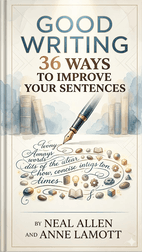
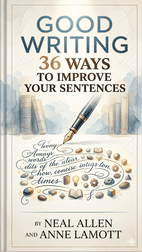
Neal Allen's Good Writing delivers 36 practical rules—from using strong verbs to trusting your reader—that sharpen prose through precision, energy, and natural voice. Designed for writers at any stage working on fiction, nonfiction, or journalism who want actionable techniques over abstract advice.
Feature
Insta.Page
Blinkist
Shortform
Good Writing
✓
✓
✕
Summary Depth
Full Chapter-by-Chapter
15-min overview
Section-by-section guides
Audio Narration
✓
✓
✓
Visual Mindmaps
✓
✕
✕
AI Q&A
✓
✕
✕
Quizzes
✓
✕
✕
PDF Downloads
✓
✕
✓
Price
$89.99/yr
$146/yr (PRO)
$199/yr
*Competitor data last verified July 2026.
1 Page Summary
In Good Writing, Neal Allen presents a pragmatic, rule-based guide to improving prose that emphasizes precision, energy, and trust in the reader. The book is organized around a series of specific, actionable rules—such as using strong verbs, questioning "being" and "having," sticking with "said," and dropping "very"—that move beyond generic advice. Allen’s approach is distinctive for its blend of journalistic discipline and creative flexibility; he argues that the goal is not strict adherence to rigid commandments, but rather internalizing the logic behind each rule so that you know when to break them. The book is built on the idea that good writing is a craft of deliberate choices, from word origin and sentence rhythm to the placement of a semicolon or the decision to use a short sentence as a sharp, jolting break.
Throughout the chapters, Allen draws on his own experience as a newspaper writer and collaborates with his editor, Anne, whose voice frequently appears to offer counterpoints and personal anecdotes. The book explicitly rejects the notion that writing should sound "literary" or formal for its own sake; instead, it champions natural, conversational language that feels immediate and connected to tangible experience. Key concepts include trusting the reader to fill in gaps, "showing then telling" rather than the reverse, and the importance of finishing a project even when it feels imperfect. Each rule is grounded in concrete examples—from Faulkner’s long sentences to the Bible’s “Jesus wept”—that illustrate both the rule and its effective violation.
The intended audience is writers at any stage who are seeking practical, no-nonsense techniques to sharpen their work, whether they are working on fiction, nonfiction, journalism, or memoir. Readers will gain a toolkit of editorial habits (like trimming tiny words, adorning "this" with a noun, and twisting clichés) alongside a deeper philosophy of writing as a collaborative, iterative process. The book’s ultimate lesson is that writing improves not by chasing elegance, but by making every word earn its place, staying in tune with natural voice, and developing the discipline to "finish the damn thing" before worrying about perfection.
Rule 1: Use Strong Verbs
Overview
This rule is about vitality in writing. Strong verbs—specific, vivid, active—replace weak, imprecise ones like "walked," "stood," "got," or "used." The difference isn't just stylistic; it's structural. A strong verb pulls the reader into the scene and often reshapes the entire sentence around it. The chapter makes clear that this isn't about showing off vocabulary; it's about precision and energy.
Weak vs. Strong: The Bare Minimum
The opening contrast is stark. "He walked out of the house" is flat, a dead end. But swap "walked" for "rushed" and suddenly the sentence has momentum—it practically demands a consequence, like tripping on the last step. That consequence forces a more complex sentence structure, mixing up the rhythm and keeping the reader from falling into a monotone subject-verb-object rut. The weak verb doesn't just sound dull; it limits what you can say next.
Adverbs Become Unnecessary
One of the most practical insights: the more specific the verb, the fewer adverbs you need. "Raced" doesn't need "quickly." "Meandered" doesn't need "aimlessly." The verb carries the full weight of the action by itself. This tightens prose and eliminates clutter—a double win.
The Danger of Overdoing It
The chapter includes a necessary warning. Take this rule too far and you get sportswriters who can't just say a team "won"—they've been slaughtered, massacred, blasted, blitzed, blown away, clobbered, thrashed, blanked, thumped, walloped, whomped, whipped, flattened, shellacked, crushed, hammered, shafted, or vanquished. The reader rolls their eyes. Strong verbs should clarify, not call attention to themselves. The rule is "use strong verbs," not "never use a weak verb."
Anne's Take: Seeing the Verb
The second half of the chapter adds a practical, almost tactile layer. She asks you to close your eyes and picture a sentence: "His grandfather sat on the porch, carving a figure out of a thick twig." You see the man, the motion, the knife. Now change it: "His grandfather slouched on the porch, whittling." Different image entirely. The verb is the picture.
She runs through a handful of transformative swaps:
"We tried to handle a week without Internet" → "We hunkered down for a week without Internet." ("Hunker" is championed as a great verb.)
"She could not stop thinking about eating an entire chocolate cake" → "She craved chocolate cake." ("Crave" is precise and psycho-visual.)
"She went out to the garden and got a lot of vegetables" → "She gathered vegetables for dinner."
Each alternative is exact and rich. The reader instantly understands the action—not just what happened, but what it felt like. As Anne puts it, "The reader gets it."
Key Takeaways
Strong verbs replace weak, imprecise ones to add energy and clarity.
A vivid verb can reshape your sentence structure, breaking monotony.
Specific verbs eliminate the need for most adverbs.
Avoid the trap of over-glorifying action; don't make every victory a massacre.
The best verbs are precise enough that the reader sees the action without explanation.
Key concepts: Rule 1: Use Strong Verbs
1. Rule 1: Use Strong Verbs
Why Strong Verbs Matter
Replace weak, imprecise verbs like 'walked' or 'got'
Add energy and clarity to writing
Pull reader into the scene structurally
Reshaping Sentence Structure
Strong verbs create momentum and consequences
Break monotony of subject-verb-object pattern
Force more complex, rhythmic sentences
Eliminating Adverbs
Specific verbs like 'raced' replace 'quickly'
Verbs carry full weight of action alone
Tightens prose and removes clutter
Avoiding Over-Glorification
Don't make every victory a 'massacre'
Strong verbs should clarify, not show off
Overdoing it makes readers roll their eyes
The Verb as the Picture
Verb choice creates the visual image
Precise verbs like 'hunker' or 'crave' are exact
Reader instantly sees and feels the action
💡 Try clicking the AI chat button to ask questions about this book!
Rule 2: Question “Being” and “Having”
Overview
Two of the most common verbs in English—“to be” and “to have”—are barely verbs at all. They don’t move a story forward; they freeze it. When you say “I am tired” or “I have a car,” you’re describing a static state or a completed acquisition, not an action or a transformation. Good writing thrives on verbs that carry energy, that show change happening now rather than stillness. By questioning every use of “being” and “having,” you can unlock sentences that feel alive, specific, and evocative.
Why “To Be” and “To Have” Are Static
The verb “to be” creates what grammarians call a predicate nominative—an equivalence between two nouns: “Lemon is a fruit.” There’s no action, no movement, just a flat statement of identity or description. “I am happy” pins the speaker in place. Even other languages treat “to be” as an afterthought: Sanskrit can leave it out entirely, assuming it when two nominative nouns appear without a verb. Similarly, “to have” describes ownership that happened before the sentence began. “I have three dollars” tells you about a past acquisition, not an ongoing process. Both verbs rob the reader of propulsive energy.
Exceptions and Nuances
The chapter acknowledges two legitimate uses. First, “to be” and “to have” work well as auxiliary (helping) verbs, especially in passive constructions or progressive tenses: “I was running” can sometimes be replaced by “I ran,” but “I am running for president” sounds wrong if you drop the auxiliary. Second, they can lend authority to a statement. When the author writes “Becoming is an activity; being is static,” the “is” delivers a declarative punch that feels definitive.
The chapter also takes a famous example—Hamlet’s “To be or not to be”—and shows how the soliloquy itself moves away from static verbs. The first fourteen lines lean heavily on “to be,” with short, punchy words. The final nineteen lines shift: only one “to be” appears (and that as auxiliary), longer words emerge, and the language gains reflective weight. Hamlet’s youthful, chop-driven impulse transforms into something more analytical, mirroring the arc of the character.
The Sanskrit Perspective and Becoming
A surprising detour into Eastern philosophy reveals that Sanskrit has two verbs for “to be.” The first, as, is nearly as static as the English version. The second, bhu, carries a sense of “becoming” as well as “being.” When bhu appears in the Bhagavad Gita, “I am a man” implies “I am becoming a man” and even “A man is becoming me”—identities are not resting places but developmental transitions. The chapter uses this contrast to highlight how English, by contrast, defaults to a materialist, fixed view of reality. The author shares a personal anecdote: his friend Neal, an overeducated and admittedly “woo-woo” writer, studied Sanskrit during the first year of COVID (or tried to, online with twenty other masochists). The point isn’t to convert you, but to show that other languages offer a different, more fluid relationship to being—one you can approximate by choosing more active verbs.
Practical Advice: Question and Replace
The core instruction is simple but demanding: after you finish a section, go back and find every “to be” and “to have.” Pin each one to the corkboard of your mind and stare it down until an action verb emerges. “I was tired” becomes “I grew tired”—growing is active. “I have some money” becomes “I found coins between the couch cushions” or “I pocketed money by using coupons.” The new sentence blossoms with specificity and sensation. The chapter ends by quoting E. L. Doctorow: “Good writing is supposed to evoke sensation in the reader—not the fact that it was raining, but the feeling of being rained upon.” Static verbs tell facts; active verbs make us feel.
Key Takeaways
“To be” and “to have” freeze a sentence in place; they signal identity or possession, not action.
Replace them with verbs that show process, change, or sensory detail whenever possible.
Exceptions: auxiliary uses (particularly for progressive tense) and authoritative declarative statements.
Challenge yourself to spot every instance of these “barely verbs” during revision—and transform them into language that moves.
Key concepts: Rule 2: Question “Being” and “Having”
2. Rule 2: Question “Being” and “Having”
Why "To Be" and "To Have" Are Static
They freeze sentences instead of moving them forward
Create flat statements of identity or description
Describe past acquisition, not ongoing process
Rob the reader of propulsive energy
Exceptions and Nuances
Work well as auxiliary verbs in progressive tenses
Can lend authority to declarative statements
Hamlet's soliloquy moves away from static verbs
Language shift mirrors character's analytical arc
The Sanskrit Perspective on Becoming
Sanskrit has two verbs for "to be"
Second verb implies becoming, not fixed identity
Contrasts English's materialist, fixed view
Other languages offer fluid relationship to being
Practical Advice: Question and Replace
Find every "to be" and "to have" during revision
Replace with action verbs showing process
New sentences blossom with specificity and sensation
Active verbs evoke feeling, not just facts
Key Takeaways
Static verbs signal identity or possession
Replace with verbs showing change or sensory detail
Exceptions: auxiliary uses and authoritative statements
Transform static verbs into language that moves
Rule 3: Keep It Active
Overview
The rule seems simple enough: use active voice. But as Neal points out right away, the grammar books make it sound more straightforward than it really is. The thumbrule of favoring active verbs is sound, but it’s the exceptions—the moments where passive pulls more weight—that make this rule worth wrestling with. A sentence like “I was handcuffed by Jim” is weaker than “Jim handcuffed me” until you imagine a detective untying Catherine and asking who did this. In that context, the passive version actually puts the emphasis where it belongs: on the object of the action, the person who suffered it. The same logic applies to “I was silenced not by the librarian, but by the person I had a crush on”—try flipping that into active voice and you get a clunky mess. So the lesson isn’t “never use passive,” but rather “pay attention every time you do.”
Why Passive Exists (and When It’s Right)
Passive voice isn’t a mistake; it’s a tool for emphasis. Neal walks through several examples where the object of the sentence deserves the spotlight. When President Roosevelt said “the United States of America was suddenly and deliberately attacked by naval and air forces of the Empire of Japan,” he wasn’t being weak—he was deliberately centering the victims and the nation, not the attackers. The emphasis on the 2,400 citizens and personnel who died that day stirs the heart before moving to anger. Douglas Adams does something similar in the opening of The Restaurant at the End of the Universe: “In the beginning the Universe was created. This made a lot of people very angry and has been widely regarded as a bad move.” The passive voice here adds a wry, detached tone, as if the creation of the universe were just another mundane event. The fact that no one is named as the creator makes it more mysterious and quirky. So passive isn’t inherently wrong—it’s about knowing when it serves the story.
The -ing Trap
Neal also flags verbs ending in -ing, even though grammarians don’t classify them as passive. In practice, they often add the same kind of flab or distance. Compare “He was running by the bank when the robbers emerged” to “He ran by the bank. Right then, the robbers emerged.” The first version has a singsong, almost casual tone; the second feels immediate and tense, like the reader is right there. The -ing form can turn a direct action into something that seems like it’s happening in the background. That doesn’t mean you should never use it—sometimes you need the continuous aspect for timing or duration—but questioning every -ing verb will lead you toward tighter, more muscular phrasing.
Anne’s Interjection: The -en Verbs and the Real Point
Halfway through, Anne steps in with a gentle correction: Neal mentioned verbs ending in -en but forgot to give examples. She supplies two: “The soufflé was eaten by the dog” versus “The dog ate the soufflé,” and “The eggs were beaten vigorously for the soufflé” versus “She beat the eggs vigorously for the soufflé.” Her real message, though, is more important than the examples: when the subject receives the action instead of performing it, the sentence weakens—but don’t feel bad about that. Good writing is about taking each sentence and making it as strong and true as you can. Sometimes the passive voice works, as in “Mistakes were made,” which is famously useful for avoiding responsibility but also for packing a punch. The key is to notice it, question it, and decide.
Key Takeaways
Favor active voice, but recognize that passive voice can be superior for emphasis, dramatic effect, or wry tone.
Watch for -ed, -en, and -ing endings that may flatten your prose; ask whether flipping the sentence would add energy.
Trust your ear, but use the rule as a pointer: if you spot a passive construction, consider whether the object of the sentence deserves the spotlight.
Passive works when you want to center the recipient of an action (victims, the universe) rather than the doer.
-ing verbs, while not technically passive, often create distance or a singsong rhythm; tightening them can increase tension and immediacy.
Key concepts: Rule 3: Keep It Active
3. Rule 3: Keep It Active
Active vs. Passive Voice
Favor active voice as default
Passive can be superior for emphasis
Rule: pay attention every time you use passive
When Passive Works Best
Centers the recipient of action (victims)
Creates dramatic or wry tone
Roosevelt's speech: focused on attacked nation
Douglas Adams: detached, mysterious effect
The -ing Trap
-ing verbs create distance and flab
Compare 'was running' vs 'ran' for immediacy
Tighten -ing forms for tension
Use continuous aspect only when needed
Anne's Correction on -en Verbs
Subject receiving action weakens sentence
Examples: 'soufflé was eaten' vs 'dog ate'
Don't feel bad about passive choices
Question each sentence for strength
Key Takeaways for Writers
Watch for -ed, -en, -ing endings
Trust your ear, use rule as pointer
Passive works for centering recipients
Tighten prose for energy and immediacy
Rule 4: Stick with “Said”
Overview
Use the word “said” almost exclusively for dialogue attributions. The rule sounds boring, even lazy, but Neal and Anne make a strong case that it’s actually a sign of discipline and trust in your reader.
The core argument is that “said” is a mechanical function word—it’s not really a verb with meaning so much as a grammatical signal telling us who spoke. Readers skip right over it the same way they skip over prepositions. Synonyms like “chuckled,” “ranted,” or “explained” try to do the writer’s job of interpreting the tone for the reader, which often backfires by adding unnecessary drama or bias.
The Rationale Behind “Said”
Neal traces the rule to his newspaper training. If you pick up any front page, you’ll see “said” repeated endlessly, with no adverbs in sight. That’s because journalism aims for objectivity. Words like “claimed” inject the author’s skepticism; “argued” implies a defensive stance. Keeping everything to “said” strips away that subtle editorializing.
But the principle extends beyond news reporting. Even in fiction, where bias and interpretation are welcome, using “said” as a default is smart. It lets the dialogue itself carry the emotion. The reader gets to interpret how the character spoke, rather than having the writer spoon-feed them a tone. You can always reserve a more colorful attribution for a moment that truly needs it—but by default, trust the words.
The Anne–Neal Debate: When to Break the Rule
Anne pushes back, arguing that some synonyms are perfectly fine and even better than “said.” She names “whispered,” “mumbled,” “stated,” “announced,” “remarked,” and “observed.” “Whispered” does double duty, telling us both that the character spoke and that they were trying not to be overheard. “Mumbled” packs “said indistinctly” into one word without needing an adverb.
Neal’s response to her list? He called her a Philistine. (Anne notes they haven’t spoken since.) The humor here hides a real tension: where do you draw the line? Anne’s point is that a long stretch of dialogue gets staccato if you only use “he said / she said.” But she also agrees that landing on desperate synonyms like “asserted” or “contended” is worse than the repetition.
The practical takeaway from their exchange: avoid the truly egregious ones (especially “chuckled,” which Anne calls the worst of all), but don’t be a slave to the rule. Use “said” most of the time, and when you do deviate, make sure the verb earns its keep by adding genuine clarity, not just variety.
Key Takeaways
“Said” is a functional word; readers register who spoke, not the verb itself.
Synonyms like “claimed” or “argued” introduce author bias—use them deliberately, not as fillers.
Avoid adverbs after attributions; let the dialogue show the tone.
Reserve colorful attributions (“whispered,” “mumbled”) for moments where they add real meaning.
A long stretch of “said” is okay; a desperate synonym is worse.
Key concepts: Rule 4: Stick with “Said”
4. Rule 4: Stick with “Said”
Core Rule: Use “Said” Almost Exclusively
“Said” is a mechanical function word, not a meaningful verb
Readers skip over it like prepositions
Synonyms like “chuckled” or “explained” add unnecessary drama
Trust the dialogue to carry emotion, not the attribution
Rationale from Journalism
Newspapers use “said” endlessly for objectivity
Words like “claimed” inject author skepticism
“Argued” implies a defensive stance
Strips away subtle editorializing from the text
The Anne–Neal Debate on Breaking the Rule
Anne defends synonyms like “whispered” and “mumbled”
“Whispered” does double duty: speech and secrecy
Neal calls her a Philistine for using alternatives
Avoid egregious synonyms like “chuckled” at all costs
Practical Guidelines for Attribution
Use “said” most of the time as default
Deviate only when the verb adds genuine clarity
Avoid adverbs after attributions; let dialogue show tone
A long stretch of “said” is better than a desperate synonym
Key Takeaways
“Said” is functional; readers register who spoke
Synonyms like “claimed” introduce bias—use deliberately
Reserve colorful attributions for moments with real meaning
Trust the reader to interpret tone from the words
You've reached the end of the free chapters
Next chapter: “Rule 6: Prefer Anglo-Saxon Words” is locked
Keep reading Good Writing — and unlock all 500+ book summaries with audio, mindmaps and AI Q&A.
$0.00 due today · 7 days free, then $89.99/year ($7.49/mo) · Cancel anytime before day 7
Neal Allen is an author and political scientist specializing in American political history and religion's role in public life. He is known for his book *The Tumble of Reason: Alice in the Land of Certainty*, which explores philosophical and spiritual themes, and his expertise in Southern politics informs his work. Allen holds a PhD and has taught at universities, bringing academic rigor to his examination of belief systems and cultural conflict.
Frequently Asked Questions about Good Writing
What is Good Writing about?
This book is a practical guide to writing that distills decades of editorial experience into 36 actionable rules. It covers everything from choosing strong verbs and avoiding weak modifiers to structuring sentences for maximum impact and trusting your reader to fill in gaps. The advice spans fiction and nonfiction, emphasizing clarity, energy, and authenticity over rigid grammar rules.
Who is the author of Good Writing?
Neal Allen is a seasoned journalist and writing teacher whose newspaper training shapes his pragmatic approach. He writes in close collaboration with his wife, Anne, whose insights and counterpoints enrich the book's advice. Their partnership exemplifies the writer-editor dynamic they champion.
Is Good Writing worth reading?
Yes, this book is worth reading for any writer who wants to sharpen their craft. The rules are presented in a conversational, often humorous tone with vivid examples that make each lesson stick. It goes beyond clichés like 'show, don't tell' to offer nuanced, immediately applicable techniques.
What are the key lessons from Good Writing?
Key lessons include using strong, specific verbs to eliminate adverbs and energize prose, questioning every use of 'to be' and 'to have' to keep writing active, and trusting your reader by removing unnecessary explanations. The book also emphasizes writing naturally in your own voice, using short sentences for impact, and finishing your project despite self-doubt.
📚 Explore Our Book Summary Library
Discover more insightful book summaries from our collection