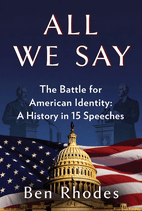
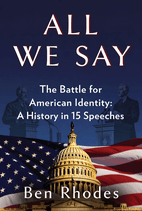
Ben Rhodes's All We Say traces the fundamental American struggle between universal principles and blood-and-soil belonging through 15 pivotal speeches, from Benjamin Franklin to Donald Trump. Written for readers seeking to understand today's polarization as a continuation of a long-running historical conflict rather than a recent anomaly.
Feature
Insta.Page
Blinkist
Shortform
All We Say
✓
✕
✕
Summary Depth
Full Chapter-by-Chapter
15-min overview
Section-by-section guides
Audio Narration
✓
✓
✓
Visual Mindmaps
✓
✕
✕
AI Q&A
✓
✕
✕
Quizzes
✓
✕
✕
PDF Downloads
✓
✕
✓
Price
$89.99/yr
$146/yr (PRO)
$199/yr
*Competitor data last verified July 2026.
1 Page Summary
This book traces the fundamental American struggle between two competing visions of national identity: one rooted in universal principles, such as the Declaration of Independence’s promise that “all men are created equal,” and another based on a particular people, place, and blood-and-soil belonging. Author Ben Rhodes uses 15 pivotal speeches—from Benjamin Franklin’s plea for compromise at the Constitutional Convention to Donald Trump’s declaration of cultural war—to show how this tension has defined American history. Each chapter presents a different orator who, in a moment of national crisis, articulated a clear vision for who counts as an American and what the country should stand for.
The book’s distinctive approach lies in its refusal to treat American history as a story of steady progress. Instead, Rhodes pairs speeches that represent opposing poles of the national argument: Benjamin Franklin’s unity-building alongside Alexander Stephens’s open embrace of white supremacy, Frederick Douglass’s vision of a “composite nation” alongside Donald Trump’s rhetoric of grievance and restoration. By showing how the same rhetorical tools of identity and belonging have been used for both liberation and exclusion, the book argues that the outcome of this battle is never guaranteed. Each chapter provides deep biographical and historical context, revealing how figures like Maria Stewart, Red Jacket, Dolores Huerta, and Ronald Reagan forged their arguments from personal experience and social upheaval.
The intended audience is readers seeking to understand the current polarization of American politics as a continuation of a long-running historical conflict rather than a recent anomaly. Rhodes offers not a prescription but a framework for seeing the present moment clearly: that America has always contained multiple, competing stories of itself, and that the question of which story wins is not settled by the passage of time but by active political and cultural struggle. Readers will come away recognizing the speeches we choose to elevate—and those we ignore—as acts of definition that shape what America can become.
Prologue
Overview
The Prologue opens with a vivid scene from July 2025, where Vice President JD Vance accepts the Claremont Institute’s “Statesman of the Year” award in Rancho Santa Fe. His speech isn’t just a routine political address—it’s a sharp, deliberate challenge to the very idea of what it means to be American. Vance rejects the classic “American creed” rooted in the Declaration of Independence, arguing that defining American identity by principles like “all men are created equal” is both over-inclusive and under-inclusive. Instead, he offers a blood-and-soil vision: America as a particular place, a particular people, and a particular way of life, bound by obligations and gratitude. This sets the stage for the book’s central argument—that America has always been pulled between two competing stories of identity, and that this tension defines our history.
Vance’s Rejection of the Creed
Vance’s argument is both provocative and familiar. He claims that a creed-based identity would theoretically admit billions of foreigners who agree with the Declaration’s ideals, while excluding native-born Americans who disagree but whose ancestors fought in the Civil War. This is a direct appeal to nativist, ancestral belonging. He insists that “American” isn’t just an idea—it’s rooted in sovereignty, a common heritage, and gratitude. But as the author points out, gratitude begs the question: to what? The answer, for Vance, is an identity that demands deference to a particular cultural and political order, one where tolerance and self-criticism are seen as ungrateful.
The Two Stories of American Exceptionalism
The Prologue then broadens out into a powerful framework. There have always been two narratives in this country. One sees America as a promised land for a particular people—white, Christian, native-born—with a particular way of life, where criticism is unpatriotic. The other sees America as a multiracial democracy striving to live up to the Declaration’s promise of equality, where self-criticism is the highest form of patriotism. These stories have coexisted, competed, and clashed for 250 years. The author makes clear that neither story has ever fully won, and that the struggle between them is what makes America America.
The Book’s Method: Speeches as Windows
This book, the author explains, will tell the story of this argument through fifteen speeches. Not the greatest speeches, but those that most directly confront the question of identity. Each speech is examined through three lenses: the authenticity of the speaker’s life, the movement that made the speech possible, and the media technology of the time. From Franklin at the Constitutional Convention to Trump’s MAGA rallies, these speeches are both products of their era and forces that reshaped it. The author, a former Obama speechwriter, brings a practitioner’s insight into what makes a speech land—why it must feel like only that person could have delivered it, and why it must emerge from a living movement.
Why Now?
The Prologue concludes with a sense of urgency. We live in a cynical, fragmented age—algorithms, oligarchy, climate change, AI. The capacity to listen to a full argument has eroded. But the author insists that words still matter. The greatest speeches tell hard truths, forcing us to see the world as it is while demanding we pursue the world as it should be. The book rejects the idea that any one faction can take custody of the American story. It is not their story; it is ours. And by revisiting these voices from the past, we remember that history is still being written.
Key Takeaways
The Prologue frames the entire book around a fundamental, unresolved question: What is an American, and who gets to decide?
JD Vance’s 2025 speech exemplifies the “particularist” story of America—blood, soil, heritage, and gratitude—pitted against the “creedal” story of equality and self-criticism.
The author argues that American identity is not a fixed inheritance but a living argument, best understood through the speeches that have shaped it.
Speeches are powerful because they combine the speaker’s authenticity, a movement’s momentum, and the media landscape of their time.
The book aims to restore our ability to listen to full arguments in an age of algorithmic fragmentation and polarized soundbites.
Key concepts: Prologue
1. Prologue
Vance's Blood-and-Soil Vision
Rejects American creed based on Declaration of Independence
Defines America by place, people, and way of life
Appeals to nativist, ancestral belonging over ideals
Demands deference and gratitude to cultural order
Two Competing Stories of America
Particularist story: white, Christian, native-born people
Creedal story: multiracial democracy striving for equality
Neither story has ever fully won the argument
Struggle between them defines American history
Speeches as Windows into Identity
Book examines fifteen speeches on American identity
Each speech analyzed through speaker, movement, and media
Speeches must feel authentic to the speaker
They emerge from living movements of their time
Urgency of the Present Moment
We live in a cynical, fragmented age
Algorithms and polarization erode deep listening
Words still matter and can tell hard truths
No single faction owns the American story
American Identity as Living Argument
Fundamental question: What is an American?
Identity is not fixed inheritance but ongoing debate
Greatest speeches demand both reality and ideals
History is still being written by us
💡 Try clicking the AI chat button to ask questions about this book!
Chapter 1: Benjamin Franklin: Founding Compromise
Overview
By the time Benjamin Franklin was carried into the Pennsylvania State House on September 17, 1787, he had already lived several lifetimes. At eighty-one, wracked with gout and kidney stones, he was about to deliver a speech that would become the founding myth of American compromise—a plea for unity grounded not in certainty but in the honest admission of doubt. The stakes could not have been higher: the infant United States was surrounded by hostile European powers and paralyzed by a weak central government. If the Constitutional Convention failed, the experiment in self-government might die with it.
Franklin’s path to that moment was anything but straight. Born into poverty, the fifteenth of seventeen children, he ended formal schooling at ten and taught himself through printing, writing, and relentless curiosity. He became America’s first media mogul with Poor Richard’s Almanack, retired at forty-two to pursue science and invention, then pivoted to nation-building. His political education came on the job: serving in colonial assemblies, observing the Haudenosaunee Confederacy at the Albany Congress, and representing Pennsylvania in London. That experience taught him that union was possible—but only if each side gave up something it wanted.
When revolution came, Franklin evolved from imperial loyalist to radical independence. He lost his son, a loyalist, over the choice. In France, he reinvented himself as a simple American sage, charming the court and securing the military aid that won the war. Through it all, he saw revolution not as an overthrow of all order but as a gradual process: change came by degrees.
Back in Philadelphia, that philosophy shaped every debate at the Convention. Franklin opposed a single executive, argued for impeachment and term limits, and supported broader suffrage. But the central fight was representation: big states wanted population-based seats, small states demanded equality. The resulting Great Compromise—a proportional House and an equal Senate—saved the union but papered over deeper divides, especially slavery. The three-fifths compromise counted enslaved people as three-fifths of a human for representation, while the fugitive slave clause legitimized bondage under federal law. Franklin was by then an abolitionist, but he believed pushing the issue would shatter the Convention. He chose union over moral clarity.
His closing speech was a masterclass in intellectual humility. He confessed his own doubts about parts of the Constitution, argued that no future convention could produce a better document, and urged every delegate to “doubt a little of his own infallibility.” He drew on a lifetime of changing his mind—from scientist to statesman, from slaveholder to abolitionist—to make the case that wisdom meant holding one’s convictions loosely. This spirit had animated the Junto, the debating club he founded in his twenties, where members swore to love and pursue truth for its own sake. That same spirit, Franklin argued, should guide the new republic.
Yet the compromises of 1787 were deeply flawed. “We the people” excluded women, the poor, Indigenous people, and the enslaved. Franklin’s own evolution on slavery—from owning slaves to petitioning Congress for abolition in 1790—shows that change is possible, but also that the founders chose caution over justice when it mattered most. The Constitution they left behind was not a finished product but a tool kit: a system capable of reform, and a set of principles—like equality—that later generations could wield to hold the nation accountable to its own ideals. Franklin understood that the work of democracy is never done, and that the only way forward is to keep doubting, keep experimenting, and keep trying to build a more perfect union.
Key Takeaways
Franklin’s defense of the Constitution rested on intellectual humility: wisdom meant doubting your own certainty.
He saw dogma as incompatible with both science and democracy—and argued that political experimentation required the same openness to revision as scientific discovery.
The Constitution’s compromises were necessary for union but excluded vast populations, embedding injustices that would require centuries of struggle to address.
Franklin’s own evolution on slavery—from slaveholder to abolitionist petitioner—shows that personal change is possible, but also that the founding generation chose caution over moral clarity.
The founders left behind not a finished project, but a tool kit: a system capable of reform, and a set of principles—like equality—that could be used to challenge the system itself.
Key concepts: Chapter 1: Benjamin Franklin: Founding Compromise
2. Chapter 1: Benjamin Franklin: Founding Compromise
Franklin's Path to the Convention
Born poor, self-taught through printing and curiosity
Became media mogul with Poor Richard's Almanack
Learned union from Haudenosaunee and colonial assemblies
Evolved from imperial loyalist to radical revolutionary
Philosophy of Gradual Change
Revolution as gradual process, not total overthrow
Opposed single executive, supported impeachment and term limits
Chose union over moral clarity on slavery
Believed pushing abolition would shatter the Convention
The Great Compromise
Big states wanted population-based House seats
Small states demanded equal Senate representation
Resulted in proportional House and equal Senate
Paper over deeper divides, especially slavery
Intellectual Humility in Closing Speech
Confessed doubts about parts of the Constitution
Argued no future convention could produce better document
Franklin evolved from slaveholder to abolitionist petitioner
Founders left a system capable of reform
Principles like equality can challenge the system itself
Chapter 2: Red Jacket: We Have Always Lived Here
Overview
In November 1805, a missionary named Jacob Cram arrived at Buffalo Creek expecting to convert the Haudenosaunee to Christianity, only to be met by a man who would cement his place in American oratory: Red Jacket, or Sagoyewatha. His response to Cram became a landmark defense of indigenous tradition, but the chapter unfolds far beyond that single encounter. It begins with the context of a young, expansionist United States and a people who had governed themselves for millennia through the Great Law of Peace, a democratic oral constitution. Red Jacket himself was a product of that tradition—a council speaker who had witnessed the devastation of the Revolution, the loss of millions of acres through treaties like Canandaigua and Big Tree, and the slow erosion of Seneca lifeways by alcohol and assimilationist pressure. His own life was a series of contradictions: he wore a medal from George Washington while fighting to keep his people’s beliefs alive; he sometimes yielded to bribes even as he stood firm against missionaries.
The chapter then broadens to show how indigenous critiques of European society were not new. A century before Red Jacket, the Huron statesman Kandiaronk had dismantled French assumptions about law, property, and religion, asking why a society needed punishment to be good. His words influenced Enlightenment thinkers, and the Haudenosaunee confederacy itself served as a model for Benjamin Franklin’s vision of American union. Franklin even echoed a Haudenosaunee chief’s advice to “not fall out with one another” at the Constitutional Convention. This lineage of oratory and political thought directly links Red Jacket’s speech to the foundations of American democracy—an irony that the chapter drives home.
Red Jacket’s words were recorded, reprinted, and canonized, used by secularists, abolitionists, and universalists to argue for tolerance and justice. Yet his legacy remains contested: some Seneca see him as a sellout, while others recognize that his compromises allowed them to hold onto a fragment of their land. Today, the Seneca Indian Nation still governs itself near Buffalo, on territory they have never left. A museum panel declares, “We have always lived here,” and Red Jacket’s Washington medal rests inside. The chapter ends by turning the historical mirror back on America, asking whether the nation is committed to fairness or simply an organism of conquest. The same questions that Red Jacket raised about land, faith, and survival remain unresolved, etched into the landscape and the stories that continue to be told.
The Encounter with Reverend Cram
In November 1805, Reverend Jacob Cram arrived at Buffalo Creek to convert the Haudenosaunee to Christianity. The backdrop was a rapidly expanding United States: five new states since the Revolution, Thomas Jefferson in the White House, and the Second Great Awakening fueling proselytizing to Native peoples. Cram was introduced by a federal official, a reminder of the power imbalance. He assured the chiefs he came not for land or money, but to “enlighten your minds.” Yet everyone understood the deeper agenda: replacing indigenous traditions with Western ideas of private property, patriarchal hierarchy, and Christian worship.
The Haudenosaunee asked for a break to deliberate. Democracy was not foreign to them—their councils had long debated issues for days, requiring speakers to recapitulate all that had been said. The man chosen to respond was a Seneca chief known to whites as Red Jacket, but to his own people as Sagoyewatha—“He Who Keeps Them Awake.” As council speaker, he bore the weight of his people’s history and survival.
The Haudenosaunee and Their History
The Haudenosaunee had lived on these lands for millennia, their power rooted in the Six Nations confederacy: Mohawk, Oneida, Onondaga, Cayuga, Seneca, and Tuscarora. Their society was governed by the Great Law of Peace—an oral constitution upheld by custom and consensus. Longhouses housed extended families, theft was nearly unknown, and women held authority over many decisions, including nominating village chiefs.
Red Jacket was born in the 1750s, a time of increasing white encroachment. He worked as a runner, memorizing messages and learning diplomacy. The British gave him a red jacket, which became his namesake. During the American Revolution, he argued for neutrality—“This quarrel does not belong to us”—but the majority sided with the British. George Washington’s scorched-earth campaign under General Sullivan destroyed dozens of Seneca villages. When the British surrendered, the Haudenosaunee were not conquered, but the Treaty of Paris granted their lands to the Americans anyway.
Red Jacket's Rise and Political Struggles
In the years after the Revolution, Red Jacket emerged as a leading voice in treaty negotiations. He knew the score: “You white people have increased very fast on this island… you are cutting off our lands piece after piece.” Yet he also accepted reality. In 1792, he visited President Washington in Philadelphia, receiving a medal that he wore proudly for the rest of his life. The medal’s engraving showed Washington gesturing toward a peace-smoking Indian, a house and plow in the background—a clear vision of assimilation. Red Jacket’s willingness to wear it reveals the conflict within him: pride in securing respect from white men versus fierce loyalty to Seneca traditions.
The Treaty of Canandaigua (1794) recognized Haudenosaunee rights to their lands but created the reservation system. The Treaty of Big Tree (1797) saw the Seneca sell over three million acres—under pressure from bribes and annuities. Red Jacket tried to halt negotiations at one point, but the deal went through. By 1805, the Seneca were confined to shrinking lands, their communal lifestyle under assault. Alcoholism, depression, and suicide were rampant.
The Battle for Cultural Survival
The Seneca had their own rich religious tradition: a creation story of Turtle Island, a benevolent Great Spirit and an evil twin, rituals of thanksgiving, and dreams as guides to the divine. But by 1805, this tradition was fraying. Some Seneca embraced Christianity and assimilation; others, like the prophet Handsome Lake, called for revival—though Red Jacket attacked him as a deviation. Red Jacket himself had succumbed at times to alcohol and white bribes, yet he remained a powerful defender of Seneca identity. This internal conflict made his impending reply to Reverend Cram all the more poignant.
Following the critique of European ways, the published dialogues between the Huron statesman Kandiaronk and the Frenchman Lahontan became a sensation in early eighteenth-century Europe. Kandiaronk did not see French civilization as progress. He saw a society so broken it needed written laws, private property, and prisons to keep people in line. “What kind of human, what kind of species of creature, must Europeans be,” he asked, “that they have to be forced to do good and only refrain from evil because of fear and punishment?” His arguments cut to the heart of empire: if people could live contentedly without laws, why impose them? On religion, Kandiaronk anticipated Red Jacket’s reasoning by more than a century. If God wanted everyone to follow the same faith, he would have visited every nation with miracles and given them identical laws. The fact that he didn’t proved that diversity was intended.
Europeans avoided this challenge by categorizing Indigenous people as living in a “state of nature”—primitive rather than an alternative model of civilization. This framing let them feel superior even as they borrowed ideas. The irony is that the Haudenosaunee practiced democratic, egalitarian governance long before Jefferson wrote about equality. In 1744, at a meeting in Lancaster, Pennsylvania, a Haudenosaunee chief advised Benjamin Franklin: “By your observing the same methods our wise forefathers have taken, you will acquire much strength and power; therefore, whatever befalls you, do not fall out with one another.” Franklin later proposed a union of the American colonies, explicitly citing the Haudenosaunee example. At the Constitutional Convention, his closing argument could be boiled down to that same phrase. Franklin’s 1783 pamphlet Remarks concerning the Savages of North America went further, describing a society without force, prisons, or officers—where the best speaker had the most influence. He even retold a Haudenosaunee story contrasting Indian hospitality with the white demand for money. Franklin offered the Haudenosaunee orator as a conscience for American hypocrisy.
Red Jacket’s Enduring Words
Red Jacket turned away Reverend Cram, but his speech wasn’t forgotten. Transcribed and published in 1809, it was reprinted widely and by 1816 appeared in The American Speaker, a textbook meant to forge a national identity. By placing Red Jacket alongside Franklin and Jefferson, these anthologies acknowledged that moral clarity and rhetorical skill weren’t the province of white people alone. His words watered the ground for more egalitarian thought. Secularists used his arguments for religious tolerance against the rising tide of evangelical Christianity. Quakers and universalists cited him to demand fairer treatment of Indigenous people. Abolitionists saw in his logic a universal rights argument. Some noted, as Franklin had, that the Haudenosaunee often lived closer to Christian ideals than the missionaries did.
The very act of recording those speeches ensured history couldn’t simply dismiss the Haudenosaunee as savages. The unfairness of what happened to them could not be erased. Late in life,
Key concepts: Chapter 2: Red Jacket: We Have Always Lived Here
3. Chapter 2: Red Jacket: We Have Always Lived Here
Red Jacket's Encounter with Reverend Cram
Jacob Cram arrived in 1805 to convert Haudenosaunee
Red Jacket delivered a landmark defense of tradition
Power imbalance highlighted by federal official presence
Missionaries aimed to replace indigenous ways with Christianity
Haudenosaunee Governance and Great Law of Peace
Six Nations confederacy governed by oral constitution
Democracy practiced through councils and consensus
Women held authority, including nominating chiefs
Model influenced Benjamin Franklin's American union
Red Jacket's Life and Contradictions
Born 1750s, worked as messenger and diplomat
Wore Washington medal while defending Seneca traditions
Sometimes yielded to bribes despite resistance
Council speaker known as 'He Who Keeps Them Awake'
Post-Revolution Land Loss and Treaties
Treaty of Paris granted Haudenosaunee lands to US
Canandaigua (1794) created reservation system
Big Tree (1797) forced sale of over 3 million acres
Red Jacket tried to halt negotiations but failed
Indigenous Critique of European Society
Kandiaronk challenged French ideas on law and religion
Questioned need for punishment to maintain goodness
Franklin echoed chief's advice at Constitutional Convention
Cultural Survival and Assimilation Pressures
Alcoholism and depression rampant on shrinking lands
Red Jacket's speech used by secularists and abolitionists
Seneca legacy contested: sellout or survivalist
Seneca Indian Nation still governs near Buffalo today
Unresolved Questions of Land and Justice
Museum panel declares 'We have always lived here'
Red Jacket's Washington medal rests in museum
Chapter asks if US is fair or conquest organism
Same issues of land, faith, and survival persist
Chapter 3: Maria Stewart: Knowledge Is Power
Overview
Maria Stewart’s first public speech in 1832 at Boston’s Franklin Hall was a landmark—the first recorded address by a Black American woman to a mixed-race, mixed-gender audience. She was young, widowed, and impoverished, yet her words carried the weight of a movement still taking shape. Her radicalism stood out even in abolitionist Boston, where she condemned Black passivity as much as white oppression and insisted on educating girls and empowering women as essential to liberation—an early recognition of intersectionality.
Born in Connecticut, orphaned at five, and bound as a domestic servant, Stewart taught herself to read and found community in the Black church during the Second Great Awakening. She moved to Boston, married James Stewart, and through him entered a radical network that included David Walker, whose Appeal called for rebellion and self-education. Between 1829 and 1831, Stewart lost her husband, Walker, and her pastor Thomas Paul—three devastating losses that stripped her of fear and forged a prophetic voice with nothing left to lose.
She walked into William Lloyd Garrison’s Liberator office in 1831 with a manuscript recounting her life and vision for Black self-empowerment. Garrison published her essay, launching a brief but intense public speaking career. Over the next two years, she delivered four speeches, the most famous at the African Masonic Hall in February 1833. There she merged lamentation with a roadmap for redemption, drawing on the jeremiad tradition—a prophetic call that indicted racism and inequality while urging her own community to rise. “Knowledge is power,” she declared, and her prescriptions were practical: establish schools, embrace temperance, pursue scientific knowledge, reject colonization, and demand rights through petitions. She warned white America of divine judgment if suppression continued.
The speech was poorly received. In her farewell address months later, Stewart admitted her tough love had made her contemptible, but she remained defiant. She moved to New York to teach, then to Baltimore, and eventually to Washington, D.C., where during the Civil War she continued the work she had preached decades earlier—teaching children, sheltering freed people, and later serving as matron of the Freedmen’s Hospital. Her life became a quiet embodiment of Black empowerment: deeply Christian, fiercely committed to education, and anchored in unshakable dignity. Testimonials from pastors recall her walking streets in winter to find children who should be in school, teaching whether they could pay or not. Even Garrison, reconnecting with her in 1879, marveled that she still burned with the same fire.
When Stewart died in 1880, few knew of her remarkable career. She was buried in Graceland Cemetery, only to be dug up and reinterred after Congress closed the site—a final injustice echoing the struggle she had fought her whole life. Her story reveals the quiet radicalism of countless Black women who changed the nation through unseen work, and it challenges the narrow spotlight on white male abolitionists.
Key Takeaways
Stewart used the jeremiad tradition to blend lamentation with a call for moral improvement and political action.
She argued that self-improvement and community organization were divine imperatives, not just practical strategies.
Her critique of Black passivity and white oppression was unsparing, yet she framed Black Americans as the nation’s truest believers in equality.
Despite poor reception, Stewart persisted as a teacher and writer, ensuring her voice would not be lost to history.
Stewart’s later life in Washington, D.C., focused on education, sheltering freed people, and serving as matron of the Freedmen’s Hospital—a quiet but essential role during the Civil War and Reconstruction.
She never sought fame, but her life embodied the message she had preached decades earlier: self-reliance, education, and dignity.
Testimonials from pastors and community members confirm her relentless dedication to teaching children, regardless of their ability to pay.
Garrison’s reunion with Stewart in 1879 shows that she retained the same fire and purpose into old age.
Her story challenges the narrow historical spotlight on white male abolitionists, revealing the quiet radicalism of countless Black women who shaped the nation through unseen work.
Even her burial site was disturbed by the same systemic injustices she fought against—a poignant reminder that her struggle was never fully finished.
Key concepts: Chapter 3: Maria Stewart: Knowledge Is Power
4. Chapter 3: Maria Stewart: Knowledge Is Power
Prophetic Voice and Jeremiad Tradition
First Black woman to address mixed audience in 1832
Used jeremiad to blend lamentation with redemption
Warned white America of divine judgment
Spoke with prophetic fire after devastating losses
Knowledge as Power and Self-Empowerment
Declared 'Knowledge is power' as central thesis
Advocated for schools and scientific education
Urged community self-improvement as divine duty
Criticized Black passivity alongside white oppression
Intersectional Vision for Women and Liberation
Insisted on educating girls for liberation
Recognized intersectionality before the term existed
Demanded rights through petitions and action
Rejected colonization as false solution
Lifelong Quiet Radicalism in Action
Taught children regardless of ability to pay
Sheltered freed people during Civil War
Served as matron of Freedmen's Hospital
Walked streets to find children for school
Enduring Legacy and Historical Challenge
Burial site disturbed by systemic injustice
Garrison marveled at her unchanged fire in 1879
Challenges spotlight on white male abolitionists
Embodied unseen work of countless Black women
You've reached the end of the free chapters
Next chapter: “Alexander Stephens: The Cornerstone” is locked
Keep reading All We Say — and unlock all 600+ book summaries with audio, mindmaps and AI Q&A.
$0.00 due today · 7 days free, then $89.99/year ($7.49/mo) · Cancel anytime before day 7
Ben Rhodes is a former deputy national security advisor for strategic communications under President Barack Obama. He is the author of the New York Times bestseller "The World as It Is: A Memoir of the Obama White House" and "After the Fall: Being American in the World We've Made." His writing and expertise focus on U.S. foreign policy, the Obama administration, and the global political landscape.
Frequently Asked Questions about All We Say
What is All We Say about?
The book examines the enduring tension between two competing visions of American identity: one rooted in universal principles like equality, and another based on blood, soil, and ancestral belonging. Through pivotal speeches and figures from Benjamin Franklin to Donald Trump, it traces how this conflict has shaped the nation's history, from founding compromises to modern culture wars. The narrative argues that America's story is not one of inevitable progress but of recurring struggles over who belongs and what the country stands for, forcing readers to confront the coexistence of both noble ideals and deep injustices.
Who is the author of All We Say?
Ben Rhodes is a former deputy national security advisor and chief speechwriter for President Barack Obama, drawing on his firsthand experience in the White House and his deep engagement with American political history. His previous books include the bestselling memoir 'The World as It Is' and 'After the Fall,' established him as a sharp observer of U.S. politics and foreign policy. In this work, he applies his insider perspective to explore the rhetorical and ideological battles that have defined the country.
Is All We Say worth reading?
This book offers a timely and deeply researched look at the speeches and moments that have shaped American identity, revealing how the same foundational debates continue to play out today. Rhodes combines vivid historical storytelling with sharp political analysis, making complex ideas accessible and compelling. For anyone trying to understand the roots of modern polarization and the recurring clash between inclusive and exclusive visions of America, this is an essential read.
What are the key lessons from All We Say?
The book demonstrates that American identity has never been settled but is perpetually contested, with each era's leaders invoking competing narratives of who belongs. It shows that historical progress is not automatic—justice requires deliberate action and a willingness to confront uncomfortable truths about the past. The recurring tension between a creedal nation based on universal rights and a nativist vision of blood and soil is the central fault line in American politics. Finally, it teaches that the same figures who championed freedom often represented exclusion, forcing us to hold both the good and bad of history together without easy resolution.
📚 Explore Our Book Summary Library
Discover more insightful book summaries from our collection