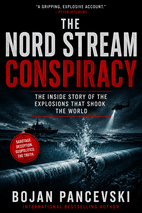
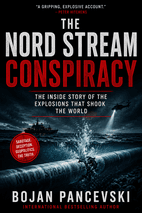
What is the book The Nord Stream Conspiracy about?
Bojan Pancevski's The Nord Stream Conspiracy reconstructs the September 2022 sabotage of the Nord Stream pipelines, from its conception by a small group of Ukrainian intelligence officers to its execution and the subsequent cover-up. Based on high-level access to key players, it reveals the planning, the parallel sailing missions, and the German investigation that was stonewalled by NATO allies. For readers interested in contemporary geopolitics, intelligence operations, and the Ukraine-Russia war.
Feature
Insta.Page
Blinkist
Shortform
The Nord Stream Conspiracy
✓
✕
✕
Summary Depth
Full Chapter-by-Chapter
15-min overview
Section-by-section guides
Audio Narration
✓
✓
✓
Visual Mindmaps
✓
✕
✕
AI Q&A
✓
✕
✕
Quizzes
✓
✕
✕
PDF Downloads
✓
✕
✓
Price
$89.99/yr
$146/yr (PRO)
$199/yr
*Competitor data last verified July 2026.
1 Page Summary
The book provides a comprehensive investigation into the September 2022 sabotage of the Nord Stream pipelines, a central event in the energy war between Russia and Ukraine. Author Bojan Pancevski reconstructs the operation from its conception by a small, private group of Ukrainian intelligence officers and special forces—dubbed "The Startup"—to its execution by a handpicked crew of civilian divers. The narrative reveals the planning and motivations behind "Operation Diameter," including the complex dynamics between Ukraine’s SBU and HUR intelligence services, the role of allied Western agencies like the CIA and Dutch military intelligence, and the subsequent cover-up and legal fallout across Germany, Poland, and beyond.
What distinguishes this account is its deeply sourced, high-level access to the key players on both the Ukrainian and German sides, providing an exceptionally detailed and nuanced perspective. The author traces the operation from the initial, chaotic days of the full-scale war, through the two parallel sailing missions (Andromeda and Santa Lucia), to the painstaking German investigation that followed. The book highlights a stark asymmetry: the Ukrainians ran a fast, reckless, improvisational operation, while the German police and prosecutors played strictly by the book, only to be stonewalled by their own NATO allies who withheld crucial evidence out of political embarrassment.
The intended audience includes readers interested in contemporary geopolitics, intelligence and special operations, and the Ukraine-Russia war. From this book, readers will gain a rare, granular understanding of how a state-directed act of sabotage was conceived, planned, and executed, and the profound moral and legal ambiguities it created. The account avoids simple hero-villain narratives, instead portraying a story where no side was purely right or wrong, and where the consequences continue to reverberate through German politics and international relations, with the fate of the pipelines remaining a potent bargaining chip in peace negotiations.
Chapter I: The Earthquake
Overview
It’s just past two in the morning on a Monday in late September 2022 when something goes terribly wrong beneath the Baltic Sea. The Nord Stream pipelines—those sprawling, controversial arteries meant to carry Russian gas to Europe—aren’t even flowing at the time. Russia had already turned off the taps on Nord Stream 1, blaming Western sanctions for supposed technical troubles, and Nord Stream 2 had never gone live. But the pipes were still pressurized, still full of gas. All four of them. And then, one by one, they ruptured.
Except for one line. A single pipe in the Nord Stream 2 system somehow escaped the damage, a quiet survivor amid the chaos.
In the hours and days that followed, confusion took root. There was no official word on what happened, no clear explanation. Into that vacuum rushed a flood of speculation, wild theories spreading across social media like wildfire. The pipelines had never lacked for enemies. Consecutive U.S. administrations had lobbied hard against them, even slapping sanctions on Nord Stream 2. So when people started looking for someone to blame, two camps quickly formed.
The first camp pointed a finger at Washington. Just months before the attack, President Joe Biden had made a stark promise: if Russia invaded Ukraine, “there will be no longer a Nord Stream 2 pipeline. We will bring an end to it.” His staff later insisted he meant sanctions, not sabotage. But that sound bite became the smoking gun for anyone convinced the U.S. had a hand in the bombing.
The other camp, of course, looked east. But that story was only just beginning.
Key Takeaways
The Nord Stream attack occurred on September 26, 2022, while the pipelines were shut down but still pressurized with gas.
One of the four pipes—part of Nord Stream 2—miraculously survived the attack.
The lack of official information created a breeding ground for conspiracy theories, quickly amplified online.
Two primary theories emerged: one blaming the United States (citing Biden’s earlier threat to “end” Nord Stream 2), the other pointing to Russia or other actors.
Key concepts: Chapter I: The Earthquake
1. Chapter I: The Earthquake
The Attack Event
September 26, 2022, just past 2 AM
Nord Stream pipelines ruptured one by one
Pipes were shut down but still pressurized with gas
One Nord Stream 2 pipe survived undamaged
Information Vacuum
No official explanation for the attack
Speculation and wild theories spread rapidly online
Pipelines had many enemies and critics
Blame Camp 1: United States
Biden threatened to 'end' Nord Stream 2 before invasion
U.S. administrations lobbied and sanctioned the pipelines
Biden's quote became a 'smoking gun' for conspiracy
Blame Camp 2: Russia or Others
Russia had turned off gas flow on Nord Stream 1
Western sanctions blamed for technical issues
This camp's story was only beginning to unfold
💡 Try clicking the AI chat button to ask questions about this book!
Chapter II: The Investigators
Overview
By the time the Nord Stream pipelines blew, Dieter Romann had already spent a decade atop Germany’s Federal Police, an agency with forty-five thousand employees and the capacity to tap communications even inside Russia. His European colleagues called him Methusalem—not for his age but for his tenure—and within the force he was simply known as P, for President. A lawyer by training, Romann had written his doctoral dissertation on when a civil servant could refuse orders from a superior, a skill he’d deployed under Angela Merkel when he pushed back against her open-door asylum policy. He’d also personally retrieved a fugitive murderer from Iraq, a move that landed him in court (unsuccessfully). Those contacts across government and Europe, and his deep knowledge of various legal systems, were about to become crucial. When the first briefings on the pipeline explosions arrived, Romann immediately grasped the stakes: this case would reverberate far beyond his office, straining political masters and international alliances alike. Legally, jurisdiction lay with Denmark and Sweden—the blasts occurred in their exclusive economic zones—but the pipelines landed in Germany and formed a critical part of its energy infrastructure. Romann correctly predicted that within days the federal prosecutor would open a probe. He understood this could be the biggest case of his life, certain to trigger a political earthquake regardless of who was behind it.
Shadows on the High Seas
Within a week of the attack, Romann and his military contacts assembled a small flotilla to investigate the scene. The police sent the coast guard flagship Potsdam BP81; the navy contributed the support vessel Mittelgrund and the minehunter Dillingen, equipped with a DSQS 11M sonar and two types of underwater drones, the Sea Fox and the Sea Cat. Elite police divers from GSG 9—among the world’s most renowned tactical units—joined the mission, packing gear comparable to what Navy SEALs and the British Special Boat Service would use. On October 9, they steered toward the first known blast location in Danish waters. By then, multiple ships and at least one submarine had been logged in the area, including a kilo-class Russian submarine escorted by the support ship Sergey Balk, shadowed by a Swedish corvette. Sweden and Denmark initially barred Russia from accessing the sites, provoking protests and claims of a Western cover-up. They also banned the Nord Stream operator from surveying its own pipeline. The second hypothesis, favored by investigators, was that the attack was carried out by a small team of professional divers deployed from a small boat—thousands of which floated across the region in September, none required to identify themselves to marine traffic systems.
The Collision of Law and Politics
By the time the German ships returned, the federal prosecutor had opened an investigation into sabotage intended to harm the constitutional order of the state—just as Romann had predicted. The violent attack on the country’s energy supply could “impact the external and internal security of Germany,” the prosecutor’s office declared. It was a grave charge, one that added political weight to the investigation and ensured no politician would ever interfere. Romann also knew it could have been much worse: legally, the attack on critical infrastructure could have been interpreted as an act of war. On October 19, German investigators set sail again, this time to the Swedish site, accompanied by criminal technicians from the Federal Criminal Police (BKA), a separate force of around seven thousand officers specializing in criminal investigations. They used a Federal Police ship, the Bamberg, and a German research vessel.
Key Takeaways
Dieter Romann’s long tenure, legal expertise, and network across European law enforcement made him uniquely positioned to lead the investigation.
The initial flotilla blended police and naval assets, with GSG 9 divers and advanced sonar, despite jurisdiction resting with Denmark and Sweden.
A Russian kilo-class submarine was logged near the blast sites, but investigators favored the theory of a small team of divers deployed from a civilian vessel.
The German federal prosecutor’s charge of “sabotage intended to harm the constitutional order” insulated the investigation from political interference and underscored the severity of the attack.
Key concepts: Chapter II: The Investigators
2. Chapter II: The Investigators
Dieter Romann's Leadership
Decade atop Germany's Federal Police
Doctorate on civil servant refusal of orders
Pushed back against Merkel's asylum policy
Retrieved fugitive murderer from Iraq
Initial Investigation Flotilla
Police flagship Potsdam BP81 deployed
Navy support vessel Mittelgrund and minehunter Dillingen
GSG 9 elite divers with advanced gear
Sonar and underwater drones Sea Fox and Sea Cat
Jurisdictional and Political Challenges
Blasts in Danish and Swedish exclusive economic zones
Pipelines land in Germany, critical energy infrastructure
Sweden and Denmark barred Russia and operator from sites
Romann predicted federal prosecutor would open probe
Suspect Theories and Evidence
Russian kilo-class submarine logged near blast sites
Shadowed by Swedish corvette
Investigators favored small team of professional divers
Thousands of small boats unidentifiable in marine traffic
Legal Ramifications and Political Weight
Charge: sabotage intended to harm constitutional order
Attack could impact external and internal security
Charge insulated investigation from political interference
Attack could have been interpreted as act of war
Chapter III: Nord Stream: From Peace Through Trade to All-Out War
Overview
Olaf Scholz became chancellor in December 2021 and asked for contingency plans in case Russia cut off gas. His aides searched high and low. There were none. No German government, not even under Angela Merkel, had ever prepared for a world without cheap Russian gas. The story reaches back to the 1930s, when Hitler and Stalin first laid the foundation for energy cooperation, and follows the twisted thread through the Cold War, Ostpolitik, and the post-Soviet era, showing how faith in “change through trade” became Germany’s untestable dogma.
The Pipes That Built a Bond
The Soviets, despite their space program, could not manufacture reliable pipeline pipes. In the 1960s, they relied on West German steel to build Druzhba (“Friendship”), the world’s longest oil pipeline, connecting the Urals to Eastern European satellites. Washington saw the danger immediately: the Kennedy administration forced West Germany to ban pipe sales to Moscow, the first of many American attempts to sever the growing energy tie. But by 1970, Chancellor Willy Brandt—himself a former American spy—launched Ostpolitik, a policy of reconciliation with the USSR. By 1973, the first pipes-for-gas deal was signed. Gas began flowing to both West and East Germany that same year.
The core belief, Wandel durch Handel (change through trade), held that commercial relations would eventually liberalize and tame Russia. It was a secular faith, inherited by every subsequent German chancellor. The US repeatedly warned that dependence was a trap, but the logic felt bulletproof: the Soviets always honored long-term contracts, and Germany would never again fight a war with Russia over energy.
Nord Stream: Built by a Western European Consortium
Nord Stream 1 was not simply a Russo-German project. The consortium included Gazprom, Germany’s Wintershall Dea and E.ON, the Dutch state-owned Gasunie, and France’s ENGIE. The German government guaranteed the construction loan. When the pipeline opened in 2011, Merkel stood alongside the leaders of France and the Netherlands and Russia’s then-president—a picture of European unity. Nord Stream 1’s capacity: 55 billion cubic meters per year. Nord Stream 2, completed later, added another 55 billion. Together, they were designed to pump Russian gas into Western Europe for at least half a century.
When Russia invaded Ukraine and annexed Crimea in 2014, Merkel made a fateful choice: insulate the energy trade from sanctions. She did not pause Nord Stream 2. Instead, she allowed Gazprom to acquire Germany’s largest gas storage facility and let Rosneft take a majority stake in a major refinery. A confidential government report obtained later warned that Nord Stream 2 would give Gazprom 60 percent of the German market and that “the EU’s dependence on Russian gas would then be impermissibly high.” Merkel and her coalition partners ignored it. Her foreign minister, Frank-Walter Steinmeier, was himself a noted Russia-friendly figure who later called the pipelines “the last bridge between Russia and Europe.”
The Biden Administration’s “Park Russia” Strategy
When Joe Biden took office in 2021, his national security advisor, Jake Sullivan, devised a new approach: “park Russia.” The idea was to sideline Moscow as a regional nuisance while the US focused on China. To make the parking work, America would throw Russia a bone—Nord Stream 2. This mirrored earlier US efforts under Bush, Obama, and Trump, each of whom initially tried to pacify Russia before pivoting. The result was the same: Putin saw a window of opportunity.
By the time Russian troops crossed into Ukraine in February 2022, Berlin was paying Russia roughly €200 million per day for energy. That cash flow blunted every sanctions package the West tried to impose. When the pipelines exploded in September 2022, Nord Stream 1 was already offline—throttled by Putin’s economic brinkmanship—but Berlin still assumed the flow would eventually resume. There was no Plan B because no one had ever believed Plan A could fail.
The Unlearned Lesson
The core failure: Germany’s change-through-trade approach changed nothing about Russia’s imperial self-conception. The policy assumed that reconciliation with France—a fellow stable democracy that had renounced empire—could be replicated with Moscow. It could not. Russia remained fundamentally different in a way German policymakers refused to see. The crash came anyway, not because of a leaky sanction or a rival pipeline, but because the faith itself was built on a false premise.
Key Takeaways
Germany had no contingency plan for a Russian gas cutoff because successive governments treated cheap Russian gas as a permanent axiom of European security.
Nord Stream was a Western European project, not just a Russo-German one; Dutch and French state-owned companies were co-owners, and the German government guaranteed the loan.
After the 2014 Crimea invasion, Merkel actively insulated energy trade from sanctions, allowing Gazprom and Rosneft to acquire critical German infrastructure.
The Biden administration’s “park Russia” strategy deliberately used Nord Stream 2 as a bargaining chip to focus on China—a miscalculation that emboldened Putin.
The policy of Wandel durch Handel failed because it assumed Russia would liberalize like postwar France; Russia’s imperial dynamics were fundamentally different and were ignored.
Key concepts: Chapter III: Nord Stream: From Peace Through Trade to All-Out War
3. Chapter III: Nord Stream: From Peace Through Trade to All-Out War
The Dogma of Change Through Trade
Faith that trade would liberalize Russia
Inherited by every German chancellor since Brandt
No contingency plan for a gas cutoff existed
Assumed Russia would evolve like postwar France
Nord Stream as a Western European Project
Consortium included Dutch, French, and German firms
German government guaranteed the construction loan
Merkel celebrated opening with European leaders in 2011
Combined capacity: 110 billion cubic meters per year
Insulating Energy from Sanctions After 2014
Merkel did not pause Nord Stream 2 after Crimea
Allowed Gazprom to acquire German gas storage
Rosneft took majority stake in a major refinery
Government report warning of 60% market share ignored
The Biden Administration's 'Park Russia' Strategy
Sideline Moscow as a regional nuisance
Used Nord Stream 2 as a bargaining chip
Mirrored earlier US efforts under Bush, Obama, Trump
Putin saw a window of opportunity
The Unlearned Lesson and Crash
Russia's imperial self-conception remained unchanged
Berlin paid €200 million per day during invasion
No Plan B because Plan A was treated as axiom
Faith collapsed on a false premise
Chapter IV: The Masterminds
Overview
The SBU and the HUR are Ukraine’s intelligence services. Two men embody their contradictions: The Colonel and The General. These are not James Bond figures. They are products of a system born from the KGB, yet driven by a cause that sets them apart from their peers. The chapter shows how they think, what made them, and how their personal feuds and ambitions have shaped the war in ways few outsiders understand.
The SBU: A KGB Inheritance, Refitted for War
Ukraine’s Security Service (SBU) is a hybrid beast unlike anything in the West. It combines the functions of the FBI, CIA, and NSA into one military-structured organization, with nearly 30,000 employees at the start of the full-scale invasion. It conducts surveillance, runs prisons, fights corruption, catches spies, and launches drone strikes deep into Russian territory. The Alpha unit, its elite special forces, carried out a landmark operation in June 2025: sending 120 small drones some 3,000 miles into Russia to destroy irreplaceable strategic bombers like the Tu-95 “Bear.” Each drone cost around €1,000; the assets they destroyed were worth billions. That attack, planned by former subordinates of The Colonel, changed modern warfare—no asset, no location, was safe anymore.
But the SBU also has a darker side. Its structure allows for a system of krysha—a “roof” of protection that permeates Ukrainian society. A senior SBU official can shield a business from tax authorities; a politician protects the SBU official in return. Many of the agency’s higher-ups live in luxury, own foreign assets, and wear watches worth more than their annual salaries. The Colonel never took that path. For him, fighting corruption was inseparable from fighting Russia. He believed that Russia’s most potent weapon was its ability to corrupt foreign elites—a system he saw at work in Germany’s Nord Stream pipeline.
The Colonel: From Peasant Roots to Sabotage Master
The Colonel grew up in western Ukraine, in a working-class family with no love for the Soviet regime. His father was a builder, his mother a grocery store clerk. He joined the SBU after graduating from the Institute of International Relations in Kyiv—but not before losing his temper and knocking out a senior lecturer who insulted him. That cost him a year of army service and taught him a lesson in discipline. “In the army, absolutely nothing makes sense, but you have to pretend it does and say ‘yes sir,’” he later said.
He cut his teeth in counterintelligence by bugging a local sauna (banya) where the prosecutor, police chief, and mob boss met weekly to divvy up corrupt proceeds. He built a heat-proof listening device and caught them all. That operation set his pattern: patient, methodical, human-intelligence driven. He never carried a pistol—didn’t know where to put it, he said. His wife thought he worked in human resources.
In the occupied Donbas, The Colonel set his sights on the separatist commander Motorola. He studied his routines, identified the vulnerability in his elevator usage, and trained two agents in the abandoned town of Pripyat to place explosives on an elevator roof in under two minutes. The operation succeeded where bombs and poison had failed. His philosophy: routine suppresses fear. “The biggest problem for a clandestine agent is fear,” he explained. “Something will inevitably go wrong… success depends on whether they can suppress fear and anxiety and act with precision.”
The General: The Spymaster Who Gave Everything to the CIA
The General grew up in western Ukraine too, but in a different world. His father was a chemical engineer, his mother an academic and local politician. He became a youth boxing champion, then studied international relations in Kyiv. Unlike The Colonel, he rose through the diplomatic and intelligence ranks and eventually headed the HUR (military intelligence). In a move that no US operative could have pulled off, he compiled a massive file of top intelligence on Russia and simply handed it over to the CIA—asking for nothing in return. That act demonstrated Ukraine’s value and its willingness to ignore American red lines.
He deeply admired American technical and financial resources but believed in the supremacy of human intelligence. He methodically profiled every Russian embassy employee abroad, then recruited junior and mid-ranking officials, paying them for years without demanding immediate returns. “Russians will mostly do it for money,” he said. “They are like us: they respond well to cash.” The US had never managed to build such networks inside Russia.
The Nord Stream Dream and the Wagner Sting
The Spetsnaz, a close comrade of The Colonel, first proposed sabotaging Nord Stream in 2017—his plan focused on onshore sections of the pipeline in Russia, thinking an undersea attack too complex. The idea never left the drawing board but fired the imagination of everyone who saw it, including CIA personnel.
Years later, The General and The Colonel spent nearly two years planning an elaborate sting operation against Wagner Group mercenaries. The plan was to lure them to a third country and capture them. Xristo Grozev was brought in to document the operation for a documentary. But Ukraine’s own government—specifically President Zelensky and his chief of staff Andriy Yermak—postponed and then killed the operation. The mercenaries were eventually detected and arrested elsewhere. The Colonel and The General were aghast, believing the president’s office had sabotaged it intentionally, possibly under covert Russian influence. No evidence supports that, but it created a deep fracture.
Internal War: Budanov, the Syringe, and the Blood Feud
The conflict between The General and The Colonel on one side, and Zelensky’s government on the other, escalated after the Wagner sting failed. The General ordered an investigation into whether a Russian mole existed in the top echelons of the Ukrainian government, including the president’s office. Yermak called Grozev to try to suppress coverage.
Then Kyrylo Budanov, head of the HUR, summoned The General. Budanov claimed that a search of The General’s old office had turned up drugs and bloodied syringes with his DNA, proving he had been shooting opiates while in command. The General burst out laughing. Budanov insisted the blood was taken from the military hospital where he had been treated. The General leaned in: “I have orchestrated many such setups myself.” He only allowed himself to be treated abroad or by doctors he personally knew. The schism was complete.
Key Takeaways
The SBU is a Soviet-derived agency with vast powers and a deep corruption problem, but also capable of historically audacious operations like the drone strike on Russian strategic bombers.
The Colonel and The General represent two paths within Ukrainian intelligence—one ascetic and relentless, the other flamboyant and geopolitically shrewd—but both are united by a deep animosity toward Russia and a willingness to cross any red line.
Human intelligence, not technical wizardry, remains the core of Ukrainian espionage, especially in recruiting Russians for cash over years.
The biggest threats to these masterminds often come not from Moscow but from their own government’s bureaucracy, paranoia, and internal power struggles.
Key concepts: Chapter IV: The Masterminds
4. Chapter IV: The Masterminds
Ukraine's Intelligence Services: SBU and HUR
SBU combines FBI, CIA, and NSA functions
HUR is Ukraine's military intelligence agency
Both born from KGB system but driven by cause
Nearly 30,000 SBU employees at war start
The Colonel: SBU Sabotage Master
Grew up working-class in western Ukraine
Built heat-proof listening device for banya sting
Planned Motorola assassination via elevator explosives
Believes routine suppresses fear in agents
The General: HUR Spymaster
Youth boxing champion from academic family
Handed massive Russia intel to CIA for free
Recruited Russian officials with cash payments
Believes human intelligence beats technology
SBU's Dark Side: Krysha Corruption
Krysha system shields businesses from taxes
Senior officials live in luxury with foreign assets
The Colonel rejected corruption path
Fighting corruption equals fighting Russia
Landmark Drone Strike on Russian Bombers
Alpha unit launched 120 drones 3,000 miles
Destroyed irreplaceable Tu-95 strategic bombers
Each drone cost €1,000, assets worth billions
Changed modern warfare: no asset is safe
Failed Wagner Sting and Nord Stream Plans
Spetsnaz proposed Nord Stream sabotage in 2017
Two-year plan to lure and capture Wagner mercenaries
Zelensky's office killed the operation
Created deep fracture between Colonel and General
Internal War: Budanov and the Blood Feud
Personal feuds shape war in hidden ways
Syringe incident symbolizes internal conflict
Rivalry between SBU and HUR leadership
Ambitions affect military decisions
You've reached the end of the free chapters
Next chapter: “Operation Diameter” is locked
Keep reading The Nord Stream Conspiracy — and unlock all 600+ book summaries with audio, mindmaps and AI Q&A.
$0.00 due today · 7 days free, then $89.99/year ($7.49/mo) · Cancel anytime before day 7
Bojan Pancevski is an award-winning journalist and correspondent for The Wall Street Journal, covering legal affairs and Europe. He has reported extensively on financial crime, organized crime, and corruption in Europe, and is known for his investigative work on the Gupta family and their influence in South Africa.
Frequently Asked Questions about The Nord Stream Conspiracy
What is The Nord Stream Conspiracy about?
This book reveals the inside story of the sabotage of the Nord Stream pipelines in September 2022, based on years of investigative reporting. It traces the operation from its conception by a small group of Ukrainian intelligence officers and civilian divers through its execution and the subsequent international investigation. The narrative exposes a web of covert alliances, high-stakes diplomacy, and the profound tensions between Ukraine’s desperate wartime gambit and Germany’s methodical but isolated pursuit of justice. Ultimately, it explores how the attack reshaped European energy politics and left both the perpetrators and investigators trapped in a moral and legal gray zone.
Who is the author of The Nord Stream Conspiracy?
The author is Bojan Pancevski, an investigative journalist who gained unprecedented access to both the Ukrainian operatives and the German investigators involved in the Nord Stream affair. His reporting placed him at the center of the story, allowing him to see both sides’ cards as events unfolded. The book is the culmination of years of on-the-ground research and interviews with key figures, including intelligence chiefs and the divers themselves.
Is The Nord Stream Conspiracy worth reading?
This is a riveting, deeply reported account that reads like a spy thriller while delivering hard-hitting geopolitical analysis. It offers exclusive, behind-the-scenes details of one of the most audacious sabotage operations in modern history, from the planning stages to the legal aftermath. For anyone interested in how the war in Ukraine actually plays out beyond the front lines, this book is indispensable and impossible to put down.
What are the key lessons from The Nord Stream Conspiracy?
The book illustrates that even the most improbable covert operations can succeed through courage, improvisation, and a willingness to bend rules—but success often carries a heavy personal and political price. It shows how national interests can pit allies against each other, with Germany forced to investigate a crime its Western partners tacitly helped conceal. The story also underscores that justice in such high-stakes cases is rarely clean: the perpetrators walk free in some countries while their comrades face arrest, and the pipelines could someday flow again if political winds shift. Finally, it reveals how a single act of sabotage can have cascading effects, fueling domestic political upheaval in Germany and altering the global energy landscape.
📚 Explore Our Book Summary Library
Discover more insightful book summaries from our collection