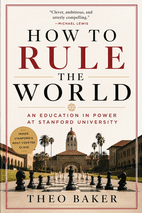
Theo Baker's How to Rule the World exposes a secretive, "vibes"-based elite network within Stanford that funnels "high agency" students into power circles, blending investigative journalism with a personal narrative of unraveling research fraud and moral compromise. Written for readers interested in higher education, elite networks, and Silicon Valley's hidden costs.
Feature
Insta.Page
Blinkist
Shortform
Summary Depth
Full Chapter-by-Chapter
15-min overview
Section-by-section guides
Audio Narration
✓
✓
✓
Visual Mindmaps
✓
✕
✕
AI Q&A
✓
✕
✕
Quizzes
✓
✕
✕
PDF Downloads
✓
✕
✓
Price
$89.99/yr
$146/yr (PRO)
$199/yr
*Competitor data last verified July 2026.
1 Page Summary
In How to Rule the World, Theo Baker exposes the hidden, parallel power structure operating within Stanford University—a system he calls the "Stanford inside Stanford." This secretive network, fueled by Silicon Valley’s immense wealth, filters for "high agency" students and funnels them into exclusive societies, venture capital circles, and startup accelerators. The book’s central thesis is that this elite ecosystem is not meritocratic but rather a "vibes"-based system where access is granted by gatekeepers, and a culture of cutting corners—from tax evasion to research misconduct—is enabled from the top down. Baker’s own story begins when he is recruited into a clandestine class called "How to Rule the World," which he discovers is a networking scheme designed to cultivate the most ambitious and connected students for future power.
The author’s distinctive approach blends investigative journalism with a deeply personal coming-of-age narrative. Baker, a Stanford freshman at the time, documents his simultaneous unraveling of two intertwined scandals: the fabricated research of Stanford’s president, Marc Tessier-Lavigne, and the clandestine world of student "fixers," hackathons, and "assassins" who recruit founders before they even have an idea. The book is structured around Baker’s dual roles as a student reporter for The Stanford Daily and as an observer—and occasional target—of the very system he is investigating. His reporting on Tessier-Lavigne’s Alzheimer’s research fraud, which forced the president’s resignation, becomes a case study in how institutional power protects itself, even as Baker himself is confronted with the personal costs of ambition, grief, and isolation.
The intended audience is anyone interested in the intersection of higher education, elite networks, and the moral compromises of Silicon Valley. Readers will gain an unflinching look at how wealth and influence operate inside one of the world’s most prestigious universities, and how the pursuit of "ruling the world" can corrupt both institutions and individuals. Baker’s account is at once a memoir of survival—navigating academic pressure, a harrowing overdose, and the death of two grandfathers—and a sobering critique of a system that prizes "high agency" over ethics, leaving many students to "paddle furiously beneath the water" while pretending to be serene. Ultimately, the book asks whether the price of admission to the elite—whether through fraud, secrecy, or self-destruction—is worth what it takes to rule.
Prologue: Fear the Tree
Overview
The author’s freshman year at Stanford began with a clandestine interview for a class that didn’t officially exist. The professor, Justin, was a successful Silicon Valley founder who ran a secret society called “How to Rule the World”—a networking scheme disguised as an exclusive insider experience, designed to filter for the most ambitious and connected students. This hidden class was just one symptom of a much larger phenomenon: the Stanford inside Stanford, a parallel world of excess and access reserved for those identified as “high agency.” That world is fueled by the staggering wealth of Silicon Valley—public companies worth $14.3 trillion, tech CEOs standing behind a president at his inauguration—and the inequality it produces is breathtaking, with eight households in two counties holding more wealth than half the population. The author arrived at seventeen as a true believer, but quickly discovered that Stanford students were a commodity: protected, cultivated, exploited. Within weeks, the author attended mansion parties funded by slush money, and over the course of freshman year heard admissions of tax evasion, research misconduct, embezzlement, securities fraud, and worse. A culture of cutting corners was not just tolerated but enabled from the top down. The author’s path split: drawn into student journalism, the author stumbled onto a story about Stanford’s president, Marc Tessier‑Lavigne, uncovering a trail of apparently fraudulent Alzheimer’s research spanning two decades. Meanwhile, peers learned the same kind of misconduct being reported on. Stanford itself was founded by robber baron Leland Stanford, and its nickname “the Farm” and mascot — a tree — reflect an underdog identity long outlived by reality. Today, the university operates its own venture capital fund, alumni have founded forty thousand active companies, and a lecturer told enraptured students that the path to success is to “aggregate enough of the capital of the world to then reallocate it against your worldview.” The motto “Fear the Tree!” captures an institution that competes on every field and wins. The author spent three years inside that institution, conducting over 250 interviews with students, CEOs, Nobel laureates, administrators, and three Stanford presidents, weaving together documents, financial filings, and personal experiences to produce a portrait of a place that is both profoundly influential and deeply inaccessible. This is the story of the kids being raised to rule the world, and what they learn from those who already do.
The Secret Class and Its Gatekeeper
The author’s freshman year at Stanford began with a clandestine interview for a class that didn’t officially exist. The professor, Justin, was a successful Silicon Valley founder who valued privacy above all else. The tryout took place in the most public spot on campus—Tresidder Memorial Union’s food court—but the process was anything but casual. Justin’s method was interrogation: he asked about past emotional highs and lows, the thread connecting them, and sized up the author’s “scope of ambition, intelligence, and emotional quotient.” The class itself was a mystery; only after the grilling did Justin explain its purpose: to teach a set of simple but non‑obvious frameworks that govern the world, frameworks that, as he put it, only the children of billionaires used to understand. By unlocking these secrets, he believed an entire cohort of promising Stanford students could be lifted up.
The New Gold Rush
California’s original gold rush transformed America, but Silicon Valley’s wealth has dwarfed it two hundred times over, even adjusted for inflation. The region’s public companies alone are worth $14.3 trillion—more than the GDPs of the UK, Germany, and India combined. Software pioneer Bob Martin captured the ethos a decade ago: “We rule the world. The world doesn’t know this yet.” That dominance is now visible in the top tech CEOs standing behind a president at his inauguration while political leaders are shunted aside. Yet the inequality is staggering: eight households in Santa Clara and San Mateo Counties hold more wealth than the bottom 50 percent of the population combined. Palantir’s CEO earns more annually than the company’s entire revenue. AI startups like Safe Superintelligence and Thinking Machines raise billions with no product or revenue. Silicon Valley runs on belief in exponential potential, and the resource it mines most aggressively is talent—especially from Stanford.
Stanford Inside Stanford
The author arrived at seventeen as a true believer in tech’s power to change the world. Quickly, the author discovered that Stanford students were a commodity—protected, cultivated, exploited. A whole economy exists to identify the next big thing, and the perks are astonishing. Within weeks, the author attended a mansion party funded by slush money from tech companies. This “Stanford inside Stanford” was a parallel world of excess and access reserved for those identified as “high agency.” But it also harbored rot. Over the course of freshman year, the author heard admissions of tax evasion, research misconduct, embezzlement, securities fraud, insider trading, hacking, and abetting foreign dictators. A culture of cutting corners was not just tolerated but enabled—from the top down.
The author’s path soon split. Drawn into student journalism at The Stanford Daily, the author stumbled onto a story about Stanford’s president, Marc Tessier‑Lavigne—a neuroscientist and former biotech executive with a sterling reputation. But when the author started poking, a trail of apparently fraudulent research studies emerged, spanning two decades. What began with a party article turned into middle‑of‑the‑night meetings with secret sources, anonymous letters at the doorstep, attacks from powerful lawyers, and a chase to uncover the truth behind famous Alzheimer’s research. All the while, the author watched peers learn the same kind of misconduct being reported on.
The Farm, the Tree, and the Fear
Stanford was founded during the Gilded Age by robber baron Leland Stanford. Its nickname “the Farm” and its mascot—a tree—reflect an underdog identity that long outlived its reality. In recent decades, Stanford transformed into an international juggernaut: an admissions rate of 3.6 percent, the top fundraising university in the country, and a budget that surpasses the GDP of 116 countries. Its symbiotic relationship with Silicon Valley is unique: half the valley was built on Stanford land, companies like Google, Instagram, and DoorDash grew out of campus projects, and the university operates its own venture capital fund. A 2011 study found Stanford alumni and faculty had founded forty thousand active companies. The speaker at a “View from the Top” lecture, billionaire Chamath Palihapitiya, told enraptured students that only 150 men run the world—and that the path to success is to “aggregate enough of the capital of the world to then reallocate it against your worldview.”
But the charm is double‑edged. Stanford’s motto, “Fear the Tree!” is chanted at opponents—but it also captures the reality of an institution that competes on every field and wins. The author spent three years trying to figure out how it really works, encountering genius and misdeed at every stage. The Stanford inside Stanford is a hidden world of perks and entry points—like the secret class the author interviewed for—where the same fifty students show up at every VC dinner, every insider event. It is alluring, and dangerous. Teenagers placed in an environment of great opportunity and scant due diligence learn they can get away with things. A fellow student who offered to be the author’s drug dealer had already raised nearly $20 million and made Forbes 30 Under 30. In a seminar on greed, a classmate tabbed between his history-of-capitalism lecture and the cap table for his new startup, upping his own share while the professor discussed avarice.
A Personal and Institutional Portrait
The book is told through the lens of the author’s freshman year—a weird year split between programming and journalism, wealth and resistance. The author was inspired by Scott Turow’s One L, and like Turow, has changed many names, especially of those under 25. But this is no roman à clef: no compound characters, no invented scenes. Over 250 interviews with students, CEOs, VCs, Nobel laureates, administrators, and three Stanford presidents underpin the account. Extensive documents, financial filings, legal papers, and text messages were used. The goal is to show an institution that is profoundly influential and deeply inaccessible—a culture that embraces getting ahead at any cost, where geniuses are stockpiled and taught to prioritize self‑interest. This is the story of the kids being raised to rule the world, and what they learn from those who already do.
Justin's class wasn't what it appeared to be. There were no course credits, no official academic standing—just lectures, discussions, and guest speakers held weekly on Stanford's campus. But the real purpose was something far more deliberate. He had created a secret society, a kind of Skull and Bones for the aspiring tech elite, and he made sure the students came to him. By asking for the names of other "high-agency individuals," he turned the application process into a filter for the most ambitious and connected. The class, called "How to Rule the World," was a networking scheme disguised as an exclusive insider experience. Justin knew that the Stanford elite wouldn't be able to resist the mystique—the whispered rumors of a class no one would talk about, where only the very best learned the secrets of the billionaires they hoped to become.
Key Takeaways
Justin's class was not an official Stanford course but a curated network of high-potential students.
The selection process itself revealed the most connected and ambitious applicants.
The mystique and exclusivity were deliberate tactics to attract the aspiring tech elite.
"How to Rule the World" was less about education and more about building a relational foundation for future influence.
Key concepts: Prologue: Fear the Tree
1. Prologue: Fear the Tree
The Secret Class
Clandestine interview for non-existent class
Professor Justin's interrogation method
Teaches frameworks known only to billionaires' children
Aims to lift promising Stanford students
Silicon Valley's Staggering Wealth
Public companies worth $14.3 trillion
Wealth dwarfs California gold rush 200x
Tech CEOs stand behind president at inauguration
Eight households hold more wealth than bottom 50%
Stanford Inside Stanford
Parallel world of excess and access
Students identified as 'high agency'
Mansion parties funded by slush money
Culture of cutting corners enabled from top
Student as Commodity
Protected, cultivated, and exploited
Whole economy exists to find next big thing
Freshman year heard admissions of fraud
Tax evasion, embezzlement, insider trading
The Author's Investigation
Drawn into student journalism
Uncovered fraudulent Alzheimer's research
Trail spans two decades by Stanford president
Peers learned similar misconduct
Stanford's True Identity
Founded by robber baron Leland Stanford
Nickname 'the Farm' and tree mascot outdated
Operates own venture capital fund
Alumni founded 40,000 active companies
Fear the Tree Mentality
Motto captures competitive winning culture
Lecturer: aggregate world's capital for worldview
Three years, 250+ interviews conducted
Story of kids raised to rule the world
💡 Try clicking the AI chat button to ask questions about this book!
Chapter 1: Drafted to the War on Fun
Overview
Arriving at Stanford in September 2022, the author is struck by the campus's curated perfection—manicured lawns, glass auditoriums—but the glossy propaganda clashes with reality: orientation coordinators in cow costumes, a twenty-minute caravan to the dorm, and an overpriced cruiser bike for navigating 8,180 acres. The dorm, Alondra, is a mundane relief, a 1950s building housing the Structured Liberal Education program, nicknamed "the Nerd Dorm" for its concentration of a chess champion, a calculus textbook author, a Hong Kong heiress, and others. But the first Friday of freshman year reveals a dead campus: Stanford canceled the traditional "Eurotrash" party with no replacement, leaving the author to discover the War on Fun—a student-coined phrase for the administration's tightening control. To host any gathering, you needed weeks of advance approval from a Party Review Committee, a detailed proposal, a Harm Reduction Plan, and even a class and exam. Off-campus parties required insurance and permits. Most organizations gave up; even fraternities faced probation. Stanford itself admitted the social scene lacked vibrancy and created a Social Life Accelerator Task Force—a committee strangling itself then investigating its own death.
The author’s grandfather, Steve Glasser, died two weeks before school started. A man who embodied fun and treasured his college paper, he inspired the author to join The Stanford Daily. Ignoring their parents' journalism careers, they show up at the $4.5 million Daily House—mostly empty—and ask to write. Emails to club leaders, administrators, and frat members go unanswered; people are afraid to talk. A journalism lecturer, R.B. Brenner, warns that few students care about journalism and the editor in chief is headed to a startup. Desperate, the author attends their first college party—a frat party called "White Lies"—for reporting. Inside, sober monitors in neon vests check IDs, attendees read pledges about consent and stolen land, and the author approaches partygoers as a reporter. Afterward, back at the Daily House with editors until 3 a.m., a small gesture—being let into the "slay" Slack channel—creates the first real sense of belonging.
The investigation uncovers a frat president's reality: Moritz Stephan of Sigma Nu, a German engineer, speaks of liabilities, not partying. With so few approved parties, hundreds of freshmen storm his house, breaking windows and assaulting door security; he’s had to call the police on himself. He fears the crackdown drives underage students into San Francisco's seedy bars alone, setting the stage for something terrible. Meanwhile, safety advocates are equally furious: nondrinkers, medical workers, and even administrators condemn the policies as dangerously counterproductive. Students now chug hard liquor in secret; first responders report rising hospitalizations. A university alcohol policy office employee calls the rules "hopelessly out of touch with reality." The cancellation of Eurotrash led to a "nomad" party where students climbed light poles. Fire safety rules pack approved events beyond capacity. The War on Fun, the author learns, is making things worse—part of a broader sanitization that renames legendary themed dorms as numbers and strips personality in the name of risk management.
This is all tied to a corporate takeover. President Marc Tessier-Lavigne (MTL) unveils a billion-dollar sustainability school but leads cautiously, launching a three-year "Long-Range Planning" process no one can describe. His predecessor, John Hennessy—the "godfather of Silicon Valley"—had warned against banning alcohol precisely because it would create dangerous unintended consequences. Hennessy understood the alchemy that made Stanford special; MTL seems focused on protecting reputation at the cost of that magic. When the author reaches out for comment, the alcohol policy office sends a panicked email assuming a leak, demanding staff get clearance before speaking—even though no media policy exists in contracts. More than fifty people decline interviews; several ask for anonymity to avoid discipline. The Sig Ep president walks out when asked to read the draft in advance.
The first article is published on October 24, 2022—one month and four days after moving in. It becomes The Stanford Daily's most-read piece of the year. The accompanying photo shows the Stanford Tree mascot waving a "Stanford Hates Fun" banner; the mascot is suspended for the protest two days later. The investigation reveals that the administration's crackdown on drinking backfired, increasing dangerous behaviors like rapid hard-liquor consumption and off-campus bingeing. Sustainability advocates and first responders align with students in condemning the policies as counterproductive. Stanford's corporate transformation under MTL prioritizes risk management over the vibrant, explorative culture that made the university legendary. The author's reporting exposes a climate of fear and retaliation within the administration, with staff warned against speaking to the press despite no official policy. The War on Fun is not a minor issue—it is a symptom of a deeper loss of identity, and it makes campus life less safe, not more.
Key Takeaways
The administration's crackdown on drinking backfired, increasing dangerous behaviors like rapid hard-liquor consumption and off-campus bingeing.
Sustainability advocates and first responders were aligned with students in condemning the policies as counterproductive.
Stanford's corporate transformation under President Tessier-Lavigne prioritized risk management and reputation over the vibrant, explorative culture that made the university legendary.
The author's reporting process revealed a climate of fear and retaliation within the administration, with staff warned against speaking to the press despite no official policy.
The War on Fun was not a minor issue—it was a symptom of a deeper loss of identity, and it made campus life less safe, not more.
Key concepts: Chapter 1: Drafted to the War on Fun
2. Chapter 1: Drafted to the War on Fun
Arrival at Stanford
Campus perfection clashes with disorganized reality
Alondra dorm houses the 'Nerd Dorm' program
First Friday reveals dead social scene
The War on Fun Defined
Party Review Committee requires weeks of approval
Harm Reduction Plans and classes needed for events
Off-campus parties demand insurance and permits
Most organizations give up; fraternities face probation
Personal Motivation and Reporting
Grandfather Steve Glasser inspired joining The Stanford Daily
Emails to leaders go unanswered due to fear
First college party at 'White Lies' frat event
Slack channel acceptance creates belonging
Consequences of the Crackdown
Frat president Moritz Stephan deals with liabilities
Hundreds storm parties; police called on hosts
Underage drinking pushed to dangerous off-campus bars
President Tessier-Lavigne prioritizes reputation over culture
Predecessor Hennessy warned against alcohol ban
Long-Range Planning process is vague and uninspiring
Risk management strips campus personality
Impact of the Investigation
First article becomes Daily's most-read of the year
Tree mascot suspended for 'Stanford Hates Fun' protest
Crackdown increases dangerous behaviors
Climate of fear silences staff despite no official policy
Chapter 2: The Impostor
Overview
The pressure to be technical in Silicon Valley is relentless, and without credentials, nobody takes you seriously. That realization hits hard while sitting outside Buck’s diner, surrounded by Ferraris and a possibly fake Porsche. Power concentrates when billionaires have Basquiats in their bathrooms, and Stanford students are already raising millions for startups with no clear business model. The message: break in fast or get left behind. He desperately wants to be special, to stand out. His War on Fun story got attention, even a mention in The Wall Street Journal, but that’s not enough. He needs to be technical. Coding has been his escape since age seven, and he devours AI research, even reading the Codex paper at a Pitbull concert. But meeting Lily Zhou, a junior who outclasses him in every way, makes him feel the gap. The secret code they share is everyone’s vernacular now.
Everyone talks about the myth of the 10x engineer—the lone hero rewriting codebases overnight. That’s not him. He meets Nick, a fucking genius who coauthored a seminal AI paper at sixteen. He knows his ceiling: competent, hardworking, but not brilliant. To make it, he has to find another angle. He takes Logan’s advice to break in fast: gets a research gig at the Stanford Internet Observatory, cold-emails professors, and jumps into CS107—the notorious weeder class. Nick sailed through; he’s determined to copy him, despite Logan’s warning that nobody comes out okay. Impostor syndrome weighs heavily. Nobody at Stanford feels they belong—the 3.6% admission rate makes even valedictorians average, and the $95,000 tuition adds pressure. After the first CS107 pset, an 83% feels like failure. Lily reassures him, but he’s already grinding through the second pset when a tip comes in at The Daily’s production night: an impostor has been living in Crothers Hall.
William Curry, a smooth-talking high school grad from Alabama, insinuated himself into the dorm for three weeks, claiming his room flooded. He baked brownies, cracked jokes, asked about psets. Residents were shocked, not scared. He volunteers to cover the story, leaving his pset behind. The article goes live at 2:14 a.m., and he returns to CS107. The story sparks discussion—parallels to Steve Jobs, arguments that Curry deserved admission. But a throwaway line about RAs letting him in causes backlash on Fizz, a campus app where someone writes “Fuck journalists.” He remembers the journalist’s rule: always follow up. Rumors hint Curry has been on campus longer. His cowriters bow out; he pursues it alone. Over days, he talks to classmates, a former girlfriend, his high school principal. The portrait turns dark. Curry is a serial manipulator who started planning in 2019, lived in half a dozen dorms over a year with new stories each time—neuroscience student, track star, transfer from Duke. He even played Assassin with one dorm, shot with a water gun and denied it. Lies built on lies, a tower of elaborate deception.
His harassment campaign escalates after a breakup. He sends threatening messages, exploits her iCloud password to stalk her, and when she goes on a date, his texts turn violent: “I'll Kill You.” The woman reports him to Stanford’s Department of Public Safety, but officials say they can do little. When she asks for a community safety alert, the response is “No, we don’t want to scare people too much.” Later, she spots Curry entering Crothers Hall and calls police with his exact location—DPS never follows up. What finally unravels him is a stolen TV. Living in a broken-in suite in Crothers’ basement, Curry cuts the security wire on a common room flatscreen and moves it to his room. A resident spots it, tells an RA, and Curry is removed. Again, RAs and deputies have no record of prior intrusions.
The investigation drops on Halloween—a day of assumed identities. The story blows up: Washington Post, AP, CNN, CBS, the Chronicle. One outlet after another runs nearly identical pieces, each ending with “The Daily reported.” Stanford stonewalls him for days, ignoring requests for comment. When he contacts a deputy who removed Curry in 2021, the DPS spokesman demands all questions be routed through him—questions he then ignores. It takes a full seven days of national media pressure for Stanford to speak. They admit “gaps” in protocols, promise an “immediate review,” and partly exonerate themselves by citing Curry’s “persistence and ability to ingratiate himself.” But Curry’s ease in fitting in mirrors a darker campus pattern. The same students who earned admission often lie to get ahead: CS majors in the Marriage Pact say they’d rather cheat than fail, people embezzle dorm funds, a false rumor about theft ruins a girl’s reputation. Students “vibe-corroborate” conspiracy theories about disability housing. Fizz itself has a security vulnerability exposing private user data—and threatens to sue students who point it out.
Two days after publication, Good Morning America flies a correspondent to the Daily House. He skips CS107 for the interview. His editor Sam—a former high school TV host who exposed school buses running stop signs—coaches him. Sam brings two Daily T-shirts for them to wear on air. “But,” he says, “you can’t keep it.” The shirt is only borrowed for GMA; he hasn’t earned it yet. The true mark of belonging remains conditional on continued work. Stanford failed to protect students, Curry’s removal came not from harassment but a stolen TV, and the university framed the failure as his unique ability to ingratiate himself. The impostor’s behavior echoes a broader culture of dishonesty. The Daily’s reporting earned national credibility, but belonging—like the T-shirt—is still out of reach.
Key Takeaways
Stanford repeatedly failed to protect students from Curry, even refusing to issue a safety alert about a known threat.
Curry’s removal was triggered not by harassment but by stealing a dorm TV—a crime, not a safety concern.
National media coverage forced Stanford to acknowledge “gaps,” but the university framed the failure as Curry’s unique ability to ingratiate himself.
The impostor’s behavior echoed a broader campus culture of dishonesty: cheating, rumor-mongering, and leveraging tech for harm.
Fizz, a platform fueling misinformation, exposed users’ private data and legally threatened whistleblowers.
The Daily’s reporting earned national credibility, but the true mark of belonging—a staff T-shirt—remained conditional on continued work.
Key concepts: Chapter 2: The Impostor
3. Chapter 2: The Impostor
The Pressure to Be Technical
Silicon Valley demands technical credentials to be taken seriously
Stanford students raise millions for startups with no clear model
Coding has been his escape since age seven
Meeting Lily Zhou makes him feel the gap
The 10x Engineer Myth and His Ceiling
The myth of the lone hero rewriting codebases overnight
Nick coauthored a seminal AI paper at sixteen
He knows his ceiling: competent, hardworking, not brilliant
He must find another angle to succeed
Impostor Syndrome at Stanford
3.6% admission rate makes even valedictorians average
$95,000 tuition adds pressure to belong
An 83% on CS107 pset feels like failure
Nobody at Stanford feels they truly belong
The Impostor in Crothers Hall
William Curry, a high school grad, lived in dorms for three weeks
He baked brownies, cracked jokes, asked about psets
Residents were shocked, not scared by his presence
He volunteers to cover the story, leaving his pset behind
Curry's Dark Past and Harassment
Curry is a serial manipulator planning since 2019
He lived in half a dozen dorms with new stories each time
After a breakup, he sent violent threats: 'I'll Kill You'
Stanford DPS ignored her calls despite exact location
National Media and Stanford's Response
The story blows up: Washington Post, AP, CNN, CBS
Stanford stonewalls for seven days under national pressure
They admit 'gaps' in protocols, blame Curry's persistence
The Daily earned credibility but belonging remains conditional
Broader Campus Dishonesty and Belonging
Students lie to get ahead: cheat, embezzle, spread rumors
Fizz app has security vulnerability, threatens to sue reporters
Curry's behavior mirrors a broader culture of dishonesty
The T-shirt is borrowed; he hasn't earned belonging yet
Chapter 3: Coupa Circuit
Overview
Theo gets hauled out of bed at 5 a.m. by the TreeHacks saplings—a ritual called a rollout that marks his official entry into Stanford’s most prestigious hackathon club. But TreeHacks is far more than a weekend coding event; it’s a carefully curated talent funnel that fast-tracks promising students into the inner circles of Silicon Valley investors and founders. Theo’s interview for the club had been nerve-racking, but once accepted, he found himself swept into a breakfast with the team in Menlo Park, buzzing with talk of drone shows and laser projectors, and an invitation to a lavish fall retreat deep in the hills. This is the moment Theo first encounters the phenomenon of getting plucked—the opaque, invisible process by which a select few are pulled into the real power networks at Stanford. Access isn’t earned through public clubs or applications; it’s granted by gatekeepers like Ivan, a twenty-year-old fixer who spends his days at Coupa Café buying coffee and vetting entrepreneurs. Ivan claims to have met thousands of engineers but only six who have what it takes, and he enlists Theo’s help to root out “wantapreneurs.” Meanwhile, Theo’s investigation into Will Curry continues to reverberate—Curry first threatens to sue, then admits guilt, and even invites Theo to gamble, revealing a reckless confidence that blinds him to how others perceive him. Another member of the Coupa Circuit is Julian, who runs the invite-only Lake Lagunita Yacht Club—a status symbol whose merchandise signals who is in and who is out. Julian sees himself as a defender of billionaires, skipping philosophy class discussions only to announce himself as the “biggest value add.” He calls himself a Buddhist, a contradiction that sums up the Stanford inside Stanford: a world that preaches merit and changing the world while hoarding access behind hidden networks like Friends and Family, the Pear Garage, and the Mayfield Fellows Program. Theo himself receives an interview invitation for the clandestine class How to Rule the World, arranged by Justin. The fall retreat at a multimillion-dollar mansion with no cell service cements the experience: beer pong with startup founders, networking with alumni, a poker tournament with a $1,000 prize, and TreeHacks’ “black hole budget.” But the morning after, as the group rides back to campus in an Uber Black past Porsches and Teslas, Theo voices his unease—asking if all the money feels excessive, imagining what it could do for a food bank. The question hangs in the air, unanswered. The silence is a verdict. This is a world where questioning the opulence marks you as an outsider, and even as Theo holds a bigger secret in his pocket, he’s beginning to see the tension between his journalistic values and the gilded reality he’s being pulled into.
TreeHacks and the Rollout
At 5:00 a.m., less than three hours after Theo’s Will Curry piece went live, a group of students burst into his dorm room, cheering. This was a rollout—Stanford’s tradition of dragging new club inductees out of bed. His club was TreeHacks, the oldest hackathon on campus. On the surface, it’s a weekend competition where nerds build products without sleep. But the real mission: TreeHacks served as a talent funnel, identifying promising entrepreneurs and smoothing their path into Silicon Valley’s inner circles. The organizers—about twenty “saplings” each year, handpicked from hundreds of applicants—were considered “high-signal” by investors. The unadvertised benefit: getting fast-tracked to top VC introductions, board seats, and funding.
The Interview
Theo had walked into his interview two weeks earlier, terrified. The codirectors, Sara and Vedant, had superhuman résumés. Sara had run multiple hackathons and worked at every major tech company. Vedant had founded ventures that delivered millions of meals. Theo had missed his first interview (fell asleep from frosh flu) but somehow got a second slot. Logan warned him to come with startup ideas. He prepared half a dozen pitches. The conversation went off-script quickly; they seemed shocked he was taking CS107 freshman fall. The chemistry clicked.
The Breakfast
On rollout morning, Theo was picked up by Vedant (in a giraffe onesie) and the team. They drove to an early breakfast in Menlo Park. The group was noisy, disheveled, and buzzing with energy. People discussed new themes, sponsors, drone shows, laser projectors. Theo had to leave early after a call from a source on the Curry story. Sara instructed everyone to clear schedules for the fall retreat.
Getting Plucked
A friend with a startup once told Theo: at Stanford, “you get plucked.” One moment you’re just a student; the next, you’ve been offered a seat at the table in the Stanford inside Stanford. There’s an inner cohort of potential innovators who all show up at the same VC dinners, text the same billionaires for advice, attend the same app launch parties. The belief that wanting to be an entrepreneur is enough is mistaken—opportunities are not equitably distributed. Access is guarded. You have to be plucked by the right group—or go through someone like Ivan.
Ivan and the Coupa Circuit
Ivan is a twenty-year-old fixer. He spends his days at Coupa Café, buying coffee for a steady stream of people. He reached out to Theo not long after he joined TreeHacks, describing himself as an investor focused on the undergrad ecosystem. He wanted Theo to teach him how to interview—“to root out the wantapreneurs.” Ivan claimed he’d met thousands of engineers but only six had what it takes. He was a member of the “Coupa Circuit,” the near-permanent residents of the café who made deals and performed entrepreneurship daily. Ivan told Theo his backstory: recruited for D1 sports, a devastating spinal injury after a month, then channeling his discipline into becoming rich. “I don’t really care about curing cancer,” he said. “The number one thing is to work with super young founders and sit on cool boards.” He needed Theo to help find people of use.
Will Curry’s Aftermath
In the wake of Theo’s first Daily articles, random people reached out—some with tips, some with conspiracy theories, some from prisons. Even the Stanford Department of Public Safety called, asking how to find Will Curry. Theo politely declined to share sources. Curry himself started talking to Theo, first threatening to sue, then admitting to the intrusions after the investigation was published. He seemed to think his charm could talk him out of anything. He invited Theo to gamble, gave photographic evidence of minor crimes, and kept talking even after Theo warned him he might write another article. He was cocky, incapable of seeing how others perceived him.
Julian and the Lake Lagunita Yacht Club
Julian was the second member of the Coupa Circuit Theo got to know. He saw himself as a defender of billionaires. In a philosophy class, he took offense at Plato’s idea that rulers shouldn’t own private property; amassing great wealth was proof of capability. Julian was a convener, setting up camp at Coupa most days, introducing people, exercising social influence. He created his own invite-only group: the Lake Lagunita Yacht Club, named after Stanford’s dried-out campus lake. The merch was a status symbol; he revoked hats from people who didn’t make the cut. In class, Julian was brash—skipping discussions, then claiming his absence gave others a chance to speak, and announcing he was the “biggest value add.” Outside class, he was genuinely savvy. When Theo asked about his moral philosophy, Julian—the billionaire-wannabe who considered a wealth tax dangerous—looked him in the eyes and said, “In many ways, I’m a Buddhist.” That kind of summed up the Stanford inside Stanford: talk of changing the world and merit, but the real access points to Silicon Valley power were obscured.
The social architecture of Stanford's entrepreneurial elite was deliberately opaque. Clubs like ASES and BASES were considered "anti-signals"—identifying as an aspiring entrepreneur actually hurt your credibility. True insider status came from being plucked into hidden networks: Friends and Family (a student-run Builders society with weekly hacking sessions and $10,000 micro-grants), the Pear Garage, Floodgate Reactor, Interact Fellowship, or the Mayfield Fellows Program (limited to twelve students per year). These weren't secret, exactly—anyone could apply online—but you had to know they existed, understand what they meant, and have the right connections to get in. For Theo, this world was just beginning to open up. Days after his Curry investigation published, he received an invitation to interview for that clandestine class called How to Rule the World, arranged by Justin himself. Meanwhile, TreeHacks offered his first real immersion.
The fall retreat took them deep into the hills, to a multimillion-dollar mansion with panoramic windows and thirty acres of isolation. No cell service, no way to escape the CS107 assignment that was still breaking Theo's brain. The house had a game room, a soaking tub larger than his dorm bed, and a towering pile of alcohol. Vedant, the codirector, greeted him with a shot of Tito's. "Ready to get lit
**
Key concepts: Chapter 3: Coupa Circuit
4. Chapter 3: Coupa Circuit
TreeHacks: The Talent Funnel
Rollout ritual at 5 a.m. marks official entry
Hackathon is a curated path to Silicon Valley
Saplings handpicked as high-signal by investors
Fast-tracks members to VC introductions and funding
Getting Plucked: Hidden Access Networks
Access granted by gatekeepers, not public applications
Ivan vets entrepreneurs at Coupa Café daily
Only six out of thousands meet his standards
Inner cohort shares VC dinners and billionaire contacts
The Coupa Circuit Gatekeepers
Ivan enlists Theo to root out wantapreneurs
Julian runs invite-only Lake Lagunita Yacht Club
Julian calls himself biggest value add and Buddhist
Networks include Friends and Family, Pear Garage
Will Curry Investigation Fallout
Curry threatens to sue, then admits guilt
He invites Theo to gamble, showing reckless confidence
Curry blinds himself to how others perceive him
The Fall Retreat: Gilded Reality
Multimillion-dollar mansion with no cell service
Beer pong, networking, poker with $1,000 prize
TreeHacks has a black hole budget for opulence
Theo's Growing Unease
Questions if money feels excessive on ride back
Imagines what it could do for a food bank
Silence marks him as outsider in this world
Tension between journalistic values and gilded pull
Clandestine Class: How to Rule the World
Theo receives interview invitation from Justin
Class is part of Stanford inside Stanford
Preaches merit while hoarding hidden access
You've reached the end of the free chapters
Next chapter: “Binary Bomb” is locked
Keep reading How to Rule the World — and unlock all 600+ book summaries with audio, mindmaps and AI Q&A.
$0.00 due today · 7 days free, then $89.99/year ($7.49/mo) · Cancel anytime before day 7
Theo Baker is an American journalist and author specializing in technology and digital culture. He is best known for his book "The Digital Sublime: Myth, Power, and Cyberspace," which examines the cultural narratives surrounding the internet. Baker has also written extensively for publications like The New York Times and Wired, drawing on his background in media studies and criticism.
Frequently Asked Questions about How to Rule the World
What is How to Rule the World about?
The book is a memoir of the author's freshman year at Stanford, where he uncovers a secret society called 'How to Rule the World'—a networking scheme disguised as an exclusive class run by a Silicon Valley founder. The author also investigates Stanford's president Marc Tessier-Lavigne for research misconduct, revealing a culture of manipulated data and institutional cover-ups. At the same time, it exposes the hidden networks of power in Silicon Valley, where a select few are granted access to staggering wealth and influence while others are left behind.
Who is the author of How to Rule the World?
Theo Baker is a Stanford student and journalist who, as a freshman, broke the story of research misconduct by Stanford's president, winning a Polk Award for his reporting. His grandfathers include Steve Glasser and Eleftherios Peter Baker, and his journalistic lineage is noted throughout the book. He writes from the perspective of a true believer who becomes disillusioned by the elitism and corruption he witnesses.
Is How to Rule the World worth reading?
This book is a gripping exposé that combines investigative journalism with a deeply personal coming-of-age story. It offers rare, firsthand insight into how power and privilege operate at the highest levels of academia and Silicon Valley. Anyone interested in the mechanics of elite networks, the cost of ambition, or the courage required to challenge authority will find it compelling and eye-opening.
What are the key lessons from How to Rule the World?
The book shows that access to power is rarely earned through merit; it is granted by opaque gatekeepers who reward loyalty over talent. Institutions often protect their own, using free speech as a shield for misconduct while silencing critics. Exposing the truth requires immense personal sacrifice, including isolation, legal threats, and emotional toll. Ultimately, the system is not designed to be fair, and those who challenge it must be prepared for a lonely fight.
📚 Explore Our Book Summary Library
Discover more insightful book summaries from our collection