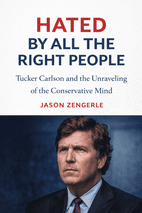
What is the book Hated by All the Right People about?
Jason Zengerle's Hated by All the Right People is a biography tracing the career of Tucker Carlson, using his transformation from a young Washington intern to a controversial Fox News host as a lens to examine the radicalization of the American conservative movement and conservative media
Feature
Insta.Page
Blinkist
Shortform
Summary Depth
Full Chapter-by-Chapter
15-min overview
Section-by-section guides
Audio Narration
✓
✓
✓
Visual Mindmaps
✓
✕
✕
AI Q&A
✓
✕
✕
Quizzes
✓
✕
✕
PDF Downloads
✓
✕
✓
Price
$89.99/yr
$146/yr (PRO)
$199/yr
*Competitor data last verified July 2026.
1 Page Summary
In Hated by All the Right People, journalist Jason Zengerle delivers a sharp and deeply reported biography of the controversial media personality Tucker Carlson. The book’s central thesis is that Carlson, best known as the former Fox News host and a powerful voice in right-wing media, represents a pivotal figure in the modern American political landscape. Zengerle argues that Carlson’s transformation—from a bow-tied young writer at The Weekly Standard to a populist provocateur who embraced conspiracy theories and white nationalist talking points—reflects and helped drive the radical unraveling of the conservative movement. His career demonstrates how the hunger for influence, amplified by cable news and the internet, rewarded increasingly extreme rhetoric, reshaping American politics long before Donald Trump became its standard-bearer.
Zengerle’s approach is that of a classic political profile, expanded to book length. He distinguishes this work through meticulous reporting, drawing on extensive research and a sweeping view of the media and political landscapes over the past thirty years. The narrative moves beyond the simple caricature of Carlson as a mere provocateur to explore the contradictions of his character—his genuine writing talent and early willingness to critique conservatives alongside his ruthless ambition and eventual embrace of dangerous falsehoods. The book is less an ideological treatise and more a character study, using Carlson’s journey to trace the evolution of conservative media and the early stirrings of the anti-elitist sentiment that would later come to dominate the Republican Party.
The intended audience is readers interested in American politics, political biography, and the intersection of media and power. While those with an interest in the history of cable news and the conservative movement will find particularly rich material, the book offers broader insights into the mechanics of how media figures can gain political influence and the long-term consequences of abandoning journalistic standards. Readers will gain a nuanced understanding of a consequential political archetype—the media-driven populist—and a compelling, often darkly funny story about a man whose career was driven by a desire for fame and power from the very elites he claims to despise.
One
Overview
In the summer of 1995, a young and ambitious Tucker Carlson arrived at the American Enterprise Institute for a fateful interview with Bill Kristol. Kristol, a powerful architect of conservative strategy, was launching The Weekly Standard, a well-funded weekly magazine conceived as the intellectual engine for the Republican revolution and backed by Rupert Murdoch. For Carlson, this represented a crucial leap into the major leagues of Washington journalism.
His path to that office was shaped by a singular and turbulent upbringing. The son of a charismatic, conservative television journalist, Dick Carlson, Tucker was raised with a paradoxical mix of aristocratic discipline and feral independence in reaction to the "hyperliberalism" of 1970s California. After his parents' bitter divorce and his mother's disappearance from his life, this upbringing forged a deeply ingrained conservative identity. He navigated an elite boarding school and a failed college career at Trinity as a professional provocateur, embracing a contrarian persona that masked academic struggle and a lasting bitterness toward elite institutions he felt had rejected him.
By 1995, Carlson had calculated that his future lay in conservative media, but on his own terms. He dismissed older publications as stale or extreme, believing Kristol's new venture was where the real influence would be. Through relentless networking, he secured an interview, only to find himself in a subdued office setting that hinted at his lower-tier status. Despite his preternatural confidence and charm, he was utterly unprepared, offering few story ideas and failing to impress Kristol and editor Fred Barnes. The rejection was immediate and unanimous. This pivotal moment closed a door to the establishment conservative press, setting Carlson on a different, more disruptive trajectory defined by the very qualities that had just failed him.
The Job Interview
In the summer of 1995, a 26-year-old Tucker Carlson arrived at the American Enterprise Institute for a job interview with Bill Kristol. He saw this as his move to the major leagues of Washington, D.C. Kristol was a formidable figure in conservative circles. Having helped sink the Clinton health care plan, he was now launching a weekly political magazine, The Weekly Standard, to shape the political news cycle for the new Republican era.
A Legacy Project
The magazine was conceived by Kristol and John Podhoretz, both sons of towering conservative intellectuals. Its mission was to provide the intellectual scaffolding for the Republican revolution. To fund it, they pitched Rupert Murdoch. Kristol argued Murdoch could use the magazine as a beachhead in Washington. Murdoch agreed to bankroll it with $3 million a year.
Carlson’s Formative Background
Carlson was the son of a conservative figure. His father, Dick Carlson, was a charismatic television journalist in San Diego. Dick's personal life was turbulent. He first married Lisa McNear Lombardi, an heiress. They had two sons, Tucker and Buckley, before divorcing in a bitter custody battle. Dick alleged Lisa had substance abuse problems, and he was awarded full custody in 1977. Lisa largely vanished from her sons' lives.
A Singular Upbringing
As a single father, Dick Carlson raised Tucker and Buckley with a contradictory mix of discipline and rugged independence. He drilled them on manners, yet also fed them bug-infested cereal to toughen them up and hired a former intelligence officer as a nanny. This environment—a reaction against the "hyperliberalism" of 1970s California—profoundly shaped Tucker's worldview and conservative identity.
A Conservative Upbringing in San Diego
Dick Carlson settled with his sons in the affluent, traditionalist enclave of La Jolla. Tucker attended the elite La Jolla Country Day School, where he was a middling student but a sharp, disruptive presence. His father’s marriage to Patricia Swanson in 1979 brought a new maternal influence. She took a lenient approach to some behaviors but insisted he attend boarding school for high school.
Contrarian Formation at St. George’s
Carlson’s time at St. George’s School in Rhode Island solidified his identity as a brash conservative and contrarian. He openly taunted liberal teachers. His reputation was cemented when, during an assembly speech about police killing Eleanor Bumpurs, he was the only one to raise his hand in response to the rhetorical question, “Does anyone think that woman deserved to die?” The act was seen as provocative puckishness.
His life at St. George’s bifurcated. Through his relationship with the headmaster’s devoutly religious daughter, he converted to a traditional form of Episcopalianism. Simultaneously, he maintained a separate social circle where he emulated Hunter S. Thompson’s drug regimen and drank heavily. Academically, he struggled, and his failure to gain admission to an Ivy League school left a lasting, bitter imprint.
Academic Drift and Provocation at Trinity
Carlson enrolled at Trinity College. He quickly bonded with future business partner Neil Patel over conservative politics. His academic effort, however, was minimal. His political activity manifested in lazy, provocative letters to the student newspaper defending traditional views.
A plan to launch a conservative magazine fizzled. His collegiate career spiraled; he stopped attending classes. In one desperate attempt to help a friend pass a class, he forged a letter from a fake psychologist—a scheme that backfired. Carlson never graduated, leaving Trinity with a 1.9 GPA and no degree.
Calculating a Career in Conservative Media
This was the résumé Carlson carried into his 1995 interview. He believed mainstream media outlets were closed to him. He sought a foothold in conservative media but was selective, dismissing National Review as “stuffy” and worrying The American Spectator was too extreme.
His sharp professional radar told him Kristol’s The Weekly Standard was where the action would be. With preternatural confidence, he relentlessly lobbied contacts to get an interview.
A Subdued Interview Setting
Kristol’s usual practice was to interview promising candidates over lunch. For Carlson, the meeting took place in Kristol’s own sparse office, with veteran editor Fred Barnes joining. The setting itself signaled that Carlson was not considered a top-tier prospect.
Charm Meets Unpreparedness
Despite his intense desire for the job, Carlson’s performance was underwhelming. When pressed for story pitches, he could only muster three ideas. His natural charisma was thoroughly undermined by a clear lack of preparation.
A Swift and Unified Rejection
The decision was immediate and unanimous. As soon as Carlson left, Kristol and Barnes easily agreed not to hire him. His campaign of networking had opened the door, but his performance in the room could not close the deal.
Key Takeaways
Ambition vs. Preparation: Relentless networking can open doors, but it cannot compensate for a lack of substantive preparation in a critical interview.
The Professional Judgment Call: Experienced editors make swift, decisive judgments based on a candidate's ideas and presence, not just their enthusiasm or connections.
An Early Career Crossroads: This rejection closed a potential path in establishment conservative journalism and ultimately steered Carlson toward a different media trajectory.
Key concepts: One
1. One
Pivotal 1995 Job Interview
Interview with Bill Kristol for The Weekly Standard
Seen as entry to major league Washington journalism
Rejected due to lack of preparation and ideas
The Weekly Standard's Mission
Intellectual engine for Republican revolution
Funded by Rupert Murdoch with $3M annually
Conceived by sons of conservative intellectuals
Turbulent Family Background
Son of conservative TV journalist Dick Carlson
Mother disappeared after bitter custody battle
Raised by single father with full custody
Contradictory Upbringing
Mix of aristocratic discipline and rugged independence
Reaction against 1970s California hyperliberalism
Forged deep conservative identity early on
Elite Education & Contrarian Persona
Attended St. George's boarding school
Openly taunted liberal teachers and peers
Provocative acts cemented conservative reputation
Failed College Career
Struggled academically at Trinity College
Engaged in lazy political provocation
Left with 1.9 GPA and no degree
Career Calculation & Rejection
Sought conservative media on his own terms
Dismissed established publications as stale or extreme
Rejection set him on more disruptive trajectory
💡 Try clicking the AI chat button to ask questions about this book!
Two
Overview
Tucker Carlson's formative years in Washington journalism began with a career-saving intervention. After a botched interview at The Weekly Standard, friends like Mark Gerson and advice from Fred Barnes helped him secure the job. He immediately made his mark with a sharp, mocking piece on celebrity supporters of Mumia Abu-Jamal. That article showcased his early style—provocative, witty, and unafraid to target liberal elites.
In the magazine's smoky office, Carlson found a fast friend in Matt Labash. Together, they embraced a New Journalism ethos, prioritizing compelling stories and elegant prose over policy influence. But Carlson's fearlessness soon sparked controversy. His exposé on Grover Norquist, published in The New Republic, accused the powerful conservative operative of selling access, leading to a fierce backlash and a public feud that climaxed with Carlson dumping a Bloody Mary on Norquist's head at a gala.
While known as a provocateur, Carlson also wrote fiercely ideological pieces on abortion and immigration, influenced by his wife Susie's views. Yet his integrity had limits; he famously returned a book advance after deeming the thesis "repugnant." During the Clinton-Lewinsky scandal, while The Weekly Standard championed impeachment, Carlson played the skeptic, focusing on dogged reporting.
Driven by ambition, Carlson networked beyond conservative media, landing a breakthrough profile of George W. Bush in Talk magazine. This subtle takedown enraged his campaign. As the 2000 election loomed, the magazine vehemently opposed Pat Buchanan's populist candidacy. Carlson also became a fervent advocate for John McCain, framing his primary loss as a moral victory.
After 9/11, The Weekly Standard's neoconservative vision merged with the Bush administration's foreign policy, aggressively advocating for the Iraq War. By the peak of this influence in 2005, Carlson had already begun his political migration away from neoconservative orthodoxy. Throughout, he carved out a dual reputation: a disinterested reporter focused on narrative, yet willing to take ideological stands, all while navigating the tensions between personal integrity and relentless careerism.
A Temporary Rejection and a Pivotal Intervention
A young Tucker Carlson faced rejection after a disastrous interview at Bill Kristol’s fledgling Weekly Standard. His salvation came through an ally—Mark Gerson, who lobbied Kristol for a second chance. Simultaneously, Carlson's wife Susie leveraged a connection to Fred Barnes, who advised Carlson to arrive overly prepared with a dozen story ideas. The strategy worked; Kristol offered him the job.
Launching a Magazine and a Style
The Weekly Standard debuted in 1995. Carlson’s contribution was a sharp piece on celebrity supporters of death-row inmate Mumia Abu-Jamal. The article was an instant hit with senior editors, who recognized a natural talent. It showcased early hallmarks of Carlson's style: a deft ability to mock liberal elites and a provocative edge.
The Office, a Fast Friendship, and a Literary Ethos
The Standard’s office was a smoky, male-dominated throwback. Carlson quickly befriended fellow junior writer Matt Labash. While other writers aimed to influence policy, Carlson and Labash were disciples of New Journalism, prioritizing compelling stories and elegant prose. They were the magazine’s “merry pranksters.”
The Norquist Exposé and Movement Backlash
Carlson’s journalistic fearlessness soon clashed with movement loyalties. In 1997, he investigated Grover Norquist, believing he was selling access. The Standard rejected the pitch. Carlson took the story to The New Republic, where it portrayed Norquist as a “cash-addled, morally malleable lobbyist.”
The fallout was severe. Norquist accused Carlson of a vendetta. Carlson faced a barrage of angry calls from conservative leaders. Norquist demanded Kristol fire him. Kristol refused. The episode cemented Carlson’s reputation as a talented but disruptive force willing to turn his sights on his own side.
The Bloody Mary Incident and Its Aftermath
The Norquist feud culminated publicly at a gala, where a drunken Carlson dumped a Bloody Mary on Norquist’s head. Later, a Norquist staffer retaliated by throwing wine in Carlson’s face. This cemented Carlson's reputation as a provocateur.
Ideological Crusades on Abortion and Immigration
Despite his reputation, Carlson wrote fiercely ideological pieces on certain issues, heavily influenced by his wife Susie’s views. He authored scathing articles attacking pro-choice Republicans and linked opposition to immigration to racist and nativist ideologies in a Wall Street Journal op-ed.
An Uncomfortable Book Deal and Ideological Independence
Carlson’s ideological commitments had limits. He backed out of a book deal that would have argued for expanding police powers, sending back his advance because he found the thesis "repugnant." This act of intellectual integrity stood in stark contrast to the intense ideological battles at The Weekly Standard. Carlson remained detached from these debates, described by colleague David Brooks as "way more a storyteller than an arguer."
The Clinton Scandal: A Reporter, Not an Advocate
When the Clinton-Lewinsky scandal broke, The Standard became a loud voice for impeachment. Carlson, however, was privately skeptical. He focused on dogged reporting. His standout scoop was an interview with Monica Lewinsky’s former therapist, who painted a psychologically plausible picture of the affair.
Ambition and the Breakthrough Bush Profile
Carlson was intensely focused on career advancement beyond the conservative media bubble. His big break came in 1999 when Tina Brown recruited him for Talk magazine. His inaugural profile of George W. Bush was a masterclass in subtle takedown. While charmed by Bush’s persona, Carlson highlighted his poor work ethic and chilling flippancy regarding an execution. The Bush campaign was furious, insinuating Carlson fabricated quotes—a charge he and Talk vehemently denied.
The Standard's War on Pat Buchanan
As the 2000 election approached, The Weekly Standard was vehemently opposed to the populist candidacy of Pat Buchanan. Carlson contributed snarky pieces on Buchanan’s campaign. This highlighted the deep rift within conservatism between the magazine’s neoconservatism and Buchanan’s paleoconservative populism.
Key Takeaways
Carlson established a dual reputation: a fierce ideological writer on select personal issues, but primarily a disinterested, ambitious reporter focused on narrative over advocacy.
His profile of George W. Bush demonstrated his sharp observational skills and willingness to betray political access for an unvarnished story.
A significant internal tension is revealed between Carlson’s personal integrity (returning the book advance) and his relentless careerism.
The Weekly Standard’s intense ideological mission to defeat Pat Buchanan framed the environment in which Carlson operated.
Carlson’s McCain Advocacy and the 2000 Election
Tucker Carlson aligned himself with the pro-McCain faction at The Weekly Standard. His coverage was exceptionally fawning, portraying McCain as “about the coolest guy who ever ran for president.” He enjoyed privileged access to the candidate. When McCain lost the nomination, Carlson framed the defeat as a moral victory, arguing McCain “lost because he would not do anything to win.”
Post-9/11 Realignment and the Neoconservative Ascendancy
The terrorist attacks of September 11, 2001, fundamentally changed the dynamic. Bush’s foreign policy began to mirror the neoconservative vision long championed by the magazine. The Standard aggressively advocated for expansive military action and for war in Iraq. The Bush administration appeared to be taking its cues directly from the magazine’s pages.
Paleoconservative Backlash and Proclamation of Victory
This neoconservative influence drew fierce opposition from Pat Buchanan and the paleoconservatives. Buchanan accused a “cabal” of leading the country into unnecessary wars. To the neocons at The Standard, such charges were the desperate cries of a defeated faction. Their triumph seemed complete. At a 2005 symposium, Fred Barnes gleefully summarized the magazine’s impact: “We started a war in Iraq, we got tax cuts, we reelected Bush.”
Key Takeaways
Tucker Carlson was deeply embedded in John McCain’s 2000 campaign, producing adoring coverage and framing McCain’s loss as a testament to his integrity.
The 9/11 attacks catalyzed a merger between the Bush administration’s foreign policy and the neoconservative agenda of The Weekly Standard, which helped shape the march to war in Iraq.
This neoconservative ascendancy triggered a final, bitter denunciation from paleoconservatives like Pat Buchanan.
By the peak of this influence in 2005, Carlson had already departed The Standard and begun his own political migration away from the neoconservative orthodoxy.
Key concepts: Two
2. Two
Career Launch at The Weekly Standard
Saved by friends' intervention after botched interview
Hired after arriving with prepared story ideas
Made mark with mocking piece on Mumia Abu-Jamal
Journalistic Style and Ethos
Embraced New Journalism with Matt Labash
Prioritized compelling stories over policy influence
Developed provocative, witty style targeting elites
Controversial Norquist Exposé
Accused Grover Norquist of selling access
Faced fierce backlash from conservative movement
Culminated in public Bloody Mary incident
Ideological Positions and Limits
Wrote fierce pieces on abortion and immigration
Influenced heavily by wife Susie's views
Returned book advance over repugnant thesis
Clinton-Lewinsky Scandal Reporting
Remained skeptical while magazine championed impeachment
Focused on dogged reporting over advocacy
Landed interview with Lewinsky's former therapist
Political Ambition and Network Building
Networked beyond conservative media circles
Wrote breakthrough profile of George W. Bush
Became fervent advocate for John McCain
Post-9/11 Political Evolution
Magazine merged with Bush's neoconservative policy
Aggressively advocated for Iraq War
Began migration away from neoconservative orthodoxy
Three
Overview
Tucker Carlson achieved his dream in 1999, attending a lavish launch party for Talk magazine as a respected print writer. But he felt restless, sensing television was the future. He was right. The rise of Fox News and MSNBC created a huge demand for telegenic pundits. Carlson stumbled into this world almost by accident after an early appearance about the O.J. Simpson trial. During the Monica Lewinsky scandal, he became a ubiquitous cable news commentator.
His TV success created a quiet rift with his colleagues at The Weekly Standard, who saw it as a unserious debasement of journalism. Carlson publicly agreed, calling it a joke done for the money. Privately, he was drawn to the medium’s power. Writing was a difficult grind for him, but a glib TV aside could get attention from powerful people. When CNN offered him his own show, The Spin Room, he had to make a choice. News Corp, which owned The Weekly Standard, forbade him from working for CNN competitor Fox News. He chose television and cleaned out his office.
An early media profile captured his charm and noted a formative lesson from sixth grade. For a mock debate, he was assigned to defend Jimmy Carter against Ronald Reagan. Instead of arguing policy, he attacked his opponent, comparing Reagan to a trained dog. His side won. He learned a sharp personal attack often beats a substantive defense.
On The Spin Room, his partnership with liberal co-host Bill Press was defined less by partisan combat than by a shared sense of mockery toward political absurdities. The show was canceled after eight months. CNN then promoted him to the debate show Crossfire. There, he faced immediate skepticism from conservatives who doubted his convictions. Fox News was now dominating with openly partisan programming. To secure his place, Carlson consciously shed nuance. He evolved into a reliable partisan shill, lavishly praising GOP leaders and attacking former heroes like John McCain.
This shift set the stage for his most consequential pivot. Initially skeptical, Carlson became an on-air advocate for the Iraq War. His role on Crossfire demanded it. He also trusted private assurances from a close friend on Vice President Cheney's staff, who said the intelligence was solid.
Following the fall of Baghdad, his cavalier tone soon faded as the occupation soured. In late 2003, he traveled to Iraq to see for himself. Embedding with security contractors, he experienced the pervasive danger firsthand. The trip shattered his support. He concluded there were not enough U.S. forces to control the country.
In 2004, while most conservative pundits stood by the war, Carlson broke ranks. He said, “I am embarrassed that I supported the war in Iraq,” calling it a “total nightmare and disaster.” This public recantation triggered a broader reckoning. He began to question the foreign policy elites he once admired, including his own father. He moved toward a paleoconservative skepticism of military intervention and the establishment that championed it.
Key Takeaways
Tucker Carlson chose a television career over print journalism, drawn to its power and reach despite publicly calling it unserious.
To succeed on CNN's Crossfire, he deliberately abandoned nuance and became a reliably partisan conservative voice.
He initially supported the Iraq War based on his TV role and trusted intelligence from a friend in the Cheney administration.
A 2003 trip to Iraq changed his mind; seeing the chaos firsthand led him to publicly renounce his support for the war.
This reversal sparked a deeper shift in his worldview toward a paleoconservative skepticism of foreign intervention and the political establishment.
Key concepts: Three
3. Three
Career Shift to Television
Left print journalism for TV's power and reach
Publicly mocked TV work but privately embraced it
Chose CNN over Fox News due to contract restrictions
Developing On-Air Persona
Learned early that personal attacks win debates
Shed nuance to become reliable partisan voice
Adopted role of conservative shill on Crossfire
Initial Support for Iraq War
Became on-air advocate due to Crossfire role
Trusted private intelligence from Cheney staff friend
Concluded insufficient U.S. forces to control country
Publicly renounced war support as disaster
Ideological Transformation
Broke ranks with conservative pundits on Iraq
Questioned foreign policy elites and own father
Moved toward paleoconservative skepticism of intervention
Four
Overview
In the wake of the Iraq War, many pundits who championed the invasion saw their careers flourish rather than falter, insulated within a forgiving media establishment. Tucker Carlson was among them, and his primary stage became the resurrected Crossfire on CNN, a show engineered as a spectacle of partisan combat. Despite the on-air theatrics, Carlson thrived in the clubby Washington world. This insulated reality was shattered when comedian Jon Stewart appeared as a guest and delivered a blistering critique, accusing the show of "hurting America" with its performative debates. The viral moment led CNN’s new president to cancel Crossfire and end Carlson’s tenure.
Seeking a fresh start at MSNBC, Carlson vowed to create a more authentic program, The Situation with Tucker Carlson. His keen eye for talent led him to select radio host Rachel Maddow as his liberal foil, with whom he developed instant chemistry and a strong friendship. He also promoted producer Willie Geist, whose humorous segment became a breakout success. Yet, despite realizing his vision for intellectually eclectic discussion—where his ideology crystallized into a paleoconservative stance—Carlson’s own show floundered in the ratings.
His decline was less about performance and more about MSNBC’s strategic shift. The network found its identity in Keith Olbermann, whose fiery liberal monologues led executives to rebrand the channel as a progressive counterweight to Fox News. Carlson saw the writing on the wall. He attempted a pivot to Hollywood, with a stint on Dancing with the Stars and a pilot for a CBS game show, but these ventures failed.
MSNBC ultimately canceled Tucker in 2008. In a final, deeply ironic twist, the very time slot and production talent he helped cultivate—including his former executive producer Bill Wolff—became the foundation for The Rachel Maddow Show, which would soon become the network’s flagship program. Carlson’s legacy at MSNBC was thus dual: he had evolved into a distinct ideological voice and proven a gifted talent scout, yet he was ultimately swept aside by the network’s new direction.
The Aftermath of Iraq: A Pundit's Sanctuary
Following the invasion of Iraq, the pundits who advocated for the war faced few professional consequences. Tucker Carlson, similarly insulated, found his stature within Washington media circles not diminished but enhanced. His introspection over the war’s faulty premises remained a private matter.
The Rise of "Crossfire" as Spectacle
Carlson’s primary platform became the revamped Crossfire on CNN. The show was explicitly designed to create partisan fireworks, pitting Democratic operatives Paul Begala and James Carville against Carlson and conservative Robert Novak. Despite the on-air rancor, Carlson developed genuine friendships with Begala and Carville off-camera, embodying a clubby Washington ethos where fierce televised debate was divorced from personal relationships.
Jon Stewart's Infamous Intervention
The insulated world of Crossfire was shattered in October 2004 by comedian Jon Stewart. Appearing as a guest, Stewart condemned the show, stating it was “hurting America” by reducing complex politics to dishonest, performative theater. Carlson engaged defensively in a tense exchange. The episode became one of the first viral video clips online, crystallizing public frustration with media failures.
The Fallout and Move to MSNBC
The Stewart incident had direct consequences. When Jon Klein became president of CNN, he agreed with Stewart’s assessment. He canceled Crossfire entirely. Carlson moved to MSNBC to host The Situation with Tucker Carlson. He vowed his new program would avoid predictable partisan hackery and foster authentic conversations.
Building a New Show and Discovering New Talent
For his liberal foil, Carlson selected Rachel Maddow, a sharp, ideologically committed radio host. Their on-air chemistry was immediate and they developed a strong off-air friendship. Carlson also identified talent behind the scenes, recognizing the sharp humor of producer Willie Geist.
Geist's Rise and Carlson's Stagnation at MSNBC
Tucker Carlson’s eye for talent was proven with Willie Geist. Brought on-air for a humorous closing segment, Geist was a hit, with executives planning a larger platform for him. This success contrasted with Carlson’s own fortunes. His show received abysmal ratings and was constantly shuffled to less desirable time slots.
The "Heady Fun" of an Ideological Show
Despite poor ratings, Carlson largely realized his vision for the program. He fostered smarter debates, booking intellectuals alongside pop-culture segments. It was here that his ideological voice crystallized. Influenced heavily by Pat Buchanan, Carlson evolved into a “paleoconservative,” criticizing both parties but focusing intense fire on President George W. Bush’s immigration policies.
MSNBC Finds Its Liberal Voice with Olbermann
Carlson’s tenure might have continued if not for the meteoric rise of Keith Olbermann. Olbermann’s direct attacks on Fox News and the Bush administration boosted his ratings dramatically. His success led MSNBC to consciously rebrand as a liberal counterweight to Fox News.
Surviving Conservatives and the Morning Joe Phenomenon
This new direction didn’t purge all conservatives. Pat Buchanan remained as a contributor. More significantly, former Republican Congressman Joe Scarborough launched Morning Joe, co-hosted by Mika Brzezinski and Willie Geist. It became a must-watch insider program—a role that might have been perfect for Carlson.
Carlson's Hollywood Detour and Game Show Dreams
Seeing the writing on the wall, Carlson pursued an escape to Hollywood. He competed on Dancing with the Stars but was voted off first. He then filmed a pilot for a CBS prime-time game show, but the network passed. His dream of a lighter career was dashed.
Cancellation and Ironic Legacies
Carlson returned to an MSNBC now fully defined by Olbermann’s liberalism. In March 2008, the network canceled Tucker. Six months later, The Rachel Maddow Show, executive produced by Carlson’s own former producer, premiered in his original time slot. It quickly became MSNBC’s top-rated program.
Key Takeaways
Tucker Carlson proved adept at identifying and launching the careers of others, most notably Rachel Maddow and Willie Geist.
His time at MSNBC was defined by an ideological evolution into a strident paleoconservative, heavily influenced by Pat Buchanan.
Carlson’s decline was less about his performance and more about MSNBC’s strategic decision to rebrand as an explicitly liberal channel.
His failed attempts to pivot to Hollywood revealed a desire for a different, lighter public persona.
In a final irony, the time slot and talent he cultivated became the foundation for The Rachel Maddow Show after his departure.
Key concepts: Four
4. Four
Post-Iraq War Media Insulation
Pundits faced no career consequences for supporting war
Carlson's stature grew within clubby Washington circles
Private introspection over war's failures
Crossfire's Spectacle & Demise
CNN show engineered for partisan combat
Jon Stewart's viral critique accused it of 'hurting America'
Directly led to show's cancellation by CNN president
MSNBC Reboot & Talent Discovery
Carlson vowed to create authentic program at MSNBC
Discovered and hired Rachel Maddow as liberal foil
Promoted producer Willie Geist to on-air success
Carlson's Ideological Crystallization
Evolved into paleoconservative voice influenced by Buchanan
Focused criticism on Bush's immigration policies
Fostered intellectually eclectic debates on his show
MSNBC's Strategic Liberal Shift
Keith Olbermann's success defined network's new direction
Network rebranded as progressive counterweight to Fox
Made Carlson's conservative show incompatible
Failed Hollywood Pivot
Competed on Dancing with the Stars, voted off first
Filmed failed CBS game show pilot
Dream of lighter entertainment career ended
Ironical Legacy at MSNBC
His time slot became The Rachel Maddow Show
His production talent built network's flagship program
Proven talent scout ultimately swept aside
You've reached the end of the free chapters
Next chapter: “Five” is locked
Keep reading Hated by All the Right People — and unlock all 600+ book summaries with audio, mindmaps and AI Q&A.
$0.00 due today · 7 days free, then $89.99/year ($7.49/mo) · Cancel anytime before day 7
plus sales tax where applicable
More ways to explore Hated by All the Right People
Jason Zengerle is a contributing writer for The New York Times Magazine and a political journalist known for his in-depth profiles. He is the author of "The Political Odyssey of Stacey Abrams" and was a senior editor at The New Republic, where he covered American politics and media.
📚 Explore Our Book Summary Library
Discover more insightful book summaries from our collection