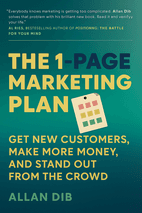
Allan Dib's The 1 Page Marketing Plan distills complex strategy into a single actionable template, providing a clear nine-step framework for attracting and converting customers. It empowers entrepreneurs and small business owners to execute focused campaigns without traditional marketing jargon.
Feature
Insta.Page
Blinkist
Shortform
Summary Depth
Full Chapter-by-Chapter
15-min overview
Section-by-section guides
Audio Narration
✓
✓
✓
Visual Mindmaps
✓
✕
✕
AI Q&A
✓
✕
✕
Quizzes
✓
✕
✕
PDF Downloads
✓
✕
✓
Price
$89.99/yr
$146/yr (PRO)
$199/yr
*Competitor data last verified July 2026.
1 Page Summary
The 1 Page Marketing Plan by Allan Dib is a practical guide designed to simplify the marketing process for businesses of all sizes. The book breaks down complex marketing strategies into a single, actionable page, making it accessible for entrepreneurs and small business owners. Dib emphasizes the importance of targeting the right audience, crafting compelling messages, and leveraging both online and offline channels to maximize reach and impact. Key concepts include the "Marketing Funnel," which outlines stages from attracting prospects to converting them into loyal customers, and the "9-Step Marketing Plan," which provides a clear, step-by-step framework for execution.
Historically, marketing plans were often lengthy, jargon-filled documents that overwhelmed small business owners. Dib’s approach disrupts this tradition by offering a streamlined, visual template that prioritizes clarity and actionability. The book draws on timeless marketing principles from legends like Dan Kennedy and Jay Abraham while adapting them for the digital age. Dib’s focus on measurable results and customer-centric strategies reflects a shift toward data-driven marketing, making the book particularly relevant in today’s fast-paced, competitive landscape.
The lasting impact of The 1 Page Marketing Plan lies in its ability to democratize marketing knowledge, empowering even non-experts to create effective campaigns. Its simplicity and practicality have made it a favorite among solopreneurs and startups, while its foundational principles remain valuable for larger organizations. By distilling marketing into its essential components, Dib’s work continues to inspire businesses to focus on what truly drives growth: understanding their audience and delivering consistent value.
Chapter 1: Selecting Your Target Market
Overview
The opening phase of the marketing journey is all about prospects—those people who don’t yet know you exist but could become your next loyal customers. The first and most vital step is zeroing in on your target market. This isn’t just a box to check; it’s the foundation for everything that follows. Trying to appeal to everyone is a surefire way to blend into the background. Instead, the chapter urges business owners to embrace the power of focus, showing that relevance and resonance come from narrowing your sights.
Why Not Everyone Is Your Customer
Many business owners, especially those just starting out, fall into the trap of thinking their product or service is for “everyone.” The logic seems sound—cast a wide net and you’ll catch more fish. But in reality, this approach dilutes your message and drains your resources. Mass marketing, the kind big companies use to “get their name out there,” is compared to an archer shooting arrows blindly in the fog. For small and medium businesses, this scattershot approach is wasteful and rarely effective.
The Power of Niching
Instead, the chapter champions the concept of finding a niche—a tightly defined slice of a larger market. The more specific you get, the more powerful your marketing becomes. Using the analogy of a 100-watt light bulb versus a 100-watt laser, the text illustrates how focused energy (or messaging) can cut through the noise and reach the right people. Real-world examples, like a beauty salon specializing in cellulite treatment for new mothers or a photographer targeting family portraits, show how specificity leads to relevance. When your message is tailored, your ideal customer feels seen and understood.
Becoming a Specialist
Specialists are always in higher demand than generalists. The chapter draws a parallel to choosing a heart specialist over a general doctor after a heart attack—when the stakes are high, people want an expert, not a jack-of-all-trades. By dominating a niche, you make price less relevant, command higher fees, and earn greater respect. The key is to identify the one burning problem your market desperately wants solved and position yourself as the go-to solution.
The PVP Index: Finding Your Ideal Market
To help business owners pinpoint their perfect target market, the chapter introduces the PVP Index—Personal fulfillment, Value to the marketplace, and Profitability. By rating each segment you serve on these three criteria, you can objectively determine where your energy is best spent. For example, a photographer might find that family portraits score highest across all three dimensions, making it the ideal focus for marketing efforts.
Getting Inside Your Customer’s Mind
Once you’ve chosen your niche, the next step is to truly understand your ideal customer. The chapter encourages business owners to get specific: What keeps your customer up at night? What are their fears, frustrations, and secret desires? What language do they use? What do they read and where do they spend time online? These aren’t just theoretical questions—they’re the keys to crafting a message that resonates.
Creating Customer Avatars
To bring your target market to life, the chapter suggests creating detailed customer avatars. These are vivid, story-driven profiles that capture the day-to-day realities, motivations, and quirks of your ideal customers. For instance, Max Cash, a successful financial planner, and Angela Assistant, his indispensable PA, are painted in rich detail, giving you a window into their worlds. This exercise isn’t just for fun—it’s a practical tool to ensure your marketing speaks directly to the people you most want to reach.
Key Takeaways
Trying to appeal to everyone is ineffective; focus on a tightly defined niche for maximum impact.
Mass marketing wastes resources and rarely delivers results for small businesses.
Specializing in a niche makes you more valuable and allows you to charge premium prices.
Use the PVP Index to objectively identify your ideal target market based on fulfillment, value, and profitability.
Deeply understanding your customer’s fears, desires, and daily life is essential for crafting a compelling message.
Creating detailed customer avatars helps you see the world through your customer’s eyes and tailor your marketing accordingly.
Dominate one niche before expanding to others, ensuring your message remains focused and powerful.
Key concepts: Chapter 1: Selecting Your Target Market
1. Chapter 1: Selecting Your Target Market
The Pitfall of Targeting Everyone
Mass marketing dilutes your message and wastes resources.
Small businesses cannot compete with big brands using broad appeals.
Trying to appeal to 'everyone' makes your business blend into the background.
The Power of Niching Down
A tightly defined niche makes marketing more powerful and relevant.
Specificity helps cut through noise (e.g., 100-watt laser vs. light bulb analogy).
Real-world examples (e.g., beauty salon for new moms, family photographer) show niche success.
Becoming a Specialist
Specialists command higher fees and greater respect than generalists.
Dominating a niche makes price less relevant (e.g., heart specialist vs. general doctor).
Identify the one burning problem your market wants solved and position yourself as the expert.
The PVP Index for Market Selection
Evaluate segments based on Personal fulfillment, Value, and Profitability (PVP).
Helps objectively determine the best market focus (e.g., photographer choosing family portraits).
Ensures alignment between passion, market demand, and financial viability.
Understanding Your Ideal Customer
Identify fears, frustrations, and desires of your target audience.
Learn their language, media habits, and online behavior.
Deep customer insight is key to crafting resonant messaging.
Creating Customer Avatars
Build vivid, story-driven profiles (e.g., Max Cash, Angela Assistant).
Helps tailor marketing to real-world customer motivations and quirks.
Ensures messaging speaks directly to the right people.
Key Strategic Takeaways
Focus beats broad appeal—dominate one niche before expanding.
Specialization increases perceived value and profitability.
Use data (PVP Index) and empathy (avatars) to refine targeting.
💡 Try clicking the AI chat button to ask questions about this book!
Chapter 2: Crafting Your Message
Overview
Crafting a marketing message that truly connects starts with stepping into the shoes of your ideal customer, visualizing their world, and speaking directly to their needs and desires. Rather than falling into the trap of bland, self-centered advertising, the focus shifts to intentional, customer-centric communication. Most small business ads miss the mark by following tired formulas, hoping for luck instead of building predictable results. The key is to define a single, clear objective for every message, ensuring every element—down to the call to action—serves that purpose and invites prospects to take a specific next step.
A standout message hinges on a unique selling proposition (USP), answering why someone should buy and why they should buy from you. Uniqueness doesn’t always come from the product itself; it can be found in how it’s delivered, supported, or packaged. By understanding what customers are truly after—the result or feeling, not just the features—businesses can move from being mere commodity providers to trusted advisors. Clarity is non-negotiable; in a noisy world, a confusing or complex message is quickly ignored, so distilling your value into a single, memorable sentence is essential.
Differentiation is possible even in crowded, commodity markets. Small creative touches, like a café’s latte art or a playful email confirmation, can transform the ordinary into the remarkable, allowing businesses to command premium prices and spark word-of-mouth. Competing on price alone is a losing game; instead, offering greater value through bonuses, customization, or exceptional service attracts better customers and builds loyalty.
Communicating your value succinctly is where the elevator pitch comes in—a brief, compelling summary that highlights the problem you solve, your solution, and proof it works. This approach keeps the focus on the customer’s needs and positions you as a problem solver, not just another vendor. To make your offer irresistible, it’s crucial to lead with the biggest benefit, use emotionally charged language, address objections, and, when possible, tell a story or offer a bold guarantee.
Understanding your target market is foundational. The most effective offers are those that excite a specific audience, reflecting what they truly value—often discovered by observing their actual behavior rather than relying solely on surveys. Packaging your offer with elements like value stacking, upsells, payment plans, guarantees, and genuine scarcity increases its appeal and urgency.
Addressing the customer’s pain points is far more motivating than simply listing features. When marketing focuses on relieving pain, price becomes less of a concern, and loyalty grows. The power of emotional copywriting cannot be overstated; authentic, conversational language that speaks directly to one person builds rapport and sets a business apart. The right words—those that trigger emotion and tap into motivators like fear, love, greed, guilt, and pride—make messages memorable and effective.
Deep understanding of the customer’s mindset, language, and motivations is the foundation of persuasive copy. Research and ongoing testing ensure that messages resonate and convert. Building trust means openly addressing risks and acknowledging who your product or service isn’t for, which not only filters out poor-fit prospects but also reassures your ideal customers that your offer is genuinely tailored to them.
Harnessing the power of a common enemy in your messaging creates camaraderie and positions your business as an ally, tapping into emotions already present in your audience. When it comes to naming your business or product, clarity always trumps cleverness. A clear, descriptive name immediately communicates value and avoids the costly confusion that comes with obscure or overly creative names. Testing names and messages with your actual target market, rather than relying on friends and family, ensures your communication lands as intended.
Ultimately, the chapter underscores that clarity, authenticity, and customer focus are the cornerstones of a memorable and effective marketing message. By prioritizing these principles, businesses can rise above the noise, build trust, and create offers that truly resonate.
#This section explores the art and science of crafting a marketing message that truly resonates with your target audience. It begins by emphasizing the importance of visualizing your ideal customer—your avatar—whenever you create marketing materials. This practice is likened to method acting, allowing you to step into your prospect’s shoes and see the world from their perspective. The section then critiques the common pitfalls of small business advertising, highlighting how most ads are bland, self-centered, and ultimately ineffective. Instead of relying on luck or “marketing by accident,” the author urges readers to market with intention and clarity.
The Problem with Most Advertising
Most small business ads follow a tired formula: company name, logo, a list of services, generic claims, and contact details. This approach is compared to playing a slot machine—hoping for a lucky win rather than creating predictable, repeatable results. The author advocates for treating advertising like a vending machine, where you know what you’ll get for your investment. To do this, you must define the purpose of your ad and focus on a single, clear objective. Every element in your ad should serve this objective, even if it means sacrificing sacred cows like your company logo.
The Power of a Clear Call to Action
A strong marketing message doesn’t try to do everything at once. Instead, it invites prospects to take a specific action, such as requesting a sample, scheduling a call, or downloading a resource. The call to action should be unmistakable and offer multiple ways for prospects to respond, catering to their preferred method of communication. The section draws a parallel to social situations: just as no one enjoys a party guest who only talks about themselves, prospects tune out ads that are self-focused. Effective marketing speaks to the needs, desires, and problems of the customer, entering the conversation already happening in their mind.
Developing a Unique Selling Proposition (USP)
Many businesses lack a compelling reason for customers to choose them over competitors. They become “me too” businesses, indistinguishable from others in their field. The author stresses that marketing amplifies whatever message you have—if your message is uninspired, reaching more people won’t help. The key is to develop a unique selling proposition that answers two critical questions: Why should someone buy? And why should they buy from you? Uniqueness doesn’t have to be in the product itself; it can be in how you package, deliver, or support what you offer. The goal is to make an apples-to-oranges comparison, so price isn’t the only differentiator.
Understanding What Customers Really Want
Customers rarely buy a product for its features alone—they’re after the result it delivers. For example, someone buying an expensive watch is purchasing status and exclusivity, not just a timepiece. By uncovering the true motivation behind a purchase, you can tailor your USP to focus on the desired outcome. This approach transforms you from a commodity provider to a trusted advisor, as illustrated by the example of a printer who offers consulting and audits rather than just printing services.
The Danger of Confusion
In a world saturated with information, clarity is paramount. If your message is confusing or overly complex, prospects will simply move on. The author warns that confusion leads to lost sales, especially for complex products. Your message should be distilled into a single, easily understood sentence that conveys your unique benefit.
Being Remarkable in a Commodity Market
Standing out doesn’t require a unique product, but it does require being different. The section offers vivid examples: a café that adds latte art, an e-commerce site with a whimsical order confirmation email, and Apple’s iconic “1,000 songs in your pocket” campaign. Each example shows how a small, creative twist can transform a commodity into a remarkable experience, allowing businesses to command premium prices and generate word-of-mouth marketing.
Why Competing on Price is a Losing Game
While it’s tempting to make “lowest price” your USP, this is a race to the bottom that small businesses can rarely win. Competing on value—through bonuses, customization, or exceptional service—is a more sustainable strategy. Higher prices often attract better customers and reduce headaches, while discounting attracts price-sensitive buyers who are harder to please.
Crafting Your Elevator Pitch
Finally, the section introduces the concept of the elevator pitch—a concise, compelling summary of what you do and the problem you solve. This pitch should be customer-focused and highlight your USP, not just your job title or a list of services. A well-crafted elevator pitch becomes a powerful tool for everyday marketing, helping you seize opportunities to communicate your value clearly and memorably.
Crafting a Memorable Message
The heart of effective marketing lies in being remembered for the problem you solve, not for a fancy title or a generic business description. A strong elevator pitch should walk your listener through three simple steps: the problem, your solution, and proof that your solution works. The formula is straightforward: “You know [problem]? Well, what we do is [solution]. In fact, [proof].” This approach keeps your message focused on the customer’s needs and positions you as a problem solver rather than just another vendor.
Building a Compelling Offer
A common pitfall in marketing is offering something uninspired, like a basic discount or a copycat deal. If you don’t give your ideal customer a compelling reason to choose you, price becomes the only differentiator. To avoid this, reflect on which of your products or services you’re most confident in delivering and which you enjoy providing the most. Ask yourself what your target market is truly buying—often it’s not the product itself, but the feeling or outcome it provides, like peace of mind or status.
To craft an irresistible offer, dig deeper: What’s the biggest benefit you can lead with? What emotionally charged words will grab attention? What objections might prospects have, and how will you address them? Can you tell an intriguing story or offer a bold guarantee? Lazy offers lead to lackluster results, so invest time and creativity into making your offer stand out.
Understanding and Exciting Your Target Market
One of the biggest mistakes is mismatching your offer to your audience. The first step is always to identify a specific target market, then structure an offer that excites them. Sometimes, the best way to find out what your prospects want is simply to ask, but remember that people often answer surveys with logic, while their actual purchases are driven by emotion. Observe what your market is already buying, what’s trending online, and what sparks conversations on social media. These insights reveal what your audience truly values.
Elements of an Irresistible Offer
Once you know what your market wants, package it with these essential elements:
Value: Focus on the most valuable result you can deliver.
Language: Speak in the jargon your audience uses, showing you understand their world.
Reason why: Be prepared to explain why you’re making such a strong offer, to overcome skepticism.
Value stacking: Add bonuses that make your offer a no-brainer.
Upsells: Offer complementary products or services when the customer is ready to buy.
Payment plans: Make high-ticket items more accessible with installment options.
Guarantee: Offer a bold, risk-reversing guarantee that builds trust.
Scarcity: Create urgency with limited-time or limited-quantity offers, always with a genuine reason.
Targeting the Customer’s Pain
People are far more motivated to relieve pain than to seek pleasure. When someone is in pain, price becomes secondary to relief. Your marketing should focus on solving the customer’s pain points, not just listing features and benefits. For example, instead of selling a TV by touting its specs, offer to install it and ensure it works seamlessly with all their devices. This transforms your offer from a commodity to a solution, making price less of a concern and building customer loyalty.
The Power of Emotional Copywriting
Compelling copywriting is one of the most valuable skills in marketing. Emotional direct response copywriting grabs attention, stirs emotion, and motivates action. Avoid bland, generic, or overly “professional” language that strips away personality. Instead, write as if you’re speaking directly to one person, using authentic language and sharing your unique perspective. People crave authenticity and connection, and your marketing should reflect the real you.
Adding personality to your business—through videos, engaging social media, or conversational copy—builds rapport and sets you apart from competitors. Don’t hide behind corporate jargon; let your personality shine and focus on what matters to your customers.
Elements of Great Copy
The right words can make all the difference. Certain words—like “free,” “you,” “save,” “guaranteed,” and “new”—trigger strong emotional responses. Remember, people buy with emotion and justify with logic. The five major motivators in buying behavior are fear, love, greed, guilt, and pride. Your headlines should grab attention and promise a self-serving result, tapping into these motivators.
Some of the most successful headlines in advertising history push these emotional buttons, making them memorable and effective. Fear of loss is especially powerful, but always use emotional triggers ethically and in the customer’s best interest.
Entering the Customer’s Mind
Every prospect has an ongoing inner conversation shaped by their unique experiences and desires. To write effective copy, you must understand your audience’s mindset, language, fears, and motivations. Research is the foundation—know your target market intimately before you write a single word. Emotional copywriting is powerful, but it must be paired with deep understanding and constant testing to truly resonate and convert.
Addressing Risk and Building Trust
Rather than glossing over potential downsides, the text urges business owners to confront the risks their prospects perceive. Ignoring these concerns only allows the fear-driven amygdala in your customer’s brain to amplify doubts, which can quietly sabotage a sale. Instead, acknowledging who your product or service is not for not only filters out ill-fitting prospects but also builds credibility and trust with those who are a good match. This transparency reassures your ideal customers that your offer is genuinely tailored to them, making your message feel more exclusive and authentic.
Leveraging the “Enemy in Common”
People rarely blame themselves for their problems, whether it’s financial stress or personal setbacks. The narrative highlights how most individuals instinctively look outward for causes, blaming the economy, government, or other external factors. Smart marketers can harness this tendency by identifying a common enemy in their messaging. By aligning with your prospect’s frustrations—such as blaming “Big Pharma” or “the food industry”—you create a sense of camaraderie and position yourself as an ally. This approach not only grabs attention but also taps into emotions already simmering beneath the surface, making your message more compelling and relatable.
The Power of Clear Naming
Naming your business, product, or service is another critical aspect of crafting your message. The advice is refreshingly straightforward: if you have to explain your name, it’s a miss. While iconic brands like Nike or Apple can afford to educate the public about what they do, most small businesses don’t have that luxury. A clear, descriptive name like “Fast Plumbing Repairs” immediately communicates your value, saving you from the costly task of clarifying your purpose through advertising. Clever or obscure names may feel creative, but they often breed confusion, which is the enemy of effective marketing. Clarity should always trump cleverness, especially when resources are limited.
Testing and Feedback
When seeking feedback on a potential name, the text cautions against relying on friends and family, who are likely to be supportive but not objective. Instead, test your ideas with people who fit your target market. Their honest reactions will be far more valuable in determining whether your message lands as intended.
Key Takeaways
Addressing risks openly in your messaging builds trust and filters out poor-fit prospects.
Using a “common enemy” in your copy connects you emotionally with your audience and makes your offer more compelling.
Choose clear, descriptive names for your business or product to avoid confusion and wasted marketing effort.
Seek feedback from your target market, not just supportive friends or family, to ensure your message resonates.
Above all, prioritize clarity over cleverness in every aspect of your communication.
Key concepts: Chapter 2: Crafting Your Message
2. Chapter 2: Crafting Your Message
Customer-Centric Messaging
Step into the shoes of your ideal customer (avatar)
Focus on needs/desires, not self-centered advertising
Avoid bland formulas—prioritize intentional communication
Unique Selling Proposition (USP)
Answer why customers should buy from you (not just what you sell)
Uniqueness can come from delivery, support, or packaging
Shift from commodity provider to trusted advisor
Clarity and Differentiation
Distill value into one memorable sentence
Creative touches (e.g., latte art) can differentiate commodities
Avoid price competition—focus on value and premium positioning
Elevator Pitch Essentials
Problem → Solution → Proof framework
Lead with the biggest benefit
Use emotional language and storytelling
Target Market Understanding
Observe behavior (not just surveys) to discover true values
Package offers with value stacking, guarantees, or scarcity
Address pain points—not just features—to build loyalty
Emotional Copywriting
Use authentic, conversational language
Tap into motivators (fear, love, pride, etc.)
Build rapport by speaking to one person
Trust and Persuasion
Address risks and acknowledge who your offer isn’t for
Use the 'common enemy' tactic to create camaraderie
Test messages with the target market (not friends/family)
Naming and Clarity
Prioritize clear, descriptive names over cleverness
Avoid obscure names that confuse the audience
Ensure names immediately communicate value
Core Principles
Clarity trumps complexity
Authenticity builds trust
Customer focus drives resonance
Call to Action Clarity
A strong marketing message invites specific actions (e.g., scheduling a call, downloading a resource).
Calls to action should be unmistakable and offer multiple response options.
Effective marketing focuses on customer needs, not self-promotion.
Unique Selling Proposition (USP)
A USP answers: 'Why buy?' and 'Why buy from you?' to stand out from competitors.
Uniqueness can lie in packaging, delivery, or support—not just the product itself.
Avoid 'me too' messaging; create an apples-to-oranges comparison to escape price wars.
Customer-Centric Messaging
Customers buy outcomes (e.g., status, peace of mind), not just product features.
Tailor your USP to highlight the desired result, positioning yourself as a trusted advisor.
Understand the emotional drivers behind purchases to craft resonant messaging.
The Power of Clarity
Confusion leads to lost sales; distill your message into one clear, benefit-focused sentence.
Complex products especially require simplicity to avoid overwhelming prospects.
Clarity trumps cleverness—prioritize being understood over being creative.
Differentiation in Commodity Markets
Stand out through small, creative twists (e.g., latte art, whimsical emails).
Remarkable experiences justify premium pricing and drive word-of-mouth.
Apple's '1,000 songs in your pocket' exemplifies transforming mundane features into magic.
Avoiding the Price Trap
Competing on price is unsustainable for small businesses; focus on value instead.
Higher prices attract better customers and reduce service headaches.
Value-driven USPs (e.g., bonuses, customization) create loyal, less price-sensitive buyers.
Crafting an Elevator Pitch
Use the formula: 'You know [problem]? We [solution]. In fact, [proof].'
Focus on the customer's problem, not job titles or generic services.
A strong pitch positions you as a problem solver, not just a vendor.
Building an Irresistible Offer
Avoid uninspired offers (e.g., basic discounts); lead with your strongest benefit.
Use emotionally charged language and address objections upfront.
Incorporate stories or bold guarantees to make your offer memorable.
Aligning Offers with Audience Needs
Mismatched offers fail; research what your market truly values (e.g., trends, social conversations).
Surveys may reveal logic, but purchases are driven by emotion—observe behavior.
Package offers with elements like scarcity, exclusivity, or transformational outcomes.
Enhancing the Offer
Focus on delivering the most valuable result to the customer.
Use audience-specific jargon to demonstrate understanding.
Explain the reasoning behind strong offers to overcome skepticism.
Add value-stacking bonuses to make the offer irresistible.
Include upsells and payment plans to increase accessibility.
Targeting the Customer’s Pain
Pain relief is a stronger motivator than seeking pleasure.
Position your product as a solution, not just a commodity.
Example: Offer installation services to transform a TV purchase into a seamless experience.
Emotional Copywriting
Avoid bland or overly professional language—write conversationally.
Inject personality into marketing to build authenticity and connection.
Use emotional triggers (fear, love, greed, guilt, pride) ethically.
Elements of Great Copy
Use high-impact words like 'free,' 'you,' 'guaranteed,' and 'new.'
Headlines should promise self-serving results and tap into emotions.
Fear of loss is a powerful motivator but must be used responsibly.
Understanding the Customer’s Mindset
Research your audience’s language, fears, and motivations before writing.
Emotional copy must be paired with deep audience understanding.
Test messaging to ensure it resonates and converts effectively.
Addressing Risk and Building Trust
Acknowledge who your product is NOT for to filter mismatched prospects.
Transparency builds credibility and reassures ideal customers.
Ignoring perceived risks amplifies doubts and can sabotage sales.
Leveraging the 'Enemy in Common'
People blame external factors (economy, industries) for their problems.
Align messaging with prospects' frustrations to create camaraderie.
Position yourself as an ally against a shared 'enemy' (e.g., Big Pharma).
The Power of Clear Naming
Avoid names that require explanation—clarity trumps cleverness.
Descriptive names (e.g., 'Fast Plumbing Repairs') communicate value instantly.
Obscure names create confusion, which harms marketing efficiency.
Testing and Feedback
Avoid relying on friends/family for objective feedback.
Test names and messaging with your target market for honest reactions.
Market validation ensures your message lands as intended.
Building Trust Through Transparency
Addressing risks openly in your messaging builds trust with your audience.
Transparency filters out poor-fit prospects early, saving time and resources.
Honesty about limitations or challenges strengthens credibility.
Emotional Connection Through Storytelling
Using a 'common enemy' in your copy fosters emotional alignment with your audience.
This technique makes your offer more compelling by framing it as a solution to shared frustrations.
Storytelling with relatable struggles deepens engagement and loyalty.
Clarity in Naming and Branding
Choose clear, descriptive names for your business or product to avoid confusion.
Avoid clever or obscure names that may require excessive explanation.
Straightforward naming reduces wasted marketing effort and improves recall.
Effective Feedback for Message Refinement
Seek feedback from your target market, not just friends or family, to ensure relevance.
Test messaging with real prospects to validate resonance and clarity.
Iterate based on constructive criticism to refine your value proposition.
Prioritizing Clarity Over Cleverness
Clarity should always trump cleverness in communication.
Simple, direct language ensures your message is understood quickly.
Avoid jargon or overly creative phrasing that may obscure your core offer.
Chapter 3: Reaching Prospects with Advertising Media
Overview
Choosing the right advertising media can make or break a business, especially since it often represents the largest slice of the marketing budget. The chapter emphasizes that tracking and measuring every advertising dollar is non-negotiable in today’s data-driven world. With tools like analytics, toll-free numbers, and coupon codes, businesses can finally know which campaigns are working and which are draining resources. The old excuse of not knowing which half of the ad spend is wasted no longer holds water—what gets measured, gets managed, and only profitable campaigns deserve to survive.
Rather than chasing vague goals like “getting your name out there,” the focus shifts to targeted campaigns that match the right offer to the right audience. It’s not about response rates alone, but about whether each campaign brings in more money than it costs. This leads naturally to the concept of customer lifetime value, distinguishing between the immediate profit from a new customer (the front end) and the ongoing value from repeat business (the back end). Sometimes, it’s even smart to lose money on the first sale if the long-term relationship is lucrative enough, but this only works if the numbers are tracked and understood.
The chapter explores the role of social media, acknowledging its power to build relationships and social proof, but warning against the myth that it’s a magic bullet for sales. Social platforms are likened to social gatherings—great for engagement, but not for hard selling. The real risk is investing too much time and energy into platforms you don’t control, as policy changes can erase your audience overnight. The smarter play is to use social media to funnel prospects to assets you own, like your website or email list, ensuring you maintain control over your audience and messaging.
Email marketing emerges as a cornerstone of effective outreach. It’s direct, personal, and—when handled with care—can become a business’s most valuable asset. Building a responsive, consent-based email list allows for ongoing engagement and quick testing of new offers. The key is to communicate in a human, value-driven way, keeping the list warm and ready for action. Deliverability, open rates, and engagement are the daily battles, but the reward is a database that can generate revenue on demand, independent of social media’s shifting sands.
Surprisingly, postal mail—often dismissed in the digital age—gets a strong endorsement. In a world where digital messages are fleeting and inboxes are overflowing, a well-crafted piece of physical mail stands out, offering emotional impact and longevity that digital channels can’t match. People tend to keep meaningful letters, while emails are quickly forgotten. As digital clutter grows, physical mailboxes are less crowded, making it easier for a tangible message to capture attention and create a lasting impression.
Budgeting for marketing is reframed as a matter of outcomes, not limits. If a campaign is profitable, there’s no reason to cap spending—except during the testing phase, when different headlines, offers, and channels are being tried out. Once a winning formula is found, the only real constraint is the business’s capacity to handle increased demand, which is a good problem to have.
A recurring warning is the danger of relying on a single source for leads, customers, or suppliers. History is full of cautionary tales where businesses collapsed after putting all their eggs in one basket, whether it was a single ad platform or a key supplier. Diversification is the antidote, with a recommendation to cultivate at least five different lead sources, especially through paid media, which is both reliable and forces accountability.
Ultimately, building a resilient media strategy means more than just picking the right channels. It’s about creating a system that can withstand changes and setbacks, consistently turning advertising dollars into profit. Paid media, managed with a sharp eye on return on investment, becomes the backbone of a growth-ready business. The chapter encourages readers to consider which media will best reach their target market and to approach every campaign with a mindset of measurement, optimization, and resilience.
The Importance of Tracking and Measuring Advertising Media
Selecting the right advertising media is one of the most critical decisions a business can make, especially since it often represents the largest portion of the marketing budget. The text underscores the necessity of tracking every advertising dollar to ensure a positive return on investment. While legendary marketers of the past lamented not knowing which half of their ad spend was wasted, today’s technology makes it easy to measure results using tools like toll-free numbers, analytics, and coupon codes. The message is clear: what gets measured, gets managed. Businesses should ruthlessly cut underperforming ads and double down on what works, always with an eye on the bottom line.
The narrative cautions against the allure of mass marketing and vague goals like “getting your name out there.” For most small and medium businesses, such strategies are a waste of limited resources. Instead, the focus should be on targeted campaigns that match the right offer to the right audience, maximizing every marketing dollar. A simple direct mail example illustrates how to calculate customer acquisition cost and why response rates alone are meaningless without understanding the profit generated per customer. The real measure of success is whether the campaign brings in more money than it costs.
Understanding Customer Lifetime Value
A key insight is the distinction between the “front end” and “back end” of customer value. The front end refers to the initial profit from a new customer, while the back end encompasses all subsequent purchases. Sometimes, it’s even strategic to lose money on the front end if the back end is strong enough to make up for it. This approach is especially common in subscription-based or high-repeat-purchase businesses. However, this strategy only works if you truly know your numbers. The text encourages constant measurement and improvement of customer acquisition cost and lifetime value, as these are the real drivers of sustainable growth.
Social Media’s Role in Marketing
Social media is acknowledged as a powerful media breakthrough, but not a panacea. The text warns against the hype that suggests social media alone can solve all marketing challenges. Social platforms are likened to social gatherings—great for building relationships and social proof, but not ideal for direct selling. Overt sales pitches can turn people off, while genuine engagement and responsiveness build trust and credibility.
There are two main pitfalls with social media: it can consume vast amounts of time with little return, and you don’t actually own your audience—the platform does. Changes in platform policies can wipe out years of effort overnight. The preferred approach is to use social media to drive traffic to assets you own, like your website or email list, ensuring you retain control over your audience and messaging.
The Power and Pitfalls of Email Marketing
Email remains a cornerstone of effective marketing. It’s direct, personal, and—when managed well—can become a business’s most valuable asset. Building a responsive email list allows for ongoing engagement, nurturing prospects who aren’t ready to buy immediately, and testing new offers quickly and inexpensively. The text emphasizes the importance of consent-based email marketing, using commercial platforms for compliance and deliverability, and maintaining regular, value-driven communication to keep the list “warm.”
Best practices include writing in a human, informal tone, providing value in most communications, and automating follow-up sequences to nurture leads. The three main challenges are getting emails delivered, opened, and read—all of which require attention to detail and a deep understanding of your audience. The ultimate goal is to create a database that can generate revenue on demand, independent of the whims of social media platforms.
Revisiting Postal Mail in a Digital Age
Despite the dominance of digital channels, postal mail—often dismissed as “snail mail”—remains a potent and underutilized marketing tool. The author’s own experience in tech startups reinforces the point that traditional media can complement digital efforts, rather than being replaced by them. Postal mail stands out in an era of digital overload, offering a tangible, personal touch that can cut through the noise and make a lasting impression.
Physical vs. Digital Media: Emotional Impact and Longevity
While digital communication offers speed and convenience, it lacks the emotional weight and staying power of physical mail. The example of a heartfelt message delivered via text versus a handwritten card with flowers illustrates how tangible items can create a deeper emotional connection. Physical mail tends to linger—people often keep meaningful letters for years—whereas emails are fleeting, easily deleted, and quickly forgotten. Interestingly, as digital inboxes become more crowded and overwhelming, physical mailboxes have grown less cluttered, making it easier for a well-crafted postal message to stand out. This shift presents a unique opportunity for marketers to cut through the noise and make a memorable impression.
The Role of Budget in Marketing Media
A critical aspect of any media strategy is understanding how to allocate your marketing budget. There are three possible outcomes when you spend on marketing: you lose money, you don’t know if you’re making money because you aren’t tracking results, or you make a profit. If your marketing is losing money, it’s time to stop and reassess. If you’re not measuring results, you’re flying blind and wasting resources. But if your marketing is profitable, the logical move is to invest as much as possible to maximize returns. The idea of setting a fixed marketing budget only makes sense during the testing phase, when you’re experimenting with different headlines, offers, and channels to find what works. Once you’ve identified a winning combination, limiting your spend is like refusing to buy discounted $100 bills. The only valid concern about scaling up is whether you can handle the increased demand, which is a good problem to have and can often be solved by raising prices.
Avoiding the Danger of “One”
Relying on a single source for leads, customers, suppliers, or media channels makes a business fragile. History is full of examples where businesses suffered because they depended too heavily on one strategy or partner—such as those who relied solely on Google for leads and were devastated by algorithm changes or increased ad costs. The lesson is clear: single points of failure can bring down even the most successful operations. By diversifying your sources of leads, customers, and suppliers, you build resilience. The recommendation is to have at least five different lead sources, with a strong emphasis on paid media. Paid channels are reliable and force you to focus on return on investment, while “free” methods like word of mouth can lull you into complacency and waste valuable time.
Building a Resilient Media Strategy
A robust media strategy is about more than just picking the right channels; it’s about ensuring your business can weather changes and setbacks. Paid media, when managed with a focus on ROI, offers both reliability and scalability. The ability to consistently turn advertising dollars into profit is the hallmark of a resilient, growth-ready business. As you plan your approach, consider which media will best reach your target market and fill in the corresponding section of your marketing plan.
Key Takeaways
Physical mail offers emotional impact and longevity that digital channels often lack, and its reduced clutter makes it a powerful tool for marketers.
Marketing budgets should be unlimited for campaigns that deliver a positive return on investment; only limit spending during the testing phase.
Relying on a single source for leads, customers, or suppliers is risky—diversify to protect your business from sudden changes.
Paid media is both reliable and forces accountability, making it a cornerstone of a resilient marketing strategy.
Consistently measuring and optimizing your media investments is essential for sustainable growth and business security.
Key concepts: Chapter 3: Reaching Prospects with Advertising Media
3. Chapter 3: Reaching Prospects with Advertising Media
Tracking and Measuring Advertising Media
Every advertising dollar must be tracked for ROI using tools like analytics, toll-free numbers, and coupon codes.
Eliminate underperforming campaigns—only profitable ones should continue.
Avoid vague goals like 'brand awareness'; focus on measurable, targeted campaigns.
Customer Lifetime Value (CLV)
Distinguish between immediate profit (front end) and long-term value from repeat business (back end).
Sometimes losing money on the first sale is justified if the long-term relationship is profitable.
Track and analyze customer value to make informed marketing decisions.
Social Media Strategy
Social media builds relationships and social proof but isn't a direct sales tool.
Use social platforms to funnel prospects to owned assets (e.g., website, email list).
Avoid over-reliance on platforms you don’t control due to policy risks.
Email Marketing
Email is direct, personal, and a high-value asset when managed properly.
Focus on building a responsive, consent-based list for ongoing engagement.
Monitor deliverability, open rates, and engagement to optimize performance.
The Power of Postal Mail
Physical mail stands out in an era of digital clutter.
Offers emotional impact and longevity compared to fleeting digital messages.
Less competition in physical mailboxes increases visibility.
Budgeting for Marketing Outcomes
Budget based on profitability, not arbitrary limits—scale what works.
Test headlines, offers, and channels before full investment.
The only constraint should be the business’s capacity to handle demand.
Diversification of Lead Sources
Avoid reliance on a single lead source—diversify across at least five channels.
Paid media is reliable and forces accountability.
Prepare for disruptions by building a resilient lead-generation system.
Building a Resilient Media Strategy
Combine measurement, optimization, and diversification for long-term success.
Paid media with strong ROI tracking is the backbone of growth.
Choose media that best reaches the target market and withstands industry changes.
Front End vs. Back End Customer Value
Front end refers to initial profit from a new customer; back end includes all subsequent purchases.
Strategic losses on the front end can be justified by strong back-end profitability.
Common in subscription-based or high-repeat-purchase businesses.
Requires precise tracking of customer acquisition cost (CAC) and lifetime value (LTV).
Sustainable growth depends on optimizing these metrics over time.
Social Media’s Role in Marketing
Powerful for engagement but not a standalone solution for direct sales.
Overt selling can backfire; focus on relationship-building and social proof.
Risks include time inefficiency and lack of audience ownership (platform dependency).
Best used to drive traffic to owned assets (e.g., website, email list).
Policy changes on platforms can disrupt years of effort overnight.
Email Marketing: Strengths and Best Practices
Direct, personal, and a high-value asset when managed properly.
Requires consent-based lists and commercial platforms for compliance.
Focus on human tone, value-driven content, and automation for nurturing.
Challenges include deliverability, open rates, and engagement.
Goal: Build a revenue-generating database independent of external platforms.
Postal Mail’s Unique Advantages
Underutilized but effective in a digital-heavy landscape.
Offers tangible, emotional impact that digital lacks (e.g., longevity, memorability).
Less cluttered than digital inboxes, increasing visibility.
Complements digital strategies rather than competing with them.
Example: Handwritten notes or physical gifts create deeper connections.
Budget Allocation and Scaling
Three outcomes: losing money, untracked spending, or profitable returns.
Profitable campaigns should be scaled aggressively (no arbitrary budget limits).
Testing phase requires controlled spending to identify winning strategies.
Scaling concerns should focus on operational capacity, not budget constraints.
Raising prices can solve demand overflow issues.
Avoiding Single Points of Failure
Over-reliance on one lead source, supplier, or channel is risky.
Historical examples show vulnerability to algorithm changes or cost spikes.
Diversify with at least five lead sources, prioritizing paid media for reliability.
Free methods (e.g., word of mouth) can breed complacency and inefficiency.
Resilience comes from redundancy and ROI-focused investments.
The Resilience of Paid Media
Paid media provides reliability and scalability when managed with ROI in focus.
A resilient business consistently converts ad spend into profit.
Diversifying media channels mitigates risk from over-reliance on a single source.
Advantages of Physical Mail in Marketing
Physical mail creates emotional impact and has longer-lasting visibility than digital ads.
Reduced clutter in physical mailboxes increases engagement and response rates.
Direct mail can complement digital efforts for a multi-channel marketing approach.
Budgeting for High-ROI Campaigns
Marketing budgets should be uncapped for campaigns with proven positive ROI.
Spending should be controlled only during the testing phase of new campaigns.
Scaling successful campaigns maximizes profitability and business growth.
Accountability in Media Investments
Paid media forces accountability through measurable performance tracking.
Continuous optimization of ad spend ensures sustainable business growth.
Tracking key metrics prevents wasteful spending and improves efficiency.
Strategic Media Planning
Choosing the right media mix depends on the target audience's behavior and preferences.
A diversified media strategy protects against market volatility and platform changes.
Aligning media choices with business goals ensures long-term marketing success.
Chapter 4: Capturing Leads
Overview
The heart of this chapter is the shift from chasing after every possible sale to cultivating a steady, reliable flow of interested prospects. Instead of the exhausting cycle of daily “hunting” for new customers, the focus turns to “farming”—planting seeds, nurturing relationships, and harvesting when the time is right. This approach is not only more sustainable but also far more effective in the long run.
Most business owners, the chapter argues, fall into the trap of trying to sell directly from their advertisements. They pour money into ads that shout their business name and a generic slogan, hoping to catch someone ready to buy right now. But the reality is, only a tiny fraction of people are ever ready to make an immediate purchase. The vast majority need time, information, and trust before they’ll open their wallets. If you don’t capture their interest and keep in touch, you lose them—possibly forever.
The solution is to capture every interested lead in a database. This isn’t just a list of names; it’s the foundation of your future sales. By offering something of value—a free guide, a helpful video, or another “ethical bribe”—you encourage prospects to raise their hand and identify themselves. This simple act of exchanging value for contact information lets you sift out the uninterested and focus your efforts on those most likely to buy.
The chapter uses a vivid analogy: if you spend $1,000 on an ad that reaches 1,000 people, but only 100 are truly interested, you’re wasting $900 on the wrong audience. By identifying and targeting only the high-probability prospects, you can spend ten times as much on each one, dramatically increasing your chances of making a sale.
This method also expands your reach. Instead of aiming for the 3% of people ready to buy immediately, you can now engage the 40% who are either ready, open to buying, or interested but not right now. This increases the effectiveness of your advertising by over 1,200%. And because you’re not pushing for an immediate sale, you come across as a trusted advisor rather than a desperate salesperson.
Building this kind of marketing infrastructure is compared to the difference between cars and personal flying machines. Just as our cities are built for cars, successful businesses are built on systems that consistently bring in, nurture, and convert leads. Without this infrastructure—a reliable database and a way to manage it—most businesses are left with “random acts of marketing” that rarely pay off.
Key Takeaways
Capturing leads in a database is essential because most prospects aren’t ready to buy immediately.
Shift your mindset from hunting for sales to farming relationships by nurturing leads over time.
Never try to sell directly from your ads; instead, use them to identify interested prospects with an “ethical bribe.”
Focus your marketing resources on high-probability prospects rather than treating all leads equally.
By capturing and nurturing leads, you can increase your advertising effectiveness dramatically and build long-term trust and authority.
A robust marketing infrastructure, centered around a well-managed database or CRM, is the foundation for consistent business growth.
Key concepts: Chapter 4: Capturing Leads
4. Chapter 4: Capturing Leads
Shift from Hunting to Farming
Move from chasing immediate sales to cultivating long-term relationships with prospects.
Focus on nurturing leads over time rather than pushing for quick transactions.
This approach is more sustainable and effective in the long run.
The Problem with Direct Selling
Most ads fail because they target only the 3% ready to buy immediately.
Ignoring the 97% who need time and trust means losing potential customers.
Direct selling from ads wastes resources on uninterested audiences.
The Power of Lead Capture
Capture leads in a database to focus on high-probability prospects.
Use an 'ethical bribe' (e.g., free guide, video) to exchange value for contact info.
This filters out uninterested leads and maximizes marketing efficiency.
Optimizing Advertising Spend
Targeting only interested prospects reduces wasted ad spend dramatically.
Example: $1,000 spent on 1,000 people can be refocused on 100 high-potential leads.
This increases ROI by concentrating resources where they matter most.
Expanding Reach and Trust
Engage the 40% who are open to buying (not just the 3% ready now).
Nurturing leads positions you as a trusted advisor, not a pushy salesperson.
This approach can increase advertising effectiveness by over 1,200%.
Building Marketing Infrastructure
A reliable database or CRM is the foundation for consistent lead nurturing.
Without infrastructure, businesses rely on 'random acts of marketing' with poor results.
Systems for capturing and managing leads are as essential as roads for cars.
You've reached the end of the free chapters
Next chapter: “Nurturing Leads” is locked
Keep reading The 1 Page Marketing Plan — and unlock all 600+ book summaries with audio, mindmaps and AI Q&A.
$0.00 due today · 7 days free, then $89.99/year ($7.49/mo) · Cancel anytime before day 7
Allan Dib is a renowned entrepreneur, marketing strategist, and bestselling author celebrated for his practical and high-impact business advice. He is best known for his groundbreaking book, *The 1-Page Marketing Plan*, which has become an essential resource for small business owners seeking to simplify and supercharge their marketing efforts. His work distills complex business concepts into actionable strategies, empowering readers to achieve rapid growth. As a successful founder and consultant, Dib brings real-world expertise and a proven track record to his writing. His influential books are available for purchase on Amazon, where they continue to receive widespread acclaim from the business community.
📚 Explore Our Book Summary Library
Discover more insightful book summaries from our collection